Avzivi
Italy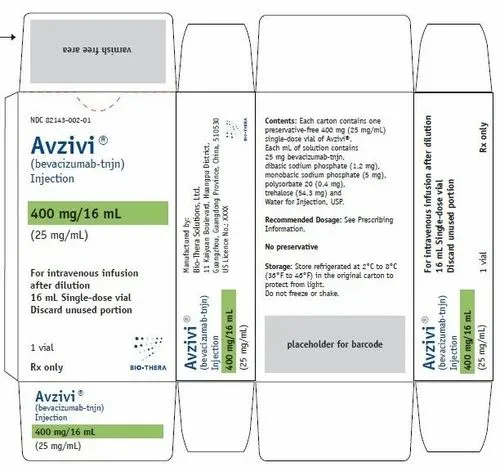
Table of Contents
Package Leaflet: Information for the User
Avzivi 25 mg/mL concentrate for solution for infusion
bevacizumab
This medicinal product is subject to additional monitoring. This will allow for rapid identification of new safety information. You can help by reporting any side effects you experience while taking this medicine. See the end of section 4 for information on how to report side effects.
Please read this leaflet carefully before using this medicine because it contains important information for you.
Keep this leaflet. You may need to read it again.
If you have any questions, consult your doctor, pharmacist, or nurse.
If you experience any side effect, including those not listed in this leaflet, consult your doctor, pharmacist, or nurse. See section 4.
Contents of this leaflet:
- What Avzivi is and what it is used for
- What you need to know before using Avzivi
- How to use Avzivi
- Possible side effects
- How to store Avzivi
- Contents of the pack and other information
1. What Avzivi is and what it is used for
Avzivi contains the active substance bevacizumab, a humanised monoclonal antibody (a type of protein normally produced by the immune system to help the body defend itself against infection and cancer). Bevacizumab binds specifically to a protein called "vascular endothelial growth factor" (VEGF), which is present on the lining of the blood and lymphatic vessels in the body. The VEGF protein promotes the growth of blood vessels within the tumour; these blood vessels supply nutrients and oxygen to the tumour. Once bevacizumab binds to VEGF, tumour growth is inhibited by blocking the development of blood vessels that supply nutrients and oxygen to the tumour.
Avzivi is a medicine used to treat adult patients with advanced colorectal cancer, that is, cancer of the colon or rectum. Avzivi will be administered in combination with a fluoropyrimidine-based chemotherapy regimen.
Avzivi is also used to treat adult patients with metastatic breast cancer. In patients with this type of cancer, Avzivi will be administered together with a chemotherapy regimen based on paclitaxel or capecitabine.
Avzivi is also used to treat adult patients with advanced non-small cell lung cancer. Avzivi will be administered together with a platinum-based chemotherapy regimen.
Avzivi is furthermore used to treat adult patients with advanced non-small cell lung cancer when the tumour cells carry certain mutations in a protein called epidermal growth factor receptor (EGFR). Avzivi will be administered in combination with erlotinib.
Avzivi is also used to treat adult patients with advanced renal cell carcinoma. In patients with this type of cancer, Avzivi will be administered together with another medicine called interferon.
Avzivi is also used to treat adult female patients with advanced epithelial ovarian cancer, fallopian tube cancer, or primary peritoneal cancer. In patients with these types of cancer, Avzivi will be administered in combination with carboplatin and paclitaxel.
Avzivi will be administered in combination with carboplatin and gemcitabine or with carboplatin and paclitaxel when used in adult women with advanced epithelial ovarian cancer, fallopian tube cancer, or primary peritoneal cancer whose disease has recurred at least 6 months after the last time they were treated with a platinum-based chemotherapy regimen.
Avzivi will be administered in combination with paclitaxel, topotecan, or pegylated liposomal doxorubicin when used in adult women with advanced epithelial ovarian cancer, fallopian tube cancer, or primary peritoneal cancer whose disease has recurred within 6 months after the last time they were treated with a platinum-based chemotherapy regimen.
Avzivi is also used to treat adult women with persistent, recurrent, or metastatic cervical cancer. Avzivi will be administered in combination with paclitaxel and cisplatin or, alternatively, with paclitaxel and topotecan in patients who cannot receive platinum-based therapy.
2. What you need to know before using Avzivi
Do not use Avzivi
if you are allergic (hypersensitive) to bevacizumab or to any of the other ingredients of this
medicine (listed in section 6).
if you are allergic to products derived from Chinese hamster ovary (CHO) cells or to other
recombinant human or humanized antibodies.
if you are pregnant.
Warnings and precautions
Talk to your doctor, pharmacist, or nurse before using Avzivi.
Avzivi may increase the risk of developing perforations in the intestinal wall. If you have conditions causing abdominal inflammation (e.g., diverticulitis, gastric ulcers, chemotherapy-associated colitis), discuss this with your doctor.
Avzivi may increase the risk of developing abnormal connections or passages between two organs or blood vessels. Persistent, recurrent, or metastatic cervical carcinoma may increase the risk of developing connections between the vagina and any part of the gastrointestinal tract.
Avzivi may increase the risk of bleeding or cause problems with wound healing after surgery. You must not take this medicine if you are scheduled for surgery, if you have had major surgery within the last 28 days, or if you have a surgical wound that has not yet healed.
Avzivi may increase the risk of developing serious skin infections or infections in deeper layers beneath the skin, especially if you have intestinal wall perforations or problems with wound healing.
Avzivi may increase the incidence of high blood pressure. If you have high blood pressure that is not well controlled with blood pressure medications, discuss this with your doctor. It is important to ensure your blood pressure is under control before starting treatment with Avzivi.
If you have or have had an aneurysm (a weakening and bulging of a blood vessel wall) or a tear in the wall of a blood vessel.
Avzivi increases the risk of having protein in the urine, especially if you already have high blood pressure.
The risk of developing blood clots in arteries (a type of blood vessel) may increase if you are over 65 years old, have diabetes, or have had previous arterial blood clots. Talk to your doctor, as blood clots can lead to heart attacks and strokes.
Avzivi may also increase the risk of developing blood clots in veins (a type of blood vessel).
Avzivi can cause bleeding, particularly tumor-related bleeding. Consult your doctor if you or members of your family tend to have bleeding or clotting disorders, or if you are taking medications to thin the blood for any reason.
Avzivi may cause bleeding within or around the brain. Consult your doctor if you have metastatic brain tumors.
Avzivi may increase the risk of bleeding in the lungs, including coughing up blood or blood in saliva. Discuss with your doctor if you have experienced these events in the past.
Avzivi may increase the risk of developing heart failure. It is important that your doctor knows if you have previously received treatment with anthracyclines (e.g., doxorubicin, a specific type of chemotherapy used to treat certain cancers) or thoracic radiotherapy, or if you have heart disease.
Avzivi may cause infections and a reduction in neutrophil count (a type of blood cell important for protection against bacteria).
Avzivi may cause hypersensitivity (including anaphylactic shock) and/or infusion-related reactions (reactions related to the injection of the medicine). Inform your doctor, pharmacist, or nurse if you have previously experienced problems after injections, such as dizziness/fainting, shortness of breath, swelling, or skin rashes.
A rare neurological side effect called reversible posterior encephalopathy syndrome (PRES) has been associated with Avzivi treatment. If you experience headache, vision disturbances, confusion, or seizures with or without high blood pressure, contact your doctor.
Also contact your doctor if any of the above symptoms occurred in the past.
Before starting or during treatment with Avzivi:
if you have had or currently have mouth, tooth, and/or jaw pain, or swelling or inflammation in the mouth, or numbness or a feeling of heaviness in the jaw, or if you lose a tooth, inform your doctor and dentist immediately;
if you need invasive dental treatment or dental surgery, inform your dentist that you are being treated with Avzivi, especially if you have received or are receiving intravenous bisphosphonate injections.
Your doctor or dentist may recommend a dental examination before starting Avzivi treatment.
Children and adolescents
Avzivi therapy is not recommended in children and adolescents under 18 years of age, as neither safety nor efficacy has been established in this patient population.
Bone tissue death (osteonecrosis) in bones other than the jaw has been observed in patients under 18 years of age treated with bevacizumab.
Other medicines and Avzivi
Inform your doctor, pharmacist, or nurse if you are taking, have recently taken, or might take any other medicines.
Combining Avzivi with another medicine called sunitinib malate (used for kidney and gastrointestinal tumors) may cause serious side effects. Discuss with your doctor to ensure you do not take these medicines together.
Inform your doctor if you are receiving platinum-based or taxane therapies for metastatic lung or breast cancer. These therapies in combination with Avzivi may increase the risk of serious side effects.
Inform your doctor if you have recently received or are currently receiving radiotherapy.
Pregnancy, breastfeeding, and fertility
You must not use Avzivi during pregnancy. Avzivi may harm the unborn baby, as it can interfere with the formation of new blood vessels. Your doctor will advise you to use effective contraception during Avzivi treatment and for at least 6 months after the last dose of Avzivi.
If you are pregnant, suspect you are pregnant during treatment with this medicine, or are planning a pregnancy in the near future, speak to your doctor immediately.
You must not breastfeed during treatment with Avzivi and for at least 6 months after the last dose of Avzivi, as Avzivi may interfere with the baby's growth and development.
Avzivi may reduce female fertility. Consult your doctor for further information.
Ask your doctor, pharmacist, or nurse for advice before taking any medicine.
Driving and using machines
Avzivi has not been shown to impair the ability to drive or use tools or machines.
However, drowsiness and fainting have been reported with the use of Avzivi. If you experience symptoms affecting your vision, concentration, or ability to react, do not drive or operate machinery until symptoms resolve.
Important information about some ingredients of Avzivi
This medicine contains less than 1 mmol of sodium (23 mg) per vial, i.e., essentially ‘sodium-free’.
3. How to use Avzivi
Dosage and frequency of administration
The required dose of Avzivi depends on your body weight and the type of tumour to be treated.
The recommended dose is 5 mg, 7.5 mg, 10 mg or 15 mg per kilogram of body weight. Your doctor will
prescribe Avzivi at the appropriate dose for you. Treatment with Avzivi will be administered once every
2 or 3 weeks. The number of infusions you receive will depend on your response to treatment; however,
you should continue receiving this treatment until Avzivi is no longer able to block the growth of your
tumour. Your doctor will discuss this with you.
Method and route of administration
Do not shake the vial. Avzivi is a concentrate for solution for infusion. Depending on the prescribed dose,
a portion of the vial contents or the entire vial of Avzivi will be diluted with a sodium chloride solution
before use. Your doctor or nurse will administer this diluted Avzivi solution as an intravenous infusion
(an intravenous drip). The first infusion will be given over 90 minutes. If this is well tolerated, the second
infusion may be given over 60 minutes. Subsequent infusions may be administered over 30 minutes.
Avzivi administration must be temporarily interrupted
if severe high blood pressure occurs, requiring treatment with medications to control blood pressure,
if you experience problems with wound healing after surgery,
if you need to undergo a surgical procedure.
Avzivi administration must be permanently discontinued if any of the following problems occur
severe high blood pressure that cannot be controlled with antihypertensive medications, or sudden and severe increase in blood pressure,
presence of protein in the urine associated with oedema (body swelling),
perforation of the intestinal wall,
an abnormal connection or passage between the trachea and oesophagus, internal organs and skin, vagina and any part of the gastrointestinal tract, or between other tissues not normally connected (fistula), as judged by the doctor to be severe,
severe skin infections or infections of deeper layers beneath the skin,
blood clots in the arteries,
blood clots in the pulmonary blood vessels,
severe bleeding of any kind.
If an excessive dose of Avzivi is administered
You may experience a severe headache. In this case, contact your doctor, pharmacist or nurse immediately.
If you forget to take a dose of Avzivi
Your doctor will decide the most appropriate time to administer your next dose of Avzivi. Discuss this with your doctor.
If you stop treatment with Avzivi
Stopping treatment with Avzivi may result in the loss of tumour growth control. Do not stop treatment with Avzivi without first discussing it with your doctor.
If you have any questions about the use of this medicine, consult your doctor, pharmacist or nurse.
4. Possible side effects
Like all medicines, this medicine can cause side effects, although not everybody will experience them.
If you experience any side effect, including those not listed in this leaflet, talk to your doctor, pharmacist or nurse.
The side effects listed below have been observed in patients treated with Avzivi in combination with chemotherapy. This does not mean that these side effects were necessarily caused by bevacizumab.
Allergic reactions
If you experience an allergic reaction, tell your doctor or medical staff immediately.
Signs may include: difficulty breathing or chest pain. You may also experience skin redness or flushing, chills and tremors, feeling unwell (nausea) or vomiting, swelling, light-headedness, rapid heartbeat and loss of consciousness.
If you experience any of the side effects described below, seek immediate help.
Serious side effects, which may be very common (may affect more than 1 in 10 people), include:
- high blood pressure,
- numbness or tingling in the hands or feet,
- reduction in blood cell counts, including white blood cells, which fight infections (this may be accompanied by fever), and cells that help blood to clot,
- feeling weak and lacking energy,
- tiredness,
- diarrhoea, nausea, vomiting and abdominal pain.
Serious side effects, which may be common (may affect up to 1 in 10 people), include:
- intestinal perforation,
- bleeding, including bleeding in the lungs in patients with non-small cell lung cancer,
- blockage of arteries by a blood clot,
- blockage of veins by a blood clot,
- blockage of pulmonary blood vessels by a blood clot,
- blockage of leg veins by a blood clot,
- heart failure,
- wound healing problems after surgery,
- redness, peeling, soreness, pain or blistering on the fingers or toes,
- reduction in the number of red blood cells,
- lack of energy,
- stomach and intestinal disorders,
- muscle and joint pain, muscle weakness,
- dry mouth associated with thirst and/or reduced or dark urine,
- inflammation of the mucous membranes of the mouth, intestine, lungs and airways, reproductive and urinary systems,
- ulcers in the mouth and oesophagus which may cause pain and difficulty swallowing,
- pain, including headache, back pain and pain in the pelvic area and anus,
- localized abscesses,
- infection, particularly blood infection or bladder infection,
- reduced blood supply to the brain or stroke,
- drowsiness,
- nosebleeds,
- increased heart rate (palpitations),
- intestinal obstruction,
- changes in urine tests (presence of protein in urine),
- shortness of breath or reduced oxygen levels in the blood,
- skin infections or infections of deeper skin layers,
- fistulas: abnormal tubular connections between internal organs and skin or other tissues that are not normally connected, including connections between the vagina and gastrointestinal tract in patients with cervical carcinoma,
- allergic reactions (signs may include difficulty breathing, facial redness, skin rash, low or high blood pressure, low oxygen levels in the blood, chest pain, or nausea/vomiting).
Serious side effects, which may be rare (may affect up to 1 in 1,000 people), include:
- sudden and severe allergic reaction with difficulty breathing, swelling, light-headedness, rapid heartbeat and loss of consciousness (anaphylactic shock).
Serious side effects of unknown frequency (frequency cannot be estimated from available data) include:
- severe skin infections or infections of deeper layers under the skin, especially if you have had perforations in the intestinal wall or wound healing problems,
- a negative effect on women's ability to have children (see paragraphs following the list of side effects for further recommendations),
- a brain condition with symptoms such as seizures, headache, confusion and vision changes (reversible posterior encephalopathy syndrome (PRES)),
- symptoms suggesting changes in normal brain function (headache, visual disturbances, confusion or seizures) and high blood pressure,
- dilation and weakening of the wall of a blood vessel or a tear in the blood vessel wall (aneurysms and arterial dissections),
- blockage of small blood vessel(s) in the kidney,
- abnormally high blood pressure in the blood vessels of the lungs, making the right side of the heart work harder than normal,
- perforation of the cartilage wall separating the nostrils,
- perforation of the stomach or intestine,
- an open wound or perforation in the lining of the stomach or small intestine (signs may include abdominal pain, feeling of bloating, black tarry stools, blood in the stool or blood in vomit),
- bleeding from the lower part of the large intestine,
- gum lesions with exposure of jawbone that do not heal, which may be associated with pain and inflammation of surrounding tissue (see paragraphs following the list of side effects for further recommendations),
- perforation of the gallbladder (symptoms and signs may include abdominal pain, fever and nausea/vomiting).
If you experience any of the side effects described below, seek help as soon as possible.
Side effects that are very common (may affect more than 1 in 10 people), which are not serious, include:
- constipation,
- loss of appetite,
- fever,
- eye problems (including increased tearing),
- changes in speech,
- altered sense of taste,
- runny nose,
- dry, peeling and inflamed skin, skin colour changes,
- weight loss,
- nosebleeds.
Side effects that are common (may affect up to 1 in 10 people), which are not serious, include:
- changes in voice and hoarseness.
Patients over 65 years of age have a higher risk of the following side effects:
- blood clots in arteries, which may lead to stroke or heart attack,
- reduction in white blood cells and cells that help blood to clot,
- diarrhoea,
- feeling unwell,
- headache,
- feeling of fatigue,
- high blood pressure.
Avzivi may also cause changes in the results of laboratory tests ordered by your doctor. These include:
- reduction in white blood cell count, particularly neutrophils (a type of white blood cell that helps protect against infections),
- presence of protein in urine,
- reduction in potassium, sodium or phosphorus (a mineral) in the blood,
- increased blood glucose levels,
- increased alkaline phosphatase (an enzyme) in the blood,
- increased serum creatinine (a protein measured in blood tests to assess kidney function),
- reduction in haemoglobin (found in red blood cells and transports oxygen), which may be severe.
Pain in the mouth, teeth and/or jaw, swelling or blisters in the mouth, numbness or heaviness in the jaw, or tooth loss. These may be signs and symptoms of damage to the jawbone (osteonecrosis). Inform your doctor and dentist immediately if any of these effects occur.
Premenopausal women (women who have menstrual cycles) may experience menstrual irregularities, absence of menstruation, and may experience negative effects on fertility. If you are considering having children, you should discuss this with your doctor before starting treatment.
Avzivi has been developed and manufactured for the treatment of cancer by intravenous injection. It has not been developed or manufactured for administration by injection into the eye. Therefore, this route of administration is not authorised. When Avzivi is injected directly into the eye (unapproved use), the following side effects may occur:
- infection or inflammation of the eyeball,
- eye redness, appearance of particles or floating spots in the visual field ("floaters"), eye pain,
- flashes of light and "floaters" progressing to loss of part of the visual field,
- increased eye pressure,
- eye haemorrhages.
Reporting of side effects
If you experience any side effect, including those not listed in this leaflet, talk to your doctor, pharmacist or nurse. You can also report side effects directly via the national reporting system listed in Annex V. By reporting side effects, you can help provide more information on the safety of this medicine.
5. How to store Avzivi
Keep this medicine out of the sight and reach of children.
Do not use this medicine after the expiry date which is stated on the outer packaging and
on the label of the vial after the abbreviation “Scad./EXP”. The expiry date refers to the
last day of the month.
Store in a refrigerator (2 °C – 8 °C). Do not freeze.
Keep the vial in the outer packaging to protect the medicine from light.
Diluted medicine
Chemical and physical in-use stability has been demonstrated for 30 days at a temperature between
2 °C and 8 °C, followed by an additional 48 hours at a temperature between 2 °C and 30 °C in a sodium chloride 9 mg/mL (0.9%) injection solution. From a microbiological standpoint, the product should be used immediately. If immediate use is not possible, the user is responsible for the storage duration and conditions, which under normal circumstances should not exceed 24 hours at a temperature between 2 °C and 8 °C, unless dilution has been carried out under controlled, validated aseptic conditions.
Do not use Avzivi if you notice any particulate matter or discoloration before administration.
Do not dispose of any medicine via wastewater or household waste. Ask your pharmacist how to dispose of medicines no longer required. This will help protect the environment.
6. Package contents and other information
What Avzivi contains
The active substance is bevacizumab.
Each mL of concentrate contains 25 mg of bevacizumab, corresponding to 1.4–16.5 mg/mL when diluted as recommended.
Each 4 mL vial contains 100 mg of bevacizumab, corresponding to 1.4 mg/mL when diluted as recommended.
Each 16 mL vial contains 400 mg of bevacizumab, corresponding to 16.5 mg/mL when diluted as recommended.
The other components are trehalose dihydrate, anhydrous disodium hydrogen phosphate, monosodium dihydrogen phosphate monohydrate (see section 2 “Important information on some components of Avzivi”), polysorbate 20, water for injections.
Description of the appearance of Avzivi and contents of the pack
Avzivi is a concentrate for solution for infusion (sterile concentrate). The concentrate is a liquid, from clear to slightly opalescent, colourless to light brown, in a glass vial closed with a rubber stopper. Each vial contains 100 mg of bevacizumab in 4 mL of solution or 400 mg of bevacizumab in 16 mL of solution. Each Avzivi pack contains one vial.
Marketing Authorisation Holder
FGK Representative Service GmbH
Heimeranstrasse 35
80339 Munich, Germany
Manufacturer
Eurofins Pharma Quality Control
10 rue de l’Aqueduc, ZI du Charpenay
69210 Lentilly
France
For further information about this medicinal product, please contact the local representative of the Marketing Authorisation Holder.
Other sources of information
More detailed information on this medicinal product is available on the website of the European Medicines Agency: http://www.ema.europa.eu.
ANNEX IV
SCIENTIFIC CONCLUSIONS AND GROUNDS FOR THE VARIATION OF THE TERMS OF THE MARKETING AUTHORISATION(S)
Scientific conclusions
Taking into account the assessment by the Pharmacovigilance and Risk Assessment Committee (PRAC) of the Periodic Safety Update Reports (PSURs) for bevacizumab, the PRAC's scientific conclusions are as follows:
In view of the available data on hyaline glomerular occlusive microangiopathy reported in the literature, including some cases with positive dechallenge, and in view of a plausible mechanism of action, the PRAC considers that a causal relationship between bevacizumab and hyaline glomerular occlusive microangiopathy is at least a reasonable possibility. The PRAC concluded that the product information for medicinal products containing bevacizumab should therefore be amended accordingly.
Having reviewed the PRAC recommendation, the Committee for Human Medicinal Products (CHMP) agrees with the respective general conclusions and the reasoning of the recommendation.
Grounds for the variation of the terms of the marketing authorisation(s)
Based on the scientific conclusions on bevacizumab, the CHMP considers that the benefit-risk balance of the medicinal product(s) containing bevacizumab remains unchanged, subject to the proposed amendments to the product information.
The CHMP recommends the variation of the terms of the marketing authorisation(s).