Atarax
Italy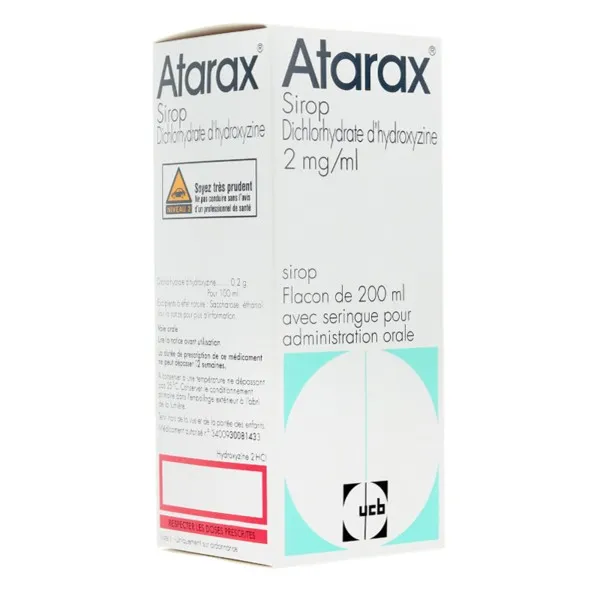
Table of Contents
- Patient information leaflet
- ATARAX 25 mg film-coated tablets
- 1. What ATARAX is and what it is used for
- 2. What you need to know before taking ATARAX
- 3. How to take ATARAX
- 4. Possible side effects
- 5. How to store ATARAX
- 6. Package contents and other information
- Patient information leaflet: information for the patient
- ATARAX 2 mg/1 ml syrup
- 1. What ATARAX is and what it is used for
- 2. What you need to know before taking ATARAX
- 3. How to take ATARAX
- 4. Possible side effects
- 5. How to store ATARAX
- 6. Package contents and other information
Patient information leaflet
ATARAX 25 mg film-coated tablets
hydroxyzine dihydrochloride
Please read all of this leaflet carefully before you take this medicine because it contains
important information for you.
- Keep this leaflet. You may need to read it again.
- If you have any questions, ask your doctor or pharmacist.
- This medicine has been prescribed for you only. Do not give it to other people, even if their symptoms are the same as yours, as it may be harmful.
- If you experience any side effects, including those not listed in this leaflet, tell your doctor or pharmacist. See section 4.
Contents of this leaflet:
- What ATARAX is and what it is used for
- What you need to know before taking ATARAX
- How to take ATARAX
- Possible side effects
- How to store ATARAX
- Contents of the pack and other information
1. What ATARAX is and what it is used for
ATARAX contains the active substance hydroxyzine dihydrochloride and belongs to a group of
medicines called psycholeptics and anxiolytics.
ATARAX film-coated tablets are indicated for the treatment of anxiety symptoms in adults aged 18 years and over, and for the treatment of pruritus symptoms in adults, adolescents, and children aged 6 years and older.
2. What you need to know before taking ATARAX
Do not take ATARAX
- If you are allergic to hydroxyzine dihydrochloride, cetirizine, other piperazine derivatives, aminophylline, ethylenediamine, or to any of the other ingredients of this medicine (listed in section 6)
- If your ECG (electrocardiogram) shows a heart rhythm problem called "QT interval prolongation"
- If you have or have had cardiovascular disease or if you have a very slow heart rate
- If you have low levels of salts in your body (for example, low levels of potassium or magnesium)
- If you are taking certain medicines for heart rhythm problems or medicines that may affect heart rhythm (see section "Other medicines and ATARAX")
- If someone in your family has died suddenly due to heart problems
- If you have a disease called porphyria
- If you are being treated with monoamine oxidase inhibitors (MAOIs) (see section "Other medicines and ATARAX")
- If you are pregnant
- If you are breastfeeding
Warnings and precautions
Talk to your doctor or pharmacist before taking ATARAX.
ATARAX may be associated with an increased risk of life-threatening heart rhythm disturbances. Therefore, inform your doctor if you have heart problems or if you are taking any other medicines, including those available without a prescription.
While taking ATARAX, contact your doctor immediately if you experience heart problems such as palpitations, breathing difficulties, or loss of consciousness. In such cases, treatment with hydroxyzine must be stopped.
Before taking ATARAX, inform your doctor:
- If you have a predisposition to seizures. Young children are more susceptible to adverse effects on the central nervous system
- If you have an eye condition that increases intraocular pressure (glaucoma)
- If you have difficulty urinating (prostatic hypertrophy or bladder neck obstruction)
- If you have narrowing of the stomach valve (pyloric stenosis), of the duodenum (duodenal stenosis), or of other parts of the gastrointestinal or urogenital tract
- If you have gastrointestinal disorders (hypomotility)
- If you have high blood pressure (arterial hypertension)
- If you have a disease called myasthenia gravis that impairs muscle function
- If your thyroid gland is overactive (hyperthyroidism)
- If you have a cognitive disorder (dementia)
- If you are taking anticoagulants. In this case, your doctor may prescribe laboratory tests
Other medicines and ATARAX
Inform your doctor or pharmacist if you are taking, have recently taken, or might take any other medicines. This includes any medicines obtained without a prescription.
ATARAX may affect or be affected by other medicines.
Do not take ATARAX if you are taking medicines to treat:
- Bacterial infections (for example, the antibiotics erythromycin, moxifloxacin, and levofloxacin)
- Fungal infections (for example, pentamidine)
- Heart problems or high blood pressure (for example, amiodarone, quinidine, disopyramide, sotalol)
- Psychosis (for example, haloperidol)
- Depression (for example, citalopram, escitalopram, monoamine oxidase inhibitors (MAOIs))
- Gastrointestinal disorders (for example, prucalopride)
- Allergy
- Malaria (for example, mefloquine and hydroxychloroquine)
- Tumors (for example, toremifene, vandetanib)
- Drug abuse or severe pain (methadone)
Inform your doctor if you are taking:
- Medicines that slow down the heart rate
- Medicines that lower potassium levels
- Substances with anticholinergic activity
- Medicines that depress the central nervous system
- Antihistamines
- Betahistine
- Anticholinesterases
- Phenytoin (an antiepileptic)
- Cimetidine (an anti-ulcer medicine)
Inform your doctor that you are taking ATARAX if you need to undergo tests to evaluate the presence of allergy or for the diagnosis of asthma. Test results may be affected.
ATARAX with food, drinks, and alcohol
Alcohol may enhance the effect of hydroxyzine. Avoid consuming alcohol during treatment with ATARAX.
Pregnancy and breastfeeding
If you are pregnant, suspect you may be pregnant, plan to become pregnant, or are breastfeeding, consult your doctor or pharmacist before taking this medicine.
Pregnancy
Do not take ATARAX if you are pregnant.
If you are a woman of childbearing age, use effective contraception to prevent pregnancy during treatment with ATARAX.
Newborns of mothers who took ATARAX during late pregnancy and/or during labor may show the following symptoms, observed immediately after or within a few hours of birth: tremors, muscle rigidity and/or weakness, breathing difficulties, and urinary retention (difficulty urinating/urine retention).
Breastfeeding
Do not take ATARAX if you are breastfeeding.
Driving and using machines
ATARAX may impair your reaction ability and concentration while driving or operating machinery, as it may cause tiredness, dizziness, and visual disturbances, especially at higher doses and/or if you simultaneously consume alcohol or take sedative medicines. Avoid consuming alcohol or sedative medicines during treatment with ATARAX.
Do not drive or operate machinery until you know how this medicine affects your ability to perform these tasks.
ATARAX contains lactose
If your doctor has diagnosed you with an intolerance to certain sugars, contact him or her before taking this medicine.
3. How to take ATARAX
Take this medicine exactly as instructed by your doctor or pharmacist.
If you have any doubts, consult your doctor or pharmacist.
ATARAX should be used at the lowest effective dose and for the shortest possible duration.
Adults
Treatment of anxiety symptoms
The recommended dose is 50 mg per day, divided into three administrations: 12.5 mg (half a 25 mg tablet), 12.5 mg (half a 25 mg tablet), and 25 mg (one 25 mg tablet). Taking a higher dose in the evening may be decided at the discretion of the doctor. If necessary, the dose may be increased up to 100 mg per day.
Treatment of pruritus symptoms
The initial dose is 25 mg, taken up to 1 hour before bedtime. If needed, continue with doses of 25 mg up to 3–4 times daily.
The maximum daily dose in adults is 100 mg per day.
Special Populations
In some cases, your doctor may prescribe a different dose within the recommended dosage range, depending on your response to treatment.
Elderly
If you are 65 years of age or older, your doctor may prescribe a lower dose.
Your doctor may start treatment with half the recommended dose and will choose the lowest possible dose.
In elderly patients, the maximum daily dose is 50 mg per day, equivalent to 2 tablets per day.
Patients with liver problems
If you have liver problems, your doctor will prescribe a lower dose.
Patients with renal impairment
If you have moderate to severe kidney disease, your doctor will prescribe a lower dose of the medicine, taking into account the degree of renal function impairment.
Use in children and adolescents
Atarax film-coated tablets are not recommended for children under 6 years of age, as they may not be able to swallow the tablet.
Other pharmaceutical forms of this medicine may be more suitable for administration in children; please consult your doctor or pharmacist.
Treatment of pruritus symptoms in adolescents and children aged 6 years and older
In adolescents and children aged 6 years and older: 1 mg/kg per day up to 2 mg/kg per day, given in divided doses.
Children up to 40 kg body weight
The maximum daily dose is 2 mg/kg per day.
Children exceeding 40 kg body weight
The maximum daily dose is 100 mg per day.
The tablets must be swallowed whole, without chewing, with a glass of water. You may take a small amount of food (e.g. biscuits, fruit, etc.) afterwards to help prevent stomach upset.
The tablet may be divided into equal parts.
If you take more ATARAX than you should
If you have taken too much ATARAX, contact your doctor immediately or go to the nearest hospital, especially if an overdose has occurred in a child. In case of overdose, symptomatic treatment may be administered. ECG monitoring may be performed due to the possibility of heart rhythm problems such as QT interval prolongation or torsade de pointes.
An overdose may cause the following symptoms: nausea, vomiting, rapid heartbeat (tachycardia), fever, drowsiness, impaired pupillary light reflex, tremor, confusion, and hallucinations. These may be followed by impaired consciousness, respiratory depression, seizures, low blood pressure (hypotension), or heart rhythm disturbances (arrhythmias), including bradycardia (slow heartbeat). This may progress to worsening coma and cardiorespiratory collapse.
If you forget to take ATARAX
Do not take a double dose to make up for the missed tablet.
If you stop taking ATARAX
If you have any questions about using this medicine, consult your doctor or pharmacist.
4. Possible side effects
Like all medicines, this medicine can cause side effects, although not everyone gets them.
Very common (may affect more than 1 in 10 patients)
- drowsiness
Common (may affect from 1 to 10 in 100 patients)
- dry mouth
- fatigue
- headache
- sedation
Uncommon (may affect from 1 to 10 in 1,000 patients)
- nausea
- weakness (asthenia)
- malaise
- fever
- dizziness
- insomnia
- tremor
- agitation
- confusion
- attention disturbance
- vertigo
Rare (may affect from 1 to 10 in 10,000 patients)
- fast heartbeat (tachycardia)
- difficulty of the eye to focus images (accommodation disorder)
- blurred vision
- constipation (stippsis)
- vomiting
- abnormal liver function tests
- allergic reactions (hypersensitivity)
- seizures
- involuntary movements (dyskinesias)
- nervousness
- difficulty coordinating movements
- disorientation
- hallucinations
- difficulty urinating (urinary retention)
- itching, red skin rashes possibly with spots and blisters (erythematous exanthema, maculopapular exanthema), urticaria, dermatitis
- low blood pressure (hypotension)
Very rare (may affect less than 1 in 10,000 patients)
- sudden severe allergic reaction (anaphylactic shock)
- sudden narrowing of the airways causing breathing difficulties (bronchospasm)
- widespread blistering rash with skin peeling, especially around the mouth, nose, eyes, and genitals (Stevens-Johnson syndrome)
- erythema multiforme
- generalized acute exanthematous pustulosis, severe allergic reaction causing swelling of the face or throat (angioneurotic edema)
- drug-induced fixed eruption
- increased sweating
Not known (frequency cannot be estimated from the available data)
- dry nose
- ringing in the ears
- hepatitis
- heart rhythm problems (electrocardiogram abnormalities such as prolonged QT interval, torsade de pointes). Stop taking the medicine and contact your doctor immediately if you experience any heart rhythm disturbances such as palpitations, breathing difficulties, or loss of consciousness
- loss of consciousness (syncope)
- skin diseases causing blisters and bullous lesions of the skin and/or mucous membranes (toxic epidermal necrolysis, pemphigoid)
- weight gain
During treatment with ATARAX, a rare but serious decrease in certain blood cells may exceptionally occur, for example in a type of white blood cells (agranulocytosis), platelets (thrombocytopenia), or red blood cells (hemolytic anemia).
Furthermore, during treatment with ATARAX, potential side effects may include aggression, depression, tics, alteration of muscular or nervous tone (dystonia), altered sensation (paresthesia), a disorder in which the eyes assume a fixed position (oculogyric crisis), diarrhea, difficulty urinating (dysuria), involuntary urination (enuresis), swelling (edema), weight gain.
Reporting of side effects
If you experience any side effect, including those not listed in this leaflet, talk to your doctor or pharmacist. You can also report side effects directly via the national reporting system at the following website:
https://www.aifa.gov.it/content/segnalazioni-reazioni-avverse
By reporting side effects, you can help provide more information on the safety of this medicine.
5. How to store ATARAX
Keep this medicine out of the sight and reach of children.
Keep the blisters in the outer packaging to protect the medicine from light.
Do not use this medicine after the expiry date stated on the pack after "Exp".
The expiry date refers to the last day of that month.
Do not dispose of medicines via wastewater or household waste. Ask your pharmacist how to
dispose of medicines you no longer use. This will help protect the environment.
6. Package contents and other information
What ATARAX contains
- The active substance is hydroxyzine dihydrochloride. One film-coated tablet contains 25 mg of hydroxyzine dihydrochloride.
- The other components are:
- tablet core components: lactose monohydrate, microcrystalline cellulose, magnesium stearate, anhydrous colloidal silica.
- film-coating components: Opadry Y-1-7000 [titanium dioxide (E 171), hypromellose (E 464), polyethylene glycol 400].
Description of the appearance of ATARAX and pack contents
The ATARAX film-coated tablets are white, elongated, and divisible.
One pack contains 20 tablets in a blister.
Marketing Authorization Holder
UCB Pharma S.p.A.
Via Varesina, 162
20156 Milan (Italy)
Manufacturer
UCB Pharma S.A.
Chemin du Foriest
1420 Braine l'Alleud (Belgium)
Patient information leaflet: information for the patient
ATARAX 2 mg/1 ml syrup
hydroxyzine dihydrochloride
Please read this leaflet carefully before taking this medicine because it contains
important information for you.
- Keep this leaflet. You may need to read it again.
- If you have any questions, consult your doctor or pharmacist.
- This medicine has been prescribed for you only. Do not give it to other people, even if their symptoms are the same as yours, as it may be harmful.
- If you experience any side effect, including those not listed in this leaflet, consult your doctor or pharmacist. See section 4.
Contents of this leaflet:
- What ATARAX is and what it is used for
- What you need to know before taking ATARAX
- How to take ATARAX
- Possible side effects
- How to store ATARAX
- Contents of the pack and other information
1. What ATARAX is and what it is used for
ATARAX contains the active substance hydroxyzine dihydrochloride and belongs to a group of
medicines called psycholeptics and anxiolytics.
ATARAX syrup is indicated for the treatment of anxiety symptoms in adults aged 18 years and older, and for the treatment of pruritus symptoms in adults, adolescents, and children from 12 months of age.
2. What you need to know before taking ATARAX
Do not take ATARAX
- If you are allergic to hydroxyzine dihydrochloride, cetirizine, other piperazine derivatives, aminophylline, ethylenediamine, or any of the other ingredients of this medicine (listed in section 6)
- If your ECG (electrocardiogram) shows a heart rhythm problem called "QT interval prolongation"
- If you have or have had cardiovascular disease or if you have a very slow heart rate
- If you have low levels of salts in your body (for example low levels of potassium or magnesium)
- If you are taking certain medicines for heart rhythm problems or medicines that may affect heart rhythm (see section “Other medicines and ATARAX”)
- If someone in your family has died suddenly due to heart problems
- If you have a disease called porphyria
- If you are being treated with monoamine oxidase inhibitors (MAOIs) (see section “Other medicines and ATARAX”)
- If you are a pregnant woman
- If you are breastfeeding
Warnings and precautions
Talk to your doctor or pharmacist before taking ATARAX.
ATARAX may be associated with an increased risk of life-threatening heart rhythm disorders. Therefore, inform your doctor if you have heart problems or if you are taking any other medicines, including those available without a prescription.
While taking ATARAX, contact your doctor immediately if you experience heart-related symptoms such as palpitations, breathing difficulties, or loss of consciousness. In such cases, treatment with hydroxyzine must be discontinued.
Before taking ATARAX, inform your doctor:
- If you have a predisposition to seizures. Young children are more susceptible to central nervous system side effects
- If you have an eye condition that increases intraocular pressure (glaucoma)
- If you have difficulty urinating (prostatic hypertrophy or bladder neck obstruction)
- If you have narrowing of the stomach valve (pyloric stenosis), of the duodenum (duodenal stenosis), or of other parts of the gastrointestinal or urogenital tract
- If you have gastrointestinal disorders (hypomotility)
- If you have high blood pressure (arterial hypertension)
- If you have a disease called myasthenia gravis that impairs muscle function
- If your thyroid gland is overactive (hyperthyroidism)
- If you have cognitive impairment (dementia)
- If you are taking anticoagulants. In this case, your doctor may recommend laboratory tests
Other medicines and ATARAX
Inform your doctor or pharmacist if you are taking, have recently taken, or might take any other medicines. This includes any medicines obtained without a prescription.
ATARAX may affect or be affected by other medicines.
Do not take ATARAX if you are taking medicines to treat:
- Bacterial infections (for example, the antibiotics erythromycin, moxifloxacin, and levofloxacin)
- Fungal infections (for example, pentamidine)
- Heart problems or high blood pressure (for example, amiodarone, quinidine, disopyramide, sotalol)
- Psychosis (for example, haloperidol)
- Depression (for example, citalopram, escitalopram, monoamine oxidase inhibitors MAOIs)
- Gastrointestinal disorders (for example, prucalopride)
- Allergy
- Malaria (for example, mefloquine and hydroxychloroquine)
- Tumors (for example, toremifene, vandetanib)
- Drug abuse or severe pain (methadone)
Inform your doctor if you are taking:
- Medicines that slow down the heart rate
- Medicines that lower potassium levels
- Anticholinergic agents
- Medicines that depress the central nervous system
- Antihistamines
- Betahistine
- Anticholinesterases
- Phenytoin (an antiepileptic)
- Cimetidine (an anti-ulcer medicine)
Inform your doctor that you are taking ATARAX if you are scheduled for allergy testing or asthma diagnosis. These tests may be affected.
ATARAX with food, drinks and alcohol
Alcohol may enhance the effect of hydroxyzine. Avoid alcohol during treatment with ATARAX.
Pregnancy and breastfeeding
If you are pregnant, think you may be pregnant, planning to become pregnant, or breastfeeding, consult your doctor or pharmacist before taking this medicine.
Pregnancy
Do not take ATARAX if you are pregnant.
If you are a woman of childbearing age, use effective contraception to prevent pregnancy during treatment with ATARAX.
Newborns of mothers who took ATARAX during late pregnancy and/or during labor may show the following symptoms, observed immediately after birth or within a few hours: tremors, muscle rigidity and/or weakness, breathing difficulties, and urinary retention (difficulty urinating/urine retention).
Breastfeeding
Do not take ATARAX if you are breastfeeding.
Driving and using machines
ATARAX may impair your ability to react and concentrate while driving or operating machinery, as it may cause fatigue, dizziness, and visual disturbances, especially at higher doses and/or if you drink alcohol or take sedative medicines simultaneously. Avoid alcohol or sedative medicines during treatment with ATARAX.
Do not drive or operate machinery until you know how this medicine affects your ability to perform these tasks.
ATARAX contains ethanol, sucrose, sodium benzoate and sodium
This medicine contains 4.75 mg of alcohol (ethanol) in 5 ml, equivalent to 0.95 mg/ml (0.095% w/v). The amount of this medicine in 5 ml corresponds to less than 1 ml of beer or 1 ml of wine.
The low amount of alcohol in this medicine has no significant effects.
If your doctor has diagnosed you with an intolerance to certain sugars, contact him/her before taking this medicine. It may be harmful to teeth.
This medicine contains 0.75 g of sucrose per ml. This should be taken into account in patients with diabetes mellitus.
This medicine contains 0.3 mg of sodium benzoate per 1 ml, equivalent to 0.3 mg/ml.
This medicine contains less than 1 mmol of sodium (23 mg) per 5 ml, i.e., essentially 'sodium-free'.
Anti-doping tests
For individuals engaged in sports, the use of medicines containing ethyl alcohol may lead to positive anti-doping test results, depending on the blood alcohol concentration limits set by certain sports federations.
3. How to take ATARAX
Take this medicine exactly as instructed by your doctor or pharmacist.
If you have any doubts, consult your doctor or pharmacist.
ATARAX should be used at the lowest effective dose and for the shortest possible duration.
When your doctor prescribes the syrup, the prescribed dose will be expressed in volume (ml).
The amount of syrup must be measured using an oral dosing syringe graduated every 0.25 ml.
Adults
Treatment of anxiety symptoms
The recommended dose is 25 ml per day, divided into three doses of 6.25 ml – 6.25 ml – 12.5 ml.
Taking a higher dose in the evening is at the discretion of the doctor. If necessary, the dose may be increased up to 50 ml per day.
Treatment of pruritus symptoms
The initial dose is 12.5 ml up to 1 hour before bedtime; if needed, continue with doses of 12.5 ml up to 3–4 times daily.
The maximum daily dose in adults is 50 ml per day.
Special populations
In some cases, your doctor may prescribe a different dose within the recommended dosage range, depending on your response to treatment.
Elderly
If you are 65 years of age or older, your doctor may prescribe a lower dose.
Your doctor may start treatment with half the recommended dose and will choose the lowest possible dose.
In elderly patients, the maximum daily dose is 25 ml per day.
Patients with liver problems
If you have liver problems, your doctor will prescribe a lower dose.
Patients with renal impairment
If you have moderate to severe kidney disease, your doctor will prescribe a lower dose of the medicine, taking into account the degree of renal function impairment.
Use in children and adolescents
For treatment of pruritus symptoms
In adolescents and children from 12 months of age: 0.5 ml/kg per day up to 1 ml/kg per day, given in divided doses.
Children up to 40 kg body weight
The maximum daily dose is 1 ml/kg per day.
Children exceeding 40 kg body weight
The maximum daily dose is 50 ml per day.
Take the syrup pure or diluted in a small amount of water or fruit juice, immediately before meals.
If you take more ATARAX than you should
If you have taken too much ATARAX, contact your doctor immediately or go to the nearest hospital, especially if an overdose has occurred in a child. In case of overdose, symptomatic treatment may be required. ECG monitoring may be performed due to the possibility of cardiac rhythm problems such as QT interval prolongation or torsades de pointes.
An overdose may cause the following symptoms: nausea, vomiting, rapid heartbeat (tachycardia), fever, drowsiness, impaired pupillary light reflex, tremor, confusion, and hallucinations. These may be followed by impaired consciousness, respiratory depression, seizures, low blood pressure (hypotension), or heart rhythm disorders (arrhythmias), including bradycardia (slowed heart rate). This may progress to worsening coma and cardiorespiratory collapse.
If you forget to take ATARAX
Do not take a double dose to make up for a forgotten dose.
If you stop taking ATARAX
If you have any doubts about using this medicine, consult your doctor or pharmacist.
4. Possible side effects
Like all medicines, this medicine can cause side effects, although not everybody will experience them.
Very common (may affect more than 1 in 10 people)
- drowsiness
Common (may affect from 1 to 10 in 100 people)
- dry mouth
- fatigue
- headache
- sedation
Uncommon (may affect from 1 to 10 in 1,000 people)
- nausea
- weakness (asthenia)
- malaise
- fever
- dizziness
- insomnia
- tremor
- agitation
- confusion
- attention disturbance
- vertigo
Rare (may affect from 1 to 10 in 10,000 people)
- fast heartbeat (tachycardia)
- difficulty of the eye to focus images (accommodation disorder)
- blurred vision
- constipation (stipsis)
- vomiting
- abnormal liver function tests
- allergic reactions (hypersensitivity)
- seizures
- involuntary movements (dyskinesias)
- nervousness
- difficulty coordinating movements
- disorientation
- hallucinations
- difficulty urinating (urinary retention)
- itching, red skin rashes possibly with spots and blisters (erythematous rash, maculopapular rash), urticaria, dermatitis
- low blood pressure (hypotension)
Very rare (may affect less than 1 in 10,000 people)
- sudden severe allergic reaction (anaphylactic shock)
- sudden narrowing of the airways causing breathing difficulties (bronchospasm)
- widespread skin rash with blisters and peeling of the skin, especially around the mouth, nose, eyes, and genitals (Stevens-Johnson syndrome)
- erythema multiforme
- generalized acute exanthematous pustulosis, severe allergic reaction causing swelling of the face or throat (angioneurotic edema)
- drug-induced fixed eruption
- increased sweating
Not known (frequency cannot be estimated from the available data)
- dry nose
- ringing in the ears
- hepatitis
- heart rhythm problems (abnormalities of the electrocardiogram with prolonged QT interval, torsade de pointes). Stop taking the medicine and contact your doctor immediately if you experience any heart rhythm problems such as palpitations, breathing difficulties, or loss of consciousness
- loss of consciousness (syncope)
- skin diseases causing blisters and bullous lesions of the skin and/or mucous membranes (toxic epidermal necrolysis, pemphigoid)
- weight gain
During treatment with ATARAX, a severe decrease in certain blood cells may exceptionally occur, for example, in a type of white blood cells (agranulocytosis), platelets (thrombocytopenia), or red blood cells (haemolytic anaemia).
Furthermore, during treatment with ATARAX, potential side effects may include aggression, depression, tics, alteration of muscular or nervous tone (dystonia), altered sensation (paraesthesia), a disorder in which the eyes assume a fixed position (oculogyric crisis), diarrhoea, difficulty urinating (dysuria), involuntary urination (enuresis), swelling (oedema), weight gain.
Reporting of side effects
If you experience any side effect, including those not listed in this leaflet, talk to your doctor or pharmacist. You can also report side effects directly via the national reporting system at the following website:
https://www.aifa.gov.it/content/segnalazioni-reazioni-avverse
By reporting side effects, you can help provide more information on the safety of this medicine.
5. How to store ATARAX
Keep this medicine out of the sight and reach of children.
Store the bottle in the outer packaging to protect the medicine from light.
Do not use this medicine after the expiry date which is stated on the carton after Exp.
The expiry date refers to the last day of that month.
Do not dispose of any medicine via wastewater or household waste. Ask your pharmacist how to
dispose of medicines you no longer use. This will help protect the environment.
6. Package contents and other information
What ATARAX contains
- The active substance is hydroxyzine dihydrochloride. 1 ml of ATARAX syrup contains 2 mg of hydroxyzine dihydrochloride. One bottle contains 150 ml of ATARAX syrup, equivalent to 300 mg of hydroxyzine dihydrochloride.
- The other components are: sucrose, sodium benzoate (E211), levomenthol, hazelnut flavour (containing propylene glycol, vanillin, ethyl vanillin, fenugreek seed extract, lovage oil), ethanol, purified water.
Description of the appearance of ATARAX and contents of the pack
ATARAX 2 mg/1 ml syrup is a clear, colourless solution. Each pack contains one glass bottle of 150 ml with an oral dosing syringe (polyethylene/polystyrene).
Marketing Authorisation Holder
UCB Pharma S.p.A.
Via Varesina, 162
20156 Milan (Italy)
Manufacturer
NextPharma S.A.S.
17 Route de Meulan
78520 Limay (France)