Aspirina for flu and nasal congestion
Italy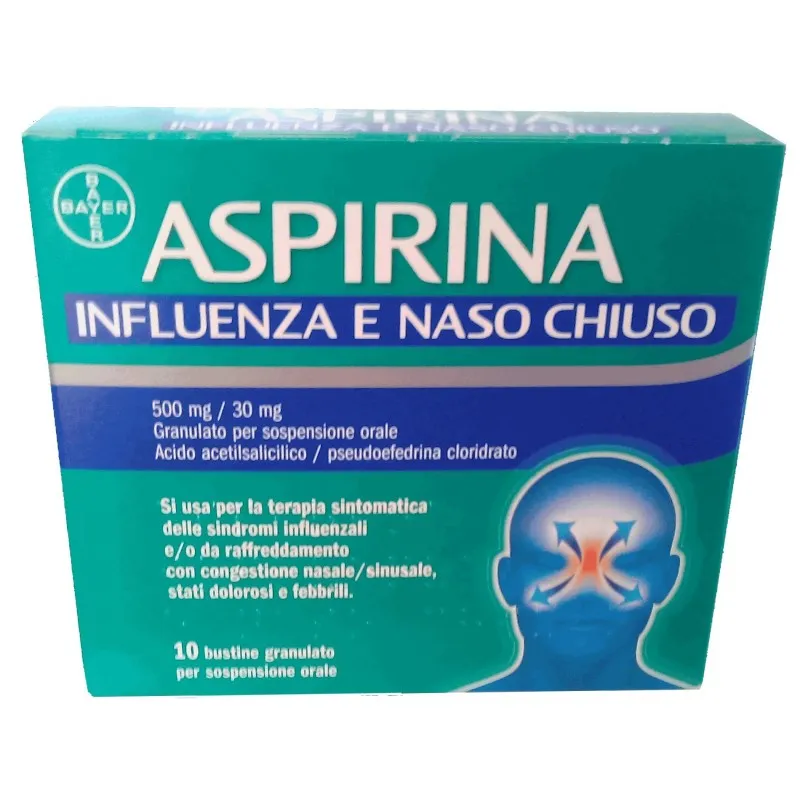
Table of Contents
- PACKAGE LEAFLET: INFORMATION FOR THE USER
- Aspirina influenza e naso chiuso
- 1. What Aspirina influenza e naso chiuso is and what it is used for
- 2. What you should know before taking Aspirina influenza e naso chiuso
- 3. How to take Aspirin flu and stuffy nose
- 4. Possible side effects
- 5. How to store Aspirin Cold and Sinus
- 6. Package contents and other information
- PATIENT LEAFLET: INFORMATION FOR THE USER
- Aspirin Flu and Nasal Congestion
- 3. What Aspirin Flu and Nasal Congestion is and what it is used for
- 4. What you need to know before taking ASPIRIN cold and flu
- 3. How to take ASPIRIN cold and flu
- 4. Possible side effects
- 5. How to store ASPIRIN cold and nasal congestion
- 6. Package contents and other information
PACKAGE LEAFLET: INFORMATION FOR THE USER
Aspirina influenza e naso chiuso
500 mg/30 mg, oral granules
acetylsalicylic acid, pseudoephedrine hydrochloride
Please read this leaflet carefully before taking this medicine because it contains important information for you.
Always take this medicine exactly as described in this leaflet or as your doctor or pharmacist has instructed you.
- Keep this leaflet. You may need to read it again.
- If you need more information or advice, consult your pharmacist.
- If you experience any side effects, including those not listed in this leaflet, consult your doctor or pharmacist. See section 4.
- Consult your doctor if you do not notice improvement or if your symptoms worsen after 3 days.
Contents of this leaflet:
- What Aspirina influenza e naso chiuso is and what it is used for
- What you need to know before taking Aspirina influenza e naso chiuso
- How to take Aspirina influenza e naso chiuso
- Possible side effects
- How to store Aspirina influenza e naso chiuso
- Contents of the pack and other information
1. What Aspirina influenza e naso chiuso is and what it is used for
Aspirina influenza e naso chiuso contains the active substances acetylsalicylic acid and pseudoephedrine hydrochloride.
It has analgesic, anti-inflammatory, antipyretic and nasal decongestant effects.
Aspirina influenza e naso chiuso is used to treat symptoms of nasal/sinus congestion with pain and fever associated with the common cold and/or flu-like symptoms.
If only one of these symptoms is present, a medicine containing just one of the active substances may be more appropriate.
Consult your doctor if you do not feel better or if you feel worse after 3 days.
Aspirina influenza e naso chiuso is indicated for adults and adolescents aged 16 years and over.
2. What you should know before taking Aspirina influenza e naso chiuso
Do not take Aspirina influenza e naso chiuso if:
- you are allergic to acetylsalicylic acid or salicylates (a group of substances used to treat pain and fever), pseudoephedrine, or any of the other ingredients of this medicine (listed in section 6)
- you have a history of asthma triggered by acetylsalicylic acid or similar substances used to treat pain, inflammation or rheumatism, known as non-steroidal anti-inflammatory drugs (NSAIDs)
- you suffer from gastric or intestinal ulcers
- you have an increased tendency to bleeding
- you have hepatic insufficiency
- you suffer from severe acute (sudden) or chronic (long-term) kidney disease or renal failure
- you have heart failure
- you have coronary artery disease
- you have very high blood pressure (severe hypertension) or uncontrolled hypertension with medication
- you are taking methotrexate at doses of 15 mg/week or higher
- you are pregnant
- you are breastfeeding
- in the last two weeks you have taken a medicine containing monoamine oxidase inhibitors (MAOIs) used to treat depression or Parkinson’s disease
- you suffer from a very severe form of increased eye pressure called narrow-angle glaucoma
- you are unable to completely empty your bladder.
Warnings and precautions
Talk to your doctor or pharmacist before taking Aspirina influenza e naso chiuso if:
- you are allergic to other medicines used as painkillers or to treat inflammation or rheumatism
- you have allergies (such as those causing skin rash, itching, hives), asthma, hay fever, nasal polyps, or long-standing lung diseases
- you have a history of gastric ulcer, gastric or intestinal bleeding
- you are taking medicines that inhibit blood clotting
- you are about to undergo surgery, including minor procedures such as dental extractions, since acetylsalicylic acid increases the risk of bleeding
- you have reduced liver function
- you have reduced kidney or heart function and cardiovascular problems caused by:
- heart disease leading to inadequate blood pumping throughout the body
- reduced body fluid volume
- major surgery
- blood infection
- major hemorrhagic event
- you are prone to gout. At low doses, acetylsalicylic acid reduces urinary excretion of uric acid, which may trigger a gout attack
- you have glucose-6-phosphate dehydrogenase (G6PD) deficiency: an inherited disorder affecting red blood cells. High doses of acetylsalicylic acid may increase red blood cell breakdown
- you regularly use analgesics, particularly combinations of different analgesics. You are at risk of permanent kidney damage
- you have hyperthyroidism
- you have mild to moderate hypertension
- you have diabetes mellitus
- you have heart conditions
- you have increased intraocular pressure
- you have an enlarged prostate
- you are sensitive to active ingredients in cough and cold medicines known as sympathomimetic agents, such as phenylephrine and ephedrine
- you suffer from renal tubular acidosis, a condition in which the kidneys fail to properly eliminate acid from the body. This may increase the risk of adverse effects due to higher levels of pseudoephedrine in the blood.
If you develop generalized erythema with fever associated with pustules, stop taking Aspirina influenza e naso chiuso and contact a doctor immediately. See section 4.
If you experience sudden abdominal pain or rectal bleeding, which may occur with Aspirina influenza e naso chiuso due to inflammation of the colon (ischemic colitis), stop taking this medicine and contact a doctor immediately. See section 4.
Reduced blood flow to the optic nerve may occur with Aspirina influenza e naso chiuso. If you experience sudden vision loss, stop taking Aspirina influenza e naso chiuso and contact a doctor immediately. See section 4.
Cases of reversible posterior encephalopathy syndrome (PRES) and reversible cerebral vasoconstriction syndrome (RCVS) have been reported following the use of medicines containing pseudoephedrine. PRES and RCVS are rare conditions that may lead to reduced blood supply to the brain. Stop using Aspirina influenza e naso chiuso immediately and seek urgent medical attention if you develop symptoms that could indicate PRES or RCVS (see section 4 “Possible side effects” for symptoms).
Doping
For individuals engaged in sports: using this medicine without therapeutic need constitutes doping and may result in a positive anti-doping test.
Elderly
Elderly patients may be particularly sensitive to pseudoephedrine and may experience insomnia or perceive things that are not real (hallucinations).
Children and adolescents
There is a possible association between acetylsalicylic acid and Reye's syndrome when administered to children and adolescents. This is a very rare but potentially fatal disease. Therefore, Aspirina influenza e naso chiuso is not recommended for children and adolescents under 16 years of age, unless advised by a doctor.
Other medicines and Aspirina influenza e naso chiuso
Inform your doctor or pharmacist if you are taking, have recently taken, or might take any other medicines, especially if you are using medicines containing:
- methotrexate for the treatment of severe joint inflammation, cancer, or a skin disease called psoriasis. Do not take Aspirina influenza e naso chiuso if you are taking methotrexate at doses of 15 mg/week or higher. Medical monitoring is recommended if you are taking methotrexate at doses lower than 15 mg/week.
- monoamine oxidase inhibitors (MAOIs) for the treatment of depression or Parkinson’s disease. Do not take Aspirina influenza e naso chiuso if you have taken these medicines within the last two weeks.
- substances that inhibit blood clotting or dissolve blood clots
- substances belonging to the group of non-steroidal anti-inflammatory drugs (NSAIDs) used to treat pain, inflammation or rheumatism
- selective serotonin reuptake inhibitors (SSRIs) for the treatment of depression
- other antidepressant agents
- digoxin, used to treat heart failure and irregular heartbeat
- agents to lower blood glucose
- agents to increase water elimination through the kidneys (diuretics)
- oral, injected, or infused glucocorticoids – except hydrocortisone when used as replacement therapy. Glucocorticoids may be used to reduce skin inflammation or in asthma.
- ACE inhibitors, agents with names ending in “pril”, mainly used to treat arterial hypertension
- other agents for treating arterial hypertension with names such as guanethidine, methyldopa, or names ending in “lol” and “lolo”
- valproic acid, used to treat epilepsy
- benzbromarone or probenecid, used to treat gout
- tablets containing salbutamol to dilate the airways. However, it is not necessary to discontinue the use of prescribed salbutamol inhalers.
- phenylephrine, ephedrine, or other so-called sympathomimetic agents contained in nasal drops or sprays.
Aspirina influenza e naso chiuso and alcohol
Avoid alcohol consumption during treatment with acetylsalicylic acid, as it may increase the risk of gastric or intestinal bleeding.
Pregnancy, breastfeeding and fertility
Do not take Aspirina influenza e naso chiuso during pregnancy or breastfeeding, as there are no data on the safety of the combination of the two active substances.
Furthermore, please note that acetylsalicylic acid:
- when used from the 20th week of pregnancy, may cause kidney and heart problems in the fetus
- when used during the last three months of pregnancy, may harm the fetus or cause complications during delivery
- when used before or during delivery, may affect the bleeding tendency in both mother and child and may delay or prolong labor beyond expectations
If you suspect you are pregnant or are planning a pregnancy, consult your doctor or pharmacist before taking this medicine.
This product belongs to a group of medicines (NSAIDs) that may impair fertility in women. This effect is reversible upon discontinuation of the medicine.
Driving and using machines
During treatment with Aspirina influenza e naso chiuso, your reaction ability may be reduced. Avoid driving if this applies to you. The risk increases further if alcohol is consumed together with the medicine. Take this into account when high attention is required.
Aspirina influenza e naso chiuso contains 510 mg of isomalt and 0.95 mg of benzyl alcohol per sachet
If your doctor has diagnosed you with an intolerance to certain sugars, contact them before taking this medicine.
Benzyl alcohol may cause allergic reactions. Consult your doctor or pharmacist if you have liver or kidney disease, as large amounts of benzyl alcohol may accumulate in the body and cause adverse effects (such as metabolic acidosis).
3. How to take Aspirin flu and stuffy nose
Take this medicine exactly as stated in this leaflet or as directed by your doctor or pharmacist. If you have any doubts, consult your doctor or pharmacist.
The recommended dose for adults and adolescents aged 16 years and over is:
- Single dose: 1-2 sachets. The single dose may be repeated after a minimum interval of 4 hours.
- Maximum daily dose: 6 sachets. Do not exceed the maximum daily dose.
Instructions for use
Pour the granules directly into the mouth. The granules dissolve in saliva and can therefore be swallowed.
Drink water immediately after administration.
Duration of treatment
Do not take Aspirin flu and stuffy nose for more than 3 days without consulting your doctor.
If you take more Aspirin flu and stuffy nose than you should
Seek immediate medical advice if you suspect an overdose. Symptoms include headache, dizziness, seizures, vomiting, tinnitus (ringing in the ears), rapid heartbeat, chest pain, restlessness, or difficulty breathing.
If you have any doubts about how to use this medicine, consult your doctor or pharmacist.
4. Possible side effects
Like all medicines, this medicine can cause side effects, although not everyone gets them. The frequency of these side effects cannot be estimated from the available data and is therefore defined as "not known".
Possible side effects due to acetylsalicylic acid are:
Immediately inform your doctor or go to the nearest hospital if you experience any of the following very serious side effects:
- allergic reactions such as difficulty breathing, rash with possible drop in blood pressure, particularly in asthmatic patients
- respiratory disease worsened by acetylsalicylic acid (symptoms of existing respiratory disease worsen after taking the medicine)
- gastric ulcer, which in isolated cases may lead to perforation
- intestinal stricture, which must be diagnosed by a physician
- gastrointestinal bleeding: in isolated cases, this may lead to a reduced number of red blood cells, possibly resulting in increased fatigue. Signs of gastrointestinal bleeding include passing black stools or vomiting blood
- serious internal bleeding, from rare to very rare, such as gastric or intestinal bleeding or cerebral haemorrhage (especially in cases of uncontrolled hypertension and/or use of medicines that inhibit blood coagulation or dissolve blood clots)
- reduced kidney function, kidney failure
- increased breakdown of red blood cells, in cases of severe glucose-6-phosphate-dehydrogenase (G6PD) deficiency
Immediately inform your doctor if you experience any of the following serious side effects:
- increased risk of bleeding, such as oral, vaginal, or anal bleeding
- stomach or intestinal disturbances such as stomach ache, indigestion, and inflammation of the stomach lining
- temporary reduction in liver function with increased liver enzymes known as transaminases
- dizziness
- ringing in the ears (tinnitus)
Mild side effects:
- nausea, vomiting, diarrhoea
Possible side effects due to pseudoephedrine are:
- serious conditions affecting the brain's blood vessels known as reversible posterior encephalopathy syndrome (PRES) and reversible cerebral vasoconstriction syndrome (RCVS)
Immediately stop treatment with Aspirin influenza e naso chiuso and contact your doctor urgently if you develop symptoms that could indicate reversible posterior encephalopathy syndrome (PRES) or reversible cerebral vasoconstriction syndrome (RCVS). These include:
- sudden, severe headache
- nausea
- vomiting
- confusion
- seizures
- changes in vision
Immediately inform your doctor if you experience any of the following serious side effects:
- increased blood pressure, even if you do not have controlled hypertension
- heart-related effects such as rapid or irregular heartbeat
- difficulty sleeping, rarely hallucinations and other effects due to stimulation of the brain and spinal cord
- inability to urinate, especially in patients with enlarged prostate
- skin reactions such as rash, hives, itching
During the first 2 days of treatment with Aspirin influenza e naso chiuso, fever, skin redness, or numerous small pustules may suddenly appear (possible symptoms of acute generalized exanthematous pustulosis – AGEP). See section 2. Stop using Aspirin influenza e naso chiuso if you experience these symptoms and contact a doctor immediately.
- inflammation of the colon due to insufficient blood supply (ischaemic colitis)
- reduced blood flow to the optic nerve (ischaemic optic neuropathy)
Mild side effects:
- flushing
- dry mouth
Reporting of side effects
If you experience any side effect, including those not listed in this leaflet, please inform your doctor or pharmacist. You can also report side effects directly via the national reporting system at https://www.aifa.gov.it/content/segnalazioni-reazioni-avverse. By reporting side effects, you can help provide more information on the safety of this medicine.
5. How to store Aspirin Cold and Sinus
Keep this medicine out of the sight and reach of children.
Do not use this medicine after the expiry date stated on the carton and sachets after EXP. The expiry date refers to the last day of that month.
Do not store above 25 C.
Do not dispose of any medicine via wastewater or household waste. Ask your pharmacist how to dispose of medicines you no longer use. This will help protect the environment.
6. Package contents and other information
What Aspirina influenza e naso chiuso contains
- Each sachet contains as active ingredients 500 mg of acetylsalicylic acid and 30 mg of pseudoephedrine hydrochloride.
- The other components are: isomalt, mannitol, citric acid, sucralose, bittering agent (contains maltodextrin, acacia, natural and artificial flavours, medium-chain triglycerides), orange flavour (contains maltodextrin, natural and artificial flavours, modified tapioca starch, DL-alpha tocopherol, benzyl alcohol) and lemon flavour (contains maltodextrin, natural and artificial flavours, DL-alpha tocopherol).
Description of the appearance of Aspirina influenza e naso chiuso and package contents
Yellowish-white granules for oral administration.
The product is available in packs of 4, 6, 10, 12, 20 or 24 sachets.
Not all pack sizes may be marketed.
Marketing Authorisation Holder and Manufacturer
Bayer Spa
Viale Certosa 130, 20156 Milano, Italy
Manufacturer: Bayer Bitterfeld GmbH
Salegaster Chaussee Greppin, 06803 Bitterfeld-Wolfen, Germany
This medicinal product is authorised in the European Economic Area Member States under the following names:
| Germany: | |
| Austria: | |
| Italy | Aspirin flu and blocked nose |
Even if the product is approved in other Member States, it might not be marketed everywhere.
PATIENT LEAFLET: INFORMATION FOR THE USER
Aspirin Flu and Nasal Congestion
500 mg / 30 mg granules for oral suspension
acetylsalicylic acid, pseudoephedrine hydrochloride
Please read this leaflet carefully before taking this medicine because it contains important
information for you.
Always take this medicine exactly as described in this leaflet or as your doctor or
pharmacist has instructed you.
- Keep this leaflet. You may need to read it again.
- If you need more information or advice, consult your pharmacist.
- If you experience any adverse reaction, contact your doctor or pharmacist. This applies also in case of any adverse reactions not listed in this leaflet. See section 4.
- Consult your doctor if you do not notice any improvement or if your symptoms worsen after 3 days.
Contents of this leaflet:
- What Aspirin Flu and Nasal Congestion is and what it is used for
- What you need to know before taking Aspirin Flu and Nasal Congestion
- How to take Aspirin Flu and Nasal Congestion
- Possible side effects
- How to store Aspirin Flu and Nasal Congestion
- Contents of the pack and other information
3. What Aspirin Flu and Nasal Congestion is and what it is used for
Aspirin Flu and Nasal Congestion contains the active substances acetylsalicylic acid and pseudoephedrine hydrochloride. It has analgesic, anti-inflammatory, antipyretic and nasal decongestant properties.
This medicine is used for the symptomatic treatment of nasal and sinus congestion (rhinosinusitis) and painful and feverish conditions associated with flu-like symptoms and/or symptoms of the common cold.
If you have only one of these symptoms, it may be more appropriate to take a medicine containing only one active ingredient.
Consult your doctor if you do not notice any improvement or if you notice a worsening of symptoms after 3 days.
Aspirin Flu and Nasal Congestion is indicated for use in adults and adolescents aged 16 years and older.
4. What you need to know before taking ASPIRIN cold and flu
Do not take Aspirin cold and flu:
if you are allergic (hypersensitive) to acetylsalicylic acid, pseudoephedrine, or any
other component of this medicine (listed in section 6)
if you have a history of asthma induced by salicylates or substances with a
similar action (i.e. non-steroidal anti-inflammatory drugs)
if you suffer from gastric ulcers (in the stomach)
if you have a tendency towards bleeding
if you suffer from hepatic insufficiency
if you suffer from severe acute (sudden) or chronic (long-term) kidney disease or
renal failure
if you suffer from severe heart failure
if you suffer from severe coronary artery disease
if you have very high blood pressure (severe hypertension) or uncontrolled
hypertension by medication
if you are also taking 15 mg (or more) of methotrexate per week
if you are pregnant
if you are breastfeeding
if you are also taking antidepressants containing monoamine oxidase inhibitors (MAO)
(or have taken them within the previous two weeks)
if you suffer from narrow-angle glaucoma (closed-angle glaucoma)
if you suffer from urinary retention
Warnings and precautions
Talk to your doctor or pharmacist before taking ASPIRIN cold and flu:
if you are allergic (hypersensitive) to other analgesics, antirheumatics, or anti-inflammatory drugs
if you suffer from allergies (e.g. rash, itching, urticaria), asthma, hay fever,
nasal mucosa swelling (nasal polyps), or chronic lung diseases
if you have a history of stomach ulcers or gastrointestinal bleeding
if you are also taking medicines that thin the blood and prevent its
clotting (anticoagulants)
if you are about to undergo surgery (even minor, such as tooth extraction), since acetylsalicylic acid increases the risk of bleeding even at low doses
if your liver function is impaired
if you have impaired renal or cardiovascular function (for example, when the
heart does not adequately pump blood through the body, hypovolemia,
major surgery, blood infection, or severe bleeding)
if you are prone to gout. At low doses, acetylsalicylic acid reduces the excretion of uric
acid through urine, which may trigger a gout attack
if you have G6PD (Glucose-6-phosphate dehydrogenase) deficiency (an inherited condition affecting red blood cells), since high doses of acetylsalicylic acid could lead to
hemolysis (destruction of red blood cells)
if you habitually take several painkillers together (particularly combinations of
different analgesics). You are at risk of permanent kidney disease
if you suffer from hyperthyroidism, mild to moderate hypertension, diabetes mellitus, heart diseases, elevated intraocular pressure, prostate enlargement, or sensitivity
to certain components in cough/cold medicines, e.g. phenylephrine
and ephedrine (sympathomimetic substances)
if you suffer from a pathological condition where the kidneys fail to properly eliminate acids from the body (renal tubular acidosis). This may result in an increased
risk of adverse effects due to higher levels of pseudoephedrine in the blood
- If you develop a generalized feverish rash with pustules, stop taking Aspirin cold and flu and contact your doctor or seek immediate medical help. See section 4.
- With Aspirin cold and flu, sudden abdominal pain or rectal bleeding may occur due to inflammation of the colon (ischemic colitis). If you experience these gastrointestinal symptoms, stop treatment with Aspirin cold and flu immediately and contact your doctor or seek medical advice. See section 4.
- With Aspirin cold and flu, reduced blood flow to the optic nerve may occur. If sudden vision loss occurs, stop taking Aspirin cold and flu and contact your doctor or a healthcare facility immediately. See section 4.
- Cases of reversible posterior encephalopathy syndrome (PRES) and reversible cerebral vasoconstriction syndrome (RCVS) have been reported following the use of medicines containing pseudoephedrine. PRES and RCVS are rare conditions that may lead to reduced blood supply to the brain. Stop using Aspirin cold and flu immediately and seek urgent medical help if you develop symptoms that could indicate PRES or RCVS (see section 4 “Possible side effects” for symptoms).
Doping
Athletes should be aware that taking this medicine may result in a positive “anti-doping” test.
Elderly people
Elderly patients may be particularly sensitive to pseudoephedrine and may experience
insomnia or perceive things that are not real (hallucinations).
Children and adolescents
There is a possible association between acetylsalicylic acid and Reye's syndrome when administered to children and adolescents. This is a very rare disease that can be fatal. For this reason, acetylsalicylic acid must not be taken by children and adolescents under 16 years of age without medical advice.
Other medicines and Aspirin cold and flu
Tell your doctor or pharmacist if you are taking, have recently taken, or might take any other medicines, especially if you are using medicines containing:
methotrexate to treat severe joint inflammation, cancer, or a skin disease called psoriasis
Do not take Aspirin cold and flu if you are taking methotrexate at doses of 15 mg or more per week. Medical monitoring is recommended if you are taking methotrexate at doses below 15 mg per week.
- monoamine oxidase inhibitors used to treat depression or Parkinson’s disease
Do not take Aspirin cold and flu if you have taken these medicines within the last two weeks. - substances that inhibit blood clotting or dissolve blood clots
- substances belonging to the group of non-steroidal anti-inflammatory drugs (NSAIDs) used to treat pain, inflammation, or rheumatism
- selective serotonin reuptake inhibitors (SSRIs) used to treat depression
- other agents used to treat depression
- digoxin used to treat heart failure and irregular heartbeat
- agents to lower blood sugar
- agents to increase water elimination through the kidneys
- oral glucocorticoids, or those administered by injection or infusion – except hydrocortisone if used as replacement therapy. Glucocorticoids may be used to reduce skin inflammation or in asthma.
- ACE inhibitors, which are agents with names ending in “pril”, mainly used to treat high blood pressure
- other agents for treating high blood pressure with names such as guanethidine, methyldopa, or ending in “lol” and “lolo”
- valproic acid used to treat epilepsy
- benzbromarone or probenecid used to treat gout
- tablets containing salbutamol to expand airways. However, it is not necessary to discontinue the use of salbutamol inhalers at prescribed doses.
- phenylephrine, ephedrine, or other so-called sympathomimetic agents contained in nasal drops or sprays.
Aspirin cold and flu with food, drinks, and alcohol
The medicine can be taken with or without food. However, granules must be poured into a glass
of water and mixed well before ingestion. Avoid consuming alcohol together
with acetylsalicylic acid, as it may increase the risk of gastric or intestinal bleeding.
Pregnancy, breastfeeding, and fertility
Do not take Aspirin cold and flu during pregnancy and breastfeeding, as there
are no data on the safety of the combination of the two active ingredients.
Also, note that acetylsalicylic acid:
- when used from the 20th week of pregnancy may cause kidney and heart problems in the fetus
- when used during the last three months of pregnancy may harm the fetus or cause problems during delivery
- when used before or during delivery may affect the bleeding tendency in both mother and baby and may delay or prolong labor beyond expected duration
If you suspect you are pregnant or are planning a pregnancy, consult your doctor or pharmacist before taking this medicine.
The medicine belongs to a group of drugs (NSAIDs) that may impair fertility in women.
This effect is reversible upon discontinuation of the medicine.
Driving and use of machines
During treatment with Aspirin cold and flu, your ability to react may be
reduced. Avoid driving if this applies to you. The risk increases further if alcohol is consumed together with the medicine. Consider this when activities requiring increased attention are necessary.
Aspirin cold and flu contains sucrose
This medicine contains 2 g of sucrose (sugar) per sachet (equivalent to 0.17 carbohydrate units). This should be taken into account in patients with diabetes mellitus. If you have been diagnosed with intolerance to certain sugars, consult your doctor before taking this medicine.
Aspirin cold and flu contains benzyl alcohol
This medicine contains 3.78 mg of benzyl alcohol per sachet.
Benzyl alcohol may cause allergic reactions.
Consult your doctor or pharmacist if you have liver or kidney disease. This is because large
amounts of benzyl alcohol may accumulate in the body and cause adverse effects (such as metabolic acidosis).
3. How to take ASPIRIN cold and flu
Take this medicine exactly as stated in this leaflet or as instructed by your
doctor or pharmacist. If you have any doubts, consult your doctor or pharmacist.
The recommended dose for adults and adolescents aged 16 years and older is:
- Single dose: 1-2 sachets. The single dose may be repeated after a minimum interval of 4 hours.
- Maximum daily dose: 6 sachets. Do not exceed the maximum daily dose.
Instructions for use
Pour the contents of one or two sachets of Aspirin cold and flu into a glass of cold water or a cup of warm (not boiling) water and stir well. The warm preparation should be consumed once cooled to a drinkable temperature. The resulting suspension has an orange flavour. Drink the entire contents of the glass or cup immediately. NB: The granules do not dissolve completely.
Duration of treatment
Do not take this medicine for more than 3 days without consulting your doctor.
If you take more Aspirin cold and flu than you should
Seek immediate medical advice if you suspect an overdose. Symptoms include headache, dizziness,
seizures, vomiting, tinnitus (ringing in the ears), rapid heartbeat, chest pain, restlessness, or difficulty breathing.
If you have any doubts about how to use this medicine, consult your doctor or pharmacist.
4. Possible side effects
Like all medicines, this medicine can cause side effects, although not everyone will experience them.
The frequency of these effects cannot be estimated from the available data and is therefore defined as
"not known".
Possible side effects due to acetylsalicylic acid:
Immediately inform your doctor or go to the nearest hospital if you notice any of the following very serious side effects:
- Allergic reactions (such as difficulty breathing, rash with possible drop in blood pressure), particularly in patients with asthma
- Respiratory disease worsened by acetylsalicylic acid (symptoms of existing respiratory disease worsen after taking the medicine)
- Gastric ulcer, which in isolated cases may lead to perforation
- Intestinal diaphragm disease (particularly with long-term treatment)
- Gastrointestinal bleeding, which in isolated cases may cause iron-deficiency anemia. Signs of gastrointestinal bleeding include passing black stools or vomiting blood
- Reduced kidney function, kidney failure
- Haemolysis (destruction of red blood cells), in cases of severe glucose-6-phosphate dehydrogenase (G6PD) deficiency
Immediately inform your doctor if you notice any of the following serious side effects:
- Increased risk of bleeding such as oral, vaginal or anal bleeding
- Gastrointestinal or intestinal disorders such as stomach ache, indigestion, and inflammation of the stomach lining
- Temporary reduction in liver function with increased levels of liver enzymes known as transaminases
- Dizziness
- Ringing in the ears (tinnitus)
Mild side effects:
- Nausea, vomiting, diarrhoea
Possible side effects due to pseudoephedrine:
Serious conditions affecting the brain's blood vessels known as reversible posterior encephalopathy syndrome (PRES) and reversible cerebral vasoconstriction syndrome (RCVS).
Immediately stop treatment with Aspirin Cold & Congestion and contact your doctor urgently if you develop symptoms that could indicate reversible posterior encephalopathy syndrome (PRES) or reversible cerebral vasoconstriction syndrome (RCVS). These include:
- Sudden, severe headache
- Nausea
- Vomiting
- Confusion
- Seizures
- Changes in vision
Immediately inform your doctor if you notice any of the following serious side effects:
- Increased blood pressure, although this does not usually affect individuals with controlled hypertension
- Heart-related effects (e.g. arrhythmia or tachycardia)
- Insomnia, rarely hallucinations and other central nervous system stimulations
- Urinary retention, especially in patients with benign prostatic hyperplasia
- Skin reactions such as rash, hives, itching
- Sudden onset of fever, skin redness, or numerous small pustules (possible symptoms of Acute Generalized Exanthematous Pustulosis - AGEP) may occur within the first 2 days of treatment with Aspirin Cold & Congestion. See section 2. Stop taking Aspirin Cold & Congestion if you develop these symptoms and contact your doctor or seek immediate medical help.
- Inflammation of the colon due to insufficient blood supply (ischaemic colitis)
- Reduced blood flow to the optic nerve (ischaemic optic neuropathy)
Mild side effects:
- Flushing
- Dry mouth
Reporting of side effects
If you experience any side effect, talk to your doctor or pharmacist. This also applies to any side effects not listed in this leaflet. You can also report side effects directly via the national reporting system at: https://www.aifa.gov.it/content/segnalazioni-reazioni-avverse
By reporting side effects, you can help provide more information on the safety of this medicine.
5. How to store ASPIRIN cold and nasal congestion
Keep this medicine out of the sight and reach of children.
Do not use this medicine after the expiry date stated on the carton and on the sachets. The expiry date refers to the last day of that month.
Do not store above 30 C.
Do not dispose of any medicine via wastewater or household waste. Ask your pharmacist how to dispose of medicines no longer required. This will help protect the environment.
6. Package contents and other information
What Aspirina influenza e naso chiuso contains
The active substances are acetylsalicylic acid (500 mg) and pseudoephedrine hydrochloride (30 mg).
The other components are citric acid, sucrose, hypromellose, saccharin, orange flavour (containing benzyl alcohol, acetic acid, alpha tocopherol, modified starch and maltodextrin).
Description of the appearance of Aspirina influenza e naso chiuso and package contents
Yellowish-white granules for oral suspension.
The product is available in packs of 10 or 20 sachets.
Not all pack sizes may be marketed.
Marketing Authorisation Holder and Manufacturer
Marketing Authorisation Holder
Bayer Spa
Viale Certosa 130, 20156 Milan, Italy
Manufacturer
Bayer Bitterfeld GmbH - Greppin - Germany
This medicinal product is authorised in the European Economic Area Member States under the following names:
Even if the product is approved in other Member States, it may not be marketed everywhere.
Germany: ASPIRIN COMPLEX 500 mg / 30 mg Granulat zur Herstellung einer Suspension zum Einnehmen
Austria: Aspirin Complex Granulat zur Herstellung einer Suspension zum Einnehmen
Bulgaria: Аспирин Антигрип Хот 500 mg / 30 mg Гранули за перорална суспензия
Croatia: Aspirin Complex 500 mg/30 mg granule za oralnu suspenziju
Italy: Aspirina influenza e naso chiuso 500mg/30mg granulato per sospensione orale
Hungary: Aspirin Complex 500 mg / 30 mg granulátum belsőleges szuszpenzióhoz
Poland: Aspirin Antigrip Hot, 500 mg + 30 mg, granulat do sporządzania zawiesiny doustnej
Portugal: Aspirinagripe 500 + 30 mg granulado para suspensão oral
Romania: Aspirin Antigrip Hot 500 mg/30 mg granule pentru suspensie orală
Slovenia: Aspirin Complex 500 mg/30 mg zrnca za peroralno suspenzijo