Asalex
Italy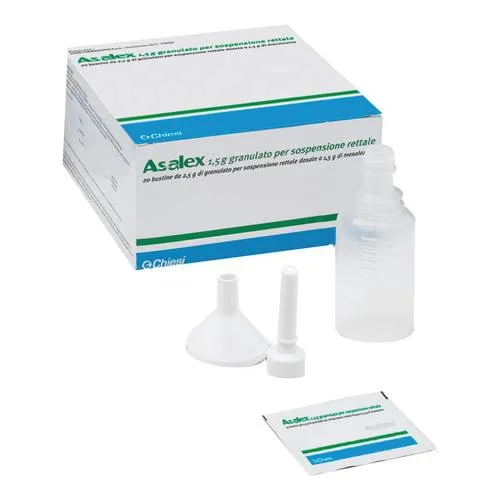
Table of Contents
- Package leaflet: Information for the patient
- ASALEX 400 mg modified-release gastro-resistant tablets, 800 mg modified-release gastro-resistant tablets
- 1. What Asalex is and what it is used for
- 2. What you should know before taking Asalex
- 3. How to take Asalex
- 4. Possible adverse effects
- 5. How to store Asalex
- 6. Package contents and other information
- Patient information leaflet
- ASALEX 2 g rectal suspension, 4 g rectal suspension
- 1. What Asalex is and what it is used for
- 2. What you should know before using Asalex
- 3. How to use Asalex
- 4. Possible adverse effects
- 5. How to store Asalex
- 6. Package contents and other information
- Package leaflet: Information for the patient
- ASALEX 1.5 g rectal granules for suspension
- 1. What Asalex is and what it is used for
- 2. What you should know before using Asalex
- 3. How to use Asalex
- 4. Possible side effects
- 5. How to store Asalex
- 6. Package contents and other information
Package leaflet: Information for the patient
ASALEX 400 mg modified-release gastro-resistant tablets, 800 mg modified-release gastro-resistant tablets
Mesalazine
Please read this leaflet carefully before taking this medicine because it contains
important information for you.
- Keep this leaflet. You may need to read it again.
- If you have any questions, ask your doctor or pharmacist.
- This medicine has been prescribed for you only. Do not give it to other people, even if they have the same symptoms as you, because it could be harmful.
- If you experience any side effects, including those not listed in this leaflet, contact your doctor or pharmacist. See section 4.
Contents of this leaflet:
- What Asalex is and what it is used for
- What you need to know before taking Asalex
- How to take Asalex
- Possible side effects
- How to store Asalex
- Contents of the pack and other information
1. What Asalex is and what it is used for
Asalex is a medicine containing mesalazine as its active ingredient, which belongs to the class of
Non-Steroidal Anti-Inflammatory Drugs (NSAIDs).
Asalex is indicated in adults and children over six years of age for the treatment of
inflammation of the intestine (ulcerative colitis, inflammatory bowel disease unclassified (IBDU), Crohn's disease) and for the prevention of relapses.
In more severe cases, your doctor may advise you to take corticosteroids together with mesalazine.
2. What you should know before taking Asalex
Do not take Asalex if:
- you are allergic to mesalazine, to any medicine belonging to the class of non-steroidal anti-inflammatory drugs (NSAIDs), or to any of the other ingredients of this medicine (listed in section 6);
- you have severe kidney disease (severe impairment of renal function, severe nephropathies) or liver disease (severe impairment of liver function);
- you have active ulcers in the stomach or the first part of the intestine (peptic ulcer);
- the child is under six years of age.
Do not take Asalex during the last weeks of pregnancy.
Inform your doctor before using mesalazine:
- if you have ever developed a severe skin rash, skin peeling, blisters and/or mouth ulcers after taking mesalazine.
Warnings and precautions
Talk to your doctor or pharmacist before taking Asalex.
Before starting treatment, your doctor may want to perform blood tests, liver enzyme tests (ALT, AST, serum creatinine) and/or urine tests. Your doctor will decide how often these tests should be repeated.
Prolonged use of this product may cause allergic reactions (sensitization).
After stopping treatment with Asalex or during inadequate maintenance therapy, symptoms of the disease may recur.
In particular, consult your doctor if:
- you have kidney disorders. Your doctor will monitor you during treatment;
- you have liver disorders;
- you are taking one or more of the following medicines:
- medicines to lower blood sugar levels (oral hypoglycaemics);
- medicines to increase urine production (diuretics);
- medicines to prevent blood clotting (coumarins, e.g. warfarin);
- medicines to treat inflammation (corticosteroids);
- you have particularly slow digestion or a stomach and intestinal disorder characterized by narrowing of the pylorus, the valve between the stomach and intestine that allows food to pass into the intestine (pyloric stenosis);
- you have lung disorders (especially asthma);
- you have previously experienced adverse effects with products containing sulfasalazine (see section 4 Possible side effects);
- you develop severe or recurrent headache, vision disturbances, ringing or buzzing in the ears, contact your doctor immediately.
Following treatment with mesalazine, you may develop certain problems (e.g. appearance of bruises, unexplained bleeding, anaemia), fever and sore throat. In such cases, your doctor will perform blood tests and, if necessary, instruct you to stop treatment.
The use of mesalazine may cause kidney stone formation. Symptoms may include pain in the sides of the abdomen and blood in the urine. It is recommended to drink an adequate amount of fluids during treatment with mesalazine.
Mesalazine may cause a red-brown discoloration of urine after contact with sodium hypochlorite contained in bleach present in toilet water. This is due to a harmless chemical reaction between mesalazine and bleach.
Exercise particular caution with mesalazine:
Serious skin adverse reactions, including drug reaction with eosinophilia and systemic symptoms (DRESS), Stevens-Johnson syndrome (SJS), and toxic epidermal necrolysis (TEN), have been reported in association with mesalazine treatment. Discontinue use of mesalazine and contact your doctor immediately if you notice any of the symptoms related to these serious skin reactions described in section 4.
Children
Asalex is contraindicated in children under 2 years of age (see section "Do not use Asalex").
Other medicines and Asalex
Inform your doctor or pharmacist if you are taking, have recently taken, or might take any other medicines.
In particular, inform your doctor if you are taking:
- lactulose (a medicine used for constipation), as it may slow down the absorption of mesalazine;
- medicines to lower blood sugar levels (oral hypoglycaemics or sulfonylureas);
- medicines to increase urine production (diuretics such as furosemide);
- medicines to prevent blood clotting (coumarins, e.g. warfarin);
- medicines to treat inflammation (corticosteroids and non-steroidal anti-inflammatory drugs, NSAIDs). However, in cases of severe intestinal inflammation, your doctor may also prescribe oral corticosteroid treatment;
- medicines to treat blood cancers (leukemias), such as 6-mercaptopurine and thioguanine;
- medicines to treat immune system disorders (the body's defense system against diseases), such as azathioprine;
- medicines to treat cancer (methotrexate);
- medicines to treat high blood uric acid levels (probenecid);
- medicines to treat blood circulation disorders (sulfinpyrazone);
- medicines to treat infections (rifampicin);
- medicines to treat high blood pressure (spironolactone).
Pregnancy and breastfeeding
If you are pregnant, think you may be pregnant, planning a pregnancy, or breastfeeding, consult your doctor or pharmacist before taking this medicine.
Pregnancy
Do not take Asalex during the last weeks of pregnancy.
During the first trimester of pregnancy, take Asalex only if clearly needed and under direct medical supervision.
Breastfeeding
Mesalazine is present in breast milk. During breastfeeding, take Asalex only if clearly needed and under direct medical supervision. If the infant develops diarrhoea, discontinue breastfeeding.
Driving and using machines
Asalex does not affect the ability to drive or operate machinery.
Asalex contains sodium
This medicine contains less than 1 mmol (23 mg) of sodium per tablet, i.e. essentially "sodium-free".
3. How to take Asalex
Take this medicine exactly as instructed by your doctor or pharmacist. If you have any doubts, consult your doctor or pharmacist.
Adults
Asalex 400 mg modified-release gastro-resistant tablets
The usual dose is: 2 tablets three times a day.
In acute phases, the dose may be increased up to 10 tablets (4 g of mesalazine) per day, according to your doctor's advice.
Asalex 800 mg modified-release gastro-resistant tablets
The usual dose is 1 tablet three times a day.
In acute phases, the dose may be increased up to 5 tablets (4 g of mesalazine) per day, according to your doctor's advice.
When starting treatment for the first time, it is advisable to gradually increase the dose over the first few days to reach the full dose.
The duration of treatment is 4–6 weeks during active phases.
For maintenance periods, when symptoms are absent, your doctor will prescribe the frequency and dosage of Asalex to prevent relapses.
Swallow the tablets whole with a glass of water and take them away from meals.
Use in children and adolescents
In children above six years of age, the doctor will prescribe the appropriate dosage.
If you take more Asalex than you should
If you accidentally ingest or take an excessive dose of Asalex, contact your doctor immediately or go to the nearest hospital.
If you forget to take Asalex
Do not take a double dose to make up for the missed tablet.
If you stop taking Asalex
If you have any questions about the use of this medicine, consult your doctor or pharmacist.
4. Possible adverse effects
Like all medicines, this medicine can cause adverse effects, although not everyone experiences them.
Following the instructions contained in this leaflet reduces the risk of adverse effects.
Stop taking Asalex and consult your doctor immediately if during treatment you experience allergic reactions with symptoms such as cramps and abdominal pain, bloody diarrhoea, fever, severe headache, and skin rash.
Discontinue treatment with mesalazine and contact your doctor immediately if you notice any of the following symptoms:
- reddish, flat spots on the trunk, target-shaped or circular, often with central blisters, skin peeling, mouth, throat, nose, genital or eye ulcers, widespread skin rash, fever and swollen lymph nodes. These serious skin reactions may be preceded by fever and flu-like symptoms.
The possible adverse effects are listed below by frequency:
Common (may affect up to 1 in 10 people):
- nausea;
- diarrhoea;
- abdominal distension;
- skin lesions (rashes);
- headache (cephalalgia);
- high blood pressure (hypertension);
- weakness (asthenia);
- fever (pyrexia).
Uncommon (may affect up to 1 in 100 people):
- abdominal pain;
- itching (pruritus);
- drowsiness;
- tremors;
- increased heart rate (tachycardia);
- low blood pressure (hypotension);
- fatigue;
- facial swelling.
Rare (may affect up to 1 in 1,000 people):
- increased sensitivity of the skin to sunlight and ultraviolet light (photosensitivity);
- dizziness (vertigo);
- passage of gas from the intestine (flatulence);
- vomiting.
Very rare (may affect up to 1 in 10,000 people):
- decrease in the number of blood cells (leucopenia, neutropenia, thrombocytopenia, pancytopenia, agranulocytosis);
- decrease in haemoglobin levels due to failure of bone marrow to produce certain blood cells (aplastic anaemia);
- loss of hair and body hair (alopecia);
- kidney disease (impaired renal function, including acute and chronic interstitial nephritis, and renal failure);
- muscle and joint pain (myalgia and arthralgia);
- allergic reactions (allergic rash, drug fever, lupus erythematosus syndrome, pancolitis);
- reduced number of sperm produced (oligospermia). This adverse effect is reversible;
- inflammation of the membrane surrounding the heart (pericarditis);
- inflammation of the heart muscle (myocarditis);
- allergic and inflammatory reactions in the lungs (including breathing difficulty, cough, bronchospasm, alveolitis, pulmonary eosinophilia, lung infiltration, pneumonia);
- inflammation of the pancreas (pancreatitis, including acute pancreatitis);
- inflammation of the liver (hepatitis, cholestatic hepatitis);
- temporary abnormalities in liver function tests;
- gallstones (cholelithiasis);
- nerve disease causing sensory and motor disturbances, including in internal organs (peripheral neuropathy).
Frequency not known (frequency cannot be estimated from the available data):
- swelling of the face, lips and throat due to an allergic reaction (angioedema);
- kidney stones and associated kidney pain (see also section 2);
- severe or recurrent headache, visual disturbances, ringing or buzzing in the ears. These could be symptoms of increased pressure inside the skull (idiopathic intracranial hypertension).
Reporting of adverse effects
If you experience any adverse effect, including those not listed in this leaflet, talk to your doctor or pharmacist. You can also report adverse effects directly via the national reporting system at https://www.aifa.gov.it/content/segnalazioni-reazioni-avverse.
By reporting adverse effects, you can help provide more information on the safety of this medicine.
5. How to store Asalex
Keep this medicine out of the sight and reach of children.
Store below 30°C.
Do not use this medicine after the expiry date stated on the packaging after the word "Exp.".
The expiry date refers to the last day of that month. This date applies to the product in its original
intact packaging, properly stored.
Do not dispose of any medicine via wastewater or household waste. Ask your pharmacist how to
dispose of medicines no longer required. This will help protect the environment.
6. Package contents and other information
What Asalex contains
Asalex 400 mg modified-release gastro-resistant tablets
- The active substance is: mesalazine (400 mg per tablet)
- The other ingredients are: microcrystalline cellulose, sodium carboxymethyl starch, maize starch, povidone, mannitol, methacrylic acid - methyl methacrylate copolymer (1:2), hydrated colloidal silica, magnesium stearate, talc, triethyl citrate, titanium dioxide, red iron oxide (E172).
Asalex 800 mg modified-release gastro-resistant tablets
- The active substance is: mesalazine (800 mg per tablet)
- The other ingredients are: microcrystalline cellulose, sodium carboxymethyl starch, maize starch, povidone, mannitol, methacrylic acid - methyl methacrylate copolymer (1:2), magnesium stearate, talc, triethyl citrate, titanium dioxide, red iron oxide (E172).
Description of the appearance of Asalex and contents of the pack
Asalex is available in packs of 60 tablets containing 400 mg or 800 mg of mesalazine.
Marketing Authorisation Holder and Manufacturer
Marketing Authorisation Holder
CHIESI FARMACEUTICI S.p.A.
Via Palermo 26/A
Parma
Manufacturer
SOFAR S.p.A.,
Via Firenze 40
Trezzano Rosa (MI)
Patient information leaflet
ASALEX 2 g rectal suspension, 4 g rectal suspension
Mesalazine
Please read this leaflet carefully before using this medicine because it contains important information for you.
- Keep this leaflet. You may need to read it again.
- If you have any questions, consult your doctor or pharmacist.
- This medicine has been prescribed for you only. Do not give it to others, even if their symptoms are the same as yours, as it could be harmful.
- If you experience any adverse reaction, including those not listed in this leaflet, consult your doctor or pharmacist. See section 4.
Contents of this leaflet:
- What Asalex is and what it is used for
- What you need to know before using Asalex
- How to use Asalex
- Possible side effects
- How to store Asalex
- Contents of the pack and other information
1. What Asalex is and what it is used for
Asalex is a medicinal product containing mesalazine, an active substance belonging to the class of Non-Steroidal Anti-Inflammatory Drugs (NSAIDs).
Asalex is indicated in adults and children over two years of age for the treatment of intestinal inflammation (ulcerative colitis and acute and chronic idiopathic intestinal inflammations localized in the rectosigmoid region) and for the prevention of relapses.
In some more severe cases, your doctor may advise you to take cortisone together with mesalazine.
2. What you should know before using Asalex
Do not use Asalex if:
- you are allergic to mesalazine, to any medicine belonging to the class of non-steroidal anti-inflammatory drugs (NSAIDs), or to any of the other ingredients of this medicine (listed in section 6);
- you have severe kidney disease (severe impairment of renal function, severe nephropathies) or liver disease (severe impairment of hepatic function);
- the child is under two years of age;
- you have active peptic ulcer.
Do not use Asalex during the last weeks of pregnancy.
Inform your doctor before using mesalazine:
- if you have ever developed a severe skin rash, skin peeling, blisters and/or mouth ulcers after taking mesalazine.
Warnings and precautions
Talk to your doctor or pharmacist before using Asalex.
Before starting treatment, your doctor may want to carry out blood tests, tests to evaluate liver enzyme levels (ALT, AST, serum creatinine) and/or urine analysis. Your doctor will decide how often these tests should be repeated.
Prolonged use of this product may lead to allergic reactions (sensitization).
After stopping treatment with Asalex or during inadequate maintenance therapy, symptoms of the disease may reappear.
In particular, consult your doctor if:
- you have kidney problems. Your doctor will monitor you during treatment;
- you have liver problems;
- you are taking one or more of the following medicines:
- medicines to lower blood sugar levels (oral hypoglycaemics);
- medicines to increase urine production (diuretics);
- medicines to prevent blood clotting (coumarins, e.g. warfarin);
- medicines to treat inflammation (corticosteroids);
- you have lung disorders (especially asthma);
- you have previously experienced adverse effects with preparations containing sulfasalazine (see section 4 Possible side effects);
- you develop severe or recurrent headache, visual disturbances, ringing or buzzing in the ears, immediately contact your doctor.
Following treatment with mesalazine, you may develop certain problems (e.g. appearance of bruises, unexplained bleeding, anaemia), fever and sore throat. In such cases, your doctor will perform blood tests and, if necessary, instruct you to stop treatment.
The use of mesalazine may cause kidney stone formation. Symptoms may include pain in the sides of the abdomen and blood in the urine. It is recommended to drink sufficient fluids during treatment with mesalazine.
Mesalazine may cause a red-brown discoloration of urine after contact with sodium hypochlorite contained in bleach present in toilet water. This is due to a harmless chemical reaction between mesalazine and bleach.
Exercise particular caution with mesalazine:
Serious cutaneous adverse reactions, including drug reaction with eosinophilia and systemic symptoms (DRESS), Stevens-Johnson syndrome (SJS), and toxic epidermal necrolysis (TEN), have been reported in association with mesalazine treatment. Discontinue use of mesalazine and seek immediate medical advice if you observe any of the symptoms related to these serious skin reactions described in section 4.
Children
Asalex is contraindicated in children under 2 years of age (see section "Do not use Asalex").
Other medicines and Asalex
Inform your doctor or pharmacist if you are taking, have recently taken, or might take any other medicines.
In particular, inform your doctor if you are taking medicines:
- to lower blood sugar levels (oral hypoglycaemics or sulfonylureas);
- to increase urine production (diuretics such as furosemide);
- to prevent blood clotting (coumarins, e.g. warfarin);
- to treat inflammation (corticosteroids and non-steroidal anti-inflammatory drugs, NSAIDs). However, in cases of severe intestinal inflammation, your doctor may prescribe oral corticosteroid treatment as well;
- to treat blood cancers (leukemias), such as 6-mercaptopurine and thioguanine;
- to treat immune system disorders (the body's defence system against diseases) such as azathioprine;
- to treat cancers (methotrexate);
- to treat high blood uric acid levels (probenecid);
- to treat blood circulation disorders (sulfinpyrazone);
- to treat infections (rifampicin);
- to treat high blood pressure (spironolactone).
Pregnancy and breastfeeding
If you are pregnant, think you may be pregnant, planning to become pregnant, or are breastfeeding, consult your doctor or pharmacist before taking this medicine.
Pregnancy
Do not use Asalex during the last weeks of pregnancy.
During the first trimester of pregnancy, use Asalex only if clearly needed and under direct medical supervision.
Breastfeeding
Mesalazine is excreted in breast milk. During breastfeeding, use Asalex only if clearly needed and under direct medical supervision. If the infant develops diarrhoea, discontinue breastfeeding.
Driving and using machines
Asalex does not affect the ability to drive vehicles or operate machinery.
Asalex contains parahydroxybenzoates
Asalex contains parahydroxybenzoates: these may cause allergic reactions (including delayed-type reactions).
3. How to use Asalex
Use this medicine exactly as directed by your doctor or pharmacist. If you have
any doubts, consult your doctor or pharmacist.
Adults
Asalex 2 g rectal suspension
The recommended dose is: 1 enema (1 bottle) twice daily, in the morning and in the evening.
For maintenance periods and prevention of relapses, the recommended dose is: 1 enema
(1 bottle) daily in the evening before going to bed.
Asalex 4 g rectal suspension
The recommended dose is: 1 enema (1 bottle) daily in the evening before going to bed for 2–3 weeks.
For maintenance periods, the recommended dose is: 1 enema (1 bottle) every other day.
Use in children and adolescents
In children above two years of age, the doctor will prescribe the appropriate dosage.
Instructions for using the enema
Preparation of the enema:
- shake the bottle before use;
- remove the protective cap covering the nozzle;
Administration method: - the bowel must be free of feces before administering the enema;
- lie on your left side and bend your right leg;
- gently insert the nozzle into the rectum;
- gently squeeze the bottle until it is completely empty;
- remove the enema;
- remain lying down for at least 30 minutes to allow proper and extensive distribution of the medicine in the intestine;
- retain the liquid in the intestine for as long as possible (at least 8 hours). After administration, discard the nozzle and bottle.
If you use more Asalex than you should
In case of accidental overdose beyond what has been prescribed by your doctor, contact your doctor immediately or go to the nearest hospital.
If you forget to use Asalex
Do not use a double dose to make up for the missed dose.
If you stop using Asalex
If you have any questions about the use of this medicine, consult your doctor or pharmacist.
4. Possible adverse effects
Like all medicines, this medicine may cause adverse effects, although not everyone experiences them.
Following the instructions contained in this leaflet reduces the risk of adverse effects.
Stop taking Asalex and consult your doctor immediately if during treatment you experience allergic reactions with symptoms such as cramps and abdominal pain, bloody diarrhoea, fever, severe headache, and skin rash.
Stop treatment with mesalazine and contact your doctor immediately if you notice any of the following symptoms:
- red, non-elevated patches on the trunk, target-shaped or circular, often with central blisters, skin peeling, mouth, throat, nose, genital, and eye ulcers, widespread rash, fever, and swollen lymph nodes. These severe skin rashes may be preceded by fever and flu-like symptoms.
The possible adverse effects are listed below according to frequency:
Common (may affect up to 1 in 10 people):
- nausea;
- diarrhoea;
- abdominal distension;
- skin lesions (rashes);
- headache (cephalalgia);
- high blood pressure (hypertension);
- weakness (asthenia);
- fever (pyrexia).
Uncommon (may affect up to 1 in 100 people):
- abdominal pain;
- itching (pruritus);
- drowsiness;
- tremors;
- increased heart rate (tachycardia);
- low blood pressure (hypotension);
- fatigue;
- facial swelling.
Rare (may affect up to 1 in 1,000 people):
- increased sensitivity of the skin to sunlight and ultraviolet light (photosensitivity);
- dizziness (vertigo);
- passage of gas from the intestine (flatulence);
- vomiting.
Very rare (may affect up to 1 in 10,000 people):
- decrease in blood cell counts (leucopenia, neutropenia, thrombocytopenia, pancytopenia, agranulocytosis);
- decrease in haemoglobin levels due to failure of bone marrow to produce certain blood cells (aplastic anaemia);
- loss of hair and body hair (alopecia);
- kidney disease (impaired kidney function, including acute and chronic interstitial nephritis, and renal failure);
- muscle and joint pain (myalgia and arthralgia);
- allergic reactions (allergic rash, drug fever, lupus erythematosus syndrome, pancolitis);
- reduced sperm count (oligospermia). This adverse effect is reversible;
- inflammation of the membrane surrounding the heart (pericarditis);
- inflammation of the heart muscle (myocarditis);
- allergic and inflammatory reactions in the lungs (including breathing difficulties, cough, bronchospasm, alveolitis, pulmonary eosinophilia, lung infiltration, pneumonia);
- inflammation of the pancreas (pancreatitis, including acute pancreatitis);
- inflammation of the liver (hepatitis, cholestatic hepatitis);
- temporary abnormalities in liver function tests;
- gallstones (cholelithiasis);
- nerve disease causing sensory and motor disturbances, including of internal organs (peripheral neuropathy).
Not known (frequency cannot be estimated from the available data):
- swelling of the face, lips, and throat due to an allergic reaction (angioedema);
- kidney stones and associated kidney pain (see also section 2);
- severe or recurrent headache, visual disturbances, ringing or buzzing in the ears. These could be symptoms of increased pressure inside the skull (idiopathic intracranial hypertension).
Reporting of adverse effects
If you experience any adverse effect, including those not listed in this leaflet, talk to your doctor or pharmacist.
You can also report adverse effects directly via the national reporting system at the following website:
https://www.aifa.gov.it/content/segnalazioni-reazioni-avverse
By reporting adverse effects, you can help provide more information on the safety of this medicine.
5. How to store Asalex
Keep this medicine out of the sight and reach of children.
Store below 30°C.
Do not use this medicine after the expiry date stated on the packaging after the word "Exp".
The expiry date refers to the last day of that month. This date applies to the product in
its original, unopened packaging, correctly stored.
Do not dispose of any medicine via wastewater or household waste. Ask your pharmacist how to
dispose of medicines you no longer use. This will help protect the environment.
6. Package contents and other information
What Asalex contains
Asalex 2 g rectal suspension
- The active substance is: mesalazine (2 g per 60 ml bottle).
- The other components are: xanthan gum, citric acid, sodium citrate, sodium sulfite, methyl p-hydroxybenzoate, propyl p-hydroxybenzoate (see section “Asalex contains sodium sulfite and parahydroxybenzoates”), purified water.
Asalex 4 g rectal suspension
- The active substance is: mesalazine (4 g per 60 ml bottle).
- The other components are: xanthan gum, citric acid, sodium citrate, sodium sulfite, methyl p-hydroxybenzoate, propyl p-hydroxybenzoate (see section “Asalex contains sodium sulfite and parahydroxybenzoates”), purified water.
Description of the appearance of Asalex and contents of the pack
Asalex is available in packs of 7 plastic bottles of 60 ml rectal suspension containing 2 g or 4 g of mesalazine.
Marketing Authorisation Holder and Manufacturer
Marketing Authorisation Holder
CHIESI FARMACEUTICI S.p.A.
Via Palermo 26/A
Parma
Manufacturer
SOFAR S.p.A.,
Via Firenze 40
Trezzano Rosa (MI)
Package leaflet: Information for the patient
ASALEX 1.5 g rectal granules for suspension
Mesalazine
Please read this leaflet carefully before using this medicine because it contains important information for you.
- Keep this leaflet. You may need to read it again.
- If you have any questions, consult your doctor or pharmacist.
- This medicine has been prescribed for you only. Do not give it to other people, even if their symptoms are the same as yours, as it may be harmful.
- If you experience any adverse reactions, including those not listed in this leaflet, consult your doctor or pharmacist. See section 4.
Contents of this leaflet:
- What Asalex is and what it is used for
- What you need to know before using Asalex
- How to use Asalex
- Possible side effects
- How to store Asalex
- Contents of the pack and other information
1. What Asalex is and what it is used for
Asalex is a medicine containing mesalazine as its active substance, which belongs to the class of
Non-Steroidal Anti-Inflammatory Drugs (NSAIDs).
Asalex is indicated in adults and children over two years of age for the treatment of
intestinal inflammations (ulcerative colitis and acute and chronic idiopathic intestinal inflammations localized in the rectosigmoid region) and for the prevention of relapses.
In some more severe cases, your doctor may advise you to take cortisone together with mesalazine.
2. What you should know before using Asalex
Do not use Asalex if:
- you are allergic to mesalazine, to any medicine belonging to the class of non-steroidal anti-inflammatory drugs (NSAIDs), or to any of the other ingredients of this medicine (listed in section 6);
- you have severe kidney disease (severe impairment of renal function, severe nephropathies) or liver disease (severe impairment of liver function);
- the child is under two years of age;
- active peptic ulcer.
Do not use Asalex during the last weeks of pregnancy.
Inform your doctor before using mesalazine:
- if you have ever developed a severe skin rash, skin peeling, blisters and/or mouth ulcers after taking mesalazine.
Warnings and precautions
Talk to your doctor or pharmacist before using Asalex.
Before starting treatment, your doctor may want to carry out blood tests, tests to evaluate liver enzyme levels (ALT, AST, serum creatinine) and/or urine tests. Your doctor will decide how often these tests should be repeated.
Prolonged use of this product may lead to allergic reactions (sensitization).
After stopping treatment with Asalex or during inadequate maintenance therapy, symptoms of the disease may reappear.
In particular, consult your doctor if:
- you have kidney problems. Your doctor will monitor you during treatment;
- you have liver problems;
- you are taking one or more of the following medicines:
- medicines to lower blood sugar levels (oral hypoglycaemics);
- medicines to increase urine production (diuretics);
- medicines to prevent blood clotting (coumarins, e.g. warfarin);
- medicines for treating inflammation (corticosteroids);
- you have lung disorders (especially asthma);
- you have previously experienced adverse effects with preparations containing sulfasalazine (see section 4 Possible side effects);
- you develop severe or recurrent headache, visual disturbances, ringing or buzzing in the ears, contact your doctor immediately.
Following treatment with mesalazine, you may develop certain problems (e.g. appearance of bruises, unexplained bleeding, anaemia), fever and sore throat. In such cases, your doctor will perform blood tests and will advise whether treatment should be discontinued.
The use of mesalazine may cause kidney stone formation. Symptoms may include pain in the sides of the abdomen and blood in the urine. It is recommended to drink sufficient fluids during treatment with mesalazine.
Mesalazine may cause a red-brown discoloration of urine after contact with sodium hypochlorite contained in bleach present in toilet water. This is due to a harmless chemical reaction occurring between mesalazine and bleach.
Exercise particular caution with mesalazine:
Serious skin adverse reactions have been reported in association with mesalazine treatment, including drug reaction with eosinophilia and systemic symptoms (DRESS), Stevens-Johnson syndrome (SJS) and toxic epidermal necrolysis (TEN). Stop using mesalazine and contact your doctor immediately if you notice any of the symptoms related to these serious skin reactions described in section 4.
Children
Asalex is contraindicated in children under 2 years of age (see section "Do not use Asalex").
Other medicines and Asalex
Inform your doctor or pharmacist if you are taking, have recently taken, or might take any other medicines.
In particular, inform your doctor if you are taking the following medicines:
- medicines to lower blood sugar levels (oral hypoglycaemics or sulfonylureas);
- medicines to increase urine production (diuretics such as furosemide);
- medicines to prevent blood clotting (coumarins, e.g. warfarin);
- medicines for treating inflammation (corticosteroids and non-steroidal anti-inflammatory drugs, NSAIDs). However, in cases of severe intestinal inflammation, your doctor may also prescribe oral corticosteroid treatment;
- medicines for treating blood cancers (leukemias), such as 6-mercaptopurine and thioguanine;
- medicines for treating immune system disorders (the body's defence system against diseases), such as azathioprine;
- medicines for treating tumours (methotrexate);
- medicines for treating high blood uric acid levels (probenecid);
- medicines for treating blood circulation disorders (sulfinpyrazone);
- medicines for treating infections (rifampicin);
- medicines for treating high blood pressure (spironolactone).
Pregnancy and breastfeeding
If you are pregnant, think you might be pregnant, planning to become pregnant, or are breastfeeding, ask your doctor or pharmacist for advice before taking this medicine.
Pregnancy
Do not use Asalex during the last weeks of pregnancy.
During the first trimester of pregnancy, use Asalex only if clearly needed and under direct medical supervision.
Breastfeeding
Mesalazine is excreted in breast milk. During breastfeeding, use Asalex only if clearly needed and under direct medical supervision. If the infant develops diarrhoea, discontinue breastfeeding.
Driving and using machines
Asalex does not impair the ability to drive or operate machinery.
3. How to use Asalex
Use this medicine exactly as directed by your doctor or pharmacist. If you have
any doubts, consult your doctor or pharmacist.
Adults
The usual dose during the active phase is: one enema containing 1.5 g (one sachet) of mesalazine twice
daily, morning and evening, or one enema containing 3 g (two sachets) of mesalazine daily, administered in the evening before bedtime, unless otherwise prescribed by your doctor.
The duration of treatment is 4–6 weeks during the active phase.
For maintenance periods, when symptoms are absent, your doctor will determine the frequency and dosage of Asalex to prevent relapses.
Use in children and adolescents
In children over two years of age, the doctor will prescribe the appropriate dosage.
Instructions for using the enema
Asalex enemas are prepared extemporaneously by using one or two sachets dissolved in 50 to 100 ml of water, depending on the patient's ability to retain the liquid in the intestine.
Preparation of the enema:
- introduce the prescribed dose of medicine (one or two sachets) into the graduated bottle provided in the Asalex package (see fig.1);
- add lukewarm or cold tap water up to the desired volume (see fig.2);
- screw the rectal cannula onto the bottle (see fig.3);
- shake for about one minute to obtain a homogeneous suspension (see fig.4);
- the enema is now ready for administration.
Administration method:
- the intestine must be free of feces before administering the en游戏副本
4. Possible side effects
Like all medicines, this medicine can cause side effects, although not everybody gets them.
Following the instructions contained in this leaflet reduces the risk of side effects.
Stop using Asalex and consult your doctor immediately if, during treatment, you experience
allergic reactions with symptoms such as cramps and abdominal pain, diarrhoea with blood, fever,
severe headache, and skin rash.
Discontinue treatment with mesalazine and contact your doctor immediately if you notice any
of the following symptoms:
- reddish, flat spots on the trunk, target-shaped or circular, often with central blisters, skin peeling, mouth ulcers, ulcers in the throat, nose, genitals, and eyes, widespread skin rash, fever, and swollen lymph nodes. These severe skin rashes may be preceded by fever and flu-like symptoms.
The possible side effects are listed below according to frequency:
Common (may affect up to 1 in 10 people):
- nausea;
- diarrhoea;
- abdominal distension;
- skin lesions (rashes);
- headache (cephalalgia);
- high blood pressure (hypertension);
- weakness (asthenia);
- fever (pyrexia).
Uncommon (may affect up to 1 in 100 people):
- abdominal pain;
- itching;
- drowsiness;
- tremors;
- increased heart rate (tachycardia);
- low blood pressure (hypotension);
- fatigue;
- facial swelling.
Rare (may affect up to 1 in 1,000 people):
- dizziness (vertigo);
- increased sensitivity of the skin to sunlight and ultraviolet light (photosensitivity);
- passing wind (flatulence);
- vomiting.
Very rare (may affect up to 1 in 10,000 people):
- decrease in the number of blood cells (leucopenia, neutropenia, thrombocytopenia, pancytopenia, agranulocytosis);
- decrease in haemoglobin levels due to failure of bone marrow to produce certain blood cells (aplastic anaemia);
- loss of hair and body hair (alopecia);
- kidney disease (impaired kidney function including acute and chronic interstitial nephritis, and renal failure);
- muscle and joint pain (myalgia and arthralgia);
- allergic reactions (allergic rash, drug fever, lupus erythematosus syndrome, pancolitis);
- decreased number of sperm produced (oligospermia). This side effect is reversible;
- inflammation of the membrane surrounding the heart (pericarditis);
- inflammation of the heart muscle (myocarditis);
- allergic and inflammatory reactions in the lungs (including breathing difficulty, cough, bronchospasm, alveolitis, pulmonary eosinophilia, lung infiltration, pneumonia);
- inflammation of the pancreas (pancreatitis, including acute);
- inflammation of the liver (hepatitis, cholestatic hepatitis);
- temporary abnormalities in liver function tests;
- gallstones (cholelithiasis);
- nerve disease causing sensory and motor disturbances, including of internal organs (peripheral neuropathy).
Not known (frequency cannot be estimated from the available data):
- swelling of the face, lips, and throat due to an allergic reaction (angioedema);
- kidney stones and associated kidney pain (see also section 2);
- severe or recurrent headache, visual disturbances, ringing or buzzing in the ears. These could be symptoms of increased pressure inside the skull (idiopathic intracranial hypertension).
Reporting of side effects
If you experience any side effects, including those not listed in this leaflet, talk to your doctor or
pharmacist. You can also report side effects directly via the national reporting system at the website
https://www.aifa.gov.it/content/segnalazioni-reazioni-avverse.
By reporting side effects, you can help provide more information on the safety of this medicine.
5. How to store Asalex
Keep this medicine out of the sight and reach of children.
Store below 30°C.
Do not use this medicine after the expiry date stated on the packaging after the word "Exp."
The expiry date refers to the last day of that month. This date applies to the product in
its original, unopened packaging, correctly stored.
Do not dispose of any medicine via wastewater or household waste. Ask your pharmacist how
to dispose of medicines you no longer use. This will help protect the environment.
6. Package contents and other information
What Asalex contains
- The active substance is: mesalazine (1.50 g per sachet).
- The other components are: microcrystalline cellulose, povidone, simethicone.
Description of the appearance of Asalex and contents of the pack
Asalex is available in packs of 20 sachets of granules for rectal suspension, containing accessories for preparation and administration: 20 single-use rectal cannulas, one graduated bottle, and one funnel.
Marketing Authorization Holder and Manufacturer
Marketing Authorization Holder
CHIESI FARMACEUTICI S.p.A.
Via Palermo 26/A
Parma
Manufacturer
SOFAR S.p.A.,
Via Firenze 40
Trezzano Rosa (MI)