Arfen
Italy
Table of Contents
- PACKAGE LEAFLET: information for the patient
- ARFEN 400 mg/3 ml injectable solution for intramuscular use
- 1. What ARFEN is and what it is used for
- 2. What you need to know before taking ARFEN
- 3. How to take ARFEN
- 4. Possible side effects
- 5. How to store ARFEN
- 6. Package contents and other information
- PATIENT INFORMATION LEAFLET: information for the patient
- ARFEN 10 mg/ml Vaginal Solution
- 1. What ARFEN is and what it is used for
- 2. What you need to know before using ARFEN
- 3. How to use ARFEN
- 4. Possible side effects
- Patient information leaflet, contact your doctor or pharmacist.
- 5. How to store ARFEN
- 6. Package contents and other information
PACKAGE LEAFLET: information for the patient
ARFEN 400 mg/3 ml injectable solution for intramuscular use
Ibuprofen Lysinate
Please read this leaflet carefully before using this medicine because it contains
important information for you.
- Keep this leaflet. You may need to read it again.
- If you have any questions, ask your doctor or pharmacist.
- This medicine has been prescribed for you only. Do not give it to others, even if their symptoms are the same as yours, as it could be harmful.
- If you experience any side effect, including those not listed in this leaflet, contact your doctor or pharmacist. See section 4.
Contents of this leaflet:
- What ARFEN is and what it is used for
- What you need to know before using ARFEN
- How to use ARFEN
- Possible side effects
- How to store ARFEN
- Contents of the pack and other information
1. What ARFEN is and what it is used for
ARFEN contains a substance called ibuprofen lysinate, which belongs to a group of medicines known as non-steroidal anti-inflammatory drugs (NSAIDs).
This medicine works by reducing inflammation and relieving pain, swelling, and stiffness of the joints and muscles.
ARFEN is used in the treatment of acute pain in patients with inflammatory diseases of the joints and muscles.
2. What you need to know before taking ARFEN
Do not take ARFEN
- if you are allergic to ibuprofen or to any of the other ingredients of this medicine (listed in section 6);
- if you have had angioedema (a serious allergic reaction causing swelling of the hands, feet or ankles, face and lips);
- if you currently have or have previously had a stomach or intestinal ulcer or bleeding;
- if you have severe liver or kidney failure;
- if you have experienced stomach or intestinal bleeding after taking ibuprofen, acetylsalicylic acid (aspirin), or other non-steroidal anti-inflammatory drugs (NSAIDs);
- if you have a condition that increases your tendency to bleed (haemorrhagic diathesis);
- if you have severe heart failure;
- if you are taking diuretics (i.e. medicines that help increase urine production) or medicines that prevent blood clotting;
- if you are pregnant or breastfeeding;
- if you are under 14 years of age.
Warnings and precautions
Talk to your doctor or pharmacist before taking ARFEN.
This medicine must be taken under strict medical supervision.
Signs of an allergic reaction to this medicine have been reported with ibuprofen,
including breathing difficulties, swelling of the face and neck area (angioedema), and chest
pain. Stop ARFEN immediately and contact your doctor or emergency medical services
immediately if you notice any of these signs.
Serious skin reactions have been reported during treatment with ibuprofen, including
exfoliative dermatitis, erythema multiforme, Stevens-Johnson syndrome, toxic epidermal
necrolysis, drug reaction with eosinophilia and systemic symptoms (DRESS), and acute
generalized exanthematous pustulosis (AGEP). Stop using ARFEN and contact your doctor
immediately if you notice any symptoms related to these serious skin reactions described in
section 4.
Talk to your pharmacist or nurse if you have an infection – see the section "Infections" below.
Anti-inflammatory/pain-relieving medicines such as ibuprofen may be associated with a
slight increase in the risk of heart attack or stroke, particularly when taken at high doses.
Infections
ARFEN may mask symptoms of infections such as fever and pain. Therefore, ARFEN may delay
appropriate treatment of the infection, which could increase the risk of complications. This has
been observed in bacterial pneumonia and bacterial skin infections associated with chickenpox.
If you take this medicine while having an infection and infection symptoms persist or worsen,
seek immediate medical advice.
Do not exceed the recommended dose or duration of treatment.
You must discuss treatment with your doctor or pharmacist before taking ARFEN if:
- you have heart problems, including heart attack, angina (chest pain), or a history of heart attack, coronary bypass surgery, peripheral arterial disease (poor circulation in legs or feet due to narrowed or blocked arteries), or any type of stroke (including 'mini-stroke' or TIA, transient ischaemic attack);
- you have high blood pressure, diabetes, high cholesterol, a family history of heart disease or stroke, or if you smoke;
- you suffer from asthma. This medicine may cause bronchospasm (symptoms include shortness of breath and difficulty breathing), shock, and other allergic reactions;
- you previously experienced bronchospasm during treatment with aspirin or other NSAIDs;
- you have liver or kidney problems;
- you have bleeding or blood clotting disorders;
- you have previously had episodes of stomach or intestinal toxicity;
- you have inflammatory bowel disease (such as ulcerative colitis or Crohn's disease);
- you are elderly. Elderly individuals are more prone to adverse effects associated with ARFEN.
Other medicines and ARFEN
Tell your doctor or pharmacist if you are taking, have recently taken, or might take any other
medicines.
ARFEN may affect or be affected by other medicines. For example:
- medicines with anticoagulant effects (i.e. substances that thin the blood and prevent clotting, e.g. aspirin/acetylsalicylic acid, warfarin, ticlopidine);
- other painkillers (such as aspirin or other NSAIDs). Combination with these medicines may, although very rarely, lead to serious skin reactions, some of which may be fatal (such as exfoliative dermatitis, Stevens-Johnson syndrome, and toxic epidermal necrolysis). In addition, they may increase the risk of stomach or intestinal ulceration or bleeding;
- corticosteroids (hormones used to treat inflammation and allergies), which may increase the risk of stomach or intestinal ulceration or bleeding;
- antiplatelet medicines (which prevent blood clots) or medicines known as selective serotonin reuptake inhibitors (SSRIs), used to treat depression. These medicines may increase the risk of stomach and intestinal bleeding;
- medicines that lower blood pressure (ACE inhibitors such as captopril, beta-blockers such as atenolol, angiotensin II receptor antagonists such as losartan).
Other medicines may also affect or be affected by treatment with ARFEN. Therefore, always consult your doctor or pharmacist before using ARFEN with other medicines.
Pregnancy and breastfeeding
If you are pregnant, think you may be pregnant, are planning to become pregnant, or are breastfeeding, consult your doctor or pharmacist before taking this medicine.
Do not take ARFEN during pregnancy, as it may harm the fetus or cause problems during childbirth. It may cause kidney and heart problems in the fetus. It may affect your or your baby's tendency to bleed and may delay or prolong labour beyond normal duration.
From week 20 of pregnancy, ARFEN may cause kidney problems in the fetus if taken for more than a few days, thereby reducing the levels of amniotic fluid surrounding the baby (oligohydramnios) or causing narrowing of a blood vessel (ductus arteriosus) in the baby's heart.
This medicine must not be used during pregnancy or while breastfeeding.
Driving and using machines
There are no data available to assess the effect of this medicine on the ability to drive or operate machinery.
ARFEN contains Sodium Metabisulphite
This medicine contains Sodium Metabisulphite: it may rarely cause severe hypersensitivity reactions and bronchospasm.
This medicine contains less than 1 mmol (23 mg) of sodium per dose, i.e. essentially “sodium-free”.
3. How to take ARFEN
Take this medicine exactly as instructed by your doctor. If you have any doubts,
consult your doctor or pharmacist.
The recommended dose is 1–2 vials of 400 mg per day, according to your doctor's instructions.
ARFEN is administered by intramuscular injection.
Do not exceed the maximum daily dose of 2,500 mg.
Your doctor may decide to adjust the dosage depending on the severity of your symptoms, at the beginning
of treatment, or based on your response to therapy.
The lowest effective dose for the shortest necessary duration should be used to relieve symptoms. If you have an infection, contact your doctor immediately if symptoms (such as fever and pain) persist or worsen (see section 2).
In elderly patients, your doctor may prescribe a lower dose than that for adults.
If you take more ARFEN than you should
If you take an excessive dose (overdose) of ibuprofen, you may commonly experience the following symptoms: nausea, vomiting, stomach pain, deep sleep with reduced responsiveness to normal stimuli (lethargy), drowsiness, headache, ringing in the ears (tinnitus), dizziness, uncontrolled body movements (convulsions), and loss of consciousness.
Symptoms of overdose may appear within 4–6 hours after taking ibuprofen.
Rarely, you may experience uncontrolled eye movements (nystagmus), lowered body temperature (hypothermia), kidney-related effects, gastrointestinal bleeding, profound loss of consciousness, temporary interruption of breathing (apnea), diarrhoea, reduced activity of the nervous system (central nervous system depression), and reduced respiratory activity (respiratory depression).
Additionally, disorientation, excited state, fainting, low blood pressure, slowed or increased heart rate (bradycardia or tachycardia) may occur.
You may also develop an increase in acid levels in the blood (metabolic acidosis). In such cases, symptoms may include nausea, stomach pain, vomiting (possibly with traces of blood), headache, ringing in the ears, confusion, and uncontrolled eye movements. At high doses, drowsiness, chest pain, palpitations, loss of consciousness, convulsions (especially in children), weakness, dizziness, blood in the urine, low blood potassium levels, feeling cold, and breathing difficulties have been reported.
If you take significantly high doses of ibuprofen, severe kidney and liver damage may occur.
If you have taken more ARFEN than prescribed, or if your child has accidentally taken this medicine, contact a doctor or the nearest hospital immediately for advice on the risks and necessary actions.
If you have any doubts about the use of ARFEN, consult your doctor or pharmacist.
If you forget to take ARFEN
Do not take a double dose to make up for a missed dose.
If you have any doubts about using this medicine, consult your doctor or pharmacist.
4. Possible side effects
Like all medicines, this medicine can cause side effects, although not everybody gets them.
Stop using ibuprofen and contact your doctor immediately if you experience any of the
following symptoms:
- chest pain, which may be a sign of a potentially serious allergic reaction called Kounis syndrome;
- if you experience any unusual stomach or intestinal symptoms (such as vomiting blood, vomiting that looks like coffee grounds, black and sticky stools, or diarrhoea with blood);
- if you develop symptoms such as skin rash, mucosal lesions (e.g. in the mouth), or other signs of an allergic reaction;
- flat, red, target-shaped or circular spots on the trunk, often with central blisters, skin peeling, mouth, throat, nose, genital or eye ulcers. These severe skin reactions may be preceded by fever and flu-like symptoms [exfoliative dermatitis, erythema multiforme, Stevens-Johnson syndrome, toxic epidermal necrolysis];
- widespread rash, high body temperature, swollen lymph nodes and increased eosinophils (a type of white blood cells) (DRESS syndrome);
- widespread, red, scaly rash with bumps under the skin and blisters, accompanied by fever. Symptoms usually occur at the beginning of treatment (acute generalized exanthematous pustulosis).
The most common side effects are:
- indigestion,
- upper abdominal pain,
- heartburn,
- flatulence,
- skin rash.
Other side effects:
- feeling unwell (nausea, vomiting),
- hard, dry stools (constipation),
- frequent need to empty the bowels, with loose or watery stools (diarrhoea),
- bleeding in the stomach (with blood in vomit or vomit that looks like coffee grounds) or in the intestine (with black, sticky stools or bloody diarrhoea), sometimes fatal,
- formation of ulcers or perforations in the stomach or intestine,
- inflammation and ulcers in the mouth (ulcerative stomatitis),
- inflammation of the stomach (gastritis),
- worsening of intestinal inflammation (colitis and Crohn's disease),
- blood disorders such as anaemia, reduced platelet count (thrombocytopenia), or changes in white blood cell count (leucopenia, neutropenia, agranulocytosis),
- nervous system disorders (depression, disorientation),
- swelling (oedema),
- blistering skin conditions such as Stevens-Johnson syndrome and toxic epidermal necrolysis,
- high blood pressure (hypertension),
- heart failure,
- heart attack (myocardial infarction),
- stroke,
- skin becomes sensitive to light – frequency not known.
If side effects become severe, or if you experience any side effect not listed in this leaflet,
contact your doctor or pharmacist.
Reporting of side effects
If you get any side effects, including those not listed in this leaflet, talk to your doctor or pharmacist.
You can also report side effects directly via the national reporting system at:
https://www.aifa.gov.it/content/segnalazioni-reazioni-avverse.
Reporting side effects can help provide more information on the safety of this medicine.
5. How to store ARFEN
Keep this medicine out of the sight and reach of children.
This medicine does not require any special storage conditions.
Do not use this medicine after the expiry date stated on the packaging after "Exp.".
The expiry date refers to the last day of that month.
Do not dispose of medicines via wastewater or household waste. Ask your pharmacist
how to dispose of medicines you no longer use. This will help protect the environment.
6. Package contents and other information
What ARFEN contains
- The active substance is ibuprofen lysine. One vial (3 ml) contains 400 mg of ibuprofen lysine.
- The other components of the medicinal product are sodium metabisulfite and water for injection.
Description of the appearance of ARFEN and package contents
Arfen 400 mg/3 ml solution for intramuscular injection is supplied in a box containing 6 vials.
Marketing Authorization Holder
Laboratorio Italiano Biochimico Farmaceutico LISAPHARMA S.p.A.
Via Licinio, 11
22036 ERBA (CO) – Italy
Manufacturer and final controller
Laboratorio Italiano Biochimico Farmaceutico LISAPHARMA S.p.A.
Via Licinio, 11
22036 ERBA (CO) – Italy
PATIENT INFORMATION LEAFLET: information for the patient
ARFEN 10 mg/ml Vaginal Solution
Ibuprofen Lysine
Please read this leaflet carefully before using this medicine because it contains
important information for you.
- Keep this leaflet. You may need to read it again.
- If you have any questions, consult your doctor or pharmacist.
- This medicine has been prescribed for you only. Do not give it to others, even if their symptoms are the same as yours, as it could be harmful.
- If you experience any side effects, including those not listed in this leaflet, contact your doctor or pharmacist. See section 4.
Contents of this leaflet:
- What ARFEN is and what it is used for
- What you need to know before using ARFEN
- How to use ARFEN
- Possible side effects
- How to store ARFEN
- Contents of the pack and other information
1. What ARFEN is and what it is used for
ARFEN contains an active substance called ibuprofen, which belongs to a group of medicines known as non-steroidal anti-inflammatory drugs (NSAIDs).
ARFEN is used in the treatment of inflammatory diseases of the female genital system (vaginitis, vulvitis and cervicovaginitis) and in the prevention of inflammation during gynaecological surgery, both before and after surgical procedures.
It works by reducing inflammation and relieving pain.
2. What you need to know before using ARFEN
Do not use ARFEN
- If you are allergic to ibuprofen or to any of the other ingredients of this medicine (listed in section 6);
- if you have a stomach or intestinal ulcer or bleeding, or if you have previously experienced repeated episodes of stomach or intestinal ulcer or bleeding;
- if you have had stomach or intestinal bleeding after taking ibuprofen, acetylsalicylic acid (e.g. aspirin), or other similar non-steroidal anti-inflammatory drugs (NSAIDs);
- if you have severe heart failure;
- if you are in the last 3 months of pregnancy.
Warnings and precautions
Talk to your doctor or pharmacist before using ARFEN.
Solution for external use only.
Take special care if
- you are already taking other non-steroidal anti-inflammatory drugs (NSAIDs);
- you are taking medicines that prevent blood clotting (such as warfarin);
- you have high blood pressure (hypertension) or heart problems;
- you have bleeding or blood clotting disorders, or inflammatory bowel disease (such as ulcerative colitis or Crohn's disease);
- you are pregnant or breastfeeding;
- you are elderly. Elderly people are more likely to experience adverse effects associated with ARFEN.
Serious skin reactions have been reported during treatment with ibuprofen, including
exfoliative dermatitis, erythema multiforme, Stevens-Johnson syndrome, toxic epidermal
necrolysis, drug reaction with eosinophilia and systemic symptoms (DRESS), and
acute generalized exanthematous pustulosis (AGEP). Stop using ARFEN and contact
your doctor immediately if you notice any of the symptoms related to these serious skin
reactions described in section 4.
Other medicines and ARFEN
Tell your doctor or pharmacist if you are taking, have recently taken, or might take any
other medicines.
No negative interactions are known with other medicines commonly used in the treatment of
conditions for which this medicine is indicated.
ARFEN may affect or be affected by other medicines.
In particular, inform your doctor or pharmacist if you are taking any of the following medicines:
- anticoagulants (medicines that make the blood thinner, such as warfarin). ARFEN may increase the effect of these medicines.
- other painkillers (such as aspirin or other NSAIDs).
- corticosteroids (hormones used to treat inflammation and allergies), which may increase the risk of stomach or intestinal ulcer or bleeding.
- antiplatelet medicines (which prevent blood clots) or medicines known as selective serotonin reuptake inhibitors (SSRIs), used to treat depression. These medicines may increase the risk of stomach or intestinal bleeding.
Pregnancy and breastfeeding
If you are pregnant, think you may be pregnant, are planning a pregnancy, or are breastfeeding,
ask your doctor or pharmacist for advice before using this medicine.
Do not use ARFEN if you are in the last 3 months of pregnancy. ARFEN must not be used
during the first 6 months of pregnancy unless clearly necessary and on medical advice.
If treatment is needed during this period, the lowest dose for the shortest possible time should
be used.
Oral forms (e.g. tablets) of ARFEN may cause adverse effects in the unborn child. It is not
known whether the same risk applies when ARFEN is used on the skin.
The use of this medicine is not recommended during pregnancy and during breastfeeding.
Driving and using machines
ARFEN does not affect the ability to drive or use machinery.
3. How to use ARFEN
Use this medicine exactly as instructed by your doctor. If you have any doubts, consult your doctor or pharmacist.
The recommended dose is one or two vaginal douches per day, according to your doctor's advice.
The solution can be used at room temperature or warmed slightly by placing the bottle under a stream of warm water.
Instructions for use
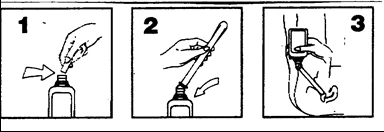
1- Remove the tamper-evident seal and closure by pushing sideways;
2- Remove the cannula from its protective packaging and attach it firmly onto the bottle, ensuring it is securely in place;
3- Position yourself so that the solution can effectively cleanse and treat the affected mucous membranes (the supine position is ideal). Carefully insert the cannula into the vaginal canal as deeply as possible.
Completely squeeze the bottle to ensure the entire amount of solution is expelled.
If you use more ARFEN than you should
If you take too much (overdose) ibuprofen, you may commonly experience the following symptoms: nausea, vomiting, stomach pain, deep sleep with reduced response to normal stimuli (lethargy), drowsiness, headache, ringing in the ears (tinnitus), dizziness, uncontrolled body movements (convulsions), and loss of consciousness.
Symptoms of overdose may appear within 4–6 hours after taking ibuprofen.
Rarely, you may experience uncontrolled eye movements (nystagmus), increased acid levels in the blood (metabolic acidosis), lowered body temperature (hypothermia), kidney-related effects, gastrointestinal bleeding, deep unconsciousness (coma), temporary interruption of breathing (apnea), diarrhea, reduced activity of the central nervous system (central nervous system depression), and reduced respiratory activity (respiratory depression).
Additionally, disorientation, excited state, fainting, low blood pressure (hypotension), and decreased or increased heart rate (bradycardia or tachycardia) may occur.
If significantly high doses of ibuprofen are taken, severe kidney and liver damage may occur.
In case of accidental ingestion or overdose of ARFEN, contact your doctor immediately or go to the nearest hospital.
If you have any doubts about the use of ARFEN, consult your doctor or pharmacist.
If you forget to use ARFEN
Do not use a double dose to make up for the missed dose.
If you have any doubts about using this medicine, consult your doctor or pharmacist.
4. Possible side effects
Like all medicines, this medicine can cause side effects, although not everyone experiences them.
The use of this product, especially if prolonged, may lead to sensitisation phenomena. In such a case, it is necessary to stop treatment and consult your doctor.
Stop taking ibuprofen and consult your doctor immediately if you notice any of the following symptoms:
- if you experience any unusual symptoms affecting the stomach or intestine (such as vomiting blood, vomiting dark brown material, black and sticky stools, or diarrhoea with blood);
- if you develop symptoms such as skin rash, lesions of the mucous membranes (e.g. in the mouth), or other signs of allergic reaction;
- red, flat, target-shaped or circular rashes on the trunk, often with central blisters, skin peeling, mouth, throat, nose, genital or eye ulcers. These serious skin reactions may be preceded by fever and flu-like symptoms [exfoliative dermatitis, erythema multiforme, Stevens-Johnson syndrome, toxic epidermal necrolysis];
- widespread rash, high body temperature, and swollen lymph nodes (DRESS syndrome);
- widespread, red, scaly rash with lumps under the skin and blisters, accompanied by fever. Symptoms usually occur at the beginning of treatment (generalised pustular eruption).
The most common side effects are:
- nausea
- vomiting
- frequent need to defecate, with loose and watery stools (diarrhoea)
- flatulence
- hard, dry stools (constipation)
- heartburn (dyspepsia)
- pain in the upper abdomen
- black stools due to presence of blood (melena)
- stomach bleeding with blood in vomit (haematemesis)
- inflammation and ulceration in the mouth (ulcerative stomatitis)
- worsening of intestinal inflammation (colitis and Crohn's disease)
- formation of ulcers or perforations in the stomach or intestine, particularly in elderly patients, sometimes fatal
Other side effects:
- inflammation of the stomach (gastritis)
- swelling (oedema)
- high blood pressure (hypertension)
- heart failure
- mild and temporary burning sensation at the site of administration, in rare cases
- severe blistering skin reactions such as exfoliative dermatitis, Stevens-Johnson syndrome and toxic epidermal necrolysis, very rare
- skin becomes sensitive to light – frequency not known
If you experience any of the side effects listed above, if the side effects become severe, or if you experience any side effect not listed in this
Patient information leaflet, contact your doctor or pharmacist.
Reporting of side effects
If you experience any side effect, including those not listed in this leaflet, please consult your
doctor or pharmacist.
You can also report side effects directly via the national reporting system at the following
website: https://www.aifa.gov.it/content/segnalazioni-reazioni-avverse.
By reporting side effects, you can help provide more information on the safety of this medicine.
5. How to store ARFEN
Keep this medicine out of the sight and reach of children.
This medicine has no special storage requirements.
Do not use this medicine after the expiry date stated on the carton after “Exp.”.
The expiry date refers to the last day of that month.
Do not dispose of any medicine via wastewater or household waste. Ask your pharmacist
how to dispose of medicines you no longer use. This will help protect the environment.
6. Package contents and other information
What ARFEN contains
- The active substance is ibuprofen lysine. Each 140 ml vial contains 1.4 g of ibuprofen lysine.
- The other ingredients of the medicine are phenethyl alcohol, rose red perfume, and purified water.
Description of the appearance of ARFEN and contents of the pack
ARFEN 10 mg/ml vaginal solution is supplied in a pack containing 5 vials of 140 ml and 5 single-use cannulas.
Marketing Authorization Holder and Manufacturer
Marketing Authorization Holder
Laboratorio Italiano Biochimico Farmaceutico LISAPHARMA S.p.A.
Via Licinio, 11
22036 ERBA (CO) – Italy
Manufacturer
Laboratorio Italiano Biochimico Farmaceutico LISAPHARMA S.p.A.
Via Licinio, 11
22036 ERBA (CO) – Italy