Archegan
ItalyTable of Contents
- Patient Information Leaflet: Information for the user
- Archegan, 0.120 mg/0.015 mg per 24 hours, vaginal ring system
- 1. What Archegan is and what it is used for
- 2. What you should know before using Archegan
- 3. How to use Archegan
- 4. Possible side effects
- 5. How to store Archegan
- 6. Package contents and other information
Patient Information Leaflet: Information for the user
Archegan, 0.120 mg/0.015 mg per 24 hours, vaginal ring system
Etonogestrel/Ethinylestradiol
Generic medicine
Important things to know about combined hormonal contraceptives (CHCs):
- They are one of the most reliable reversible methods of contraception when used correctly.
- They slightly increase the risk of blood clots forming in veins and arteries, especially during the first year of use or when restarting a combined hormonal contraceptive after a break of 4 or more weeks.
- Be alert and contact your doctor if you think you may have symptoms of a blood clot (see section 2 “Blood clots”).
Read this leaflet carefully before using this medicine because it contains important information for you.
- Keep this leaflet. You may need to read it again.
- If you have any questions, ask your doctor or pharmacist.
- This medicine has been prescribed for you only. Do not give it to others, as it may be harmful to them.
- If you experience any side effects, including those not listed in this leaflet, tell your doctor or pharmacist. See section 4.
Contents of this leaflet
- What Archegan is and what it is used for
- What you need to know before using Archegan
2.1 Do not use Archegan
2.2 Warnings and precautions
Blood clots
Cancer
2.3 Children and adolescents
2.4 Other medicines and Archegan
Laboratory tests
2.5 Pregnancy and breastfeeding
2.6 Driving and use of machines - How to use Archegan
3.1 How to insert and remove Archegan
3.2 Three weeks with the ring inserted, one week without
3.3 When to start with the first ring
3.4 What to do if…
The ring is accidentally expelled from the vagina
The ring remains temporarily outside the vagina
The ring breaks
More than one ring has been inserted
You forget to insert a new ring after a ring-free interval
You forget to remove the ring
You miss your period
You have unexpected bleeding
You wish to change the first day of your menstrual cycle
You wish to delay your menstrual period
3.5 When you want to stop using Archegan - Possible side effects
- How to store Archegan
- Contents of the pack and other information
What Archegan contains
What Archegan looks like and contents of the pack
Marketing Authorisation Holder and Manufacturer
1. What Archegan is and what it is used for
Archegan is a vaginal contraceptive ring used to prevent pregnancy. Each ring contains
a small amount of two female sex hormones – etonogestrel and ethinylestradiol. The ring releases
these hormones slowly into the bloodstream. Because the amounts of hormones released are low,
Archegan is considered a low-dose hormonal contraceptive.
Since Archegan releases two different types of hormones, it is a so-called combined hormonal contraceptive.
Archegan works just like a combined oral contraceptive pill (the Pill), but instead of taking
a pill every day, the ring is used continuously for 3 weeks. Archegan releases two female sex
hormones that prevent the release of an egg from the ovaries. If no egg is released,
pregnancy cannot occur.
2. What you should know before using Archegan
General notes
Before starting to use Archegan, you must read the information about blood clots in section 2. It is
particularly important that you read about the symptoms of a blood clot – see section 2 “Blood clots”.
This patient leaflet describes several situations in which you must stop using Archegan or in which
Archegan may be less effective. In such situations, you must not have sexual intercourse or you must use
additional non-hormonal contraceptive precautions – such as male condoms or other barrier methods. Do not use rhythm or basal body temperature methods, which may be unreliable, because Archegan alters the monthly changes in body temperature and cervical mucus.
Archegan, like other hormonal contraceptives, does not protect against HIV infection (AIDS) or any other sexually transmitted disease.
2.1 When you must not use Archegan
Do not use Archegan if you have any of the conditions listed below. If you have any of the conditions listed below, consult your doctor. Your doctor will discuss with you other birth control methods that might be more suitable for your case.
Do not use Archegan:
- if you have (or have ever had) a blood clot in a blood vessel of the leg (deep vein thrombosis, DVT), lung (pulmonary embolism, PE), or other organs.
- if you know you have a disorder affecting blood clotting, such as protein C deficiency, protein S deficiency, antithrombin-III deficiency, factor V Leiden, or antiphospholipid antibodies;
- if you are about to undergo surgery or if you are required to remain bedridden for a prolonged period (see section “Blood clots”);
- if you have ever had a heart attack or stroke;
- if you have (or have ever had) angina pectoris (a condition causing severe chest pain which may be an early sign of heart attack) or transient ischaemic attack (TIA – temporary stroke-like symptoms);
- if you have any of the following conditions, which could increase the risk of developing clots in the arteries:
o severe diabetes with blood vessel damage
o very high blood pressure
o very high levels of fats (cholesterol or triglycerides) in the blood
o a condition known as hyperhomocysteinaemia - if you have (or have ever had) a type of migraine called “migraine with aura”;
- if you have (or have had) pancreatitis (inflammation of the pancreas) associated with high levels of fats in the blood;
- if you have (or have had) a serious liver disease and liver function has not yet returned to normal;
- if you have (or have had) a benign or malignant liver tumour;
- if you have (or have had), or may have, cancer of the breast or genital organs;
- if you have vaginal bleeding of unknown origin;
- if you are allergic to ethinylestradiol or etonogestrel or to any of the other ingredients of this medicine (listed in section 6).
If any of these conditions occur for the first time while you are using Archegan, remove the ring immediately and consult your doctor. In the meantime, use non-hormonal contraceptive methods.
Do not use Archegan if you have hepatitis C and are taking medicines containing
ombitasvir/paritaprevir/ritonavir and dasabuvir or glecaprevir/pibrentasvir or sofosbuvir/velpatasvir/
voxilaprevir (also see section 2.4 “Other medicines and Archegan”).
2.2 Warnings and precautions
When should you contact your doctor?
Contact your doctor urgently
- if you notice signs suggestive of a blood clot, which may indicate that you have a blood clot in the leg (e.g., deep vein thrombosis), in the lung (e.g., pulmonary embolism), a heart attack or a stroke (see the following section “Blood clots”).
For a description of the symptoms of these serious side effects, refer to the section “How to recognize a blood clot”.
Inform your doctor if any of the following conditions apply to you.
If any of these conditions develop or worsen while you are using Archegan, you must inform your doctor.
- if a close relative has or has ever had breast cancer;
- if you have epilepsy (see section 2.4: “Other medicines and Archegan”);
- if you have liver disease (e.g., jaundice) or gallbladder disease (e.g., gallstones);
- if you have Crohn’s disease or ulcerative colitis (chronic inflammatory bowel disease);
- if you have systemic lupus erythematosus (SLE – a disease affecting the body’s natural defence system);
- if you have haemolytic uraemic syndrome (HUS – a blood clotting disorder causing kidney failure);
- if you have sickle cell anaemia (an inherited red blood cell disorder);
- if you have high levels of fats in the blood (hypertriglyceridaemia) or a family history of this condition. Hypertriglyceridaemia has been associated with an increased risk of developing pancreatitis (inflammation of the pancreas);
- if you are about to undergo surgery or if you are required to remain bedridden for a prolonged period (see section 2 “Blood clots”);
- if you have recently given birth, your risk of developing blood clots is higher. Ask your doctor how long after delivery you can start using Archegan;
- if you have inflammation of the veins under the skin (superficial thrombophlebitis);
- if you have varicose veins;
- if you have a condition that occurred for the first time or worsened during pregnancy or during previous use of sex hormones (e.g., hearing loss, porphyria [a blood disorder], herpes gestationis [blistering rash during pregnancy], Sydenham’s chorea [a nerve disorder with sudden involuntary movements], hereditary angioedema [you must seek immediate medical attention if you experience symptoms of angioedema such as: swelling of the face, tongue and/or throat and/or difficulty swallowing, or hives associated with breathing difficulties]);
- if you have (or have ever had) chloasma (brown-yellow patches, so-called “pregnancy mask”, especially on the face). In this case, avoid prolonged exposure to sunlight or ultraviolet rays;
- if you have a medical condition making it difficult to use Archegan – for example, constipation, uterine prolapse, or pain during sexual intercourse;
- if you have a sudden need to urinate, frequent urination, burning and/or pain, and cannot locate the ring in the vagina. These symptoms may indicate accidental placement of Archegan inside the bladder.
BLOOD CLOTS
Using a combined hormonal contraceptive such as Archegan increases the risk of developing a blood clot compared to not using one. In rare cases, a blood clot can block blood vessels and cause serious problems.
Blood clots can develop:
- in veins (a condition called “venous thrombosis”, “venous thromboembolism” or VTE);
- in arteries (a condition called “arterial thrombosis”, “arterial thromboembolism” or ATE).
Recovery from blood clots is not always complete. Rarely, long-term serious effects may occur, and very rarely, these effects can be fatal.
It is important to remember that the overall risk of a harmful blood clot associated with Archegan is low.
HOW TO RECOGNIZE A BLOOD CLOT
Contact your doctor immediately if you notice any of the following signs or symptoms.
Do you have any of these signs? What are you likely suffering from?
- swelling in one leg or along a vein in the leg or foot, especially if accompanied by:
- pain or tenderness in the leg, which may only be felt when standing or walking
- increased warmth in the affected leg
| |
| Pulmonary embolism |
| Symptoms occurring more frequently in one eye: •sudden loss of vision or •painless blurring of vision that may progress to loss of vision. | Retinal vein thrombosis (blood clot in the eye) |
| Heart attack |
| Stroke |
| seek urgent medical attention as you may be at risk of another stroke. | |
| Blood clots blocking other blood vessels |
BLOOD CLOTS IN A VEIN
What can happen if a blood clot forms in a vein?
- The use of combined hormonal contraceptives has been associated with an increased risk of developing blood clots in veins (venous thrombosis). However, these side effects are rare. In most cases, they occur during the first year of using a combined hormonal contraceptive.
- If a blood clot forms in a vein of the leg or foot, it may cause deep vein thrombosis (DVT).
- If a blood clot travels from the leg and lodges in the lung, it may cause a pulmonary embolism.
- Very rarely, a clot may form in another organ such as the eye (retinal vein thrombosis).
When is the risk of developing a blood clot in a vein highest?
The risk of developing a blood clot in a vein is highest during the first year in which you
first start taking a combined hormonal contraceptive. The risk may also be higher
if you restart taking a combined hormonal contraceptive (the same product or a different product)
after a break of 4 or more weeks.
After the first year, the risk decreases but remains slightly higher than if you were not
using a combined hormonal contraceptive.
When you stop taking Archegan, the risk of developing a blood clot returns to
normal levels within a few weeks.
What is the risk of developing a blood clot?
The risk depends on your natural risk of VTE (venous thromboembolism) and on the type of combined hormonal contraceptive you are taking.
The overall risk of developing a blood clot in the leg or lung (DVT or PE) with Archegan is low.
- Among 10,000 women who do not use any combined hormonal contraceptive and who are not pregnant, about 2 will develop a blood clot in a year.
- Among 10,000 women who use a combined hormonal contraceptive containing levonorgestrel, norethisterone, or norgestimate, about 5–7 will develop a blood clot in a year.
- Among 10,000 women who use a combined hormonal contraceptive containing norelgestromin or etonogestrel, such as Archegan, about 6–12 women will develop a blood clot in a year.
- Your risk of developing a blood clot depends on your medical history (see below “Factors that increase the risk of developing a blood clot”).
| Risk of developing a blood clot in one year | |
| Women who are not using a combined hormonal contraceptive pill, patch or ring and who are not pregnant | About 2 women out of 10,000 |
| Women who use a combined oral contraceptive pill containing levonorgestrel, norethisterone or norgestimate | About 5-7 women out of 10,000 |
| Women who use Archegan | About 6-12 women out of 10,000 |
Factors that increase the risk of developing a blood clot in a vein
The risk of developing a blood clot with Archegan is low, but certain conditions can increase it. Your risk is higher:
- if you are very overweight (body mass index or BMI above 30 kg/m²);
- if a close relative has had a blood clot in a leg, lung, or another organ at a young age (under approximately 50 years). In this case, you may have an inherited blood clotting disorder;
- if you are scheduled for surgery or are required to remain bedridden for a prolonged period due to injury or illness, or if you have a leg in a cast. You may need to stop taking Archegan several weeks before surgery or during periods of reduced mobility. If you need to stop taking Archegan, ask your doctor when you can start taking it again;
- as you get older (especially over 35 years of age);
- if you have given birth less than a few weeks ago.
The risk of developing a blood clot increases when you have more than one of these conditions.
Air travel (lasting >4 hours) may temporarily increase the risk of blood clot formation, particularly if you have some of the other risk factors listed above.
It is important that you inform your doctor if any of these conditions apply to you, even if you are uncertain. Your doctor may decide to discontinue your use of Archegan.
If any of the above conditions change while you are using Archegan—for example, if a close relative develops thrombosis without a known cause or if you gain significant weight—contact your doctor.
BLOOD CLOTS IN AN ARTERY
What can happen if a blood clot forms in an artery?
Like blood clots in a vein, clots in an artery can cause serious problems, for example, they can lead to a heart attack or stroke.
Factors that increase the risk of developing a blood clot in an artery
It is important to note that the risk of heart attack or stroke associated with the use of Archegan is very low but may increase:
- with increasing age (over 35 years);
- if you smoke. When using a combined hormonal contraceptive such as Archegan, it is advisable to stop smoking. If you cannot stop smoking and are over 35 years old, your doctor may recommend using a different type of contraceptive;
- if you are overweight;
- if you have high blood pressure;
- if a close relative has had a heart attack or stroke at a young age (under approximately 50 years). In this case, you may also have an increased risk of heart attack or stroke;
- if you or a close relative have high levels of fat in the blood (cholesterol or triglycerides);
- if you suffer from migraine, especially migraine with aura;
- if you have heart problems (valvular defect, a heart rhythm disorder called atrial fibrillation);
- if you have diabetes.
If you have more than one of these conditions or if one of them is particularly severe, the risk of developing a blood clot may be even higher.
If any of the above conditions change while you are using Archegan—for example, if you start smoking, if a close relative develops thrombosis without a known cause, or if you gain significant weight—contact your doctor.
Tumors
The information below comes from studies on combined oral contraceptives and may also apply to Archegan. Information on the vaginal administration of contraceptive hormones (such as Archegan) is not available.
Diagnoses of breast cancer are slightly more frequent in women using the combined pill, but it is not known whether this is caused by the treatment. For example, tumors may be detected more often in women taking the combined pill because they undergo more frequent medical check-ups. The increased occurrence of breast cancer gradually decreases after stopping the combined pill. It is important to regularly examine your breasts and contact your doctor as soon as you feel a lump. Additionally, you must inform your doctor if a close relative has or has had breast cancer (see section 2.2 “Warnings and precautions”).
Benign liver tumors have been rarely reported in women taking the pill, and malignant liver tumors even more rarely. Consult your doctor if you experience unusual, severe abdominal pain.
Women using the combined pill have been reported to develop endometrial cancer (cancer of the lining of the uterus) and ovarian cancer less frequently. This may also be the case with Archegan, but it has not been confirmed.
Psychiatric disorders
Some women using hormonal contraceptives, including Archegan, have reported depression or depressed mood. Depression can be severe and sometimes may lead to suicidal thoughts. If you experience mood changes or depressive symptoms, consult your doctor as soon as possible for further medical advice.
2.3 Children and adolescents
The safety and efficacy of Archegan in adolescents under 18 years of age have not been studied.
2.4 Other medicines and Archegan
Always inform your doctor about any medicines or herbal products you are currently taking. Also inform any other doctors, dentists, or pharmacists who prescribe other medicines that you are using Archegan. They may advise you whether you need to use additional contraceptive methods (e.g., a male condom), and if so, for how long, or whether you need to adjust the use of another medicine you are taking.
Some medicines:
- may affect blood levels of Archegan;
- may cause a decrease in contraceptive effectiveness;
- may cause unexpected bleeding.
These include medicines used to treat:
- epilepsy (e.g., primidone, phenytoin, barbiturates, carbamazepine, oxcarbazepine, topiramate, felbamate);
- tuberculosis (e.g., rifampicin);
- HIV infection (e.g., ritonavir, nelfinavir, nevirapine, efavirenz);
- hepatitis C virus infection (e.g., boceprevir, telaprevir);
- other infectious diseases (e.g., griseofulvin);
- high blood pressure in the blood vessels of the lungs (bosentan);
- depressed mood (St. John’s wort herbal remedy).
If you are taking medicines or herbal products that may reduce the effectiveness of Archegan, you must also use a barrier contraceptive method (e.g., a male condom). Because the effect of other medicines on Archegan may last up to 28 days after stopping them, you must continue using an additional barrier contraceptive method throughout this period. Note: Do not use Archegan in combination with a diaphragm, cervical cap, or female condom.
Archegan may affect the action of other medicines, for example:
- medicines containing cyclosporine;
- the antiepileptic lamotrigine (this could lead to an increased frequency of seizures).
Do not use Archegan if you have hepatitis C and are taking medicines containing
ombitasvir/paritaprevir/ritonavir and dasabuvir or glecaprevir/pibrentasvir or sofosbuvir/velpatasvir/
voxilaprevir, as this may cause increases in liver function blood test values (elevated liver enzymes ALT).
Your doctor will prescribe a different type of contraceptive before starting treatment with these medicines.
Archegan can be resumed approximately 2 weeks after completion of such treatment. See section 2.1 “Do not use Archegan”.
Ask your doctor or pharmacist for advice before taking any medicine.
You may use sanitary tampons while using Archegan. Insert Archegan before inserting the tampon. Take particular care when removing the tampon to ensure that the ring is not accidentally expelled. If this happens, simply wash the ring with cold or lukewarm water and reinsert it immediately.
Ring breakage has occurred when also using a vaginal product such as a lubricant or anti-infective treatment (see section 3.4 “What to do if…The ring breaks”). The use of spermicidal products or vaginal products for the treatment of yeast infections does not reduce the contraceptive effectiveness of Archegan.
Laboratory tests
If you undergo blood or urine tests, inform the healthcare provider that you are using Archegan, as it may affect the results of certain tests.
2.5 Pregnancy and breastfeeding
Archegan must not be used if you are pregnant or suspect you may be pregnant. If you become pregnant while using Archegan, remove the ring and contact your doctor.
If you wish to stop using Archegan because you want to become pregnant, see section 3.5 “When you want to stop using Archegan”.
Archegan is generally not recommended during breastfeeding. If you wish to use Archegan while breastfeeding, consult your doctor.
2.6 Driving and using machines
It is unlikely that Archegan will affect your ability to drive or use machines.
3. How to use Archegan
You can insert and remove Archegan yourself. Your doctor will give you instructions on when to start using Archegan for the first time. The vaginal ring must be inserted on the appropriate day of the menstrual cycle (see section 3.3 “When to start with the first ring”) and left in the vagina continuously for 3 weeks. Check regularly that Archegan is in place (e.g., before and after sexual intercourse) to ensure protection against pregnancy. After the third week, remove Archegan and take a one-week break. Your menstrual period will usually occur during this ring-free interval.
While using Archegan, you must not use certain female barrier contraceptive methods such as a vaginal diaphragm, cervical cap, or female condom. These barrier methods should not be used as an additional contraceptive method, as Archegan may interfere with the correct placement and positioning of the diaphragm, cervical cap, or female condom. However, you may use a male condom as an additional barrier contraceptive method.
3.1 How to insert and remove Archegan
- Before inserting the ring, check that it is not expired (see section 5 “How to store Archegan”).
- Wash your hands before inserting or removing the ring.
- Choose the most comfortable position for inserting the ring, for example, standing with one leg raised, squatting, or lying down.
- Remove Archegan from its pouch.
- Hold the ring between your thumb and index finger, compress it on opposite sides, and insert it into the vagina (see Figures 1–4). Once inserted, Archegan should not cause any discomfort. If you feel discomfort, gently adjust the position of Archegan (e.g., push the ring slightly deeper into the vagina) until it feels comfortable. The exact position of the ring within the vagina is not important.
- After 3 weeks, remove Archegan from the vagina. Archegan can be removed by hooking your index finger under the front edge of the ring or by grasping the edge and pulling outward (see Figure 5). If you have inserted the ring into the vagina but have difficulty removing it, you must contact your doctor.
- The used ring should be disposed of with regular household waste, preferably inside the resealable pouch. Do not flush Archegan down the toilet.
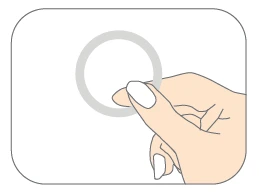
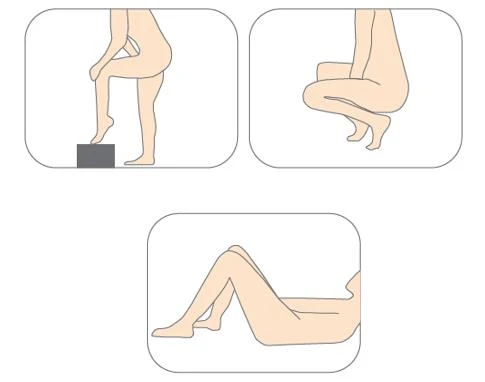
Figure 1
Remove Archegan from the pouch
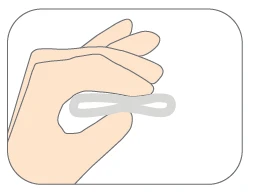
Figure 3 Choose a comfortable position for inserting the ring
Figure 2
Compress the ring
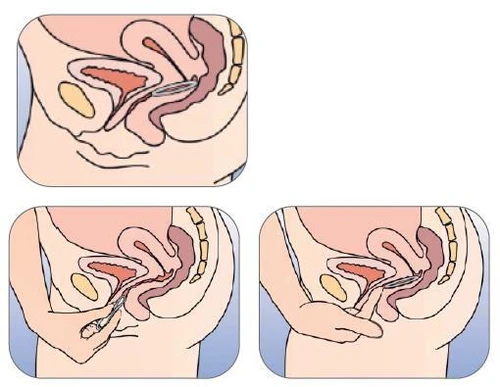
Figure 4A Figure 4B Figure 4C
Insert the ring into the vagina with one hand (Figure 4A); if necessary, the labia may be parted with the other hand. Push the ring into the vagina until it feels comfortably in place (Figure 4B). Leave the ring inserted for 3 weeks (Figure 4C).
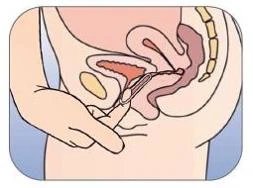
Figure 5
Archegan can be removed by hooking the index finger under the ring or by grasping the ring between the index and middle fingers and pulling outward.
3.2 Three weeks with the ring inserted, one week without
- Starting from the day of insertion, the vaginal ring must remain in the vagina continuously for 3 weeks.
- After 3 weeks, remove the ring on the same day of the week and approximately at the same time as it was inserted. For example, if you insert Archegan on Wednesday around 10 p.m., remove the ring on the Wednesday of the third following week, approximately at 10 p.m.
- After removal, do not use the ring for 1 week. During this week, vaginal bleeding should occur. It usually starts 2–3 days after removal of Archegan.
- Insert a new ring exactly one week after the end of the ring-free interval (again on the same day of the week and approximately at the same time), even if vaginal bleeding has not yet stopped.
- If the new ring is inserted more than 3 hours late, protection against pregnancy may be reduced. In this case, follow the instructions provided in section 3.4 “What to do if… You forget to insert a new ring after a ring-free interval”.
If you use Archegan as described above, vaginal bleeding will occur approximately on the same days each month.
3.3 When to start with the first ring
- If you have not used a hormonal contraceptive during the past month Insert the first Archegan on day 1 of your natural cycle (i.e., the first day of your menstrual period). Archegan starts to work immediately. No additional contraceptive measures are needed. You may also start Archegan between day 2 and day 5, but if you have sexual intercourse during the first 7 days of using Archegan, you must use an additional contraceptive method (such as a male condom). This advice applies only when using Archegan for the first time.
- If you have used a combined oral contraceptive pill during the past month Start using Archegan no later than the day after the pill-free interval of your current pill pack. If your pack contains inactive tablets, start using Archegan no later than the day after the last inactive tablet. If you are unsure which tablet is which, consult your doctor or pharmacist. Do not extend the hormone-free interval of your current pill pack beyond the recommended duration. If you have taken the pill consistently and correctly and are sure you are not pregnant, you may also stop taking the pill on any day of the current pack and start using Archegan immediately.
- If you have used a transdermal patch during the past month Start using Archegan no later than the day after the usual patch-free interval. Do not extend the patch-free interval beyond the recommended duration. If you have used the patch consistently and correctly and are sure you are not pregnant, you may also stop using the patch at any time and start using Archegan immediately.
- If you have used a progestogen-only pill (mini-pill) during the past month You may stop the mini-pill on any day and start using Archegan the next day at the same time you would normally have taken the pill. Make sure to also use an additional contraceptive method (such as a male condom) during the first 7 days of ring use.
- If you have used an injection, implant, or intrauterine device (IUD) releasing progestogen during the past month Start using Archegan on the day the next injection is due or on the day of removal of the implant or progestogen-releasing IUD. Make sure to also use an additional contraceptive method (such as a male condom) during the first 7 days of ring use.
- After childbirth If you have recently given birth, your doctor will advise you to wait until your first natural menstrual cycle before starting Archegan. In some cases, earlier initiation may be possible. Your doctor will provide the necessary guidance. If you wish to use Archegan during breastfeeding, you must consult your doctor first.
- After a spontaneous or surgical abortion Your doctor will provide the necessary instructions.
3.4 What to do if…
The ring is accidentally expelled from the vagina
Archegan may accidentally come out of the vagina—for example, if it was not inserted correctly, during tampon removal, during sexual intercourse, or in association with constipation or uterine prolapse. Therefore, you should regularly check whether the ring is still in place (e.g., before and after sexual intercourse).
The ring remains temporarily outside the vagina
Archegan may still protect you from pregnancy, but this depends on how long it has been outside the vagina.
If the ring remains outside the vagina for:
- a period less than 3 hours, it may still protect you from pregnancy. Wash the ring with cool or lukewarm water (do not use hot water) and reinsert it as soon as possible, but only if it has been outside the vagina for less than 3 hours.
- a period more than 3 hours during the 1st or 2nd week, it may not protect you from pregnancy. Wash the ring with cool or lukewarm water (do not use hot water) and reinsert it as soon as you remember, and leave the ring in the vagina continuously for at least 7 days. Use a male condom if you have sexual intercourse during these 7 days. If you are in the 1st week and have had sexual intercourse in the previous 7 days, there is a possibility that pregnancy may have occurred. In this case, contact your doctor.
- a period more than 3 hours during the 3rd week, it may not protect you from pregnancy. Discard that ring and choose one of the following two options:
- Insert a new ring immediately. This will start the next three-week treatment period. Your menstrual period may not occur, but breakthrough bleeding or spotting may occur.
- Do not reinsert the ring. Wait for your menstrual period and insert a new ring no later than 7 days after the previous ring was removed or expelled. Choose this option only if you have used Archegan continuously during the previous 7 days.
- an unknown duration, you may not be protected from pregnancy. Perform a pregnancy test and consult your doctor before inserting a new ring.
The ring breaks
Very rarely, Archegan may break. Vaginal injury associated with ring breakage has been reported. If you notice that Archegan has broken, discard that ring and start with a new one as soon as possible. Use additional contraceptive precautions (e.g., a male condom) for the next 7 days. If you had sexual intercourse before noticing the break, consult your doctor.
More than one ring has been inserted
No serious adverse effects due to overdose of Archegan’s hormones have been reported. If you have accidentally inserted more than one ring, you may experience nausea, vomiting, or vaginal bleeding. Remove the extra rings and consult your doctor if symptoms persist.
You forget to insert a new ring after a ring-free interval
If the ring-free interval is longer than 7 days, insert a new ring as soon as you remember. Use an additional contraceptive method (such as a male condom) if you have sexual intercourse during the next 7 days. If you had sexual intercourse during the ring-free interval, the possibility of pregnancy should be considered. In this case, contact your doctor immediately. The longer the ring-free interval, the higher the risk of pregnancy.
You forget to remove the ring
- If the ring has been left in for more than 3 but not more than 4 weeks, it may still protect you from pregnancy. Complete the usual one-week ring-free interval and then insert a new ring.
- If the ring has been left in for more than 4 weeks, there is a possibility of pregnancy. Contact your doctor before inserting a new ring.
You miss a menstrual period
- Archegan has been used according to instructions If you miss a period but have used Archegan according to instructions and have not taken other medications, it is very unlikely that you are pregnant. Continue using Archegan as usual. However, if you miss two consecutive periods, pregnancy may have occurred. Contact your doctor immediately. Do not start a new Archegan until pregnancy has been ruled out by your doctor.
- Archegan has not been used according to instructions If you miss a period and have not followed the instructions and did not have the expected period during the first normal ring-free interval, pregnancy may have occurred. Contact your doctor before starting a new Archegan.
You have unexpected bleeding
While using Archegan, some women may experience unexpected vaginal bleeding between periods. You may need to use sanitary protection. In any case, leave the ring in the vagina and continue using it normally. Consult your doctor if irregular bleeding persists, becomes heavy, or recurs.
You wish to change the first day of your menstrual cycle
If you use Archegan according to instructions, your menstrual period (withdrawal bleeding) will start during the ring-free interval. If you wish to change the day your period starts, you may shorten the ring-free interval (never extend it!).
For example, if your period usually starts on Friday, you may change it to Tuesday (3 days earlier) starting next month. Simply insert the next ring 3 days earlier than usual.
If the ring-free interval is very short (e.g., 3 days or less), you may not have the usual withdrawal bleeding, but you may experience spotting (drops or small stains of blood) or breakthrough bleeding during use of the next ring.
If you are unsure about how to proceed, contact your doctor for clarification.
You wish to delay your menstrual period
Although not recommended, it is possible to delay your menstrual period (withdrawal bleeding) by inserting a new ring immediately after removing the previous one, without taking a ring-free interval. The new ring may remain inserted for a maximum of 3 weeks. During use of the new ring, you may experience spotting (drops or small stains of blood) or breakthrough bleeding. Remove the ring when you wish to have your period. Observe the regular one-week ring-free interval and then insert a new ring.
You may consult your doctor before deciding to delay your menstrual period.
3.5 When you wish to stop using Archegan
You may stop using Archegan at any time. If you do not wish to become pregnant, consult your doctor about other contraceptive methods.
If you stop using Archegan because you wish to become pregnant, wait for your natural menstrual cycle before trying to conceive. This will help you calculate the expected date of delivery.
4. Possible side effects
Like all medicines, Archegan can cause side effects, although not everyone experiences them. If you experience any side effect, especially if it is severe or persistent, or if you notice any change in your health that you think may be due to Archegan, inform your doctor.
An increased risk of developing blood clots in the veins (venous thromboembolism (VTE)) or blood clots in the arteries (arterial thromboembolism (ATE)) exists in all women taking combined hormonal contraceptives. For more detailed information on the different risks associated with taking combined hormonal contraceptives, see section 2, “What you should know before using Archegan”.
If you are allergic to any of the components of Archegan (hypersensitivity), you may experience the following symptoms (frequency not known): angioedema and/or anaphylaxis [swelling of the face, lips, tongue and/or throat and/or difficulty swallowing] or hives associated with breathing difficulties. If this occurs, remove Archegan and consult your doctor immediately (see section 2.2 “Warnings and precautions”).
The following side effects have been reported during the use of Archegan:
Common: may affect up to 1 in 10 women
- abdominal pain; feeling unwell (nausea)
- vaginal fungal infection (e.g., “Candida”); vaginal discomfort due to the ring; genital itching; vaginal discharge
- headache or migraine; depressed mood; decreased libido
- breast pain; pelvic pain; painful menstruation
- acne
- weight gain
- expulsion of the ring
Uncommon: may affect up to 1 in 100 women
- visual disturbances; dizziness
- bloated abdomen; vomiting, diarrhoea or constipation
- feeling tired, unwell or irritable; mood changes; mood swings
- fluid retention in tissues (oedema)
- urinary tract or bladder infection
- difficulty or pain when urinating; strong urge or need to urinate; increased frequency of urination
- problems during sexual intercourse, including pain, bleeding or partner feeling the ring
- increased blood pressure
- increased appetite
- back pain; muscle spasms; leg or arm pain
- reduced skin sensitivity
- sore or enlarged breasts; fibrocystic mastopathy (breast cysts that may swell or cause pain)
- inflammation of the uterine cervix; cervical polyps (growths in the cervix); eversion of the cervical margin (ectropion)
- menstrual cycle changes (e.g., periods may be heavy, prolonged, irregular or may stop completely); pelvic discomfort; premenstrual syndrome; uterine spasms
- vaginal infections (fungal and bacterial); burning, unpleasant odour, pain, discomfort or dryness of the vagina or vulva
- hair loss, eczema, itching, rash or hot flushes
- urticaria
Rare: may affect up to 1 in 1,000 women
- harmful blood clots in a vein or artery, for example:
- in a leg or foot (DVT)
- in a lung (PE)
- heart attack
- stroke
- mini-stroke or temporary stroke-like symptoms, known as transient ischaemic attack (TIA)
- blood clots in the liver, stomach/intestine, kidneys or eye.
The likelihood of developing a blood clot may be higher if you have any other condition that increases this risk. (See section 2 for more information on conditions that increase the risk of blood clots and symptoms of a blood clot.)
- breast discharge
Not known (frequency cannot be estimated from the available data)
- chloasma (brown-yellowish pigmented skin patches, particularly on the face)
- penile discomfort in the partner (such as irritation, rash, itching)
- inability to remove the ring without medical assistance (e.g., due to adhesion to the vaginal wall)
- vaginal lesion associated with ring breakage.
Cancer of the breast and liver tumours have been reported in association with the use of combined hormonal contraceptives. For further information, see section 2.2 Warnings and precautions, Tumours.
Very rarely, Archegan may break. For further information, see section 3.4 What to do if...the ring breaks.
Reporting of side effects
If you experience any side effect, including those not listed in this leaflet, talk to your doctor, pharmacist or nurse. You may also report side effects directly via the national reporting system at https://www.aifa.gov.it/content/segnalazioni-reazioni-avverse. By reporting side effects, you can help provide more information on the safety of this medicine.
5. How to store Archegan
Keep Archegan out of the sight and reach of children.
If you know that a child has been exposed to Archegan's hormones, consult a doctor.
Do not use Archegan after the expiry date stated on the box and on the sachet. The expiry date refers to the last day of that month.
Do not use Archegan if you notice any colour changes in the ring or any other visible signs of deterioration.
Dispose of used rings with ordinary household waste, preferably placed in the resealable sachet. Do not flush Archegan down the toilet. As with other medicines, do not dispose of unused or expired rings via wastewater or household waste. Ask your pharmacist how to properly dispose of rings you no longer use. This will help protect the environment.
6. Package contents and other information
What Archegan contains
- The active substances are: etonogestrel and ethinylestradiol. Each ring contains 11.7 mg of etonogestrel and 2.7 mg of ethinylestradiol. Daily release of 0.120 mg of etonogestrel and 0.015 mg of ethinylestradiol (over 3 weeks).
- The other components are: ethylene vinyl acetate copolymer, 28% vinyl acetate; ethylene vinyl acetate copolymer, 9% vinyl acetate (a type of plastic that does not dissolve in the body); and magnesium stearate.
Description of the appearance of Archegan and package contents
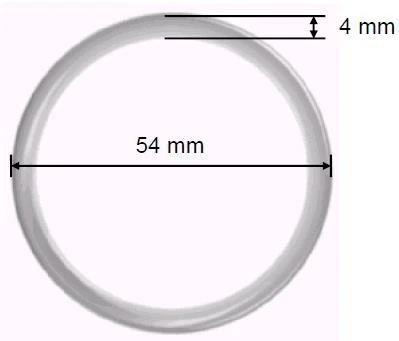
Archegan is a flexible, transparent, colourless ring with an outer diameter of 54 mm.
Each ring is packaged in a resealable aluminium pouch. The pouch is contained within a cardboard box. Each package contains either 1 or 3 pouches, packed in a cardboard box together with this leaflet.
It is possible that not all pack sizes are marketed.
Marketing Authorisation Holder and Manufacturer
Marketing Authorisation Holder
Farmitalia S.r.l.
Via Pinciana 25
00198 Rome
Italy
Manufacturer
KERN PHARMA, S.L.
Venus, 72 – Pol. Ind. Colón II
08228 Terrassa - Barcelona
Spain
This medicinal product is authorised in the European Economic Area countries under the following names:
Portugal: Ringo
Italy: Archegan