Aqumeldi
Italy
Table of Contents
- Package leaflet: Information for the user
- Aqumeldi 0.25 mg, orodispersible tablets, 1 mg, orodispersible tablets
- 1. What Aqumeldi is and what it is used for
- 2. What you need to know before you or the child uses Aqumeldi
- 3. How to use Aqumeldi
- 4. Possible side effects
- 5. How to store Aqumeldi
- 6. Package contents and other information
Package leaflet: Information for the user
Aqumeldi 0.25 mg, orodispersible tablets, 1 mg, orodispersible tablets
enalapril maleate
Please read this leaflet carefully before you or your child take this medicine, because
it contains important information for you.
- Keep this leaflet. You may need to read it again.
- If you have any questions, ask your doctor or pharmacist.
- This medicine has been prescribed for you or your child only. Do not give it to other people, even if their symptoms are the same as yours or your child's, because it may be harmful.
- If you or your child experience any side effect, including those not listed in this leaflet, talk to your doctor or pharmacist. See section 4.
Contents of this leaflet
- What Aqumeldi is and what it is used for
- What you need to know before you or your child use Aqumeldi
- How to use Aqumeldi
- Possible side effects
- How to store Aqumeldi
- Contents of the pack and other information
1. What Aqumeldi is and what it is used for
Aqumeldi contains the active substance enalapril maleate.
It is indicated in children and adolescents from birth to 17 years of age for the treatment of heart
failure (the inability of the heart to pump sufficient blood throughout the body).
Enalapril belongs to a group of medicines known as angiotensin-converting enzyme (ACE) inhibitors,
which means that it blocks an enzyme (a protein) in the body from forming the hormone angiotensin II.
Angiotensin II constricts blood vessels and can cause an increase in blood pressure, forcing the heart
to work harder to pump blood through the body. Angiotensin II also triggers the release of hormones,
such as aldosterone, which increase blood pressure by causing fluid retention.
By blocking the formation of angiotensin II, Aqumeldi modifies the hormonal system involved in blood
pressure regulation and fluid balance in the body. This action helps lower blood pressure and increases
blood and oxygen supply to the heart. The medicine usually starts to work within one hour, but it may
take several weeks of treatment before the patient's condition improves.
2. What you need to know before you or the child uses Aqumeldi
Do not use Aqumeldi if you or the child
- are allergic to enalapril maleate, to any of the other ingredients of this medicine (listed in section 6), or to other ACE inhibitors (such as captopril, lisinopril, or ramipril). ACE inhibitors are used to treat high blood pressure or heart failure;
- have ever had an episode of angioedema (rapid swelling under the skin in areas such as the face, throat, arms, and legs, which can be potentially fatal if swelling in the throat blocks the airways) after taking another ACE inhibitor or when the cause of angioedema was unknown or hereditary;
- you are more than 3 months pregnant. It is also advisable to avoid Aqumeldi during early pregnancy (see section 2 “Pregnancy, breastfeeding, and fertility”);
- have diabetes or reduced kidney function and are being treated with a blood pressure-lowering medicine containing aliskiren (see section 2 “Other medicines and Aqumeldi”);
- have taken or are currently taking sacubitril/valsartan, a medicine used to treat long-term (chronic) heart failure, as the risk of angioedema is higher. Wait at least 36 hours after the last dose of sacubitril/valsartan before taking Aqumeldi;
- have severe kidney disease.
If in doubt, consult your doctor or pharmacist before using Aqumeldi.
Warnings and precautions
Talk to your doctor before using Aqumeldi if you or the child:
- have a heart condition known as left ventricular outflow tract obstruction, outflow tract obstruction, or cardiogenic shock;
- have a condition affecting blood vessels in the brain (e.g., stenosis, thrombosis, embolism, hemorrhage);
- have a collagen vascular disease (conditions causing long-term inflammation in connective tissues, i.e., tissues that hold bones, muscles, and ligaments together);
- are undergoing immunosuppressive therapy (used to reduce the body’s immune response), treatment with allopurinol (used to reduce uric acid levels), or procainamide (used to treat heart rhythm disorders). In these cases, enalapril may increase the risk of low neutrophil levels (neutropenia), a type of white blood cell that fights infections, very low levels of a type of white blood cells called granulocytes (agranulocytosis) important for fighting infections, low platelet levels in the blood (thrombocytopenia) which may lead to bleeding and bruising, and low red blood cell levels (anemia) which may cause fatigue and pale skin (see section 2 “Other medicines and Aqumeldi”);
- have previously experienced an allergic reaction to ACE inhibitors, with swelling of the face, lips, tongue, or throat causing difficulty swallowing or breathing (angioedema). Angioedema may occur at any time during treatment with Aqumeldi. If symptoms appear, Aqumeldi must be stopped and a doctor must be contacted immediately for treatment. Be aware that black patients are at higher risk of these types of reactions to ACE inhibitors (medicines that work like Aqumeldi). The risk of angioedema may be higher in patients taking other medicines (see section 2 “Other medicines and Aqumeldi”);
- have kidney problems (including kidney transplant), diabetes, dehydration, sudden worsening of heart failure, acid buildup in the body, or are taking diuretics (water pills) that retain potassium in the blood (such as spironolactone, eplerenone, triamterene, or amiloride), potassium-containing salt substitutes, or medicines known to increase blood potassium levels (such as heparin, trimethoprim, or cotrimoxazole). These conditions may lead to high potassium levels in the blood (hyperkalemia), which may cause fatigue, muscle weakness, nausea, and heart rhythm disturbances. Your doctor may need to adjust the dose of Aqumeldi or monitor blood potassium levels regularly (see section 2 “Other medicines and Aqumeldi”);
- have a problem with the renal arteries, as this may increase the risk of low blood pressure or kidney dysfunction;
- have been severely ill (excessive vomiting) or have recently had severe diarrhea;
- have diabetes. Blood sugar levels need to be monitored, as they may be low, especially during the first month of treatment. Blood potassium levels may also be higher;
- are on dialysis, as the dose of Aqumeldi may need to be adjusted;
- have low blood pressure (you may notice dizziness or fainting, especially when standing);
- are taking any of the following medicines for high blood pressure: an angiotensin II receptor blocker (ARB) (also known as sartans, e.g., valsartan, telmisartan, irbesartan), as these may increase the risk of low blood pressure, high blood potassium, and kidney problems (see section 2 “Other medicines and Aqumeldi”);
- the child is under 1 month old and has a liver problem or jaundice (yellowing of the skin and whites of the eyes);
- the child is under 1 month old, as very young infants are at higher risk of low blood pressure, kidney problems, and high blood potassium levels.
Your doctor may regularly monitor kidney function, blood pressure, and electrolyte levels (e.g., potassium) in your blood or the child’s blood.
If you are unsure whether any of the above conditions apply to you or the child, consult your doctor or pharmacist before administering Aqumeldi.
If you or the child are about to undergo a medical procedure
Inform your doctor that you or the child are taking Aqumeldi if you are about to undergo any of the following procedures:
- any surgical or medical procedure requiring anesthesia (including at the dentist);
- desensitization treatment for allergies, e.g., with bee or wasp venom (Hymenoptera venom);
- treatment to remove cholesterol from the blood called LDL apheresis.
If any of the above apply, consult your doctor or dentist before starting the procedure.
Other medicines and Aqumeldi
Tell your doctor or pharmacist if you or the child are taking, have recently taken, or might take any other medicines, including those not requiring a prescription. This includes herbal medicines. Your doctor may need to adjust the dose of Aqumeldi or take other precautions.
Taking Aqumeldi with the following medicines may affect how Aqumeldi or the listed medicines work, or may increase the risk of side effects:
- antihypertensives, medicines to lower blood pressure (several types are listed below):
o angiotensin II receptor blockers (ARBs), sometimes called sartans (e.g., losartan, valsartan);
o aliskiren;
o beta-blockers (e.g., atenolol, propranolol);
o diuretics (medicines that increase urine production) (e.g., furosemide, chlorothiazide);
o vasodilators [medicines to open (dilate) blood vessels] (e.g., nitroglycerin, isosorbide mononitrate);
o neprilysin inhibitors (e.g., sacubitril, racecadotril).
The risk of angioedema (swelling of the face, lips, tongue, or throat with difficulty swallowing or breathing) may increase when these medicines are used (see section 2 “Do not use Aqumeldi if you or the child”).
- potassium-sparing medicines, medicines that increase potassium in the blood and may cause excessive potassium levels (several types are listed below):
o potassium supplements and salt substitutes;
o potassium-sparing diuretics (medicines that increase urine production) (e.g., spironolactone, amiloride);
o antibiotics used to treat bacterial infections (e.g., trimethoprim, cotrimoxazole);
o heparin, used to thin the blood and prevent clotting; - lithium, a medicine used to treat depression;
- tricyclic antidepressants used to treat depression (e.g., amitriptiline);
- antipsychotics, medicines used to treat mental health conditions;
- cough and cold medicines and weight-reduction medicines (e.g., pseudoephedrine, amphetamines);
- gold, used to treat pain or arthritis;
- antidiabetic medicines, including insulin and vildagliptin, used to lower blood sugar levels;
- non-steroidal anti-inflammatory drugs (NSAIDs), medicines to reduce inflammation and relieve pain (several types are listed below):
o selective cyclooxygenase-2 inhibitors (COX-2 inhibitors, e.g., ibuprofen);
o acetylsalicylic acid (aspirin); - transplant rejection medicines, used to prevent organ transplant rejection (e.g., cyclosporine, temsirolimus, sirolimus, everolimus).
If you are unsure whether any of the above conditions apply to you or the child, consult your doctor or pharmacist before administering Aqumeldi.
Aqumeldi with food, drinks, and alcohol
You or the child should not drink alcohol while taking Aqumeldi. Alcohol may cause excessive lowering of blood pressure, leading to dizziness, lightheadedness, or fainting.
Pregnancy, breastfeeding, and fertility
You must inform your doctor if you or your daughter think you are (or could be) pregnant. Usually, your doctor will advise you to stop taking Aqumeldi before becoming pregnant or as soon as pregnancy is confirmed, and to take another medicine instead.
Aqumeldi is not recommended during early pregnancy and must not be taken after 3 months of pregnancy, as it may cause serious harm to the unborn child if used after the third month of pregnancy (see section 2 “Do not use Aqumeldi if you or the child”).
If you are a woman of childbearing age, you must use effective contraception during treatment and for up to 1 week after stopping treatment.
Breastfeeding
Inform your doctor if you are breastfeeding or planning to breastfeed, and discuss with them whether to discontinue breastfeeding or stop treatment with Aqumeldi.
Driving and using machines
Aqumeldi may cause drowsiness in you or the child or affect concentration and coordination. This may impair the ability to perform tasks requiring special skills, such as driving, cycling, or operating machinery.
Aqumeldi contains sodium
This medicine contains less than 1 mmol of sodium (23 mg) per dose, meaning it is essentially “sodium-free.”
3. How to use Aqumeldi
Use this medicine exactly as instructed by your doctor or pharmacist. If you have
any doubts, consult your doctor or pharmacist.
The dose will be advised by your doctor and will depend on your weight or that of the child, and on the response
to treatment.
- The recommended initial dose is up to 2 mg as a single dose.
- The recommended maintenance dose is from 1 mg to 20 mg once daily.
Your paediatrician will advise you when to increase the dose based on the child's blood pressure,
blood potassium levels, and kidney function.
INSTRUCTIONS FOR USE
Read carefully before using one or more orodispersible tablets.
Aqumeldi must be taken only by mouth. These are orodispersible tablets, which means they dissolve in the mouth or in water. The tablet may be taken with or without food.
- Since the tablets are small, use the dosing scoop provided in the package to help remove them from the bottle. Avoid touching the tablets with your hands as much as possible.
- Place the orodispersible tablet(s) on the tongue or in the space between the gum and cheek (buccal cavity) and allow them to dissolve.
- Do not break the orodispersible tablets.
If the prescribed dose is less than 0.25 mg, it can be prepared as follows:
- Place one 0.25 mg orodispersible tablet into an oral dosing syringe of 10 mL.
- Draw up 10 mL of fresh tap water into the syringe (up to the 10 mL mark). In children under 6 months of age, sterile water must be used.
- Gently rotate the syringe for 3 minutes until the orodispersible tablet is completely dissolved.
- This will result in a concentration of 0.025 mg/mL of enalapril maleate.
- In the resulting solution, 1 mL will contain 0.025 mg of enalapril and 4 mL will contain 0.1 mg of enalapril.
- The required volume of dispersion should then be administered immediately to the patient; do not store the dispersion in the oral dosing syringe.
If you or the child are receiving the medicine via a feeding tube,
follow the procedure below:
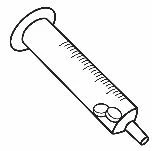
- Remove the plunger from the syringe used with the feeding tube (syringe not provided) and place the desired number of orodispersible tablets into the barrel of the syringe.
Note: A maximum of four orodispersible tablets can be dissolved in 1 mL at a time; it may
be necessary to repeat the following procedure to achieve the recommended dose.
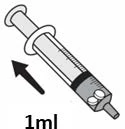
- Reinsert the plunger into the syringe and draw up 1 mL of fresh tap water. In children under 6 months of age, sterile water must be used.
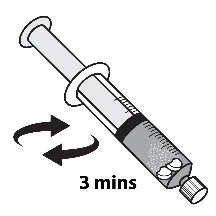
- Cap the syringe and gently rotate or shake it for 3 minutes to dissolve the orodispersible tablets.
- Remove the cap and administer the dose through the feeding tube.
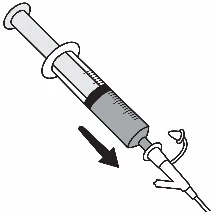
- Flush the feeding tube with at least 3 mL of water after administering the medicine.
The solution must be administered immediately to you or the child. Do not store it.
Standard feeding tubes (polyurethane, polyvinyl chloride, and silicone) have been considered
suitable for use with this medicine.
If you or the child take more Aqumeldi than you should
Do not take more medicine than prescribed by your doctor. If you or the child have taken more
tablets than prescribed, contact immediately the nearest hospital emergency department
or your doctor. Take the medicine packaging with you.
The most common signs and symptoms of overdose are low blood pressure (you may feel
dizzy or lightheaded) and a state of near-complete unconsciousness (stupor). Other symptoms
may include rapid and forceful heartbeat, fast pulse, anxiety, cough, kidney problems, and
rapid breathing.
If you or the child forget to take Aqumeldi
If you or the child forget to take Aqumeldi, skip the missed dose.
Take the next dose as usual.
Do not take a double dose to make up for the missed dose.
If you or the child stop taking Aqumeldi
Do not stop taking Aqumeldi unless your doctor tells you to do so.
If you have any doubts about using this medicine, consult your doctor, pharmacist, or
nurse.
4. Possible side effects
Like all medicines, this medicine can cause side effects, although not everybody gets them.
The following serious side effects have been reported in adult patients. If you or the child experience any of these side effects, stop using the medicine and seek urgent medical advice:
- swelling of the lips, eyes, mouth or throat which may cause difficulty breathing or swallowing (angioedema) – common;
- blood disorders including changes in blood values, such as reduced numbers of white and red blood cells, reduced haemoglobin, reduced platelet count – uncommon;
- heart attack (probably due to very low blood pressure in some high-risk patients, including those with heart or brain circulation problems) – uncommon;
- stroke (probably due to very low blood pressure in high-risk patients) – uncommon;
- blood disorders (bone marrow suppression), including changes in blood values such as reduced number of white blood cells (neutropenia), reduced platelet count (thrombocytopenia), lower haemoglobin levels, lower haematocrit levels, pancytopenia, agranulocytosis – rare;
- severe skin reactions with redness and peeling of the skin, blisters or open sores (Stevens-Johnson syndrome, toxic epidermal necrolysis) – rare;
- sudden, unexpected rash, burning, redness or peeling of the skin – rare;
- bone marrow stops producing new blood cells, leading to fatigue, reduced ability to fight infections and uncontrolled bleeding (aplastic anaemia) – rare;
- inflammation of the liver, liver disease (hepatopathy), increased liver enzymes or bilirubin (measured in tests), jaundice (yellowing of the skin and/or eyes) – rare.
Side effects observed in children taking Aqumeldi for heart failure:
Common (may affect up to 1 in 10 people)
- Dizziness, low blood pressure (postural dizziness)
- Cough
- Vomiting
- High potassium levels (hyperkalaemia), measured in blood
- Slight increase in protein albumin in urine (microalbuminuria)
You or the child may experience dizziness when starting Aqumeldi. This is caused by a drop in blood pressure. In such cases, lying down may help. Contact your doctor or paediatrician.
Other possible side effects observed in adults treated with enalapril include:
Very common (may affect more than 1 in 10 people)
- Dizziness
- Weakness (asthenia)
- Nausea
- Blurred vision
- Cough
Common (may affect up to 1 in 10 people)
- Diarrhoea
- Abdominal pain
- Vomiting
- Rash
- Headache
- Fainting (syncope)
- Low blood pressure
- Changes in heart rhythm
- Rapid heartbeat
- Angina
- Chest pain
- Tiredness (fatigue)
- Depression
- Increased potassium levels (hyperkalaemia), measured in blood tests
- Increased creatinine levels (increased serum creatinine), measured in blood tests
- Abnormal loss of albumin in urine (microalbuminuria), measured in urine tests
- Altered sense of taste
- Shortness of breath (dyspnoea)
Uncommon (may affect up to 1 in 100 people)
- Indigestion
- Constipation
- Loss of appetite (anorexia)
- Slow movement of food through the intestine
- Inflammation of the pancreas
- Irritated stomach (gastric irritation)
- Dry mouth
- Ulcer
- Impaired kidney function
- Kidney failure
- Runny nose
- Hoarseness
- Sore throat
- Fast or irregular heartbeats (palpitations)
- Excessive destruction of red blood cells leading to fatigue and paleness (haemolytic anaemia)
- Confusion
- Difficulty sleeping
- Drowsiness
- Nervousness
- Tingling or numbness of the skin
- Sensation of dizziness (vertigo)
- Ringing in the ears (tinnitus)
- Asthma
- Chest tightness associated with asthma (bronchospasm)
- Increased sweating
- Itching
- Hives
- Hair loss
- Muscle cramps
- Flushing
- Low blood pressure when standing (postural hypotension)
- Feeling unwell
- Fever
- Impotence (erectile dysfunction)
- High levels of protein in urine (measured in a test)
- Low blood sugar levels
- Low sodium levels (hyponatraemia), measured in blood
- High levels of urea in blood, measured in blood tests
Rare (may affect up to 1 in 1,000 people)
- Small fluid-filled blisters on the skin (pemphigus)
- Liver impairment (liver failure)
- Problems with bile flow (cholestasis)
- Increased liver enzymes
- Raynaud's phenomenon, where hands and feet may become very cold and pale due to low blood pressure
- Autoimmune diseases
- Unusual dreams
- Sleep disorders
- Accumulation of fluid or other substances in the lungs (observed on X-ray)
- Inflammation of the nose
- Lung inflammation caused by accumulation of blood cells, leading to breathing difficulties (eosinophilic pneumonia)
- Inflammation of the mouth (stomatitis)
- Inflammation of the tongue (glossitis)
- Mouth ulcers (aphthous ulcers)
- Reduced amount of urine produced
- Skin disorder due to allergic reaction or infection (erythema multiforme)
- Breast enlargement in men
- Swelling of glands in the neck, armpit or groin
- Swelling of hands, feet or ankles
Very rare (may affect up to 1 in 10,000 people)
- Swelling in the intestine (intestinal angioedema)
Not known (frequency cannot be estimated from available data)
- Excessive production of antidiuretic hormone, a hormone that helps the kidneys control the amount of water the body loses through urine, causing fluid retention, leading to weakness, fatigue or confusion (syndrome of inappropriate antidiuretic hormone secretion, SIADH)
- Severe skin reactions. A group of symptoms has been reported which may include some or all of the following: fever, inflammation of blood vessels (serositis/vasculitis), muscle pain (myalgia/myositis), joint pain (arthralgia/arthritis). Skin rash, sensitivity to sunlight and UV radiation, or other skin manifestations may also occur.
Reporting of side effects
If you or the child experience any side effect, talk to your doctor, pharmacist or nurse, including any side effects not listed in this leaflet. You can also report side effects directly via the national reporting system listed in Annex V. By reporting side effects, you can help provide more information on the safety of this medicine.
5. How to store Aqumeldi
Keep this medicine out of the sight and reach of children.
Do not use this medicine after the expiry date stated on the carton and bottle after
Exp. The expiry date refers to the last day of that month.
Do not store above 25 °C. Store in the original packaging to protect the
medicine from moisture.
Do not dispose of any medicine via wastewater or household waste. Ask your pharmacist how to
dispose of medicines no longer in use. This will help protect the environment.
6. Package contents and other information
What Aqumeldi contains
- The active substance is enalapril maleate. The other excipients are: mannitol (E421), crospovidone, poly(vinyl acetate), povidone, sodium lauryl sulfate (see section 2 “Aqumeldi contains sodium”), sodium stearyl fumarate, colloidal anhydrous silica - (only in the 0.25 mg tablet), yellow iron oxide (E172) - (only in the 1 mg tablet).
Description of the appearance of Aqumeldi and package contents
The 0.25 mg orodispersible tablets of Aqumeldi are white, round, biconvex tablets with a diameter of 2 mm.
The 1 mg orodispersible tablets of Aqumeldi are yellowish to yellow, round, biconvex tablets with a diameter of 2 mm.
The tablets are supplied in a plastic bottle with a child-resistant and tamper-evident plastic cap, inside a cardboard box. Each cardboard box contains one bottle and a blue measuring spoon.
Pack sizes of 0.25 mg or 1 mg containing 50, 100 or 200 orodispersible tablets per bottle are available.
Not all pack sizes may be marketed.
When opening the bottle for the first time, the seal must be broken:
- Hold the bottle firmly with one hand.
- With the other hand: press down firmly and turn the cap anticlockwise.
- Continue turning until the seal breaks.
Marketing Authorisation Holder
Proveca Pharma Limited
2 Dublin Landings
North Wall Quay
Dublin 1
Ireland
Manufacturer
Pharbil Waltrop GmbH
Im Wirrigen 25
45731 Waltrop
Germany
Other sources of information
More detailed information on this medicinal product is available on the website of the European Medicines Agency: https://www.ema.europa.eu.