Aptivus
Italy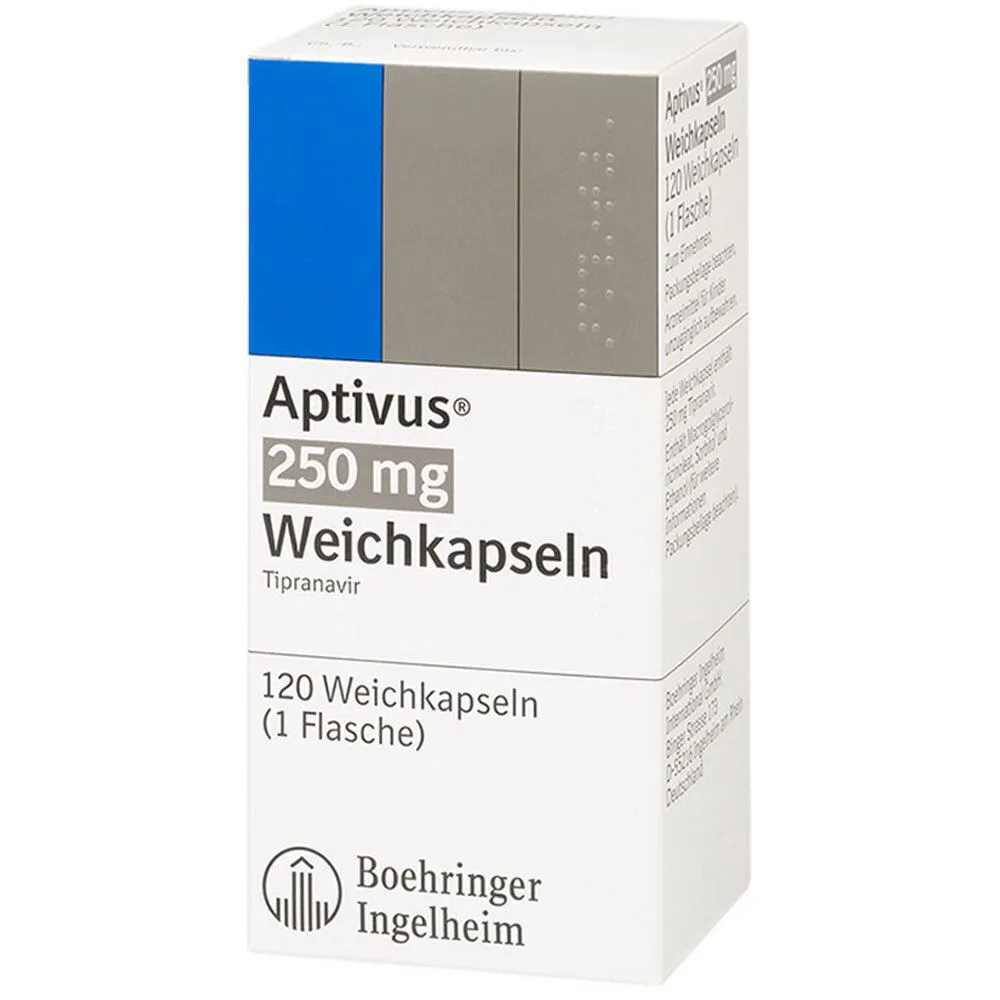
Table of Contents
Patient Information Leaflet: Information for the User
Aptivus 250 mg soft capsules
tipranavir
Please read this leaflet carefully before taking this medicine because it contains
important information for you.
- Keep this leaflet. You may need to read it again.
- If you have any questions, ask your doctor or pharmacist.
- This medicine has been prescribed for you only. Do not give it to others, even if they have the same symptoms as you, because it could be harmful.
- If you experience any side effect, including those not listed in this leaflet, talk to your doctor or pharmacist. See section 4.
Contents of this leaflet
- What Aptivus is and what it is used for
- What you need to know before taking Aptivus
- How to take Aptivus
- Possible side effects
- How to store Aptivus
- Contents of the pack and other information
If Aptivus has been prescribed for your child, please note that all information
contained in this patient leaflet applies to your child (i.e., understand “your child”
whenever you read “you”).
1. What Aptivus is and what it is used for
Aptivus contains the active substance tipranavir. It belongs to a group of medicines called
protease inhibitors used in the treatment of Human Immunodeficiency Virus (HIV) infection.
It blocks an enzyme called protease, which is involved in HIV replication. When this enzyme is
inhibited, the virus cannot replicate normally, thereby slowing down the infection. You must take Aptivus with:
- low-dose ritonavir (which helps Aptivus achieve adequate blood concentrations)
- other HIV medicines (antiretrovirals). Your doctor will decide, together with you, which other medicines you should take. This decision will depend, for example, on:
- the medicines you have previously taken for HIV
- which medicines your virus is resistant to. If your virus is resistant to certain medicines, this means that those medicines are not as effective, or not effective at all, in controlling the infection.
Aptivus is specifically used for the treatment of HIV that is resistant to most other protease inhibitors. Before starting treatment, your doctor will take blood samples to test for viral resistance. These tests must confirm that the HIV in your blood is resistant to most other protease inhibitors, and that treatment with Aptivus is appropriate for you. You should not use Aptivus if you have never previously received antiretroviral therapy or if other treatment options are available.
Aptivus soft capsules are indicated for:
- adolescents aged 12 years and older, with a body surface area (BSA) ≥ 1.3 m² or weighing ≥ 36 kg
- adults
2. What you should know before taking Aptivus
You must take Aptivus in combination with low-dose ritonavir and other antiretroviral medicines.
Therefore, it is important that you are also informed about these medicines. You must read the
package leaflet of ritonavir and of the other antiretroviral medicines carefully. If you have any
questions regarding ritonavir or other medicines prescribed to you, consult your doctor or pharmacist.
Do not take Aptivus
- if you are allergic to tipranavir or to any of the other ingredients of this medicine (listed in section 6)
- if you have moderate to severe liver problems. Your doctor will take a blood sample to assess whether your liver is functioning properly (liver function). Depending on the results of your liver function tests, it may be necessary to delay or discontinue treatment with Aptivus
- if you are taking products containing:
- rifampicin (used in the treatment of tuberculosis)
- cisapride (used to treat stomach problems)
- pimozide or sertindole (used to treat schizophrenia)
- quetiapine (used to treat schizophrenia, bipolar disorder, and major depressive disorder)
- lurasidone (used to treat schizophrenia)
- triazolam or oral midazolam (taken by mouth). These medicines are used to treat anxiety and sleep disorders
- ergot derivatives (used to treat migraine headaches)
- astemizole or terfenadine (used to treat allergies or hay fever)
- simvastatin or lovastatin (used to lower blood cholesterol)
- amiodarone, bepridil, flecainide, propafenone, or quinidine (used to treat heart rhythm disorders)
- metoprolol (used to treat heart failure)
- alfuzosin and sildenafil (when used to treat rare vascular disorders characterized by increased pressure in the pulmonary artery)
- colchicine (when used to treat acute gout attacks in patients with kidney or liver disease).
Do not take preparations containing St. John’s wort (a herbal remedy for depression).
It may prevent Aptivus from working properly.
Warnings and precautions
Talk to your doctor or pharmacist before taking Aptivus.
Inform your doctor if you have:
- haemophilia A or B
- diabetes
- liver disease.
If you have:
- elevated liver function test values
- hepatitis B or C infection, you may be at increased risk of severe and potentially fatal liver damage while being treated with Aptivus. Your doctor will monitor your liver function through blood tests before and during treatment with Aptivus. If you have liver failure or hepatitis, your doctor will decide whether further tests are needed. You must inform your doctor as soon as possible if you notice possible signs or symptoms of hepatitis such as:
- fever
- malaise (general feeling of being unwell)
- nausea (stomach upset)
- vomiting
- abdominal pain
- fatigue
- jaundice (yellowing of the skin and whites of the eyes).
Skin rash:
Mild to moderate skin rash, including:
- urticaria
- rash with small flat or raised red spots
- photosensitivity have been observed in approximately 1 in 10 patients treated with Aptivus. Some patients who developed a rash also had:
- joint pain or stiffness
- throat tightness
- widespread itching
In some patients with advanced HIV infection (AIDS) and a history of opportunistic infections, signs and symptoms of inflammation related to previous infections may occur shortly after starting anti-HIV treatment. These symptoms are believed to be due to an improved immune response, allowing the body to fight infections that may have been present without noticeable symptoms. If you notice any signs of infection (e.g., fever, swollen lymph nodes), inform your doctor immediately.
In addition to opportunistic infections, autoimmune disorders (a condition in which the immune system attacks healthy body tissue) may also occur after starting medicines for HIV infection. Autoimmune disorders may occur several months after starting treatment. If you notice any signs of infection or other symptoms such as muscle weakness, initial weakness in hands and feet spreading towards the trunk, palpitations, tremors, or hyperactivity, inform your doctor immediately to receive necessary treatment.
Inform your doctor if you have experienced fainting or a sensation of irregular heartbeat. Aptivus, when taken with low-dose ritonavir, may cause changes in heart rhythm and electrical activity of the heart. These changes can be seen on an ECG (electrocardiogram).
Bone problems: Some patients receiving combination antiretroviral therapy may develop a bone disease called osteonecrosis (death of bone tissue due to reduced blood supply to the bone). Duration of combination antiretroviral therapy, use of corticosteroids, alcohol consumption, severe immunosuppression, higher body mass index, among others, may be some of the many risk factors for developing this condition. Signs of osteonecrosis include joint stiffness, discomfort, pain (especially in hips, knees, and shoulders), and difficulty moving. Consult your doctor if you notice the onset of any of these symptoms.
Children
Aptivus soft capsules must not be used in children under 12 years of age.
Elderly
If you are over 65 years old, your doctor will prescribe Aptivus capsules cautiously and monitor your treatment closely. Tipranavir has been used in a limited number of patients aged 65 years or older.
Other medicines and Aptivus
Inform your doctor or pharmacist if you are taking, have recently taken, or might take any other medicine.
This is very important. If you take other medicines at the same time as Aptivus and ritonavir, the combination may increase or decrease the effect of the various medicines taken. These effects are called interactions and may cause serious side effects or prevent proper control of other conditions you may have.
Interactions with other HIV medicines:
- etravirine belongs to a class of HIV medicines called non-nucleoside reverse transcriptase inhibitors (NNRTIs). The use of Aptivus with etravirine is not recommended.
- abacavir and zidovudine. These belong to a class of HIV medicines called nucleoside reverse transcriptase inhibitors (NRTIs). Your doctor will prescribe abacavir and zidovudine only if you cannot take other NRTIs.
- didanosine: If you are taking gastro-resistant coated tablets of didanosine, you must take them at least two hours before or after Aptivus.
- emtricitabine: If you are taking emtricitabine, your kidney function must be monitored before starting Aptivus.
- rilpivirine: If you are taking rilpivirine, your doctor will monitor you closely.
- Protease inhibitors (PIs): Taking Aptivus may cause significant decreases in blood levels of other HIV protease inhibitors. For example, blood levels of the protease inhibitors amprenavir, atazanavir, lopinavir, and saquinavir may decrease. Taking Aptivus with atazanavir may cause a marked increase in blood levels of Aptivus and ritonavir. Your doctor will carefully evaluate whether to combine Aptivus with protease inhibitors.
Other medicines with which Aptivus may interact include:
- oral contraceptives/hormone replacement therapy (HRT or HRT): If you are taking oral contraceptives to prevent pregnancy, you must use an additional or different contraceptive method (e.g., a barrier method such as a condom). Generally, the use of Aptivus with ritonavir together with oral contraceptives or hormone replacement therapy is not recommended. You should discuss with your doctor whether it is appropriate to continue taking oral contraceptives or hormone replacement therapy. If you take oral contraceptives or hormone replacement therapy, there is an increased risk of developing a skin rash while taking Aptivus. If a skin rash occurs, it is usually mild to moderate. You must inform your doctor, as it may be necessary to temporarily discontinue either Aptivus or the oral contraceptives or hormone replacement therapy.
- carbamazepine, phenobarbital, and phenytoin (used to treat epilepsy) may reduce the effectiveness of Aptivus.
- sildenafil, vardenafil, tadalafil (medicines used to induce and maintain an erection). The effects of sildenafil and vardenafil are likely to be enhanced when taken concomitantly with Aptivus. Tadalafil will not be prescribed until at least 7 days have passed since starting Aptivus therapy.
- omeprazole, esomeprazole, lansoprazole, pantoprazole, rabeprazole (proton pump inhibitors used to reduce stomach acid production)
- metronidazole (used to treat infections)
- disulfiram (used to treat alcohol dependence)
- buprenorphine/naloxone (used to treat severe pain)
- cyclosporine, tacrolimus, sirolimus (used to prevent organ transplant rejection (to suppress the immune system))
- warfarin (used to treat and prevent thrombosis)
- digoxin (used to treat cardiac arrhythmias and heart failure)
- antifungal medicines including fluconazole, itraconazole, ketoconazole, or voriconazole
The following medicines are not recommended:
- fluticasone (used to treat asthma)
- atorvastatin (used to lower blood cholesterol)
- salmeterol (used for long-term control of asthma, prevention of bronchospasm in COPD)
- bosentan (used to treat pulmonary arterial hypertension)
- halofantrine or lumefantrine (used to treat malaria)
- tolterodine (used to treat overactive bladder (with symptoms of increased frequency and urgency of urination or incontinence))
- cobicistat and products containing cobicistat (used to boost the effectiveness of HIV medicines).
Aptivus may cause loss of effectiveness of certain medicines, including:
- methadone, meperidine (pethidine), used as morphine substitutes
Your doctor may find it necessary to increase or decrease the dose of other medicines you are taking with Aptivus. Examples include:
- rifabutin and clarithromycin (antibiotics)
- theophylline (used to treat asthma)
- desipramine, trazodone, and bupropion (used to treat depression; bupropion is also used to help quit smoking)
- midazolam (administered by injection); midazolam is a sedative used to treat anxiety and to induce sleep
- rosuvastatin or pravastatin (used to reduce blood cholesterol levels)
- colchicine (used to treat gout attacks in patients with normal kidney and liver function)
- raltegravir (used to treat HIV infection)
- dolutegravir (used to treat HIV infection).
If you are taking antacid medicines containing aluminium or magnesium (used to treat dyspepsia/gastroesophageal reflux), the time interval between taking Aptivus and the antacid should be at least two hours.
Inform your doctor if you are taking blood-thinning medicines or if you are taking vitamin E. In these circumstances, your doctor may consider certain precautions.
Pregnancy, breastfeeding, and fertility
If you are pregnant, think you may be pregnant, or are planning to become pregnant, ask your doctor or pharmacist for advice before taking this medicine. It is not known whether Aptivus can be used safely during pregnancy.
Breastfeeding is not recommended for HIV-positive women because HIV infection can be transmitted to the baby through breast milk.
If you are breastfeeding or considering breastfeeding, you must discuss this with your doctor as soon as possible.
See also section 2, particularly “Oral contraceptives/hormone replacement therapy (HRT or HRT)”.
Aptivus contains a very small amount of alcohol (see Aptivus capsules contain ethanol).
Driving and using machines
Some of the side effects of Aptivus (e.g., dizziness and drowsiness) may affect your ability to drive or operate machinery. If you experience these symptoms, you must not drive or operate machinery.
Aptivus capsules contain ethanol, polyoxyl 40 hydrogenated castor oil, and sorbitol (E420)
Aptivus contains 100 mg of alcohol (ethanol) in each capsule. The amount in 250 mg of this medicine (i.e., one capsule) is equivalent to less than 3 mL of beer or 1 mL of wine. The small amount of alcohol in this medicine will not produce significant effects.
Aptivus also contains polyoxyl 40 hydrogenated castor oil, which may cause stomach discomfort and diarrhoea.
This medicine contains 12.6 mg of sorbitol per capsule.
3. How to take Aptivus
Take this medicine exactly as directed by your doctor. If you have any doubts, consult your doctor or pharmacist. You must take Aptivus together with ritonavir.
The recommended dose for an adult or an adolescent aged 12 years or older with a body surface area (BSA) ≥ 1.3 m² or weighing ≥ 36 kg is:
- 500 mg of Aptivus (two 250 mg capsules) together with
- 200 mg of ritonavir (two 100 mg capsules) twice daily with food.
Oral use.
Aptivus capsules must be taken with food, swallowed whole, and must not be opened or chewed.
Always take this medicine in combination with other antiretroviral medicines. For these medicines, follow the instructions provided in their respective Package Leaflets.
You must continue taking Aptivus for the entire duration prescribed by your doctor.
If you take more Aptivus than you should
If you take more Aptivus than prescribed, inform your doctor as soon as possible.
If you forget to take Aptivus
If you miss a dose of Aptivus or ritonavir by more than 5 hours, wait and take the next scheduled dose of Aptivus and ritonavir at the regular time. If you miss a dose of Aptivus and/or ritonavir by less than 5 hours, take the missed dose immediately. Then take the next dose of Aptivus and ritonavir at the regularly scheduled time.
Do not take a double dose to make up for a forgotten dose.
If you stop taking Aptivus
It has been shown that taking all doses at the correct times:
- greatly increases the effectiveness of antiretroviral combination therapy
- reduces the risk that your HIV becomes resistant to your antiretroviral medicines.
Therefore, it is important that you continue taking Aptivus correctly as described above. DO NOT stop taking Aptivus unless your doctor specifically tells you to do so.
If you have any questions about how to use this medicine, consult your doctor or pharmacist.
4. Possible side effects
During HIV therapy, an increase in weight and in blood lipid and glucose levels may occur. This is partly related to the recovery of health status and lifestyle, and in the case of blood lipids, sometimes also to the HIV medications themselves. Your doctor will monitor these changes.
Like all medicines, this medicine can cause side effects, although not everybody gets them. It may be difficult to distinguish between:
- side effects caused by Aptivus
- side effects caused by other medicines you are taking
- complications arising from HIV infection.
For this reason, it is very important that you inform your doctor of any changes in your health status.
Serious side effects associated with the use of Aptivus:
- Abnormal liver function
- Hepatitis and fatty liver
- Liver failure. This may lead to death
- Increased levels of bilirubin (a breakdown product of haemoglobin)
You must inform your doctor if you experience:
- Loss of appetite
- Nausea (upset stomach)
- Vomiting and/or jaundice, which may be symptoms of abnormal liver function
- Bleeding *Cerebral haemorrhage. This may lead to permanent disability or death, and has occurred in some patients treated with Aptivus during clinical studies. In most of these patients, bleeding may have had other causes. For example, patients had other underlying diseases or were receiving concomitant treatment with other medicines that could have caused the bleeding.
Possible side effects
Very common: may affect more than 1 in 10 people
- Diarrhoea
- Nausea (upset stomach)
Common: may affect up to 1 in 10 people
- Vomiting
- Abdominal pain (stomach ache)
- Flatulence (excessive intestinal gas)
- Fatigue
- Headache
- Mild skin rash, e.g., with urticaria or small flat or raised red spots
- Increased levels of lipids (fats) in the blood
- Dyspepsia
Uncommon: may affect up to 1 in 100 people
- Reduction in red and white blood cells
- Reduction in blood platelets
- Allergic reactions (hypersensitivity)
- Reduced appetite
- Diabetes
- Increased blood sugar
- Increased blood cholesterol levels
- Insomnia and other sleep disturbances
- Somnolence
- Dizziness
- Numbness and/or tingling and/or pain in hands and feet
- Breathing difficulties
- Pancreatitis
- Skin inflammation
- Pruritus
- Muscle cramps
- Muscle pain
- Kidney disease
- Influenza-like symptoms (feeling unwell)
- Fever
- Weight loss
- Increased blood levels of the pancreatic enzyme amylase
- Increased liver enzyme activity
- Hepatitis with liver cell damage due to toxin exposure
Rare: may affect up to 1 in 1,000 people
- Liver failure (including fatal cases)
- Hepatitis
- Fatty liver
- Increased blood levels of bilirubin (a breakdown product of haemoglobin)
- Dehydration (when the body does not have enough fluids)
- Facial wasting
- Cerebral haemorrhage* (see above)
- Increased blood levels of the pancreatic enzyme lipase
Additional information on possible side effects related to combination antiretroviral therapy:
- Bleeding Increased bleeding. If you have haemophilia type A or B, you may experience increased bleeding. This may occur in the skin or joints. If you notice this effect, contact your doctor immediately.
Muscle disorders
Cases of muscle pain, tenderness, or weakness have been reported. This is particularly when Aptivus or other protease inhibitors are taken in combination with nucleoside analogues. Rarely, these muscle disorders have been severe, involving breakdown of muscle tissue (rhabdomyolysis).
Additional side effects in children and adolescents
The most common side effects are generally similar to those described in adults. Vomiting, skin rash, and fever have been observed more frequently in children than in adults.
Reporting of side effects
If you experience any side effect, including those not listed in this leaflet, talk to your doctor or pharmacist. You can also report side effects directly via the national reporting system listed in Annex V. By reporting side effects, you can help provide more information on the safety of this medicine.
5. How to store Aptivus
Keep this medicine out of the sight and reach of children.
Do not use this medicine after the expiry date stated on the vial after "Exp". The expiry date refers to the last day of that month.
Store in a refrigerator (2 °C to 8 °C). After opening the vial, the contents should be used within 60 days (store at a temperature below 25 °C). It is recommended to note the date the vial was opened on the label and/or outer carton.
Do not dispose of any medicine via wastewater or household waste. Ask your pharmacist how to dispose of medicines you no longer use. This will help protect the environment.
6. Package contents and other information
What Aptivus contains
- The active substance is tipranavir. Each capsule contains 250 mg of tipranavir.
- The other ingredients are polyoxyl 40 hydrogenated castor oil, ethanol (alcohol), mono/diglycerides of caprylic/capric acid, propylene glycol, purified water, tromethamine, and propyl gallate. The capsules are composed of gelatin, red iron oxide, propylene glycol, purified water, "special sorbitol and glycerin mixture" (D-sorbitol, 1,4-sorbitan, mannitol, and glycerin), and titanium dioxide. The black ink contains propylene glycol, black iron oxide, polyvinyl acetate phthalate, macrogol, and ammonium hydroxide.
Description of the appearance of Aptivus and package contents
Aptivus soft capsules are pink, oblong soft gelatin capsules with the marking “TPV 250” printed in black. Each Aptivus capsule contains 250 mg of the active substance tipranavir. Aptivus is available in bottles containing 120 capsules.
Marketing Authorization Holder
Boehringer Ingelheim International GmbH
Binger Strasse 173
55216 Ingelheim am Rhein
Germany
Manufacturer
Boehringer Ingelheim Pharma GmbH & Co. KG
Binger Strasse 173
55216 Ingelheim am Rhein
Germany
or
Boehringer Ingelheim France
100-104 avenue de France
75013 Paris
France
For further information about this medicinal product, please contact the local representative of the Marketing Authorization Holder:
België/Belgique/Belgien Lietuva
Boehringer Ingelheim SComm Boehringer Ingelheim RCV GmbH & Co KG
Tél/Tel: +32 2 773 33 11 Lietuvos filialas
Tel: +370 5 2595942
България Luxembourg/Luxemburg
Бьорингер Ингелхайм РЦВ ГмбХ и Ко КГ - Boehringer Ingelheim SComm
клон България Tél/Tel: +32 2 773 33 11
Тел: +359 2 958 79 98
Česká republika Magyarország
Boehringer Ingelheim spol. s r.o. Boehringer Ingelheim RCV GmbH & Co KG
Tel: +420 234 655 111 Magyarországi Fióktelepe
Tel: +36 1 299 89 00
Danmark Malta
Boehringer Ingelheim Danmark A/S Boehringer Ingelheim Ireland Ltd.
Tlf.: +45 39 15 88 88 Tel: +353 1 295 9620
Deutschland Nederland
Boehringer Ingelheim Pharma GmbH & Co. KG Boehringer Ingelheim B.V.
Tel: +49 800 77 90 900 Tel: +31 (0) 800 22 55 889
Eesti Norge
Boehringer Ingelheim RCV GmbH & Co KG Boehringer Ingelheim Danmark
Eesti filiaal Norwegian branch
Tel: +372 612 8000 Tlf: +47 66 76 13 00
Ελλάδα Österreich
Boehringer Ingelheim Ελλάς Μονοπρόσωπη Boehringer Ingelheim RCV GmbH & Co KG
Α.Ε. Tel: +43 1 80 105-7870
Tηλ: +30 2 10 89 06 300
España Polska
Boehringer Ingelheim España, S.A. Boehringer Ingelheim Sp. z o.o.
Tel: +34 93 404 51 00 Tel: +48 22 699 0 699
France Portugal
Boehringer Ingelheim France S.A.S. Boehringer Ingelheim Portugal, Lda.
Tél: +33 3 26 50 45 33 Tel: +351 21 313 53 00
Hrvatska România
Boehringer Ingelheim Zagreb d.o.o. Boehringer Ingelheim RCV GmbH & Co KG
Tel: +385 1 2444 600 Viena - Sucursala Bucuresti
Tel: +40 21 302 2800
Ireland Slovenija
Boehringer Ingelheim Ireland Ltd. Boehringer Ingelheim RCV GmbH & Co KG
Tel: +353 1 295 9620 Podružnica Ljubljana
Tel: +386 1 586 40 00
Ísland Slovenská republika
Vistor ehf. Boehringer Ingelheim RCV GmbH & Co KG
Sími: +354 535 7000 organizačná zložka
Tel: +421 2 5810 1211
Italia Suomi/Finland
Boehringer Ingelheim Italia S.p.A. Boehringer Ingelheim Finland Ky
Tel: +39 02 5355 1 Puh/Tel: +358 10 3102 800
Κύπρος Sverige
Boehringer Ingelheim Ελλάς Μονοπρόσωπη Boehringer Ingelheim AB
Α.Ε. Tel: +46 8 721 21 00
Tηλ: +30 2 10 89 06 300
Latvija
Boehringer Ingelheim RCV GmbH & Co KG
Latvijas filiāle
Tel: +371 67 240 011
More detailed information on this medicinal product is available on the website of the European Medicines Agency: https://www.ema.europa.eu/