Apretude
Italy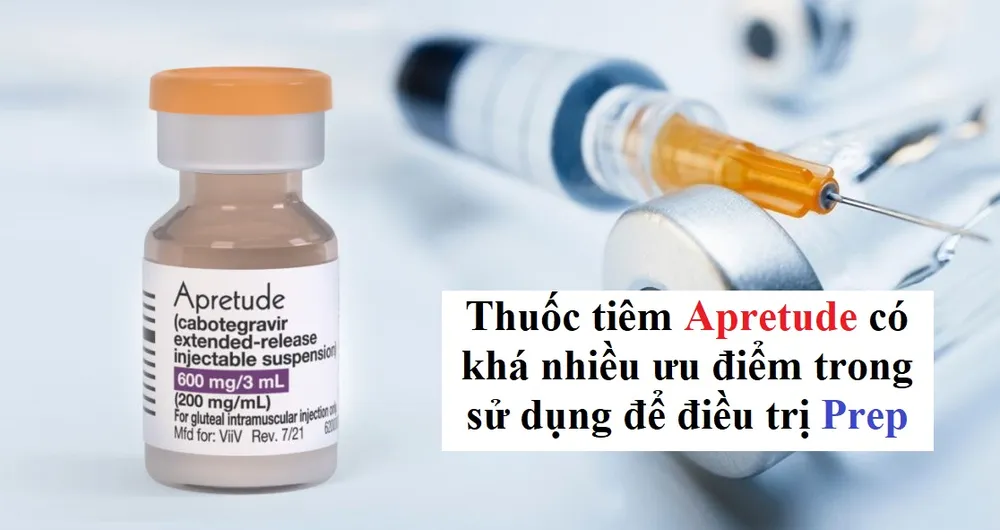
Table of Contents
- Package leaflet: Information for the patient
- Apretude 600 mg prolonged-release injectable suspension
- 1. What Apretude is and what it is used for
- 2. What you should know before you are given Apretude
- 3. How Apretude is administered
- 4. Possible side effects
- 5. How to store Apretude
- 6. Package contents and other information
- The following information is intended exclusively for healthcare professionals:
- 1. Inspection of the vial
- 2. Shake vigorously
- 3. Prepare the syringe and needle
- 4. Slowly draw up the dose
- 5. Attach the injection needle
- 6. Prepare the injection site
- 7. Remove excess liquid
- 8. Stretch the skin
- 9. Inject the dose
- 10. Examine the injection site
- 2. How long can the medicine remain in the syringe?
- 3. Why is it necessary to inject air into the vial?
- 4. Why is the ventrogluteal approach the recommended route of administration?
- Patient information leaflet
- Apretude 30 mg film-coated tablets
- 1. What Apretude tablets are and what they are used for
- 2. What you need to know before taking Apretude tablets
- 4. Possible side effects
- 5. How to store Apretude tablets
- 6. Package contents and other information
Package leaflet: Information for the patient
Apretude 600 mg prolonged-release injectable suspension
cabotegravir
This medicinal product is under additional monitoring. This will allow for rapid identification of new safety information. You can help by reporting any side effects you experience while taking this medicine. See the end of section 4 for information on how to report side effects.
Please read all of this leaflet carefully before you start using this medicine because it contains important information for you.
- Keep this leaflet. You may need to read it again.
- If you have any questions, ask your doctor or nurse.
- If you experience any side effects, including those not listed in this leaflet, talk to your doctor or nurse. See section 4.
Contents of this leaflet
- What Apretude is and what it is used for
- What you need to know before you are given Apretude
- How Apretude is administered
- Possible side effects
- How to store Apretude
- Contents of the pack and other information
1. What Apretude is and what it is used for
Apretude contains the active substance cabotegravir. Cabotegravir belongs to a group of antiretroviral medicines called integrase inhibitors (INI).
Apretude is used to help prevent infection with human immunodeficiency virus-1 (HIV-1) in adults and adolescents weighing at least 35 kg who are at high risk of acquiring the infection. This is known as pre-exposure prophylaxis: PrEP (see section 2).
It should be used in combination with safer sex practices, such as the use of condoms.
2. What you should know before you are given Apretude
Do not use Apretude
- if you have developed a severe skin rash, skin peeling, blisters and/or mouth ulcers.
- if you are allergic ( hypersensitive ) to cabotegravir or to any of the other ingredients of this medicine (listed in section 6).
- if you are HIV-positive or do not know your HIV status. Apretude can only help reduce the risk of acquiring HIV before you become infected. Before taking Apretude, you must be tested to make sure you are HIV-negative.
- if you are taking any of the following medicines :
- carbamazepine, oxcarbazepine, phenytoin, phenobarbital (medicines used to treat epilepsy and prevent seizures)
- rifampicin or rifapentine (medicines used to treat certain bacterial infections such as tuberculosis).
These medicines reduce the effectiveness of Apretude by decreasing the amount of Apretude in your blood.
➔ Talk to your doctor if you think any of these conditions apply to you or if you are unsure.
Warnings and precautions
Taking Apretude alone may not prevent HIV infection.
HIV infection spreads through sexual contact with an HIV-positive person or through the transfer of infected blood. Although Apretude reduces the risk of acquiring HIV infection, it is still possible to become infected with HIV while taking this medicine.
You must take other measures to further reduce the risk of acquiring HIV infection:
- get tested for other sexually transmitted infections as advised by your doctor. These infections may make it easier for you to acquire HIV;
- use a condom when having oral or penetrative sex;
- do not share or reuse needles or other injection or medication administration equipment;
- do not share personal items that may have blood or body fluids on them (such as razors or toothbrushes). Discuss with your doctor any additional precautions needed to further reduce the risk of acquiring HIV infection.
Reducing the risk of acquiring HIV infection:
There is a risk of developing resistance to this medicine if you become infected with HIV. This means the medicine will not prevent HIV infection. To minimise this risk and prevent HIV infection, it is important that you:
- attend your scheduled appointments to receive your Apretude injection. Talk to your doctor if you are considering stopping the injections, as this may increase your risk of acquiring HIV infection. If you stop or delay receiving the Apretude injection, you may need to take other medicines or take precautions to reduce the risk of acquiring HIV infection and possibly developing HIV resistance.
- get tested for HIV when your doctor requests it. You must be tested regularly to ensure you remain HIV-1 negative while taking Apretude.
- tell your doctor immediately if you think you may have been infected with HIV (you may have flu-like illness). Your doctor may perform further tests to confirm you are still HIV-negative.
Injectable Apretude is a long-acting medicine
If you stop Apretude injections, cabotegravir will remain in your body for up to a year or more after the last injection, but this is not sufficient to protect you from acquiring HIV infection.
It is important that you attend your scheduled visits to receive your Apretude injection. Talk to your doctor if you are considering stopping PrEP.
After stopping Apretude injections, you may need to take other medicines to reduce the risk of acquiring HIV infection or use other precautions for safe sex.
Liver problems
Talk to your doctor if you have liver problems. You may require closer monitoring
(See also ‘Uncommon side effects’ in section 4).
Adolescents
Your doctor will discuss your mental health before and during treatment with Apretude. Inform your doctor if you have mental health problems. You may require closer monitoring
( see also section 4 ).
Severe skin reaction:
Severe, potentially life-threatening skin reactions such as Stevens-Johnson syndrome and toxic epidermal necrolysis have been reported very rarely in association with Apretude. Stop taking Apretude and contact a doctor immediately if you notice any of the symptoms related to these severe skin reactions.
➔ Read the information in section 4 of this leaflet (“Possible side effects”).
Allergic reaction
Apretude contains cabotegravir, which is an integrase inhibitor. Integrase inhibitors, including cabotegravir, can cause a serious allergic reaction known as hypersensitivity reaction. You need to be aware of these important signs and symptoms so you can recognise them while taking Apretude.
➔ Read the information in ‘Possible side effects’ in section 4 of this leaflet.
Children and adolescents
This medicine is not intended for use in children or in adolescents weighing less than 35 kg, as it has not been studied in these populations.
Other medicines and Apretude
Tell your doctor if you are taking, have recently taken, or might take any other medicines, including those not requiring a prescription.
Some medicines may affect the activity of Apretude or make it more likely that you will experience side effects. Apretude may also affect the activity of other medicines.
Apretude must not be administered with certain other medicines that may affect its activity (see ‘Do not use Apretude’ in section 2). These medicines include:
- carbamazepine, oxcarbazepine, phenytoin, phenobarbital (medicines used to treat epilepsy and prevent seizures).
- rifampicin or rifapentine (medicines used to treat certain bacterial infections such as tuberculosis).
Tell your doctor if you are taking:
- rifabutin (used to treat certain bacterial infections such as tuberculosis). You may need to receive Apretude injections more frequently. ➔ Tell your doctor or pharmacist if you are taking this medicine. Your doctor may decide that you need additional monitoring.
Pregnancy and breastfeeding
If you are pregnant, think you may be pregnant, planning to become pregnant, or are breastfeeding, ask your doctor for advice before taking this medicine.
Pregnancy
Apretude is not recommended during pregnancy. The effect of Apretude on pregnancy is unknown.
Talk to your doctor: if you could become pregnant, if you are planning to have a baby, or if you become pregnant. Do not stop your scheduled visits for Apretude injections without consulting your doctor. Your doctor will assess the benefit to you and the risk to your baby of starting/continuing Apretude.
Breastfeeding
It is not known whether the components of Apretude pass into breast milk. However, cabotegravir may still pass into breast milk for up to 12 months after the last Apretude injection.
If you are breastfeeding or considering breastfeeding, talk to your doctor. Your doctor will assess the benefits and risks of breastfeeding for you and your baby.
Driving and using machines
Apretude may cause dizziness and other side effects that may reduce your attention.
➔ Do not drive or operate machinery if you are not sure that your level of alertness is not impaired.
3. How Apretude is administered
This medicine is administered as a 600 mg injection. A nurse or doctor will give you Apretude as an intramuscular injection in the buttock.
Before you are given Apretude, you must have a negative HIV test.
Your first and second doses of Apretude will be given one month apart.
After the second dose, you will receive Apretude as a single injection every 2 months.
Before starting treatment with Apretude injections, you and your doctor may decide that you first take cabotegravir tablets (this is called the oral initiation phase). The initiation phase allows you and your doctor to assess whether continuing with injections is appropriate.
If you decide to start treatment with tablets:
- you must take one 30 mg tablet of Apretude once daily for about one month;
- you will receive your first injection on the same day you take your last tablet, or no more than 3 days after;
- thereafter, you will receive an injection every 2 months.
Injection schedule for administration every 2 months
When Medicine
First and second injection, one month apart Apretude 600 mg
Third injection onwards, every 2 months Apretude 600 mg
If you are given too much Apretude
A doctor or nurse will administer this medicine to you, so it is unlikely that you will receive too much. If you are concerned, speak to your doctor or nurse, and you will be treated as necessary.
If you miss an Apretude injection
Contact your doctor immediately to reschedule your appointment.
It is important that you attend your scheduled visits to receive your injection and to reduce your risk of acquiring HIV (see section 2). Talk to your doctor if you are considering stopping Apretude.
Talk to your doctor if you think you may not be able to receive your Apretude injection at the scheduled time.
Your doctor may advise you to take cabotegravir tablets until you are able to receive the Apretude injection again.
Do not stop receiving Apretude injections without consulting your doctor.
Continue receiving Apretude injections for as long as your doctor recommends. Do not stop unless your doctor advises you to. If you stop and are still at risk of acquiring HIV, your doctor must start you on another PrEP medicine within 2 months of your last Apretude injection.
If you have any further questions about the use of this medicine, ask your doctor or pharmacist.
4. Possible side effects
Like all medicines, this medicine can cause side effects, although not everyone will experience them.
Stop taking Apretude and contact a doctor immediately if you notice any of the following symptoms:
- flat, red, target-like or circular skin rashes, often with blisters in the center, skin peeling, mouth, throat, nose, genital or eye ulcers. These serious skin reactions may be preceded by fever and flu-like symptoms (Stevens-Johnson syndrome, toxic epidermal necrolysis). These potentially life-threatening skin reactions are very rare (may affect up to 1 in 10,000 people).
Allergic reactions
Apretude contains cabotegravir, which is an integrase inhibitor. Integrase inhibitors, including cabotegravir, can cause a serious allergic reaction known as hypersensitivity reaction.
If you experience any of the following symptoms:
- skin rash
- fever
- fatigue
- swelling, sometimes of the face or mouth (angioedema), causing difficulty breathing
- muscle or joint pain ➔ Contact a doctor immediately. Your doctor may decide to run tests to monitor your liver, kidneys, or blood and may instruct you to stop taking Apretude.
Very common side effects (may affect more than 1 in 10 people)
- headache
- diarrhoea
- injection site reactions or very common: pain (which rarely may include temporary difficulty walking) and discomfort, hardened mass or nodule; or common: redness (erythema), itching, swelling, warmth, numbness (anaesthesia), or bruising (which may include skin discoloration or blood accumulation under the skin); or uncommon: pus accumulation (abscess)
- feeling of warmth (pyrexia)
- changes in liver function (increased transaminases), detected by blood tests
Common side effects (may affect up to 1 in 10 people)
- depression
- anxiety
- abnormal dreams
- difficulty sleeping (insomnia)
- dizziness
- nausea
- vomiting
- stomach ache (abdominal pain)
- flatulence
- skin rash
- muscle pain (myalgia)
- fatigue
- general feeling of being unwell
Uncommon side effects (may affect up to 1 in 100 people)
- suicide attempt
- suicidal thoughts (particularly in individuals who previously had depression or mental health problems)
- allergic reaction (hypersensitivity)
- urticaria
- swelling (angioedema), sometimes of the face or mouth, causing difficulty breathing
- drowsiness
- weight gain
- feeling dizzy during or after an injection (vasovagal reaction). This may lead to fainting.
- liver damage (hepatotoxicity). Signs may include yellowing of the skin and whites of the eyes, loss of appetite, itching, stomach tenderness, pale stools or unusually dark urine.
- increased bilirubin in the blood, a breakdown product of red blood cells, detected by blood tests.
Reporting of side effects
If you experience any side effect, including those not listed in this leaflet, contact your doctor or nurse. You can also report side effects directly via the national reporting system listed in Annex V. Reporting side effects helps provide more information on the safety of this medicine.
5. How to store Apretude
Keep this medicine out of the sight and reach of children.
Do not use this medicine after the expiry date stated on the label and carton after "Exp.". The expiry date refers to the last day of that month.
The doctor or nurse is responsible for the correct storage of the medicine.
Do not freeze.
6. Package contents and other information
What Apretude contains
The active substance is cabotegravir.
Each 3 mL vial contains 600 mg of cabotegravir.
The other excipients are:
Mannitol (E421)
Polysorbate 20 (E432)
Macrogol (E1521)
Water for injections
Description of the appearance of Apretude and contents of the pack
Cabotegravir is a white to pale pink suspension supplied in a brown glass vial with a rubber stopper and an aluminium seal, closed with a plastic flip-off cap.
Marketing Authorization Holder
ViiV Healthcare BV
Van Asch van Wijckstraat 55H
3811 LP Amersfoort
The Netherlands
Manufacturer
GlaxoSmithKline Manufacturing S.p.A.
Strada Provinciale Asolana, 90
San Polo di Torrile
Parma, 43056
Italy
For further information about this medicinal product, please contact the local representative of the Marketing Authorization Holder:
België/Belgique/Belgien Lietuva
ViiV Healthcare srl/bv ViiV Healthcare BV
Tél/Tel: + 32 (0) 10 85 65 00 Tel: + 370 80000334
България Luxembourg/Luxemburg
ViiV Healthcare BV ViiV Healthcare srl/bv
Teл.: + 359 80018205 Belgique/Belgien
Tél/Tel: + 32 (0) 10 85 65 00
Česká republika Magyarország
GlaxoSmithKline, s.r.o. ViiV Healthcare BV
Tel: + 420 222 001 111 Tel.: + 36 80088309
[email protected]
Danmark Malta
GlaxoSmithKline Pharma A/S ViiV Healthcare BV
Tlf.: + 45 36 35 91 00 Tel: + 356 80065004
[email protected]
Deutschland Nederland
ViiV Healthcare GmbH ViiV Healthcare BV
Tel.: + 49 (0)89 203 0038-10 Tel: + 31 (0) 33 2081199
[email protected]
Eesti Norge
ViiV Healthcare BV GlaxoSmithKline AS
Tel: + 372 8002640 Tlf: + 47 22 70 20 00
Ελλάδα Österreich
GlaxoSmithKline Μονοπρόσωπη A.E.B.E. GlaxoSmithKline Pharma GmbH
Τηλ: + 30 210 68 82 100 Tel: + 43 (0)1 97075 0
[email protected]
España Polska
Laboratorios ViiV Healthcare, S.L. GSK Services Sp. z o.o.
Tel: + 34 900 923 501 Tel.: + 48 (0)22 576 9000
[email protected]
France Portugal
ViiV Healthcare SAS VIIVHIV HEALTHCARE, UNIPESSOAL, LDA
Tél.: + 33 (0)1 39 17 69 69 Tel: + 351 21 094 08 01
[email protected] [email protected]
Hrvatska România
ViiV Healthcare BV ViiV Healthcare BV
Tel: + 385 800787089 Tel: + 40 800672524
Ireland Slovenija
GlaxoSmithKline (Ireland) Limited ViiV Healthcare BV
Tel: + 353 (0)1 4955000 Tel: + 386 80688869
Ísland Slovenská republika
Vistor hf. ViiV Healthcare BV
Sími: +354 535 7000 Tel: + 421 800500589
Italia Suomi/Finland
ViiV Healthcare S.r.l GlaxoSmithKline Oy
Tel: + 39 (0)45 7741600 Puh/Tel: + 358 (0)10 30 30 30
Κύπρος Sverige
ViiV Healthcare BV Τηλ: + 357 80070017 GlaxoSmithKline AB
Tel: + 46 (0)8 638 93 00
[email protected]
Latvija
ViiV Healthcare BV
Tel: + 371 80205045
Other sources of information
More detailed information on this medicinal product is available on the website of the European Medicines Agency: https://www.ema.europa.eu
The following information is intended exclusively for healthcare professionals:

Pack 2 of 2
Apretude
600 mg
Extended-release injectable suspension
Cabotegravir
For intramuscular use
Instructions for use

General information
A 3 mL (600 mg) cabotegravir injection is required at each visit.
Cabotegravir is a suspension that does not require further dilution or reconstitution.
Cabotegravir is for intramuscular use only. It must be administered in the gluteal site.
Note: The ventrogluteal site is recommended.

Storage information
- Storage conditions are indicated on the packaging.
Do not freeze.
To prepare the injection
- 1 Luer-Lock syringe (5 mL)
- 1 Luer-Lock aspiration needle or an aspiration device (to withdraw the suspension)
To administer the injection
- 1 additional Luer-Lock needle (use safety needle if available), gauge 23, 1.5 inches
Consider the patient's body habitus and use clinical judgment to select the appropriate injection needle length.
You will also need
- Non-sterile gloves
- 2 alcohol swabs
- 1 gauze pad
- A sharps container Preparation
1. Inspection of the vial
- Check the expiration date.
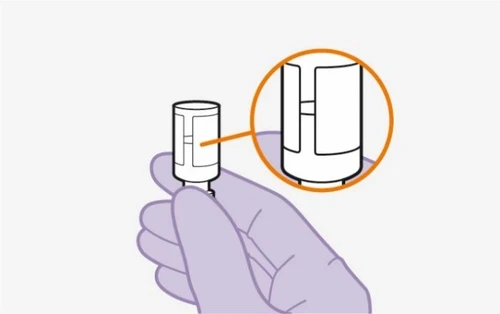
Check the expiration
date and the Do not use if the expiration date has passed.
medicinal product
- Inspect the vial. If foreign particles are visible, do not use the medicinal product.
Note: The cabotegravir vial is made of
brown glass.
2. Shake vigorously
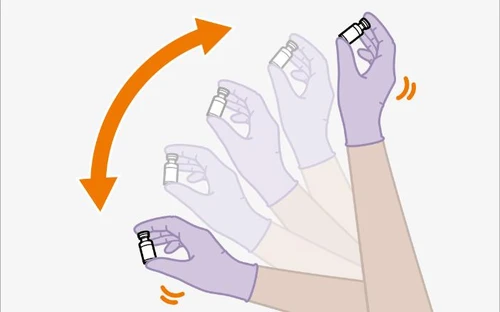
- Hold the vial firmly and shake vigorously for a full 10 sec as illustrated in the figure.
- Invert the vial and check the resuspension. It should have a uniform appearance. If the suspension is not uniform, shake the vial again.
- It is normal to see small air bubbles.
- Remove the cap from the vial.
- Wipe the rubber stopper with an alcohol swab.
Do not allow anything to come into contact
with the rubber stopper after cleaning it.
3. Prepare the syringe and needle
- Continue preparing the injection according to local
guidelines. - Example: attach the drawing-up needle to the syringe.
- It is recommended to inject 1 mL of air into the vial to facilitate withdrawal of the required volume.
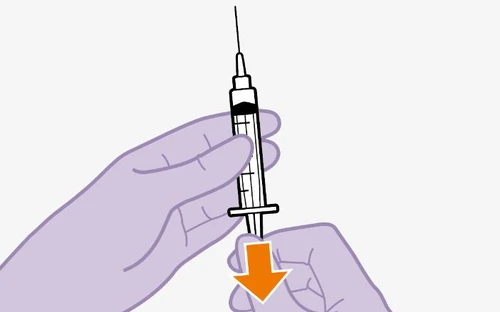
4. Slowly draw up the dose
- Invert the syringe and the vial and
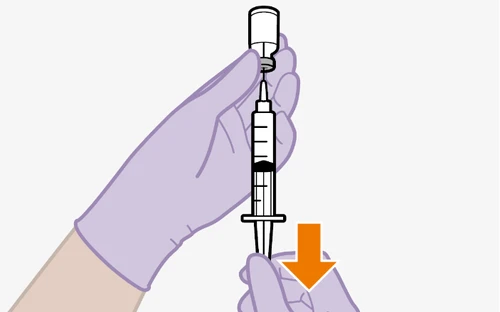
slowly draw up all the liquid possible
into the syringe. There may be more liquid in
the vial than the required dose.
Note: Check that the suspension is
uniform and ranges in color from white to pink.
5. Attach the injection needle
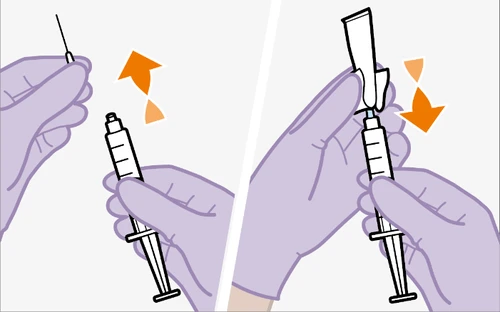
- Open the needle cover just enough to expose the base of the needle.
- Holding the syringe vertically, firmly insert it into the needle.
- Attach the needle.
- Remove the needle cover.
Injection
6. Prepare the injection site
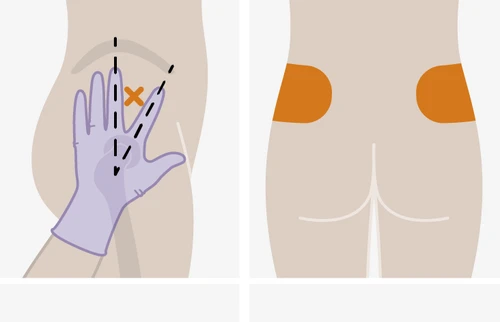
Injections must be administered in the
gluteal area. Choose one of the following
sites for the injection:
- Ventrogluteal (recommended)
- Dorso gluteal (upper outer quadrant)
Note: For intramuscular use in gluteal site only.
Do not inject intravenously.
Ventrogluteal Dorso gluteal

7. Remove excess liquid
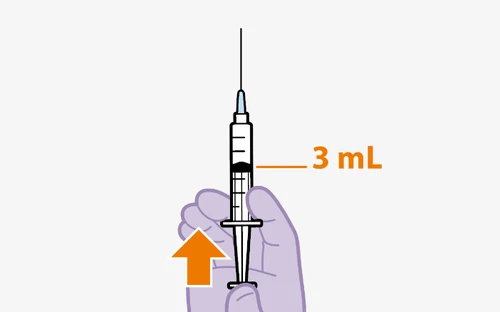
- Remove the needle cap.
- Hold the syringe with the needle pointing upward. Push the plunger up to the 3 mL mark to expel excess liquid and any air bubbles.
Note: Disinfect the injection site with an
alcohol swab. Allow the skin to air-dry
before proceeding.
8. Stretch the skin
Use the z-track injection technique to
minimize the risk of medication leaking from
the injection site.
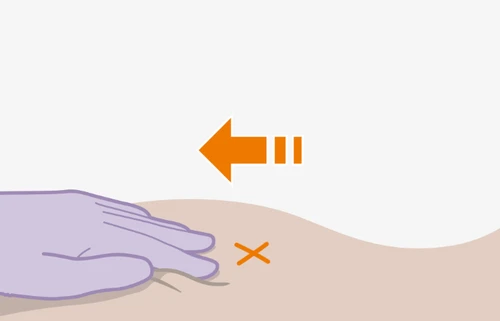
1 inch
(2.5 cm) • Firmly stretch the skin covering the
injection site, moving it approximately one
inch (2.5 cm).
- Keep the skin stretched in this position while administering the injection.
9. Inject the dose
- Insert the needle fully or to a sufficient depth to reach the muscle.
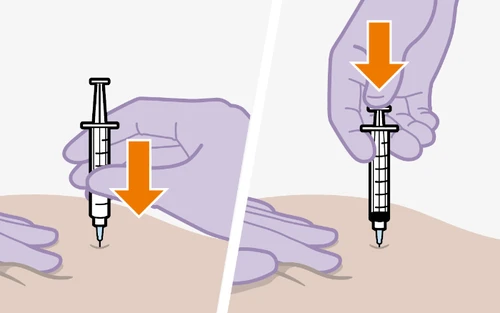
- While keeping the skin taut, slowly press the plunger all the way down.
- Make sure the syringe is empty.
- Remove the needle and immediately release the stretched skin.
10. Examine the injection site
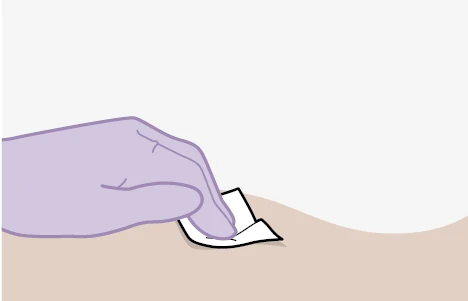
- Apply pressure to the injection site using a gauze pad.
- If bleeding occurs, a bandage may be applied.
- Dispose of needles, syringe, and vial according to local health and safety regulations. Do not massage the area.
Questions and Answers
- If the pack has been stored in the refrigerator, is it safe to warm the vial more quickly to reach room temperature?
It is necessary to wait at least 15 minutes before administering the injection, to allow the medicine to reach room temperature. The best approach is to let the vial warm up naturally to room temperature. However, you may use the warmth of your hands to speed up the warming process, making sure that the vial temperature does not exceed 30°C. Do not use any other warming methods.
2. How long can the medicine remain in the syringe?
The medicine (at room temperature) should preferably be injected as soon as possible after withdrawal. However, the medicine can remain in the syringe for up to 2 hours before injection. If the medicine remains in the syringe for more than 2 hours, the filled syringe and needle must be discarded.
3. Why is it necessary to inject air into the vial?
Introducing 1 mL of air into the vial facilitates the subsequent withdrawal of the dose into the
syringe.
Without the air, part of the liquid may inadvertently flow back into the vial, leaving in the syringe
a volume of medication lower than required.
4. Why is the ventrogluteal approach the recommended route of administration?
The ventrogluteal approach, into the gluteus medius muscle, is recommended because this site is located far from major nerves and blood vessels. The dorso-gluteal approach into the gluteus maximus muscle is acceptable if preferred by the healthcare provider. The injection must not be administered at any other site.
Patient information leaflet
Apretude 30 mg film-coated tablets
cabotegravir
This medicinal product is subject to additional monitoring. This will allow for rapid identification of new safety information. You can help by reporting any side effects you experience while taking this medicine. See the end of section 4 for information on how to report side effects.
Please read this leaflet carefully before you start taking this medicine because it contains important information for you.
- Keep this leaflet. You may need to read it again.
- If you have any questions, consult your doctor or nurse.
- This medicine has been prescribed for you only. Do not give it to other people, even if they have the same symptoms as yours, because it could be harmful.
- If you experience any side effect, including those not listed in this leaflet, contact your doctor or nurse. See section 4.
Contents of this leaflet
- What Apretude is and what it is used for
- What you need to know before taking Apretude
- How to take Apretude
- Possible side effects
- How to store Apretude
- Contents of the pack and other information
1. What Apretude tablets are and what they are used for
Apretude contains the active substance cabotegravir. Cabotegravir belongs to a group of antiretroviral medicines called integrase inhibitors (INI).
Apretude is used to help prevent infection with human immunodeficiency virus HIV-1 in adults and adolescents weighing at least 35 kg who are at high risk of acquiring the infection. This is known as pre-exposure prophylaxis: PrEP (see section 2).
It should be used in combination with safe sex practices, such as using condoms.
Your doctor may advise you to take Apretude tablets before receiving your first Apretude injection (the so-called oral initiation period, see section 3).
If you are being treated with Apretude injections but are unable to receive an injection, your doctor may also advise you to take Apretude tablets until you can receive the injection again (see section 3).
2. What you need to know before taking Apretude tablets
Do not use Apretude
- if you have developed a severe skin rash, skin peeling, blisters and/or mouth ulcers.
- if you are allergic ( hypersensitive ) to cabotegravir or to any of the other ingredients of this medicine (listed in section 6).
- if you are HIV-positive or do not know your HIV status. Apretude can only help reduce the risk of acquiring HIV before you become infected. Before taking Apretude, you must be tested to ensure you are HIV-negative.
- if you are taking any of the following medicines :
- carbamazepine, oxcarbazepine, phenytoin, phenobarbital (medicines used to treat epilepsy and prevent seizures).
- rifampicin or rifapentine (medicines used to treat certain bacterial infections such as tuberculosis).
These medicines reduce the effectiveness of Apretude by decreasing the amount of Apretude in your blood.
➔ Consult your doctor if you think any of these conditions apply to you or if you are unsure.
Warnings and precautions
Taking Apretude alone may not prevent HIV infection.
HIV infection spreads through sexual contact with an HIV-positive person or through the transfer of infected blood. Although Apretude reduces the risk of acquiring HIV infection, it is still possible to become infected with HIV while taking this medicine.
You must take additional measures to further reduce the risk of acquiring HIV infection:
- get tested for other sexually transmitted infections as advised by your doctor. These infections can make it easier to acquire HIV;
- use a condom when having oral or penetrative sex;
- do not share or reuse needles or other injection or drug administration equipment;
- do not share personal items that may have blood or body fluids on them (such as razor blades or toothbrushes).
Discuss with your doctor additional precautions necessary to further reduce the risk of acquiring HIV infection.
Reducing the risk of acquiring HIV infection:
There is a risk of developing resistance to this medicine if you acquire HIV infection. This means the medicine will no longer prevent HIV infection. To minimize this risk and prevent HIV infection, it is important that you:
- take Apretude tablets every day to reduce the risk, not only when you think you are at risk of acquiring HIV infection. Do not miss any doses of Apretude or stop taking it. Missing doses may increase the risk of acquiring HIV infection.
- get tested for HIV when your doctor requests it. Regular testing is necessary to ensure you remain HIV-1 negative while taking Apretude.
- inform your doctor immediately if you think you may have been infected with HIV (you might have flu-like illness). Your doctor may perform additional tests to confirm you are still HIV-negative.
Liver problems
Consult your doctor if you have liver problems. You may require closer monitoring
(See also ‘Uncommon adverse effects’ in section 4).
Adolescents
Your doctor will discuss your mental health before and during treatment with Apretude. Inform your doctor if you have mental health problems. Closer monitoring may be required
(see also section 4).
Severe skin reaction:
Severe, potentially life-threatening skin reactions, such as Stevens-Johnson syndrome and toxic epidermal necrolysis, have been very rarely reported with Apretude. Stop taking Apretude and contact a doctor immediately if you notice any symptoms related to these serious skin reactions.
➔ Read the information in section 4 of this leaflet (“Possible side effects”).
Allergic reaction
Apretude contains cabotegravir, which is an integrase inhibitor. Integrase inhibitors, including cabotegravir, can cause a serious allergic reaction known as hypersensitivity reaction. You should be aware of these important signs and symptoms so you can recognize them while taking Apretude.
➔ Read the information in ‘Possible side effects’ in section 4 of this leaflet.
Children and adolescents
This medicine is not intended for use in children or adolescents under 12 years of age or weighing less than 35 kg, as it has not been studied in these populations.
Other medicines and Apretude
Inform your doctor if you are taking, have recently taken, or might take any other medicines, including those without a prescription.
Some medicines may affect the activity of Apretude or make it more likely that you experience side effects. Apretude may also affect the activity of other medicines.
Apretude must not be administered with certain other medicines that may affect its activity (see ‘Do not use Apretude’ in section 2). These medicines include:
- carbamazepine, oxcarbazepine, phenobarbital or phenytoin (medicines used to treat epilepsy and prevent seizures);
- rifampicin or rifapentine (medicines used to treat certain bacterial infections such as tuberculosis).
Inform your doctor if you are taking:
- antacids (medicines used to treat indigestion and heartburn). Antacids may interfere with the absorption of Apretude tablets by the body. Do not take these medicines within 2 hours before or at least 4 hours after taking Apretude. ➔ Inform your doctor or pharmacist if you are taking these medicines. Your doctor may decide that additional monitoring is necessary.
Pregnancy and breastfeeding
If you are pregnant, think you might be pregnant, are planning to become pregnant, or are breastfeeding, consult your doctor before taking this medicine.
Pregnancy
Apretude is not recommended during pregnancy. The effect of Apretude on pregnancy is unknown.
Talk to your doctor: if you could become pregnant, if you are planning to have a child, or if you become pregnant. Your doctor will assess the benefit to you and the risk to your baby of starting/continuing Apretude.
Breastfeeding
It is not known whether the components of Apretude pass into breast milk.
If you are breastfeeding or considering breastfeeding, discuss this with your doctor as soon as possible.
Your doctor will evaluate the benefits and risks of breastfeeding for you and your baby.
Driving and using machines
Apretude may cause dizziness and other side effects that may reduce your attention.
➔ Do not drive or operate machinery if you are not sure that your level of alertness is unaffected.
Apretude contains lactose
If your doctor has informed you that you have an intolerance to certain sugars, talk to your doctor before taking this medicine.
Apretude contains sodium
This medicine contains less than 1 mmol of sodium (23 mg) per tablet, therefore it is essentially "sodium-free".
3 How to take Apretude
Always take this medicine exactly as your doctor has instructed. If you have any doubts, consult your doctor or pharmacist.
Before taking Apretude, you must have a negative HIV test.
When starting treatment with Apretude injections, you and your doctor may decide to begin treatment with cabotegravir tablets for an initial oral lead-in period.
This allows your doctor to assess whether it is appropriate to proceed with injections.
If you decide to start treatment with tablets for the oral lead-in period:
- you must take one 30 mg Apretude tablet once daily for approximately one month;
- after one month of tablet therapy, you must receive the first injection on the same day as taking the last tablet or no later than 3 days after;
- thereafter, you will receive an injection every 2 months.
Oral lead-in treatment schedule
When Medicine
Month 1 Apretude 30 mg tablet once daily
Months 2 and 3 Apretude 600 mg injection once monthly
From month 5 onwards Apretude 600 mg injection every 2 months
If you cannot receive the Apretude injection, your doctor may recommend that you continue taking Apretude tablets until you can receive an injection again.
How to take the tablets
Apretude tablets should be swallowed with a small amount of water. They may be taken with or without food.
Do not take antacids (medicines used to treat indigestion and heartburn) within 2 hours before or at least 4 hours after taking the Apretude tablet, as this may interfere with the absorption of Apretude tablets by the body and reduce their effectiveness.
If you take more Apretude than you should
If you take too many Apretude tablets, contact your doctor or pharmacist for advice and receive the necessary treatment. If possible, show them the Apretude tablet bottle.
If you forget to take Apretude
If you realize you have forgotten to take Apretude within 12 hours of your usual time, take the missed tablet as soon as possible. If you realize after 12 hours, skip that dose and take the next dose as usual.
Do not take a double dose to make up for a forgotten tablet.
If you vomit within 4 hours after taking Apretude, take another tablet. If you vomit more than 4 hours after taking Apretude, you do not need to take another tablet until your next scheduled dose.
Do not stop taking Apretude without consulting your doctor
Take Apretude for the entire duration prescribed by your doctor. Do not stop treatment unless instructed by your doctor.
If you have further questions about the use of this medicine, consult your doctor or pharmacist.
4. Possible side effects
Like all medicines, this medicine can cause side effects, although not everybody gets them.
Stop taking Apretude and contact a doctor immediately if you experience any of the following symptoms:
- flat, red skin patches, resembling targets or circles on the trunk, often with blisters in the center, peeling of the skin, ulcers in the mouth, throat, nose, genitals, and eyes. These serious skin rashes may be preceded by fever and flu-like symptoms (Stevens-Johnson syndrome, toxic epidermal necrolysis). These life-threatening skin reactions are very rare (may affect up to 1 in 10,000 people).
Allergic reactions
Apretude contains cabotegravir, which is an integrase inhibitor. Integrase inhibitors, including cabotegravir, can cause a serious allergic reaction known as hypersensitivity reaction.
If you experience any of the following symptoms:
- skin rash
- fever
- fatigue
- swelling, sometimes of the face or mouth ( angioedema ), causing difficulty in breathing
- muscle or joint pain ➔ Contact a doctor immediately. The doctor may decide to run tests to monitor liver, kidney, or blood function and may instruct you to stop taking Apretude.
Very common side effects (may affect more than 1 in 10 people)
- headache
- diarrhoea
- feeling of warmth ( pyrexia )
- changes in liver function (increased transaminases), detected by blood tests
Common side effects (may affect up to 1 in 10 people)
- depression
- anxiety
- abnormal dreams
- difficulty sleeping (insomnia)
- dizziness
- nausea
- vomiting
- stomach ache (abdominal pain)
- flatulence
- skin rash
- muscle pain (myalgia)
- fatigue
- general feeling of being unwell
Uncommon side effects (may affect up to 1 in 100 people)
- suicide attempt and suicidal thoughts (particularly in individuals who previously had depression or mental health problems)
- allergic reaction (hypersensitivity)
- urticaria
- swelling (angioedema), sometimes of the face or mouth, causing difficulty in breathing
- somnolence
- weight gain
- liver damage (hepatotoxicity). Signs may include yellowing of the skin and whites of the eyes, loss of appetite, itching, stomach tenderness, pale stools or unusually dark urine
- increased bilirubin in the blood, a breakdown product of red blood cells, detected by blood tests.
Reporting of side effects
If you experience any side effect, including those not listed in this leaflet, contact your doctor or nurse. You can also report side effects directly through the national reporting system listed in Annex V. Reporting side effects can help provide more information on the safety of this medicine.
5. How to store Apretude tablets
Keep this medicine out of the sight and reach of children.
Do not use this medicine after the expiry date which is stated on the label and the carton after "Exp." The expiry date refers to the last day of that month.
This medicine does not require any specific storage temperature.
Do not dispose of any medicine via wastewater or household waste. Ask your pharmacist how to dispose of medicines you no longer use. This will help protect the environment.
6. Package contents and other information
What Apretude contains
The active substance is cabotegravir. Each tablet contains 30 mg of cabotegravir.
The other components are:
Tablet core
Lactose monohydrate
Microcrystalline cellulose (E460)
Hypromellose (E464)
Sodium starch glycolate
Magnesium stearate
Tablet film coating
Hypromellose (E464)
Titanium dioxide (E171)
Macrogol (E1521)
Description of the appearance of Apretude and contents of the pack
Apretude film-coated tablets are white, oval, film-coated tablets with the code ‘SV CTV’ engraved on one side.
The film-coated tablets are supplied in bottles with child-resistant closures.
Each bottle contains 30 film-coated tablets.
Marketing Authorisation Holder
ViiV Healthcare BV
Van Asch van Wijckstraat 55H
3811 LP Amersfoort
The Netherlands
Manufacturer
Glaxo Wellcome, S.A.
Avenida De Extremadura, 3
Aranda De Duero
Burgos 09400
Spain
For further information about this medicinal product, please contact the local representative of the Marketing Authorisation Holder:
België/Belgique/Belgien Lietuva
ViiV Healthcare srl/bv ViiV Healthcare BV
Tél/Tel: + 32 (0) 10 85 65 00 Tel: + 370 80000334
България Luxembourg/Luxemburg
ViiV Healthcare BV ViiV Healthcare srl/bv
Teл.: + 359 80018205 Belgique/Belgien
Tél/Tel: + 32 (0) 10 85 65 00
Česká republika Magyarország
GlaxoSmithKline, s.r.o. ViiV Healthcare BV
Tel: + 420 222 001 111 Tel.: + 36 80088309
[email protected]
Danmark Malta
GlaxoSmithKline Pharma A/S ViiV Healthcare BV
Tlf.: + 45 36 35 91 00 Tel: + 356 80065004
[email protected]
Deutschland Nederland
ViiV Healthcare GmbH ViiV Healthcare BV
Tel.: + 49 (0)89 203 0038-10 Tel: + 31 (0) 33 2081199
[email protected]
Eesti Norge
ViiV Healthcare BV GlaxoSmithKline AS
Tel: + 372 8002640 Tlf: + 47 22 70 20 00
Ελλάδα Österreich
GlaxoSmithKline Μονοπρόσωπη A.E.B.E. GlaxoSmithKline Pharma GmbH
Τηλ: + 30 210 68 82 100 Tel: + 43 (0)1 97075 0
[email protected]
España Polska
Laboratorios ViiV Healthcare, S.L. GSK Services Sp. z o.o.
Tel: + 34 900 923 501 Tel.: + 48 (0)22 576 9000
[email protected]
France Portugal
ViiV Healthcare SAS VIIVHIV HEALTHCARE, UNIPESSOAL, LDA
Tél.: + 33 (0)1 39 17 69 69 Tel: + 351 21 094 08 01
[email protected] [email protected]
Hrvatska România
ViiV Healthcare BV ViiV Healthcare BV
Tel: + 385 800787089 Tel: + 40 800672524
Ireland Slovenija
GlaxoSmithKline (Ireland) Limited ViiV Healthcare BV
Tel: + 353 (0)1 4955000 Tel: + 386 80688869
Ísland Slovenská republika
Vistor hf. ViiV Healthcare BV
Sími: +354 535 7000 Tel: + 421 800500589
Italia Suomi/Finland
ViiV Healthcare S.r.l GlaxoSmithKline Oy
Tel: + 39 (0)45 7741600 Puh/Tel: + 358 (0)10 30 30 30
Κύπρος Sverige
ViiV Healthcare BV Τηλ: + 357 80070017 GlaxoSmithKline AB
Tel: + 46 (0)8 638 93 00
[email protected]
Latvija
ViiV Healthcare BV
Tel: + 371 80205045
Other sources of information
More detailed information on this medicinal product is available on the website of the European Medicines Agency: https://www.ema.europa.eu.