Apofin
ItalyInstructions for Use
Table of Contents
- APOFIN 30 mg/3 ml solution for subcutaneous injection
- 1. What APOFIN is and what it is used for
- 2. What you should know before taking APOFIN
- 3. How to use APOFIN
- 4. Possible side effects
- 5. How to store APOFIN
- 6. Contents of the pack and other information
- Patient Information Leaflet
- APOFIN 50 mg/5 ml injectable solution for subcutaneous infusion
- 1. What APOFIN is and what it is used for
- 2. What you need to know before taking APOFIN
- 3. How to take APOFIN
- 4. Possible side effects
- 5. How to store APOFIN
- 6. Package contents and other information
Patient Information Leaflet
APOFIN 30 mg/3 ml solution for subcutaneous injection
Apomorphine
Please read all of this leaflet carefully before you start using this medicine because it contains important information for you.
- Keep this leaflet. You may need to read it again.
- If you have any questions, ask your doctor.
- This medicine has been prescribed for you only. Do not give it to other people, even if their symptoms are the same as yours, as it could be harmful.
- If you experience any side effects, including those not listed in this leaflet, talk to your doctor or pharmacist. See section 4.
Contents of this leaflet:
- What APOFIN is and what it is used for
- What you need to know before using APOFIN
- How to use APOFIN
- Possible side effects
- How to store APOFIN
- Contents of the pack and other information
1. What APOFIN is and what it is used for
APOFIN contains apomorphine, which belongs to a group of medicines known as dopaminergic agonists, and is used for the treatment of Parkinson's disease.
APOFIN is indicated for "as-needed" treatment of severe motor difficulties that do not respond to treatment with levodopa and other dopamine agonists (other medicines used for the treatment of Parkinson's disease) in patients with Parkinson's disease ("on-off" phenomenon).
2. What you should know before taking APOFIN
Do not take APOFIN
- if you are allergic to apomorphine, morphine or its derivatives, or to any of the other ingredients of this medicine (listed in section 6);
- if you have severe respiratory or brain problems (respiratory depression and central nervous system depression);
- if you suffer from mental disorders (confusion, visual hallucinations, acute and chronic psychosis);
- if you have severe movement difficulties (severe dyskinesias) or reduced muscle tone (hypotonia) after treatment with levodopa;
- if you have dementia (a condition characterized by memory loss, inability to express oneself properly in words, and disorientation in time and space);
- if you have liver problems (hepatic insufficiency);
- if you are pregnant or breastfeeding;
- if you are taking ondansetron (a medicine used to treat nausea and vomiting).
Warnings and precautions
Before using APOFIN, your doctor will perform an ECG (electrocardiogram) and ask you to list all other medicines you are taking. This ECG will be repeated during the first days of treatment and whenever your doctor considers it necessary. Your doctor may also ask you about any other medical conditions you may have, particularly heart diseases. Some of these questions and tests may be repeated at each medical visit. If you develop cardiac symptoms, e.g. palpitations, fainting or near-fainting episodes, inform your doctor immediately. You must also inform your doctor if you develop diarrhea or start a new treatment.
Talk to your doctor before taking APOFIN:
- if you have a disease of the hormone-producing glands;
- if you have kidney, lung, heart or circulatory diseases. In such cases, your doctor will carry out periodic checks to monitor your condition;
- if you frequently suffer from nausea and vomiting;
- if you are elderly or debilitated;
- if you have previously experienced orthostatic hypotension (a drop in blood pressure when moving from sitting to standing) after taking other medicines used to treat Parkinson's disease (dopamine agonists);
- if you or someone in your family is known to have a heart rhythm disorder called long QT syndrome;
- if you or someone in your family/caregiver notices that you are developing impulses or urges to behave in ways that are unusual for you, or cannot resist the impulse or temptation to carry out certain activities that could harm yourself or others. These are called impulse control disorders and may include behaviors such as gambling addiction, excessive eating, excessive spending, abnormally increased sexual desire, or increased sexual thoughts or feelings. Your doctor may consider it necessary to adjust or stop your dose;
- if you are also taking other oral medicines for the treatment of Parkinson's disease, as unusual side effects or signs of enhanced effects of APOFIN may occur. Your doctor will assess whether to reduce the dose or discontinue treatment.
Some patients develop symptoms resembling dependence, leading to a desire for high doses of APOFIN and other medicines used to treat Parkinson's disease.
Other medicines and APOFIN
Tell your doctor if you are taking, have recently taken, or might take any other medicine, especially:
- medicines that affect brain activity such as reserpine, tetrabenazine, metoclopramide, neuroleptics (phenothiazines, thioxanthenes, butyrophenones), amphetamines, and papaverine. These medicines should not be administered at the same time as APOFIN. If administration of one of these medicines is considered essential, your doctor must carefully evaluate the onset of unusual side effects or signs of possible interactions;
- medicines known to affect heart rhythm. This includes medicines used for heart rhythm problems (such as quinidine and amiodarone), for treating depression (including tricyclic antidepressants such as amitriptyline and imipramine), for treating bacterial infections (antibiotics such as erythromycin, azithromycin, and clarithromycin), and domperidone (a medicine used to treat vomiting and digestive difficulties);
- if you are taking ondansetron (a medicine used to treat nausea and vomiting), as this may result in a severe drop in blood pressure and loss of consciousness.
Pregnancy and breastfeeding
Do not use APOFIN if you are pregnant, suspect you may be pregnant, or are breastfeeding.
Driving and using machines
APOFIN may impair your ability to drive vehicles and operate machinery.
Apomorphine may cause drowsiness and neuropsychiatric disturbances (confusion, visual hallucinations). For this reason, driving vehicles or engaging in any activity where reduced attention could expose you or others to the risk of serious injury or death (e.g., operating machinery) is not recommended.
APOFIN contains sodium metabisulfite
Rarely, this may cause severe allergic reactions and shortness of breath with wheezing (bronchospasm).
3. How to use APOFIN
Before using APOFIN, your doctor will ensure that you tolerate this medicine and an antiemetic drug, which you must take concomitantly.
Use this medicine exactly as directed by your doctor. If you have any doubts, consult your doctor.
APOFIN must be administered via subcutaneous injection (preferably in the abdominal wall) through intermittent, "on-demand" administrations.
The recommended dose is one subcutaneous injection of 1 mg (or 20 \μg/kg); if this initial dose proves insufficient, gradual dose increases by 1 mg are recommended until an adequate therapeutic response (unblocking effect) is achieved.
Your doctor will determine the dosage according to your individual needs and motor response.
The commonly used dosage range is between 3 mg and 30 mg per day, divided into several administrations throughout the day. The frequency of administration may vary from 1 to 10 injections per day.
Typically, the effective dose remains unchanged from one injection to the next (see section "Instructions for use").
Domperidone administration is useful to prevent the onset of nausea and vomiting; it should generally be started 3–4 days before initiating APOFIN therapy, at a dosage of 20 mg three times daily. Both the amount and duration of domperidone treatment may be adjusted by your doctor according to your individual needs.
PRESENTATION
FIRST USE OF APOFIN
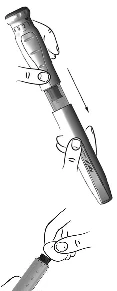
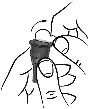
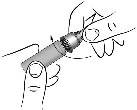
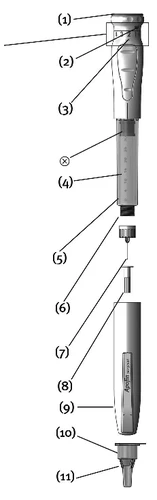
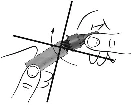
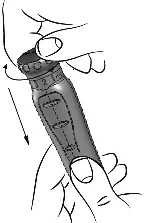
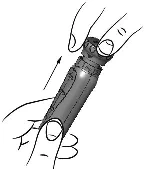

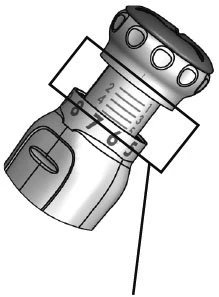
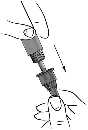
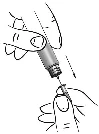
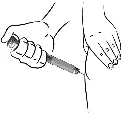
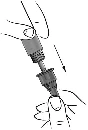
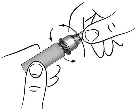

If you use more APOFIN than you should
In case of accidental ingestion/overdose of APOFIN, contact your doctor immediately or go to the nearest hospital. An excessive dose may cause breathing difficulties and slowed heart rate.
If you forget to use APOFIN
Do not use a double dose to make up for the missed dose.
If you stop using APOFIN
Contact your doctor before stopping treatment and discuss with them whether this is appropriate.
If you have any questions about the use of this medicine, consult your doctor or pharmacist.
4. Possible side effects
Like all medicines, this medicine can cause side effects, although not everyone gets them.
The possible side effects are listed below, classified according to their frequency:
Very common (may affect more than 1 in 10 people)
- hallucinations (seeing, hearing or sensing things that are not real).
Rare (may affect up to 1 in 1,000 people)
- drop in blood pressure when moving from sitting to standing (orthostatic hypotension), usually temporary and presumably related to the discontinuation of domperidone (a medicine used to treat nausea and vomiting).
Not known (frequency cannot be estimated from the available data)
- movement disorders (dyskinesia). Your doctor may stop treatment;
- drowsiness, which tends to disappear within the first weeks of treatment;
- itching, nodules under the skin at the injection site, skin irritation (localized erythema), localized inflammatory reactions, inflammation of the subcutaneous fat tissue (panniculitis), necrotic ulcerations at the injection site;
- nausea and vomiting, usually due to failure to take domperidone (see section 3 How to use APOFIN);
- increase in white blood cells (eosinophilia);
- decrease in red blood cells caused by an immune system disorder (autoimmune hemolytic anemia) and changes in the results of certain laboratory tests (positive Coombs test). Your doctor will ask you to undergo check-ups with a specialist/laboratory tests at the beginning of treatment and periodically thereafter. Your doctor may also reduce your dose or discontinue treatment with APOFIN and/or other medicines used to treat Parkinson’s Disease;
- confusion and sensation of seeing things that are not actually present (visual hallucinations). Your doctor will ask you to undergo check-ups and may reduce your dose of APOFIN and/or other medicines used to treat Parkinson’s Disease;
- fainting;
- inability to resist the impulse to carry out actions that could be harmful, which may include:
- strong impulse to gamble excessively, despite serious personal or family consequences;
- altered or increased sexual interest and behaviour causing significant concern to you or others, for example, increased sexual desire;
- compulsive eating (eating large amounts of food in a short period of time) or bulimia (eating more food than normal and more than needed to satisfy your hunger); uncontrolled shopping or excessive spending;
- aggression, agitation;
- headache;
- peripheral edema (swelling of arms and legs);
- transient sedation: may occur at the beginning of therapy and usually resolves within the first few weeks.
Tell your doctor if you experience any of these behaviours, so that appropriate measures can be taken
to manage or reduce these symptoms.
Reporting of side effects
If you experience any side effect, including those not listed in this leaflet, talk to your doctor or pharmacist. You can also report side effects directly via the national reporting system at https://www.aifa.gov.it/content/segnalazioni-reazioni-avverse . By reporting side effects, you can help provide more information on the safety of this medicine.
5. How to store APOFIN
Keep this medicine out of the sight and reach of children.
Store below 25°C.
Keep the vial in the outer packaging to protect the medicine from light.
APOFIN must be used within 30 days of the first injection.
Like other precision devices, APOFIN must be handled with care.
Protect APOFIN from dust and exposure to extreme temperatures. When not in use,
make sure the protective cap is placed on the pen (Stylo).
After an accidental drop, it is important to check that APOFIN is working properly and that there are no
possible leaks of the medicine.
It is important that a person close to the patient knows how to use APOFIN in case the patient is unable to
perform the injection themselves.
Always follow the instructions for use of APOFIN carefully.
Do not use this medicine after the expiry date stated on the carton after "Exp".
The expiry date refers to the last day of that month.
Do not dispose of any medicine via wastewater or household waste. Ask your pharmacist how to dispose of
medicines you no longer use. This will help protect the environment.
6. Contents of the pack and other information
What APOFIN contains
- The active substance is apomorphine.
- The other components are sodium metabisulfite, hydrochloric acid, water for injections.
Description of the appearance of APOFIN and contents of the pack
APOFIN is presented as an auto-injection pen with a pre-filled glass cartridge. It is available in cartons containing 1 pen and cartons containing 5 pre-filled pens of 3 ml.
Not all pack sizes may be marketed.
Marketing Authorization Holder and Manufacturer
CHIESI ITALIA S.p.A. - Via Giacomo Chiesi, 1 - 43122 Parma
Manufacturer
Manufacturer: Laboratories AGUETTANT - 1 Rue A. Fleming - Lyon – France
Patient Information Leaflet
APOFIN 50 mg/5 ml injectable solution for subcutaneous infusion
Apomorphine
Please read this leaflet carefully before using this medicine because it contains important information for you.
- Keep this leaflet. You may need to read it again.
- If you have any questions, consult your doctor.
- This medicine has been prescribed for you only. Do not give it to other people, even if their symptoms are the same as yours, as it may be harmful.
- If you experience any side effect, including those not listed in this leaflet, contact your doctor or pharmacist. See section 4.
Contents of this leaflet:
- What APOFIN is and what it is used for
- What you need to know before using APOFIN
- How to use APOFIN
- Possible side effects
- How to store APOFIN
- Contents of the pack and other information
1. What APOFIN is and what it is used for
APOFIN contains apomorphine, which belongs to a group of medicines known as dopaminergic agonists,
and is used for the treatment of Parkinson's disease.
APOFIN, administered by subcutaneous infusion, is indicated for the treatment of severe motor fluctuations (occurring multiple times throughout the day):
- that are unresponsive to treatment with Levodopa and oral dopamine agonists (other medicines used to treat Parkinson's disease);
- or that respond only partially to 'on-demand' subcutaneous injections of apomorphine;
- or when frequent daily injections are required to control motor symptoms in patients with advanced Parkinson's disease.
2. What you need to know before taking APOFIN
Do not take APOFIN
- if you are allergic to apomorphine, morphine or its derivatives, or to any of the other ingredients of this medicine (listed in section 6);
- if you have severe respiratory and brain problems (respiratory depression and central nervous system depression);
- if you suffer from mental disorders (mental confusion, visual hallucinations, acute and chronic psychosis);
- if you have severe movement difficulties (severe dyskinesias) or reduced muscle tone (hypotonia) after treatment with levodopa;
- if you have dementia (a disease characterized by memory loss, inability to express oneself properly with words, disorientation in time and space);
- if you have liver problems (hepatic insufficiency);
- if you are pregnant, suspect you may be pregnant, or are breastfeeding;
- if you are taking ondansetron (a medicine used to treat nausea and vomiting).
Warnings and precautions
Before using APOFIN, your doctor will perform an ECG (electrocardiogram) and ask you to list all other medicines you are taking. This ECG will be repeated during the first days of treatment and whenever your doctor considers it necessary. Your doctor may also ask you questions about any other medical conditions you may have, especially heart diseases. Some of these questions and tests may be repeated at each medical visit. If you develop cardiac symptoms, e.g. palpitations, fainting or near-fainting episodes, inform your doctor immediately. You must also inform your doctor if you develop diarrhea or start a new treatment.
Talk to your doctor before taking APOFIN:
- if you are elderly or debilitated;
- if you suffer from diseases of hormone-producing glands, kidneys, lungs, heart, or circulatory system. In these cases, your doctor will carry out periodic checks to monitor your condition;
- if you frequently suffer from nausea and vomiting;
- if you have previously experienced orthostatic hypotension (a drop in blood pressure when moving from sitting to standing position) after taking other medicines used to treat Parkinson’s Disease (dopamine agonists);
- if you or someone in your family is known to have a heart rhythm disorder called long QT syndrome;
- if you or someone in your family/caregiver notices that you are developing impulses or urges to behave in ways that are unusual for you, or that you cannot resist the impulse or temptation to carry out certain activities that could harm yourself or others. These are called impulse control disorders and may include behaviors such as gambling addiction, excessive eating, overspending, abnormally increased sexual desire, or increased sexual thoughts or feelings. Your doctor may consider it necessary to adjust or stop your dose;
- if you are taking other oral medicines used to treat Parkinson’s Disease, as unusual side effects or signs of enhanced effects of APOFIN may occur.
IN ALL THESE CASES, CONSULT YOUR DOCTOR, WHO MAY NEED TO MODIFY YOUR TREATMENT.
Some patients develop symptoms resembling dependence, leading to a desire for high doses of APOFIN and other medicines used to treat Parkinson’s Disease.
Other medicines and APOFIN
Inform your doctor if you are taking, have recently taken, or might take any other medicine, especially:
- medicines that affect brain activity such as reserpine, tetrabenazine, metoclopramide, neuroleptics (phenothiazines, thioxanthenes, butyrophenones), amphetamines, and papaverine. These medicines should not be administered at the same time as APOFIN. If administration of one of these medicines is considered essential, your doctor must carefully evaluate the possible onset of unusual side effects or signs of potential interactions;
- medicines known to affect heart rhythm. This includes medicines used for heart rhythm problems (such as quinidine and amiodarone), for treating depression (including tricyclic antidepressants such as amitriptyline and imipramine), for treating bacterial infections (antibiotics such as erythromycin, azithromycin, and clarithromycin), and domperidone (a medicine used to treat vomiting and digestive difficulties);
- if you are taking ondansetron (a medicine used to treat nausea and vomiting), as this may result in a severe drop in blood pressure and loss of consciousness.
Pregnancy and breastfeeding
Do not use APOFIN if you are pregnant, suspect you may be pregnant, or are breastfeeding.
Driving and use of machines
APOFIN may impair your ability to drive vehicles or operate machinery.
Apomorphine may cause drowsiness and neuropsychiatric disturbances (mental confusion, visual hallucinations).
For this reason, driving and engaging in any activity where reduced attention could expose you or others to the risk of serious injury or death (e.g., operating machinery) is not recommended.
APOFIN contains benzyl alcohol, sodium metabisulfite, and methyl parahydroxybenzoate
APOFIN contains 10 mg of benzyl alcohol per ml. It must not be given to premature infants or newborns.
It may cause toxic and allergic reactions in children up to 3 years of age.
APOFIN contains sodium metabisulfite: rarely, this may cause severe allergic reactions and bronchospasm (severe breathing difficulty).
APOFIN contains methyl parahydroxybenzoate: it may cause allergic reactions (including delayed reactions), and exceptionally, bronchospasm.
3. How to take APOFIN
Before using APOFIN, your doctor will ensure that you tolerate this medicine and an antiemetic drug, which you must take concomitantly.
Always use this medicine exactly as instructed by your doctor. If you have any doubts, consult your doctor.
Apomorphine vials must be administered via subcutaneous infusion into the abdominal wall (abdomen), using a programmable device (programmable mini-pump), which allows adjustment of the amount and intervals of administration according to the dose prescribed by your doctor.
The dose will be determined by your doctor based on your individual needs; therefore, a short hospital stay under specialist supervision is recommended.
Treatment is usually started at a dose of 1 mg per hour; this dose may be increased according to your response, but must not exceed 100 mg per day. The treatment is generally administered while you are awake, although in special cases it may be extended up to 24 hours per day.
You or the person caring for you will be instructed on how to change the needle insertion site in the abdomen, which must be changed every 12 hours. Alternatively, you should contact a healthcare professional to do this for you.
WARNING: The vials must not be used via other routes of administration (i.e., injected into a muscle or directly into a vein), nor via single subcutaneous injection.
Your doctor will monitor you during treatment for the occurrence of adverse effects or the need for adjustments in the hourly dosage.
Domperidone administration is useful to prevent nausea and vomiting; it is generally started 3–4 days before initiating APOFIN therapy, at a dosage of 20 mg three times daily. Both the amount and duration of domperidone treatment may be modified by your doctor according to your individual needs.
If you take more APOFIN than you should
In case of accidental ingestion/overdose of APOFIN, contact your doctor immediately or go to the nearest hospital.
An overdose may cause respiratory difficulties and slowed heart rate.
If you forget to take APOFIN
Do not take a double dose to make up for the missed dose.
If you stop APOFIN treatment
Contact your doctor before stopping treatment and discuss with them whether this is appropriate.
If you have any doubts about using this medicine, consult your doctor or pharmacist.
4. Possible side effects
Like all medicines, this medicine can cause side effects, although not everybody will experience them.
The possible side effects are listed below according to their frequency:
Very common (may affect more than 1 in 10 people)
- hallucinations (seeing, hearing or perceiving things that are not there).
Rare (may affect up to 1 in 1,000 people)
- drop in blood pressure when moving from sitting to standing (orthostatic hypotension), usually transient and presumably related to the discontinuation of domperidone (a medicine used to treat nausea and vomiting).
Not known (frequency cannot be estimated from the available data)
- movement disorders (dyskinesia). Your doctor may discontinue treatment;
- drowsiness, which tends to disappear within the first few weeks of treatment;
- subcutaneous nodules at the injection site, skin irritation (localized erythema), localized inflammatory reactions, inflammation of subcutaneous fatty tissue (panniculitis), necrotic ulceration at the injection site. To reduce inflammatory reactions, it is recommended to change the injection site every 12 hours;
- increase in white blood cells (eosinophilia);
- decrease in red blood cells caused by an autoimmune disease (autoimmune hemolytic anemia) and altered results in certain laboratory tests (positive Coombs test). In this case, your doctor may reduce or discontinue treatment;
- confusion and perception of seeing things that do not actually exist (visual hallucinations). In such cases, your doctor will evaluate your condition and may reduce treatment;
- fainting;
- inability to resist the impulse to perform actions that could be harmful, which may include:
- strong urge to gamble excessively, despite serious personal or family consequences;
- altered or increased sexual interest and behaviour causing significant concern to you or others, for example, increased sex drive;
- compulsive eating (eating large amounts of food in a short period of time) or bulimia (eating more food than normal and more than needed to satisfy hunger), uncontrolled shopping or excessive spending;
- aggression, agitation;
- headache;
- peripheral oedema (swelling of arms and legs);
- transient sedation: may occur at the beginning of therapy and usually resolves within the first few weeks.
If you experience any of these behaviours, inform your doctor, so that he/she can decide how to intervene to manage or reduce these symptoms.
Reporting of side effects
If you experience any side effects, including those not listed in this leaflet, talk to your doctor or pharmacist. You can also report side effects directly via the national reporting system at https://www.aifa.gov.it/content/segnalazioni-reazioni-avverse . By reporting side effects, you can help provide more information on the safety of this medicine.
5. How to store APOFIN
Keep this medicine out of the sight and reach of children.
Store below 25°C.
Keep the vial in the outer packaging to protect the medicine from light.
The solution must be used within 24 hours after opening.
Do not use this medicine after the expiry date stated on the pack after Exp.
The expiry date refers to the last day of that month.
Do not dispose of any medicine via wastewater or household waste. Ask your pharmacist how to dispose of
medicines you no longer use. This will help protect the environment.
6. Package contents and other information
What APOFIN contains
- The active substance is apomorphine.
- The other components are benzyl alcohol, sodium metabisulfite, methyl parahydroxybenzoate (see section 2. APOFIN contains benzyl alcohol, sodium metabisulfite and methyl parahydroxybenzoate), edetate disodium, hydrochloric acid, water for injections.
Description of the appearance of APOFIN and contents of the pack
APOFIN is a yellow glass vial containing a solution for subcutaneous infusion injection.
It is available in a carton containing 5 vials of 5 ml each.
Marketing Authorization Holder and Manufacturer
CHIESI ITALIA S.p.A., Via Giacomo Chiesi, 1 - 43122 Parma
Manufacturer
ALFASIGMA S.p.A. - Via Enrico Fermi 1 - Alanno - Pescara
This page has been machine-translated and may contain inaccuracies. The original data is available in the manufacturing country's language.
Last data check: May 11, 2026 · Data source: Agenzia Italiana del Farmaco (AIFA)