Antalgil
Italy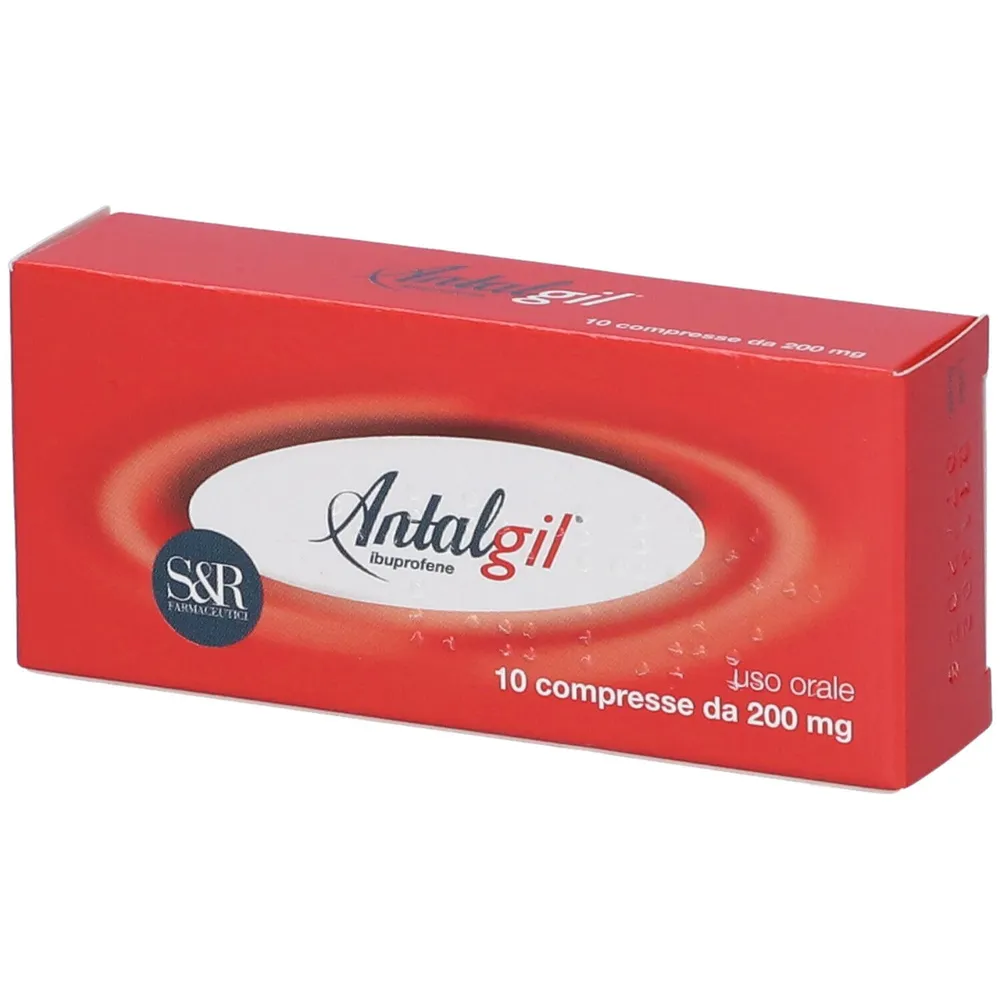
Table of Contents
Package leaflet: Information for the patient
ANTALGIL 200 mg tablets
Ibuprofen
Please read all of this leaflet carefully before taking this medicine because it contains
important information for you.
Always use this medicine exactly as described in this leaflet or as your doctor or
pharmacist has told you to.
- Keep this leaflet. You may need to read it again.
- If you need more information or advice, consult your pharmacist.
- If you experience any side effects, including those not listed in this leaflet, talk to your doctor or pharmacist. See section 4.
- Consult your doctor if you do not notice improvement or if you notice worsening of symptoms after 3 days.
Contents of this leaflet
- What ANTALGIL is and what it is used for
- What you need to know before using ANTALGIL
- How to use ANTALGIL
- Possible side effects
- How to store ANTALGIL
- Contents of the pack and other information
1. What ANTALGIL is and what it is used for
Antalgil contains the active substance ibuprofen, which belongs to the group of non-steroidal anti-inflammatory drugs (NSAIDs).
Antalgil is used for the symptomatic treatment of pain of various origins and types (headache, toothache, neuralgia, menstrual pain, osteoarticular and muscular pain).
Consult your doctor if you do not feel better or if you feel worse after 3 days.
2. What you should know before taking ANTALGIL
Do not take ANTALGIL
- If you are allergic to ibuprofen, to other substances chemically similar (especially acetylsalicylic acid or other anti-rheumatic drugs), or to any of the other ingredients of this medicine (listed in section 6).
- If you have a history of gastrointestinal bleeding or perforation following previous treatments, or a history of recurrent peptic ulcer/bleeding (two or more distinct episodes of stomach ulcer or bleeding).
- If you currently suffer from active gastro-duodenal ulcer or other stomach disorders.
- If you suffer from severe heart failure.
- If you are in the last trimester of pregnancy or if you are breastfeeding.
- If you suffer from severe renal or hepatic insufficiency.
Antalgil is contraindicated in children under 12 years of age.
Warnings and precautions
Talk to your doctor or pharmacist before taking ANTALGIL.
The use of ANTALGIL is contraindicated during pregnancy and breastfeeding, or if you are planning
pregnancy. Discontinue Antalgil if you have fertility problems or are undergoing fertility investigations (see section “Pregnancy, breastfeeding and fertility”).
Do not take Antalgil together with other NSAIDs (Non-Steroidal Anti-Inflammatory Drugs). You can
reduce unwanted effects by using the lowest effective dose for the shortest duration necessary to control symptoms (see section “Other medicines and ANTALGIL”). Do not take multiple analgesic substances simultaneously, as they may cause permanent kidney damage and increase the risk of renal failure (analgesic nephropathy).
With ibuprofen, signs of an allergic reaction to this medicine have been reported, including
respiratory problems, swelling of the face and neck area (angioedema), and chest pain.
Stop taking ANTALGIL immediately and contact your doctor or emergency medical services if you notice any of these signs.
Elderly:
Elderly patients have an increased frequency of adverse reactions to NSAIDs, especially
gastrointestinal bleeding and perforation of the stomach and intestines, which may be fatal. If you belong
to this patient group and treatment is considered necessary, use the lowest dose for the shortest duration required to control symptoms. If you experience no benefit or develop adverse reactions, contact your doctor, who will regularly review and possibly discontinue treatment.
Gastrointestinal bleeding, ulceration, and perforation:
During treatment with all NSAIDs, gastrointestinal bleeding, ulceration, and perforation have been reported at any time, with or without warning symptoms or previous history of serious gastrointestinal events, and may be fatal.
If you are elderly and have a history of ulcers, especially if complicated by bleeding or
perforation (see section “Do not take Antalgil”), the risk of gastrointestinal bleeding, ulceration, or perforation is higher with higher doses of NSAIDs. If you belong to these patient groups, start treatment with the lowest available dose. If you belong to these patient groups or are taking low-dose aspirin or other drugs that may increase the risk of gastrointestinal events (see section “Other medicines and ANTALGIL”), take a gastroprotective agent (gastroprotectants: misoprostol or proton pump inhibitors) concomitantly.
If you have a history of gastrointestinal toxicity, especially if you are elderly, report any unusual gastrointestinal symptoms (particularly gastrointestinal bleeding), especially during the initial stages of treatment.
Exercise caution if you are taking concomitant medications that could increase the risk of ulcer or bleeding, such as oral corticosteroids, anticoagulants like warfarin, selective serotonin reuptake inhibitors, or antiplatelet agents like aspirin (see section “Other medicines and ANTALGIL”).
If gastrointestinal bleeding or ulceration occurs while taking Antalgil, discontinue treatment.
If you have a history of gastrointestinal disease (ulcerative colitis, Crohn’s disease), take NSAIDs with caution, as these conditions may worsen (see section “Possible side effects”).
Cardiovascular and cerebrovascular effects:
If you have a history of hypertension and/or heart failure, exercise caution, as fluid retention, hypertension, and edema have been reported in association with NSAID therapy.
Anti-inflammatory/analgesic drugs such as ibuprofen may be associated with a small increased risk of heart attack or stroke, especially when administered at high doses. Do not exceed the recommended dose or duration of treatment.
Discuss treatment with your doctor or pharmacist before taking ANTALGIL if you have:
- Heart problems including heart attack, angina (chest pain), or history of heart attack, coronary bypass surgery, peripheral arterial disease (poor circulation to legs or feet due to narrowed or blocked arteries), or any type of stroke (including “mini-stroke” or “TIA”, transient ischemic attack);
- High blood pressure, diabetes, high cholesterol, family history of heart disease or stroke, or if you are a smoker.
Exercise caution if you are being treated with diuretics, ACE inhibitors, or angiotensin II antagonists (see section “Other medicines and ANTALGIL”).
If you develop uncontrolled high blood pressure (hypertension), congestive heart failure, ischemic heart disease, peripheral arterial disease, and/or cerebrovascular disease, ibuprofen may be taken only after careful consideration by your doctor. The same doctor should perform similar evaluations before starting long-term treatment if you have risk factors for cardiovascular events (e.g., hypertension, hyperlipidemia, diabetes mellitus, smoking).
Renal effects:
If you have mild or moderate reduction in renal function, your doctor will advise taking the lowest possible dose for the shortest duration necessary to control symptoms, and your kidney function should be monitored.
Ibuprofen may cause sodium and potassium retention and fluid retention in patients who have never had kidney disorders due to its effects on renal perfusion. This may cause you to develop edema or even lead to heart failure or hypertension if predisposed.
Prolonged use of ibuprofen, as with other NSAIDs, may cause kidney disease with blood in the urine (acute interstitial nephritis with hematuria), protein in the urine (proteinuria), and nephrotic syndrome. If you have kidney problems, heart failure, liver problems, are taking diuretics and ACE inhibitors, or are elderly, you are at higher risk of developing kidney problems. These issues resolve upon discontinuation of treatment.
Hepatic insufficiency:
If you have mild or moderate impairment of liver function, your doctor will advise taking the lowest possible dose for the shortest duration necessary to control symptoms and will monitor your liver function.
Skin reactions:
Severe skin reactions have been reported with ibuprofen treatment, including exfoliative dermatitis, erythema multiforme, Stevens-Johnson syndrome, toxic epidermal necrolysis, drug reaction with eosinophilia and systemic symptoms (DRESS), and acute generalized exanthematous pustulosis (AGEP). Stop using ANTALGIL and contact your doctor immediately if you notice any symptoms related to these severe skin reactions described in section 4.
Infections:
Antalgil may mask symptoms of infections such as fever and pain. Therefore, Antalgil may delay appropriate treatment of infection, potentially increasing the risk of complications. This has been observed in bacterial pneumonia and bacterial skin infections associated with chickenpox. If you take this medicine while having an infection and infection symptoms persist or worsen, contact your doctor immediately.
Other precautions:
If you suffer or have suffered from bronchial asthma, chronic rhinitis, sinusitis, nasal polyps, adenoids, or allergic diseases, symptoms such as bronchospasm, urticaria, or angioedema may worsen.
If you are an asthmatic patient, use this medicine with caution and only after consulting your doctor.
Ibuprofen may mask signs or symptoms of infection (fever, pain, swelling).
During treatment with ibuprofen, some cases with symptoms of aseptic meningitis, such as neck stiffness, headache, nausea, vomiting, fever, or confusion, have been observed in patients with pre-existing autoimmune disorders (such as systemic lupus erythematosus, mixed connective tissue disease).
If you have blood coagulation disorders or are on anticoagulant therapy, you should undergo careful medical monitoring, as ibuprofen may prolong bleeding time and slow coagulation.
Report to your doctor any signs or symptoms of gastrointestinal ulcer or bleeding, blurred vision or other visual symptoms, skin rash, weight gain, or edema.
If you are a high-risk patient, long-term treatment with ibuprofen requires periodic monitoring of liver and kidney function and blood tests.
Children and adolescents
The use of Antalgil is not indicated in children under 12 years of age.
In dehydrated adolescents, there is a risk of impaired renal function.
Other medicines and ANTALGIL
Inform your doctor or pharmacist if you are taking, have recently taken, or might take any other medicines.
ANTALGIL may affect or be affected by other medicines. For example:
Do not take ibuprofen together with the following substances:
- Medicines with anticoagulant effect (i.e., substances that thin the blood to prevent clot formation, e.g., aspirin/acetylsalicylic acid, warfarin, ticlopidine).
- Other NSAIDs: concomitant use may increase the risk of gastrointestinal ulcers and bleeding.
- Methotrexate: ibuprofen administered within 24 hours before or after methotrexate may lead to elevated methotrexate concentrations and increased toxicity. Additionally, potential interaction risks should be considered during low-dose methotrexate therapy, especially if you have impaired renal function. Renal function must be monitored during combined treatment.
Take ibuprofen (like other NSAIDs) with caution in combination with the following substances:
- Phenytoin, lithium, and cardiac glycosides (e.g., digoxin): concomitant administration of ibuprofen may increase serum levels of these medicines. If you take ibuprofen with these substances, your doctor will advise monitoring serum levels of lithium, phenytoin, and digoxin.
Medicines that lower high blood pressure (ACE inhibitors such as captopril, beta-blockers
such as atenolol, angiotensin II receptor antagonists such as losartan). If you have reduced renal function (e.g., you are dehydrated or elderly with reduced renal function), concomitant use of an ACE inhibitor and angiotensin II antagonist with a cyclooxygenase-inhibiting drug may lead to further deterioration of renal function, including possible acute renal failure, usually reversible. In such cases, exercise caution when taking these medicines, especially if you are elderly.
Shortly after starting combination therapy with ibuprofen and diuretics/antihypertensives, always drink sufficient fluids and undergo periodic monitoring of renal parameters.
Concomitant administration of ibuprofen and potassium-sparing diuretics or ACE inhibitors may cause excessive increase in blood potassium (hyperkalemia), so careful monitoring of potassium levels is necessary.
Corticosteroids, as they may increase the risk of gastrointestinal ulceration or bleeding (see section “Warnings and precautions”).
- Cholestyramine: concomitant treatment with cholestyramine and ibuprofen may interfere with ibuprofen absorption. Take these medicines at least one hour apart.
- Zidovudine: evidence shows increased risk of hemarthrosis (bleeding into a joint) and hematoma (bruising) in HIV-positive hemophiliac patients receiving concomitant zidovudine and ibuprofen. If taking ibuprofen and zidovudine, undergo a hematological examination 1–2 weeks after starting treatment.
- Sulfonylureas: NSAIDs may enhance the hypoglycemic effect of sulfonylureas, i.e., reduce blood sugar levels. If taking these drugs concomitantly, closely monitor blood glucose levels.
- Medicines that prevent blood clotting (antiplatelet agents such as clopidogrel and ticlopidine) and antidepressants, particularly selective serotonin reuptake inhibitors (SSRIs): may increase the risk of gastrointestinal bleeding (see section “Warnings and precautions”).
Other possible interactions:
- Cyclosporine and Tacrolimus: due to risk of kidney damage.
- Probenecid and Sulfinpyrazone: as they may delay ibuprofen elimination.
- Quinolone antibiotics: if you take NSAIDs and quinolones, you may have an increased risk of developing seizures.
- Other medicines such as mifepristone, moclobemide, ritonavir, aminoglycosides, alcohol, bisphosphonates, oxpentifilline (pentoxifylline), and baclofen may interact with ibuprofen treatment. Consult your doctor before using ibuprofen with other medicines.
Other medicines may also affect or be affected by treatment with ANTALGIL. Therefore, always consult your doctor or pharmacist before using ANTALGIL with other medicines.
ANTALGIL with alcohol
Alcohol consumption should be avoided, as it may intensify the adverse effects of NSAIDs, especially on the gastrointestinal tract or central nervous system.
Pregnancy, breastfeeding and fertility
If you are pregnant, suspect you may be pregnant, are planning a pregnancy, or are breastfeeding, consult your doctor or pharmacist before taking this medicine.
Pregnancy
You should not take ANTALGIL during the first and second trimesters of pregnancy unless strictly necessary and after medical advice, as an increased risk of miscarriage, cardiac malformations, and abdominal wall defects has been observed.
If you are planning a pregnancy or during the first and second trimesters of pregnancy, the dose and duration of treatment should be kept as low as possible. If taken for more than a few days starting from the 20th week of pregnancy, ANTALGIL may cause kidney problems in the fetus, leading to low levels of amniotic fluid surrounding the baby (oligohydramnios) or narrowing of a blood vessel (ductus arteriosus) in the baby’s heart. If treatment lasts more than a few days, your doctor may recommend additional monitoring.
During the third trimester of pregnancy, all prostaglandin synthesis inhibitors, such as ANTALGIL, may expose:
- your baby to:
- cardiopulmonary toxicity with premature closure of the artery carrying blood to the lung and increased blood pressure in the lungs (pulmonary hypertension);
- renal dysfunction, which may progress to renal failure with reduced amniotic fluid production;
- you and your baby to:
- possible prolongation of bleeding time, which may occur even at very low doses;
- inhibition of uterine contractions, leading to delayed or prolonged labor. ANTALGIL is contraindicated during the third trimester of pregnancy.
Breastfeeding
The use of ANTALGIL is contraindicated during breastfeeding.
Ibuprofen is excreted in breast milk, but at therapeutic doses and during short-term treatment, the risk of affecting the newborn appears unlikely. However, if treatment is long-term, you should consider discontinuing breastfeeding.
Fertility
Medicines such as ANTALGIL may impair female fertility by affecting ovulation. This condition is, however, reversible upon discontinuation of treatment.
Driving and using machines
Due to possible occurrence of dizziness, headache, or insomnia, ANTALGIL may impair your ability to drive or operate machinery.
ANTALGIL contains Sunset Yellow (E 110 aluminium lake) which may cause allergic reactions.
ANTALGIL contains less than 1 mmol (23 mg) of sodium per dose, i.e., essentially ‘sodium-free’.
3. How to take ANTALGIL
Take this medicine exactly as stated in this leaflet or as directed by your doctor or pharmacist. If you have any doubts, consult your doctor or pharmacist.
Adults and adolescents over 12 years of age:
The recommended dose is 1-2 tablets 2-3 times daily.
Do not exceed 6 tablets per day.
Do not exceed the recommended doses; in particular, if you are an elderly patient, consult your doctor and follow the minimum dosages indicated above.
Take the medicine with food.
This medicine is intended only for short-term use and should not exceed 3 days of treatment.
If symptoms persist or worsen, consult a doctor.
If use of the medicine is required for more than 3 days in adolescents, or if symptoms worsen, consult a doctor.
Use the lowest effective dose for the shortest duration necessary to relieve symptoms. If you have an infection, seek immediate medical advice if symptoms (for example, fever and pain) persist or worsen (see section 2).
Instructions for use
Swallow the tablets with a glass of water during or after a meal.
Take with plenty of fluid.
If you take more ANTALGIL than you should
If you have taken more Antalgil than recommended, or if your child has accidentally taken this medicine, contact your doctor or the nearest hospital immediately for advice regarding potential risks and necessary actions.
Symptoms
Most patients who ingest significant amounts of ibuprofen will experience symptoms within 4-6 hours.
The most commonly reported overdose symptoms include: nausea, vomiting, abdominal pain, lethargy (deep sleep), and drowsiness.
Central nervous system (CNS) effects include headache, tinnitus (perception of ringing or buzzing in the ears), dizziness, seizures, and loss of consciousness.
Nystagmus (involuntary oscillating movement of the eyeballs), metabolic acidosis, hypothermia (lowered body temperature), renal effects, gastrointestinal bleeding (see also section 4 below), coma, apnoea (absence of breathing), diarrhoea, and CNS and respiratory depression have also been reported rarely. In asthmatic patients, worsening of asthma may occur.
Symptoms of metabolic acidosis may include nausea, stomach ache, vomiting (possibly with traces of blood), headache, ringing in the ears, confusion, and uncontrolled eye movements. At high doses, drowsiness, chest pain, palpitations, loss of consciousness, seizures (especially in children), weakness and dizziness, blood in urine, low blood potassium levels, feeling cold, and breathing difficulties may occur.
Disorientation, excited state, fainting, and cardiovascular toxicity including hypotension (low blood pressure), bradycardia (slowed heart rate), and tachycardia (increased heart rate) have also been reported. In cases of significant overdose, acute renal failure and liver damage are possible.
Children may also develop cramps due to severe and involuntary muscle contractions.
Treatment
There is no specific antidote to counteract the effects of an ibuprofen overdose. In case of overdose, symptomatic and supportive treatment is therefore indicated.
If you have any doubts about the use of this medicine, consult your doctor or pharmacist.
4. Possible side effects
Like all medicines, this medicine can cause side effects, although not everybody gets them.
Stop taking Ibuprofen and contact your doctor immediately if you notice any of the following
symptoms:
- Flat, reddish, target-shaped or circular spots on the trunk, often with central blisters, skin peeling, mouth, throat, nose, genital, and eye ulcers. These serious skin rashes may be preceded by fever and flu-like symptoms [exfoliative dermatitis, erythema multiforme, Stevens-Johnson syndrome, toxic epidermal necrolysis].
- Widespread rash, high body temperature, and swollen lymph nodes (DRESS syndrome).
- Widespread, red, scaly rash with bumps under the skin and blisters, accompanied by fever. Symptoms usually appear at the beginning of treatment (generalized pustular eruption).
Side effects are mostly dose-dependent. In particular, the risk of gastrointestinal bleeding depends on the dose and duration of treatment.
Ibuprofen, especially at high doses (2400 mg per day) and during long-term treatment, may be associated with a modest increase in the risk of arterial thrombotic events (e.g. myocardial infarction or stroke).
In association with NSAID treatment, oedema (fluid accumulation in tissues leading to swelling), hypertension (increased blood pressure), heart failure, and chest pain—which may indicate a potentially severe allergic reaction called Kounis syndrome—have been reported.
The side effects listed below are arranged in order of frequency:
Very common (may affect more than 1 in 10 people):
- Gastrointestinal disorders such as heartburn, dyspepsia (digestive difficulties), abdominal pain, nausea, vomiting, diarrhoea, flatulence (bloating), constipation.
Common (may affect up to 1 in 10 people):
- Headache, drowsiness, dizziness, fatigue, insomnia, irritability.
- Gastrointestinal ulcers, sometimes with bleeding and perforation (see section “Warnings and precautions”), occult blood loss (not visible to the naked eye), which may lead to anaemia, melena, haematemesis (bleeding from the stomach, oesophagus, or intestine), ulcerative stomatitis, colitis, worsening of inflammatory bowel disease, complications of colonic diverticula (perforation, fistula).
Uncommon (may affect up to 1 in 100 people):
- Visual disturbances.
- Rhinitis, bronchospasm.
- Gastritis.
- Development of oedema, especially in patients with hypertension or renal insufficiency, nephrotic syndrome, interstitial nephritis which may be associated with renal failure.
- Photosensitivity.
- Hypersensitivity reactions such as urticaria, pruritus, purpura, and rash, as well as asthma attacks (sometimes with hypotension).
Rare (may affect up to 1 in 1,000 people):
- Increased blood urea nitrogen, serum transaminases, and alkaline phosphatase; decreased haemoglobin and haematocrit values; inhibition of platelet aggregation; prolonged bleeding time; decreased serum calcium; increased serum uric acid.
- Impaired vision in one eye, also known as "lazy eye" (toxic amblyopia).
- Drug-induced lupus syndrome (i.e. a syndrome resembling systemic lupus erythematosus that resolves upon discontinuation of the drug).
- Depression, confusion, hallucinations.
Very rare (may affect up to 1 in 10,000 people):
- Palpitations, heart failure, myocardial infarction, acute pulmonary oedema, oedema.
- Haematological disorders (anaemia, leucopenia, thrombocytopenia, pancytopenia, agranulocytosis). Initial symptoms or signs may include: fever, sore throat, superficial mouth ulcers, flu-like symptoms, severe fatigue, nosebleeds, and skin bleeding.
- Aseptic meningitis (non-infectious).
- Tinnitus.
- Oesophagitis, pancreatitis, intestinal strictures.
- Renal papillary necrosis with long-term use (see section “Warnings and precautions”).
- Bullous reactions, severe forms of skin reactions (erythema multiforme, exfoliative dermatitis, Stevens-Johnson syndrome, and toxic epidermal necrolysis), alopecia, necrotizing fasciitis, i.e. a serious and severe skin infection with tissue destruction.
- Hypertension.
- Severe hypersensitivity reactions. Symptoms may include: facial swelling, swelling of the tongue or inner larynx, swelling causing airway constriction, dyspnoea, tachycardia, drop in blood pressure leading to shock and life-threatening conditions.
- Hepatic dysfunction, liver damage, especially with long-term use, liver failure, acute hepatitis, jaundice.
Not known ( frequency cannot be estimated from the available data ):
- A severe skin reaction known as DRESS syndrome may occur. Symptoms of DRESS include: rash, fever, swollen lymph nodes, and increased eosinophils (a type of white blood cell).
- A widespread, red, scaly rash with pustule formation under the skin and blisters, mainly localized in skin folds, trunk, and upper limbs, accompanied by fever at the beginning of treatment (generalized pustular eruption). Stop taking Antalgil if you develop these symptoms and contact your doctor immediately. See also section 2.
Additional side effects in children and adolescents
In dehydrated adolescents, there is a risk of impaired renal function.
Reporting of side effects
If you experience any side effects, including those not listed in this leaflet, talk to your doctor, pharmacist, or nurse. You can also report side effects directly via the national reporting system at the following website:
https://www.aifa.gov.it/content/segnalazioni-reazioni-avverse.
By reporting side effects, you can help provide more information on the safety of this medicine.
5. How to store ANTALGIL
Keep this medicine out of the sight and reach of children.
Do not use this medicine after the expiry date stated on the packaging.
This medicine requires no special storage conditions.
Do not dispose of medicines via wastewater or household waste. Ask your pharmacist
how to dispose of medicines you no longer use. This will help protect the environment.
6. Contents of the pack and other information
What ANTALGIL contains
- The active substance is ibuprofen. Each tablet contains 200 mg of ibuprofen.
- The other components are: maize starch, pregelatinized starch, hypromellose, microcrystalline cellulose, sodium starch glycolate, precipitated silica, sodium lauryl sulfate, E 104 aluminium lake, E 110 aluminium lake, titanium dioxide, propylene glycol, carnauba wax.
Description of the appearance of ANTALGIL and contents of the pack
Antalgil is presented as tablets for oral use.
Pack contents: 10 tablets or 30 tablets for oral use, 200 mg each.
Marketing Authorization Holder
V.I.M. G. Ottaviani S.p.A.
Piazza Giovanni XXIII, 5
06012 Città di Castello (PG)
Manufacturer
Special Product’s Line S.p.A. - Via Fratta Rotonda Vado Largo, 1- 03012 Anagni (Frosinone).