Ansiolin
Italy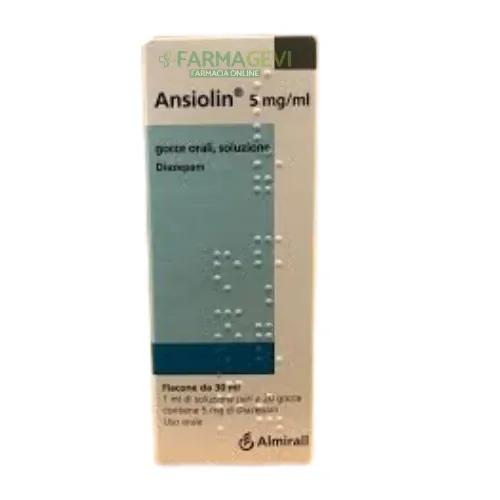
Table of Contents
- Package leaflet: Information for the patient
- Ansiolin 5 mg film-coated tablets, 5 mg/ml oral drops, solution
- 1. What Ansiolin is and what it is used for
- 2. What you need to know before taking Ansiolin
- 3. How to take Ansiolin
- 4. Possible side effects
- 5. How to store Ansiolin
- 6. Package contents and other information
Package leaflet: Information for the patient
Ansiolin 5 mg film-coated tablets, 5 mg/ml oral drops, solution
diazepam
Please read this leaflet carefully before taking this medicine because it contains
important information for you.
- Keep this leaflet. You may need to read it again.
- If you have any questions, ask your doctor or pharmacist.
- This medicine has been prescribed for you only. Do not give it to other people, even if they have the same symptoms as you, because it could be harmful.
- If you experience any side effects, including those not listed in this leaflet, contact your doctor or pharmacist. See section 4.
Contents of this leaflet
- What Ansiolin is and what it is used for
- What you need to know before taking Ansiolin
- How to take Ansiolin
- Possible side effects
- How to store Ansiolin
- Contents of the pack and other information
1. What Ansiolin is and what it is used for
Ansiolin contains diazepam, which belongs to a class of medicines called "benzodiazepines".
Ansiolin is used in the treatment of anxiety, tension, and other physical or mental symptoms associated with anxiety, as well as in the treatment of sleep problems (insomnia).
Medicines of the same class as Ansiolin (benzodiazepines) are indicated only when the condition is severe, disabling, or causes severe distress.
2. What you need to know before taking Ansiolin
Do not take Ansiolin
- if you are allergic to the active substance or to any of the other ingredients of this medicine (listed in section 6).
- if you suffer from an autoimmune disease characterized by muscle weakness (myasthenia gravis),
- if you suffer from severe breathing problems (severe respiratory insufficiency),
- if you suffer from severe liver problems (severe hepatic insufficiency),
- if you suffer from a disorder characterized by interruption or excessive slowing of breathing during sleep (sleep apnea syndrome).
Warnings and precautions
Talk to your doctor or pharmacist before taking Ansiolin.
Your doctor will carefully choose the dose of Ansiolin you should take if you are:
- elderly,
- debilitated or have brain disorders (organic brain diseases, especially arteriosclerotic), or serious heart and breathing problems (cardiorespiratory insufficiency).
Your doctor will prescribe a lower dose of Ansiolin if you suffer from respiratory problems (chronic respiratory insufficiency) due to the risk of respiratory depression.
Benzodiazepines are not recommended for the treatment of a mental illness known as “psychotic illness” and should not be used alone to treat depression or anxiety associated with depression (as this may increase the risk of suicide).
While taking Ansiolin, avoid concomitant use of alcohol or medicines that depress the activity of the central nervous system, as this may enhance the sedative effect of diazepam and may also cause respiratory and/or cardiovascular depression (see “Other medicines and Ansiolin”).
Use Ansiolin with extreme caution if you have previously abused drugs or alcohol.
Tolerance
A certain reduction in effectiveness of the hypnotic effects of benzodiazepines may develop after repeated use for several weeks.
Dependence
The use of benzodiazepines may lead to the development of physical and psychological dependence on these medicines. The risk of dependence increases with dose and duration of treatment and is higher if you have a history of drug or alcohol abuse.
Once physical dependence has developed, abruptly stopping treatment may lead to the following withdrawal symptoms: headache, muscle pain, extreme anxiety, tension, restlessness, confusion, and irritability. In severe cases, the following symptoms may occur: feeling detached from reality (derealization), feeling estranged from oneself (depersonalization), hearing disturbances with increased sensitivity and intolerance to sounds (hyperacusis), temporary loss of sensation (numbness) and tingling in the extremities, hypersensitivity to light, noise, and physical contact, hallucinations, or epileptic seizures (see “Possible side effects”).
There is evidence that, in the case of benzodiazepines with a short duration of action, withdrawal symptoms may appear within the dosing interval between one dose and the next, especially at high doses.
It is not advisable to switch from long-acting benzodiazepines to short-acting benzodiazepines, as withdrawal symptoms may occur.
Rebound insomnia and anxiety
When stopping treatment, a transient syndrome may occur in which the symptoms that led to benzodiazepine treatment reappear in a worsened form. It may be accompanied by other reactions, including mood changes, anxiety, restlessness, or sleep disturbances. Since the risk of withdrawal or rebound symptoms is greater after abrupt discontinuation of treatment, the dose of the medicine should be gradually reduced.
Laboratory tests
If treatment is prolonged, your doctor will perform blood tests and liver function tests.
Memory loss (amnesia)
Benzodiazepines may cause memory loss with inability to store new information (anterograde amnesia). This occurs more frequently several hours after taking the medicine; therefore, to reduce the risk, ensure you can sleep uninterrupted for 7–8 hours (see section “Possible side effects”).
Psychiatric and paradoxical reactions
When using benzodiazepines, reactions such as restlessness, agitation, irritability, aggression, delusions, anger, nightmares, hallucinations, psychosis, and behavioral changes may occur. If this happens, your doctor will discontinue treatment with Ansiolin. These reactions are more common in children and the elderly (see “Possible side effects”).
Children and adolescents
Benzodiazepines should not be administered to children without careful evaluation by a doctor regarding the actual need for treatment; the duration of treatment should be as short as possible.
The safety and efficacy in children under 6 months have not been established.
Other medicines and Ansiolin
Tell your doctor or pharmacist if you are taking, have recently taken, or might take any other medicines.
The effects of Ansiolin may be influenced by, or may influence, the following medicines:
- medicines that depress the central nervous system, such as medicines used to treat certain psychoses (neuroleptics), medicines that promote sleep (hypnotics), medicines used to treat anxiety (anxiolytics/sedatives) or depression (antidepressants), painkillers (narcotic analgesics), medicines for epilepsy (antiepileptics), anesthetics, and allergy medicines (sedating antihistamines); use together with Ansiolin may increase the central nervous system depressant effect. In the case of narcotic analgesics, increased euphoria may occur, leading to increased risk of psychological dependence.
- Concomitant use of Ansiolin and opioids (strong painkillers, medicines for substitution therapy, and some cough medicines) increases the risk of drowsiness, breathing difficulties (respiratory depression), coma, and may be life-threatening. For these reasons, concomitant use should only be considered when no other treatment options are available. However, if your doctor prescribes Ansiolin together with opioids, the dose and duration of concomitant treatment should be limited by your doctor. Inform your doctor about all opioid medicines you are taking and follow their instructions regarding dosage carefully. It may be helpful to inform your friends or family members to watch for the symptoms listed above. Contact your doctor if you experience any of these symptoms.
- medicines that inhibit certain liver enzymes (especially cytochrome P450), such as cimetidine and omeprazole (used to reduce stomach acidity), ketoconazole (used to treat fungal infections), fluvoxamine and fluoxetine (used to treat depression or certain psychiatric disorders): using these medicines together with Ansiolin may increase benzodiazepine activity, leading to enhanced and prolonged sedative effects.
Ansiolin and alcohol
Do not take Ansiolin with alcohol, as the sedative effect may be increased. This negatively affects your ability to drive or operate machinery.
Pregnancy, breastfeeding, and fertility
Pregnancy
If you are pregnant, think you may be pregnant, are planning to become pregnant, or are breastfeeding, consult your doctor or pharmacist before taking this medicine.
Do not take Ansiolin during the first trimester of pregnancy; during later stages, the medicine should only be administered if clearly needed and under direct medical supervision.
If you are taking Ansiolin for serious reasons during the late stages of pregnancy or during childbirth at high doses, effects on the newborn may occur, such as lowered body temperature (hypothermia), reduced muscle tone (hypotonia), and moderate respiratory depression due to the pharmacological action of the medicine.
In addition, newborns born to mothers who have chronically taken medicines of the same class as Ansiolin (benzodiazepines) during the later stages of pregnancy may develop physical dependence and may be at risk of developing withdrawal symptoms shortly after birth.
Breastfeeding
Ansiolin passes into breast milk; do not take this medicine if you are breastfeeding.
Driving and using machines
Sedation, amnesia, altered concentration, and impaired muscle function may negatively affect your ability to drive and operate machinery. If sleep duration has been insufficient, the likelihood of impaired alertness may be increased.
Ansiolin may affect motor and mental reaction abilities, reducing, for example, your ability to drive a vehicle or altering your behavior in road traffic or during the performance of delicate work tasks.
Do not drive a vehicle during the day, or at least for 12 hours after taking Ansiolin.
Ansiolin tablets contain:
lactose and glucose
If your doctor has diagnosed you with an intolerance to certain sugars, contact them before taking this medicine.
Ansiolin drops contain:
This medicine contains 21 vol % ethanol (alcohol), equivalent to 170 mg per dose, corresponding to 4.2 ml of beer or 1.8 ml of wine per dose.
It may be harmful for alcoholics.
This should be taken into account in pregnant or breastfeeding women, children, and high-risk groups such as patients with liver disease or epilepsy.
This medicine contains 600 mg of propylene glycol per ml.
If the child is under 5 years of age, talk to your doctor or pharmacist before administering this medicine, especially if the child is taking other medicines containing propylene glycol or alcohol.
This medicine contains less than 1 mmol (23 mg) of sodium per dose, i.e., essentially ‘sodium-free’.
3. How to take Ansiolin
Take this medicine exactly as directed by your doctor or pharmacist. If
you have any doubts, consult your doctor or pharmacist.
Film-coated tablets
Adults:
The recommended dose is:
1 to 3 tablets daily, or more, according to the doctor's judgment.
Oral drops, solution
Adults:
The recommended dose is:
20 drops, 1 to 3 times daily, or more, according to the doctor's judgment.
Children:
up to 3 years: 4-24 drops, equivalent to 1-6 mg of diazepam, per day.
from 4 to 14 years: 16-48 drops, equivalent to 4-12 mg of diazepam, per day.
The drops may be diluted in a small amount of liquid.
If you are an elderly person, your doctor will assess whether a reduction of the above doses is necessary.
Insomnia
Do not exceed the maximum dose.
For the treatment of insomnia, take Ansiolin just before going to bed.
Your doctor will evaluate you regularly at the beginning of treatment to reduce, if necessary, the dose or frequency of administration in order to avoid excessive dosing.
Duration of treatment
The treatment duration should be as short as possible, depending on the indication:
- Anxiety, tension and other somatic or psychiatric manifestations associated with anxiety syndrome The total duration of treatment is generally no longer than 8-12 weeks, including a period of gradual withdrawal. Your doctor may need to re-evaluate you regularly. In certain cases, the doctor may decide to extend the maximum treatment period.
- Insomnia The treatment should be as short as possible. The duration of treatment generally ranges from a few days to two weeks, up to a maximum of four weeks, including a period of gradual withdrawal. In certain cases, the doctor may decide to extend the maximum treatment period. Treatment should be initiated with the lowest dose.
Instructions for using the dropper bottle:
To dispense the correct dose of medicine, hold the bottle in an upright position with the opening facing
downwards. If the liquid does not flow, shake the bottle or turn it upside down several times and repeat the dispensing procedure as indicated above.
If you take more Ansiolin than you should
Taking an excessive dose of Ansiolin together with other substances that depress the central nervous system (including alcohol) may be life-threatening.
An overdose of benzodiazepines may cause central nervous system depression of varying severity, ranging from loss of sensory and intellectual functions (drowsiness) to coma. In mild cases, symptoms include drowsiness, mental confusion, and persistent sleepiness (lethargy).
In more severe cases, symptoms may include loss of muscle coordination (ataxia), loss of muscle tone (hypotonia), low blood pressure (hypotension), serious breathing problems (respiratory depression), rarely coma, and very rarely death.
If you have taken or ingested too much Ansiolin, contact your doctor or go immediately to the nearest hospital for appropriate actions to be taken (induction of vomiting, within one hour if you are conscious, gastric lavage if you are unconscious, administration of medicines).
If you forget to take Ansiolin
Do not take a double dose to make up for a forgotten dose.
If you have any doubts about how to use this medicine, consult your doctor or pharmacist.
4. Possible side effects
Like all medicines, this medicine can cause side effects, although not everyone will experience them.
Drowsiness, reduced emotional responsiveness (emotional blunting), decreased alertness, confusion, fatigue, headache (cephalalgia), dizziness, muscle weakness, loss of muscle coordination (ataxia), double vision. These effects mainly occur at the beginning of treatment and usually disappear with continued administration.
The following side effects have also been observed with Ansiolin, although their frequency cannot be determined from the available data:
Psychiatric disorders: increased or decreased sexual desire (libido)
Nervous system disorders: speech disorders (dysarthria), difficulty with verbal expression, tremors, dizziness
Eye disorders: blurred vision
Cardiac disorders: severe heart problems (heart failure including cardiac arrest)
Vascular disorders: low blood pressure (hypotension), circulatory problems (circulatory depression)
Respiratory, thoracic and mediastinal disorders: severe breathing problems (respiratory depression including respiratory failure)
Gastrointestinal disorders: nausea, dry mouth or increased salivation, constipation and other gastrointestinal disturbances
Hepatobiliary disorders: jaundice
Skin and subcutaneous tissue disorders: skin reactions
Renal and urinary disorders: incontinence, urinary retention
General disorders and administration site conditions:
Investigations: irregular heart rate; increased values in laboratory tests (levels of transaminases, alkaline phosphatase in blood)
Injury, poisoning and procedural complications: fractures (
)
With medicines belonging to the same class as Ansiolin (benzodiazepines), the following effects have also been observed:
Memory disturbances (Amnesia)
Benzodiazepines may cause memory disturbances (anterograde amnesia) at therapeutic doses; the risk increases at higher doses. These effects may be associated with behavioral changes (see section "What you need to know before taking Ansiolin").
Depression
Benzodiazepine use may unmask pre-existing depression (see section "What you need to know before taking Ansiolin").
Paradoxical reactions
Benzodiazepines or benzodiazepine-like compounds may cause reactions such as restlessness, agitation, irritability, aggression, delusions, anger, nightmares, hallucinations, mental disturbances (psychosis), and behavioral changes. These reactions can be severe and are more likely in children and elderly patients (see "What you need to know before taking Ansiolin").
Dependence
Benzodiazepines, even at therapeutic doses, may lead to physical dependence (the need to continue taking the medicine). Stopping treatment may result in the return of symptoms (rebound phenomena) or withdrawal symptoms (see section "What you need to know before taking Ansiolin"). Psychological dependence may also occur. Abuse of benzodiazepines has been reported.
Reporting of side effects
If you experience any side effects, including those not listed in this leaflet, talk to your doctor or pharmacist. You can also report side effects directly via the national reporting system at www.aifa.gov.it/content/segnalazioni-reazioni-avverse. By reporting side effects, you can help provide more information on the safety of this medicine.
5. How to store Ansiolin
Do not store above 30°C.
Keep out of the sight and reach of children.
Do not use this medicine after the expiry date stated on the packaging after "Expiry date:".
The expiry date refers to the last day of that month.
Do not dispose of any medicine via wastewater or household waste. Ask your pharmacist how to
dispose of medicines you no longer use. This will help protect the environment.
6. Package contents and other information
What Ansiolin contains
Film-coated tablets
- The active substance is diazepam. One tablet contains 5 mg of diazepam.
- The other components are: lactose, maize starch, magnesium stearate, methylhydroxypropylcellulose, anhydrous glucose, propylene glycol, polyethylene glycol.
Oral drops, solution
- The active substance is diazepam. 100 ml of solution contain 0.500 g of diazepam.
- The other components are ethanol 96%, propylene glycol, ammonium glycyrrhizinate, saccharin, sodium hydroxide, wild cherry flavor, purified water.
Description of the appearance of Ansiolin and contents of the pack
Ansiolin is available as:
- Film-coated tablets: pack containing 40 tablets
- Oral drops, solution: 1 bottle of 30 ml
Marketing Authorization Holder and Manufacturer
Marketing Authorization Holder
Neuraxpharm Italy S.p.A.
Via Piceno Aprutina, 47, 63100 - Ascoli Piceno (AP), Italy
Manufacturer
Film-coated tablets
Industrias Farmaceuticas Almirall S.A., Ctra. Nacional II, km 593 – 08740 Sant Andreu de la Barca –
Barcelona (SPAIN)
Oral drops, solution
Industrias Farmaceuticas Almirall S.A., Ctra. Nacional II, km 593 – 08740 Sant Andreu de la Barca –
Barcelona (SPAIN)
Almirall Hermal GmbH, Scholtzstraße 3, 21465 – Reinbek, Germany
Warning
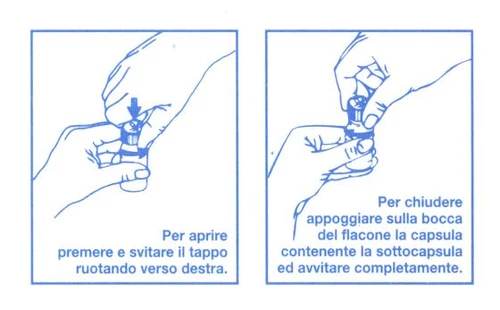
The bottle for the oral drops formulation is equipped with a child-resistant closure system (Italian Ministry of Health Circular No. 49/84); please carefully follow the instructions: