Amoxicillin Sandoz GmbH
Italy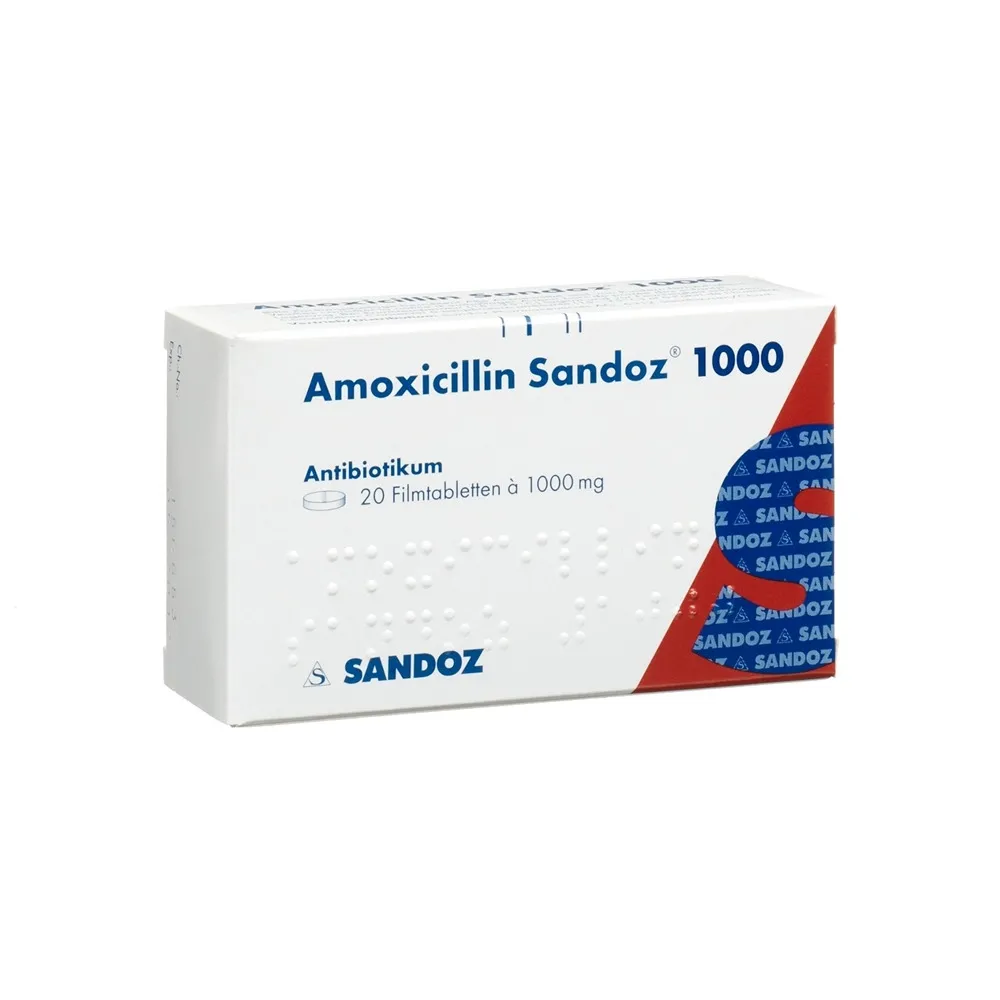
Table of Contents
- PACKAGE LEAFLET: INFORMATION FOR THE PATIENT
- Amoxicillina Sandoz GmbH 1000 mg film-coated tablets
- 1. What Amoxicillina Sandoz GmbH is and what it is used for
- 2. What you need to know before taking Amoxicillina Sandoz GmbH
- 3. How to take Amoxicillina Sandoz GmbH
- 4. Possible side effects
- 5. How to store Amoxicillina Sandoz GmbH
- 6. Package contents and other information
PACKAGE LEAFLET: INFORMATION FOR THE PATIENT
Amoxicillina Sandoz GmbH 1000 mg film-coated tablets
Generic medicine
Please read this leaflet carefully before taking this medicine because it contains important information for you.
- Keep this leaflet. You may need to read it again.
- If you have any questions, ask your doctor or pharmacist.
- This medicine has been prescribed for you only. Never give it to other people, even if their symptoms are the same as yours.
- If you experience any side effects, including those not listed in this leaflet, consult your doctor or pharmacist. See section 4.
Contents of this leaflet:
- What Amoxicillina Sandoz GmbH is and what it is used for
- What you need to know before taking Amoxicillina Sandoz GmbH
- How to take Amoxicillina Sandoz GmbH
- Possible side effects
- How to store Amoxicillina Sandoz GmbH
- Contents of the pack and other information
1. What Amoxicillina Sandoz GmbH is and what it is used for
What Amoxicillina Sandoz GmbH is
Amoxicillina Sandoz GmbH is an antibiotic. Its active substance, called
amoxicillin, belongs to a group of medicines known as "penicillins".
What Amoxicillina Sandoz GmbH is used for
Amoxicillina Sandoz GmbH is used to treat bacterial infections in various
parts of the body. Amoxicillina Sandoz GmbH may also be used in combination
with other medicines for the treatment of gastric ulcers.
2. What you need to know before taking Amoxicillina Sandoz GmbH
Do not take Amoxicillina Sandoz GmbH
- if you are allergic to amoxicillin, penicillins, or any of the other ingredients of this medicine (see section 6)
- if you have previously had an allergic reaction to any antibiotic. This includes skin rash or development of swelling of the face or throat.
Do not take Amoxicillina Sandoz GmbH if any of the above situations apply to you. If you are unsure, consult your doctor or pharmacist before taking Amoxicillina Sandoz GmbH.
Warnings and precautions
Talk to your doctor or pharmacist before taking Amoxicillina Sandoz GmbH if:
- you have glandular fever (fever, sore throat, swollen glands, and extreme tiredness)
- you have kidney problems
- you do not urinate regularly.
If you are unsure whether any of the above points apply to you, consult your doctor or pharmacist before taking Amoxicillina Sandoz GmbH.
Blood and urine tests
If you are undergoing:
- urine tests (for glucose) or blood tests for liver function
- tests for estriol (used during pregnancy to monitor normal fetal development)
Inform your doctor or pharmacist that you are taking Amoxicillina Sandoz GmbH, as this medicine may alter the results of these tests.
Other medicines and Amoxicillina Sandoz GmbH
Tell your doctor or pharmacist if you are taking, have recently taken, or might take any other medicines.
- If you are taking allopurinol (a medicine used to treat gout) together with Amoxicillina Sandoz GmbH, you may have an increased risk of developing an allergic skin reaction.
- If you are taking probenecid (a medicine used to treat gout), your doctor may need to adjust the dose of Amoxicillina Sandoz GmbH.
- If you are taking medicines to reduce blood clotting (e.g., warfarin), you may need additional blood tests.
- If you are taking other antibiotics (e.g., tetracyclines), the effectiveness of Amoxicillina Sandoz GmbH may be reduced.
- If you are taking methotrexate (a medicine used to treat cancer and severe psoriasis), Amoxicillina Sandoz GmbH may cause an increase in side effects.
Pregnancy, breastfeeding and fertility
If you are pregnant, think you may be pregnant, planning to become pregnant, or are breastfeeding, consult your doctor or pharmacist before taking this medicine.
Driving and using machines
Amoxicillina Sandoz GmbH may cause side effects whose symptoms (such as allergic reactions, dizziness, and seizures) could impair your ability to drive. Do not drive or operate machinery if you do not feel well.
3. How to take Amoxicillina Sandoz GmbH
Take this medicine exactly as directed by your doctor or pharmacist. If you have any doubts, consult your doctor or pharmacist.
- Swallow the tablet with water without breaking or chewing it.
- Take the doses at regular intervals throughout the day, at least 4 hours apart.
Usual dose:
Children weighing less than 40 kg
All doses are calculated according to the child's body weight in kilograms.
- Your doctor will advise you on the amount of Amoxicillina Sandoz GmbH to give to your infant or child.
- The usual dose is 40–90 mg per kg of body weight per day, given in two or three divided doses.
- The maximum recommended dose is 100 mg per kg of body weight per day.
Adults, elderly patients and children weighing 40 kg or more
The usual dose of Amoxicillina Sandoz GmbH is 250–500 mg three times a day
or 750 mg–1 g every 12 hours, depending on the severity and type of infection.
- Severe infections: 750 mg to 1 g three times a day.
- Urinary tract infections: 3 g twice a day for one day.
- Lyme disease (infection caused by a parasite called tick): isolated erythema migrans (early stage – circular reddish or rosy skin rash): 4 g per day; systemic manifestations (late stage – with more severe symptoms or when the disease spreads to other parts of the body): up to 6 g per day.
- Gastric ulcers: one 750 mg dose or one 1 g dose twice a day for 7 days, together with other antibiotics and medicines for treating gastric ulcers.
- Prevention of heart infections during surgical procedures: the dose will vary depending on the type of surgical procedure. Other medicines may also be administered simultaneously. Your doctor, pharmacist or nurse will provide more detailed information.
- The maximum recommended dose is 6 g per day.
Kidney problems
If you have kidney problems, your dose may be lower than usual.
If you take more Amoxicillina Sandoz GmbH than you should
If you take too much Amoxicillina Sandoz GmbH, symptoms such as gastrointestinal disturbances (nausea, vomiting or diarrhoea) or crystals in the urine may occur, possibly causing cloudy urine or problems with urination. Contact your doctor as soon as possible, and take the medicine with you to show it.
If you forget to take Amoxicillina Sandoz GmbH
- If you miss a dose, take it as soon as you remember.
- Do not take the next dose too early; wait approximately 4 hours before taking the next dose.
- Do not take a double dose to make up for a forgotten dose.
How long should you take Amoxicillina Sandoz GmbH?
- Continue taking Amoxicillina Sandoz GmbH for the length of time prescribed by your doctor, even if you start to feel better. It is important to take all prescribed doses to fully treat the infection. The infection may return if some bacteria survive.
- If you still do not feel well after completing the treatment, contact your doctor again.
Prolonged use of Amoxicillina Sandoz GmbH may lead to the development of candidiasis (a yeast infection affecting moist areas of the body, causing irritation, itching and whitish discharge). If this occurs, consult your doctor.
If you take Amoxicillina Sandoz GmbH for a long time, your doctor may carry out additional tests to check that your kidneys, liver and blood are functioning normally.
If you have any questions about the use of this medicine, consult your doctor or pharmacist.
4. Possible side effects
Like all medicines, this medicine can cause side effects, although not everybody gets them.
Stop taking Amoxicillina Sandoz GmbH and consult a doctor immediately if you experience any of the following serious side effects, as urgent medical treatment may be required:
The following side effects are very rare (may affect up to 1 in 10,000 people):
- allergic reactions, accompanied by symptoms such as skin itching or rash, swelling of the face, lips, tongue or body, or difficulty breathing. These effects can be severe and, in some cases, have been fatal
- skin rash or appearance of small, round, flat, reddish spots under the skin surface, or skin bruising. This is due to inflammation of the blood vessel walls caused by an allergic reaction. It may be accompanied by joint pain (arthritis) and kidney problems
- delayed allergic reaction, usually occurring 7–12 days after taking Amoxicillina Sandoz GmbH, accompanied by symptoms such as skin rash, fever, joint pain, and swollen lymph nodes, particularly those under the arm
- a skin reaction known as “erythema multiforme”, with itchy, reddish-purple patches on the skin, especially on the palms of the hands or soles of the feet, areas of skin swelling similar to hives, or painful areas on the surface of the mouth, eyes, and genitals. This may be accompanied by fever and a general feeling of extreme tiredness
- other serious skin reactions may include changes in skin colour, formation of lumps under the skin, appearance of blisters, pustules, peeling, redness, pain, itching and flaking, and may be associated with fever, headache and widespread body aches
- flu-like symptoms with rash, fever, swollen glands and abnormal blood test results (including increased white blood cell count (eosinophilia) and elevated liver enzymes) (Drug Reaction with Eosinophilia and Systemic Symptoms (DRESS))
- fever, chills, sore throat or other signs of infection, or a tendency to bruise easily. These may be signs of a blood cell disorder
- the Jarisch-Herxheimer reaction, which may occur during treatment of Lyme disease with Amoxicillina Sandoz GmbH, causing fever, chills, headache, muscle pain and skin rash
- inflammation of the large intestine (colon) with diarrhoea (sometimes containing blood), abdominal pain and fever
- serious side effects affecting the liver may occur, mainly observed in patients treated for long periods, in men and in elderly people. Inform your doctor urgently if you notice: severe diarrhoea with bleeding or blisters, skin redness or bruising, dark urine, pale stools, or yellowing of the skin or the white part of the eye (jaundice). See also the entry on anaemia below as a possible cause of jaundice. These effects may occur during treatment with the medicine or even several weeks later.
If any of the above-listed effects occur, stop taking the medicine and contact your doctor immediately.
Less severe skin reactions may sometimes occur, such as:
- a slightly itchy rash (roundish pink-reddish patches), localized swelling similar to hives on the forearms, legs, palms of the hands, hands or feet. This is an uncommon effect (may affect up to 1 in 100 people).
If any of these side effects occur, contact your doctor, as treatment with Amoxicillina Sandoz GmbH will need to be stopped.
Other possible side effects include:
Common (may affect up to 1 in 10 people)
- skin rash
- nausea
- diarrhoea.
Uncommon (may affect up to 1 in 100 people)
- vomiting.
Very rare (may affect up to 1 in 10,000 people)
- candidiasis (yeast infection of the vagina, mouth or skin folds); your doctor or pharmacist will prescribe appropriate treatment
- kidney problems
- seizures, observed in patients receiving high doses or with pre-existing kidney problems
- dizziness
- hyperactivity
- presence of crystals in the urine, possibly causing cloudy urine, difficulty urinating or discomfort during urination. Make sure you drink plenty of fluids to reduce the risk of developing these symptoms
- the tongue may become yellowish, brownish or blackish in colour and have a hairy appearance
- excessive destruction of red blood cells, leading to a type of anaemia. Signs include: tiredness, headache, shortness of breath, dizziness, paleness, and yellowing of the skin and the white part of the eye
- reduction in the number of white blood cells
- reduction in the number of cells involved in blood clotting
- prolonged blood clotting time compared to normal. This effect may be noticed with nosebleeds or when sustaining a cut.
Reporting of side effects
If you experience any side effect, including those not listed in this leaflet, talk to your doctor or pharmacist. You can also report side effects directly via the national reporting system at www.agenziafarmaco.gov.it/content/come-segnalare-una-sospetta-reazione-avversa.
By reporting side effects, you can help provide more information on the safety of this medicine.
5. How to store Amoxicillina Sandoz GmbH
Keep this medicine out of the sight and reach of children.
Do not use this medicine after the expiry date stated on the carton and blister after EXP. The expiry date refers to the last day of that month.
Do not store above 25°C.
Store in the original packaging to protect the medicine from moisture.
Do not dispose of any medicine via wastewater or household waste. Ask your pharmacist how to dispose of medicines you no longer use. This will help protect the environment.
6. Package contents and other information
What Amoxicillina Sandoz GmbH contains
The active substance is amoxicillin (as trihydrate).
Each film-coated tablet contains 1148 mg of amoxicillin trihydrate, equivalent
to 1000 mg of amoxicillin.
The other components are
Core: magnesium stearate (E470b), povidone (K25) (E1201), sodium starch glycolate (type
A), microcrystalline cellulose (E460).
Coating: titanium dioxide (E171), talc (E553b), hypromellose (E464).
Description of the appearance of Amoxicillina Sandoz GmbH and package contents
The film-coated tablets are oval, biconvex, white to off-white in colour, with a break line on both sides.
The tablet can be divided into two equal halves.
The film-coated tablets are packaged in PVC/PVDC/Aluminium blisters.
Pack sizes: 7, 10, 12, 14, 16, 20, 28, 30, 100, and 1000 film-coated tablets.
Not all pack sizes may be marketed.
Marketing Authorization Holder
Sandoz GmbH – Biochemiestrasse, 10 – 6250 Kundl (Austria)
Representative in Italy: Sandoz Spa – Largo U. Boccioni, 1 – 21040 Origgio (VA)
Manufacturers
Sandoz GmbH – Biochemiestrasse, 10 – 6250 Kundl (Austria)
Salutas Pharma GmbH – Otto Von Guericke Allee 1 – 39179 Barleben (Germany)
This medicinal product is authorized in the Member States of the European Economic Area under the following names:
Austria Amoxicillin Sandoz 500 mg – Filmtabletten
Amoxicillin Sandoz 750 mg – Filmtabletten
Amoxicillin Sandoz 1000 mg – Filmtabletten
Bulgaria Amoxicillin Sandoz 500 mg film-coated tablets
Amoxicillin Sandoz 1000 mg film-coated tablets
Denmark Imadrax
Estonia Ospamox 500mg
Ospamox 1000mg
Italy AMOXICILLINA SANDOZ GmbH
Lithuania Ospamox 500 mg plėvele dengtos tabletės
Ospamox 1000 mg plėvele dengtos tabletės
Latvia Ospamox 500 mg apvalkotās tabletes
Ospamox 1000 mg apvalkotās tabletes
Romania Amoxicilina Sandoz 500 mg comprimate filmate
Amoxicilina Sandoz 1000 mg comprimate filmate
Sweden Amoxicillin Sandoz 500 mg filmdragerade tabletter
Amoxicillin Sandoz 750 mg filmdragerade tabletter
Slovenia Ospamox 500 mg filmsko obložene tablete
Ospamox 750 mg filmsko obložene tablete
Ospamox 1000 mg filmsko obložene tablete
Slovakia Ospamox 500 mg filmom obalené tablety
Ospamox 750 mg filmom obalené tablety
Ospamox 1000 mg filmom obalené tablety
This Patient Information Leaflet was last approved on
General recommendation on the use of antibiotics
Antibiotics are used to treat bacterial infections and have no effect against infections caused by viruses.
It may happen that a bacterial infection does not respond to a course of antibiotic therapy. Most often, this is due to the fact that the bacteria causing the infection are resistant to the administered antibiotic and are therefore able to survive and multiply despite treatment.
There are several reasons why bacteria can become resistant to antibiotics. Correct use of antibiotics can help reduce the likelihood of bacteria developing resistance.
An antibiotic prescription is intended solely to treat the current illness. By following the recommendations below, you can help prevent the development of resistant bacteria, which could render antibiotic therapy ineffective.
-
It is very important that antibiotics are taken at the correct dose, at the correct times, and for the prescribed number of days. It is important to read the instructions accompanying the medicine and, if they are difficult to understand, to ask your doctor or pharmacist for clarification.
-
Antibiotics should not be taken unless they have been specifically prescribed for you and should only be used to treat the infection for which they were prescribed.
-
Do not take antibiotics prescribed for other people, even if the infection appears similar.
-
Do not give your prescribed antibiotics to other people.
-
If, after completing the treatment course as directed by your doctor, you have unused antibiotic remaining, you should return it to a pharmacy for proper disposal.