Amoxicillin and clavulanic acid Sun
Italy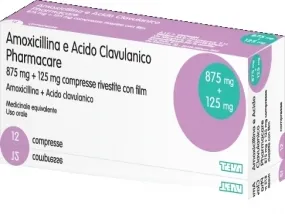
Table of Contents
- Package leaflet: Information for the user
- Amoxicillin and Clavulanic Acid SUN
- 1. What Amoxicillin and Clavulanic Acid SUN is and what it is used for
- 2. What you need to know before taking Amoxicillin and Clavulanic Acid SUN
- 3. How to take Amoxicillin and Clavulanic Acid SUN
- 4. Possible side effects
- 5. How to store Amoxicillin and Clavulanic Acid SUN
- 6. Package contents and other information
Package leaflet: Information for the user
Amoxicillin and Clavulanic Acid SUN
875 mg + 125 mg film-coated tablets
Generic medicine
Read this leaflet carefully before taking this medicine because it contains
important information for you.
- Keep this leaflet. You may need to read it again.
- If you have any questions, ask your doctor or pharmacist.
- This medicine has been prescribed for you only. Do not give it to others, even if their symptoms are the same as yours, as it may be harmful.
- If you experience any adverse reactions, including those not listed in this leaflet, contact your doctor or pharmacist. See section 4.
What this leaflet contains :
- What Amoxicillin and Clavulanic Acid SUN is and what it is used for
- What you need to know before taking Amoxicillin and Clavulanic Acid SUN
- How to take Amoxicillin and Clavulanic Acid SUN
- Possible side effects
- How to store Amoxicillin and Clavulanic Acid SUN
- Contents of the pack and other information
1. What Amoxicillin and Clavulanic Acid SUN is and what it is used for
Amoxicillin and Clavulanic Acid SUN is an antibiotic that works by killing the bacteria that cause infections. It contains two different active ingredients called amoxicillin and clavulanic acid.
Amoxicillin belongs to a group of medicines known as "penicillins," whose activity can sometimes be blocked (rendered inactive). The other active component (clavulanic acid) prevents this from happening.
Amoxicillin and Clavulanic Acid SUN is used in adults and children to treat the following infections:
- ear and sinus infections
- respiratory tract infections
- urinary tract infections
- skin and soft tissue infections, including dental infections
- bone and joint infections
2. What you need to know before taking Amoxicillin and Clavulanic Acid SUN
Do not take Amoxicillin and Clavulanic Acid SUN:
- if you are allergic to amoxicillin, clavulanic acid, penicillins, or to any of the other Var11 1
components of Amoxicillin and Clavulanic Acid SUN (listed in section 6)
- if you have had or have ever had a severe allergic reaction to any other antibiotic. This may include a skin rash or swelling of the face or neck
- if you have had liver problems or jaundice (yellowing of the skin) when taking an antibiotic.
Do not take Amoxicillin and Clavulanic Acid SUN if any of the above apply to you.
If you have any doubts, speak with your doctor or pharmacist before taking Amoxicillin and Clavulanic Acid SUN.
Warnings and precautions
Talk to your doctor or pharmacist before taking Amoxicillin and Clavulanic Acid SUN:
- if you have infectious mononucleosis
- if you have previously been treated for liver or kidney problems
- if you do not urinate regularly.
If you are unsure whether any of the conditions listed above apply to you, discuss this with your doctor or pharmacist before taking Amoxicillin and Clavulanic Acid SUN.
In some cases, your doctor may carry out tests to identify the type of bacteria causing your infection. Based on the results, they may prescribe a different dosage of Amoxicillin and Clavulanic Acid SUN or a different medicine.
Conditions you should be aware of
Amoxicillin and Clavulanic Acid SUN may worsen certain pre-existing conditions or cause serious side effects. These may include allergic reactions, seizures, and inflammation of the intestine. You should pay attention to certain symptoms while taking Amoxicillin and Clavulanic Acid SUN in order to reduce any risks. See section 4 “Conditions you should be aware of”.
Blood and urine tests
If you are scheduled for blood tests (such as checks on red blood cells or liver function tests) or urine tests (for glucose), inform your doctor or nurse that you are taking Amoxicillin and Clavulanic Acid SUN. This is because Amoxicillin and Clavulanic Acid SUN may affect the results of these types of tests.
Other medicines and Amoxicillin and Clavulanic Acid SUN
Inform your doctor or pharmacist if you are taking, have recently taken, or might take any other medicines.
If you are taking allopurinol (used for gout) together with Amoxicillin and Clavulanic Acid SUN, you are very likely to develop a skin allergic reaction.
If you are taking probenecid (used for gout), your doctor may decide to adjust the dose of Amoxicillin and Clavulanic Acid SUN.
If you are taking medicines together with Amoxicillin and Clavulanic Acid SUN that help prevent blood clots (such as warfarin), additional blood tests may be required.
Var11 2
Amoxicillin and Clavulanic Acid SUN may affect how methotrexate (a medicine used to treat tumours or rheumatic diseases) works.
Amoxicillin and Clavulanic Acid SUN may affect how mycophenolate mofetil (a medicine used to prevent rejection of transplanted organs) works.
Pregnancy and breastfeeding
If you are pregnant, think you may be pregnant, are planning to become pregnant, or are breastfeeding with breast milk, consult your doctor or pharmacist before taking this medicine.
Driving and using machines
Amoxicillin and Clavulanic Acid SUN may cause side effects, and the symptoms may make you unfit to drive. Do not drive or operate machinery unless you feel well.
3. How to take Amoxicillin and Clavulanic Acid SUN
Take this medicine exactly as directed by your doctor or pharmacist. If
you have any doubts, consult your doctor or pharmacist.
Adults and children weighing 40 kg or more
- Recommended dose: 1 tablet twice daily
- Higher dose: 1 tablet three times daily
Children weighing less than 40 kg
Children aged 6 years or younger should preferably be treated with amoxicillin and
clavulanic acid oral suspension or sachets.
Consult your doctor or pharmacist for advice on administering Amoxicillin and Clavulanic Acid SUN tablets to children weighing less than 40 kg.
Patients with kidney or liver problems
- If you have kidney problems, your dose may need to be adjusted. Your doctor may choose a different dosage or a different medicine.
- If you have liver problems, you may require more frequent blood tests to monitor liver function.
Method of administration
- Swallow the tablet whole with a glass of water at the beginning of a meal or just before
- Space your doses evenly throughout the day, at least 4 hours apart. Do not take 2 doses within 1 hour.
Duration of treatment
Do not take Amoxicillin and Clavulanic Acid SUN for longer than 2 weeks. If you continue to feel unwell, you must see your doctor.
The break line is only intended to help you split the tablet if you have difficulty
swallowing it whole.
If you take more Amoxicillin and Clavulanic Acid SUN than you should
If you take too much Amoxicillin and Clavulanic Acid SUN, symptoms may include gastrointestinal disturbances (nausea, vomiting or diarrhoea) or seizures. Inform your doctor as soon as possible.
Take the medicine packaging with you to show the doctor.
If you forget to take Amoxicillin and Clavulanic Acid SUN
If you forget to take a dose, take it as soon as you remember. Do not take the next dose too soon; wait approximately 4 hours before taking the next dose. Do not take a double dose to make up for a forgotten dose.
If you stop taking Amoxicillin and Clavulanic Acid SUN
Continue taking Amoxicillin and Clavulanic Acid SUN until the treatment is complete, even if you feel better. You need every dose to help fight the infection. If some bacteria survive, they may cause the infection to return.
If you have any questions about using this medicine, consult your doctor or pharmacist.
4. Possible side effects
Like all medicines, this medicine can cause side effects, although not everybody gets them.
Conditions you should pay attention to
Allergic reactions:
- skin rash
- inflammation of blood vessels (vasculitis), which may appear as red or purple spots on the skin but can also affect other parts of the body
- fever, joint pain, swelling of the glands in the neck, armpits or groin
- swelling, sometimes of the face or mouth (angioedema), causing difficulty in breathing
- collapse. Contact your doctor immediately if you experience any of these symptoms. Stop taking Amoxicillin and Clavulanic Acid SUN.
Intestinal inflammation
Intestinal inflammation, causing watery diarrhoea usually containing blood and mucus, stomach pain and/or fever.
If you experience these symptoms, contact your doctor as soon as possible for advice.
Very common side effects
May affect more than 1 in 10 people
- diarrhoea (in adults)
Common side effects
May affect up to 1 in 10 people
- thrush (candida – a fungal infection of the vagina, mouth or skin folds)
- nausea, especially when taking high doses Var11 4
→ if you are affected, take Amoxicillin and Clavulanic Acid SUN before food
- vomiting
- diarrhoea (in children)
Uncommon side effects
May affect up to 1 in 100 people
- skin rash, itching
- raised, itchy rash (urticaria)
- indigestion
- dizziness
- headache
Uncommon side effects that may be detected in blood tests:
- increase in certain proteins (enzymes) produced by the liver, indicating possible liver damage
Rare side effects
May affect up to 1 in 1,000 people
- skin rashes, which may appear as blisters and look like small targets (a dark central spot surrounded by a paler area, with a dark ring around the edge – erythema multiforme). If you notice any of these symptoms, contact your doctor urgently.
Rare side effects that may be detected in blood tests:
- low number of cells involved in blood clotting
- low white blood cell count
Other side effects
Other side effects occur in a very small number of people, but their exact frequency is unknown.
- Allergic reactions (see above)
- Intestinal inflammation (see above)
- Inflammation of the protective membrane surrounding the brain (aseptic meningitis)
- Severe skin reactions:
- widespread rash with blisters and peeling of the skin, particularly around the mouth, nose, eyes and genitals (Stevens-Johnson syndrome) and a more severe form causing extensive skin detachment (more than 30% of the body surface – toxic epidermal necrolysis)
- widespread red rash with small blisters containing pus (exfoliative bullous dermatitis)
- a skin rash, red with crusts and swellings under the skin and blisters (pustular exanthema)
- flu-like symptoms with rash, fever, swollen glands and abnormal blood test results (including increased white blood cell count (eosinophilia) and elevated liver enzymes) (Drug Reaction with Eosinophilia and Systemic Symptoms (DRESS)).
If you experience any of these symptoms, contact your doctor immediately:
Var11 5
- inflammation of the liver (hepatitis)
- jaundice, caused by increased levels of bilirubin (a substance produced in the liver) in the blood, which may make the skin and whites of the eyes appear yellow
- inflammation of the kidney tubules
- blood takes longer to clot
- hyperactivity
- seizures (in people taking high doses of Amoxicillin and Clavulanic Acid SUN or who have kidney problems)
- black hairy tongue, appearing as if covered with hair
- tooth staining (in children), usually removable by brushing
Side effects that may be detected in blood or urine tests:
- severe reduction in white blood cell count
- low number of red blood cells (haemolytic anaemia)
- crystals in the urine
Reporting of side effects
If you experience any side effect, including those not listed in this leaflet, talk to your doctor or pharmacist.
You can also report side effects directly via the national reporting system at: www.agenziafarmaco.gov.it/it/responsabili
By reporting side effects, you can help provide more information on the safety of this medicine.
5. How to store Amoxicillin and Clavulanic Acid SUN
Keep this medicine out of the sight and reach of children.
Do not use this medicine after the expiry date stated on the container. The expiry date refers to the
last day of that month.
Store below 25°C.
Keep in the original packaging to protect the medicine from light.
Do not dispose of any medicine via wastewater or household waste. Ask your pharmacist how to
dispose of medicines no longer required. This will help protect the environment.
6. Package contents and other information
What Amoxicillina e Acido Clavulanico SUN contains
- The active substances are amoxicillin and clavulanic acid. One film-coated tablet contains: 1004.3 mg of amoxicillin trihydrate, equivalent to 875 mg of amoxicillin, and 148.9 mg of potassium clavulanate, equivalent to 125 mg of clavulanic acid.
- The other components are: microcrystalline cellulose, sodium starch glycolate, anhydrous colloidal silica, povidone, Eudragit E100, magnesium stearate, hypromellose, titanium dioxide (E171), macrogol 400, talc. Var11 6
Description of the appearance of Amoxicillina e Acido Clavulanico SUN and contents of the
packaging
Amoxicillina e Acido Clavulanico SUN are film-coated tablets, white to off-white in colour, capsule-shaped, with "RX509" engraved on one side and a break line on the other side.
Pack sizes: 8, 10, 12, 14, 16, 20, 21, 24, 28, 30, 60, 100 film-coated tablets in PVC/PVdC/Al blisters in a pouch (polyester/aluminium/polyester/polyethylene film) containing a 1 g desiccant sachet inside.
Do not eat the desiccant sachet contained inside the pouch.
Not all pack sizes may be marketed.
Marketing Authorisation Holder
SUN Pharmaceutical Industries Europe B.V., Polarisavenue 87, Hoofddorp, 2132JH - The Netherlands
Responsible manufacturers for batch release:
SUN Pharmaceutical Industries (Europe) B.V. - Polarisavenue 87, Hoofddorp, 2132JH - The Netherlands
TERAPIA S.A. 124 Fabricii Street, 400 632 Cluj Napoca - Romania
Alkaloida Chemical Company Zrt. - Kabay János u. 29 - Tiszavasvári 4440, Hungary
Ecopharm EOOD, 14 Cherni vrah Blvd., bl.3, ground floor, 1421 Sofia - Bulgaria
Behavioural hygiene
Antibiotics are used to treat bacterial infections. They are not effective against viral infections.
Sometimes, a bacterial infection does not respond to antibiotic treatment. One of the most common reasons for this is that the bacteria causing the infection are resistant to the antibiotic being used. This means that the bacteria survive and multiply despite the presence of the antibiotic.
Bacteria become resistant to antibiotics for various reasons. Using antibiotics appropriately can help reduce the emergence of bacterial resistance.
When your doctor prescribes you an antibiotic, it is intended only for the illness you currently have. Please pay attention to the following advice to help prevent the emergence of bacterial resistance, which can lead to antibiotics becoming ineffective.
- It is very important that you take the antibiotic at the correct dose, at the prescribed times, and for the correct number of days. Read the instructions in the package leaflet and, if anything is unclear, ask your doctor or pharmacist for clarification.
- Do not take antibiotics unless they have been specifically prescribed for you, and use them only for the infection for which they were prescribed.
- Do not use antibiotics that have been prescribed for other people, even if you think you have a similar infection.
- Do not give your antibiotics, which were specifically prescribed for you, to other people.
- If you have leftover antibiotics after completing your treatment, return them to your pharmacist for proper disposal.
Var11 8