Amox
Italy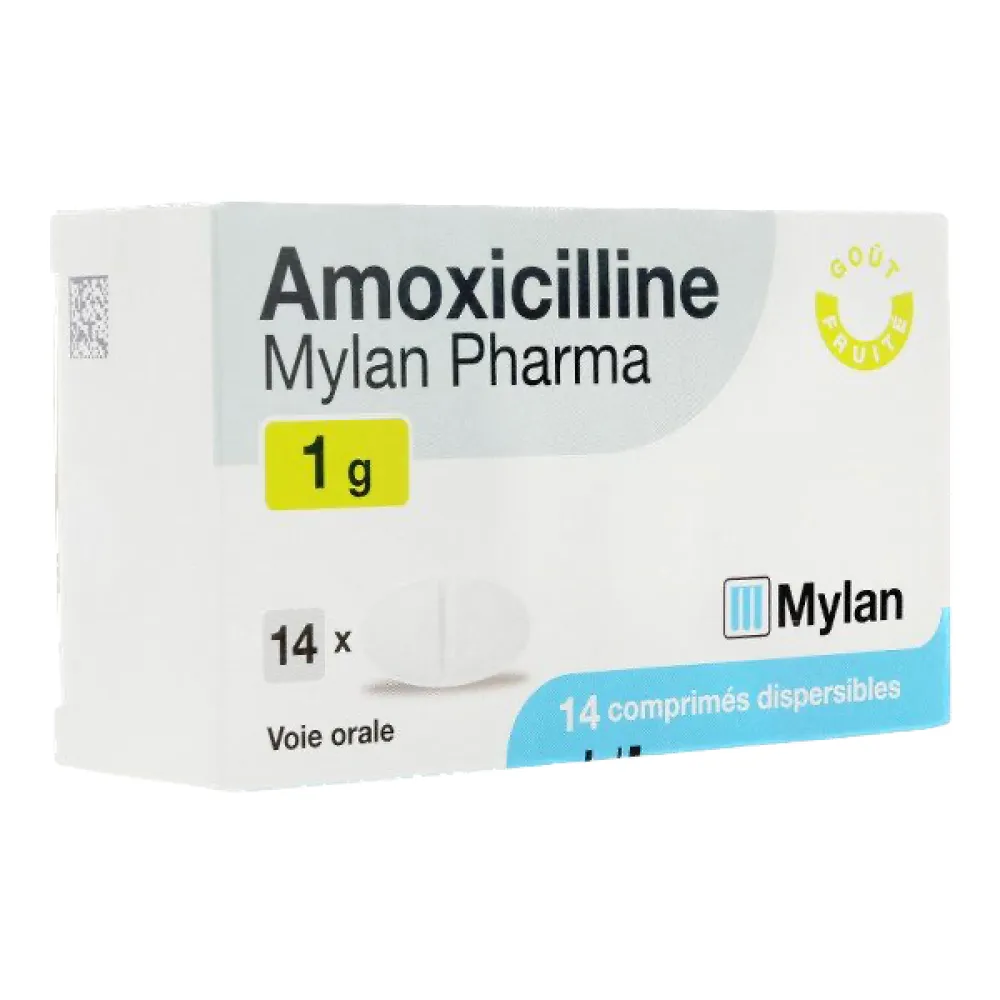
Table of Contents
Patient Information Leaflet: Information for the User
AMOX 1 g tablets
Amoxicillin
Read this leaflet carefully before taking this medicine because it contains important information for you.
- Keep this leaflet. You may need to read it again.
- If you have any questions, ask your doctor or pharmacist.
- This medicine has been prescribed for you only. Do not give it to others, even if their symptoms are the same as yours, because it could be harmful.
- If you experience any side effects, including those not listed in this leaflet, tell your doctor or pharmacist. See section 4.
Contents of this leaflet
- What AMOX is and what it is used for
- What you need to know before taking AMOX
- How to take AMOX
- Possible side effects
- How to store AMOX
- Contents of the pack and other information
1. What AMOX is and what it is used for
What AMOX is
AMOX is an antibiotic. Its active ingredient, called amoxicillin, belongs to a group
of medicinal substances known as "penicillins".
What AMOX is used for
AMOX is used to treat bacterial infections in various parts of the body. Infections
caused by Gram-positive and Gram-negative organisms sensitive to the antibiotic (respiratory and otomastoid infections, enteric, hepatobiliary, salmonellosis, genitourinary and venereal infections, dermatological, surgical infections, endocarditis, sepsis).
2. What you need to know before taking AMOX
Do not take AMOX
- if you are allergic to amoxicillin, penicillin, or any of the other ingredients of this medicine (listed in section 6).
- if you have previously had an allergic reaction to any antibiotic. This includes skin rash or development of swelling of the face or throat.
- if you have or suspect you have infectious mononucleosis.
Do not take AMOX if any of the above apply to you. If you have any doubts, consult your doctor or pharmacist before taking AMOX.
AMOX is not indicated for the treatment of infections caused by penicillinase-producing microorganisms.
Contraindicated in pediatric age.
Warnings and precautions
Talk to your doctor or pharmacist before taking AMOX if:
- you have glandular fever (fever, sore throat, swollen glands, and extreme fatigue)
- you have kidney problems
- you do not urinate regularly. If you are unsure whether any of the above points apply to you, consult your doctor or pharmacist before taking AMOX.
Blood and urine tests
If you are undergoing:
- urine tests (for glucose) or blood tests for liver function
- tests for estriol (used during pregnancy to monitor normal fetal development), inform your doctor or pharmacist that you are taking AMOX, as this medicine may alter the results of these tests.
Other medicines and AMOX
Inform your doctor or pharmacist if you are taking, have recently taken, or might take any other medicines.
- If you are taking allopurinol (a medicine used to treat gout) together with AMOX, you may be more likely to develop an allergic skin reaction.
- If you are taking probenecid (a medicine used to treat gout), your doctor may decide to adjust the dose of AMOX.
- If you are taking medicines to reduce blood clotting (e.g. warfarin), you may need additional blood tests.
- If you are taking other antibiotics (e.g. tetracyclines), the effectiveness of AMOX may be reduced.
- If you are taking aminoglycoside drugs.
- If you are taking acetylsalicylic acid, phenylbutazone, or other anti-inflammatory drugs at high doses.
- Amoxicillin may reduce the effect of heparin.
- Methotrexate (used for the treatment of cancer and severe psoriasis): penicillins may reduce the excretion of methotrexate, potentially increasing side effects. Probenecid (used for the treatment of gout): concomitant use with probenecid may reduce the excretion of amoxicillin and is not recommended.
Pregnancy and breastfeeding
If you are pregnant, think you may be pregnant, are planning to become pregnant, or are breastfeeding, consult your doctor or pharmacist before taking this medicine.
Driving and using machines
AMOX may cause adverse effects whose symptoms (such as allergic reactions, dizziness, and seizures) may impair your ability to drive vehicles.
Do not drive or operate machinery if you do not feel well.
AMOX contains sodium.
This medicine contains less than 1 mmol (23 mg) of sodium per tablet, i.e., essentially 'sodium-free'.
3. How to take AMOX
Take this medicine exactly as directed by your doctor or pharmacist. If you have any doubts, consult your doctor or pharmacist.
- Take the doses at regular intervals throughout the day, spaced at least 8 to 12 hours apart.
The usual dose of AMOX is 1 tablet every 8 to 12 hours. The dosage depends on the type and severity of the infection, body weight, the patient's condition, and the doctor's judgment.
If you take more AMOX than you should
If you take too much AMOX, symptoms such as gastrointestinal disturbances (nausea, vomiting, or diarrhoea) or the presence of crystals in the urine may occur, possibly causing cloudiness of the urine or problems with urination. Contact your doctor as soon as possible, and bring the medicine with you to show it to them.
If you forget to take AMOX
- If you forget a dose, take it as soon as you remember.
- Do not take the next dose too early; wait approximately 4 hours before taking the next dose.
- Do not take a double dose to make up for the missed dose.
How long should you take AMOX?
- Continue taking AMOX for the length of time prescribed by your doctor, even if you start to feel better. It is important to take all the prescribed doses to fully treat the infection. The infection may return if some bacteria survive.
- If, after completing the treatment, you still do not feel well, consult your doctor again.
Prolonged use of AMOX may lead to the development of candidiasis (a yeast infection affecting moist areas of the body, causing irritation, itching, and whitish discharge). If this occurs, consult your doctor.
If you take AMOX for long periods, your doctor may carry out additional tests to monitor the function of your kidneys, liver, and blood.
If you have any doubts about how to use this medicine, consult your doctor or pharmacist.
4. Possible side effects
Like all medicines, this medicine can cause side effects, although not everybody gets them.
Stop taking AMOX and consult a doctor immediately if you experience any of the following serious side effects, as urgent medical treatment may be required:
The following side effects are very rare (may affect up to 1 in 10,000 people):
-
allergic reactions, accompanied by signs such as skin itching or rash, swelling of the face, lips, tongue or body, or breathing difficulties. These effects can be severe and, in some cases, have been fatal
-
skin rash or appearance of small, round, flat, reddish spots beneath the skin surface, or skin bruising. This is due to inflammation of the walls of blood vessels caused by an allergic reaction.
It may be accompanied by joint pain (arthritis) and kidney problems -
a delayed allergic reaction, usually occurring 7–12 days after taking AMOX, accompanied by signs such as skin rash, fever, joint pain, and swollen lymph nodes, particularly those under the arm
-
a skin reaction known as “erythema multiforme”, with itchy, reddish-purple patches on the skin, particularly on the palms of the hands or soles of the feet, areas of hive-like skin swelling, or painful areas on the surface of the mouth, eyes, and genitals. This may be accompanied by fever and a general feeling of extreme fatigue
-
other severe skin reactions may include changes in skin colour, formation of lumps under the skin, appearance of blisters, pustules, peeling, redness, pain, itching and skin desquamation, and may be associated with fever, headache and widespread body aches
-
fever, chills, sore throat or other signs of infection, or a tendency to bruise easily. These may be signs of a blood cell disorder
-
the Jarisch-Herxheimer reaction, which may occur during treatment of Lyme disease with AMOX, causing fever, chills, headache, muscle pain and skin rash
-
inflammation of the large intestine (colon) with diarrhoea (sometimes containing blood), abdominal pain and fever
-
severe adverse effects affecting the liver, mainly observed in patients undergoing long-term treatment, in men and in elderly people. Contact your doctor urgently if you notice: severe diarrhoea with bleeding or blisters, skin redness or bruising, dark urine, pale stools, or yellowing of the skin or the white part of the eye (jaundice). See also the section on anaemia below as a possible cause of jaundice.
-
chest pain occurring in the context of allergic reactions, which may be a symptom of allergic-triggered heart attack (Kounis syndrome).
-
Drug-induced enterocolitis syndrome (DIES) DIES has been reported mainly in children treated with amoxicillin. It is a type of allergic reaction with the main symptom being repeated vomiting (1–4 hours after taking the medicine). Additional symptoms may include abdominal pain, lethargy, diarrhoea and low blood pressure.
-
skin rash with blistering arranged in a ring-shaped pattern with a central crust or resembling a string of pearls (linear IgA disease)
-
inflammation of the membranes surrounding the brain and spinal cord (aseptic meningitis)
These effects may occur during treatment with the medicine or even several weeks later.
If any of the above effects occur, stop taking the medicine and contact your doctor immediately.
Sometimes less severe skin reactions may occur, such as:
- a slightly itchy rash (roundish pinkish-red spots), localized swelling similar to hives on the forearms, legs, palms of the hands, hands or feet. This is an uncommon effect (may affect up to 1 in 100 people).
If you experience any of these side effects, contact your doctor, as it will be necessary to stop treatment with AMOX.
Other possible side effects are:
Common (may affect up to 1 in 10 people)
- skin rash
- nausea
- diarrhoea.
Uncommon (may affect up to 1 in 100 people)
- vomiting.
Very rare (may affect up to 1 in 10,000 people)
- candidiasis (yeast infection of the vagina, mouth or skin folds); your doctor or pharmacist will prescribe appropriate treatment
- kidney problems
- seizures, observed in patients receiving high doses or with kidney problems
- dizziness
- hyperactivity
- presence of crystals in the urine leading to acute kidney injury, possibly causing cloudy urine, difficulty urinating or discomfort during urination. Make sure to drink plenty of fluids to reduce the risk of developing these symptoms
- teeth may appear stained, but usually return to their normal appearance with brushing (this effect has been documented in children)
- the tongue may become yellowish, brownish or blackish in colour and have a hairy appearance
- excessive destruction of red blood cells, causing a type of anaemia. Signs include: fatigue, headache, shortness of breath, dizziness, paleness, and yellowing of the skin and the white part of the eye
- reduced number of white blood cells
- reduced number of cells involved in blood clotting
- prolonged blood clotting time compared to normal. This may become apparent with nosebleeds or when sustaining a cut.
Other possible, although rare, side effects: glossitis, stomatitis, altered platelet aggregation, eosinophilia, vertigo, headache, anorexia, epigastric pain, gastritis, glossitis, stomatitis, drug-induced enterocolitis syndrome, mixed liver injury, hepatocellular liver injury, altered liver function, drug rash with eosinophilia and systemic symptoms (DRESS), angioedema, skin rashes (maculopapular rash, erythematous rash, morbilliform rash), superinfections, positive direct Coombs test, prolonged bleeding time, prolonged activated partial thromboplastin time.
Changes in transaminase levels, anaemia, haemolytic anaemia, thrombocytopenia, thrombocytopenic purpura, eosinophilia, leucopenia, neutropenia, agranulocytosis are usually reversible upon discontinuation of therapy.
In prolonged treatments with high doses, periodic monitoring of blood counts and liver and kidney function is recommended.
Reporting of side effects
If you experience any side effect, including those not listed in this leaflet, contact your doctor or pharmacist. You may also report side effects directly via the reporting system at www.agenziafarmaco.gov.it/it/responsabili.
By reporting side effects, you can help provide more information on the safety of this medicine.
5. How to store AMOX
Keep this medicine out of the sight and reach of children.
Do not use this medicine after the expiry date stated on the carton. The expiry date refers to the last day of that month.
Store in the original packaging to protect the medicine from light.
Do not dispose of medicines via wastewater or household waste. Ask your pharmacist how to dispose of medicines you no longer use. This will help protect the environment.
6. Package contents and other information
What AMOX contains
Each tablet contains 1 g of amoxicillin as the active substance.
The other components are: Microcrystalline cellulose, Sodium carboxymethyl starch, Peg 4000,
Cream caramel flavour, Magnesium stearate.
Description of the appearance of AMOX and pack contents
AMOX tablets are in tablet form. The tablets are packed in blisters enclosed in a box available in a pack size of 12 tablets.
Marketing Authorization Holder
S.F. Group S.r.l. – Via Tiburtina, 1143 – 00156 Rome, Italy
Manufacturer
LA.FA.RE. S.r.l. - Via Sacerdote Benedetto Cozzolino, 77 - 80056 Ercolano (NA), Italy
General recommendation on the use of antibiotics
Antibiotics are used to treat bacterial infections and have no effect against infections caused by viruses.
It may happen that a bacterial infection does not respond to a course of antibiotic therapy. Most often, this is due to the fact that the bacteria causing the infection are resistant to the administered antibiotic and are therefore able to survive and multiply despite treatment.
There are several reasons why bacteria can become resistant to antibiotics. Correct use of antibiotics can help reduce the likelihood of bacteria developing resistance.
Prescription of an antibiotic course is intended solely to treat the current illness. By following the recommendations below, you can help prevent the development of resistant bacteria, which could undermine the effectiveness of antibiotic therapy.
- It is very important that antibiotics are taken at the correct dose, at the right times, and for the prescribed number of days. It is important to read the instructions accompanying the medicine and, if they are difficult to understand, to ask your doctor or pharmacist for clarification.
- Antibiotics should not be taken unless they have been specifically prescribed for you and should be used only to treat the infection for which they were prescribed.
- Do not take antibiotics prescribed for other people, even if the infection appears similar.
- Do not give your prescribed antibiotics to other people.
- If, after completing the treatment course as directed by your doctor, you have any unused antibiotic left, it should be returned to a pharmacy for proper disposal.