Amobronc
Italy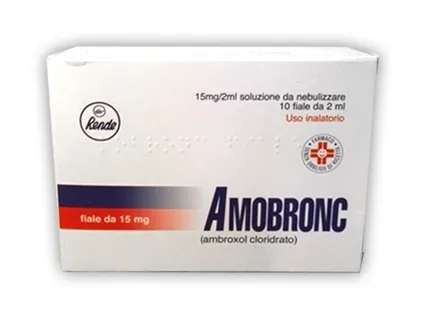
Table of Contents
- Package leaflet: Information for the patient
- Amobronc 7.5 mg/ml Nebuliser Solution
- 1. What Amobronc is and what it is used for
- 2. What you need to know before using Amobronc
- 3. How to use Amobronc
- 4. Possible side effects
- 5. How to store Amobronc
- 6. Package contents and other information
- Package leaflet: information for the patient
- Amobronc 3 mg/ml syrup
- 1. What Amobronc is and what it is used for
- 2. What you should know before using Amobronc
- 3. How to use AMOBRONC
- 4. Possible side effects
- 5. How to store AMOBRONC
- 6. Package contents and other information
Package leaflet: Information for the patient
Amobronc 7.5 mg/ml Nebuliser Solution
Ambroxol hydrochloride
Read this leaflet carefully before using this medicine because it contains
important information for you.
Always use this medicine exactly as described in this leaflet or as your doctor or
pharmacist has instructed you.
- Keep this leaflet. You may need to read it again.
- If you need more information or advice, consult your pharmacist.
- If you experience any side effects, including those not listed in this leaflet, contact your doctor or pharmacist. See section 4.
- Contact your doctor if you do not notice improvement or if your symptoms worsen after a short period of treatment.
Contents of this leaflet:
- What Amobronc is and what it is used for
- What you need to know before using Amobronc
- How to use Amobronc
- Possible side effects
- How to store Amobronc
- Contents of the pack and other information
1. What Amobronc is and what it is used for
Amobronc contains the active substance ambroxol hydrochloride, a mucolytic agent belonging to a group of medicines called mucolytics, used to facilitate the removal of mucus from the respiratory tract.
Amobronc is used for the treatment of respiratory diseases associated with mucus.
Consult your doctor if you do not feel better or feel worse after a short period of treatment.
2. What you need to know before using Amobronc
Do not use Amobronc
- If you are allergic to ambroxol or to any of the other ingredients of this medicine (listed in section 6).
- If you have severe liver and/or kidney disease.
- In children under 2 years of age.
Warnings and precautions
Talk to your doctor or pharmacist before using Amobronc.
- Use Amobronc with caution if you have a lesion on the inner surface of the stomach (peptic ulcer).
During inhalation, try to breathe normally, as deep inhalation of the aerosol
may cause coughing. Warm the solution to body temperature before inhalation.
If you suffer from asthma, take a bronchospasmolytic medicine (to reduce bronchial spasms)
before inhalation.
Severe skin reactions have been reported with ambroxol administration. If you
develop a skin rash (including lesions of mucous membranes such as mouth, throat, nose, eyes,
genitals), stop taking ambroxol and consult your doctor immediately.
These reactions could be symptoms of serious skin disorders such as erythema multiforme,
Stevens-Johnson syndrome/toxic epidermal necrolysis, and acute generalized exanthematous pustulosis.
Most of these reactions could also be explained by the severity of underlying diseases or by concomitant medications.
Moreover, in the early stages of Stevens-Johnson syndrome or toxic epidermal necrolysis (TEN),
you may initially experience non-specific flu-like symptoms such as fever, chills, rhinitis, cough, and sore throat.
Due to these non-specific symptoms, symptomatic treatment with cough and cold remedies may be initiated.
In case of mild renal impairment, use Amobronc only after consulting your doctor.
Children
Mucolytics may cause reduced respiratory capacity (bronchial obstruction) in children under 2 years of age.
Indeed, the ability to clear mucus from the bronchi is limited in this age group.
Do not give this medicine to children under 2 years of age (see section "Do not use Amobronc").
Other medicines and Amobronc
Inform your doctor or pharmacist if you are taking, have recently taken, or might take any other medicines.
Ambroxol does not interfere with other medicines commonly used concomitantly in respiratory diseases, such as cardiac glycosides (medicines used in heart conditions to help heart contraction), corticosteroids (cortisone and similar drugs), bronchodilators, and antibiotics.
It is also compatible with anticoagulants (medicines used to thin the blood) and antidiabetic agents.
Pregnancy and breastfeeding
If you are pregnant, think you may be pregnant, planning a pregnancy, or breastfeeding, ask your doctor or pharmacist for advice before using this medicine.
Pregnancy
Ambroxol hydrochloride crosses the placental barrier. Amobronc is not recommended during the first trimester of pregnancy. During the second and third trimesters of pregnancy, take Amobronc only after consulting your doctor, if strictly necessary.
Breastfeeding
Ambroxol hydrochloride is excreted in breast milk. Although no adverse effects in breastfed infants are expected, the use of Amobronc is not recommended during breastfeeding.
Driving and using machines
Amobronc does not affect the ability to drive vehicles or operate machinery.
3. How to use Amobronc
Use this medicine exactly as directed by your doctor or pharmacist. If you have
any doubts, consult your doctor or pharmacist.
Amobronc can be administered using various inhalation devices.
The medicine may be diluted with an equal amount of water. Ask your doctor for advice on whether
dilution is necessary and how to dilute this medicine.
Adults:
The recommended dose is 2–3 vials per day.
Children over 5 years:
The recommended dose is 2–3 vials per day.
Children up to 5 years:
The recommended dose is 1–2 vials once daily.
For maintenance therapy, starting 8–10 days after beginning treatment, the lowest recommended doses should be used. Consult your doctor.
If you use more Amobronc than you should
No cases of ambroxol poisoning have been reported.
In case of accidental overdose, contact your doctor immediately or go to the nearest hospital Emergency Department.
If you forget to use Amobronc
Do not use a double dose to make up for the missed dose. Consult your doctor if you miss a dose.
If you have any questions about the use of this medicine, consult your doctor or pharmacist.
4. Possible side effects
Like all medicines, this medicine can cause side effects, although not everybody gets them.
The following side effects may occur:
Common side effects (may affect up to 1 in 10 people):
Nausea, numbness of the mouth, tongue and throat (oral and pharyngeal hypoesthesia),
altered taste (dysgeusia).
Uncommon side effects (may affect up to 1 in 100 people):
Vomiting, diarrhoea, indigestion (dyspepsia), abdominal pain, dry mouth.
Rare side effects (may affect up to 1 in 1,000 people):
Hypersensitivity reactions, rash, urticaria, dry throat.
Side effects with unknown frequency: frequency cannot be estimated from the available data:
Bronchial obstruction, anaphylactic reactions, including anaphylactic shock, angioedema (rapidly developing swelling of the skin, subcutaneous tissues, mucosa and submucosal tissues), and pruritus, serious skin reactions (including erythema multiforme, Stevens-Johnson syndrome/toxic epidermal necrolysis, and acute generalised exanthematous pustulosis).
Reporting of side effects
If you experience any side effect, including those not listed in this leaflet, talk to your doctor, pharmacist or nurse.
You may also report side effects directly via the national reporting system at
https://www.aifa.gov.it/content/segnalazioni-reazioni-avverse . By reporting side effects, you can help provide more information on the safety of this medicine.
5. How to store Amobronc
Keep this medicine out of the sight and reach of children.
Do not use this medicine after the expiry date stated on the pack after Exp. The expiry date refers to the last day of that month.
Do not dispose of any medicine via wastewater or household waste. Ask your pharmacist how to dispose of medicines you no longer use. This will help protect the environment.
6. Package contents and other information
What Amobronc contains
Amobronc 7.5 mg/ml Nebulising Solution
- The active substance is ambroxol. Each vial contains 15 mg of ambroxol hydrochloride.
- The other components are: Monobasic sodium phosphate, dibasic sodium phosphate, sterile water.
Description of the appearance of Amobronc and contents of the pack
7.5 mg/ml nebulising solution - 10 vials of 2 ml
Marketing Authorization Holder and Manufacturer
Marketing Authorization Holder
S.F. Group S.r.l. – Via Tiburtina, 1143 – 00156 Rome
Manufacturer
Istituto Biochimico Nazionale Savio S.r.l. - Via E. Bazzano n. 14 - 16019 Ronco Scrivia (GE)
Package leaflet: information for the patient
Amobronc 3 mg/ml syrup
Ambroxol hydrochloride
Please read this leaflet carefully before taking this medicine because it contains
important information for you.
Always use this medicine exactly as described in this leaflet or as your doctor or
pharmacist has instructed you.
- Keep this leaflet. You may need to read it again.
- If you would like more information or advice, consult your pharmacist.
- If any of the side effects occur, including those not listed in this leaflet, consult your doctor or pharmacist. See section 4.
- Consult your doctor if you do not notice improvement or if your symptoms worsen after a short period of treatment.
Contents of this leaflet:
- What Amobronc is and what it is used for
- What you need to know before taking Amobronc
- How to use Amobronc
- Possible side effects
- How to store Amobronc
- Package contents and other information
1. What Amobronc is and what it is used for
Amobronc contains the active substance ambroxol hydrochloride, which belongs to a group of
medicines called mucolytics, used to facilitate the elimination of mucus from the respiratory tract.
Amobronc is used for the treatment of respiratory diseases associated with mucus.
Consult your doctor if you do not feel better or if you feel worse after a short period of treatment.
2. What you should know before using Amobronc
Do not use Amobronc
- If you are allergic to ambroxol or to any of the other ingredients of this medicine (listed in section 6),
- In children under 2 years of age,
- If you have severe liver and/or kidney impairment.
Warnings and precautions
Talk to your doctor or pharmacist before using Amobronc.
- Use Amobronc with caution if you have a lesion on the inner surface of the stomach (peptic ulcer).
Cases of severe skin reactions associated with ambroxol administration have been reported. If you
develop a skin rash (including lesions of mucous membranes such as mouth, throat, nose, eyes,
genitals), stop taking ambroxol and contact your doctor immediately.
These reactions may be symptoms of serious skin disorders such as erythema multiforme, Stevens-Johnson syndrome/toxic epidermal necrolysis, and generalized acute exanthematous pustulosis. Most of these reactions could also be explained by the severity of underlying diseases or by concomitant medications. Moreover, during the initial phase of Stevens-Johnson syndrome or toxic epidermal necrolysis (TEN), you may initially experience non-specific symptoms resembling influenza, such as fever, chills, rhinitis, cough, and sore throat. Due to these non-specific symptoms, symptomatic treatment with cough and cold remedies may be initiated.
In case of mild renal impairment, use AMOBRONC only after consulting your doctor.
Children
Mucolytics may cause reduced respiratory capacity (bronchial obstruction) in children under 2 years of age. Indeed, the ability to clear mucus from the bronchi is limited in this age group.
Do not give this medicine to children under 2 years of age (see section “Do not use Amobronc”).
Other medicines and AMOBRONC
Inform your doctor or pharmacist if you are taking, have recently taken, or might take any other medicines.
Ambroxol does not interfere with other medicines commonly used concomitantly in respiratory diseases, such as cardiac glycosides (medicines used in heart diseases to help heart contraction), corticosteroids (cortisone and similar drugs), bronchodilators, and antibiotics.
Furthermore, it is not incompatible with anticoagulants (medicines used to thin the blood) or antidiabetics.
Pregnancy and breastfeeding
If you are pregnant, think you might be pregnant, are planning to become pregnant, or are breastfeeding, ask your doctor or pharmacist for advice before using this medicine.
Pregnancy
Ambroxol hydrochloride crosses the placental barrier.
Amobronc is not recommended during the first trimester of pregnancy. During the second and third trimesters of pregnancy, take Amobronc only after consulting your doctor and only if clearly needed.
Breastfeeding
Ambroxol hydrochloride is excreted in breast milk. Although adverse effects in breastfed infants are not expected, the use of Amobronc is not recommended during breastfeeding.
Driving and using machines
Amobronc does not affect the ability to drive or operate machinery.
Amobronc contains sorbitol, methyl parahydroxybenzoate, and propyl parahydroxybenzoate.
Sorbitol: This medicine contains 2.8 g of sorbitol per dose (10 ml). Sorbitol is a source of fructose. If your doctor has told you that you (or the child) have an intolerance to certain sugars, or if you have been diagnosed with hereditary fructose intolerance, a rare genetic disorder in which patients cannot metabolize fructose, speak with your doctor before you (or the child) take this medicine.
It may cause gastrointestinal disturbances and has a mild laxative effect.
Methyl parahydroxybenzoate: may cause allergic reactions (including delayed reactions).
Propyl parahydroxybenzoate: may cause allergic reactions (including delayed reactions).
3. How to use AMOBRONC
Use this medicine exactly as directed by your doctor or pharmacist. If you
have any doubts, consult your doctor or pharmacist.
Adults:
The recommended dose is 10 ml, 2-3 times daily.
Children over 5 years:
The recommended dose is 5 ml, 2-3 times daily.
The medicine should preferably be taken during or after meals.
Each ml of syrup contains 3 mg of ambroxol hydrochloride. The syrup package includes
a dosing cup with markings corresponding to 2.5 - 5 - 10 ml.
If you take more AMOBRONC than you should
No cases of ambroxol poisoning have been reported.
In case of accidental overdose, contact your doctor immediately or go
to the nearest hospital emergency department.
If you forget to take AMOBRONC
Do not take a double dose to make up for a forgotten dose. Consult your doctor
if you miss a dose.
If you have any doubts about how to use this medicine, consult your doctor or pharmacist.
4. Possible side effects
Like all medicines, this medicine can cause side effects, although not everybody gets them.
The following side effects may occur:
Common side effects (may affect up to 1 in 10 people): nausea, numbness of the mouth, tongue and throat (oral and pharyngeal hypoesthesia), altered taste (dysgeusia).
Uncommon side effects (may affect up to 1 in 100 people): vomiting, diarrhoea, indigestion (dyspepsia), abdominal pain, dry mouth.
Rare side effects (may affect up to 1 in 1,000 people): hypersensitivity reactions, rash, urticaria, dry throat.
Side effects with unknown frequency: frequency cannot be estimated from the available data: Bronchial obstruction. Anaphylactic reactions, including anaphylactic shock, angioedema (rapid swelling of the skin, subcutaneous tissues, mucosa and submucosal tissues), and pruritus.
Serious skin adverse reactions (including erythema multiforme, Stevens-Johnson syndrome/toxic epidermal necrolysis, and acute generalized exanthematous pustulosis).
Reporting of side effects
If you experience any side effect, including those not listed in this leaflet, talk to your doctor, pharmacist or nurse. You can also report side effects directly via the national reporting system at the website https://www.aifa.gov.it/content/segnalazioni-reazioni-avverse . By reporting side effects, you can help provide more information on the safety of this medicine.
5. How to store AMOBRONC
Keep this medicine out of the sight and reach of children.
Do not use this medicine after the expiry date stated on the packaging after "Exp". The expiry date refers to the last day of that month.
Do not dispose of any medicine via wastewater or household waste. Ask your pharmacist how to dispose of medicines no longer required. This will help protect the environment.
6. Package contents and other information
What AMOBRONC contains
Amobronc 3 mg/ml syrup
- The active substance is ambroxol. 100 ml of syrup contain 0.3 g of ambroxol hydrochloride.
- The other components are: Glycerol, Sorbitol solution, Methyl p-hydroxybenzoate, Propyl p-hydroxybenzoate, Fruit flavour, Purified water.
Description of the appearance of AMOBRONC and contents of the pack
3 mg/ml syrup – 200 ml bottle
Marketing Authorization Holder and Manufacturer
Marketing Authorization Holder
S.F. Group S.r.l. – Via Tiburtina, 1143 – 00156 Rome
Manufacturer
Special Product’s Line S.p.A. – Via Fratta Rotonda Vado Largo, 1 – 03012 Anagni (FR)