Amiodarone Mylan
Italy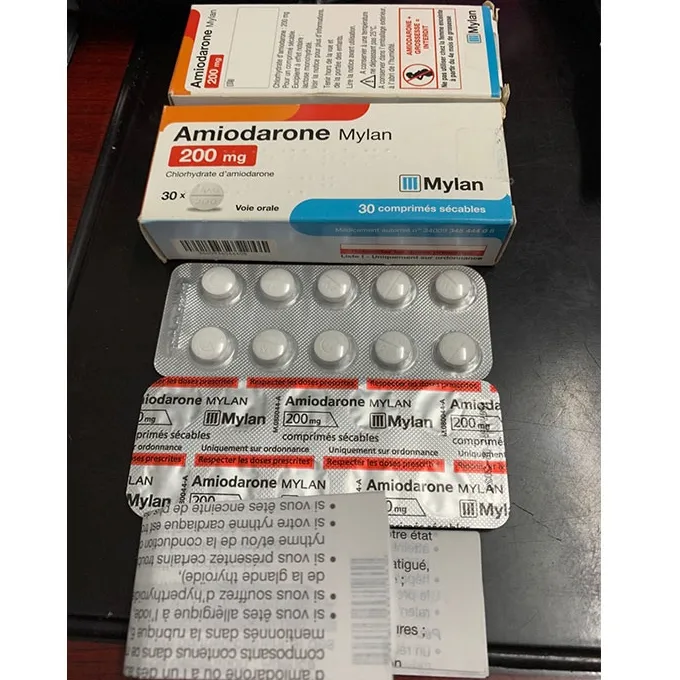
Table of Contents
Package leaflet: Information for the patient
Amiodarone Mylan 200 mg tablets
amiodarone hydrochloride
Generic medicinal product
Please read all of this leaflet carefully before you take this medicine because it contains
important information for you.
- Keep this leaflet. You may need to read it again.
- If you have any questions, ask your doctor, pharmacist, or nurse.
- This medicine has been prescribed for you only. Do not give it to other people, even if their symptoms are the same as yours, as it could be harmful.
- If you experience any side effects, including those not listed in this leaflet, tell your doctor, pharmacist, or nurse. See section 4.
The name of this medicine is Amiodarone Mylan 200 mg tablets; however, for simplicity, it will be referred to as Amiodarone throughout this leaflet.
Contents of this leaflet:
- What Amiodarone is and what it is used for
- What you need to know before taking Amiodarone
- How to take Amiodarone
- Possible side effects
- How to store Amiodarone
- Contents of the pack and other information
1. What Amiodarone is and what it is used for
These tablets contain amiodarone hydrochloride, which belongs to a class of medicines known as antiarrhythmics. Amiodarone can help suppress and prevent abnormal or irregular heart rhythms and restore the heart rhythm to normal.
Amiodarone may be used:
- to treat irregular heartbeat when other medicines have not worked or cannot be used
- to treat a condition called Wolff-Parkinson-White syndrome, in which the heart beats unusually fast
- to treat other types of fast or irregular heartbeats known as "atrial flutter" or "atrial fibrillation". Amiodarone is used only when other medicines cannot be used
- to treat heart conditions characterized by a rapid or accelerated heart rate, which may occur suddenly and be irregular. Amiodarone is used only when other medicines cannot be used.
2. What you need to know before taking Amiodarone
Do not take Amiodarone:
- if you are allergic to amiodarone, to any of the other ingredients of this medicine (listed in section 6), or to iodine. Signs of an allergic reaction include: rash, difficulty swallowing or breathing, swelling of the lips, face, throat, or tongue.
- if you have a slower-than-normal heart rate (called 'sinus bradycardia') or a condition called sinoatrial block.
- if you have any other heart rhythm problems and do not have a pacemaker implanted.
- if you have or have had thyroid problems. Your doctor will examine your thyroid before prescribing this medicine.
- if you are taking other medicines that may affect your heartbeat or monoamine oxidase inhibitors (MAOIs) for the treatment of depression (see below "Other medicines and Amiodarone").
- if you are pregnant or breastfeeding (see section “Pregnancy and breastfeeding” above).
Warnings and precautions
Talk to your doctor or pharmacist before taking Amiodarone
- if you have heart failure or suffer from breathlessness and swollen ankles
- if you have liver problems
- if you have lung problems or asthma
- if you have vision problems, including a condition called "optic neuritis"
- if you are due to undergo surgery or general anaesthesia
- if you are elderly (over 65 years of age). Your doctor will need to monitor you more closely.
- if you have a "pacemaker" or an "implantable cardioverter defibrillator". Your doctor will check that the device is working properly shortly after starting treatment or when the dose is changed.
- if you are currently taking a medicine called sofosbuvir, or a medicine containing sofosbuvir, for the treatment of hepatitis C, as this may cause a life-threatening slowing of the heartbeat. Your doctor may consider alternative treatments. If treatment with both amiodarone and sofosbuvir is necessary, additional cardiac monitoring may be required.
Tell your doctor immediately if you are taking a medicine containing sofosbuvir
for the treatment of hepatitis C and during treatment you experience:
- slow or irregular heartbeat or heart rhythm problems
- shortness of breath or worsening of existing shortness of breath
- chest pain
- mild confusion
- palpitations
- near-fainting or fainting
If you are on a waiting list for a heart transplant, your doctor may change your treatment.
This is because taking amiodarone before heart transplantation has been shown to
increase the risk of a potentially life-threatening complication (primary graft dysfunction),
in which the transplanted heart fails to function properly within the first 24 hours after surgery.
Protecting your skin from sunlight
Avoid direct exposure to sunlight while taking this medicine and for several months after stopping it. Your skin will be more sensitive to the sun and may burn, tingle, or blister severely if you do not take the following precautions:
- Make sure to use a sunscreen with a high sun protection factor
- Always wear a hat and clothing that covers your arms and legs.
Other medicines and Amiodarone
Tell your doctor or pharmacist if you are taking, have recently taken, or might take any other medicines.
The following medicines may cause an irregular heart rhythm, shown by an abnormal ECG, and must not be used at the same time as Amiodarone, due to an increased risk of heart rhythm disturbances or missed heartbeats (torsades de pointes):
- Other medicines for irregular heartbeat (such as quinidine, disopyramide, procainamide, sotalol, bretylium, flecainide, or bepridil)
- Medicines used to treat mental illness or depression, such as chlorpromazine, pimozide, thioridazine, fluphenazine, haloperidol, amisulpride, lithium, doxepine, maprotiline, amitriptyline, or sertindole
- Medicines used to treat hay fever, rashes, or other allergies (antihistamines such as terfenadine, astemizole, mizolastine)
- Antimalarial medicines, such as quinine, mefloquine, halofantrine, chloroquine
- Medicines used to treat infections, such as intravenous erythromycin, co-trimoxazole, moxifloxacin, or pentamidine
- Medicines for the treatment of hepatitis C (sofosbuvir, daclatasvir, simeprevir, or ledipasvir)
Tell your doctor or pharmacist if you are taking, have recently taken, or might take any other medicines, including those without a prescription, or the following:
- monoamine oxidase inhibitors (MAOIs), such as phenelzine, used to treat depression
- medicines to lower cholesterol (statins), such as simvastatin, lovastatin, atorvastatin, or pravastatin
- medicines to treat infections, such as clarithromycin, ciprofloxacin, ofloxacin, or levofloxacin
- medicines for constipation (laxatives), such as senna or bisacodyl
- medicines for heart conditions (beta-blockers), such as propranolol
- medicines known as "calcium antagonists" (such as diltiazem or verapamil) for chest pain (angina) or high blood pressure
The following medicines may increase the risk of side effects when taken with Amiodarone:
- amphotericin B (when given directly into a vein), used to treat fungal infections
- medicines used to treat inflammation (corticosteroids (gluco-, mineral-)), such as hydrocortisone, betamethasone, or prednisolone
- diuretics (tablets that increase urine production)
- general anaesthetics or high doses of oxygen, used during surgery
- tetracosactide, used to investigate certain hormonal problems
Amiodarone may increase the effect of the following medicines:
- ciclosporin, tacrolimus, and sirolimus, used to help prevent rejection after transplantation
- medicines for erectile dysfunction, such as sildenafil, tadalafil, or vardenafil
- fentanyl, used as a painkiller
- ergotamine, used for migraine
- midazolam, used to treat anxiety or to help you relax before surgery
- flecainide, another medicine used for irregular heartbeat. Your doctor must monitor your treatment and may halve the dose of flecainide.
- lidocaine, used as an anaesthetic
- dabigatran, used to thin the blood
- warfarin, used to prevent blood clots
- digoxin, used for certain heart conditions
- colchicine, used in the treatment of gout
- phenytoin, used in the treatment of epilepsy
Amiodarone with food, drinks, and alcohol
Limit the amount of alcohol you drink while taking this medicine. Drinking alcohol while taking this medicine increases the risk of liver problems.
Talk to your doctor or pharmacist about how much alcohol you can safely drink.
Do not drink grapefruit juice while taking this medicine, as drinking grapefruit juice with Amiodarone tablets may increase the risk of side effects.
Pregnancy and breastfeeding
Do not take Amiodarone if you are pregnant or planning to become pregnant.
Do not breastfeed while taking Amiodarone. Small amounts of this medicine can pass into breast milk and may harm your baby.
If you are pregnant, think you may be pregnant, are planning a pregnancy, or are breastfeeding, ask your doctor or pharmacist for advice before taking this medicine.
Driving and using machines
After taking this medicine, you may experience blurred vision. If this occurs, do not drive or operate machinery until your vision returns to normal.
Amiodarone contains lactose (a type of sugar)
If your doctor has diagnosed you with an intolerance to certain sugars, contact your doctor before taking this medicine.
Amiodarone contains iodine
One 200 mg tablet contains 75 mg of iodine. Iodine is present in amiodarone hydrochloride, the active substance in the tablets. Iodine may cause thyroid problems (see "Monitoring" below).
3. How to take Amiodarone
Take this medicine exactly as instructed by your doctor or pharmacist. If you have any doubts, consult your doctor or pharmacist.
Swallow the tablets whole, or divide them into two equal parts if necessary. The tablet can be split into two equal doses. Do not crush or chew the tablets. If you feel your condition is not improving while taking this medicine, contact your doctor.
Do not stop taking this medicine without first consulting your doctor.
Adults
The recommended dose is 200 mg three times a day for the first week, then 200 mg twice a day during the second week. Afterwards, your doctor will further reduce the dose of Amiodarone, usually to 200 mg once a day, unless told otherwise.
In some cases, your doctor may decide to increase or decrease your daily dose. This will depend on how you respond to the medicine.
Elderly
Your doctor may prescribe a lower dose of amiodarone. In addition, your doctor should regularly monitor your blood pressure and thyroid function.
Use in children and adolescents
Available data on efficacy and safety in children are limited; therefore, this medicine is not recommended for use in children.
If you take more Amiodarone than you should
If you have taken too many tablets, contact your doctor immediately or go to the nearest emergency department. Take the medicine pack with you. The following effects may occur: dizziness, weakness or fatigue, confusion, slow heartbeat, feeling unwell, and liver damage.
If you forget to take Amiodarone
Take the missed dose as soon as you remember. However, if it is almost time for your next dose, skip the missed dose and take the next dose at the scheduled time. Do not take a double dose to make up for a forgotten dose.
If you stop taking Amiodarone
Continue taking this medicine until your doctor tells you to stop. Do not stop taking this medicine just because you feel better. If you stop taking this medicine, irregular heartbeats may return. This can be dangerous.
If you have any questions about how to use this medicine, ask your doctor or pharmacist.
Monitoring
Your doctor will prescribe regular tests to check your liver function during treatment and for several months after you stop taking this medicine. Amiodarone can affect liver function.
If this occurs, your doctor will decide whether you should continue taking these tablets.
Your doctor may also prescribe regular thyroid function tests while you are taking this medicine. This is because Amiodarone tablets contain iodine, which may cause thyroid problems.
Your doctor may also prescribe other regular checks, such as blood tests, chest X-rays, ECGs (electrical tests of heart rhythm), and eye examinations, both before and during treatment, and for several months after stopping Amiodarone.
4. Possible side effects
Like all medicines, this medicine can cause side effects, although not everyone gets them.
Amiodarone can remain in the blood for up to one month after stopping treatment.
During this period, side effects may still occur.
Stop taking this medicine and consult a doctor or go to hospital immediately
if you experience any of the following side effects.
Common (may affect up to 1 in 10 people)
- Yellowing of the skin or eyes (jaundice), feeling tired or unwell, loss of appetite, stomach pain or high fever. These may be signs of liver damage or liver problems which can be very dangerous.
- Difficulty breathing or tightness in the chest, persistent cough, breathlessness, weight loss and fever. These symptoms may be due to inflammation of the lungs which can be very dangerous.
- Decreased sexual desire
Uncommon (may affect up to 1 in 100 people)
- Irregular heartbeat or missed heartbeats. This may lead to a heart attack; you must see a doctor immediately.
Very rare (may affect up to 1 in 10,000 people)
- Loss of vision in one eye or visual disturbances and inability to perceive colours. Your eyes may be painful or weak, and you may feel pain when moving them. These may be signs of a condition called "optic neuropathy or neuritis".
- Your heartbeat becomes very slow or stops. If this happens, you must go to hospital immediately.
- Breathlessness and breathing difficulties caused by excessive and prolonged contraction of the muscles in the airways (bronchospasm).
- Weakness, fatigue, loss of appetite, weight loss, stomach ache and swelling, nausea, vomiting, swelling of the ankles and yellowing of the skin and/or eyes. These could be signs of chronic liver disease.
Not known (frequency cannot be estimated from available data)
- Severe and sudden allergic reaction with symptoms such as swelling of the face, lips, mouth, tongue or throat, which may cause difficulty swallowing or breathing (angioedema).
- Severe allergic reaction (anaphylactic reaction, anaphylactic shock).
- Sudden-onset inflammation of the pancreas (pancreatitis (acute)).
- You may get more infections than usual. This could be caused by a decrease in the number of white blood cells (neutropenia).
- Severe reduction in the number of white blood cells, making infections more likely (agranulocytosis).
- Abnormal muscle movements, stiffness, tremor and restlessness (parkinsonism).
- Confusion (delirium), hallucinations.
- Seeing, hearing or perceiving things that are not there (hallucinations).
- Potentially life-threatening skin reactions characterized by rashes, blisters, skin peeling and pain (toxic epidermal necrolysis (TEN), Stevens-Johnson syndrome (SJS), bullous dermatitis, drug reaction with eosinophilia and systemic symptoms (DRESS)).
- Potentially life-threatening complication (primary graft dysfunction) following heart transplantation, in which the transplanted heart stops functioning properly (see section 2, Warnings and precautions).
Stop taking Amiodarone and go to a doctor immediately if you notice
any of the following serious side effects – urgent medical treatment may be needed:
Uncommon (may affect up to 1 in 100 people)
- Numbness or weakness, tingling or burning sensation in any part of the body.
Very rare (may affect up to 1 in 10,000 people)
- Skin rash caused by narrowing or blockage of blood vessels (called "vasculitis").
- Headache (usually worse in the morning or after coughing or straining), feeling unwell (nausea), seizures, fainting, vision problems or confusion may occur. These may be signs of brain problems.
- Unsteady or staggering gait, slurred or slowed speech.
- Feeling faint, dizziness, unusual tiredness and shortness of breath. These may be signs of a very slow heartbeat (especially in people over 65 years of age) or other problems with the natural rhythm of your heart.
Not known
- Chest pain and shortness of breath and irregular heartbeat. These may be signs of a condition called "torsades de pointes".
- Some cases of bleeding in the lungs have been reported in patients treated with amiodarone. You must inform your doctor immediately if you notice blood in your sputum.
- Lupus-like syndrome (including skin rashes, joint disorders and effects on blood cells).
Tell your doctor as soon as possible if you experience any of the following side effects:
Very common (may affect more than 1 in 10 people)
- Blurred vision or seeing coloured halos around lights in bright light.
Common (may affect up to 1 in 10 people)
- Feeling extremely restless or agitated, weight loss, increased sweating and heat intolerance. These may be signs of a condition called "hyperthyroidism".
- Feeling extremely tired, weak or exhausted, weight gain, cold intolerance, constipation and muscle aches. These may be signs of a condition called "hypothyroidism".
- Tremors in the arms or legs.
- Greyish or bluish discolouration of sun-exposed skin, especially on the face.
Uncommon (may affect up to 1 in 100 people)
- Muscle cramps, stiffness or spasms.
Very rare (may affect up to 1 in 10,000 people)
- Swelling of the testicles.
- Red, peeling skin, hair loss or loss of nails (called "exfoliative dermatitis").
- Feeling tired, weak, dizzy or pale. These may be signs of anaemia.
- Bruising and bleeding more easily than usual. This could be due to a blood disorder (called "thrombocytopenia").
- Increased frequency of infections, often with symptoms such as fever, severe chills and sore throat or mouth ulcers (called "leucopenia").
- Feeling unwell, confused or weak, malaise (nausea), loss of appetite, irritability. This may be a condition called "syndrome of inappropriate antidiuretic hormone secretion" (SIADH).
- You may experience symptoms such as fever, night sweats and fatigue. This could be due to a vascular disorder (called "vasculitis").
- Increased creatinine in the blood.
Tell your doctor or pharmacist if any of the following side effects worsen or last longer than a few days:
Very common (may affect more than 1 in 10 people)
- Feeling unwell (nausea) or feeling sick (vomiting).
- Change in sense of taste.
- Increase in liver enzymes in the blood at the start of treatment (confirmed by blood test).
- Increased sensitivity to sunlight (see "Protecting your skin from sunlight" in section 2).
Common (may affect up to 1 in 10 people)
- Slightly slower heartbeat.
- Nightmares.
- Sleep disturbances.
- Constipation.
- Itchy, red rash (eczema).
Uncommon (may affect up to 1 in 100 people)
- Dry mouth.
Very rare (may affect up to 1 in 10,000 people)
- Headache.
- Balance problems, feeling dizzy (vertigo).
- Difficulty achieving or maintaining an erection or problems with ejaculation.
- Hair loss, baldness.
- Skin rash.
- Redness of the skin during radiotherapy.
Not known (frequency cannot be estimated from available data)
- Hives (itching, papular rash).
- Metallic taste.
- Granulomas, small red spots on the skin or inside the body visible on X-ray.
- Decreased appetite.
- Abnormal perception of smells (parosmia).
Reporting of side effects
If you experience any side effect, including those not listed in this leaflet, talk to your doctor or pharmacist. You can also report side effects directly via the national reporting system at https://www.aifa.gov.it/content/segnalazioni-reazioni-avverse. By reporting side effects, you can help provide more information on the safety of this medicine.
5. How to store Amiodarone
Keep this medicine out of the sight and reach of children.
Do not use this medicine after the expiry date stated on the carton, blister pack, and bottle after Exp. The expiry date refers to the last day of that month.
Storage conditions for blister packs:
Do not store above 25ºC. Keep in the original packaging to protect the medicine from light and moisture.
Storage conditions for polypropylene containers:
Do not store above 25ºC. Keep the container tightly closed to protect the medicine from light and moisture.
Do not dispose of any medicine via wastewater or household waste. Ask your pharmacist how to dispose of medicines you no longer use. This will help protect the environment.
6. Package contents and other information
What Amiodarone Tablets contain
The active substance is amiodarone hydrochloride. Each tablet contains 200 mg of amiodarone hydrochloride.
The other ingredients are monohydrate lactose (see section 2, "This medicinal product contains lactose"), microcrystalline cellulose, crospovidone, povidone, anhydrous colloidal silica, talc and magnesium stearate.
Description of the appearance of Amiodarone and package contents
The medicine is presented as round, white, uncoated tablets with a score line, marked with 'AM 200' on one side and 'G' on the other.
Amiodarone is available in containers or blisters containing 10, 20, 28, 30, 50, 60 or 90 tablets.
Not all pack sizes may be marketed.
Marketing Authorization Holder
Mylan S.p.A., Via Vittor Pisani 20, 20124 Milano
Manufacturer
McDermott Laboratories Limited trading as Gerard Laboratories
35/36 Baldoyle Industrial Estate, Grange Road, Dublin 13
Ireland
Mylan Hungary Ltd
2900 Komárom
Mylan utca 1
Hungary
Logiters, Logistica Portugal S.A.,
Estrada dos Ameiros, 4, Azambuja, 2050-544,
Portugal