Amiodarone Hikma
Italy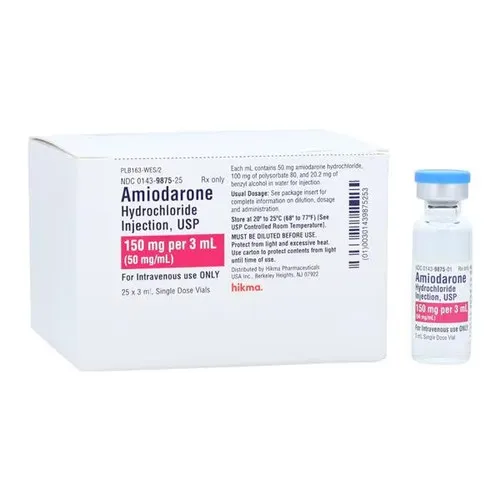
Table of Contents
- Package leaflet: Information for the user
- Amiodarone Hikma 50 mg/ml, solution for injection
- 1. What Amiodarone Hikma is and what it is used for
- 2. What you must know before using Amiodarone Hikma
- 3. How to use Amiodarone Hikma
- 4. Possible side effects
- 5. How to store Amiodarone Hikma
- 6. Package contents and other information
- 1. NAME OF THE MEDICINAL PRODUCT
- 2. QUALITATIVE AND QUANTITATIVE COMPOSITION
- 3. PHARMACEUTICAL FORM
- 4. CLINICAL INFORMATION
- 5. PHARMACOLOGICAL PROPERTIES
- 6. PHARMACEUTICAL INFORMATION
- 7. MARKETING AUTHORISATION HOLDER
- 8. MARKETING AUTHORISATION NUMBER(S)
- 9. DATE OF FIRST AUTHORISATION / RENEWAL OF THE AUTHORISATION
- 10. DATE OF TEXT REVISION:
Package leaflet: Information for the user
Amiodarone Hikma 50 mg/ml, solution for injection
amiodarone hydrochloride
Read all of this leaflet carefully before you start using this medicine because it contains important information for you.
- Keep this leaflet. You may need to read it again.
- If you have any questions, ask your doctor or pharmacist.
- If you get any side effects, talk to your doctor or pharmacist. This includes any possible side effects not listed in this leaflet.
Contents of this leaflet:
- What Amiodarone Hikma is and what it is used for
- What you need to know before you use Amiodarone Hikma
- How to use Amiodarone Hikma
- Possible side effects
- How to store Amiodarone Hikma
- Contents of the pack and other information
1. What Amiodarone Hikma is and what it is used for
What class of medicines does Amiodarone Hikma belong to?
Amiodarone Hikma belongs to a group of medicines called antiarrhythmics. Antiarrhythmic medicines
correct heart rhythm when the heart is not beating properly.
What is Amiodarone Hikma used for?
Amiodarone Hikma is used to treat and prevent certain heart rhythm disorders. It is used only when
other medicines are not effective or cannot be used. For example, it is used if you are unable to take
tablets. It is also used when you need a medicine that acts very quickly.
2. What you must know before using Amiodarone Hikma
The following section contains information for you and your doctor to consider before Amiodarone Hikma is administered to you.
Do not use Amiodarone Hikma
- If you are allergic to amiodarone hydrochloride or to any of the excipients of this medicine (listed in section 6)
- If your heart rate is extremely slow (sinus bradycardia) or if you have heart rhythm disorders (sinoatrial block)
- If you have sino-atrial node syndrome (a specific type of heart rhythm disorder)
- If you have AV block (a specific type of heart conduction disorder)
- If your thyroid gland is not functioning properly
- If you are taking medicines that increase the risk of "torsade de pointes". "Torsade de pointes" is a heart disease causing excessively rapid heartbeat (see also "Other medicines and Amiodarone Hikma" below)
- Amiodarone must not be administered to premature infants or to newborns and children up to 3 years of age.
Amiodarone Hikma may be administered in an emergency if you have lost consciousness and require resuscitation. In such cases, the reasons listed above for not using this medicine do not apply.
Warnings and precautions
Amiodarone Hikma is used only in intensive care units. The medicine will be administered only by specialist doctors. If you are given this medicine, your doctor will regularly check:
- That your liver and thyroid are functioning properly (through periodic blood tests)
- That your heart is functioning properly (through electrocardiography, a device that records heart activity)
- That your lungs are functioning properly (through lung imaging tests)
Exercise particular caution under the following circumstances:
- If you suffer from any of the following conditions:
- Severe impairment of lung function (pulmonary insufficiency)
- Low blood pressure (arterial hypotension)
- The heart is not pumping blood effectively (congestive heart failure) If this medicine is administered to treat the conditions listed above, extreme caution and close monitoring are required. The medicine must not be administered by injection, as this may worsen your condition.
- Slowing of heart rate: in some cases, the effect of Amiodarone Hikma may be too strong and may slow the heartbeat. In such cases, your doctor will take steps to restore normal heart rhythm.
- Heart rhythm disturbances: Amiodarone Hikma may cause new heart rhythm disorders or worsen existing ones.
- Shortness of breath: Amiodarone Hikma may cause lung disorders. For example, it may cause a type of lung inflammation called interstitial pneumonia. If you develop shortness of breath (with or without fatigue, weight loss, or fever), your doctor will examine you. You may undergo a chest X-ray.
- Liver failure: Amiodarone Hikma may cause liver failure within the first 24 hours after use. For this reason, your doctor will monitor liver function.
- Use of certain other medicines (see "Other medicines and Amiodarone Hikma").
If Amiodarone Hikma is administered by injection:
- You must not receive a dose exceeding 5 mg per kg of body weight.
- The dose must be administered slowly, over at least 3 minutes (unless the medicine is administered for resuscitation).
- Your doctor must wait at least 15 minutes before administering another injection.
See also “HOW TO USE AMIODARONE HIKMA?”.
Most adverse effects occurring during treatment arise when an excessive dose of Amiodarone Hikma is administered. Therefore, it is recommended to administer the lowest possible dose of Amiodarone Hikma. This will minimize adverse effects. See also “If you use more Amiodarone Hikma than you should”.
Inform your doctor or pharmacist if any of the above warnings apply to you or have applied to you in the past.
Other medicines and Amiodarone Hikma
Inform your doctor or pharmacist if you are taking or have recently taken any other medicines, including herbal remedies, supplements, or dietary supplements obtained without a prescription.
The following medicines may increase the risk of "torsade de pointes". DO NOT use Amiodarone Hikma concurrently with these medicines:
- Certain medicines used to treat heart rhythm disorders (e.g., quinidine, procainamide, disopyramide, and sotalol)
- Vincamine (used to increase blood flow to the brain)
- Certain medicines used to treat severe mental illnesses (e.g., sultopride, sulpiride, pimozide, thioridazine) and certain medicines called phenothiazines
- Cisapride (used to treat digestive disorders)
- Erythromycin injections (an antibiotic)
- Pentamidine injections (used in certain types of pneumonia)
- Certain antidepressants (e.g., amitriptyline, clomipramine, dosulepin, doxepin, imipramine, lofepramine, nortriptyline, trimipramine, maprotiline)
- Antihistamines (medicines used to treat allergies and hay fever, e.g., terfenadine)
- Halofantrine (an antimalarial drug)
Not recommended combinations
Concurrent use of the following medicines with Amiodarone Hikma is not recommended. Otherwise, severe slowing of the heartbeat may occur.
- Beta-blockers (used to treat high blood pressure, heart failure, and increased intraocular pressure)
- Calcium channel blockers (used to treat high blood pressure and heart rhythm disorders)
Caution
Caution is recommended when using the following medicines concurrently with Amiodarone Hikma. These medicines may lower potassium levels in the blood, thereby increasing the risk of rapid heartbeat ("torsade de pointes"):
- Stimulant laxatives
- Adrenal cortex hormones (glucocorticoids and mineralocorticoids)
- Tetracosactide (used to treat adrenal cortex disorders)
- Diuretics
- Amphotericin B injections (an antibiotic used to treat or prevent certain infections)
Blood-thinning medicines (anticoagulants)
Amiodarone Hikma may enhance the effect of these medicines. This increases the risk of bleeding.
If you are using anticoagulants, consult your doctor.
Your doctor may decide to adjust the dose of other medicines. This is especially true for:
- Phenytoin (used in epilepsy)
- Digitalis (used to treat certain heart diseases)
- Flecainide (used to treat certain heart rhythm disorders)
- Medicines that are metabolized by specific liver enzymes, including:
- Certain cholesterol-lowering medicines (some statins, e.g., simvastatin)
- Some medicines used to prevent transplant rejection (cyclosporine, tacrolimus)
- Fentanyl (a strong painkiller)
- Lidocaine (a local anesthetic)
- Sildenafil (used to treat erectile dysfunction)
- Midazolam and triazolam (sleeping pills)
- Ergotamine, dihydroergotamine (used to treat migraine)
Surgical procedures: if you are scheduled for surgery, you must inform the surgeons that you are taking Amiodarone Hikma.
Pregnancy and breastfeeding
This medicine may harm the unborn baby. Therefore, you must not take Amiodarone Hikma:
- If you are pregnant
- If you suspect you are pregnant
- If you are planning a pregnancy If you become pregnant during treatment with Amiodarone Hikma, you must inform your doctor immediately.
You must not use Amiodarone Hikma during breastfeeding. If use of Amiodarone Hikma is necessary, you must stop breastfeeding.
Ask your doctor or pharmacist for advice before taking any medicine.
Driving and using machines
While using Amiodarone Hikma, your vision may become blurred or reduced. Do not drive or operate machinery if you experience these symptoms. If you experience these symptoms, ask your doctor whether you can safely drive or operate machinery.
Amiodarone Hikma contains benzyl alcohol
This medicine contains benzyl alcohol (20 mg/ml) as a preservative. This substance may cause toxic and allergic reactions in newborns and children up to 3 years of age.
3. How to use Amiodarone Hikma
How Amiodarone Hikma is administered
Your doctor will determine the exact dose of Amiodarone Hikma you need. Amiodarone Hikma will be administered by direct injection into a vein or by intravenous infusion (a slow drip infusion).
Dosage
Injection
The usual dose is 5 mg per kg of body weight. The medicine will be injected over a period of not less than 3 minutes.
Intravenous infusion
The usual dose is 5 mg per kg of body weight. The infusion lasts between 20 minutes and 2 hours and is repeated 2 to 3 times a day.
You will also receive a maintenance dose of between 10 and 20 mg per kg of body weight per day. The maintenance dose is necessary to keep the medicine effective and to prevent further heart rhythm disturbances.
Your doctor will monitor your response to Amiodarone Hikma and adjust the dose accordingly.
See also "Take special care with Amiodarone Hikma".
Use in children
Do not administer Amiodarone Hikma to children under 3 years of age (see also "Do not use Amiodarone Hikma").
There is limited data on the safety and efficacy in children. Your doctor will decide the appropriate dose.
If you use more Amiodarone Hikma than you should
If you are given too much Amiodarone Hikma, the following may occur:
- Nausea; in rare cases, vomiting
- Constipation
- Sweating
- Slow and irregular heartbeat
These effects may also appear 1–3 days after administration. If large amounts of Amiodarone Hikma have been administered, the following may also occur:
- Low blood pressure
- Heart disturbances
- Rarely, increased thyroid activity (hyperthyroidism)
Symptoms of hyperthyroidism include weight loss, increased appetite, heat intolerance, fatigue, weakness, hyperactivity, irritability, apathy, depression, increased urine production, and sweating. If you experience any of these symptoms, inform your doctor immediately.
4. Possible side effects
Like all medicines, this medicine can cause side effects, although not everybody gets them.
The following side effects have been observed:
Common (may affect up to 1 in 10 people, but more than 1 in 100):
- Bradycardia (slow heart rate)
- Drop in blood pressure and rapid heartbeat. These side effects occur immediately after injection. These effects are generally moderate and transient. If too high a dose of Amiodarone Hikma is administered too rapidly, these side effects may become severe.
- At the injection or infusion site the following may occur:
- Pain
- Redness of the skin (erythema)
- Fluid accumulation (edema)
- Localized destruction of soft tissue (necrosis)
- Leakage of fluid (extravasation)
- Swelling due to fluid infiltration into the skin
- Inflammation
- Hardening (tissues harder than normal)
- Inflammation of blood vessels with or without formation of clots (phlebitis and thrombophlebitis)
- Infection
- Inflammation of the tissues beneath the skin (cellulitis)
- Change in skin colour
Rare (may affect up to 1 in 1,000 people, but more than 1 in 10,000):
- Allergic reactions (hypersensitivity). Symptoms of these reactions include:
- Thrombocytopenia (low platelet count in the blood, resulting in bruising and tendency to bleed)
- Blood vessel disorders
- Kidney problems
Very rare (may affect up to 1 in 10,000 people, or frequency cannot be estimated from the available data):
- Headache
- Increased pressure inside the skull, with headache, nausea and vomiting (benign intracranial hypertension)
- Severe slowing of the heartbeat (bradycardia) (may lead to discontinuation of treatment)
- Development of new heart rhythm disorders, which may be fatal
- Worsening of pre-existing heart rhythm disorders, which may be fatal
- Heart conduction disorders (e.g. AV block)
- Hot flushes
- Breathing difficulties due to sudden contraction of the muscles in the airways (bronchospasm). This may occur if you already have serious breathing problems, particularly if you have asthma. Usually, patients recover quickly from this side effect after stopping treatment.
- Lung disease (interstitial pneumonia). Usually, patients recover quickly from this side effect after stopping treatment. However, some cases have been fatal.
- Severe breathing problems (adult respiratory distress syndrome). Usually, patients recover quickly from this side effect after stopping treatment. However, some cases have been fatal.
- Nausea
- Changes in liver function. Your doctor will regularly monitor your liver function to detect any abnormalities. Such abnormalities are often transient or improve with dose reduction.
- Acute liver dysfunction, with increased liver enzyme levels and/or jaundice. The liver may suddenly stop functioning properly. This may be fatal. If this side effect occurs, your doctor will consider stopping treatment with Amiodarone Hikma.
- Sweating
- Anaphylactic shock. Symptoms of anaphylactic shock include:
- Sudden drop in blood pressure
- Pallor
- Restlessness
- Weak and rapid pulse
- Cold and clammy skin
- Reduced level of consciousness
Shock is due to sudden and marked dilation of blood vessels caused by a severe allergic reaction.
- Feeling unwell, confusion or weakness, nausea, loss of appetite, feeling irritable. This could be due to a condition called “syndrome of inappropriate antidiuretic hormone secretion” (SIADH).
Not known (frequency cannot be estimated from the available data):
- Severe anaemia
- Numbness and tingling in the hands and feet
- Tingling sensation
- Lack of muscle coordination
- Tremors
- Vomiting
- Metallic taste
- Skin reactions such as sunburn or erythema
- Thyroid disorders (overactive or underactive thyroid)
- (Muscle disorders)
- Corneal microdeposits, sometimes associated with coloured halos, reversible after discontinuation of treatment
- Optic nerve disorders
- Epididymitis (testicular disorder or pain)
- Insomnia
- Nightmares
If you experience any side effect, whether or not listed in this leaflet, inform your doctor or pharmacist.
Reporting of suspected adverse reactions
Reporting suspected adverse reactions after a medicine has been authorised is important, as it allows continued monitoring of the benefit-risk balance of the medicine. Healthcare professionals are encouraged to report any suspected adverse reactions via
5. How to store Amiodarone Hikma
Keep this medicine out of the sight and reach of children.
Do not store Amiodarone Hikma above 25 °C. Do not refrigerate or freeze.
Store in the original packaging to protect the medicine from light.
The diluted product is physically and chemically stable for 24 hours at room temperature.
However, from a microbiological standpoint, it is advisable to use the product immediately after
dilution.
For single use only. Discard any unused solution.
Do not use Amiodarone Hikma after the expiry date stated on the pack after “EXP”. The expiry date refers to the last day of the month indicated.
Medicines should not be disposed of via wastewater or household waste. Ask your pharmacist how to dispose of medicines no longer required. This will help protect the environment.
6. Package contents and other information
What Amiodarone Hikma contains
- The active substance is amiodarone hydrochloride.
Each ml of Amiodarone Hikma 50 mg/ml injectable solution contains 50 mg of amiodarone
hydrochloride.
Each vial contains 3 ml of Amiodarone Hikma.
The excipients are:
Polysorbate 80 (E433)
Benzyl alcohol
Water for injections
Description of the appearance of Amiodarone Hikma and contents of the pack
Amiodarone Hikma is a clear, pale yellow solution.
Each pack contains 10 x 5 ml transparent glass vials.
Each vial contains 3 ml of Amiodarone Hikma.
Marketing Authorisation Holder and Manufacturer
Hikma Farmacêutica (Portugal), S.A.
Estrada do Rio da Mó, 8, 8A and 8B - Fervença
2705-906 Terrugem SNT
Portugal
Tel.: +351 219 608 410
Fax: +351 219 615 102
[email protected]
For further information on Amiodarone Hikma, please contact the local representative of the Marketing Authorisation Holder:
Marketing Authorisation Holder in Italy
Hikma Italia SpA
Viale Certosa 10
27100 Pavia
This medicinal product is authorised in the EEA Member States under the following names:
Germany
Austria Sedacoron®
Netherlands
Italy
Portugal
The following information is intended exclusively for medical or healthcare professionals:
PRODUCT CHARACTERISTICS SUMMARY
1. NAME OF THE MEDICINAL PRODUCT
Amiodarone Hikma 50 mg/ml solution for injection
2. QUALITATIVE AND QUANTITATIVE COMPOSITION
One 3 ml vial of injectable solution contains the equivalent of 150 mg of amiodarone hydrochloride.
1 ml contains 50 mg of amiodarone hydrochloride.
Excipients with known effect: each 3 ml vial contains 60.6 mg of benzyl alcohol.
For the complete list of excipients, see section 6.1.
3. PHARMACEUTICAL FORM
Injectable solution
Clear yellowish solution in a colorless transparent glass vial
pH: 3.7-4.3
4. CLINICAL INFORMATION
4.1 Therapeutic indications
Amiodarone Hikma is indicated for the prophylaxis and treatment of severe cardiac arrhythmias in cases where other therapies are ineffective or contraindicated:
- Atrial arrhythmias, including atrial fibrillation and atrial flutter;
- AV nodal arrhythmias and AV re-entrant tachycardia, e.g. as a manifestation of Wolff-Parkinson-White syndrome;
- Life-threatening ventricular arrhythmias, including sustained or non-sustained ventricular tachycardia or episodes of ventricular fibrillation.
Amiodarone Hikma is used in patients who require a rapid response or in whom oral administration is not possible.
4.2 Posology and method of administration
Use amiodarone only in facilities equipped with appropriate monitoring equipment for cardiac monitoring, defibrillation, and cardiac pacing.
Infusion
For dilution with 5% glucose solution, see also section 6.6.
Loading dose
Administer 5 mg per kg body weight in 250 ml of glucose physiological solution over 20 minutes to 2 hours, and repeat 2–3 times every 24 hours. Adjust the infusion rate according to the effect achieved.
The effect develops within a few minutes and gradually subsides; therefore, the loading dose should be followed by a maintenance dose.
Maintenance dose / preventive treatment
10–20 mg per kg body weight in glucose physiological solution every 24 hours (on average 600–800 mg/24 hours, up to a maximum of 1200 mg/24 hours, equivalent to 4–5 vials, maximum 8 vials) for several days. To preserve solution stability, do not use concentrations below 300 mg in 500 ml and do not add other medicinal products to the infusion solution.
To prevent possible local reactions (phlebitis), do not use concentrations exceeding 3 mg/ml.
It is advisable to start with an oral maintenance dose on the first day of infusion. Repeated or continuous infusions into peripheral veins may cause local reactions (inflammation). For repeated or continuous infusions, a central venous route is recommended.
Caution: If administered by infusion, amiodarone may reduce droplet size; adjust infusion rate accordingly if necessary.
Intravenous bolus injection
In cases of extreme emergency, at the physician’s discretion, the drug may be administered by slow injection. Administer 5 mg per kg body weight over no less than 3 minutes. The injection duration must never be less than 3 minutes, except in cases of cardiopulmonary resuscitation for shock-resistant ventricular fibrillation. A second bolus injection must not be administered before 15 minutes have elapsed since the first injection, even if only one vial was injected (risk of irreversible shock).
Patients treated in this way must be closely monitored in intensive care units. Administer the bolus injection only in emergencies and do not use other medicinal products in the same syringe.
The recommended dose of 5 mg per kg by direct injection must not be exceeded.
Cardiopulmonary resuscitation in shock-resistant ventricular fibrillation
The initial dose is 300 mg (or 5 mg/kg body weight) diluted in 20 ml of 5% dextrose solution, administered by rapid injection. If ventricular fibrillation persists, an additional dose of 150 mg (or 2.5 mg/kg body weight) may be considered.
Paediatric population
The safety and efficacy of amiodarone in children have not been established. The currently available data are described in sections 5.1 and 5.2.
Due to the presence of benzyl alcohol, intravenous amiodarone is contraindicated in neonates and children up to 3 years of age.
Transition from intravenous to oral therapy
Begin with an oral maintenance dose of amiodarone as soon as an adequate response has been achieved. Then gradually discontinue intravenous amiodarone administration. In patients treated concomitantly with amiodarone and simvastatin, the simvastatin dose must not exceed 20 mg/day.
Method of administration
For information on dilution of the medicinal product before administration, see section 6.6.
4.3 Contraindications
- Sinus bradycardia, sinoatrial block (risk of sinus arrest)
- Sick sinus syndrome, without pacemaker
- Second- or third-degree AV block, without pacemaker. In these cases, intravenous amiodarone may be administered only in specialized units and only in conjunction with a pacemaker
- Thyroid dysfunction
- Concomitant use of medicinal products that prolong the QT interval (see section 4.5)
- Hypersensitivity to the active substance or to any of the excipients listed in section 6.1.
Due to the presence of benzyl alcohol, intravenous administration of amiodarone is contraindicated in neonates and children up to 3 years of age.
The above contraindications do not apply to the use of amiodarone for cardiopulmonary resuscitation in shock-resistant ventricular fibrillation.
4.4 Special warnings and precautions for use
Amiodarone may be prescribed only by competent specialists. Its use requires careful and regular monitoring of liver and thyroid function, ECG, and chest radiography.
The administration of direct intravenous injections (bolus injections) is discouraged due to the risk of haemodynamic effects such as severe hypotension and cardiocirculatory collapse. Bolus injections should be used only in emergencies—within coronary intensive care units and under ECG monitoring—when alternative therapeutic options have failed.
Use Amiodarone Hikma only under continuous ECG and arterial pressure monitoring.
Use the product with extreme caution—with haemodynamic monitoring—in patients with severe impairment of pulmonary function, arterial hypotension, or stable congestive heart failure. These patients should not receive a bolus injection (risk of exacerbation).
The recommended dose of 5 mg per kg administered by direct injection must not be exceeded.
If the product’s effect is too strong (e.g. marked bradycardia), appropriate measures should be taken, e.g. use of a pacemaker or beta-stimulation.
The use of Amiodarone Hikma is not a contraindication for subsequent external defibrillation.
Cardiac disorders (see section 4.8)
Amiodarone may induce new cardiac arrhythmias or exacerbate existing arrhythmias, sometimes with fatal consequences. However, compared with other antiarrhythmics, the incidence of such effects appears less frequent. Exercise caution especially in patients with heart failure or first-degree AV block. In addition, cases of torsade de pointes, a polymorphic ventricular tachycardia associated with QT prolongation, have been reported. This particular arrhythmia occurs particularly in patients with markedly prolonged QT interval and/or in association with medicinal products that may induce hypokalaemia, certain antiarrhythmic agents, and certain agents that impair repolarization (see also section 4.5).
In the ECG, T-wave changes and the possible appearance of U-waves are due to amiodarone-induced prolongation of the repolarization phase.
As with other antiarrhythmic agents, this phenomenon may exceptionally induce atypical ventricular tachycardias (“torsade de pointes”).
Endocrine disorders (see section 4.8)
Intravenous administration of amiodarone may induce hyperthyroidism, particularly in patients with a history of thyroid disorders, patients with iodine deficiency, or patients who are currently or previously taking amiodarone orally. If thyroid dysfunction is suspected, serum TSH levels should be measured. If hyperthyroidism is confirmed, intravenous amiodarone therapy should be discontinued. In severe cases, sometimes resulting in fatal events, individual emergency treatment with antithyroid drugs and/or corticosteroids should be initiated.
Amiodarone administration leads to reduced peripheral conversion of thyroxine (T4) to tri-iodothyronine (T3), resulting in increased T4, a slight reduction in T3, and reversible increases in T3 concentrations. The basal serum concentration of TSH (thyroid-stimulating hormone) increases transiently during the first months of treatment.
Occasionally, patients become clinically hypo- or hyperthyroid, primarily related to dietary iodine intake.
Assessment of thyroid function is recommended in patients before starting treatment with Amiodarone and periodically during treatment.
Pulmonary disorders (see section 4.8)
Cases of pulmonary toxicity (interstitial pneumonia), sometimes with fatal outcomes, have been observed during intravenous use of amiodarone. It is recommended to perform a chest radiograph and pulmonary function tests if dyspnoea (on exertion) occurs, regardless of any changes in the patient’s general condition (fatigue, weight loss, fever).
Pulmonary adverse effects are generally reversible and resolve rapidly after discontinuation of treatment. Corticosteroid treatment may be considered.
In most cases, clinical symptoms resolve within 3 or 4 weeks, although radiological and pulmonary function test normalization may be slower (up to several months).
Hepatic disorders (see section 4.8)
Severe hepatic impairment may occur within the first 24 hours after intravenous administration of amiodarone and may sometimes be fatal. Therefore, careful monitoring of transaminases is recommended from the start of treatment.
Drug interactions (see section 4.5)
Concomitant use of amiodarone with the following medicinal products is discouraged: beta-blockers, calcium-antagonist antihypertensives (verapamil, diltiazem), and stimulant laxatives that may induce hypokalaemia.
At the end of treatment, following repeated intravenous administrations, effective serum concentrations of amiodarone may persist for several weeks due to the long half-life of amiodarone. As amiodarone levels further decrease, arrhythmias may recur. Regular monitoring of patients after treatment termination is recommended.
Benzyl alcohol:
Amiodarone Hikma contains 20 mg/ml of benzyl alcohol.
Benzyl alcohol may cause toxic and allergic reactions in neonates and children up to 3 years of age.
Undesirable effects
Adverse effects are generally due to excessive dosing. Therefore, it is recommended to use the lowest possible dose to minimize the number and severity of adverse effects.
4.5 Interactions with other medicinal products and other forms of interaction
- Concomitant use of medicinal products that prolong the QT interval and thus increase the risk of potentially fatal torsade de pointes is contraindicated:
- Certain antiarrhythmics, such as class 1a antiarrhythmics (e.g., quinidine, procainamide, and disopyramide) and sotalol.
- Other medicinal products such as vincamine, certain neuroleptics (sultopride, sulpiride), cisapride, intravenous erythromycin, parenteral pentamidine, due to increased risk of potentially lethal torsade de pointes, tricyclic antidepressants, and other medicinal products that prolong the QT interval, such as certain antipsychotics (pimozide, thioridazine, some phenothiazines), certain tetracyclic antidepressants (e.g., maprotiline), some antihistamines (e.g., terfenadine), and halofantrine.
- Concomitant use of the following medicinal products is discouraged:
- Beta-blockers or calcium-antagonist antihypertensives (verapamil, diltiazem). Concomitant use may lead to disturbances in cardiac automaticity (marked bradycardia).
- Use caution with concomitant use of the following medicinal products:
- Stimulant laxatives: may induce hypokalaemia and thus increase the risk of torsade de pointes; use another type of laxative.
- Other medicinal products that may induce hypokalaemia, such as:
- diuretics, alone or in combination;
- systemic glucocorticoids and mineralocorticoids, tetracosactide;
- amphotericin B (intravenous).
Hypokalaemia must be avoided and, if necessary, corrected.
QT interval monitoring is advisable. In case of torsade de pointes, do not administer antiarrhythmics
(ventricular pacing is recommended; intravenous magnesium may be administered).
- Oral anticoagulants Amiodarone increases warfarin concentration via inhibition of cytochrome P450 2C9. Therefore, amiodarone may potentiate the effect of coumarin derivatives, resulting in an increased risk of bleeding. For this reason, in patients treated with anticoagulants, prothrombin time should be monitored frequently and the anticoagulant dose adjusted, both during and after amiodarone treatment.
- Digitalis Disturbances in cardiac automaticity (marked bradycardia) and atrioventricular conduction (synergistic effect) may occur. Serum digoxin levels may increase due to reduced digoxin clearance. Monitoring, including plasma digoxin levels and ECG, is recommended; in addition, patients should be monitored for clinical signs of digitalis toxicity. A reduction in digoxin dose may be necessary.
- Phenytoin Amiodarone increases phenytoin plasma levels via inhibition of cytochrome P450 2C9. Therefore, during concomitant use of amiodarone and phenytoin, phenytoin plasma levels may increase (appearance of neurological abnormalities).
Monitoring is necessary; if signs of phenytoin overdose occur, reduce the phenytoin dose; measure phenytoin plasma levels.
- General anaesthesia / oxygen therapy In patients treated with amiodarone undergoing general anaesthesia, the following complications have been reported, among others: bradycardia (refractory to atropine), hypotension, conduction disturbances, and reduced cardiac output. Some cases of postoperative respiratory complications, sometimes with fatal outcomes, have been reported. This may be due to interaction with high concentrations of oxygen in the blood. In case of surgical procedures, it is important to inform the anaesthetist if amiodarone treatment is ongoing.
- Flecainide Amiodarone increases flecainide plasma levels via inhibition of CYP 2D6. If necessary, adjust the flecainide dose.
- Medicinal products metabolized by cytochrome P450 3A4 Amiodarone is an inhibitor of CYP 3A4. If medicinal products dependent on this enzymatic system for metabolism are administered concomitantly with amiodarone, their plasma concentrations may increase, resulting in an increased risk of toxicity.
- Cyclosporine: concomitant use with amiodarone carries a risk of increased cyclosporine plasma levels. If necessary, adjust the cyclosporine dose.
- Fentanyl: concomitant use with amiodarone may potentiate the effect of fentanyl, increasing the risk of toxicity.
- Other medicinal products metabolized by P450 3A4 include statins such as simvastatin, tacrolimus, lidocaine, sildenafil, midazolam, triazolam, dihydroergotamine, ergotamine, and, among previously mentioned drugs, cisapride, calcium antagonists, cyclosporine, quinidine, terfenadine, pimozide, and erythromycin.
4.6 Fertility, pregnancy and lactation
Pregnancy
There are insufficient data on the safety of amiodarone administered during pregnancy.
Amiodarone and N-desethylamiodarone cross the placenta, and concentrations in the infant reach 10–25% of maternal plasma concentrations. The most frequent complications include growth retardation, premature delivery, and thyroid dysfunction in the newborn. Hypothyroidism, bradycardia, and QT interval prolongation have been observed in neonates. In isolated cases, increased thyroid volume or heart murmurs have been reported. The frequency of malformations does not appear increased. However, the possibility of cardiac defects should be considered. Therefore, Amiodarone Hikma should not be used during pregnancy unless absolutely necessary.
Women of childbearing potential should not plan a pregnancy until at least six months after the end of treatment, to avoid fetal exposure during the first trimester.
Lactation
Transfer into breast milk has been demonstrated for both the active substance and the active metabolite. If treatment during lactation is necessary or if amiodarone was administered during pregnancy, breastfeeding should be discontinued.
Fertility
In male patients, elevated serum levels of LH and FSH, indicating testicular dysfunction, have been observed after long-term treatment.
4.7 Effects on ability to drive and use machines
No data are available on this. Since vision may be blurred and/or reduced, the possible effect on the ability to drive vehicles and use machines should be considered.
4.8 Undesirable effects
The most commonly observed adverse drug reactions following intravenous administration of amiodarone are infusion phlebitis, bradycardia, and hypotension.
The frequency of the adverse reactions listed below is based on the following convention:
very common (≥1/10);
common (≥1/100 to <1/10);
uncommon (≥1/1,000 to <1/100);
rare (≥1/10,000 to <1/1,000);
very rare (<1/10,000), not known (frequency cannot be estimated from the available data).
Immune system disorders
Very rare
- Anaphylactic shock Frequency not known
- Haemolytic or aplastic anaemia
Nervous system disorders
Very rare
- Benign intracranial hypertension (pseudotumor cerebri).
- Headache Frequency not known
- Peripheral neuropathy
- Paraesthesia, ataxia, tremors
Cardiac disorders
Common
- Dose-dependent bradycardia. Very rare
- Marked bradycardia (in cases of sinus node dysfunction and in the elderly) or, more rarely, sinus arrest: this may necessitate discontinuation of treatment.
- New arrhythmias and exacerbation of existing arrhythmias, including atypical ventricular tachycardias (torsade de pointes) (see also sections 4.4 and 4.5).
- Conduction disturbances (sinoatrial block, AV block).
Vascular disorders
Common
- Hypotension and increased heart rate immediately after injection. These effects are generally moderate and transient. Cases of severe hypotension or shock have been observed in cases of overdose or too rapid administration (bolus injection). Very rare
- Flushing.
Respiratory, thoracic and mediastinal disorders
Very rare
- Interstitial pneumonia (see section 4.4).
- Acute ARDS (acute respiratory distress syndrome in adults), sometimes with fatal outcomes.
- Bronchospasm in patients with severe respiratory disorders, particularly in asthmatic patients.
Gastrointestinal disorders
Very rare
- Nausea. Frequency not known
- Vomiting
- Metallic taste
Hepatobiliary disorders
Very rare
- Mild to moderate increases in transaminase levels (1.5 to 3 times above normal) at the beginning of treatment; these increases are often transient or resolve after dose reduction.
- Acute alterations in liver function, with increased serum transaminases and/or jaundice, including hepatic failure, sometimes with fatal outcomes (see section 4.4).
Skin and subcutaneous tissue disorders
Very rare
- Sweating. Frequency not known
- Persistent photosensitivity for several months after discontinuation of treatment
Endocrine disorders
Very rare
- Syndrome of inappropriate antidiuretic hormone secretion (SIADH). Frequency not known
- Hyperthyroidism (sometimes with fatal outcome) (see section 4.4)
- Hypothyroidism (see section 4.4)
Musculoskeletal and connective tissue disorders
Frequency not known
- Myopathy
Eye disorders
Frequency not known
- Corneal microdeposits, sometimes associated with coloured halos, reversible after discontinuation of treatment
- Optic neuropathy
Reproductive system and breast disorders
Frequency not known
- Epididymitis
General disorders and administration site conditions
Common
- At injection or infusion site: pain, erythema, oedema, necrosis, extravasation, infiltration, inflammation, induration, thrombophlebitis, phlebitis, cellulitis, infection, pigmentary changes. Frequency not known
- Insomnia, nightmares
Rare cases with various clinical symptoms indicative of hypersensitivity reactions have been observed:
vasculitis, reduced renal function with increased creatinine levels, thrombocytopenia, anaphylaxis.
Reporting of suspected adverse reactions
Reporting suspected adverse reactions after medicinal product authorization is important, as it allows continued monitoring of the benefit-risk balance of the medicinal product. Healthcare professionals are requested to report any suspected adverse reactions via
4.9 Overdose
In case of acute overdose or too rapid intravenous administration, the following effects may occur: nausea, vomiting, constipation, sweating, bradycardia, and QT interval prolongation. In case of marked overdose, hypotension, cardiac arrest, and torsade de pointes are expected. In exceptional cases, hyperthyroidism may occur.
In case of marked overdose, prolonged ECG monitoring is recommended. Consider transfer to intensive care unit. Hypotension may be treated with infusions or vasopressors. Use of alpha-adrenergic or beta-adrenergic agents or temporary pacing may be indicated. Avoid use of class Ia and III antiarrhythmics, as they may induce QT interval prolongation and torsade de pointes. Further treatment should be supportive and symptomatic.
Amiodarone and its metabolites are not dialysable.
5. PHARMACOLOGICAL PROPERTIES
5.1 Pharmacodynamic properties
Pharmacotherapeutic category: class III antiarrhythmic agents
ATC code: C01B D01
Mechanism of action
Amiodarone is a diiodinated benzofuran derivative classified as a class III antiarrhythmic agent due to its ability to prolong the cardiac action potential duration in atrial and ventricular myocytes by blocking cardiac K+ channels (primarily the rapid component of the repolarizing K+ current, IKr). Therefore, amiodarone prolongs the refractory period of the action potential, suppressing ectopic beats and re-entry arrhythmias, and prolonging the QTc interval on the ECG. Additionally, amiodarone blocks cardiac Na+ currents (class I effect) and Ca2+ currents (class IV effect). The latter effect may slow conduction in the sinoatrial and atrioventricular nodes.
With long-term administration, amiodarone appears to inhibit the transport of ion channels from the endoplasmic reticulum to the cell membrane in cardiac myocytes, and this effect may contribute to amiodarone’s action on cardiac electrophysiology during prolonged treatment.
Pharmacodynamic effects
Furthermore, amiodarone is a non-competitive antagonist of β-adrenergic and α-adrenergic receptors and thus exerts hemodynamic effects: coronary artery dilation and peripheral vasodilation, resulting in reduced systemic arterial pressure.
Some effects of amiodarone resemble those of hypothyroidism, which may be due to inhibition of thyroid hormone synthesis. Amiodarone is a potent inhibitor of iodotyronine-5´-monodeiodinase activity (the main enzyme converting T4 to T3). In rats, increases in serum thyroid-stimulating hormone (TSH), thyroxine (T4), and reverse triiodothyronine (rT3), as well as reductions in serum triiodothyronine (T3) due to impaired deiodination of T4 to T3, have been observed. These antithyroid effects of amiodarone may contribute to its action on cardiac electrophysiology.
The main metabolite, N-desethylamiodarone, has effects on cardiac electrophysiology similar to those of the parent compound.
Clinical efficacy and safety
The safety and efficacy of intravenous amiodarone in patients with out-of-hospital cardiac arrest due to shock-resistant ventricular fibrillation were evaluated in two double-blind studies: in the ARREST study, amiodarone was compared with placebo, while in the ALIVE study, amiodarone was compared with lidocaine. The primary endpoint in both studies was survival to hospital admission.
In the ARREST study, 504 patients with out-of-hospital cardiac arrest due to ventricular fibrillation or pulseless ventricular tachycardia refractory to defibrillation with 3 or more shocks and epinephrine were treated with either 300 mg amiodarone diluted in 20 ml of 5% dextrose solution administered as a rapid intravenous bolus via a peripheral vein (246 patients) or placebo (258 patients). Among the 197 patients (39%) who survived transport to hospital, amiodarone significantly increased the likelihood of resuscitation and hospital admission: 44% in the amiodarone group versus 34% in the placebo group (p = 0.03). After adjustment for other independent predictive factors, the adjusted odds ratio for survival to hospital admission was 1.6 (95% confidence interval 1.1 to 2.4; p = 0.02) in the amiodarone group compared to the placebo group. The incidence of hypotension (59% versus 25%, p = 0.04) and bradycardia (41% versus 25%, p = 0.004) was higher in patients treated with amiodarone than in those receiving placebo.
In the ALIVE study, 347 patients with ventricular fibrillation refractory to defibrillation with 3 or more shocks, epinephrine, and one additional defibrillation shock, or with recurrent ventricular fibrillation after initial successful defibrillation, received either amiodarone (5 mg/kg) or lidocaine (1.5 mg/kg). Amiodarone significantly increased the likelihood of resuscitation and hospital admission: 22.8% in the amiodarone group (41 out of 180 patients) versus 12% in the lidocaine group (20 out of 167 patients), p = 0.009. After adjustment for other factors influencing survival, the adjusted odds ratio for survival to hospital admission was 2.49 (95% confidence interval 1.28 to 4.85; p = 0.007) in the amiodarone group compared to the lidocaine group. The proportion of patients experiencing cardiac arrest after initial study drug administration and defibrillation was significantly higher in the lidocaine group (28.9%) than in the amiodarone group (18.4%), p = 0.04.
Paediatric population
No controlled paediatric studies have been conducted.
In published studies, the safety of amiodarone has been evaluated in 1118 paediatric patients with various arrhythmias. The following dosages were used in clinical trials.
Intravenous administration:
- Loading dose: 5 mg/kg body weight over 20 minutes up to 2 hours
- Maintenance dose: 10 to 15 mg/kg/day for several hours to several days
Oral therapy may be initiated concurrently with the standard loading dose if required.
5.2 Pharmacokinetic properties
Amiodarone has a low elimination rate and marked tissue affinity.
Intravenous administration:
After injection, plasma concentration decreases rapidly due to distribution into tissues. Maximum effect is achieved within 15 minutes after dosing and gradually declines over the next 4 hours. Tissue saturation occurs with repeated intravenous administration or continuous oral dosing.
No paediatric studies have been conducted. In the limited published data available for paediatric patients, no differences compared to adults have been identified.
5.3 Preclinical safety data
In a 2-year carcinogenicity study in rats, amiodarone caused an increase in follicular thyroid tumors (adenomas and/or carcinomas) in both sexes at clinically relevant exposures. Since mutagenicity results were negative, an epigenetic rather than genotoxic mechanism has been proposed for this type of tumor induction. In mice, no carcinomas were observed, but dose-dependent follicular hyperplasia of the thyroid was noted.
These thyroid effects in rats and mice are likely related to amiodarone’s effects on the synthesis and/or release of thyroid hormones. The relevance of these findings to humans is considered low.
6. PHARMACEUTICAL INFORMATION
6.1 List of excipients
Polysorbate 80 (E433)
Benzyl alcohol
Water for injection
6.2 Incompatibilities
Amiodarone Hikma is incompatible with saline solution and must be administered only in 5% dextrose solution.
The use of administration devices containing plasticizers such as DEHP (di-2-ethylhexyl phthalate) with amiodarone may result in leaching of DEHP into the solution. To minimize patient exposure to DEHP, it is recommended that diluted amiodarone solutions be administered using DEHP-free infusion sets, such as polyolefin (PE, PP) or glass sets. No other medicinal products should be added to amiodarone infusions.
6.3 Shelf life
2 years.
The diluted product is physically and chemically stable for 24 hours at room temperature.
However, from a microbiological standpoint, the product should be used immediately after dilution.
For single use only. Any unused solution should be discarded.
6.4 Special precautions for storage
Do not store above 25 °C. Do not refrigerate or freeze.
Keep in the original packaging to protect the medicinal product from light.
For storage conditions after dilution of the medicinal product, see section 6.3.
6.5 Nature and contents of container
Each box contains 10 clear glass vials of 5 ml (containing 3 ml of solution).
6.6 Special precautions for disposal and handling
Dilute vials with 5% glucose solution. Use a maximum of 250 ml of 5% glucose solution per vial.
Higher dilutions are unstable.
Amiodarone Hikma diluted in 5% dextrose solution at a concentration < 0.6 mg/ml is not stable. Solutions containing less than 2 vials of Amiodarone Hikma in 500 ml of 5% dextrose solution are unstable and must not be used.
See section 4.2.
7. MARKETING AUTHORISATION HOLDER
Hikma Farmacêutica (Portugal), S.A.
Estrada do Rio da Mó, 8, 8A and 8B - Fervença
2705-906 Terrugem SNT
Portugal
Tel.: + 351 219 608 410
Fax: + 351 219 615 102
[email protected]
8. MARKETING AUTHORISATION NUMBER(S)
Amiodarone Hikma 50mg/ml injectable solution 10 vials in glass of 3ml
MA number: 038320014
9. DATE OF FIRST AUTHORISATION / RENEWAL OF THE AUTHORISATION
Date of first authorisation: 15 May 2008
Date of latest renewal: 10 September 2010