Altuvoct
Italy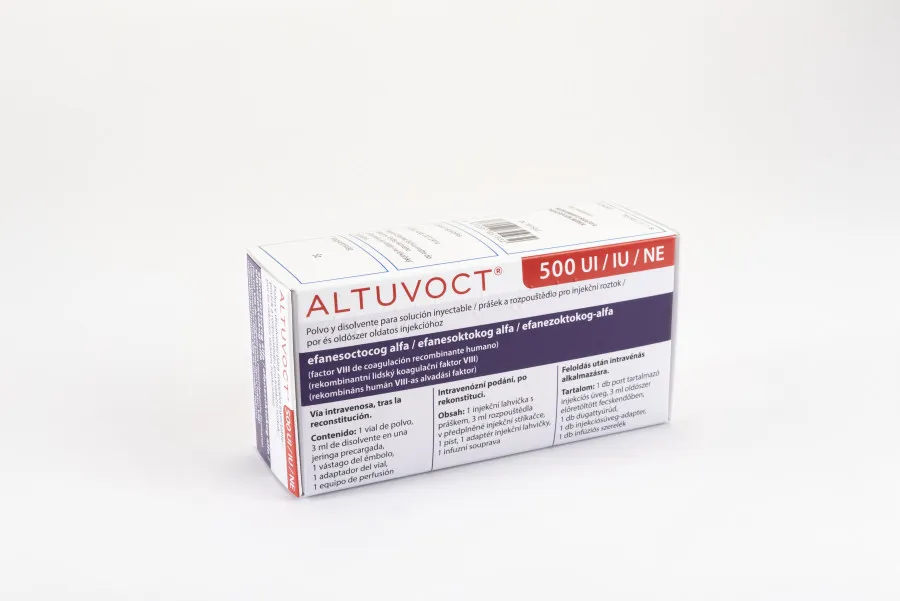
Table of Contents
- Package leaflet: Information for the user
- ALTUVOCT 250 IU powder and solvent for solution for injection, 500 IU powder and solvent for solution for injection, 750 IU powder and solvent for solution for injection, 1,000 IU powder and solvent for solution for injection, 2,000 IU powder and solvent for solution for injection, 3,000 IU powder and solvent for solution for injection, 4,000 IU powder and solvent for solution for injection
- 1. What ALTUVOCT is and what it is used for
- 2. What you need to know before using ALTUVOCT
- 3. How to use ALTUVOCT
- 4. Possible side effects
- 5. How to store ALTUVOCT
- 6. Package contents and other information
- 1. Prepare the vial
- 2. Prepare the syringe
- 3. Connect the syringe to the vial
- 4. Dissolve the powder in the solvent
- 5. If more than one vial is used
- 6. Draw up the solution into the syringe
- 7. Prepare the injection
- 8. Inject the solution
- 9. Safely dispose of
Package leaflet: Information for the user
ALTUVOCT 250 IU powder and solvent for solution for injection, 500 IU powder and solvent for solution for injection, 750 IU powder and solvent for solution for injection, 1,000 IU powder and solvent for solution for injection, 2,000 IU powder and solvent for solution for injection, 3,000 IU powder and solvent for solution for injection, 4,000 IU powder and solvent for solution for injection
efanesoctocog alfa (recombinant human coagulation factor VIII)
This medicinal product is subject to additional monitoring. This will allow rapid identification of new safety information. You can help by reporting any side effects you may experience while taking this medicine. See the end of section 4 for information on how to report side effects.
Please read this leaflet carefully before using this medicine because it contains important information for you.
- Keep this leaflet. You may need to read it again.
- If you have any questions, ask your doctor, pharmacist, or nurse.
- This medicine has been prescribed for you only. Do not give it to other people, even if they have the same symptoms as yours, as it may be harmful to them.
- If you experience any side effect, including those not listed in this leaflet, tell your doctor, pharmacist, or nurse. See section 4.
Contents of this leaflet
- What ALTUVOCT is and what it is used for
- What you need to know before using ALTUVOCT
- How to use ALTUVOCT
- Possible side effects
- How to store ALTUVOCT
- Contents of the pack and other information
1. What ALTUVOCT is and what it is used for
ALTUVOCT contains the active substance efanesoctocog alfa, a replacement factor VIII protein.
ALTUVOCT is used for the treatment and prevention of bleeding episodes in patients with
haemophilia A (an inherited bleeding disorder caused by factor VIII deficiency) and can be used
in patients of all age groups.
Factor VIII is a protein naturally present in the body, essential for blood clot formation and for stopping bleeding. In patients with haemophilia A, factor VIII is missing or does not function properly.
ALTUVOCT replaces the missing or deficient factor VIII. ALTUVOCT increases factor VIII levels
in the blood, helping blood to clot at the site of bleeding; this temporarily corrects the tendency to bleed.
2. What you need to know before using ALTUVOCT
Do not use ALTUVOCT
- if you are allergic to efanesoctocog alfa or to any of the other ingredients of this medicine (listed in section 6).
Warnings and precautions
Talk to your doctor, pharmacist, or nurse before using ALTUVOCT.
- There is a rare possibility that you may develop hypersensitivity reactions, including anaphylactic reactions (a severe and sudden allergic reaction) to ALTUVOCT. Signs of an allergic reaction may include generalized itching, hives, tightness in the chest, difficulty breathing, and low blood pressure. If any of these symptoms occur, stop the injection immediately and contact your doctor.
- Contact your doctor if you feel that your bleeding or the child's bleeding is not adequately controlled with the dose being received, as there may be several reasons. Some people using this medicine may develop antibodies directed against factor VIII (also called factor VIII inhibitors). The development of factor VIII inhibitors is a known complication that may occur during treatment with all factor VIII-containing medicines. These inhibitors, especially at high levels, may prevent the treatment from working as intended. You or the child will be closely monitored to detect the development of such inhibitors.
Cardiovascular events
If you have heart disease or are at risk of heart disease, exercise particular caution when using factor VIII medicines and consult your doctor.
Catheter-related complications
If a central venous access device (CVAD) is required, the risk of CVAD-related complications should be considered, including local infections, presence of bacteria in the blood, and blood clots at the catheter site.
Other medicines and ALTUVOCT
Inform your doctor if you are currently taking, have recently taken, or might take any other medicines.
Pregnancy and breastfeeding
If you are pregnant, suspect you may be pregnant, planning to become pregnant, or are breastfeeding, consult your doctor before using this medicine.
Driving and using machines
ALTUVOCT has no effect or negligible effect on the ability to drive vehicles and use machinery.
3. How to use ALTUVOCT
Treatment with ALTUVOCT will be initiated by a physician experienced in the management of patients with haemophilia A. ALTUVOCT is administered by intravenous injection.
After adequate training in the correct injection technique, patients or their caregivers may be able to administer ALTUVOCT at home. Your doctor will determine the dose (in International Units or “IU”) based on your body weight and whether the medicine is being used for prevention or treatment of bleeding episodes.
Use this medicine exactly as directed by your doctor. If you have any doubts, consult your doctor, pharmacist, or nurse.
Record keeping
Each time you use ALTUVOCT, record the date, the name of the medicine, and the batch number.
Prevention of bleeding episodes
The usual dose of ALTUVOCT is 50 International Units (IU) per kg of body weight. The injection is administered once weekly.
Treatment of bleeding episodes
The dose of ALTUVOCT is 50 International Units (IU) per kg of body weight. The dose and frequency may be adjusted according to the severity and location of the bleeding.
Use in children and adolescents
ALTUVOCT may be used in children of any age. The recommended dose is the same as that for adults.
How ALTUVOCT is administered
ALTUVOCT is administered by intravenous injection. For further information, see “Instructions for using ALTUVOCT”.
If you use more ALTUVOCT than you should
Inform your doctor as soon as possible. Always use ALTUVOCT exactly as directed by your doctor. If you have any doubts, consult your doctor, pharmacist, or nurse.
If you forget to use ALTUVOCT
Do not inject a double dose to make up for the missed dose. Administer the missed dose as soon as you remember, then resume your regular dosing schedule. If you have any doubts, consult your doctor, pharmacist, or nurse.
If you stop using ALTUVOCT
If you stop treatment with ALTUVOCT, you may no longer be protected against bleeding episodes, or an ongoing bleed may not stop. Do not discontinue treatment with ALTUVOCT without consulting your doctor.
If you have any questions about the use of this medicine, consult your doctor.
4. Possible side effects
Like all medicines, this medicine can cause side effects, although not everybody gets them.
If hypersensitivity reactions, including anaphylactic reactions, occur, administration must be stopped immediately and you should contact your doctor straight away.
Symptoms of hypersensitivity reactions/anaphylactic reactions include:
- facial swelling • hot flushes
- rash • headache
- generalized itching • low blood pressure
- hives • general feeling of unwellness
- tightness in the chest • nausea
- difficulty breathing • restlessness and rapid heartbeat
- burning and stinging at the injection site • dizziness
- chills
Risk of inhibitor development
In children who have not previously been treated with factor VIII-containing medicines, the development of inhibitory antibodies (see section 2) is very common (may affect more than 1 in 10 people).
However, in patients who have received prior factor VIII treatment (more than 150 days of treatment), the risk is uncommon (may affect up to 1 in 100 people).
If you or the child develop inhibitory antibodies, the medicine may no longer work as expected, and you or the child may experience persistent bleeding. If this happens, contact your doctor immediately.
The following side effects may occur with this medicine.
Very common side effects (may affect more than 1 in 10 people)
- headache
- arthralgia (joint pain)
Common side effects (may affect up to 1 in 10 people)
- limb pain (arms, hands, legs or feet)
- back pain
- eczema (itching, dry or red skin)
- rash
- urticaria (itchy rash)
- fever
- vomiting
Uncommon side effects (may affect up to 1 in 100 people)
- injection site reactions (including bruising and inflammation)
Reporting of side effects
If you experience any side effect, including those not listed in this leaflet, talk to your doctor, pharmacist or nurse.
You can also report side effects directly through the national reporting system listed in Annex V.
By reporting side effects, you can help provide more information on the safety of this medicine.
5. How to store ALTUVOCT
Keep this medicine out of the sight and reach of children.
Do not use this medicine after the expiry date stated on the carton and vial after "Exp./EXP". The expiry date refers to the last day of that month.
Store in a refrigerator (2 °C – 8 °C).
Do not freeze.
Keep the vial in the outer packaging to protect the medicine from light.
Before reconstitution of ALTUVOCT powder, it may be stored at room temperature (≤ 30 °C) for a single period not exceeding 6 months. The date when the medicine was removed from the refrigerator should be recorded on the carton. After storage at room temperature, the medicine must not be returned to the refrigerator.
Do not use after the expiry date printed on the vial or, in any case, beyond six months from when the carton was removed from the refrigerator.
After dissolving ALTUVOCT powder in the solvent provided in the pre-filled syringe, it must be used immediately. Do not store the prepared solution in the refrigerator.
After reconstitution, the solution should range from clear and colourless to slightly opalescent. Do not use this medicine if you notice that it is cloudy or contains visible particles.
Do not dispose of medicines via wastewater or household waste. Ask your pharmacist how to dispose of medicines you no longer use. This will help protect the environment.
6. Package contents and other information
What ALTUVOCT contains
- The active substance is efanesoctocog alfa (recombinant human coagulation factor VIII). Each vial of ALTUVOCT nominally contains 250, 500, 750, 1,000, 2,000, 3,000, or 4,000 IU of efanesoctocog alfa.
- The other ingredients are sucrose, calcium chloride dihydrate, histidine, arginine hydrochloride, and polysorbate 80.
Description of the appearance of ALTUVOCT and contents of the pack
ALTUVOCT is supplied as a powder and solvent for injectable solution. The powder is a white to off-white powder or solid. The solvent provided for preparing the injectable solution is a clear, colourless solution. After reconstitution, the injectable solution is clear and colourless to slightly opalescent.
Each pack of ALTUVOCT contains 1 vial of powder, 3 mL of solvent in a pre-filled syringe, 1 plunger, 1 vial adapter, and 1 infusion set.
Marketing Authorisation Holder
Swedish Orphan Biovitrum AB (publ)
SE-112 76 Stockholm
Sweden
Manufacturer
Swedish Orphan Biovitrum AB (publ)
Norra Stationsgatan 93
113 64 Stockholm
Sweden
More detailed information on this medicinal product is available on the European Medicines Agency website: https://www.ema.europa.eu.
For instructions on preparation and administration, please turn over the leaflet.
Instructions on how to use ALTUVOCT
READ THESE INSTRUCTIONS CAREFULLY BEFORE USING ALTUVOCT
ALTUVOCT is administered by intravenous injection after dissolving the powder for injectable solution in the solvent provided in the pre-filled syringe.
If the prescribed dose requires more than one vial, you will be provided with more than one pack and, ideally, a larger syringe.
A healthcare professional must show you how to correctly prepare and inject ALTUVOCT before you use it for the first time. If you have any doubts, consult your healthcare professional.
Important information
Check that the name and dosage strength of the medicine are correct, and make sure you know how frequently to administer ALTUVOCT.
Do not use the medicine if it has expired, has been opened, or appears damaged.
ALTUVOCT must not be mixed with other injectable solutions.
ALTUVOCT should ideally be stored in the refrigerator. Allow the vial and the solvent-filled syringe to reach room temperature before use. Do not use external heat sources.
Before use, inspect all components for any damage. Do not use them if they appear damaged.
All components are for single use only.
Wash your hands and clean a flat surface before preparing the kit. Place the syringe safely on a clean surface when not handling it.
Guide to components (included in the pack)
To reconstitute ALTUVOCT, the powder for injectable solution (A) is dissolved in the solvent provided in the pre-filled syringe (B). The ALTUVOCT solution is then administered using the infusion set (E).

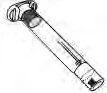
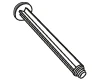

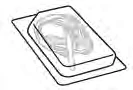
A. Vial of powder B. 3 mL pre-filled syringe C. Plunger D. Vial adapter E. Infusion set
Additional components (not included in the pack)
Ensure you have alcohol-impregnated swabs available (F).
Your pharmacist may have provided you separately with a larger syringe (G) to withdraw solution from multiple vials into a single syringe. If a larger syringe has NOT been provided, follow steps 6 to 8 to administer the solution from each syringe.
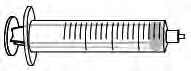

F. Alcohol-impregnated swabs G. Larger syringe
Reconstitution
1. Prepare the vial
a. Remove the vial closure cap
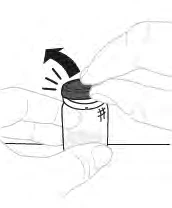
Place the powder vial (A) on a clean, flat surface
and remove the plastic closure cap.
b. Clean the top of the vial
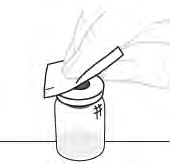
Clean the top of the vial with an alcohol swab.
After cleaning, make sure nothing touches the
top of the vial.
c. Open the vial adapter package
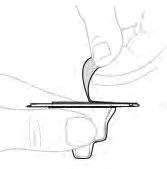
Peel off the paper protective lid from the vial adapter
package (D).
Do not touch the vial adapter and do not remove it from its
package.
d. Attach the vial adapter
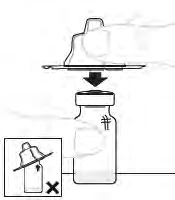
Position the vial adapter package perpendicularly
over the vial.
Firmly press down until the adapter clicks into place. The spike will then pierce the vial stopper.
2. Prepare the syringe
a. Attach the plunger
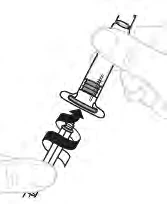
Insert the plunger (C) into the 3 mL syringe (B). Rotate the plunger clockwise until it is securely fixed.
b. Remove the syringe cap
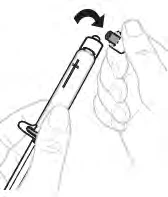
Peel off the top part of the white syringe cap along the perforations and set it aside.
Do not touch the inside of the syringe cap or the tip of the syringe.
3. Connect the syringe to the vial
a. Remove the vial adapter packaging
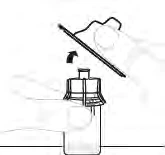
Lift and remove the packaging from the vial adapter and discard it.
b. Connect the syringe to the vial adapter
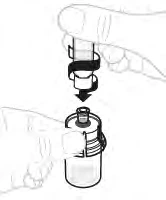
Grasp the vial adapter at the lower end.
Place the tip of the syringe onto the top of the vial adapter.
Rotate the syringe clockwise to securely attach it.
4. Dissolve the powder in the solvent
a. Add the solvent to the vial
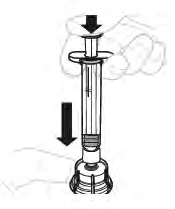
Slowly push the plunger to inject all of the solvent into the vial.
b. Dissolve the powder
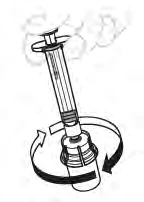
With your thumb on the plunger, gently rotate the vial until the powder is completely dissolved.
Do not shake.
c. Inspect the solution
Inspect the solution before administration. It should be clear and colourless.
Do not use the solution if it is cloudy or contains visible particles.
5. If more than one vial is used
If the prescribed dose requires more than one vial, follow the steps described below (5a and
5b); otherwise, proceed directly to step 6.
a. Repeat steps 1 to 4
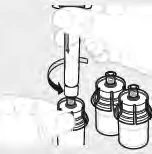
Repeat steps 1 to 4 with all the vials until a sufficient amount of solution for the prescribed dose has been prepared.
Remove the 3 mL syringes from each vial (see
step 6b), leaving the solution in each vial.
b. Use the large syringe (G) provided by the pharmacist
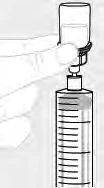
For each vial, attach the large syringe (G) to the vial adapter (see step 3b) and perform step 6 to
draw up the solution from each vial into the large syringe. If only part of the entire
vial is needed, use the scale on the syringe to check how much solution has been drawn up, according to the instructions provided by the healthcare professional.
6. Draw up the solution into the syringe
a. Draw up the solution
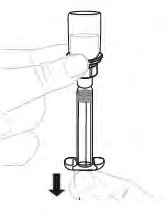
Point the syringe upwards. Slowly pull back the plunger to draw all the solution into the syringe.
b. Detach the syringe
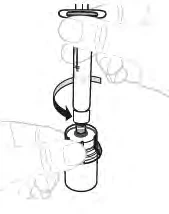
Detach the syringe from the vial by holding the vial adapter. Rotate the syringe counterclockwise to disconnect it.
Administration
7. Prepare the injection
a. Remove the cap from the vial
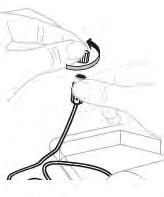
Open the infusion set package (E) (do not use if damaged).
Remove the cap from the vial.
Do not touch the exposed end of the vial.
b. Attach the syringe
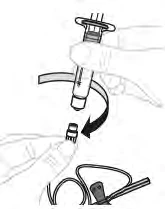
Attach the prepared syringe to the end of the infusion set by rotating the syringe clockwise.
c. Prepare the injection site
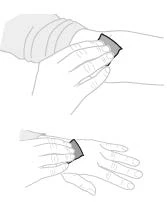
If necessary, apply a tourniquet. Clean the injection site with an alcohol swab (F).
d. Remove air from the syringe and tubing
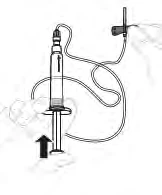
Remove air by pointing the syringe upward and gently pushing the plunger. Do not push solution into the needle.
Injecting air into a vein can be dangerous.
8. Inject the solution
a. Insert the needle
Remove the needle cover.
Insert the needle into a vein according to the instructions provided by your doctor or nurse, and, if used, remove the tourniquet.
You may use adhesive tape to secure the plastic wings of the needle at the injection site

to prevent movement.
b. Inject the solution
The prepared solution must be administered intravenously over 1 to 10 minutes, depending on your clinical condition.
9. Safely dispose of
a. Remove the needle
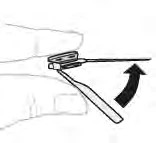
Remove the needle. Cover the needle with the protective cap until it clicks into place.
b. Safely dispose
Safely dispose of the used needle, any residual solution, the syringe, and the empty vial in a designated medical waste container.
Do not reuse any used materials.
ANNEX IV
SCIENTIFIC CONCLUSIONS AND REASONS FOR THE VARIATION OF THE TERMS
OF THE MARKETING AUTHORISATION(S)
Scientific conclusions
Taking into account the assessment by the Pharmacovigilance Risk Assessment Committee (PRAC) of the Periodic Safety Update Report(s) (PSUR) for efanesoctocog alfa, the scientific conclusions of the PRAC are as follows:
In light of available data on hypersensitivity reactions derived from spontaneous reports, including several cases with a close temporal relationship, positive response to discontinuation of treatment (de-challenge) and/or re-administration (re-challenge), and in view of a plausible mechanism of action, the PRAC considers that a causal relationship between efanesoctocog alfa and hypersensitivity reactions, including anaphylaxis, constitutes at least a reasonable possibility. The PRAC concluded that the product information for medicinal products containing efanesoctocog alfa should therefore be amended accordingly.
Having reviewed the PRAC recommendation, the Committee for Human Medicinal Products (CHMP) agrees with the overall conclusions and the rationale of the recommendation.
Reasons for the variation of the terms of the marketing authorisation(s)
Based on the scientific conclusions regarding efanesoctocog alfa, the CHMP considers that the benefit-risk balance of the medicinal product(s) containing efanesoctocog alfa remains unchanged, subject to the proposed amendments to the product information.
The CHMP recommends the variation of the terms of the marketing authorisation(s).