Alprazolam PensA
Italy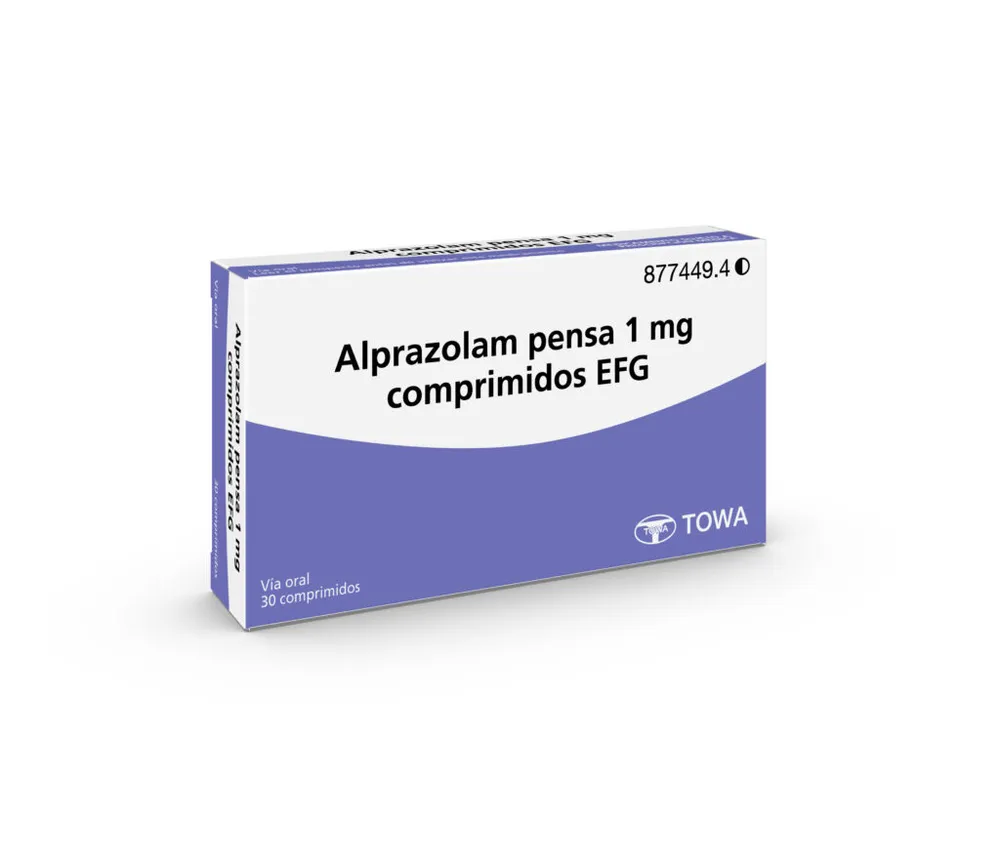
Table of Contents
- PACKAGE LEAFLET: INFORMATION FOR THE PATIENT
- ALPRAZOLAM PENSA 0.25 mg tablets, 0.50 mg tablets, 1 mg tablets, 0.75 mg/ml oral drops, solution
- 1. What ALPRAZOLAM PENSA is and what it is used for
- 2. What you should know before taking ALPRAZOLAM PENSA
- 3. How to take ALPRAZOLAM PENSA
- 4. Possible side effects
- 5. How to store ALPRAZOLAM PENSA
- 6. Package contents and other information
PACKAGE LEAFLET: INFORMATION FOR THE PATIENT
ALPRAZOLAM PENSA 0.25 mg tablets, 0.50 mg tablets, 1 mg tablets, 0.75 mg/ml oral drops, solution
Alprazolam
Equivalent medicinal product
Please read this leaflet carefully before taking this medicine because it contains
important information for you.
- Keep this leaflet. You may need to read it again.
- If you have any questions, ask your doctor or pharmacist.
- This medicine has been prescribed for you only. Do not give it to other people, even if their symptoms are the same as yours, because it could be harmful.
- If you experience any side effect, including those not listed in this leaflet, talk to your doctor or pharmacist. See section 4.
Contents of this leaflet:
- What ALPRAZOLAM PENSA is and what it is used for
- What you need to know before taking ALPRAZOLAM PENSA
- How to take ALPRAZOLAM PENSA
- Possible side effects
- How to store ALPRAZOLAM PENSA
- Contents of the pack and other information
1. What ALPRAZOLAM PENSA is and what it is used for
ALPRAZOLAM PENSA contains the active substance alprazolam, which belongs to a group of
medicines called benzodiazepines (anxiolytic medicines).
ALPRAZOLAM PENSA is used in adult patients for the treatment of symptoms of anxiety when the
disorder is severe, disabling, and causes the patient severe distress. This medicine is indicated
only for short-term use.
2. What you should know before taking ALPRAZOLAM PENSA
Do not take ALPRAZOLAM PENSA:
- if you are allergic to alprazolam, to other similar medicines (benzodiazepines) and their derivatives, or to any of the other ingredients of this medicine (listed in section 6);
- if you suffer from myasthenia gravis, a disease causing muscle weakness and fatigue;
- if you have severe breathing problems (severe respiratory insufficiency);
- if you have breathing difficulties during sleep (sleep apnea);
- if you have severe liver problems (severe hepatic insufficiency) that may cause mental confusion (hepatic encephalopathy);
- if you have high eye pressure due to a disease of the optic nerve called closed-angle glaucoma. This medicine may be used if you have a form of the disease called open-angle glaucoma and are receiving appropriate treatment;
- if you are in the first three months of pregnancy or if you are breastfeeding (see section “Pregnancy and breastfeeding”).
Warnings and precautions
Talk to your doctor or pharmacist before taking ALPRAZOLAM PENSA.
This medicine may reduce or even suppress consciousness, may cause a significant reduction in spontaneous breathing capacity, coma, and death if taken together with other medicines acting on the brain and mind (e.g., opioids, antipsychotics, and hypnotic-sedatives) (see section “Other medicines and Alprazolam Pensa”).
The use of this medicine in individuals predisposed to dependence, such as alcoholics or drug-dependent individuals, should be avoided whenever possible.
Take this medicine with caution and always under medical supervision in the following cases:
- if you are elderly or debilitated. Your doctor will prescribe a reduced dose of this medicine; remember to use this medicine cautiously as it may cause sedation and/or musculoskeletal weakness, increasing your risk of falls, often with serious consequences (see section 3 “How to take ALPRAZOLAM PENSA – Use in the elderly”);
- if you suffer from reduced blood flow to the brain due to hardening of the arteries (arteriosclerosis);
- if you have heart and lung problems (cardiorespiratory insufficiency);
- if you have chronic breathing problems (chronic respiratory insufficiency), as this medicine may worsen your condition;
- if you have low blood pressure;
- if you have previously abused alcohol, drugs, or other medicines, as this increases the risk of developing dependence on alprazolam (see section “Dependence”);
- if you have kidney problems (impaired renal function) or mild to moderate liver problems (hepatic and renal insufficiency);
- if you are being treated with other medicines acting on the brain and mind, as alprazolam may enhance the effects of these medicines (see section “Other medicines and Alprazolam Pensa”);
- if you suffer from severe depression. Alprazolam, like other benzodiazepines, should not be used alone to treat depression or anxiety associated with depression, as it may worsen suicidal tendencies and cause mood changes;
- if you are being treated with ketoconazole, itraconazole, or similar medicines (see section “Other medicines and Alprazolam”);
- if you suffer from psychosis, a serious mental illness altering your behavior and causing difficulties in social interaction. Alprazolam Pensa is not recommended as primary treatment for this condition;
- if you suffer from difficulty coordinating movements;
- if you suffer from rare hereditary intolerance to a specific sugar (galactose).
Depending on any of the above conditions, your doctor may decide to reduce the dose or subject you to regular monitoring during treatment with this medicine.
Tolerance
After several weeks of treatment, a certain loss of effectiveness of this medicine may occur.
Dependence
Taking this medicine may lead to the development of physical and psychological dependence, characterized by an absolute and uncontrollable need to take the medicine. The risk increases with dose and duration of treatment. It is higher if you have previously abused drugs or alcohol.
The risk of dependence increases with concomitant use of multiple benzodiazepines, regardless of anxiolytic or hypnotic indication. Therefore, your doctor will prescribe the most appropriate treatment based on your condition, using the lowest effective dose for the shortest possible time. Your doctor will also indicate when to schedule follow-up visits to monitor your health during Alprazolam Pensa therapy. Cases of abuse have also been reported.
Incorrect use of Alprazolam Pensa
You must take this medicine ONLY if prescribed by a doctor and after purchasing it from a pharmacy. Some people tend to abuse Alprazolam Pensa and other similar medicines called benzodiazepines.
Moreover, some people obtain these medicines illegally (e.g., black market, internet, friends, family, etc.), sometimes with the intent to resell them. DO NOT take Alprazolam Pensa if it has not been prescribed by your doctor. DO NOT take Alprazolam Pensa if you are not sure that the medicine was purchased from a pharmacy.
Withdrawal symptoms
When stopping ALPRAZOLAM PENSA, you may experience withdrawal or rebound symptoms, even if you have taken the medicine at recommended doses and for a short period (see section “If you stop taking ALPRAZOLAM PENSA”). To minimize such symptoms, gradual dose reduction is recommended.
Withdrawal symptoms may also occur when switching from a long-acting benzodiazepine to a short-acting one. Therefore, such substitution is not recommended.
Rebound insomnia and anxiety
Upon discontinuation of treatment, a temporary syndrome may occur in which the symptoms that led to ALPRAZOLAM PENSA treatment reappear in an aggravated form (see section “If you stop taking ALPRAZOLAM PENSA”).
Since the risk of rebound/withdrawal phenomena is higher if treatment is abruptly stopped, your doctor will gradually reduce your dose.
However, keep in mind the possibility of these rebound phenomena occurring when stopping use of this medicine.
Amnesia
ALPRAZOLAM PENSA may cause anterograde amnesia, i.e., the inability to memorize new information. This occurs more frequently several hours after taking the medicine. To reduce these risks, take this medicine immediately before going to sleep (see section “How to take ALPRAZOLAM PENSA”) and ensure uninterrupted sleep of 7–8 hours.
Behavioral reactions
During treatment with this medicine, you may experience behavioral disturbances such as restlessness, agitation, irritability, aggression, delusions, anger, nightmares, hallucinations (seeing or hearing things that do not exist), psychosis (a mental condition in which a person loses touch with reality and the ability to think and judge clearly), and behavioral changes. If you experience these symptoms, stop taking the medicine immediately. These reactions are more frequent in children and the elderly.
Alprazolam is not indicated as primary treatment for mental illnesses (psychosis).
Benzodiazepines should not be used alone to treat depression or anxiety associated with depression, as suicidal tendencies may be enhanced in such patients. Therefore, alprazolam should be used with caution, and the prescribed amount should be limited in patients showing signs or symptoms of depression or suicidal tendencies.
Children and adolescents
The use of ALPRAZOLAM PENSA is not recommended in children and adolescents under 18 years of age. ALPRAZOLAM PENSA should be used in children only when absolutely necessary, and treatment duration should be as short as possible.
Other medicines and ALPRAZOLAM PENSA
Inform your doctor or pharmacist if you are taking, have recently taken, or might take any other medicine.
Concomitant use of ALPRAZOLAM PENSA and opioids (strong analgesics, medicines for addiction therapy, and some cough medicines) increases the risk of drowsiness, breathing difficulties (respiratory depression), coma, and may be life-threatening. For this reason, concomitant use should only be considered when other treatment options are not feasible.
However, if your doctor prescribes ALPRAZOLAM PENSA together with opioids, the dose and duration of concomitant treatment must be limited by the doctor.
Inform your doctor about all opioid medicines you are taking and carefully follow the doctor’s dosage recommendations. It may be helpful to inform friends or family members to watch for the signs and symptoms listed above.
Contact your doctor if you experience such symptoms.
Pay special attention and inform your doctor if you are taking the following medicines:
- medicines acting on the brain and mind* such as:
- antipsychotics (neuroleptics), used to treat mental disorders;
- antidepressants such as nefazodone, fluvoxamine, fluoxetine, imipramine, and desipramine, used to treat depression;
- hypnotics, medicines used to promote sleep;
- anxiolytics, used to treat anxiety;
- sedatives, tranquillizers;
- certain strong painkillers (narcotic analgesics), which may cause increased feelings of well-being when taken with ALPRAZOLAM PENSA. This may lead to an absolute and uncontrollable need to take these medicines (dependence);
- antiepileptics, used for epilepsy;
- anesthetics, used during surgical procedures; anesthetics used together with alprazolam may cause euphoria, increasing the likelihood of developing alprazolam dependence;
- sedating antihistamines, used to treat allergies; * If you take ALPRAZOLAM PENSA together with one or more of these medicines or with alcoholic beverages, these substances may contribute to reducing brain and mind functions, potentially leading to reduced spontaneous breathing, coma, and death (see section Warnings and precautions).
- certain antibiotics used against bacterial infections (macrolide antibiotics);
- cimetidine, used to treat stomach lesions (ulcers);
- propoxyphene, a medicine used for pain;
- oral contraceptives;
- diltiazem, a medicine used to lower blood pressure;
- digoxin (a medicine used to increase the heart's contraction strength). If you are elderly, taking Alprazolam Pensa may increase the likelihood of developing toxic effects due to digoxin;
- medicines that inhibit the Cytochrome P450 enzyme, as they may increase the activity of ALPRAZOLAM PENSA.
Particular caution, especially in elderly patients, must be exercised with medicines having respiratory depressant effects, such as opioids (analgesics, cough sedatives, substitution treatments).
Co-administration of alprazolam with azole antifungals (ketoconazole, itraconazole, posaconazole, voriconazole), protease inhibitors (ritonavir), or certain macrolides (erythromycin, clarithromycin, telithromycin) should be done with caution, and a substantial dose reduction should be considered.
ALPRAZOLAM PENSA with alcohol
Do not consume alcohol during treatment with this medicine, as it may enhance the sedative effect. This negatively affects your ability to drive vehicles and operate machinery.
Pregnancy and breastfeeding
If you are pregnant, suspect you may be pregnant, planning a pregnancy, or breastfeeding, consult your doctor or pharmacist before taking this medicine.
Pregnancy:
Do not take ALPRAZOLAM PENSA during the first 3 months of pregnancy, as it may cause serious harm, including malformations, to your baby. Your doctor will assess whether you can take this medicine during the second and third trimesters of pregnancy.
If, due to absolute medical necessity, your doctor considers that you must take ALPRAZOLAM PENSA in the late stages of pregnancy, your baby may show reduced muscle tone (hypotonia), breathing difficulties (moderate respiratory depression or apnea), difficulty feeding, reduced body temperature (hypothermia), and withdrawal symptoms. These effects are reversible but may last from 1 to 3 weeks.
If ALPRAZOLAM PENSA has been taken regularly during the late stages of pregnancy, your baby may develop physical dependence and show withdrawal symptoms.
Breastfeeding:
Do not take this medicine if you are breastfeeding, as alprazolam passes into breast milk.
Driving and using machines
The use of ALPRAZOLAM PENSA may affect your ability to drive vehicles and operate machinery, as you may feel unfocused, forgetful, drowsy, and experience impaired muscle function.
If this occurs, do not drive or operate machinery. If you have not slept enough, reduced vigilance is more likely.
ALPRAZOLAM PENSA tablets contain lactose, sodium, and the colouring agent sunset yellow (E110)
This medicine contains lactose, a type of sugar. If your doctor has diagnosed you with intolerance to certain sugars, contact them before taking this medicine.
This medicine contains less than 1 mmol (23 mg) of sodium per dose, i.e., essentially ‘sodium-free’.
ALPRAZOLAM PENSA 0.50 mg tablets contain the colouring agent sunset yellow (E110), which may cause allergic reactions.
ALPRAZOLAM PENSA oral drops, solution contains ethanol (alcohol), propylene glycol, and sodium
This medicine contains 43.3 mg of alcohol (ethanol) per 0.25 mg dose (equivalent to 10 drops), which corresponds to 130 mg/ml of ethanol. A 0.25 mg dose (10 drops) is equivalent to less than 2 ml of beer or less than 1 ml of wine; a 0.5 mg dose (20 drops) is equivalent to less than 3 ml of beer or less than 1 ml of wine.
The small amount of alcohol in this medicine will not produce significant effects.
This medicine contains 233 mg of propylene glycol per 0.25 mg dose (10 drops); it contains 466 mg of propylene glycol per 0.50 mg dose (20 drops) and 3728 mg of propylene glycol per maximum dose (4 mg).
If the child is under 5 years of age, talk to your doctor or pharmacist before administering this medicine, especially if the child is taking other medicines containing propylene glycol or alcohol.
If you are pregnant or breastfeeding, do not take this medicine unless otherwise advised by your doctor. Your doctor may perform additional monitoring during treatment.
If you suffer from liver or kidney disease, do not take this medicine unless otherwise advised by your doctor. Your doctor may perform additional monitoring during treatment.
This medicine contains less than 1 mmol (23 mg) of sodium per dose, i.e., essentially ‘sodium-free’.
3. How to take ALPRAZOLAM PENSA
Take this medicine exactly as directed by your doctor. If you have any doubts, consult your doctor.
ALPRAZOLAM PENSA is taken orally.
The evening dose of the medicine should be taken just before going to bed.
Continue taking this medicine until your doctor tells you to stop.
Always use the lowest effective dose and do not exceed the maximum recommended dose to avoid unwanted effects.
The duration of treatment should be as short as possible.
Treatment of anxiety
The recommended starting dose is 0.25 to 0.50 mg (or 10–20 drops of oral solution) three times daily. This dose may be gradually increased by your doctor up to a maximum of 4 mg per day, taken in divided doses. Dose increases should first be made to the evening dose, followed by the daytime doses.
If you are elderly, have liver or kidney problems and/or are debilitated
The recommended starting dose for the treatment of anxiety is 0.25 mg (= 10 drops of oral solution) two or three times daily.
Duration of treatment
The duration of treatment should be as short as possible and should not usually exceed 2–4 weeks. Only your doctor can decide whether to extend treatment beyond this period.
If you take more ALPRAZOLAM PENSA than you should
If you have taken an excessive dose of Xanax, contact your doctor immediately or go to the nearest emergency department.
An overdose of ALPRAZOLAM PENSA alone is unlikely to be life-threatening unless other medicines that depress the central nervous system (including alcohol) have also been taken.
Overdose typically causes central nervous system depression of varying severity. Symptoms may include drowsiness, mental confusion, difficulty speaking, muscle problems (ataxia, hypotonia), low blood pressure, breathing difficulties, rarely coma, and very rarely death.
If you forget to take ALPRAZOLAM PENSA
If you forget to take a dose, take it as soon as you remember, unless it is almost time for your next dose. Do not take a double dose to make up for the forgotten dose.
If you stop taking ALPRAZOLAM PENSA
Do not stop treatment with ALPRAZOLAM PENSA suddenly or without first discussing it with your doctor, as withdrawal symptoms may occur.
If your doctor decides to discontinue treatment, they will gradually reduce your dose (by no more than 0.5 mg every 3 days) to minimize withdrawal symptoms such as: mood disturbances, insomnia, vomiting, muscle and abdominal cramps, sweating, tremor, headache, muscle pain, tension, severe anxiety, confusion, restlessness, irritability.
In severe cases of withdrawal, derealization (a feeling that things are not real), depersonalization (a sense of detachment from the surrounding environment), sound intolerance (hyperacusis), numbness and tingling in hands and feet, increased sensitivity to light, noise and physical touch, hallucinations (seeing or hearing things that are not there), or epileptic seizures may occur.
These symptoms, especially the more severe ones, are generally more common in patients who have been treated with excessive doses over prolonged periods.
Furthermore, upon discontinuation of treatment, a temporary syndrome may occur in which the symptoms that led to treatment with ALPRAZOLAM PENSA reappear in an aggravated form. This is known as rebound insomnia and anxiety (See section “Warnings and precautions”).
Since the risk of rebound or withdrawal symptoms is higher when treatment is stopped abruptly, your doctor will gradually reduce your dose.
Nonetheless, remain aware of the possibility of such rebound phenomena occurring when you stop using this medicine. You may also experience mood changes, anxiety, restlessness, and sleep disturbances (See section “Warnings and precautions”).
If you have any questions about how to use this medicine, consult your doctor or pharmacist.
4. Possible side effects
Like all medicines, this medicine can cause side effects, although not everybody will experience them.
Contact your doctor immediately if you experience any of the following side effects, as treatment with ALPRAZOLAM PENSA must be discontinued: depression and mental disorders such as restlessness, agitation, irritability, aggression, feelings of disappointment, anger, nightmares, hallucinations (seeing or hearing things that do not exist), psychosis (a mental condition in which a person loses touch with reality and the ability to think and judge clearly), and behavioural changes.
These reactions are more likely to occur in children and elderly patients (see section “Warnings and precautions”).
Contact your doctor immediately if you experience any of the following side effects, as they may be serious:
- swelling of the face, tongue and throat leading to difficulty in swallowing and breathing (angioedema)
- difficulty remembering events that occurred after taking the medicine (see section 2 “Amnesia”)
- dependence (see section 2 “Dependence”)
- withdrawal symptoms and rebound symptoms (see section 3 “If you stop taking ALPRAZOLAM PENSA”)
- destruction of the intestinal wall (necrotizing enterocolitis)
Side effects, if they occur, are usually observed at the beginning of treatment and generally decrease in intensity or disappear as treatment continues, or by reducing the dose.
The following side effects may occur:
Very common (may affect more than 1 in 10 people):
- Depression
- Sedation
- Drowsiness
- Loss of ability to coordinate movements
- Memory disturbances
- Difficulty speaking
- Dizziness
- Headache
- Constipation
- Dry mouth due to lack of saliva
- Fatigue
- Irritability
Common (may affect up to 1 in 10 people):
- Decreased appetite, decreased or increased body weight
- Confusion, disorientation
- Increased or decreased sexual desire, sexual dysfunction
- Anxiety
- Insomnia, excessive sleepiness
- Nervousness
- Balance disorders, problems with coordination of movements
- Loss of attention and concentration
- Excessive drowsiness (lethargy)
- Tremors
- Vertigo
- Slurred speech
- Blurred vision
- Nausea
- Dermatitis
- Irritability
Uncommon (may affect up to 1 in 100 people):
- Obsessive thoughts and behaviours
- Inability to experience pleasure, either physical or emotional
- Inability to achieve orgasm
- General slowing down of various mental functions, particularly thinking speed
- Depressive state
- Feeling of detachment or estrangement from oneself or the external world
- Reduction or loss of normal inhibitions
- Euphoric state
- Fear
- Loss of sexual desire
- Panic attacks
- Generalized visible slowing down of movements and speech speed (psychomotor retardation)
- Sleep disorders
- Memory disorder (amnesia)
- Clumsy and awkward movements
- Seizures
- Reduced perception of taste or distorted taste perception
- Abnormal or accelerated gait
- Increase in active behaviour
- Epileptic seizures with or without loss of consciousness
- Headache
- Behaviours characterised by excessive passivity and inertia towards events and people (e.g. state of immobility and mutism)
- Perception of ringing, whistling or buzzing in the ears (tinnitus)
- Palpitations
- Hot flushes
- Suffocation, breathing difficulties
- Abdominal pain
- Diarrhoea
- Stomach ache
- Vomiting
- Increased tendency to bruise
- Skin rashes
- Increased sweating
- Itching
- Muscle weakness
- Joint pain
- Back pain
- Muscle pain and cramps
- Pain in arms and legs
- Incontinence, voluntary or involuntary repeated loss of urine, frequent urge to urinate
- Irregular menstrual cycle, delayed menstrual cycle
- Ejaculation disorders
- Inability in men to achieve erection
- Chest pain
- Altered sensations
- Intoxication-like state
- Feeling of nervousness, feeling of relaxation
- Influenza-like syndrome, confusion
- Sensation of a foreign body
- Slowness
- Feeling of thirst
- Weakness
- Tendency to fall
- Injuries to arms and legs
- Tendency to take the medicine in excessive doses
- Increased risk of road traffic accidents
- Increased levels of bilirubin (a substance produced by the liver) in the blood
- Drug dependence
- Drug withdrawal syndrome
Frequency not known (frequency cannot be estimated from the available data):
- Increased levels of prolactin (a natural hormone in the blood)
- Mood changes
- Hostile behaviour, abnormal thoughts
- Impulsivity and motor hyperactivity
- Alterations in the nervous system responsible for bodily functions that cannot be voluntarily controlled (e.g. functions of internal organs and glands)
- Involuntary muscle contractions forcing the body into unnatural positions
- Stomach and intestinal disorders
- Inflammatory liver diseases (hepatitis)
- Altered liver function
- Yellow or yellowish discoloration of the skin and mucous membranes (jaundice)
- Skin reactions due to exposure to sunlight
- Inability to completely empty the bladder
- Swelling of hands and feet due to fluid accumulation
- Increased pressure inside the eye
- Abuse of this medicine (tendency towards excessive or incorrect use of Alprazolam Pensa)
Anterograde amnesia, i.e. the inability to memorize new information, may occur even at therapeutic doses, but the risk increases with higher doses. Memory loss effects may also be associated with behavioural changes (see section “Warnings and precautions”).
During the use of benzodiazepines, pre-existing depressive states may become apparent.
The use of benzodiazepines (even at therapeutic doses) may lead to the development of physical and psychological dependence (see section “Warnings and precautions” and “If you stop taking ALPRAZOLAM PENSA”). Abuse of benzodiazepines has been reported.
Reporting of side effects
If you experience any side effect, including those not listed in this leaflet, talk to your doctor or pharmacist. You can also report side effects directly via the national reporting system at the following website:
https://www.aifa.gov.it/content/segnalazioni-reazioni-avverse
By reporting side effects, you can help provide more information on the safety of this medicine.
5. How to store ALPRAZOLAM PENSA
Keep this medicine out of the sight and reach of children.
Do not use this medicine after the expiry date stated on the pack after "Exp.".
The expiry date refers to the last day of that month.
Store protected from light.
Oral drops should be used within 20 days of first opening the bottle.
Do not dispose of any medicine via wastewater or household waste. Ask your pharmacist how to dispose of medicines you no longer use. This will help protect the environment.
6. Package contents and other information
What ALPRAZOLAM PENSA contains
The active substance is alprazolam.
Tablets
One tablet of Alprazolam Pensa contains 0.25 mg of alprazolam.
The other ingredients are: lactose, microcrystalline cellulose, sodium docusate, colloidal silica,
corn starch, magnesium stearate.
One tablet of Alprazolam Pensa contains 0.50 mg of alprazolam.
The other ingredients are: lactose, microcrystalline cellulose, sodium docusate, colloidal silica,
corn starch, magnesium stearate, sunset yellow (E110).
One tablet of Alprazolam Pensa contains 1 mg of alprazolam.
The other ingredients are: lactose, microcrystalline cellulose, sodium docusate, colloidal silica,
corn starch, magnesium stearate, indigotine (E132).
Oral drops
1 ml of Alprazolam Pensa oral drops, solution contains 0.75 mg of alprazolam.
The other ingredients are: ethanol, propylene glycol, sodium saccharin, cherry flavouring,
purified water.
Description of the appearance of ALPRAZOLAM PENSA and package contents
Tablets:
Tablets are available in packs of 20 tablets of 0.25 mg, 0.50 mg and 1 mg.
Oral drops, solution:
Pack containing one 20 ml bottle of solution.
Marketing Authorization Holder
Towa Pharmaceutical S.p.A.
Via Enrico Tazzoli, 6
20154 Milan - Italy
Manufacturers
Tablets:
DOPPEL FARMACEUTICI S.r.l.
Via Volturno n. 48,
Quinto De’ Stampi
20089 Rozzano (MI)
Oral drops, solution:
DOPPEL FARMACEUTICI S.r.l.
Via dei Martiri delle Foibe, 1
29016 Cortemaggiore (PC)