Alphagan
Italy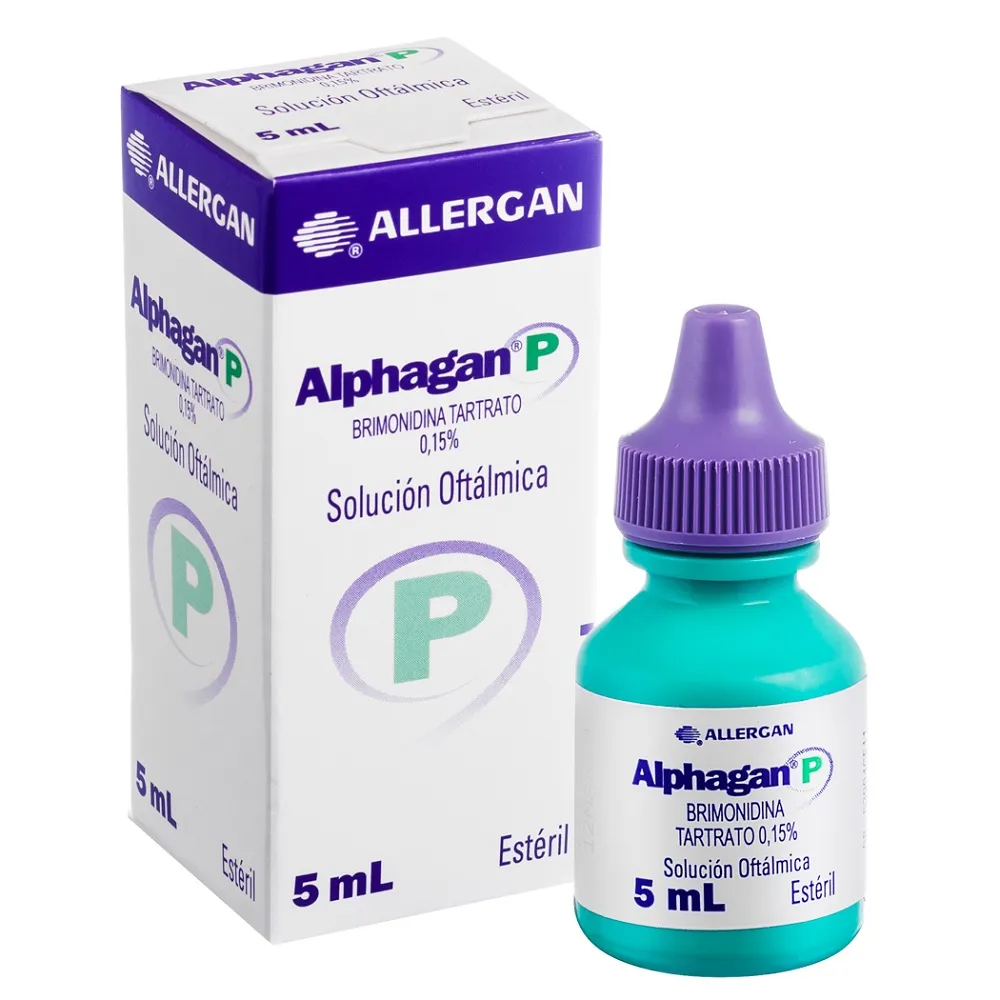
Table of Contents
Package leaflet: Information for the patient
ALPHAGAN 0.2% w/v (2 mg/ml) eye drops, solution
brimonidine tartrate
Please read this leaflet carefully before using this medicine because it contains
important information for you
- Keep this leaflet. You may need to read it again.
- If you have any questions, ask your doctor or pharmacist.
- This medicine has been prescribed for you only. Never give it to other people, even if their symptoms are the same as yours.
- If you experience any side effect, including those not listed in this leaflet, tell your doctor or pharmacist. See section 4.
Contents of this leaflet:
- What ALPHAGAN is and what it is used for
- What you need to know before using ALPHAGAN
- How to use ALPHAGAN
- Possible side effects
- How to store ALPHAGAN
- Contents of the pack and other information
1. What ALPHAGAN is and what it is used for
Alphagan is used to reduce pressure within the eye. The active substance in ALPHAGAN is brimonidine tartrate, which belongs to a group of medicines called alpha-2 adrenergic agonists and works by reducing pressure inside the eyeball.
It may be used alone when beta-blocking eye drops are contraindicated, or in combination with another eye drop when a single medicine is not sufficient to reduce elevated intraocular pressure in the treatment of open-angle glaucoma or ocular hypertension.
2. What you need to know before using ALPHAGAN
Do not use Alphagan
- If you are allergic (hypersensitive) to brimonidine tartrate or to any of the excipients of this medicine (listed in section 6).
- If you are taking monoamine oxidase inhibitors (MAOIs) or other antidepressants. Inform your doctor if you are taking any antidepressant medication.
- If you are breastfeeding.
- In infants/children (from birth up to two years of age).
Warnings and precautions
Talk to your doctor before using ALPHAGAN:
- If you have or have had depression, reduced mental capacity, reduced blood flow to the brain, heart problems, reduced blood flow to the limbs, or blood pressure disorders.
- If you have or have previously had kidney or liver problems.
Children and Adolescents
The use of ALPHAGAN is not recommended in children aged between 2 and 12 years.
ALPHAGAN should generally not be used in adolescents aged between 12 and 17 years,
as clinical studies have not been conducted in this age group.
Other medicines and ALPHAGAN
Inform your doctor or pharmacist if you are taking, have recently taken, or might take any other
medicines, including those not requiring a prescription.
Inform your doctor if you are taking any of the following medicines:
- Painkillers, sedatives, opioids, barbiturates, or if you are a regular consumer of alcoholic beverages.
- Anaesthetics.
- Medicines used to treat a heart condition or to lower blood pressure.
- Medicines that may affect metabolism, such as chlorpromazine, methylphenidate, and reserpine.
- Medicines acting on the same receptor as ALPHAGAN, for example isoprenaline and prazosin.
- Monoamine oxidase inhibitors (MAOIs) and other antidepressants.
- Medicines for any other condition, even if not related to your eye problems.
- Or if the dose of any of your current medicines has changed.
These may affect your treatment with ALPHAGAN.
Pregnancy and breastfeeding
If you are pregnant, think you might be pregnant, planning to become pregnant, or are breastfeeding,
consult your doctor or pharmacist before using this medicine. Do not use ALPHAGAN if you are
pregnant unless your doctor considers it necessary.
Do not use ALPHAGAN if you are breastfeeding.
Driving and using machines
- ALPHAGAN may cause blurred or abnormal vision. This effect may seem worse at night or under conditions of reduced lighting.
- In some patients, ALPHAGAN may also cause drowsiness or fatigue.
- If you experience any of these symptoms, do not drive or operate machinery until the symptoms have resolved.
ALPHAGAN contains Benzalkonium chloride
ALPHAGAN contains 0.25 mg of benzalkonium chloride in each 5 ml of solution, equivalent to 0.05 mg/ml.
Benzalkonium chloride may be absorbed by soft contact lenses and may cause discoloration. Remove contact lenses before using this medicine and wait 15 minutes before reinserting them.
Benzalkonium chloride may also cause eye irritation, especially if you have dry eye or corneal disorders (the transparent outermost layer of the eye). If you experience any abnormal sensation in the eye, such as burning or pain after using this medicine, speak with your doctor.
3. How to use ALPHAGAN
Always use ALPHAGAN exactly as directed by your doctor. If you have any doubts, consult your doctor or pharmacist.
Adults
The recommended dose is one drop twice daily in the affected eye(s), approximately 12 hours apart. Do not change the dosage or stop using ALPHAGAN without first consulting your doctor.
Children under 12 years of age
ALPHAGAN must not be administered to children under 2 years of age.
The use of ALPHAGAN is not recommended in children (from 2 to 12 years of age).
Instructions for use
ALPHAGAN is an eye drop solution. Always wash your hands before applying eye drops. Your prescription will indicate how many drops to use for each dose. If you are using ALPHAGAN with another eye drop, wait 5–15 minutes before applying the second eye drop.
Apply the eye drops as follows:

- Tilt your head backwards and look upwards.
- Gently pull down the lower eyelid to form a small pocket.
- Invert the bottle and gently squeeze to release one drop of the eye drop into the eye.
- While keeping the eye closed, press a finger against the corner of the eye (where the eye meets the nose) and hold for one minute.
If the drop did not enter the eye, repeat the procedure.
To avoid eye infections, the tip of the bottle must not touch the eye or any other surface. Immediately after using the bottle, replace and screw on the cap tightly.
If you use more ALPHAGAN than you should
Adults
In adults who have instilled more drops than prescribed, the adverse effects reported are those already known with the use of ALPHAGAN.
Adults who have accidentally ingested ALPHAGAN have experienced a drop in blood pressure, which in some patients was followed by an increase in blood pressure.
Children
Serious adverse effects have been reported in children who have accidentally ingested ALPHAGAN. Symptoms included drowsiness, unsteadiness, low body temperature, pallor, and breathing difficulties. If this occurs, contact your doctor immediately.
Adults and Children
If ALPHAGAN has been accidentally ingested or if you have used more than prescribed, contact your doctor immediately.
If you forget to use ALPHAGAN
If you forget to administer a dose, take it as soon as you remember. However, if it is almost time for your next dose, skip the missed dose and continue with your regular dosing schedule.
If you stop using ALPHAGAN
For ALPHAGAN to work properly, it must be used every day. Do not stop using ALPHAGAN unless your doctor advises you to do so.
If you have any questions about how to use this medicine, ask your doctor or pharmacist.
4. Possible side effects
Like all medicines, this medicine can cause side effects, although not everybody gets them.
The following ocular side effects may occur with ALPHAGAN.
Eye disorders
Very common (may affect more than 1 in 10 people):
- Eye irritation (red eye, burning, stinging sensation, foreign body sensation in the eye, itching, follicles or white dots on the transparent layer covering the surface of the eye)
- Blurred vision
- Allergic reaction of the eye
Common (may affect up to 1 in 10 people):
- Local irritation (inflammation and swelling of the eyelid, swelling of the transparent layer covering the surface of the eye, sticky eyes, pain and tearing)
- Light sensitivity
- Erosion and staining of the surface of the eye
- Dry eyes
- Blanching of the transparent layer covering the surface of the eye
- Abnormal vision
- Inflammation of the transparent layer covering the surface of the eye
Very rare (may affect up to 1 in 10,000 people):
- Inflammation of the eye
- Reduction in pupil size
Side effects with unknown frequency (frequency cannot be estimated from the available data):
- Itching of the eyelids
General disorders
Very common (may affect more than 1 in 10 people):
- Headache
- Dry mouth
- Fatigue/somnolence
Common (may affect up to 1 in 10 people):
- Dizziness
- Influenza-like symptoms
- Gastrointestinal symptoms
- Taste alteration
- Generalized weakness
Uncommon (may affect up to 1 in 100 people):
- Depression
- Palpitations or changes in heart rate
- Dry nose
- Generalized allergic reactions
Rare (may affect up to 1 in 1,000 people):
- Shortness of breath
Very rare (may affect up to 1 in 10,000 people):
- Insomnia
- Fainting
- High blood pressure
- Low blood pressure
Side effects with unknown frequency (frequency cannot be estimated from the available data):
- Skin reactions including flushing, facial swelling, itching, rash, and blood vessel dilation
Reporting of side effects
If you experience any side effect, including those not listed in this leaflet, talk to your doctor or pharmacist. You can also report side effects directly via the national reporting system at: https://www.aifa.gov.it/content/segnalazioni-reazioni-avverse.
By reporting side effects, you can help provide more information on the safety of this medicine.
5. How to store ALPHAGAN
- Keep this medicine out of the reach and sight of children.
- Do not store above 25°C.
- Do not use this medicine if the bottle's safety seal is broken before first use.
- Do not use this medicine after the expiry date stated on the label of the bottle and on the carton after Exp:. The expiry date refers to the last day of the month.
- Discard the bottle 28 days after first opening, even if some solution remains. Do not dispose of any medicine via wastewater or household waste. Ask your pharmacist how to dispose of medicines you no longer use. This will help protect the environment.
6. Package contents and other information
What ALPHAGAN contains
- The active substance is brimonidine tartrate. One ml of solution contains 2.0 mg of brimonidine tartrate, equivalent to 1.3 mg of brimonidine.
- The other components are benzalkonium chloride as a preservative, polyvinyl alcohol, sodium chloride, sodium citrate, citric acid monohydrate, purified water, and sodium hydroxide or hydrochloric acid to adjust the pH.
Description of the appearance of ALPHAGAN and contents of the pack
ALPHAGAN is a clear eye drop solution ranging from yellow-green to slightly yellow-green, contained in a plastic bottle. Each bottle contains 2.5 ml, 5 ml or 10 ml of medicinal product.
ALPHAGAN is available in packs containing 1, 3 or 6 bottles.
Not all pack sizes may be marketed.
Marketing Authorisation Holder
AbbVie S.r.l.
S.R. 148 Pontina km 52 snc
04011 Campoverde di Aprilia (LT)
Italy
Manufacturer
Allergan Pharmaceuticals Ireland
Castlebar Road
Westport, County Mayo, Ireland
This medicinal product is authorised in the Member States of the European Economic Area under the following names:
| Austria | Alphagan 0.2% eye drops |
| Germany | Alphagan 0.2% m/v (2 mg/ml) eye drops |
| Belgium, Finland, Greece, Iceland, Luxembourg, Norway, Portugal | Alphagan |
| Denmark, Ireland, Italy, Netherlands, Sweden, United Kingdom | Alphagan 0.2% |
| France | ALPHAGAN 0.2% (2 mg/ml), solution for eye drops |
| Spain | Alphagan 2 mg/ml solution for eye drops |
This patient information leaflet was last approved on