Allopurinol Teva Italia
Italy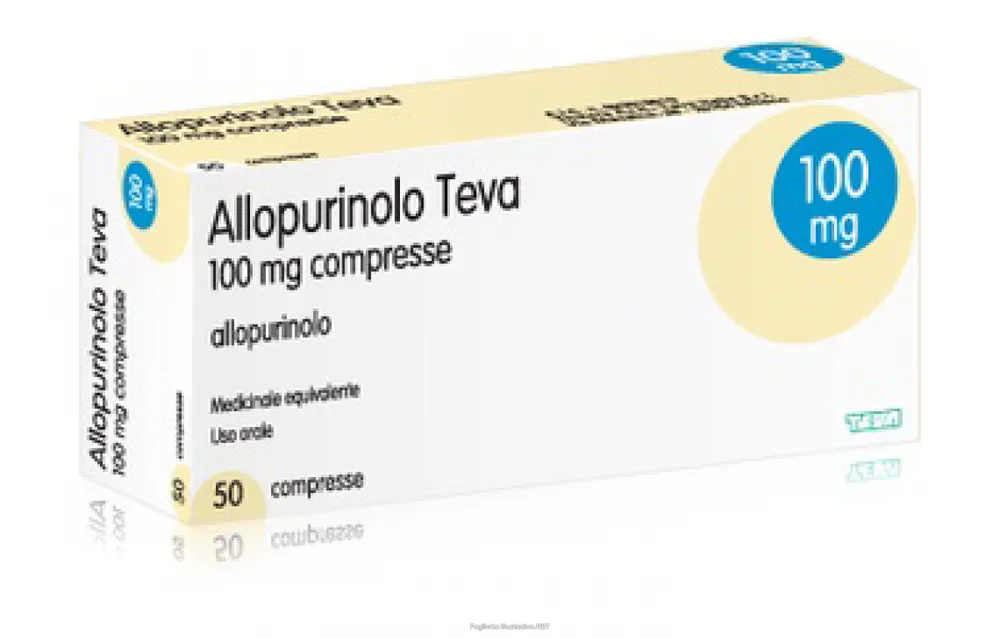
Table of Contents
- Package leaflet: Information for the user
- Allopurinol Teva Italia 100 mg tablets, 300 mg tablets
- 1. What Allopurinolo Teva Italia is and what it is used for
- 2. What you need to know before taking Allopurinol Teva Italia
- 3. How to take Allopurinol Teva Italia
- 4. Possible side effects
- 5. How to store Allopurinol Teva Italia
- 6. Package contents and other information
Package leaflet: Information for the user
Allopurinol Teva Italia 100 mg tablets, 300 mg tablets
Equivalent medicine
Please read all of this leaflet carefully before you start taking this medicine, because it contains important information for you.
- Keep this leaflet. You may need to read it again.
- If you have any questions, ask your doctor or pharmacist.
- This medicine has been prescribed for you only. Do not give it to other people, even if their symptoms are the same as yours, as it may be harmful.
- If you experience any side effects, including those not listed in this leaflet, talk to your doctor or pharmacist. See section 4.
Contents of this leaflet:
- What Allopurinol Teva Italia is and what it is used for
- What you need to know before taking Allopurinol Teva Italia
- How to take Allopurinol Teva Italia
- Possible side effects
- How to store Allopurinol Teva Italia
- Contents of the pack and other information
1. What Allopurinolo Teva Italia is and what it is used for
- Allopurinolo Teva Italia belongs to a group of medicines called enzyme inhibitors, which act by controlling the rate at which certain chemical changes occur in the body.
- Allopurinolo Teva Italia tablets are used for the long-term preventive treatment of gout and may also be used in other conditions associated with excess uric acid in the body, including kidney stones and other types of kidney disorders.
2. What you need to know before taking Allopurinol Teva Italia
Do not take Allopurinol Teva Italia:
- if you are allergic to allopurinol or to any of the other ingredients of this medicine (listed in section 6).
Warnings and precautions
Talk to your doctor or pharmacist before taking Allopurinol Teva Italia if:
- you have liver or kidney problems. Your doctor may prescribe a lower dose or advise you to take the medicine less frequently than once daily. You may also be monitored more closely.
- you have heart problems or high blood pressure and are taking diuretics and/or a medicine called an ACE inhibitor.
- you are currently experiencing a gout attack.
- you are of Han Chinese, Thai, or Korean origin.
- you have thyroid problems.
Serious skin reactions have been reported with the use of allopurinol, which may be more common in patients with chronic kidney disease. These severe skin rashes may include drug hypersensitivity syndrome, Stevens-Johnson syndrome, and toxic epidermal necrolysis. All of these have been reported with allopurinol use. Often, the rash may include ulcers in the mouth, throat, nose, genitals, and conjunctivitis (red and swollen eyes). These serious skin reactions are frequently preceded by flu-like symptoms such as fever, headache, and generalised aches (referred to as flu-like symptoms). The rash may progress with the appearance of widespread blisters and skin peeling.
These serious skin reactions may be more common in individuals of Han Chinese, Thai, or Korean origin. Chronic kidney disease may also increase the risk in these patients.
If you develop a skin rash or these skin-related symptoms, stop taking allopurinol immediately and contact your doctor without delay.
If you have kidney stones, they may become smaller and there may be a small chance that they could move and block your urinary tract.
If you have cancer or Lesch-Nyhan syndrome, the amount of uric acid in your urine may increase. To prevent this, you should drink enough fluids to dilute your urine.
Other medicines and Allopurinol Teva Italia
Inform your doctor or pharmacist if you are taking, have recently taken, or might take any other medicines:
Tell your doctor or pharmacist if you are taking any of the following:
- 6-mercaptopurine (used to treat blood cancers).
- azathioprine, cyclosporine (used to suppress the immune system). Be aware that adverse effects of cyclosporine may occur more frequently.
- vidarabine (used to treat herpes). Be aware that adverse effects of vidarabine may occur more frequently. Pay particular attention if such effects occur.
- salicylates (used to reduce pain, fever, or inflammation, e.g., acetylsalicylic acid).
- probenecid (used for the treatment of gout).
- chlorpropamide (used for the treatment of diabetes). A dose reduction of chlorpropamide may be necessary, especially in patients with reduced kidney function.
- warfarin, phenprocoumon, acenocoumarol (used to thin the blood). Your doctor will monitor your blood clotting values more frequently and, if necessary, reduce the dose of these medicines.
- phenytoin (used to treat epilepsy).
- theophylline (used to treat asthma and other respiratory diseases). Your doctor will measure theophylline levels in your blood, especially at the beginning of allopurinol treatment or after any dose adjustment.
- ampicillin or amoxicillin (used to treat bacterial infections). Where possible, patients should take alternative antibiotics, as allergic reactions may be more likely to occur.
- cytostatic agents (used to treat aggressive tumours). When allopurinol is administered together with cytostatic agents (e.g., cyclophosphamide, doxorubicin, bleomycin, procarbazine, alkylating halides), blood dyscrasias occur more frequently than when these active substances are given alone. Therefore, regular monitoring of blood counts should be performed.
- didanosine (used to treat HIV infections).
- ACE inhibitors or diuretics (medicines that increase water elimination through urine) (used to treat heart problems or high blood pressure). The risk of skin reactions may increase, especially if your kidney function is chronically reduced.
- aluminium hydroxide (used to neutralise stomach acid). If aluminium hydroxide is taken at the same time, allopurinol may have a reduced effect. There should be an interval of at least 3 hours between taking the two medicines.
Pregnancy and breastfeeding
If you are pregnant, think you may be pregnant, are planning to become pregnant, or are breastfeeding, consult your doctor or pharmacist before taking this medicine.
Do not take this medicine during pregnancy unless advised by your doctor.
Allopurinol is excreted in breast milk. Allopurinol is not recommended during breastfeeding.
Driving and using machines
Allopurinol Teva Italia tablets may cause dizziness, drowsiness, and affect motor coordination. If you experience these symptoms, do NOT drive, operate machinery, or engage in hazardous activities.
Allopurinol Teva Italia contains lactose
If your doctor has diagnosed you with an intolerance to certain sugars, contact your doctor before taking this medicine.
Allopurinol Teva Italia contains sodium
This medicine contains less than 1 mmol (23 mg) of sodium per tablet, i.e., essentially “sodium-free”.
3. How to take Allopurinol Teva Italia
Take this medicine exactly as prescribed by your doctor or pharmacist. If you
have any doubts, consult your doctor or pharmacist.
The tablets should preferably be taken with a glass of water. Take the tablets
after a meal. During treatment with this medicine, you should drink plenty of fluids (2–3 litres per
day). The recommended dose is:
Adults (including elderly patients)
Initial dose: 100–300 mg daily.
At the beginning of treatment, your doctor may also prescribe an anti-inflammatory medicine or colchicine for one month or more to prevent gouty arthritis attacks.
The allopurinol dose may be adjusted according to the severity of your condition. The maintenance dose is:
- mild conditions: 100–200 mg daily
- moderately severe conditions: 300–600 mg daily
- severe conditions: 700–900 mg daily. Your doctor may adjust the dose if you have reduced kidney or liver function, particularly if you are elderly. If your daily dose exceeds 300 mg and gastrointestinal side effects such as nausea or vomiting occur (see section 4), your doctor may prescribe allopurinol in divided doses to reduce these effects.
If you have severe kidney problems
- you may be advised to take less than 100 mg daily
- or you may be advised to take 100 mg at intervals longer than one day. If you undergo dialysis two or three times a week, your doctor may prescribe a dose of 300 or 400 mg to be taken immediately after dialysis.
Use in children (under 15 years of age)
100–400 mg daily administered in 3 divided doses.
Use in children is rarely indicated, except in certain types of cancer, particularly leukaemia, and in
certain enzyme disorders, such as Lesch-Nyhan syndrome.
The score line is intended only to facilitate tablet splitting if you have difficulty
swallowing it whole.
If you take more Allopurinol Teva Italia than you should
If you (or someone else) swallow many tablets at the same time, or if you suspect that a
child has swallowed one or more tablets, contact the nearest emergency department or
your doctor immediately.
An overdose is likely to cause effects such as nausea, vomiting, diarrhoea or
dizziness.
Take this leaflet, any remaining tablets and the container with you to the hospital or doctor so that it is clear exactly which tablets have been taken.
If you forget to take Allopurinol Teva Italia
If you miss a dose, take it as soon as you remember, unless it is almost time for the next dose. Do not take a double dose to make up for a forgotten tablet. Take the remaining doses at the correct time.
If you stop taking Allopurinol Teva Italia
You must continue taking these tablets for the length of time indicated by your doctor. DO NOT stop taking the medicine without first talking to your doctor.
If you have any questions about the use of this medicine, consult your doctor, pharmacist or
nurse.
4. Possible side effects
Like all medicines, this medicine can cause side effects, although not everybody gets them.
If you experience any of the following symptoms, stop taking the medicine and/or contact your
doctor immediately:
- an unexpected skin reaction (possibly associated with fever, swollen glands, joint pain, blistering, unusual bleeding, kidney problems or sudden onset of seizures)
- skin rashes are the most common side effect of allopurinol (may affect up to 1 in 10 people)
Rare (may affect up to 1 in 1,000 people)
- fever and chills, headache, muscle pain (flu-like symptoms), and general feeling of discomfort
- any skin changes, for example mouth, throat, nose or genital ulcers, conjunctivitis (red and swollen eyes), widespread blistering and skin peeling
- bleeding from lips, eyes, mouth, nose or genitals
- severe hypersensitivity reactions including fever, skin rash, joint pain and blood abnormalities or liver function test changes (these may be signs of a multi-organ hypersensitivity disorder)
Very rare (may affect up to 1 in 10,000 people)
- serious allergic reaction causing swelling of the face or throat
- potentially life-threatening serious allergic reaction
If you experience an allergic reaction, stop taking allopurinol and seek immediate medical advice. Symptoms may include:
- skin rash, skin peeling, pustules or irritation of the lips or mouth
- swelling of the face, hands, lips, tongue or throat
- difficulty swallowing or breathing
- very rare signs include, among others, wheezing, restlessness or tightness in the chest, and collapse. Do not take further tablets unless instructed by your doctor.
If you experience any of the following effects during treatment with Allopurinolo Teva Italia, inform your
doctor as soon as possible:
The following common side effects have been reported (may affect up to 1 in 10 people):
- increased levels of thyroid-stimulating hormone in the blood
The following uncommon side effects have been reported (may affect up to 1 in 100 people):
- stomach discomfort, nausea, vomiting (very rarely with blood) and diarrhoea
- symptoms of allergic reaction including itchy rashes
- increased liver function test results
The following rare side effects have been reported (may affect up to 1 in 1,000 people):
- joint pain or painful swelling in the groin, armpits or neck
- inflammation of the liver (hepatitis), jaundice (yellowing of the skin and whites of the eyes)
- liver or kidney function may be affected
- formation of stones in the urinary tract; symptoms include blood in the urine and pain in the abdomen, side or groin
The following very rare side effects have been reported (may affect up to 1 in 10,000 people):
- high temperature
- blood in the urine
- changes in bowel habits or unusually foul-smelling bowel movements
- high levels of fats in the blood
- general feeling of malaise
- weakness, numbness, unsteadiness when walking, inability to move muscles (paralysis), or loss of consciousness
- lack of voluntary coordination of muscle movements (ataxia)
- tingling (paraesthesia)
- seizures or depression
- headache, dizziness, drowsiness or vision disturbances
- chest pain, high blood pressure or slow pulse
- fluid retention leading to swelling (oedema), particularly of the ankles
- male infertility or inability to achieve or maintain an erection, or ejaculation during sleep ("wet dreams")
- breast enlargement in both men and women
- changes in taste perception, mouth inflammation
- cataract (clouding of the lens) and other vision problems
- pustules (small, soft, red skin eruptions)
- hair loss or discolouration
- feeling thirsty, tiredness and weight loss (these symptoms may be related to diabetes); your doctor may measure your blood sugar levels to determine whether you have diabetes
- muscle pain
- swollen glands, usually resolving after stopping allopurinol treatment
- occasionally, allopurinol may affect the blood, resulting in increased tendency to bruise, or you may develop a sore throat or other signs of infection. These effects generally occur in people with liver or kidney problems. Inform your doctor as soon as possible.
Occasionally, you may feel nauseous, but this can be avoided by taking allopurinol after meals. Inform your doctor if this problem persists.
Reporting of side effects
If you experience any side effect, including those not listed in this leaflet, talk to your doctor or pharmacist. You can also report side effects directly via the national reporting system at www.aifa.gov.it/content/segnalazioni-reazioni-avverse.
By reporting side effects, you can help provide more information on the safety of this medicine.
5. How to store Allopurinol Teva Italia
Aluminium transparent blisters
Keep this medicine out of the sight and reach of children.
Do not use this medicine after the expiry date stated on the carton and on the blister after
Exp. The expiry date refers to the last day of the month.
This medicine does not require any special storage conditions.
Do not dispose of medicines via wastewater or household waste. Ask your pharmacist how to
dispose of medicines you no longer use. This will help protect the environment.
HDPE bottles
Keep this medicine out of the sight and reach of children.
Do not use this medicine after the expiry date stated on the carton and on the bottle after
Exp. The expiry date refers to the last day of the month.
Store Allopurinol Teva Italia in the original packaging.
Keep the bottle tightly closed to protect it from light.
Do not dispose of medicines via wastewater or household waste. Ask your pharmacist how to
dispose of medicines you no longer use. This will help protect the environment.
6. Package contents and other information
What Allopurinolo Teva Italia contains:
- The active substance is allopurinol. Each 100 mg tablet contains 100 mg of allopurinol. Each 300 mg tablet contains 300 mg of allopurinol.
- The other components are monohydrate lactose, anhydrous colloidal silicon dioxide, maize starch, powdered cellulose, sodium carboxymethylamido (type A), sodium lauryl sulfate, povidone K30 and magnesium stearate (E470b).
Description of the appearance of Allopurinolo Teva Italia and package contents:
- Allopurinolo Teva Italia 100 mg tablets are white, round, biconvex tablets, marked with “4K1 4K1” on one side and a score line on both sides.
- Allopurinolo Teva Italia 300 mg tablets are white, round, biconvex tablets, marked with “2K1 2K1” on one side and a score line on the other side.
The product is available in transparent aluminum blisters in the following pack sizes:
Allopurinolo Teva Italia 100 mg tablets: packs of 20, 25, 28, 30, 50, 60, 90, 98, 100, 105 and 500 tablets, and hospital pack of 50.
Allopurinolo Teva Italia 300 mg tablets: packs of 20, 28, 30, 50, 60, 90, 98, 100, 105 and 500 tablets, and hospital pack of 50.
The medicine is also available in HDPE bottles in the following pack sizes:
Allopurinolo Teva Italia 100 mg tablets: 30 tablets in a 35 ml bottle or 100 tablets in a 35 ml bottle
Allopurinolo Teva Italia 300 mg tablets: 30 tablets in a 35 ml bottle or 100 tablets in a 100 ml bottle
Not all pack sizes may be marketed.
Marketing Authorization Holder
Teva Italia S.r.l. – Piazzale Luigi Cadorna, 4 - 20123 Milano, Italy
Manufacturer
Teva Pharmaceutical Works Private Limited Company - Pallagi st. 13 - H-4042 Debrecen (Hungary)
Pharmachemie B.V. - Swensweg 5 – 2031 GA Haarlem (The Netherlands)
This medicinal product is authorized in the European Economic Area countries under the following names:
Belgium: Allopurinol TEVA 100 and 300 mg tabletten
Bulgaria: ALODAGRA 100 mg tablets
Denmark: Allopurinol “Teva”
France: Allopurinol Teva 100, 200 and 300 mg, comprimé
Ireland: Allopurinol TEVA 100 and 300 mg tablets
Italy: Allopurinolo Teva Italia 100 and 300 mg compresse
The Netherlands: Allopurinol 100, 200 and 300 mg PCH, tabletten
Sweden: Allopurinol Teva 100 and 300 mg tabletter