Alfuzosin Aurobindo
Italy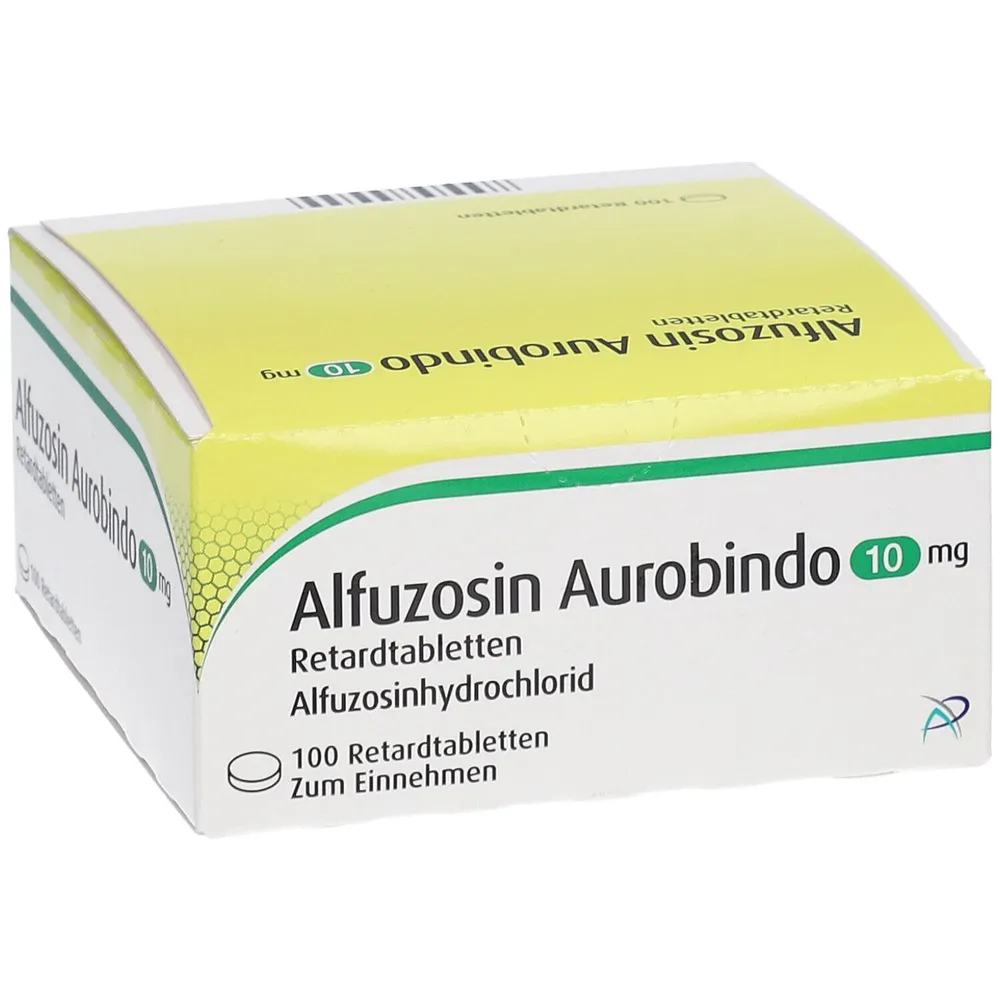
Table of Contents
- Package leaflet: Information for the user
- Alfuzosin Aurobindo 10 mg prolonged-release tablets
- 1. What Alfuzosina Aurobindo is and what it is used for
- 2. What you need to know before taking Alfuzosine Aurobindo
- 3. How to take Alfuzosin Aurobindo
- 4. Possible side effects
- 5. How to store Alfuzosina Aurobindo
- 6. Package contents and other information
Package leaflet: Information for the user
Alfuzosin Aurobindo 10 mg prolonged-release tablets
Equivalent medicine
Please read all of this leaflet carefully before you start taking this medicine because it contains important information for you.
- Keep this leaflet. You may need to read it again.
- If you have any questions, ask your doctor or pharmacist.
- This medicine has been prescribed for you only. Do not give it to other people, even if their symptoms are the same as yours, because it may be harmful.
- If you experience any side effect, including those not listed in this leaflet, inform your doctor or pharmacist. See section 4.
Contents of this leaflet:
- What Alfuzosin Aurobindo is and what it is used for
- What you need to know before taking Alfuzosin Aurobindo
- How to take Alfuzosin Aurobindo
- Possible side effects
- How to store Alfuzosin Aurobindo
- Contents of the pack and other information
1. What Alfuzosina Aurobindo is and what it is used for
Alfuzosina Aurobindo belongs to a group of medicines called alpha-1 blockers.
Alfuzosina Aurobindo is used to treat moderate to severe symptoms of benign prostatic hyperplasia. This is a condition in which the prostate gland becomes enlarged (hyperplasia), but this enlargement is not cancerous (benign). This condition occurs more frequently in older men.
The prostate gland is located below the bladder and surrounds the urethra (the tube through which urine passes out of the body). As men age, the prostate gland may enlarge and press on the urethra, narrowing it. This can cause urinary problems such as frequent need to urinate and difficulty urinating.
Alfuzosina Aurobindo works by relaxing the muscle of the prostate gland. This reduces narrowing of the urethra and makes it easier for urine to pass.
In some patients with benign prostatic hyperplasia, the prostate gland becomes so large that it completely blocks the flow of urine. This is called acute urinary retention.
- This is very painful and may require a short hospital stay.
- A thin, flexible tube (catheter) is inserted into the bladder. This drains the urine and relieves pain.
- During this time, Alfuzosina Aurobindo may be used to help urine flow again. This has been shown to help only in men over 65 years of age.
2. What you need to know before taking Alfuzosine Aurobindo
Do not take Alfuzosine Aurobindo
- If you are allergic to alfuzosine or to any of the other ingredients of this medicine (listed in section 6). Symptoms of an allergic reaction include: skin rash, swelling of lips, throat or tongue, difficulty swallowing or breathing.
- If you are allergic (hypersensitive) to substances similar to alfuzosine (such as terazosin or doxazosin).
- If you have, or have previously had, low blood pressure when standing up from a sitting or lying position (the medical term for this condition is "orthostatic hypotension"). This may cause dizziness, lightheadedness or fainting when you stand up or sit up quickly.
- If you are already taking another alpha-1 blocker (such as terazosin or doxazosin) or dopamine receptor agonists at the same time. See section "Other medicines and Alfuzosine Aurobindo". If in doubt, consult your doctor or pharmacist.
- If you have liver problems.
Warnings and precautions:
Talk to your doctor or pharmacist before taking Alfuzosine Aurobindo:
- if you have severe kidney problems;
- if you have a heart condition;
- if you have chest pain (angina);
- if you know you have an abnormality on your electrocardiogram (ECG), called "QT interval prolongation";
- if you are over 65 years old. This is due to the increased risk of developing low blood pressure (hypotension) and related side effects in elderly patients;
- before starting treatment with Alfuzosine Aurobindo, your doctor may perform certain tests to rule out other diseases that may cause the same symptoms as benign prostatic hyperplasia. Before treatment and periodically thereafter, a digital rectal examination may be performed and, if necessary, blood tests will be carried out;
- if you have ever experienced a painful and prolonged erection of the penis not related to sexual activity, either before or during treatment.
Other medicines and Alfuzosine Aurobindo
Inform your doctor or pharmacist if you are taking, have recently taken, or might take any
other medicine.
This is because Alfuzosine Aurobindo may affect how some other medicines work. Some
medicines may also affect how Alfuzosine Aurobindo works.
Do not take Alfuzosine Aurobindo if you are taking:
- other alpha-blockers, such as doxazosin, indoramin, prazosin, terazosin, tamsulosin or phenoxybenzamine, or dopamine receptor agonists.
Before taking this medicine, check with your doctor or pharmacist:
- if you have previously experienced a significant drop in blood pressure while taking an alpha-blocker (including previous use of alfuzosine). See the previous section for examples of other alpha-blockers;
- if you are taking a medicine for high blood pressure, as you may experience dizziness, weakness or sweating within a few hours after taking this medicine. If this happens, you should lie down until symptoms have completely disappeared. Discuss this with your doctor, who may decide to adjust your dose;
- if you are taking medicines for chest pain or angina (nitrates);
- if you are taking medicines for fungal infections (e.g. ketoconazole, itraconazole);
- if you are taking medicines for HIV (e.g. ritonavir);
- if you are taking certain medicines used to treat hepatitis C (e.g. ritonavir, ombitasvir and paritaprevir);
- if you are taking medicines for bacterial infections (e.g. clarithromycin, telithromycin);
- if you are taking medicines for depression (e.g. nefazodone);
- if you are taking ketoconazole tablets (used to treat Cushing's syndrome, when the body produces too much cortisol);
- if you are taking medicines for premature ejaculation (e.g. dapoxetine).
Surgery while taking Alfuzosine Aurobindo
-
If you are scheduled for surgery requiring general anesthesia, inform your doctor before the procedure that you are taking Alfuzosine Aurobindo. Your doctor may decide to stop
treatment with Alfuzosine Aurobindo 24 hours before surgery. This is because this medicine can lower blood pressure, which may be dangerous. -
If you are being treated for high blood pressure, your doctor should monitor your blood pressure regularly, especially at the beginning of treatment.
-
If you are scheduled for eye surgery for cataract (clouding of the lens), inform the specialist before the procedure that you are currently taking or have taken Alfuzosine Aurobindo. This is because Alfuzosine Aurobindo may cause complications during surgery, which can be managed if the specialist prepares in advance.
Alfuzosine Aurobindo with food, drinks and alcohol
- Take Alfuzosine Aurobindo after a meal.
- You may experience dizziness and weakness while taking Alfuzosine Aurobindo. If this occurs, do not drink alcohol.
Pregnancy, breastfeeding and fertility
This section does not apply, as alfuzosine is not used in women.
Driving and using machines
When taking Alfuzosine Aurobindo, you may experience dizziness and weakness. Adverse reactions such as a significant drop in blood pressure upon standing, together with dizziness, vertigo, visual disturbances and asthenia, may occur especially at the beginning of treatment. If this happens, do not drive and do not operate tools or machinery.
3. How to take Alfuzosin Aurobindo
Take this medicine exactly as prescribed by your doctor or pharmacist. If you have
any doubts, consult your doctor or pharmacist.
- Swallow the tablets whole with plenty of liquid (e.g. a glass of water).
- Do not break, crush or chew the tablets: this may compromise the release of the medicine into the body.
- Take the medicine after a meal.
- The first dose of the medicine should be taken at bedtime.
Benign prostatic hyperplasia
The usual dose is one prolonged-release tablet of Alfuzosin Aurobindo once daily (after
a meal).
Acute urinary retention
- Alfuzosin Aurobindo will be administered by your doctor on the day the catheter is inserted.
- You must continue taking Alfuzosin Aurobindo once daily.
- You must stop taking Alfuzosin Aurobindo the day after catheter removal (approximately 3–4 days in total).
Use in children and adolescents
Children
The use of Alfuzosin Aurobindo is not recommended in children and adolescents.
Elderly patients (> 65 years):
The usual dose is one prolonged-release tablet of Alfuzosin Aurobindo 10 mg once daily. Dose adjustment is not necessary in elderly patients (over 65 years).
Patients with mild to moderate renal impairment
Dose adjustment is not required for mild to moderate renal impairment.
If you take more Alfuzosin Aurobindo than you should
Contact your doctor or the local hospital emergency department immediately. Inform the doctor how many tablets you have taken. Lie down as much as possible to help reduce side effects. Do not attempt to drive to the hospital.
If you forget to take Alfuzosin Aurobindo
Do not take a double dose to make up for the missed dose. Skip the missed dose and take the next tablet as prescribed.
If you stop taking Alfuzosin Aurobindo
Continue taking the tablets, even if your symptoms improve. Stop treatment only if your doctor tells you to do so. Symptoms will be better controlled if you continue taking the same dose of this medicine.
If you have any doubts about how to use this medicine, consult your doctor or pharmacist.
4. Possible side effects
Like all medicines, this medicine can cause side effects, although not everybody gets them.
These side effects are more likely to occur at the beginning of treatment.
Chest pain (angina) (new onset, worsening or recurrence)
This normally only happens if you have previously had angina. If you experience chest pain, stop taking the
tablets immediately and contact your doctor or go to hospital. This occurs in less than 1 in 10,000 people.
Allergic reactions
You may experience symptoms of angioedema, such as skin rash with redness and lumps, swelling (of the eyelids, face, lips, mouth and tongue), difficulty breathing or swallowing.
These are symptoms of an allergic reaction. If this happens, stop taking the tablets immediately and contact your doctor or go to hospital. This occurs in less than 1 in 10,000 people.
Other side effects include:
Common (affects less than 1 in 10 people)
- dizziness;
- headache;
- feeling unwell (nausea);
- stomach pain;
- weakness or fatigue.
Uncommon (affects less than 1 in 100 people)
- dizziness, lightheadedness or fainting when standing up or sitting down quickly (postural hypotension);
- rapid heartbeat (tachycardia), pounding heartbeat in the chest and irregular heartbeat (palpitations);
- drowsiness;
- runny nose, itching, sneezing and nasal congestion;
- diarrhoea;
- dry mouth;
- skin rashes and itching;
- urinary incontinence;
- fluid retention (may cause swelling of arms and legs);
- chest pain;
- hot flushes;
- general feeling of being unwell;
- vision problems.
Very rare (affects less than 1 in 10,000 people)
- hepatotoxicity;
- itchy, blistering rash (urticaria).
Additional side effects (frequency not known) which may occur are:
If you are undergoing cataract surgery (clouding of the lens), the pupil may not dilate properly and the iris (the coloured part of the eye) may become floppy during the procedure.
- Irregular and rapid heartbeat (atrial fibrillation);
- reduced white blood cell count (neutropenia). Signs may include more frequent infections, sore throat or mouth ulcers;
- increased risk of bleeding (including nosebleeds and/or bleeding gums) and bruising. This may be related to a blood disorder called "thrombocytopenia", i.e. a reduction in the number of platelets in the blood;
- abnormal liver function (liver problems). Signs may include yellowing of the skin and whites of the eyes;
- if you are undergoing cataract surgery (clouding of the lens) and are currently taking or have previously taken Alfuzosina Aurobindo, the pupil may not dilate properly and the iris (the coloured circular part of the eye) may become floppy during the procedure. This only occurs during surgery, and it is important that the specialist is aware of this possibility, as the surgery may need to be performed differently (see section “Surgery during treatment with Alfuzosina Aurobindo”);
- prolonged, abnormal, often painful erection of the penis not related to sexual activity (priapism);
- malaise (vomiting);
- stroke (inadequate blood flow to the brain). This is more likely in patients who have previously had problems with blood flow to the brain.
Reporting of side effects
If you experience any side effects, including those not listed in this leaflet, talk to your doctor or pharmacist.
You can also report side effects directly via the national reporting system at https://www.aifa.gov.it/content/segnalazioni-reazioni-avverse.
By reporting side effects, you can help provide more information on the safety of this medicine.
5. How to store Alfuzosina Aurobindo
Keep this medicine out of the sight and reach of children.
This medicine does not require any special storage conditions.
Do not use this medicine after the expiry date stated on the label, carton, or bottle after EXP. The expiry date refers to the last day of that month.
Do not dispose of any medicine via wastewater or household waste. Ask your pharmacist how to dispose of medicines you no longer use. This will help protect the environment.
6. Package contents and other information
What Alfuzosin Aurobindo contains
- The active substance is alfuzosin hydrochloride. Each prolonged-release tablet contains 10 mg of alfuzosin hydrochloride.
- Other components are:
Tablet core: hypromellose (E464), hydrogenated vegetable oil, povidone (K-30) (E1201), calcium hydrogen phosphate, carbomer, anhydrous colloidal silica (E551), magnesium stearate (E572).
Coating: hypromellose (E464), propylene glycol, titanium dioxide (E171).
The tablets have a prolonged-release effect, meaning that after administration the active substance is not released immediately from the tablet but gradually, thus providing a longer duration of action.
Description of the appearance of Alfuzosin Aurobindo and package contents
Prolonged-release tablets.
White to off-white, round, biconvex, film-coated tablets, printed with "X" on one side and "47" on the other.
Alfuzosin Aurobindo tablets are available in blister packs made of PVC/PVdC/Aluminium and in white opaque HDPE bottles containing silica gel.
Pack sizes:
Blister packs: 30, 50 and 100 tablets.
HDPE bottles: 30, 500 and 1000 tablets.
Not all pack sizes may be marketed.
Marketing Authorisation Holder
Aurobindo Pharma (Italia) S.r.l.
Via San Giuseppe 102
21047 Saronno (VA)
Italy
Manufacturers
APL Swift Services (Malta) Limited – HF26, Hal Far Industrial Estate, Hal Far, Birzebbugia, BBG 3000 – Malta
This medicinal product is authorised in the European Economic Area countries under the following names:
Cyprus: Alfuzosin Aurobindo 10 mg δισκία παρατεταμένης
Czech Republic: Alfuzosin Aurovitas
Germany: Alfuzosin Aurobindo 10 mg Retardtabletten
Italy: Alfuzosina Aurobindo
Ireland: Alfu 10 mg prolonged release tablets
Malta: Zochek 10 mg prolonged-release tablets
Netherlands: Alfuzosine HCl Aurobindo 10 mg, tabletten met verlengde afgifte
Spain: Alfuzosina Aurovitas 10 mg comprimidos de liberación prolongada EFG