Alendronate acid Aurobindo
Italy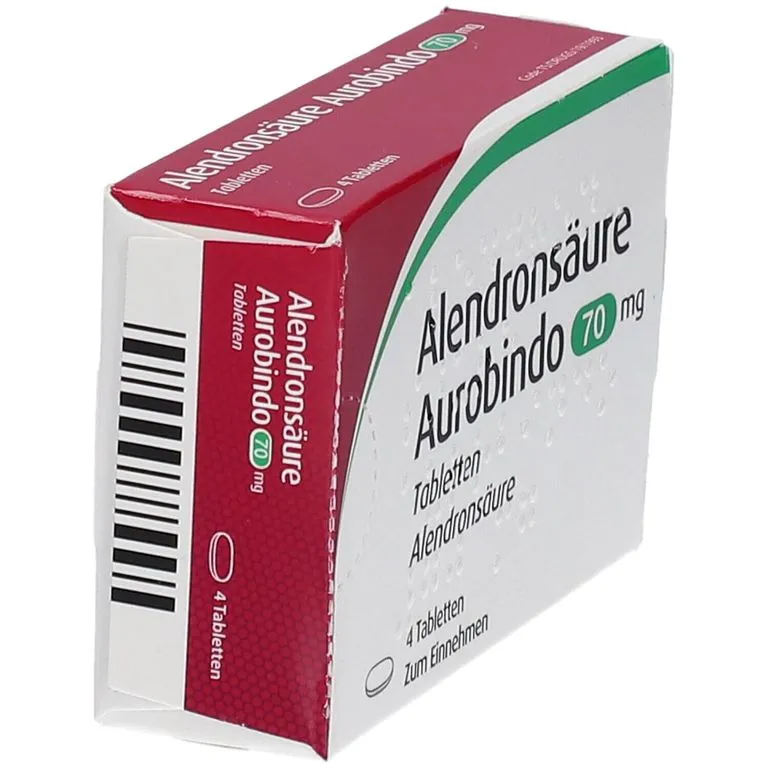
Table of Contents
- Package leaflet: Information for the user
- Alendronic Acid Aurobindo 70 mg tablets
- 1. What is Alendronic Acid Aurobindo and what is it used for
- 2. What you need to know before taking Alendronic Acid Aurobindo
- 3. How to take Alendronic Acid Aurobindo
- 4. Possible side effects
- 5. How to store Alendronic Acid Aurobindo
- 6. Package contents and other information
Package leaflet: Information for the user
Alendronic Acid Aurobindo 70 mg tablets
Generic Medicine
Please read all of this leaflet carefully before you take this medicine because it contains important
information for you.
Keep this leaflet. You may need to read it again.
If you have any questions, ask your doctor or pharmacist.
This medicine has been prescribed for you only. Do not give it to other people, even if their symptoms are
the same as yours, because it may be harmful.
If you experience any adverse reaction, including those not listed in this leaflet, contact your doctor or
pharmacist. See section 4.
Contents of this leaflet:
What Alendronic Acid Aurobindo is and what it is used for
What you need to know before taking Alendronic Acid Aurobindo
How to take Alendronic Acid Aurobindo
Possible side effects
How to store Alendronic Acid Aurobindo
Contents of the pack and other information
1. What is Alendronic Acid Aurobindo and what is it used for
What is Alendronic Acid Aurobindo?
Alendronic acid belongs to a group of medicines called "bisphosphonates". Alendronic Acid Aurobindo prevents bone tissue loss that occurs in women after menopause and promotes bone rebuilding. It reduces the risk of vertebral and hip fractures.
What is Alendronic Acid Aurobindo used for?
Your doctor has prescribed Alendronic Acid Aurobindo for the treatment of osteoporosis. Alendronic Acid Aurobindo reduces the risk of vertebral and hip fractures.
Alendronic Acid Aurobindo must be taken once a week
What is osteoporosis?
Osteoporosis is thinning and weakening of the bones. It is common in women after menopause. During menopause, the ovaries stop producing female hormones, the estrogens that help maintain a woman's healthy skeleton. As a result, bone tissue is lost and the bone becomes weaker. The risk of osteoporosis is greater the earlier a woman reaches menopause. In its early stages, osteoporosis usually has no symptoms. If left untreated, fractures may occur. Although fractures are usually painful, fractures of the spinal bones may go unnoticed until they cause a decrease in height. Fractures can occur during daily activities, such as lifting weights or with minor trauma that would not cause fractures in normal bone. Fractures typically occur in the hip, spine, or wrist and may cause pain or even significant problems such as curvature of the back ("dowager's hump") and loss of mobility.
How can osteoporosis be treated?
Osteoporosis can be treated and it is never too late to start treatment. Alendronic Acid Aurobindo not only prevents bone tissue loss but also helps rebuild bone that may have been lost and reduces the risk of vertebral and hip fractures.
Along with treatment with alendronic acid, your doctor may suggest that you make lifestyle changes to improve the condition, such as:
Stop smoking: Smoking appears to increase the rate at which bone tissue is lost and therefore may increase the risk of fractures.
Physical exercise: Like muscles, bones need physical activity to stay strong and healthy. Consult your doctor before starting any exercise program.
Balanced diet: Your doctor can provide information about diet or the possible need to take dietary supplements (especially calcium and Vitamin D).
2. What you need to know before taking Alendronic Acid Aurobindo
Do not take Alendronic Acid Aurobindo
if you are allergic to alendronate sodium trihydrate or to any of the other ingredients of this
medicine (listed in section 6).
if you have certain problems with your oesophagus (the tube connecting your mouth to your stomach), such as narrowing or difficulty swallowing
if you are unable to stand or sit upright for at least 30 minutes
if your doctor has told you that you have low levels of calcium in your blood
If you think you fall into any of these categories, do not take the tablets. Consult your doctor and follow the instructions given.
Warnings and precautions
It is important to inform your doctor before starting treatment with Alendronic Acid tablets if:
you have kidney problems;
you have difficulty swallowing or gastrointestinal disorders;
your doctor has told you that you have Barrett’s oesophagus (a condition associated with changes in the cells lining the lower part of the oesophagus);
you have been told that you have low levels of calcium in your blood;
you have poor dental health, gum disease, are scheduled for a tooth extraction, or do not regularly receive dental care;
you have cancer;
you are undergoing chemotherapy or radiotherapy;
you are taking corticosteroids (such as prednisone or dexamethasone);
you are or have been a smoker (as this may increase the risk of dental problems).
Before starting treatment with Alendronic Acid Aurobindo, you may be required to undergo a dental examination.
During treatment with Alendronic Acid Aurobindo, it is important to maintain good oral hygiene. You should have regular dental check-ups throughout the treatment and contact your doctor or dentist if you experience any problems with your mouth or teeth, such as tooth loss, pain or swelling.
Irritation, inflammation or ulceration of the oesophagus (the tube connecting the mouth to the stomach) may occur, often with symptoms such as chest pain, burning sensation in the upper stomach, difficulty or pain when swallowing, especially if patients do not drink a full glass of water and/or lie down within the first 30 minutes after taking Alendronic Acid Aurobindo.
These adverse effects may worsen if patients continue taking Alendronic Acid Aurobindo after experiencing these symptoms.
Other medicines and Alendronic Acid Aurobindo
Calcium supplements, antacids and certain oral medicines may interfere with the absorption of Alendronic Acid Aurobindo if taken at the same time.
Therefore, it is important to follow the instructions provided in section 3 “How to take Alendronic Acid Aurobindo”.
Some medicines used for rheumatism or long-term pain called NSAIDs (e.g. aspirin or ibuprofen) may cause irritation of the digestive tract. Therefore, caution is required when these medicines are taken together with Alendronic Acid Aurobindo.
Inform your doctor if you are taking, have recently taken or might take any other medicines.
Taking Alendronic Acid Aurobindo with food, drinks and alcohol
Food and drinks (including mineral water) may reduce the effectiveness of Alendronic Acid Aurobindo if taken at the same time. Therefore, it is important to follow the instructions given in section 3 “How to take Alendronic Acid Aurobindo”.
Children and adolescents
Alendronic Acid Aurobindo must not be administered to children and adolescents.
Pregnancy, breast-feeding and fertility
If you are pregnant, think you may be pregnant, planning to become pregnant, or are breast-feeding, consult your doctor or pharmacist before taking this medicine.
Alendronic Acid Aurobindo is indicated only for postmenopausal women. Do not take Alendronic Acid Aurobindo if you are pregnant, think you may be pregnant, or are breast-feeding.
Driving and using machines
Undesirable effects have been reported with Alendronic Acid Aurobindo (e.g. blurred vision, dizziness and severe bone, joint or muscle pain) which may affect your ability to drive or operate machinery. Individual responses to Alendronic Acid Aurobindo may vary (see section 4 “Possible side effects”).
3. How to take Alendronic Acid Aurobindo
Take this medicine exactly as instructed by your doctor. If you have any doubts, consult your
doctor or pharmacist.
Take one tablet of Alendronic Acid Aurobindo once a week.
To benefit from treatment, it is important to follow carefully the instructions below:
Choose the day of the week that best fits your routine. Take one tablet of
Alendronic Acid Aurobindo once a week on the chosen day.
It is very important that you follow instructions 2), 3), 4), 5), and 6) to help the tablet of Alendronic Acid Aurobindo
reach the stomach and help reduce the risk of irritating the oesophagus (the tube connecting the mouth to the stomach).
After getting up from bed, and before taking any food, drink, or other medicine during the day, swallow the
tablet of Alendronic Acid Aurobindo whole with a full glass of tap water (not mineral water) (at least 200 ml or 7 fl. oz.).
Do not take it with mineral water (still or sparkling).
Do not take it with coffee or tea.
Do not take it with juices or milk.
Do not crush, chew, or let the tablet dissolve in your mouth.
Do not lie down – remain upright (sitting, standing, or walking) – for at least 30 minutes after swallowing the tablet. Do not lie down until you have eaten something.
Alendronic Acid Aurobindo must not be taken at bedtime or before getting up from bed in the morning.
If you experience difficulty or pain when swallowing, chest pain, or new or worsening heartburn, stop taking Alendronic Acid Aurobindo and contact your doctor.
After swallowing the tablet of Alendronic Acid Aurobindo, wait at least 30 minutes before eating, drinking, or taking any other medicines of the day, including antacids, calcium supplements, and vitamins. Alendronic Acid Aurobindo is effective only when taken on an empty stomach.
If you take more Alendronic Acid Aurobindo than you should
If you accidentally take too many tablets, drink a full glass of milk and contact your doctor immediately. Do not induce vomiting and do not lie down.
What to do if you forget to take Alendronic Acid Aurobindo
If you forget a dose, take one tablet the following morning. Do not take two tablets on the same day. Then resume taking the tablet on your chosen day of the week.
If you stop taking Alendronic Acid Aurobindo
It is important to continue taking Alendronic Acid Aurobindo for as long as prescribed by your doctor.
Alendronic Acid Aurobindo is effective in treating osteoporosis only if you continue taking the tablets.
If you have any questions about how to use this medicine, ask your doctor or pharmacist.
4. Possible side effects
Like all medicines, this medicine can cause side effects, although not everyone gets them.
The frequency of the possible side effects listed below is defined using the following convention:
Very common (affects at least 1 in 10 people treated)
Common (affects at least 1 in 100 and less than 1 in 10 people treated)
Uncommon (affects at least 1 in 1,000 and less than 1 in 100 people treated)
Rare (affects at least 1 in 10,000 and less than 1 in 1,000 people treated)
Very rare (affects less than 1 in 10,000 people treated)
Very common:
Bone, muscle and/or joint pain, sometimes severe;
Common:
Burning sensation; difficulty swallowing; pain when swallowing; oesophageal ulcers (the tube connecting the mouth to the stomach) causing chest pain, burning sensation or difficulty or pain when swallowing;
Joint swelling;
Abdominal pain; stomach discomfort or belching after meals; constipation; feeling of fullness or bloating in the stomach; diarrhoea; flatulence;
Hair loss; itching;
Headache; dizziness;
Tiredness, swelling of the hands or legs.
Uncommon:
Nausea, vomiting;
Irritation or inflammation of the oesophagus (the tube connecting the mouth to the stomach) or stomach;
Black or dark stools;
Blurred vision; eye pain or redness;
Skin rash, skin redness;
Flu-like symptoms, such as muscle aches, general feeling of being unwell, and sometimes fever, usually at the beginning of treatment;
Taste disturbances.
Rare:
Allergic reactions such as hives; swelling of the face, lips, tongue and/or throat, possibly causing difficulty breathing and swallowing;
Symptoms due to low calcium levels in the blood, including muscle cramps or spasms and/or tingling in the fingers or around the mouth;
Peptic or stomach ulcers (sometimes severe or with bleeding);
Narrowing of the oesophagus (the tube connecting the mouth to the stomach);
Skin rash worsened by exposure to sunlight; severe skin reactions;
Pain in the mouth and/or jaw, swelling or ulcers inside the mouth, numbness or a sensation of heaviness in the jaw, or tooth loss. These could be signs of bone damage in the jaw (osteonecrosis), usually associated with delayed healing and infection, often following dental extraction. Contact your doctor and dentist if you experience such symptoms.
Unusual fracture of the femur may rarely occur, particularly in patients on long-term treatment. Contact your doctor if you experience pain, weakness or discomfort in the thigh, hip or groin, as this may be an early sign of a possible femur fracture.
Mouth ulcers when tablets are chewed or sucked.
Very rare (may affect up to 1 in 10,000 people):
- Seek medical advice if you experience ear pain, ear discharge and/or ear infection. These episodes could be signs of bone damage in the ear.
Inform your doctor or pharmacist immediately if you notice the onset of these or any other unusual symptoms.
It is helpful to record any symptoms that occur, when they started, and how long they last.
Reporting of side effects
If you get any side effects, including ones not listed in this leaflet, talk to your doctor or pharmacist. You can also report side effects directly via the national reporting system at www.agenziafarmaco.gov.it/it/responsabili. By reporting side effects, you can help provide more information on the safety of this medicine.
5. How to store Alendronic Acid Aurobindo
Keep this medicine out of the sight and reach of children.
This medicine does not require any special storage conditions.
Do not use this medicine after the expiry date stated on the pack after EXP. The expiry date refers to the last day of that month.
Do not dispose of medicines via wastewater or household waste. Ask your pharmacist how to dispose of medicines you no longer use. This will help protect the environment.
6. Package contents and other information
What Acido Alendronico Aurobindo contains
- The active substance is alendronic acid. Each tablet contains 70 mg of alendronic acid (equivalent to 91.363 mg of alendronate sodium trihydrate).
- The other components are: microcrystalline cellulose, maize starch, sodium starch glycolate (Type A), povidone (Kollidon 30) and magnesium stearate.
Description of the appearance of Acido Alendronico Aurobindo and contents of the pack
White to off-white, oval, biconvex, uncoated tablets, marked with “F” on one side and “21” on the other. Tablet size is 12.8 mm x 7.0 mm.
The tablets are supplied in PVC/Aclar - aluminium blister packs.
Pack sizes: 2, 4, 8, 12, 20, 30, 40, 50 or 60 tablets.
Not all pack sizes may be marketed.
Marketing Authorisation Holder
Aurobindo Pharma (Italia) S.r.l
via San Giuseppe 102
21047 Saronno (VA)
Italy
Manufacturer
APL Swift Services (Malta) Limited
HF26, Hal Far Industrial Estate, Hal Far,
Birzebbugia, BBG 3000.
Malta
This medicinal product is authorised in the European Economic Area countries under the following names:
Czech Republic: Alendronic acid Aurobindo 70 mg tablety
Cyprus: Alendronic Acid Aurobindo 70 mg δισκία
Denmark: Alendronat “Aurobindo”
Finland: Alendronat Aurobindo 70 mg tabletit
Italy: Acido Alendronico Aurobindo
Malta: Alendronic Acid 70 mg tablets
Netherlands: Alendroninezuur Aurobindo 70 mg, tabletten
Poland: Alendronat Aurobindo
Romania: Acid Alendronic Aurobindo 70 mg comprimate
Spain: Acido Alendrónico semanal Aurovitas Spain 70 mg comprimidos EFG
Sweden: Alendronat Aurobindo 70 mg tabletter
United Kingdom: Alendronic Acid 70 mg tablets