Aldara
Italy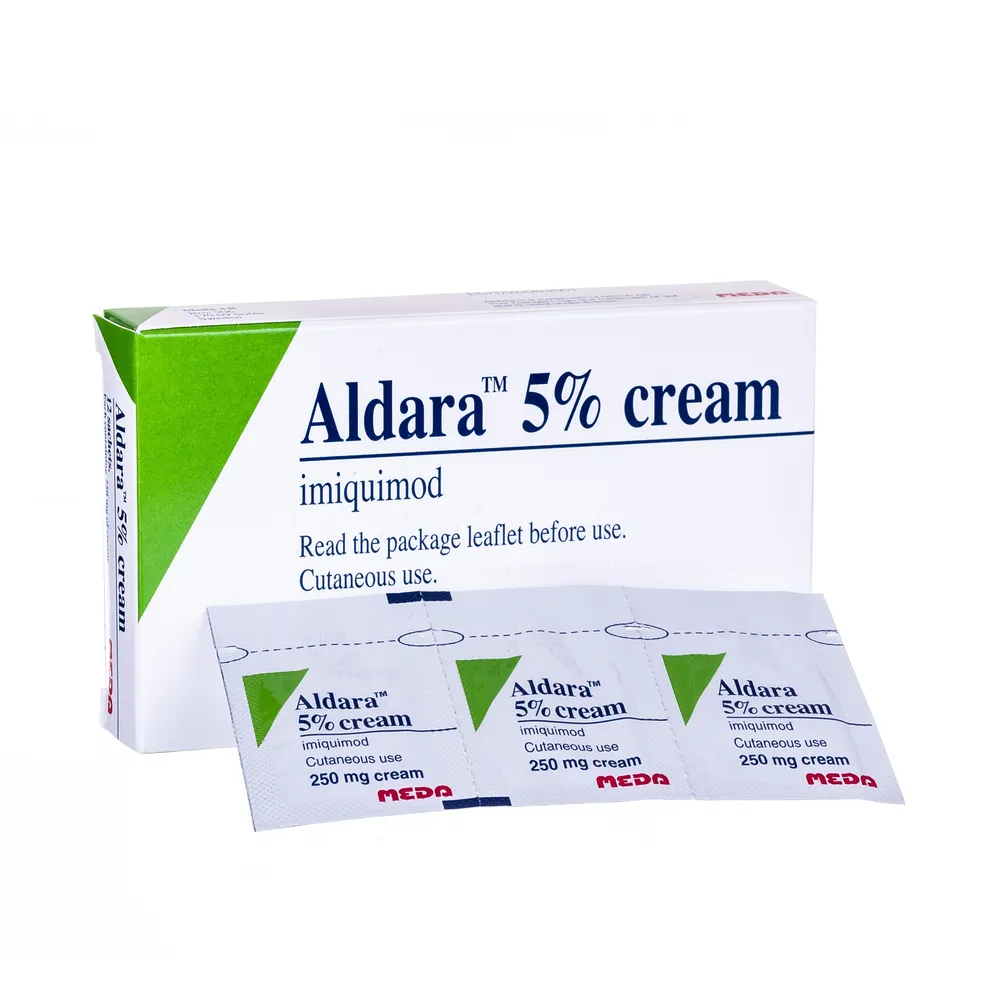
Table of Contents
Package leaflet: Information for the patient
Aldara 5% cream
imiquimod
Please read this leaflet carefully before using this medicine because it contains important information for you.
- Keep this leaflet. You may need to read it again.
- If you have any questions, ask your doctor or pharmacist.
- This medicine has been prescribed for you only. Do not give it to others, even if their symptoms are the same as yours, as it may be harmful. If you experience any adverse reactions, including those not listed in this leaflet, contact your doctor or pharmacist. See section 4.
Contents of this leaflet
- What Aldara cream is and what it is used for
- What you need to know before using Aldara cream
- How to use Aldara cream
- Possible side effects
- How to store Aldara cream
- Contents of the pack and other information
1. What Aldara cream is and what it is used for
Aldara cream may be used in three different situations. Aldara cream may be prescribed by a doctor
for the treatment of:
- Genital warts (condylomata acuminata) appearing on the surface of the genitals (sexual organs) and around the anus (perianal area)
- Superficial basal cell carcinoma. This is a common, slowly growing skin cancer with very little risk of spreading to other parts of the body. It usually occurs in elderly or middle-aged individuals, particularly those with fair skin, and is due to excessive exposure to sunlight. If left untreated, basal cell carcinoma can be disfiguring, especially on the face. It is therefore important to recognize it and treat it early.
- Actinic keratosis. Actinic keratosis is characterized by rough patches of skin found in individuals who have had excessive sun exposure over their lifetime. Some of these patches are pigmented, others are grayish, pink, red, or brown. They may be flat and partially overlapping, or raised, rough, hardened, and verrucous. Aldara should only be used for flat actinic keratoses on the face and scalp in patients with an intact immune system, when the doctor has decided that Aldara is the most appropriate treatment for you. Aldara cream helps your body's immune system to produce natural substances that help fight superficial basal cell carcinoma, actinic keratosis, or the virus responsible for genital warts.
2. What you need to know before using Aldara cream
Do not use Aldara cream
- if you are allergic to imiquimod or to any of the other ingredients of this medicine (listed in section 6). Warnings and precautions Talk to your doctor or pharmacist before using Aldara cream
- If you have previously used Aldara cream or another similar medicine, inform your doctor before starting this treatment.
- If you suffer from autoimmune diseases.
- If you have undergone an organ transplant.
- Do not use Aldara cream until the area to be treated has completely healed after a previous medical or surgical treatment.
- Avoid contact with the eyes, lips, and nostrils. In case of accidental contact, remove the cream by rinsing with water.
- Do not apply the cream to internal areas.
- Do not apply more cream than prescribed by your doctor.
- Do not cover genital warts with bandages or similar materials after applying Aldara cream.
- If you experience discomfort in the treated area, remove the cream by washing with water and mild soap. Once the discomfort has subsided, you may resume treatment.
- Inform your doctor if you have abnormal blood test results (blood cell counts).
Due to the mechanism of action of Aldara cream, there is a possibility that the cream could worsen a pre-existing inflammation in the treated area.
- If you are being treated for genital warts, follow these additional precautions:
Men with warts under the foreskin should retract the foreskin and clean the underlying area daily. If this cleaning is not performed daily, symptoms such as tightening, swelling (edema), and loss of skin covering may occur, leading to difficulty in retracting the foreskin. If you experience such symptoms, stop treatment immediately and contact your doctor.
If you have open wounds: do not start treatment with Aldara cream until they are completely healed.
If you have internal warts: do not use Aldara cream in the urethra (the opening through which urine passes), in the vagina, cervix, or in any internal location of the anus (rectum).
Do not use this medicine for more than one treatment cycle if your doctor has diagnosed you with severe immune system problems, whether due to disease or caused by other medicines you are taking.
If you are HIV-positive, you must inform your doctor, as Aldara cream has shown limited effectiveness in this group of patients.
If you decide to have sexual intercourse while warts are still present, apply Aldara cream after—not before—intercourse. Aldara cream may damage condoms or diaphragms, so it should not remain on the skin during sexual activity. Remember that Aldara cream does not protect against the risk of transmission of HIV or other sexually transmitted infections.
- If you are being treated for basal cell carcinoma or actinic keratosis, follow these additional precautions: do not use sunlamps or tanning beds, and avoid exposure to sunlight as much as possible during treatment with Aldara cream. Wear protective clothing and wide-brimmed hats when going outdoors. During treatment with Aldara cream and until healing is complete, the treated area will likely look very different from normal skin. Children and adolescents Use is not recommended in children and adolescents. Other medicines and Aldara cream Inform your doctor or pharmacist if you are taking, have recently taken, or might take any other medicines. No medicines are known to be incompatible with Aldara cream. Pregnancy and breastfeeding Ask your doctor or pharmacist for advice before taking any medicine. You must inform your doctor if you are pregnant or planning to become pregnant. Your doctor will then explain to you the risks and benefits of using Aldara cream during pregnancy. Animal studies have not shown any direct or indirect harmful effects during pregnancy. Do not breastfeed during treatment with Aldara cream, as it is not known whether imiquimod is excreted in breast milk. Driving and using machines This medicine does not alter or alters only insignificantly the ability to drive and use machinery. Aldara cream contains methyl hydroxybenzoate, propyl hydroxybenzoate, cetyl alcohol, stearyl alcohol, and benzyl alcohol. Methyl hydroxybenzoate (E218) and propyl hydroxybenzoate (E216) may cause allergic reactions (including delayed reactions). Cetyl alcohol and stearyl alcohol may cause local skin reactions, e.g., contact dermatitis. This medicine contains 5 mg of benzyl alcohol per sachet. Benzyl alcohol may cause allergic reactions and mild local irritation.
3. How to use Aldara cream
Children and adolescents:
Use is not recommended in children and adolescents.
Adults:
Use this medicine exactly as directed by your doctor. If you have any doubts, consult your doctor or pharmacist.
Wash your hands thoroughly before and after applying the cream. Do not cover the treated area with bandages or plasters after applying Aldara cream.
Always open a new sachet each time you use the cream. Discard the sachet together with any remaining cream after use. Do not keep an opened sachet for later use.
The frequency and duration of treatment vary depending on whether it is for genital warts, basal cell carcinoma, or actinic keratosis (see specific instructions for each indication).
Aldara Cream Application Instructions
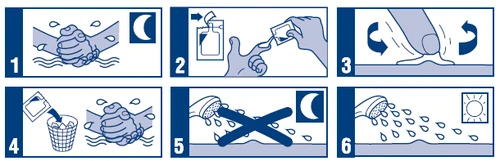
- If you are being treated for genital warts: Application instructions – (Monday, Wednesday, Friday)
- Before going to bed, wash your hands and the affected area with water and mild soap. Dry thoroughly.
- Open a new sachet and squeeze a small amount of cream onto the tip of your finger.
- Apply a thin layer of Aldara cream to the previously washed and dried genital warts area, and gently rub in until the cream is completely absorbed.
- After applying the cream, discard the opened sachet and wash your hands with water and mild soap.
- Leave Aldara cream on the warts for approximately 6–10 hours. During this time, avoid bathing or showering.
- After approximately 6–10 hours, wash the application area with water and mild soap. Apply Aldara cream three times a week. For example, apply the cream on Monday, Wednesday, and Friday. Each sachet contains enough cream to cover an area of 20 cm² of warts.
Men who have warts located under the foreskin should retract it and clean the area daily (see section 2 "Take special care").
Continue using Aldara cream as instructed until the warts have completely healed (approximately half of women and men achieve complete healing after 8 and 12 weeks of treatment, respectively, although in some cases healing may occur as early as 4 weeks).
Do not use Aldara cream for more than 16 weeks to treat each episode of genital warts.
If you feel that the effect of Aldara cream is too strong or too weak, inform your doctor or pharmacist.
- If you are being treated for basal cell carcinoma:
Application instructions – (Monday, Tuesday, Wednesday, Thursday, Friday)
- Before going to bed, wash your hands and the treatment area with water and mild soap. Dry thoroughly.
- Open a new sachet and squeeze a small amount of cream onto the tip of your finger.
- Apply Aldara cream to the affected area and to the surrounding skin within a 1 cm (approximately 0.5 inches) radius. Gently massage the cream into the area until completely absorbed.
- After applying the cream, discard the opened sachet and wash your hands with water and mild soap.
- Leave Aldara cream on the skin for approximately 8 hours. During this time, avoid bathing or showering.
- After approximately 8 hours, wash the application area with water and mild soap. Apply a sufficient amount of Aldara cream to cover the treatment area and a 1 cm surrounding margin, once daily for five consecutive days per week for 6 weeks. For example, apply the cream from Monday to Friday. Do not apply the cream on Saturday and Sunday.
- If you are being treated for actinic keratosis: Application instructions – (Monday, Wednesday, Friday)
- Before going to bed, wash your hands and the treatment area with water and mild soap. Dry thoroughly.
- Open a new sachet and squeeze a small amount of cream onto the tip of your finger.
- Apply the cream only to the affected area. Gently massage the cream into the skin until completely absorbed.
- After applying the cream, discard the opened sachet and wash your hands with water and mild soap.
- Leave Aldara cream on the skin for approximately 8 hours. During this time, avoid bathing or showering.
- After approximately 8 hours, wash the application area with water and mild soap. Apply Aldara cream three times a week. For example, apply the cream on Monday, Wednesday, and Friday. Each sachet contains enough cream to cover an area of 25 cm² (approximately 4 inches). Continue treatment for 4 weeks. Four weeks after completion of the first course of treatment, your doctor will examine your skin. If lesions have not cleared, an additional 4-week course of treatment may be necessary.
If you use more Aldara cream than you should: Remove any excess by washing with water and mild soap. Once any skin reaction has resolved, treatment may be resumed. In case of accidental ingestion of Aldara cream, contact your doctor immediately.
If you forget to use Aldara cream: If you miss a dose, apply the cream as soon as possible and continue according to the prescribed schedule. Do not apply the cream more than once a day.
If you have any questions about the use of this medicine, consult your doctor or pharmacist.
4. Possible side effects
The frequency of side effects is defined as follows:
Very common side effects (may occur in more than 1 in 10 patients)
Common side effects (may occur in fewer than 1 in 10 patients)
Uncommon side effects (may occur in fewer than 1 in 100 patients)
Rare side effects (may occur in fewer than 1 in 1,000 patients)
Very rare side effects (may occur in fewer than 1 in 10,000 patients)
Like all medicines, this medicine can cause side effects, although not everyone gets them.
If you do not feel well during treatment with Aldara cream, inform your doctor or pharmacist as soon as possible.
Some patients have observed changes in skin colour in the area where Aldara cream was applied. Although such changes usually tend to improve over time, they may be permanent in some patients.
If your skin reacts badly to the application of Aldara cream, stop treatment, wash the area with water and mild soap, and contact your doctor or pharmacist.
In some patients, a reduction in the number of blood cells has been observed. A decrease in blood cell count may make you more susceptible to infections, cause bruising more easily, or lead to fatigue.
Some patients with autoimmune diseases may experience a worsening of their condition. If you notice any changes during treatment with Aldara, inform your doctor.
Serious skin reactions have been reported rarely. If you notice skin lesions or spots that start as small red areas and spread to become similar to small target-like lesions, accompanied by symptoms such as itching, fever, general feeling of malaise, joint problems, visual disturbances, burning, pain or itching in the eyes, or mouth pain, stop using Aldara cream and contact your doctor immediately.
In a small number of patients, hair loss has occurred in the treated area or surrounding region.
- If you are being treated for genital warts:
Many of the side effects of Aldara cream are due to its local action on the skin.
Very common side effects include redness (in 61% of patients), erosions (in 30% of patients), flaking and swelling. Subcutaneous hardening, small ulcerations, crust formation during the healing process, and small subcutaneous blisters may also occur. You may also experience itching (in 32% of patients), burning (in 26% of patients), or pain (in 8% of patients) at the application sites of Aldara cream. Most of these reactions are moderate, and the skin returns to normal within 2 weeks after stopping treatment.
Commonly, headache has been reported in some patients (in 4% or fewer). Uncommonly, fever and flu-like syndrome, muscle and joint pain, uterine prolapse, pain during sexual intercourse in women, erectile dysfunction, increased sweating, nausea, stomach and intestinal symptoms, ringing or buzzing in the ears, redness, fatigue, dizziness, migraine, tingling, insomnia, depression, loss of appetite, enlarged glands, bacterial, fungal and viral infections (e.g. cold sores), vaginal infections and oral candidiasis, cough and colds with sore throat.
Very rarely, severe or painful reactions have occurred, particularly in cases of excessive use of the product beyond the recommended amount. Painful skin reactions at the vaginal opening have caused difficulty urinating in women. If such situations occur, you must contact your doctor immediately.
- If you are being treated for basal cell carcinoma:
Many of the side effects of Aldara cream are due to its local action on the skin.
Local skin reactions may be a sign that the medicine is working properly.
Very commonly, mild itching may be felt on the treated skin.
Common side effects include: tingling, small skin swellings, pain, burning, irritation, bleeding, redness or rash.
If a skin reaction becomes excessively bothersome during treatment, consult your doctor. Your doctor may advise you to stop applying Aldara cream for a few days.
If pus or other signs of infection appear, discuss this with your doctor. In addition to skin reactions, other common side effects include enlarged lymph glands and back pain.
Uncommonly, some patients have reported changes at the application site (discharge, inflammation, swelling, crusting, skin lesions, blisters, dermatitis) or irritability, nausea, dry mouth, flu-like symptoms and fatigue.
- If you are being treated for actinic keratosis:
Many of the side effects of Aldara cream are due to its local action on the skin.
Local skin reactions may be a sign that the medicine is working properly.
Very commonly, mild itching may be felt on the treated skin.
Common side effects include: pain, burning, irritation or redness.
If a skin reaction becomes excessively bothersome during treatment, consult your doctor. Your doctor may advise you to stop applying Aldara cream for a few days (i.e. take a short break from treatment).
If pus or other signs of infection appear, discuss this with your doctor. In addition to skin reactions, other common side effects include headache, loss of appetite, nausea, muscle and joint pain, and fatigue.
Uncommonly, some patients have observed changes at the application site (bleeding, inflammation, discharge, sensitisation, oedema, small skin swellings, chills, crusting or scarring, ulceration, or a sensation of heat or discomfort), or inflammation of the nasal lining, nasal congestion, influenza or flu-like symptoms, depression, eye irritation, eyelid swelling, sore throat, diarrhoea, actinic keratosis, redness, facial swelling, ulcers, limb pain, fever, weakness or tremors.
Reporting of side effects
If you experience any side effect, including those not listed in this leaflet, talk to your doctor or pharmacist. You can also report side effects directly via the national reporting system listed in Annex V.
By reporting side effects, you can help provide more information on the safety of this medicine.
5. How to store Aldara cream
Keep this medicine out of the sight and reach of children.
Do not store above 25°C.
Do not use this medicine after the expiry date stated on the carton and label following "Exp".
After opening, the sachets must not be reused.
Do not dispose of any medicine via wastewater or household waste. Ask your pharmacist how to
dispose of medicines you no longer use. This will help protect the environment.
6. Package contents and other information
What Aldara Cream contains
- The active substance is Imiquimod. Each sachet contains 250 mg of cream (100 mg of cream contains 5 mg of imiquimod). The other ingredients are: isostearic acid, benzyl alcohol, cetyl alcohol, stearyl alcohol, white soft paraffin, polysorbate 60, sorbitan stearate, glycerol, methyl hydroxybenzoate (E218), propyl hydroxybenzoate (E216), xanthan gum, purified water (see also section 2 “Aldara cream contains methyl hydroxybenzoate, propyl hydroxybenzoate, cetyl alcohol, stearyl alcohol and benzyl alcohol”).
Description of the appearance of Aldara Cream and contents of the pack
- Each sachet of Aldara 5% cream contains 250 mg of a white to yellowish cream.
- Each pack contains 12 or 24 unit-dose sachets made of polyester/aluminium laminate. Not all pack sizes may be marketed.
Marketing Authorisation Holder
Viatris Healthcare Limited
Damastown Industrial Park
Mulhuddart
Dublin 15
DUBLIN
Ireland
Manufacturer
Swiss Caps GmbH
Grassingerstraße 9
83043 Bad Aibling
Germany
For further information about this medicinal product, please contact the local representative of the Marketing Authorisation Holder.
België/Belgique/Belgien
Viatris
Tél/Tel: +32 2 658 61 00
Luxembourg/Luxemburg
Viatris
Tél/Tel: +32 2 658 61 00 (Belgique/Belgien)
България
Майлан ЕООД
Тел: +359 2 44 55 400
Magyarország
Viatris Healthcare Kft.
Váci út 150
1138 Budapest
Tel: +36 1 465 2100
Česká republika
Viatris CZ s.r.o.
Tel: +420 222 004 400
Malta
V.J. Salomone Pharma Limited
Upper Cross Road
Marsa, MRS 1542
Tel: +356 21 22 01 74
Danmark
Viatris ApS
Tlf: +45 28 11 69 32
Nederland
Mylian Healthcare B.V.
Krijgsman 20
1186 DM Amstelveen
Tel: +31 (0)20 426 3300
Deutschland
Viatris Healthcare GmbH
Tel: +49 800 0700 800
Tel: +49 (0)6172 888 01
Norge
Viatris AS
Hagaløkkveien 26
1383 Asker
Tlf: +47 66 75 33 00
Eesti
Viatris OÜ
Tel: +372 63 63 052
Österreich
Viatris Austria GmbH
Guglgasse 15
1110 Wien
Tel: +43 (0)1 86 390
Ελλάδα
Viatris Hellas Ltd
Τηλ: +30 210 010 0002
Polska
Viatris Healthcare Sp. z o.o.
ul. Postępu 21B
02-676 Warszawa
Tel: +48 22 546 6400
España
Viatris Pharmaceuticals, S.L.
Tel: +34 900 102 712
Portugal
Viatris Healthcare, Lda.
Av. D. João II, Edifício Atlantis, nº 44C – 7.3 e 7.4
1990-095 Lisboa
Tel: +351 214 127 200
France
Viatris Santé
1 bis place de la Défense – Tour Trinity
92400 Courbevoie
Tél: +33 (0)1 40 80 15 55
România
BGP PRODUCTS SRL
Tel.: +40 372 579 000
Hrvatska
Viatris Hrvatska d.o.o.
Koranska 2
10 000 Zagreb
Tel: +385 1 235 059 9
Slovenija
Viatris d.o.o.
Tel: +386 1 23 63 180
Ireland
Mylan Ireland Limited
Tel: +353 1 8711600
Slovenská republika
Viatris Slovakia s.r.o.
Tel: +421 2 32 199 100
Ísland
Icepharma hf
Sími: +354 540 8000
Suomi/Finland
Viatris Oy
Vaisalantie 2-8 / Vaisalavägen 2-8
02130 Espoo / Esbo
Puh/Tel: +358 20 720 9555
Italia
Viatris Italia
Via Vittor Pisani, 20
20124 Milano
Tel: +39 0261246921
Sverige
Viatris AB
Box 23033
104 35 Stockholm
+46 (0)8 630 19 00
Κύπρος
GPA Pharmaceuticals Ltd
Τηλ: +357 22863100
United Kingdom (Northern Ireland)
Mylan IRE Healthcare Limited
Tel: +353 1 8711600
Latvija
Viatris SIA
101 Mūkusalas str.
Rīga LV-1004
Tālr: +371 67616137
Lietuva
Viatris UAB
Žalgirio str. 90-100
Vilnius LT-09303
Tel: +370 52051288
This leaflet was last updated on:
More detailed information on this medicinal product is available on the European Medicines Agency website: http://www.ema.europa.eu