Aldactone
Italy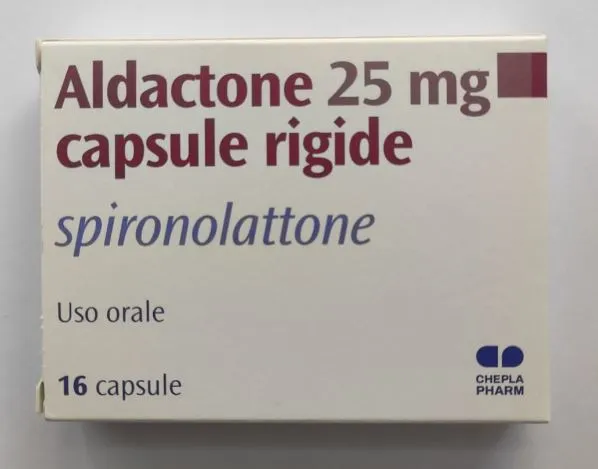
Table of Contents
Patient Information Leaflet
Aldactone 25 mg hard capsules, 100 mg coated tablets
spironolactone
Please read all of this leaflet carefully before taking this medicine because it contains important information for you.
- Keep this leaflet. You may need to read it again.
- If you have any questions, ask your doctor or pharmacist.
- This medicine has been prescribed for you only. Do not pass it on to other people, even if their symptoms are the same as yours, as it may be harmful.
- If you experience any side effects, including those not listed in this leaflet, tell your doctor or pharmacist. See section 4.
Contents of this leaflet
- What Aldactone is and what it is used for
- What you need to know before taking Aldactone
- How to take Aldactone
- Possible side effects
- How to store Aldactone
- Contents of the pack and other information
1. What Aldactone is and what it is used for
Aldactone contains the active substance spironolactone, a compound belonging to a group of medicines called "diuretics", which help increase urine production, thereby helping to relieve disorders caused by excessive fluid accumulation in the body (edema).
Aldactone is used to treat a condition caused by increased production of the hormone aldosterone, characterized by low potassium levels in the blood and high blood pressure (primary and secondary hyperaldosteronism), as well as states of elevated arterial pressure of unknown cause (essential arterial hypertension), when other medications have not been effective or are not tolerated.
2. What you should know before taking Aldactone
Do not take Aldactone
- if you are allergic to spironolactone or to any of the other ingredients of this medicine (listed in section 6);
- if your kidneys are not working properly (acute renal failure and reduced creatinine excretion);
- if you are not passing urine (anuria);
- if your blood potassium level is higher than normal (hyperkalemia) and you have a condition called Addison’s disease;
- if your blood sodium level is lower than normal (hyponatremia);
- if your blood volume is reduced (hypovolemia);
- if you are dehydrated;
- during pregnancy and breastfeeding (see section “Pregnancy, breastfeeding and fertility”).
Warnings and precautions
Talk to your doctor or pharmacist before taking Aldactone.
Pay special attention and consult your doctor before taking Aldactone if:
- you have very low blood pressure (severe hypotension);
- your kidneys are not working properly, as this increases the risk of elevated blood potassium levels (hyperkalemia);
- your voice plays an important role in your life and work (e.g. actors, teachers, singers), as spironolactone may cause voice changes.
During treatment with this medicine, the following conditions may occur:
- dry mouth, thirst, weakness, drowsiness, restlessness, muscle cramps, low blood pressure, reduced urine output, irregular heartbeat, and stomach or intestinal disturbances, if your blood sodium level drops too low (hyponatremia); this condition may be more likely if the medicine is taken together with other diuretics and if you have edema (accumulation of excess fluid in the body);
- increased blood potassium levels (hyperkalemia), irregular heartbeat, fatigue or weakness in the legs, and increased blood acidity due to excessive loss of sodium bicarbonate (hyperchloremic acidosis), especially if you have severely impaired liver function (decompensated hepatic cirrhosis) with normal kidney function;
- increased nitrogen levels in the blood, particularly if your kidney function is impaired;
- dehydration and hypovolemia (significant reduction in blood volume) may develop;
- in some patients with castration-resistant prostate cancer, tumor progression has been observed during treatment with spironolactone. Spironolactone may increase PSA levels (prostate-specific antigen, a marker for prostate cancer).
Inform your doctor if you experience any of the above conditions or otherwise feel unwell during treatment with this medicine.
During treatment with spironolactone, your doctor will regularly monitor your health status and response to the medicine through blood tests to check sodium, potassium, creatinine, and glucose (sugar) levels.
This is particularly important if:
- you are an elderly patient or have impaired kidney or liver function;
- you are taking other medicines that increase potassium levels, which your doctor will inform you about if applicable.
Concomitant administration of Aldactone with potassium-containing dietary supplements or potassium-rich foods may lead to severe hyperkalemia (elevated blood potassium levels), with symptoms such as muscle cramps, irregular heartbeat, diarrhea, nausea, dizziness, and headache.
Therefore, during Aldactone therapy, it is important to avoid taking potassium supplements and medications such as potassium-sparing diuretics, ACE inhibitors, angiotensin II receptor antagonists, aldosterone blockers, heparin, low-molecular-weight heparins, and other drugs that increase blood potassium levels, unless you are simultaneously receiving corticosteroid therapy (see section “Other medicines and Aldactone”).
Other medicines and Aldactone
Tell your doctor or pharmacist if you are taking, have recently taken, or might take any other medicines.
Your doctor will assess whether Aldactone is appropriate if you are already taking any of the following medicines:
- potassium-sparing diuretics or aldosterone blockers;
- potassium salts used to correct electrolyte imbalances;
- medicines that reduce potassium excretion; your doctor will advise you if any of your regular medications fall into this category;
- non-steroidal anti-inflammatory drugs (NSAIDs), which may reduce the effectiveness of Aldactone;
- ACE inhibitors, angiotensin II receptor antagonists (valsartan, losartan) used to treat high blood pressure;
- heparins used to thin the blood;
- trimethoprim and trimethoprim-sulfamethoxazole (medicines used for bacterial infections).
These medicines, when taken with spironolactone, may excessively increase blood potassium levels (even severe hyperkalemia). Additionally, using other medicines for high blood pressure together with Aldactone may lead to a more pronounced drop in blood pressure. NSAIDs may reduce the effect of Aldactone. Inform your doctor if you are taking mitotane for the treatment of malignant adrenal gland tumors. This medicine must not be used concomitantly with mitotane.
Be cautious when taking Aldactone together with:
- carbenoxolone (used to treat stomach ulcers), as concomitant use with spironolactone may impair the pharmacological action of both medicines;
- liquorice, as high intake of liquorice may impair the effectiveness of the medicine;
- lithium salts (used to treat mental disorders), as spironolactone reduces the elimination of lithium, increasing its toxicity;
- norepinephrine (used as a potent vasoconstrictor during surgical procedures under local or general anesthesia), as patients taking spironolactone may not respond adequately to norepinephrine;
- tacrolimus and cyclosporine (used to prevent organ rejection after transplantation): concomitant use with spironolactone may excessively increase blood potassium levels;
- digoxin (used to treat heart function disorders): Aldactone increases blood digoxin levels;
- medicines used to lower blood pressure: concomitant use with spironolactone enhances the blood pressure-lowering effect;
- non-steroidal anti-inflammatory drugs (NSAIDs): concomitant use may impair the action of Aldactone;
- cholestyramine (used to reduce blood cholesterol levels): concomitant use with Aldactone may cause hyperchloremic acidosis (increased blood acidity due to excessive loss of sodium bicarbonate) and increased blood potassium (hyperkalemia);
- abiraterone (used to treat prostate cancer): inform your doctor if you are taking abiraterone for prostate cancer treatment.
Aldactone with food and alcohol
Absorption of this medicine is improved when taken with food.
Drinking alcohol during treatment with Aldactone may impair your ability to drive or operate machinery (see section “Driving and using machines”).
Pregnancy, breastfeeding and fertility
If you are pregnant, think you might be pregnant, planning a pregnancy, or breastfeeding, consult your doctor or pharmacist before taking this medicine.
Pregnancy
You must not take Aldactone during pregnancy. Studies confirm toxic effects of the drug on the fetus (antiandrogenic effects).
Breastfeeding
Do not take this medicine if you are breastfeeding.
Driving and using machines
This medicine may affect your ability to drive or operate machinery due to possible side effects during treatment with Aldactone.
Be aware that these effects may be more likely at the beginning of spironolactone therapy or if you consume alcohol during treatment.
Aldactone 25 mg hard capsules contain sodium
This medicine contains less than 1 mmol (23 mg) of sodium per capsule, i.e. essentially ‘sodium-free’.
Aldactone 100 mg film-coated tablets contain sucrose and sodium
If you have been diagnosed with an intolerance to certain sugars, consult your doctor before taking this medicine.
This medicine contains less than 1 mmol (23 mg) of sodium per tablet, i.e. essentially ‘sodium-free’.
For those engaged in sports
Using this medicine without therapeutic need constitutes doping and may result in a positive anti-doping test.
3. How to take Aldactone
Take this medicine exactly as directed by your doctor or pharmacist. If you have any doubts, consult your doctor or pharmacist.
This medicine must always be taken under strict medical supervision.
Treatment of primary and secondary hyperaldosteronism
The recommended dose may range from 100 mg to 300 mg daily, divided throughout the day.
Your doctor may adjust your dose, increasing or decreasing it, depending on your response to the medicine.
Treatment of essential arterial hypertension
The recommended dose may range from 200 mg to 400 mg daily, divided throughout the day, during the first 2–3 weeks of treatment. This will be followed by a maintenance therapy, determined by your doctor according to your response to the medicine, which usually ranges from 25 mg to 100 mg per day.
Use in children and adolescents
Treatment of primary and secondary hyperaldosteronism
Your doctor will determine a reduced dose, compared to the adult dose, based on the child's body weight.
Method of administration
It is recommended to take the medicine with food in the morning, during breakfast.
Both tablets and capsules must be swallowed whole, without chewing, with a sufficient amount of liquid (approximately ½ glass of water).
Caution is advised in elderly patients and in patients with severe liver or kidney impairment, as the activity and elimination of the medicine may be altered.
If you take more Aldactone than you should
If you take more than the prescribed dose, stop taking the medicine and contact your doctor immediately or go to the nearest hospital. In case of overdose, symptoms such as drowsiness, confusion, and severe disturbances in blood electrolytes may occur, for example increased potassium levels (hyperkalaemia).
If you forget to take Aldactone
Do not take a double dose to make up for the forgotten dose.
If you stop taking Aldactone
Consult your doctor if you intend to discontinue treatment.
If you have any doubts about how to use this medicine, consult your doctor or pharmacist.
4. Possible side effects
Like all medicines, this medicine can cause side effects, although not everyone experiences them.
The following side effects may occur with unknown frequency (frequency cannot be estimated
from the available data on studies of the active substance) :
- severe increase or decrease in white blood cells (eosinophilia or agranulocytosis);
- reduction in the number of platelets in the blood (thrombocytopenia);
- dizziness and leg cramps that may be due to: increased potassium levels in the blood (hyperkalemia), decreased sodium levels in the blood (hyponatremia), reduction in blood volume (hypovolemia), or dehydration;
- changes in heart rhythm, fatigue, or weakness in the legs caused by possible increase in potassium levels in the blood (hyperkalemia), more likely in patients with kidney disorders;
- onset or worsening of a clinical condition leading to increased acid levels in the blood due to excessive loss of sodium bicarbonate (hyperchloremic metabolic acidosis);
- disturbances in electrolyte levels (your health status, type of diet, and concomitant use of other medications may influence the occurrence of this condition);
- voice changes characterized by difficulty producing vocal sounds (hoarseness) and lowering of voice pitch in women or raising of voice pitch in men, which may persist even after discontinuation of the medicine;
- nausea, vomiting, or diarrhoea;
- inflammation of the liver (hepatitis) and increased liver blood test values;
- damage to the stomach lining, sometimes with bleeding (gastric ulcer);
- inflammation of the stomach mucosa (gastritis);
- stomach cramps;
- skin reactions including urticaria and itching;
- a condition characterized by fluid-filled blisters on the skin (bullous pemphigoid);
- abnormal growth of body hair (hirsutism);
- alopecia;
- increased urine production and consequent worsening of symptoms in patients with urinary outflow obstruction;
- severe impairment of kidney function (acute renal failure);
- increased nipple sensitivity to touch, breast pain (mastodynia), and breast enlargement (gynecomastia) in both men and women; the latter effect in men resolves upon discontinuation of the medicine;
- menstrual cycle irregularities (amenorrhea or postmenopausal bleeding);
- male erectile dysfunction;
- progression of castration-resistant prostate cancer;
- vertigo;
- drowsiness;
- loss of muscle coordination (ataxia);
- headache;
- tendency to prolonged drowsiness (lethargy);
- skin disorders such as itching, rashes, urticaria, development of red papules or widespread blisters, and desquamation, particularly on legs, arms, hands, and feet, which may extend to the face and lips, occasionally accompanied by fever. These may be signs of serious skin diseases such as Stevens-Johnson Syndrome, toxic epidermal necrolysis, drug reaction with eosinophilia and systemic symptoms (DRESS syndrome).
Reporting of side effects
If you experience any side effect, including those not listed in this leaflet, please contact your doctor or pharmacist.
You may also report side effects directly via the national reporting system at:
https://www.aifa.gov.it/content/segnalazioni-reazioni-avverse . By reporting side effects, you can help provide more information on the safety of this medicine.
5. How to store Aldactone
Keep this medicine out of the sight and reach of children.
Aldactone 25 mg hard capsules: do not store above 25 °C.
Aldactone 100 mg coated tablets: this medicine requires no special storage conditions.
Do not use this medicine after the expiry date stated on the pack after "Exp.".
The expiry date refers to the last day of that month.
Do not dispose of medicines via wastewater or household waste. Ask your pharmacist how to dispose of medicines you no longer use. This will help protect the environment.
6. Package contents and other information
What Aldactone contains
Aldactone 25 mg hard capsules
- The active substance is spironolactone. Each hard capsule contains 25 mg of spironolactone.
- The other components are: macrogol, talc, maize starch, erythrosine (E127), indigo carmine (E132), titanium dioxide (E171), gelatin.
Aldactone 100 mg coated tablets
- The active substance is spironolactone. Each coated tablet contains 100 mg of spironolactone.
- The other components are: magnesium stearate, maize starch, sodium carmellose, gelatin, macrogol, light magnesium carbonate, heavy kaolin, talc, sodium docusate, titanium dioxide (E171), sucrose.
Description of the appearance of Aldactone and contents of the pack
Aldactone 25 mg hard capsules: supplied in a box containing 16 capsules in blister packs.
Aldactone 100 mg coated tablets: supplied in a box containing 10 tablets in blister packs.
Marketing Authorization Holder and Manufacturer
Marketing Authorization Holder
CHEPLAPHARM Arzneimittel GmbH - Ziegelhof 24, 17489 - Greifswald (Germany).
Manufacturers
Aldactone 25 mg hard capsules
Sanofi-Aventis S.A. Ctra. C-35 (La Batllòria-Hostalric) km 63.09 - 17404 Riells i Viabrea (Girona)
Spain
DELPHARM REIMS, 10 rue Colonel Charbonneaux, Reims - 51100 (France)
CHEPLAPHARM Arzneimittel GmbH - Ziegelhof 23-24, 17489 - Greifswald (Germany)
Aldactone 100 mg coated tablets
Sanofi S.r.l. - Strada Statale 17, Km 22 - 67019 Scoppito (AQ)
Saneca Pharmaceuticals a. s., Nitrianska 100, 920 27 Hlohovec (Slovak Republic)