Airtal
Italy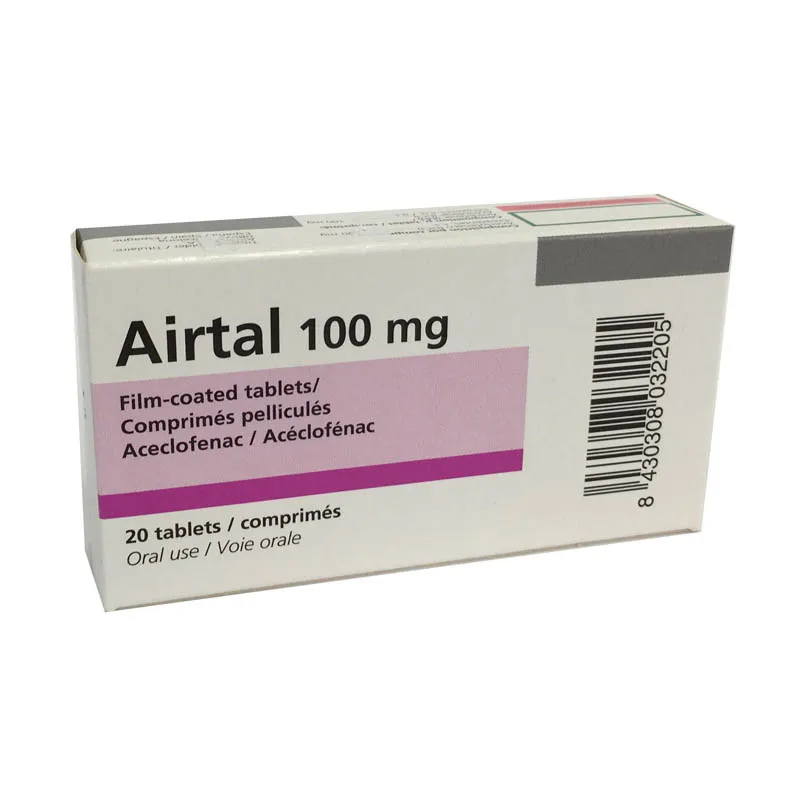
Table of Contents
- Package leaflet: Information for the user
- AIRTAL 100 mg film-coated tablets, 100 mg oral suspension powder
- 1. What AIRTAL is and what it is used for
- 2. What you need to know before taking AIRTAL
- 3. How to take AIRTAL
- 4. Possible side effects
- 5. How to store AIRTAL
- 6. Package contents and other information
- Package leaflet: information for the user
- AIRTAL 1.5 g/100 g cream
- 1. WHAT AIRTAL IS AND WHAT IT IS USED FOR
- 2. WHAT YOU SHOULD KNOW BEFORE USING AIRTAL
- 3. HOW TO USE AIRTAL
- 4. POSSIBLE ADVERSE REACTIONS
- 5. HOW TO STORE AIRTAL
- 6. CONTENTS OF THE PACKAGE AND OTHER INFORMATION
Package leaflet: Information for the user
AIRTAL 100 mg film-coated tablets, 100 mg oral suspension powder
Aceclofenac
Please read this leaflet carefully before taking this medicine because it contains
important information for you.
- Keep this leaflet. You may need to read it again.
- If you have any questions, ask your doctor or pharmacist.
- This medicine has been prescribed for you only. Do not give it to other people, even if their symptoms are the same as yours, as it may be harmful.
- If you experience any side effects, including those not listed in this leaflet, contact your doctor or pharmacist. See section 4.
Contents of this leaflet:
- What AIRTAL is and what it is used for
- What you need to know before taking AIRTAL
- How to take AIRTAL
- Possible side effects
- How to store AIRTAL
- Contents of the pack and other information
1. What AIRTAL is and what it is used for
AIRTAL contains the active substance aceclofenac, which belongs to the group of non-steroidal anti-inflammatory drugs (NSAIDs) and anti-rheumatic agents (medicines used for conditions affecting bones, cartilage, and muscles).
This medicine is indicated in adults for the treatment of:
- Inflammatory rheumatic diseases such as osteoarthritis (a disease affecting the joints), rheumatoid arthritis (a progressive, chronic autoimmune disease affecting the joints), and ankylosing spondylitis (a severe disabling rheumatic disease that may lead to joint fusion).
- Extra-articular rheumatism such as periarthritis (an inflammatory disease involving the fibrous tissues surrounding a joint), bursitis (inflammation of the fluid-filled sacs that act as cushions between bones and tendons and/or muscles around a joint), tendinitis (inflammation of tendons), and enthesitis (inflammation at the site where a muscle inserts into a bone).
- Acute painful conditions of various origins, such as sciatica (a sensation of intense leg pain caused by irritation of the sciatic nerve), lumbago (lower back pain), myalgia (muscle pain), primary dysmenorrhea (painful menstrual periods), pain following trauma of various kinds, and odontalgia (toothache).
2. What you need to know before taking AIRTAL
Do not take AIRTAL
- If you are allergic to the active substance, to other NSAIDs (including acetylsalicylic acid) or to any of the other ingredients of this medicine (listed in section 6).
- If in the past you experienced asthma attacks or other allergic reactions such as urticaria (skin reaction), rhinitis (inflammation of the nasal mucosa), edema (fluid accumulation), rash (sudden reddening of the skin), or bronchospasm (narrowing of the bronchial lumen) after taking acetylsalicylic acid or other NSAIDs. This applies to all non-steroidal anti-inflammatory drugs.
- If you have a heart and/or cerebrovascular disease (involving blood vessels of the brain), for example if you have had a heart attack, stroke (brain damage occurring when blood flow to the brain suddenly stops), mini-stroke (TIA), blockages in blood vessels of the heart or brain, or if you have undergone surgery to remove such blockages or a coronary bypass (a procedure creating an artificial detour to bypass a circulation obstruction).
- If you have or have had circulatory problems (peripheral arterial disease).
- If you currently have a gastroduodenal ulcer (erosion of the inner lining of the stomach or intestine) or gastrointestinal bleeding (hemorrhage).
- If you have active bleeding or bleeding disorders (blood loss).
- If you have previously experienced gastrointestinal hemorrhage or perforation due to prior treatment with non-steroidal anti-inflammatory drugs, or if you have had recurrent peptic ulcer/bleeding in the past (two or more distinct episodes of proven ulceration or bleeding).
- If you suffer from impaired liver function (severe hepatic impairment).
- If you suffer from impaired kidney function (renal impairment).
- If you are pregnant, especially during the third trimester, or if you are breastfeeding, unless there are valid medical reasons for taking it. In such cases, the lowest effective dose should be used (see "Pregnancy, breastfeeding and fertility").
AIRTAL must not be administered to children (see "Children and adolescents").
Warnings and precautions
Talk to your doctor or pharmacist before taking AIRTAL.
Do not take AIRTAL in combination with other NSAIDs, including selective COX-2 inhibitors.
Use AIRTAL with caution:
- If you smoke.
- If you have diabetes (increased blood sugar levels).
- If you suffer from angina (chest pain caused by insufficient oxygen supply to the heart).
- If you have blood clots.
- If you suffer from hypertension (high blood pressure).
- If you have high cholesterol or triglyceride levels (fats) in the blood.
- In case of hepatic dysfunction (liver malfunction).
- In case of heart or kidney failure.
- If you have undergone major surgery.
- If you are elderly.
Undesirable effects can be minimized by using the lowest effective dose for the shortest duration necessary to control symptoms (see section 3 "How to take AIRTAL").
If you are elderly, be aware that the frequency of adverse effects, especially gastrointestinal bleeding and perforation, is higher and may be fatal (see section 3 "How to take AIRTAL").
Gastrointestinal system (stomach and intestine)
During treatment with all NSAIDs, at any time and with or without warning symptoms, serious gastrointestinal events (disorders of the stomach or intestine) have been reported, including bleeding, ulceration, or perforation of the stomach or intestine, which may be fatal.
Immediately discontinue treatment with AIRTAL and consult your doctor if gastrointestinal bleeding or ulceration occurs while taking the medicine.
As with all NSAIDs, you should take AIRTAL with particular caution and under close medical supervision if you have symptoms suggestive of disorders of the upper or lower gastrointestinal tract, if you have previously had gastric or intestinal ulcers, bleeding, perforation, ulcerative colitis or Crohn's disease (inflammatory bowel diseases), or hematological abnormalities (blood disorders), as these conditions may worsen (see section 4 "Possible side effects").
If you are elderly or have previously had an ulcer, especially if complicated by bleeding or perforation, your risk of gastrointestinal bleeding, ulceration, or perforation is higher, particularly with increased NSAID doses. In such cases, initiate treatment with the lowest effective dose to reduce the risk of gastrointestinal toxicity.
If you are taking low-dose acetylsalicylic acid or other medications that may increase the risk of gastrointestinal events (such as other NSAIDs or corticosteroids – see "Other medicines and AIRTAL"), you may consider using concomitant gastroprotective agents (e.g., misoprostol or proton pump inhibitors).
If you have experienced gastrointestinal toxicity (i.e., stomach or intestinal problems), especially if you are elderly, you must inform your doctor of any abdominal symptoms (particularly gastrointestinal bleeding), especially during the initial stages of treatment.
Be cautious when taking AIRTAL if you are concurrently using medications that could increase the risk of ulceration or bleeding, such as systemic corticosteroids, anticoagulants, antiplatelet agents, or selective serotonin reuptake inhibitors (SSRIs) (see "Other medicines and AIRTAL").
Cardiovascular (heart vessels) and cerebrovascular (brain vessels) system
Undergo appropriate monitoring and take AIRTAL with caution:
- If you have previously had hypertension and/or mild to moderate congestive heart failure (inability of the heart to supply adequate blood to meet the body's needs), as fluid retention and edema have been observed with NSAID treatment.
- If you have significant risk factors for cardiovascular events (high blood pressure, high blood fat levels, diabetes) or if you smoke.
- If you have previously had cerebrovascular bleeding.
The use of AIRTAL may be associated with an increased risk of myocardial infarction (heart attack) (see section 4 "Possible side effects").
Since the cardiovascular risks of AIRTAL may increase with dose and duration of treatment, use the lowest effective daily dose for the shortest necessary period. The response to therapy and the need for continued symptom improvement should be periodically reassessed.
Hypersensitivity reactions (allergy) and skin reactions
Avoid using AIRTAL if you have chickenpox; in some cases, chickenpox may lead to severe skin and soft tissue infections, and the role of NSAIDs in worsening these infections cannot be excluded (see section 4 "Possible side effects").
As with other NSAIDs, allergic reactions, including anaphylactic/anaphylactoid reactions (rapid-onset allergic reactions), may rarely occur, even without prior exposure to aceclofenac (see section 4 "Possible side effects").
Severe skin reactions (skin level), some of which have been fatal, including exfoliative dermatitis (skin irritation with peeling), Stevens-Johnson syndrome (lesions of the skin and mucous membranes), and toxic epidermal necrolysis (a severe skin disease where the epidermis detaches in sheets), have been very rarely reported in association with NSAID use (see section 4 "Possible side effects"). The risk appears to be higher in the early stages of therapy, as the reaction typically occurs within the first month of treatment.
Discontinue taking AIRTAL at the first appearance of a skin rash, mucosal lesions, or any other sign of hypersensitivity (allergy).
Renal function
Take AIRTAL with caution:
- In case of mild to moderate renal impairment, as NSAID use may lead to deterioration of kidney function. In such cases, take the lowest effective dose and undergo regular monitoring of kidney function.
- If you are concurrently taking diuretics (medications that increase urine production).
Effects on kidney function are generally reversible upon discontinuation of aceclofenac.
Hepatic function (liver)
Discontinue treatment with AIRTAL if liver function tests remain persistently abnormal or worsen, if clinical signs or symptoms suggestive of liver disease develop, or if other manifestations such as eosinophilia (elevated white blood cell count) or rash occur. Hepatitis (liver inflammation) without warning symptoms may occur with AIRTAL use.
Use AIRTAL with caution if you have hepatic porphyria (a rare disease involving deficiency of liver enzymes), as it may trigger an attack.
Regular medical check-ups are recommended in case of mild to moderate liver function impairment.
Hematological problems (blood level)
Aceclofenac may temporarily inhibit platelet aggregation (see "Other medicines and AIRTAL").
Respiratory disorders
Exercise particular caution when taking AIRTAL if you currently suffer or have previously suffered from bronchial asthma (a disease caused by bronchial obstruction), as NSAIDs may worsen bronchospasm.
Long-term treatments
As a precautionary measure, if you are undergoing long-term treatment with NSAIDs, regular monitoring of blood cell counts and kidney and liver function parameters is recommended.
Children and adolescents
Currently, no clinical data are available on the use of this medicine in children; therefore, its administration is not recommended (see "Do not take AIRTAL").
Other medicines and AIRTAL
Inform your doctor or pharmacist if you are taking, have recently taken, or might take any other medicines.
Exercise caution when taking AIRTAL with:
- Diuretics (medications used to increase urine production); aceclofenac, like other NSAIDs, may inhibit diuretic activity. When used concomitantly with potassium-sparing diuretics, blood potassium levels should be monitored.
- Antihypertensives (medications used to lower blood pressure); NSAIDs may reduce the effectiveness of antihypertensive drugs. If your kidney function is impaired (e.g., if you are dehydrated or elderly), co-administration of antihypertensive drugs such as ACE inhibitors or angiotensin II antagonists with NSAIDs may increase the risk of acute renal failure, usually reversible. In such cases, you should be adequately hydrated, and kidney function should be monitored after starting combination therapy and periodically thereafter.
- Corticosteroids (anti-inflammatory drugs); there may be an increased risk of stomach and intestinal ulceration or bleeding (gastrointestinal hemorrhage) (see "Warnings and precautions").
- Anticoagulants; like other NSAIDs, aceclofenac may enhance the effect of anticoagulant drugs such as warfarin (see "Warnings and precautions"), and therefore close monitoring is required during combination therapy.
- Antiplatelet agents and selective serotonin reuptake inhibitors (SSRIs); concomitant use with NSAIDs may increase the risk of gastrointestinal bleeding (see "Warnings and precautions").
- Antidiabetics. Isolated cases of hypoglycemic (reduced blood sugar levels) and hyperglycemic (increased blood sugar levels) effects have been reported; therefore, adjustment of hypoglycemic drug dosage should be considered when used concomitantly with aceclofenac.
- Methotrexate (an antineoplastic and antirheumatic drug used to treat conditions such as leukemia, lymphoma, rheumatoid arthritis, lupus, and psoriasis); potential interactions between NSAIDs and methotrexate should be considered even with low-dose methotrexate, especially if renal function is reduced. When combination therapy is required, kidney function should be monitored. Exercise particular caution when taking NSAIDs and methotrexate within 24 hours of each other, as this may increase methotrexate blood concentrations, leading to increased toxicity.
- Lithium (a mood-stabilizing drug used in the treatment of depression and bipolar disorder) and digoxin (a drug that enhances heart function); various NSAIDs inhibit the elimination of lithium and digoxin, increasing their blood concentrations. This combination should therefore be avoided unless frequent monitoring of lithium and digoxin levels is possible.
- Other NSAIDs; concomitant use of acetylsalicylic acid and other NSAIDs may increase the frequency of adverse effects.
- Cyclosporine and tacrolimus (immunosuppressive drugs); NSAID administration together with cyclosporine or tacrolimus is believed to increase the risk of nephrotoxicity (kidney toxicity). Close monitoring of kidney function is therefore important during combination therapy.
- Zidovudine (an antiviral drug); when NSAIDs are administered with zidovudine, the risk of hematological toxicity (blood toxicity) increases; there are indications of increased risk of hemarthrosis (bleeding into a joint) and hematoma in HIV-positive hemophiliacs receiving concomitant treatment with zidovudine and ibuprofen (a drug belonging to the NSAID class).
Pregnancy, breastfeeding and fertility
If you are pregnant, suspect you may be pregnant, planning a pregnancy, or breastfeeding, consult your doctor or pharmacist before taking this medicine.
Pregnancy
Do not take AIRTAL during the last three months of pregnancy, as it may harm the fetus or cause problems during delivery. It may cause heart, lung, or kidney problems in the fetus. It may affect your and your baby's tendency to bleed and delay or prolong labor. You should not take AIRTAL during the first six months of pregnancy unless absolutely necessary and under medical advice. If treatment is required during this period or during attempts to conceive, the lowest possible dose for the shortest possible time should be used. From week 20 of pregnancy, AIRTAL may cause kidney problems in the fetus if taken for more than a few days, thereby reducing the levels of amniotic fluid surrounding the baby (oligohydramnios) or narrowing a blood vessel (ductus arteriosus) in the baby's heart. If treatment is required for more than a few days, your doctor may recommend additional monitoring.
Inhibition of prostaglandin synthesis caused by NSAIDs may negatively affect pregnancy and/or embryonic and fetal development. Epidemiological study results suggest an increased risk of miscarriage and cardiac malformation and gastroschisis (abdominal wall defect where the intestine, and sometimes other organs, develop outside the fetus's abdomen) after using a prostaglandin synthesis inhibitor during early pregnancy. The absolute risk of cardiac malformations increased from less than 1% to approximately 1.5%. It is believed that the risk increases with dose and duration of therapy.
Breastfeeding
Do not take AIRTAL while breastfeeding to avoid adverse effects in the infant, unless the potential benefit to the mother outweighs the possible risk to the infant (see "Do not take AIRTAL").
Fertility
NSAIDs may impair fertility, and their use is not recommended in women attempting to conceive. Administration of aceclofenac should be discontinued in women experiencing fertility problems or undergoing fertility investigations.
If you take AIRTAL in these cases, the dose should be kept as low as possible and the treatment duration as short as possible.
Driving and using machines
Administration of aceclofenac, as with other NSAIDs and in particularly susceptible patients, may cause dizziness, vertigo, or other central nervous system disturbances. You should be aware of these possible effects before driving or operating machinery requiring full alertness.
AIRTAL 100 mg oral suspension powder contains sorbitol.
This medicine contains 2639 mg of sorbitol per sachet. Sorbitol is a source of fructose. If your doctor has told you that you are intolerant to certain sugars, or if you have been diagnosed with hereditary fructose intolerance, a rare genetic condition in which patients cannot properly metabolize fructose, consult your doctor before taking this medicine.
AIRTAL 100 mg oral suspension powder contains aspartame.
This medicine contains 10 mg of aspartame per sachet. Aspartame is a source of phenylalanine. It may be harmful if you have phenylketonuria, a rare genetic disorder causing accumulation of phenylalanine because the body cannot properly eliminate it.
AIRTAL 100 mg oral suspension powder. This medicine contains less than 1 mmol of sodium (23 mg) per sachet, i.e., essentially "sodium-free".
AIRTAL 100 mg coated tablets. This medicine contains less than 1 mmol of sodium (23 mg) per tablet, i.e., essentially "sodium-free".
3. How to take AIRTAL
Take this medicine exactly as directed by your doctor or pharmacist.
If you have any doubts, consult your doctor or pharmacist.
AIRTAL 100 mg film-coated tablets
Adults
The recommended dose is 2 tablets per day (200 mg per day), 1 tablet every 12 hours.
Swallow the tablets with a sufficient amount of water.
Take the medicine preferably during meals.
AIRTAL 100 mg oral suspension powder
The recommended dose is 2 sachets per day (200 mg per day), 1 sachet every 12 hours.
Dissolve the contents of one sachet in a glass of water (40–60 ml) and take immediately.
Take the medicine preferably during meals.
Elderly
Dosage adjustment is not considered necessary.
Patients with hepatic impairment
In patients with liver problems (hepatic insufficiency), it is advisable to reduce the initial dose to 100 mg per day.
However, as with other NSAIDs, use AIRTAL with caution if you are elderly and have impaired renal or hepatic function, cardiovascular disorders, or are concurrently receiving other medicinal treatments.
Adverse effects can be minimized by using the lowest effective dose for the shortest duration necessary to control symptoms (see "Warnings and precautions").
If you take more AIRTAL than you should
In case of accidental ingestion/overdose of AIRTAL, inform your doctor immediately or go to the nearest hospital.
Currently, there is insufficient information available regarding the clinical picture resulting from AIRTAL overdose.
Therapeutic measures to be taken in case of acute poisoning with oral aceclofenac are those commonly used in acute NSAID poisoning:
- Absorption should be prevented as soon as possible by gastric lavage (emptying and washing out the stomach) and treatment with activated charcoal.
- Supportive and symptomatic treatments should be administered in case of complications such as hypotension (low blood pressure), renal failure, seizures, gastrointestinal irritation, and respiratory depression.
- Specific therapies such as forced diuresis (a method used to increase the elimination of already absorbed substances), dialysis (a therapy that replaces kidney function), or hemoperfusion (passing blood through a column of absorbent resin to remove a substance) are not effective in removing non-steroidal anti-inflammatory drugs, due to their high degree of protein binding in the blood and extensive metabolism.
If you forget to take AIRTAL
Do not take a double dose to make up for the missed dose.
If you have any doubts about how to use this medicine, consult your doctor or pharmacist.
4. Possible side effects
Like all medicines, this medicine can cause side effects, although not everybody gets them.
Stop treatment with AIRTAL and contact your doctor immediately if you experience any of the following side effects:
- Bleeding in the stomach and intestine (gastrointestinal bleeding)
- Stomach lesions (peptic ulcers)
- Persistently abnormal or worsening liver function tests, clinical signs or symptoms suggestive of liver disease, or other manifestations such as eosinophilia
- Skin rash (sudden reddening of the skin), mucosal lesions, or any other sign of allergy
Possible side effects that may occur after taking AIRTAL are:
Common side effects (may affect up to 1 in 10 people)
- Dizziness (vertigo)
- Increased levels of certain liver enzymes
- Nausea, diarrhoea, abdominal pain, dyspepsia (indigestion)
Uncommon side effects (may affect up to 1 in 100 people)
- Gastritis (inflammation of the stomach), oral ulcers (aphthae), flatulence (intestinal gas), constipation, vomiting
- Urticaria (skin condition), rash (sudden reddening of the skin), pruritus (itching), dermatitis (inflammation of the skin)
- Increased blood levels of urea and creatinine
- Constipation
Rare side effects (may affect up to 1 in 1,000 people)
- Anaemia (reduced haemoglobin concentration in the blood)
- Angioedema (sudden swelling of the skin or mucous membranes)
- Visual disturbances
- Hypertension (high blood pressure)
- Anaphylactic reaction (rapid-onset allergic reaction), including shock, allergy
- Heart failure (inability of the heart to supply sufficient blood to meet the body's needs)
- Dyspnoea (difficulty breathing)
- Melena (passing blood in stools), ulcer and gastrointestinal bleeding (peptic ulcers, gastrointestinal perforation or haemorrhage may occur, sometimes fatal, especially in the elderly – see “Warnings and precautions”)
Very rare side effects (may affect up to 1 in 10,000 people)
- Thrombocytopenia (reduced number of platelets in the blood), haemolytic anaemia (reduced haemoglobin concentration due to destruction of red blood cells), granulocytopenia (severe reduction in the number of granulocytes in the blood), bone marrow depression (reduced bone marrow function leading to decreased blood cell production)
- Depression, insomnia, abnormal dreams
- Paraesthesia (altered sensation), dysgeusia (taste disturbances), headache, somnolence (drowsiness)
- Tinnitus (ringing in the ears), vertigo
- Palpitations
- Flushing
- Vasculitis (inflammation of blood vessels), hot flushes
- Bronchospasm (narrowing of the bronchi)
- Worsening of ulcerative colitis or Crohn’s disease (inflammatory bowel diseases), stomatitis (inflammation of the oral mucosa), pancreatitis (inflammation of the pancreas), intestinal perforation, haematemesis (vomiting blood)
- Stevens-Johnson syndrome (acute allergic reaction affecting the skin and mucous membranes), toxic epidermal necrolysis (or “Lyell’s syndrome”, a severe drug-induced skin disease characterised by destruction of the skin epithelium and mucous membranes), purpura (bruise-like lesion due to rupture of capillaries under the skin), exanthema (skin rash)
- Renal failure, nephrotic syndrome (a set of clinical signs and symptoms caused by glomerular kidney damage leading to protein loss in urine)
- Liver injury (including hepatitis, inflammation of the liver), increased blood alkaline phosphatase levels
- Oedema (fluid retention), fatigue
- Weight gain
Clinical studies and epidemiological data indicate that there may be an increased risk of arterial thrombotic events (e.g. myocardial infarction or stroke) associated with the use of aceclofenac, particularly at high doses and with long-term treatment (see “Warnings and precautions”).
Exceptionally, severe skin and soft tissue infectious complications have been reported during chickenpox when using NSAIDs. To date, a role of NSAIDs in worsening these infections cannot be ruled out (see “Warnings and precautions”).
If any of the above side effects occur, it is recommended to discontinue treatment with aceclofenac and contact your doctor.
Following the instructions provided in this leaflet reduces the risk of side effects.
Reporting of side effects
If you experience any side effect, including those not listed in this leaflet, talk to your doctor or pharmacist. You can also report side effects directly via the national reporting system at https://www.aifa.gov.it/content/segnalazioni-reazioni-avverse .
By reporting side effects, you can help provide more information on the safety of this medicine.
5. How to store AIRTAL
Keep this medicine out of the sight and reach of children.
Do not use this medicine after the expiry date stated on the packaging. The expiry date refers to the last day of that month and applies to the product in its original, undamaged packaging, properly stored.
AIRTAL 100 mg film-coated tablets
Store below 30°C.
AIRTAL 100 mg oral suspension powder
No special storage precautions are required.
Do not dispose of any medicine via wastewater or household waste. Ask your pharmacist how to dispose of medicines you no longer use. This will help protect the environment.
6. Package contents and other information
What AIRTAL contains
AIRTAL 100 mg film-coated tablets
One film-coated tablet contains:
Active substance: aceclofenac 100 mg.
Other components: microcrystalline cellulose, sodium croscarmellose, glyceryl palmitostearate,
povidone, hypromellose, polyoxyethylene(40) stearate, titanium dioxide.
AIRTAL 100 mg powder for oral suspension
One sachet contains:
Active substance: aceclofenac 100 mg.
Other components: sorbitol, sodium saccharin, caramel flavour, cream flavour, milk flavour, anhydrous colloidal silica, aspartame, hypromellose, titanium dioxide.
Description of the appearance of AIRTAL and the contents of the pack
AIRTAL 100 mg film-coated tablets
White, round, film-coated tablets.
- Blister pack of 10 film-coated tablets in a cardboard carton.
- Blister pack of 40 film-coated tablets in a cardboard carton.
AIRTAL 100 mg powder for oral suspension
White or cream-white powder for oral suspension.
Pack: 30 sachets.
Marketing Authorisation Holder and Manufacturer
Marketing Authorisation Holder
ALMIRALL S.A.
Ronda General Mitre 151
08022 Barcelona, Spain
Manufacturer
Industrias Farmacéuticas Almirall S.A. (Planta de Sant Andreu de la Barca)
Ctra. de Martorell, 41-61, 08740 Sant Andreu de la Barca – Barcelona (SPAIN).
Package leaflet: information for the user
AIRTAL 1.5 g/100 g cream
Aceclofenac
Read this leaflet carefully before using this medicine because it contains important information for you.
Always use this medicine exactly as described in this leaflet or as your doctor or pharmacist has instructed you.
- Keep this leaflet. You may need to read it again.
- If you need more information or advice, consult your pharmacist.
- If you experience any side effects, including those not listed in this leaflet, consult your doctor or pharmacist. See section 4.
- Consult your doctor if you do not notice any improvement or if your symptoms worsen after 3 days.
Contents of this leaflet:
- What AIRTAL is and what it is used for
- What you need to know before using AIRTAL
- How to use AIRTAL
- Possible side effects
- How to store AIRTAL
- Contents of the pack and other information
1. WHAT AIRTAL IS AND WHAT IT IS USED FOR
AIRTAL contains the active substance aceclofenac, which belongs to the group of non-steroidal anti-inflammatory drugs (NSAIDs) and anti-rheumatic agents (medicines used for conditions affecting bones, cartilage, and muscles).
This medicinal product is indicated for the local treatment of painful and inflammatory conditions of rheumatic or traumatic origin affecting joints, muscles, tendons, and ligaments, such as tendinitis (inflammation of tendons), tenosynovitis (inflamm inflammation of the membrane covering the tendon), sprains, bruises, periarthritis (inflammatory diseases involving the fibrous tissues surrounding a joint), dislocations (joint dislocations), lumbago (back pain), torticollis, bursitis (inflammation of the fluid-filled sacs that act as cushions between bones and tendons and/or muscles around a joint), strains, and trauma-related sequelae.
2. WHAT YOU SHOULD KNOW BEFORE USING AIRTAL
Do not use AIRTAL
- If you are allergic to the active substance, to other NSAIDs (including acetylsalicylic acid), or to any of the other ingredients of this medicine (listed in section 6).
- If in the past you have experienced worsening of asthma attacks, acute rhinitis (inflammation of the nasal mucosa), or urticaria (skin redness with intense itching) after taking acetylsalicylic acid or other NSAIDs.
- If you currently have or have previously had hypersensitivity reactions (allergy) to diclofenac, even if cross-allergenicity with this medicine has not been demonstrated.
- If you are in the last 3 months of pregnancy or during breastfeeding (see "Pregnancy, breastfeeding and fertility").
AIRTAL is contraindicated in pediatric patients (see "Children and adolescents").
Warnings and precautions
Talk to your doctor or pharmacist before using AIRTAL.
Use AIRTAL cream for external use only.
During treatment with AIRTAL, you must avoid:
- Inappropriate exposure of the treated area to sunlight without adequate protection, to prevent photosensitivity reactions (immune system reaction to sunlight).
- Applying the cream on sores or open wounds.
- Contact with eyes, mucous membranes, or any other application site with ongoing skin lesions.
Discontinue treatment with AIRTAL and seek appropriate medical treatment if you experience symptoms of local irritation.
Prolonged use of dermatological products may lead to sensitization (allergy).
As with other NSAIDs, allergic reactions including anaphylactic/anaphylactoid reactions (rapid-onset allergic reactions) may occur, even without prior exposure to aceclofenac (see section 4 "Possible side effects").
Severe skin reactions, some of which have been fatal, including exfoliative dermatitis (skin irritation with peeling), Stevens-Johnson syndrome (lesions affecting the skin and mucous membranes), and toxic epidermal necrolysis (a serious skin condition in which the epidermis detaches in sheets), have been very rarely reported in association with NSAID use (see section 4 "Possible side effects"). The risk appears to be higher in the early stages of treatment, as the reaction typically occurs within the first month of therapy.
Discontinue AIRTAL at the first appearance of skin rash, mucosal lesions, or any other sign of hypersensitivity (allergy).
Avoid using AIRTAL in case of chickenpox; in some cases, chickenpox may lead to serious skin and soft tissue infections, and the role of NSAIDs in worsening these infections cannot be excluded (see section 4 "Possible side effects").
Children and adolescents
Currently, there are no data available on the safety and efficacy of aceclofenac in children under 14 years of age; therefore, its use is not recommended (see "Do not use AIRTAL").
Other medicines and AIRTAL
Inform your doctor or pharmacist if you are taking, have recently taken, or might take any other medicines.
Exercise caution when using AIRTAL with:
- Lithium (a mood-stabilizing drug used in the treatment of depression and bipolar disorder).
- Digoxin (a drug that enhances heart function).
- Oral anticoagulants (medicines that increase blood fluidity).
- Diuretics (medicines used to increase urine production).
- Painkillers (medicines used to relieve pain).
Pregnancy, breastfeeding and fertility
If you are pregnant, suspect you may be pregnant, are planning a pregnancy, or are breastfeeding, consult your doctor or pharmacist before taking this medicine.
Pregnancy
Oral formulations (e.g., tablets) of aceclofenac may cause adverse effects in the unborn child.
It is not known whether the same risk applies to AIRTAL.
If you are pregnant, suspect you may be pregnant, are planning a pregnancy, or are breastfeeding, consult your doctor or pharmacist before using this medicine. Do not use AIRTAL during the last 3 months of pregnancy.
You should not use AIRTAL during the first 6 months of pregnancy unless strictly necessary and advised by your doctor. If treatment is required during this period, use the lowest effective dose for the shortest possible duration.
Breastfeeding
Do not use AIRTAL if you are breastfeeding.
Fertility
The use of AIRTAL, as with any drug that inhibits prostaglandin synthesis and cyclooxygenase (anti-inflammatory drugs), is not recommended in women attempting to conceive.
Administration of AIRTAL should be discontinued in women experiencing fertility problems or undergoing fertility investigations.
Driving and using machines
AIRTAL does not impair the ability to drive vehicles or operate machinery.
AIRTAL 15 mg/g cream contains propylparahydroxybenzoate and methylparahydroxybenzoate.
These may cause allergic reactions (including delayed reactions).
3. HOW TO USE AIRTAL
Use this medicine exactly as stated in this leaflet or as directed by your doctor or pharmacist. If you have any doubts, consult your doctor or pharmacist.
The recommended dose is 1.5 g - 2 g of AIRTAL cream, equivalent to 4-5 cm, to be applied three times daily to the affected area, or as prescribed by a physician.
If you use more AIRTAL than you should
Cases of overdose are not known. In case of misuse or excessive dose intake, general therapeutic measures usually adopted for poisoning with non-steroidal anti-inflammatory drugs should be undertaken.
If you forget to use AIRTAL
Do not use a double dose to make up for the missed dose.
If you have any doubts about the use of this medicine, consult your doctor or pharmacist.
4. POSSIBLE ADVERSE REACTIONS
Like all medicines, this medicine can cause adverse reactions, although not everyone experiences them.
Possible adverse reactions that may occur following the use of AIRTAL are:
Mild or moderate skin irritation accompanied by redness and mild pruritus, which disappear upon discontinuation of treatment.
Uncommon adverse reactions (may affect up to 1 in 100 patients)
- Photosensitivity, in case treated skin areas have been exposed to strong sunlight without adequate protection (see "Warnings and precautions").
- Erythema (skin irritation).
- Pruritus.
Very rare adverse reactions (may affect up to 1 in 10,000 patients)
Bullous eruption (including Stevens-Johnson Syndrome and Toxic Epidermal Necrolysis).
Exceptionally, severe cutaneous and soft-tissue infectious complications have been reported during chickenpox in association with NSAID treatment (see "Warnings and precautions").
Following the instructions provided in this leaflet reduces the risk of adverse reactions.
Reporting of adverse reactions
If you experience any adverse reaction, including those not listed in this leaflet, talk to your doctor or pharmacist. You may also report adverse reactions directly via the national reporting system at the following website:
https://www.aifa.gov.it/content/segnalazioni-reazioni-avverse .
By reporting adverse reactions, you can help provide more information on the safety of this medicine.
5. HOW TO STORE AIRTAL
Keep this medicine out of the sight and reach of children.
Do not use this medicine after the expiry date stated on the packaging. The expiry date refers to the last day of that month and applies to the product in its original, unopened packaging, properly stored.
Store below 30°C.
Do not dispose of any medicine via wastewater or household waste. Ask your pharmacist how to dispose of medicines you no longer use. This will help protect the environment.
6. CONTENTS OF THE PACKAGE AND OTHER INFORMATION
What AIRTAL contains
100 g of cream contain:
Active substance: aceclofenac 1.5 g.
Other components: emulsifying wax, liquid paraffin, propylparahydroxybenzoate,
methylparahydroxybenzoate, purified water.
Description of the appearance of AIRTAL and contents of the pack
White cream.
Tube containing 50 g of cream.
Marketing Authorization Holder
ALMIRALL S.A.
Ronda General Mitre 151
08022 Barcelona, Spain
Representative in Italy:
ALMIRALL S.p.A.
Via Messina, 38 – Tower C
20154 Milan
Manufacturer
Industrias Farmacéuticas Almirall, S.A. (Planta de Sant Andreu de la Barca), Ctra. de Martorell, 41-61 -
08740 Sant Andreu de la Barca - Barcelona (Spain) (solely for batch control and release).
Almirall Hermal GmbH, Scholtzstrasse 3, 21465 Reinbek (Germany).