Aerrane
Italy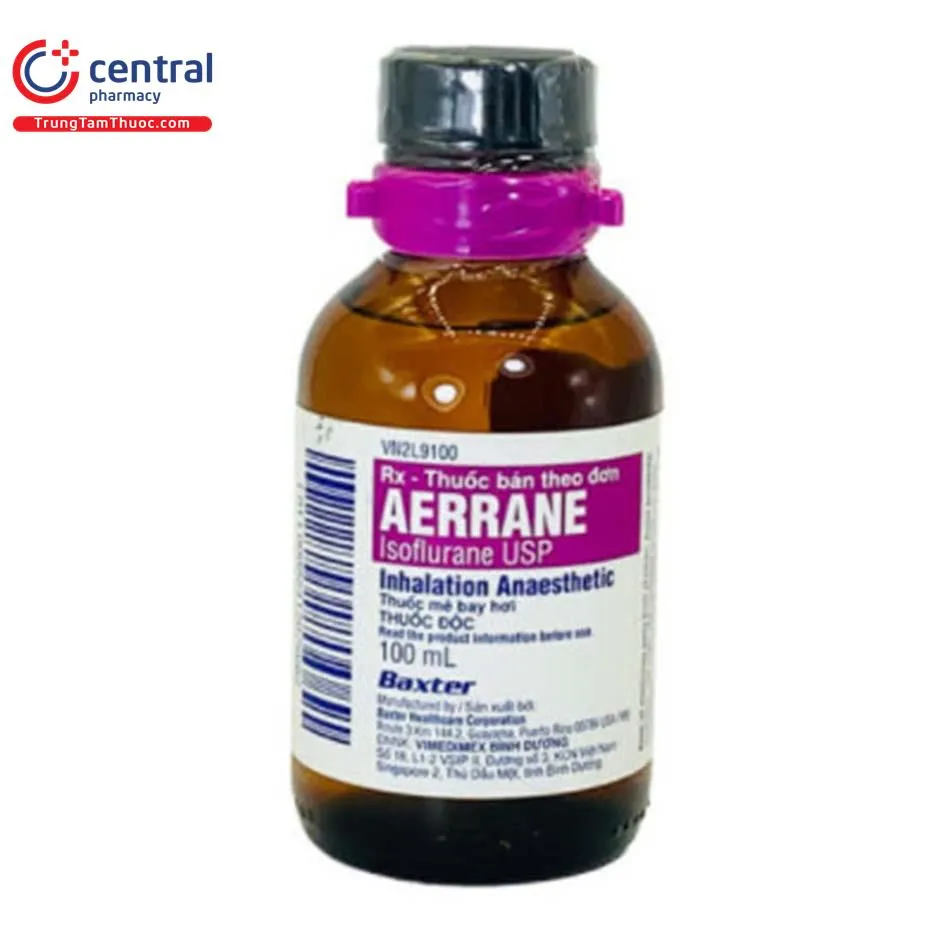
Instructions for Use
Package leaflet: Information for the patient
AERRANE Inhalation Liquid
Isoflurane
Please read this leaflet carefully before you are given this medicine because it contains important information for you.
- Keep this leaflet. You may need to read it again.
- If you have any questions, ask your doctor or pharmacist.
- If you experience any side effects, including those not listed in this leaflet, inform your doctor or pharmacist. See section 4.
Contents of this leaflet:
- What AERRANE is and what it is used for
- What you need to know before you are given AERRANE
- How AERRANE will be administered to you
- Possible side effects
- How to store AERRANE
- Contents of the pack and other information
1. What AERRANE is and what it is used for
AERRANE is a medicine containing the active substance isoflurane, a medicine belonging to the group of medicines called "general anesthetics".
AERRANE is used by an anesthesiologist to:
- induce and maintain general anesthesia (a state of unconsciousness or sleep) during surgical procedures.
2. What you should know before AERRANE is administered to you
You must not be given AERRANE
- if you are allergic to isoflurane or to other anaesthetics similar to AERRANE (listed in section 6)
- if you or someone in your family has a history of malignant hyperthermia (see section 4 "Possible side effects")
- during obstetric procedures
- if you have developed liver disease after previous anaesthesia: hepatic dysfunction, jaundice, fever, increase in white blood cells (leucocytosis or eosinophilia).
Warnings and precautions
This medicine is available only in hospital. Therefore, this medicine will be administered to you only under the close supervision of qualified medical personnel.
In particular, before AERRANE is administered to you, inform your doctor:
- if you have heart disorders (QT prolongation associated with torsade de pointes)
- if you have inherited disorders known as "mitochondrial disorders"
- if you have had liver disorders (hepatic disorders, cirrhosis, or viral hepatitis). Your doctor may decide not to administer AERRANE and choose another type of anaesthesia.
- if you have diseases of the arteries supplying blood to the heart (coronary arteries)
- if you have a disease affecting the muscles causing weakness, fatigue, and possibly leading to paralysis (myasthenia gravis)
- if you are in a condition with reduced blood volume (hypovolemia)
- if you have low blood pressure (hypotension)
- if you are debilitated
- if you have respiratory diseases
- if you have increased pressure inside the skull
- if you have a severe muscle disease (Duchenne muscular dystrophy)
Your doctor must proceed with particular caution if you have previously been administered an inhaled anaesthetic medicine, especially if it occurred several times within a short period of time (repeated use).
AERRANE may trigger a condition called malignant hyperthermia (rapid and significant increase in body temperature, muscle rigidity, tachycardia, tachypnea, cyanosis, arrhythmia, and blood pressure fluctuations). In such a case, your doctor will initiate appropriate supportive therapy.
AERRANE may cause a slight decline in intellectual function for 2–4 days after anaesthesia. Minor changes in mood and symptoms may persist for up to 6 days after administration. Take this into account when resuming normal daily activities, including driving or operating machinery (see section Driving and use of machines).
Children and adolescents
AERRANE will be administered with caution in children under 2 years of age. The use of AERRANE is not recommended in neonates and children for induction of anaesthesia due to the occurrence of coughing, breathlessness, desaturation, increased secretions, and laryngospasm.
Other medicines and AERRANE
Inform your doctor or pharmacist if you are taking, have recently taken, or might take any other medicines.
In particular, inform your doctor if you are taking any of the following medicines:
Contraindicated combinations
- Non-selective monoamine oxidase inhibitors, medicines used to treat depression. Discontinue treatment 15 days before surgery.
- Beta-sympathomimetics (e.g. isoprenaline) and alpha-beta-sympathomimetics (e.g. epinephrine or adrenaline, norepinephrine or noradrenaline), medicines acting on part of the nervous system.
Combinations requiring caution
- Beta-blockers, medicines used to treat heart diseases
- Isoniazid, a medicine used to treat tuberculosis. Isoniazid treatment must be discontinued 7 days before surgery and should not be resumed until at least 15 days after surgery.
- Indirect sympathomimetics (amphetamines and derivatives; psychostimulants; anorectics; ephedrine and derivatives), medicines acting on part of the nervous system
- Muscle relaxants, medicines causing muscle relaxation
- Opioids, medicines with strong pain-relieving effects used during anaesthesia
- Benzodiazepines and other sedative agents, medicines causing relaxation
- Calcium antagonists, medicines used to treat high blood pressure
- Adrenaline for subcutaneous or gingival injections, a medicine used to prolong local anaesthesia
Laboratory tests
After administration of AERRANE, your laboratory test results may be altered. Inform your doctor or laboratory technician that you have been administered AERRANE before undergoing blood tests (it may cause alterations in potassium, glucose, creatinine, urea, cholesterol, and alkaline phosphatase levels).
AERRANE and alcohol
Do not consume alcohol for 24 hours after administration of AERRANE.
Pregnancy and breastfeeding
If you are pregnant, think you may be pregnant, planning to become pregnant, or breastfeeding, consult your doctor or pharmacist before this medicine is administered to you.
Pregnancy
Your doctor may administer this medicine during pregnancy only if absolutely necessary.
The use of AERRANE is indicated for caesarean section, while increased blood loss has been observed during curettage.
Breastfeeding
It is not known whether AERRANE passes into breast milk. Therefore, breastfeeding should not resume for at least 12 hours after completion of anaesthesia.
Driving and use of machines
After anaesthesia with AERRANE, do not drive or operate any machinery for at least 24 hours after the procedure. You must be accompanied home. Changes in behaviour and intellectual functions may persist for up to 6 days after administration. This should be taken into account when resuming normal daily activities, including driving or operating heavy machinery.
3. How AERRANE will be administered to you
This medicine is available only in a hospital setting. Therefore, this medicine will be administered to you only under the close supervision of qualified medical personnel.
The appropriate dose for you will be determined by the anaesthetist based on your age, body weight and overall health condition. Your doctor will administer the correct dose of AERRANE to induce and maintain anaesthesia or to achieve the desired level of sedation, carefully monitoring your response and vital signs (pulse, blood pressure, etc.). Your doctor may also administer other medicines to induce sleep in order to prevent coughing or laryngospasm.
Use in the elderly
Lower concentrations of AERRANE are normally required to maintain anaesthesia in elderly patients.
Use in children and adolescents
The use of AERRANE is not recommended in neonates and children for induction of anaesthesia due to the occurrence of coughing, breathlessness, desaturation, increased secretions and laryngospasm.
The dose will be determined by the anaesthetist based on the child's age, weight and health condition.
Your child will be closely monitored during administration of AERRANE, and the doctor will assess whether additional medicines are needed to counteract possible respiratory depression and reduced heart rate.
Method of administration
AERRANE will be administered to you by inhalation using specific vaporizers.
If you are given more AERRANE than you should
It is highly unlikely that you will receive a higher than appropriate dose of AERRANE, as your doctor will monitor you closely during treatment.
However, if an excessive dose of AERRANE is administered, your doctor will provide appropriate supportive therapy.
4. Possible side effects
Like all medicines, this medicine can cause side effects, although not everybody gets them.
During administration of AERRANE, you may experience malignant hyperthermia, a serious side effect which includes the following symptoms:
- muscle rigidity,
- increased heart rate (tachycardia),
- increased respiratory rate (tachypnea),
- bluish skin due to lack of oxygen (cyanosis),
- irregular heart rhythm (arrhythmia),
- blood pressure fluctuations,
- severe lack of oxygen (acute hypoxia),
- very high fever.
In such cases, the doctor will immediately discontinue administration and provide appropriate treatment.
The following side effects are listed according to the frequency category below:
Not known (frequency cannot be estimated from the available data)
- Carboxyhemoglobinemia (hemoglobin bound to carbon monoxide)
- Hypersensitivity, allergic reactions, including severe ones
- Elevated levels of potassium in the blood (hyperkalemia)
- Increased blood glucose levels
- Agitation, delirium, mood alterations
- Seizures (involuntary contraction of certain muscles, as in epilepsy)
- Reduced mental function (mental impairment)
- Heart rhythm disorders (arrhythmia, torsades de pointes)
- Decreased heart rate (bradycardia), cardiac arrest, electrocardiogram (ECG) abnormalities – tests to assess the heart's electrical system (QT interval prolongation)
- Increased heart rate (tachycardia), low blood pressure (hypotension)
- Bleeding (haemorrhage)
- Bronchoconstriction causing severe breathing difficulty due to reduced airflow (bronchospasm), shortness of breath (dyspnea), wheezing
- Reduced respiratory activity (respiratory depression)
- Spasm of the larynx – the organ where voice is produced – causing severe breathing difficulty due to reduced airflow (laryngospasm)
- Intestinal obstruction (ileus)
- Vomiting, nausea
- Liver disorders (hepatic necrosis, hepatocellular damage)
- Increased bilirubin levels, detectable in blood tests
- Swollen face
- Contact dermatitis, skin rash
- Increased creatinine levels, detectable in blood tests
- Decreased urea levels, detectable in blood tests
- Chest pain
- Chills
- Increased white blood cell count
- Increased liver enzymes, detectable in blood tests
- Increased fluoride levels, detectable in blood tests
- Abnormal electroencephalogram (EEG) – a test to measure electrical activity of the brain
- Decreased cholesterol levels, detectable in blood tests
- Decreased alkaline phosphatase levels, detectable in blood tests
- Increased creatine kinase levels, detectable in blood tests
- Presence of myoglobin in urine, causing dark red-brown urine (myoglobinuria)
- Severe muscle damage (rhabdomyolysis)
- Increased potassium levels in blood, which may cause heart rhythm disturbances and death, especially if you suffer from a severe muscle disease (Duchenne muscular dystrophy)
Additional side effects in children
- Increased potassium levels in blood, which may cause heart rhythm disturbances and death
- Increased production of saliva and mucus, which may lead to spasm of the larynx, causing severe breathing difficulty due to reduced airflow (laryngospasm)
Reporting of side effects
If you experience any side effect, including those not listed in this leaflet, please inform your doctor. You may also report side effects directly via the national reporting system at www.agenziafarmaco.gov.it/it/responsabili. By reporting side effects, you can help provide more information on the safety of this medicine.
5. How to store AERRANE
Keep this medicine out of the sight and reach of children.
This medicine does not require any special storage temperature.
The anaesthetist and hospital pharmacist are responsible for the correct storage, use, and distribution of this medicine.
Do not use this medicine after the expiry date stated on the packaging after "Exp.".
The expiry date refers to the last day of that month.
Do not dispose of any medicine via wastewater or household waste. Ask your pharmacist how to dispose of medicines you no longer use. This will help protect the environment.
6. Package Contents and Other Information
What AERRANE Contains
- The active substance is isoflurane
Description of the Appearance of AERRANE and Contents of the Package
AERRANE is presented as a liquid for inhalation.
It is available in the following pack sizes:
- 1 and 6 bottles of 100 ml
- 1 and 6 bottles of 250 ml
Not all pack sizes may be marketed.
Marketing Authorization Holder
Baxter S.p.A. - Roma
Piazzale dell’Industria 20, 00144-Roma
Manufacturer
Baxter S.A. Lessines (Belgium)
Baxter Manufacturing Sp. z.o.o. Lublin (Poland)
The following information is intended exclusively for physicians or healthcare professionals:
PRECAUTIONS FOR USE
AERRANE must be administered only in an adequately equipped anaesthesia environment by trained personnel experienced in the pharmacology of the medicinal product and qualified by training and experience in managing anaesthetized patients. Since the depth of anaesthesia induced by AERRANE can change easily and rapidly, administration must be carried out using a vaporizer specifically designed and calibrated for isoflurane, capable of delivering a predictable flow with reasonable accuracy, or by techniques in which inspired or expired concentrations can be monitored. Vaporizers specifically calibrated for isoflurane must be used in such a way that the concentration of anaesthetic delivered can be accurately controlled.
Cases of QT interval prolongation associated with torsade de pointes (in rare cases, fatal) have been reported. Caution must be exercised when administering general anaesthesia, including isoflurane, to patients with mitochondrial disorders.
Hypotension and respiratory depression may provide indications of the depth of anaesthesia achieved and increase with deeper anaesthesia.
Isoflurane may cause respiratory depression, which may be enhanced by premedication with narcotics or other agents causing respiratory depression (see section “Dosage and method and time of administration”). Isoflurane is a potent inhalational anaesthetic whose effect is potentiated by premedication or concomitant use of respiratory depressant drugs.
Respiration must be carefully monitored and assisted ventilation or controlled ventilation employed when necessary.
Reports indicate that isoflurane may cause hepatic damage ranging from mild transient increases in liver enzymes to rare cases of fatal hepatic necrosis. Previous exposure to halogenated hydrocarbon anaesthetics may increase the potential for hepatic damage, especially if the interval between exposures is less than 3 months. The onset of such reactions may indicate hypersensitivity to halogenated anaesthetics.
Isoflurane undergoes relatively little metabolism in humans; during the postoperative phase, only 0.17% of administered isoflurane is converted into urinary metabolites. In general, the peak plasma concentration of inorganic fluoride, reached 4 hours after anaesthesia, averages below 5 µmol/l, with return to normal levels within 24 hours. No signs of renal insufficiency have been reported after administration of isoflurane.
Experience with isoflurane in repeated anaesthesia is considered insufficient to establish recommendations in this regard. As with all halogenated anaesthetics, repeated anaesthesia within a short time interval should be performed with caution.
Controlled ventilation is recommended in patients undergoing neurosurgical procedures. Increased intracranial pressure can be prevented or avoided by hyperventilating the patient before or during anaesthesia.
It is advisable to monitor ventilation in patients undergoing neurosurgical procedures.
All commonly used muscle relaxants are markedly potentiated by isoflurane, with a more profound effect observed with non-depolarizing agents.
As with all halogenated inhalational anaesthetics, when used in a closed circuit, it is recommended to ensure the presence of fresh or adequately moist absorbent (e.g., soda lime), as rare cases of carbon monoxide formation within the circuit have been reported, leading to patient carboxyhaemoglobinaemia due to interaction between the halogenated agent and dried absorbent.
INTERACTIONS
Concomitant administration of isoflurane and the following medicinal products requires strict monitoring of the patient's clinical and biological status.
Contraindicated Combinations
Non-selective monoamine oxidase inhibitors: risk of crisis and haemodynamic instability during surgery or medical procedures. Treatment must be discontinued 15 days prior to surgery.
Beta-sympathomimetics such as isoprenaline, and alpha-beta sympathomimetics such as epinephrine (adrenaline) or norepinephrine (noradrenaline), must be used with caution during isoflurane anaesthesia due to a potential risk of severe ventricular arrhythmias caused by tachycardia.
Combinations Requiring Caution
BETA-BLOCKERS: concomitant use of beta-blockers may enhance the cardiovascular effects of inhalational anaesthetics, including hypotension and negative inotropic effects. Risk of blocking cardiovascular compensatory mechanisms as a result of enhanced negative inotropic effects. Beta-sympathomimetic agents may be used intraoperatively to overcome the effects of beta-blockers.
In general, it is not necessary to discontinue beta-blocker therapy, but abrupt reduction in dosage should be avoided.
Cardiovascular compensatory responses may be compromised by beta-blockers.
ISONIAZID: risk of enhanced hepatotoxicity and increased formation of toxic isoniazid metabolites.
Isoniazid treatment must be discontinued 7 days before surgery and not resumed until at least 15 days after surgery.
INDIRECT SYMPATHOMIMETICS (amphetamines and derivatives; psychostimulants; anorectics; ephedrine and derivatives): risk of perioperative hypertension. In cases of scheduled surgery, treatment should be discontinued several days before the procedure.
In most cases where pharmacological treatment is considered essential, therapy should not be discontinued prior to general anaesthesia, but the anaesthetist must be informed of ongoing treatment.
MUSCLE RELAXANTS: risk of potentiation of the action of depolarizing and, in particular, non-depolarizing relaxants. All muscle relaxants are markedly potentiated by isoflurane, with a more profound effect observed with non-depolarizing agents. It is therefore recommended to reduce the administered dose of these substances by one-third to one-half. Compared to conventional anaesthetics, the disappearance of neuromuscular blockade with isoflurane is slower. Neostigmine reverses the effects of non-depolarizing relaxants but has no effect on the muscle-relaxing action of isoflurane.
OPIOIDS, benzodiazepines and other sedatives: the respiratory depressant effect of isoflurane is enhanced by these agents. Particular caution is required when administering them concomitantly with isoflurane.
CALCIUM ANTAGONISTS: isoflurane may cause marked hypotension in patients treated with calcium antagonists, particularly dihydropyridine derivatives. Caution is required when calcium antagonists are used concomitantly with inhalational agents due to the risk of additional negative inotropic effects.
ADRENALINE for subcutaneous or gingival injections: risk of severe ventricular arrhythmias as a result of increased heart rate, although myocardial sensitivity to adrenaline is lower with isoflurane than with halothane. Doses of adrenaline exceeding 5 mcg/kg administered submucosally may produce multiple ventricular arrhythmias.
In adults, therefore, the dose should be limited, for example, to 0.1 mg of adrenaline administered over 10 minutes or 0.3 mg over 1 hour.
The MAC (Minimum Alveolar Concentration) is reduced with concomitant administration of nitrous oxide in adults.
SPECIAL WARNINGS
It is advisable to monitor ventilation in patients undergoing neurosurgical procedures.
AERRANE, like other halogenated anaesthetics, may increase cerebral blood flow, leading to a transient increase in cerebrospinal fluid pressure. In most cases, this pressure increase can be prevented by hyperventilation.
In most cases, the pressure increase is completely reversible with hyperventilation.
In selected animal models, isoflurane may cause arteriolar coronary vasodilation; the drug may have the same effect in humans. Like other coronary arteriolar vasodilators, isoflurane may divert blood flow away from ischemic areas to normally perfused areas (coronary steal).
Clinical studies assessing parameters such as myocardial ischemia, infarction, and death have not established that the characteristic arteriolar dilation caused by isoflurane is associated with coronary steal or myocardial ischemia in patients with coronary artery disease.
Because AERRANE is irritating to mucous membranes, induction of anaesthesia via mask may be difficult.
During induction of anaesthesia, salivary flow and tracheobronchial secretions may increase and may cause laryngospasm, especially in children.
Caution is advised when AERRANE is used in young children (under 2 years of age) due to limited experience in this patient group.
An increased blood loss has been observed in patients undergoing induced abortion, comparable to that observed with other inhalational anaesthetic agents.
AERRANE relaxes uterine muscle, and in obstetric procedures, the lowest possible concentrations of AERRANE should be used. There are no data on the use of AERRANE in obstetric procedures other than caesarean section.
Malignant Hyperthermia
In susceptible individuals, AERRANE may trigger a hypermetabolic state of the musculoskeletal system, resulting in high oxygen demand and leading to a clinical syndrome known as malignant hyperthermia. The syndrome presents with non-specific symptoms such as muscle rigidity, tachycardia, tachypnea, cyanosis, arrhythmias, and blood pressure fluctuations. (It should be noted that many of these non-specific symptoms may also occur with light anaesthesia, acute hypoxia, etc.) A generalized increase in metabolism may lead to elevated body temperatures (which may rise rapidly at the beginning or end, but are usually not the first sign of increased metabolism) and increased consumption of the carbon dioxide absorbent system (hot container). Partial pressure of oxygen and pH may decrease, and hyperkalaemia and base deficit may occur. Fatal outcomes of malignant hyperthermia with isoflurane have been reported. Treatment involves discontinuation of triggering agents (e.g., AERRANE), intravenous administration of sodium dantrolene, and supportive therapy. This therapy includes vigorous efforts to restore body temperature to normal levels, respiratory and circulatory support as indicated, and management of acid-base and electrolyte imbalances. (Refer to the instructions for intravenous sodium dantrolene for further information on patient management.) Renal damage may occur subsequently.
Perioperative Hyperkalaemia
The use of inhaled anaesthetic agents has been associated with rare increases in serum potassium levels, leading to cardiac arrhythmias and death in paediatric patients during the postoperative period. Patients with latent or overt neuromuscular disorders, particularly Duchenne muscular dystrophy, appear to be most vulnerable. Concomitant use of succinylcholine has been associated with many, but not all, of these cases. These patients have also shown marked increases in serum creatine kinase levels and, in some cases, urinary changes consistent with myoglobinuria. Despite clinical similarities to malignant hyperthermia, none of these patients showed signs or symptoms of muscle rigidity or hypermetabolic state. Early and aggressive intervention is recommended to treat hyperkalaemia and refractory arrhythmias, followed by evaluation for latent neuromuscular disorders.
After anaesthesia with AERRANE, the patient must not drive or operate machinery for at least 24 hours following surgery. The patient should be accompanied home and must not consume alcohol. Changes in behaviour and intellectual functions may persist for up to 6 days after administration. This should be taken into account when patients resume normal daily activities, including driving or operating heavy machinery.
It has been reported that interaction of AERRANE with inadequately hydrated barium hydroxide or lime absorbents may lead to carbon monoxide formation. Inhalation of carbon monoxide results in elevated carboxyhaemoglobin levels in exposed patients; carboxyhaemoglobin is toxic even at low concentrations and is not easily detectable with common monitoring systems such as pulse oximetry.
Whenever a patient undergoing closed-circuit anaesthesia with this product develops uncorrectable hypoxia despite standard therapeutic measures, direct measurement of carboxyhaemoglobin is advisable. All precautions must also be taken to prevent dehydration of the lime absorbent.
Isolated cases of increased carboxyhaemoglobin have been reported with the use of halogenated inhaled agents containing a –CFH functional group (e.g., desflurane, enflurane, and isoflurane). Clinically significant concentrations of carbon monoxide are not produced in the presence of properly hydrated absorbents. Care should be taken to follow the manufacturer's instructions for carbon dioxide absorbents.
Rare cases of extreme heat, smoke, and/or spontaneous fire in the anaesthesia machine have been reported during administration of general anaesthesia with agents in this class when used together with dried carbon dioxide absorbents, particularly those containing potassium hydroxide (e.g., Baralyme). When a physician suspects that the carbon dioxide absorbent is dried out, it must be replaced before administration of isoflurane. The colour indicator of many carbon dioxide absorbents does not necessarily change as a result of drying. Therefore, the absence of a significant colour change should not be taken as assurance of adequate hydration. Carbon dioxide absorbents must be replaced periodically regardless of the status of the colour indicator.
DOSAGE AND METHOD AND TIME OF ADMINISTRATION
To ensure accurate control of the exact concentration of isoflurane, vaporizers specifically calibrated for isoflurane must be used.
General Anaesthesia
MAC (Minimum Alveolar Concentration) values vary considerably depending on age, concomitant medications, and other factors. Values in humans (at 1 atm) are approximately:
| ADULTS | ||
| AGE (years) 26 ± 4 44 ± 7 64 ± 5 | O2-100% 1.28 1.15 1.05 | O2+N2O (70%) 0.56 0.50 0.37 |
| PEDIATRIC POPULATION | ||
| AGE (years) Preterm neonates < 32 weeks of gestation Preterm neonates 32-37 weeks of gestation 0-1 month 1-6 months 6-12 months 1-5 years 6-10 years 10-15 years | O2-100% 1.28 1.41 1.60 1.87 1.80 1.60 1.40 1.16 | O2+N2O (60%) ---- ---- ---- ---- ---- ---- 0.58 0.53 |
Premedication
The drugs used for premedication should be selected individually for each patient, taking into account the respiratory depressant effect of isoflurane. The use of anticholinergic drugs is an option, but may be advisable for inhalational induction in pediatric patients.
Induction of anesthesia
An initial concentration of 0.5% is recommended. Typically, isoflurane concentrations of 1.5% – 3.0% produce surgical anesthesia within 7 – 10 minutes.
A short-acting barbiturate at a hypnotic dose or other intravenous induction agents such as propofol, etomidate, or diazepam are usually administered to prevent coughing or laryngospasm, which may occur if anesthesia is induced with AERRANE or with combinations of AERRANE and oxygen or AERRANE and a mixture of oxygen and nitrous oxide.
Induction of anesthesia in children
AERRANE is not recommended as an inhalational induction agent in children due to the occurrence of coughing, breath-holding, desaturation, increased secretions, and laryngospasm.
Maintenance of anesthesia
Adequate levels of surgical anesthesia are maintained with isoflurane concentrations of 1.0% – 2.5% when administered together with nitrous oxide and oxygen. An additional 0.5% – 1.0% of isoflurane may be required when administration is carried out with pure oxygen. If further relaxation is needed, supplementary doses of muscle relaxants may be used.
Arterial blood pressure levels during maintenance tend to be inversely correlated with alveolar concentrations of isoflurane in the absence of other complicating factors. Excessive drops in blood pressure may be due to the depth of anesthesia, and in such cases should be corrected by reducing the inspired concentration of isoflurane.
Recovery
To achieve rapid recovery, the concentration of AERRANE should be reduced to 0.5% towards the end of surgery or to 0% during wound suturing.
If administration of anesthetic agents is discontinued, the patient's airways must be ventilated several times with 100% oxygen until the patient is fully awake.
If the carrier gas is a 50%:50% mixture of oxygen and nitrous oxide, the minimum alveolar concentration (MAC) of isoflurane is approximately 0.65%.
Elderly patients
As with other agents, lower concentrations of isoflurane are generally required to maintain anesthesia during surgery in elderly patients. See the MAC values reported above.
Sedation
Sedation can be maintained with 0.1% – 1.0% isoflurane in an air/oxygen mixture. This dose should be titrated to the individual patient's requirements.
PHARMACOLOGICAL AND PHARMACOKINETIC PROPERTIES
Isoflurane is an inhalational anesthetic belonging to the family of halogenated anesthetics.
Induction of anesthesia and emergence from anesthesia occur rapidly.
Isoflurane is slightly irritating and has an ether-like odor, which may delay the speed of induction of anesthesia.
The rapid suppression of pharyngeal and laryngeal reflexes facilitates tracheal intubation.
AERRANE is minimally metabolized compared to other halogenated anesthetics. 95% of isoflurane is eliminated via exhaled air; 0.2% is metabolized to trifluoroacetic acid.
In anesthetized patients, plasma levels of inorganic fluoride range between 3 and 4 µmol/l.
In patients anesthetized with isoflurane, the average plasma concentration of inorganic fluorides is usually less than 5 µmol/l, remaining elevated for about 4 hours after anesthesia, with return to normal levels within 24 hours. In healthy individuals, this does not result in renal functional impairment.
OVERDOSE
In case of overdose, discontinue administration of the anesthetic, ensure airway patency, and, as appropriate, initiate assisted or controlled ventilation with pure oxygen.
Hypotension and respiratory depression have been observed. Careful monitoring of blood pressure and respiration is recommended. Supportive measures may be necessary to correct hypotension and respiratory depression caused by excessively deep levels of anesthesia.
For further information, consult the Summary of Product Characteristics.
Similar Medications
-
Sedaconda
Form: solution, for inhalation
Active substance Dosage ISOFLURANE — Manufacturer: SEDANA MEDICAL AB
This page has been machine-translated and may contain inaccuracies. The original data is available in the manufacturing country's language.
Last data check: May 11, 2026 · Data source: Agenzia Italiana del Farmaco (AIFA)