Aerinaze
Italy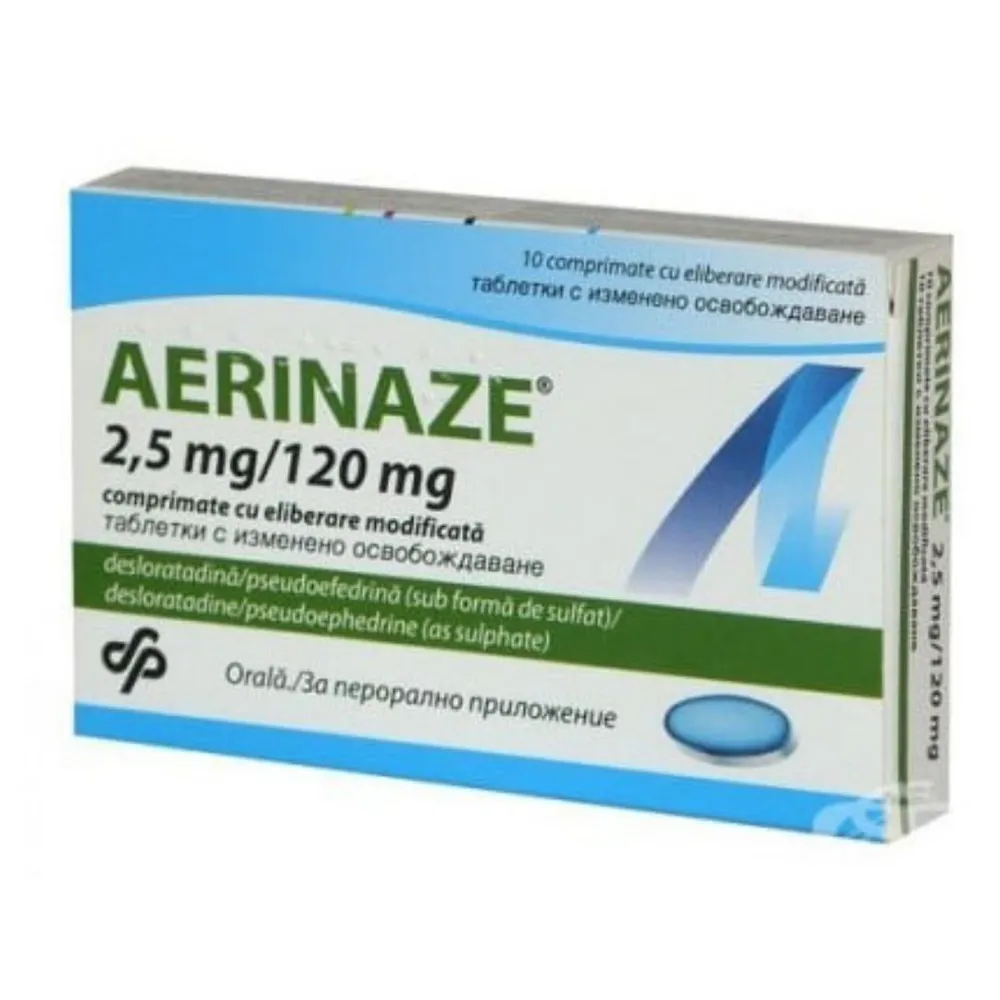
Table of Contents
Patient Information Leaflet
Aerinaze 2.5 mg/120 mg modified-release tablets
desloratadine/pseudoephedrine sulfate
Please read all of this leaflet carefully before taking this medicine because it contains
important information for you.
- Keep this leaflet. You may need to read it again.
- If you have any questions, ask your doctor, pharmacist, or nurse.
- This medicine has been prescribed for you only. Do not give it to other people, even if their symptoms are the same as yours, as it may be harmful.
- If you experience any side effects, including those not listed in this leaflet, inform your doctor, pharmacist, or nurse. See section 4.
Contents of this leaflet:
- What Aerinaze is and what it is used for
- What you need to know before taking Aerinaze
- How to take Aerinaze
- Possible side effects
- How to store Aerinaze
- Contents of the pack and other information
1. What Aerinaze is and what it is used for
What Aerinaze is
Aerinaze tablets contain a combination of two active substances: desloratadine, which is an
antihistamine, and pseudoephedrine sulfate, which is a decongestant.
How Aerinaze works
Antihistamines help reduce allergic symptoms by preventing the effects of a substance called
histamine, which is produced by the body. Decongestants help relieve nasal congestion (blocked/stuffy nose).
When Aerinaze should be used
Aerinaze tablets relieve symptoms associated with seasonal allergic rhinitis (hay fever), such as:
sneezing, runny nose, itching of the nose and eyes, when accompanied by nasal congestion, in adults and adolescents aged 12 years and older.
2. What you need to know before taking Aerinaze
Do not take Aerinaze
- if you are allergic to desloratadine, pseudoephedrine sulfate, adrenergic drugs, or to any of the other ingredients of this medicine (listed in section 6), or to loratadine
- if you have very high blood pressure (severe hypertension) or uncontrolled hypertension due to medication, suffer from a heart or vascular disease, or have had a stroke
- if you have glaucoma, have difficulty urinating, suffer from urinary tract obstruction, or have hyperactivity of the thyroid gland
- if you are taking monoamine oxidase inhibitors (MAOIs) (a class of antidepressant medicines) or have stopped taking these medicines within the last 14 days
- if you suffer from severe acute (sudden) or chronic (long-term) kidney disease or renal failure.
Warnings and precautions
Certain conditions may make you particularly sensitive to the decongestant
pseudoephedrine sulfate contained in this medicine. Consult your doctor, pharmacist, or
nurse before taking Aerinaze:
- if you are 60 years of age or older. Elderly patients may be more sensitive to the effects of this medicine
- if you have diabetes
- if you have intestinal ulcers causing narrowing of the stomach, small intestine, or esophagus (stenosing peptic ulcer)
- if you have intestinal obstruction (pyloric or duodenal blockage)
- if you have bladder neck obstruction (vesical cervix blockage)
- if you have a history of breathing difficulties due to tightening of the muscles in the lung (bronchospasm)
- if you have liver, kidney, or bladder problems.
Additionally, if you have experienced or have been diagnosed with any of the following conditions, you must inform your
doctor, pharmacist, or nurse, as they may advise you to stop taking
Aerinaze:
- high blood pressure
- rapid or pounding heartbeat
- irregular heartbeat
- nausea and headache or worsening headache while taking Aerinaze
- if you have a personal or family history of seizures
- severe skin reactions, including signs and symptoms such as skin redness, multiple small boils, with or without fever.
If you are scheduled for surgery, your doctor may advise you to stop
taking Aerinaze 24 hours beforehand.
One of the active ingredients in Aerinaze, pseudoephedrine sulfate, may potentially lead to abuse, and high doses of pseudoephedrine sulfate can be toxic. Prolonged use may lead to taking more than the recommended dose of Aerinaze to achieve the desired effect, thereby increasing the risk of overdose. If you stop treatment abruptly, depression may occur.
Cases of reversible posterior encephalopathy syndrome (PRES) and reversible cerebral vasoconstriction syndrome (RCVS) have been reported following the use of medicines containing
pseudoephedrine. PRES and RCVS are rare conditions that may result in reduced blood flow to the brain. Stop using Aerinaze immediately and seek immediate medical attention if
you develop symptoms that could be signs of PRES or RCVS (see section 4 “Possible side effects” for symptoms).
Laboratory tests
Stop treatment with Aerinaze at least 48 hours before undergoing a skin test, as antihistamines
may affect the result.
Athletes taking Aerinaze may test positive in doping tests.
Use in children and adolescents
Do not administer this medicine to children under 12 years of age.
Other medicines and Aerinaze
Inform your doctor, pharmacist, or nurse if you are taking, have recently taken, or might take any other medicines. This is particularly important if you are taking:
- digitalis, a medicine used to treat certain heart conditions
- medicines for blood pressure (e.g. α-methyldopa, mecamylamine, reserpine, veratrum alkaloids, and guanethidine)
- oral or nasal decongestants (such as phenylpropanolamine, phenylephrine, ephedrine, oxymetazoline, naphazoline)
- diet pills (appetite-reducing drugs)
- amphetamines
- migraine medicines such as ergot alkaloids (e.g. dihydroergotamine, ergotamine, or methylergometrine)
- medicines for Parkinson’s disease or infertility such as bromocriptine, cabergoline, lisuride, and pergolide
- antacids for indigestion or stomach problems
- a medicine for diarrhea called kaolin
- tricyclic antidepressants (e.g. nortriptyline), antihistamines (e.g. cetirizine, fexofenadine).
Aerinaze and alcohol
Ask your doctor, pharmacist, or nurse if you can drink alcohol while taking Aerinaze. Drinking alcohol while taking Aerinaze is not recommended.
Pregnancy, breastfeeding, and fertility
If you are pregnant, suspect you may be pregnant, planning to become pregnant, or breastfeeding, consult your doctor, pharmacist, or nurse before taking this
medicine.
Aerinaze is not recommended during pregnancy.
With pseudoephedrine sulfate, a component of Aerinaze, a decrease in milk production has been reported in breastfeeding mothers. Desloratadine and pseudoephedrine sulfate are excreted in human milk. If you are breastfeeding, taking Aerinaze is not recommended.
Fertility
No data are available on male/female fertility.
Driving and using machines
At the recommended dose, this medicine is not expected to affect the ability to drive or operate machinery. Although most people do not experience drowsiness, it is recommended not to undertake activities requiring mental alertness, such as driving or operating machinery, before you have assessed your response to the medicine.
3. How to take Aerinaze
Take this medicine exactly as instructed by your doctor, pharmacist, or nurse. If you have any doubts, consult your doctor, pharmacist, or nurse.
Adults and adolescents aged 12 years and older
The recommended dose is one tablet twice daily, taken with a glass of water, either during or regardless of meals.
This medicine is for oral use.
Swallow the tablet whole without crushing, breaking, or chewing it before swallowing.
Do not take more tablets than recommended in the instructions for use. Do not take the tablets more frequently than recommended.
Do not take this medicine for more than 10 consecutive days unless prescribed otherwise by your doctor.
If you take more Aerinaze than you should
If you take more Aerinaze than prescribed, contact your doctor, pharmacist, or nurse immediately.
If you forget to take Aerinaze
If you forget to take your dose at the prescribed time, take it as soon as possible, then continue your treatment as usual. Do not take a double dose to make up for the missed dose.
If you stop taking Aerinaze
If you have any questions about the use of this medicine, consult your doctor, pharmacist, or nurse.
4. Possible side effects
Like all medicines, this medicine can cause side effects, although not everybody gets them.
Stop taking Aerinaze immediately and contact your doctor urgently if you develop symptoms that could be signs of posterior reversible encephalopathy syndrome (PRES) and reversible cerebral vasoconstriction syndrome (RCVS). These include:
- sudden, severe headache
- nausea
- vomiting
- confusion
- seizures
- changes in vision
The following side effects have been observed in clinical studies:
Common: these side effects may affect up to 1 in 10 people
- fast heartbeat
- decreased appetite
- fatigue
- restlessness with increased body movements
- constipation
- headache
- sleep disturbances
- dry mouth
- nervousness
- dizziness
- drowsiness
- sore throat
Uncommon: these side effects may affect up to 1 in 100 people
- heavy or irregular heartbeat
- dry throat
- itching
- stomach pain
- chills
- increased body movements
- flu-like gastric disturbances
- decreased sense of smell
- skin flushing
- nausea
- abnormal liver function tests
- hot flushes
- abnormal stools
- confusion
- pain or difficulty urinating
- blurred vision
- dry eye
- nosebleed
- irritated nose
- nasal inflammation
- runny nose
- sinus inflammation
- urinary problems
- changes in urination frequency
- increased blood sugar
- sugar in urine
- thirst
- anxiety
- irritability
- agitation
Very rare: the following additional side effects have been reported during post-marketing use of desloratadine and may affect up to 1 in 10,000 people
- severe allergic reactions (including difficulty breathing, wheezing, itching, rash, hives, swelling)
- vomiting
- muscle pain
- diarrhoea
- seizures
- hallucinations
- liver inflammation
- skin rashes
- changes in liver function tests
Not known: frequency cannot be estimated from the available data
- serious conditions affecting cerebral blood vessels, known as posterior reversible encephalopathy syndrome (PRES) and reversible cerebral vasoconstriction syndrome (RCVS)
- aggressive behaviour
- abnormal behaviour
- changes in heart rhythm
- weight gain
- increased appetite
- depressed mood
Cases of severe skin reactions, including symptoms such as fever, skin redness, or numerous small boils, have been reported with medicines containing pseudoephedrine.
Reporting of side effects
If you experience any side effect, including those not listed in this leaflet, talk to your doctor, pharmacist, or nurse. You can also report side effects directly via the national reporting system listed in Annex V. By reporting side effects, you can help provide more information on the safety of this medicine.
5. How to store Aerinaze
Keep this medicine out of the sight and reach of children.
Do not use this medicine after the expiry date which is stated on the carton after EXP. and on the
blister after EXP.
The expiry date refers to the last day of that month.
Do not store above 30°C. Keep the blisters in the carton to protect the medicine from light.
Do not dispose of medicines via wastewater or household waste. Ask your pharmacist how to dispose of medicines you no longer use. This will help protect the environment.
6. Package contents and other information
What Aerinaze contains
- The active substances are desloratadine and pseudoephedrine sulfate.
- Each tablet contains 2.5 mg of desloratadine and 120 mg of pseudoephedrine sulfate.
- The other components are:
- Components in the blue immediate-release layer: maize starch, microcrystalline cellulose, sodium edetate, citric acid, stearic acid, and colouring agent (Indigotine aluminium lake E132).
- Components in the white delayed-release layer: hypromellose 2208, microcrystalline cellulose, povidone K30, silicon dioxide, and magnesium stearate.
Description of the appearance of Aerinaze and contents of the pack
Aerinaze is a modified-release, two-layered blue and white oval tablet with "D12" engraved on the blue layer. Aerinaze tablets are supplied in packs of 2, 4, 7, 10, 14, or 20 tablets in blisters made of laminated film with a sealing foil.
Not all pack sizes may be marketed.
Marketing Authorisation Holder and Manufacturer
Marketing Authorisation Holder:
N.V. Organon
Kloosterstraat 6
5349 AB Oss
The Netherlands
Manufacturer:
Organon Heist bv Industriepark 30
2220 Heist-op-den-Berg
Belgium
For further information about this medicinal product, please contact the local representative of the Marketing Authorisation Holder:
België/Belgique/Belgien Lietuva
Organon Belgium Organon Pharma B.V. Lithuania atstovybė
Tél/Tel: 0080066550123 (+32 2 2418100) Tel.: +370 52041693
[email protected] [email protected]
България Luxembourg/Luxemburg
Органон (И.А.) Б.В. - клон България Organon Belgium
Тел.: +359 2 806 3030 Tél/Tel: 0080066550123 (+32 2 2418100)
[email protected] [email protected]
Česká republika Magyarország
Organon Czech Republic s.r.o. Organon Hungary Kft.
Tel: +420 233 010 300 Tel.: +36 1 766 1963
[email protected] [email protected]
Danmark Malta
Organon Denmark ApS Organon Pharma B.V., Cyprus branch
Tlf: +45 4484 6800 Tel: +356 2277 8116
[email protected] [email protected]
Deutschland Nederland
Organon Healthcare GmbH N.V. Organon
Tel.: 0800 3384 726 (+49 (0) 89 2040022 10) Tel: 00800 66550123
[email protected] (+32 2 2418100)
[email protected]
Eesti Norge
Organon Pharma B.V. Estonian RO Organon Norway AS
Tel: +372 66 61 300 Tlf: +47 24 14 56 60
[email protected] [email protected]
Ελλάδα Österreich
BIANEΞ Α.Ε. Organon Austria GmbH
Τηλ: +30 210 80091 11 Tel: +43 (0) 1 263 28 65
[email protected] [email protected]
España Polska
Organon Salud, S.L. Organon Polska Sp. z o.o.
Tel: +34 91 591 12 79 Tel.: +48 22 105 50 01
[email protected] [email protected]
France Portugal
Organon France Organon Portugal, Sociedade Unipessoal Lda.
Tél: +33 (0) 1 57 77 32 00 Tel: +351 218705500
[email protected]
Hrvatska România
Organon Pharma d.o.o. Organon Biosciences S.R.L.
Tel: +385 1 638 4530 Tel: +40 21 527 29 90
[email protected] [email protected]
Ireland Slovenija
Organon Pharma (Ireland) Limited Organon Pharma B.V., Oss, podružnica
Tel: +353 Ljubljana
[email protected] Tel: +386 1 300 10 80
[email protected]
Ísland Slovenská republika
Vistor hf. Organon Slovakia s. r. o.
Sími: +354 535 70 00 Tel: +421 2 44 88 98 88
[email protected]
Italia Suomi/Finland
Organon Italia S.r.l. Organon Finland Oy
Tel: +39 90259059 Puh/Tel: +358 (0) 29 170 3520
[email protected] [email protected]
Κύπρος Sverige
Organon Pharma B.V., Cyprus branch Organon Sweden AB
Τηλ: +357 22866730 Tel: +46 8 502 597 00
[email protected] [email protected]
Latvija United Kingdom (Northern Ireland)
Ārvalsts komersanta “Organon Pharma B.V.” Organon Pharma (UK) Limited
pārstāvniecība Tel: +44 (0) 208 159 3593
Tel: +371 66968876 [email protected]
[email protected]
More detailed information on this medicinal product is available on the website of the European Medicines Agency, https://www.ema.europa.eu .
Annex IV
Scientific Conclusions
Scientific Conclusions
Pseudoephedrine is an alpha-adrenergic receptor agonist. Its mechanism of action as a decongestant is based on the constriction of dilated arterioles in the nasal mucosa and the reduction of blood flow, resulting in decreased rhinorrhea and nasal congestion. After oral administration of a single dose of pseudoephedrine, nasal decongestion occurs within 30 minutes and lasts for 4–6 hours.
Medicinal products containing pseudoephedrine are used for the symptomatic treatment of nasal or sinus congestion caused by the common cold, influenza, sinusitis, allergic rhinosinusitis, vasomotor rhinitis, and aerotitis (otitic barotrauma). In numerous authorised medicinal products containing pseudoephedrine available in the EU, pseudoephedrine is combined with other active substances such as antihistamines, analgesics, and/or antitussives. These combinations treat multiple symptoms simultaneously in respiratory conditions. Medicinal products containing pseudoephedrine have been approved for several decades as both prescription and over-the-counter (OTC) medicines. Pseudoephedrine-containing medicines are available in most EU Member States; the majority of these products have been authorised at national level, and one via the centralised procedure: Aerinaze (desloratadine 2.5 mg/pseudoephedrine 120 mg). Pseudoephedrine-containing medicines are widely used, with reported exposure reaching millions of patients annually.
The efficacy of pseudoephedrine-containing medicines in their approved indications is considered established, particularly in the short-term reduction of nasal congestion. Regarding safety, it is known that pseudoephedrine-containing medicines are associated with cardiovascular risks such as hypertension, arrhythmias, heart failure, ischaemic risks (transient ischaemic attack, myocardial infarction, stroke, ischaemic colitis, and ischaemic optic neuropathy), or haemorrhagic stroke. These adverse events are variably indicated in the product information. Some pseudoephedrine-containing medicines include various levels of restrictions and warnings in their product information to reduce these risks. The extent of information on cardiovascular and cerebrovascular risks varies between individual products.
Within the context of the PSUSA procedure for pseudoephedrine in combination with ibuprofen (PSUSA/00001711/202207), concluded in February 2023, the PRAC identified new safety data on ischaemic cerebrovascular adverse reactions, particularly spontaneous cases of PRES (reversible posterior encephalopathy syndrome) and RCVS (reversible cerebral vasoconstriction syndrome) in the EudraVigilance data analysis system (EVDAS) and in the literature. These ischaemic events contributed to the accumulation of serious ischaemic risks observed in association with pseudoephedrine-containing products. It was therefore considered necessary to conduct a thorough assessment to examine the impact of these concerns on the risk-benefit balance of pseudoephedrine-containing products. A referral procedure was therefore initiated.
As part of this review, the PRAC requested marketing authorisation holders of pseudoephedrine-containing medicinal products to conduct a literature review focused on publications concerning severe ischaemic neurological disorders (with particular attention to PRES/RCVS events) following pseudoephedrine administration, and to propose risk minimisation measures to prevent or mitigate the risks of cerebrovascular and other known ischaemic events. The PRAC also considered an EudraVigilance (EV) analysis performed by the EMA and consulted experts during a meeting with an ad hoc expert group to gather further information and their opinions on the matter. A third-party communication was also received during this procedure.
On 30 November 2023, the PRAC adopted a recommendation, which was subsequently reviewed by the CHMP (Committee for Medicinal Products for Human Use), under Article 107duodecies of Directive 2001/83/EC.
General summary of the PRAC’s scientific assessment
The PRAC considered that the data reviewed within the context of this referral procedure do not challenge the efficacy of pseudoephedrine-containing products, as no new data were provided to alter the already established benefit of these medicines in their respective approved indications. The therapeutic positioning of pseudoephedrine-containing medicines as symptomatic treatment for cold/flu and allergic rhinitis was also confirmed by the experts consulted during the procedure. Regarding safety, the PRAC reviewed all data presented during the review concerning the risks of PRES and RCVS within the overall safety profile of pseudoephedrine-containing medicines. The causal relationship between pseudoephedrine and PRES and RCVS was evaluated and considered at least reasonably possible. This causality assessment was supported by a total of 34 serious cases of PRES and RCVS considered probably or possibly related to pseudoephedrine, articles in the literature describing pseudoephedrine as a trigger for PRES and RCVS, and the plausible mechanism of action of pseudoephedrine in the development of PRES and RCVS.
PRES is a neurological disorder caused by dysregulation of cerebral perfusion. RCVS is a medical condition characterised by multifocal arterial vasoconstriction and vasodilation of the cerebral vasculature. Pseudoephedrine is described in the literature as a precipitating factor for the development of PRES and RCVS, along with other vasoactive agents. Clinical data also indicate that pseudoephedrine can cause a dose-dependent increase in blood pressure, which is a standard risk factor for cardiovascular and cerebrovascular complications, including PRES and RCVS.
The number of reported cases of PRES or RCVS identified as related to pseudoephedrine (n = 34) was not considered high when compared to the high level of patient exposure to this substance. This view was agreed upon by the experts consulted during the procedure. However, the PRAC observed that all reported cases with pseudoephedrine were serious, required hospitalisation, and in five cases, recovery was reported with sequelae. The PRAC also noted that PRES and RCVS are serious conditions, although generally reversible or resolvable with timely diagnosis and management. Despite not being observed among the cases examined in association with pseudoephedrine use, irreversible or fatal cases of PRES have been reported. Additionally, potentially fatal forms of RCVS with multiple strokes and uncontrolled massive cerebral oedema have been reported (not in association with pseudoephedrine). Early recognition and intervention are therefore crucial to achieving a favourable clinical outcome in reversible posterior encephalopathy and reversible cerebral vasoconstriction syndrome. Consequently, given the severity of these syndromes, it is important to minimise their occurrence in patients treated with pseudoephedrine-containing medicines, given the reasonably possible association between pseudoephedrine use and the development of PRES and RCVS as described above. The product information for pseudoephedrine-containing medicines must therefore be updated to inform healthcare professionals and patients about PRES and RCVS, their signs and symptoms, and actions to take if related reactions occur (section 4.4 of the Summary of Product Characteristics and corresponding section(s) of the Package Leaflet). Furthermore, the adverse reactions must be added with an estimated frequency of "not known" in the product information (section 4.8 of the Summary of Product Characteristics and corresponding section of the Package Leaflet).
Specifically regarding risk factors for PRES and RCVS, the PRAC noted the established link between severe hypertension and the risk of reversible posterior encephalopathy and reversible cerebral vasoconstriction syndrome, as well as the known hypertensive effects of pseudoephedrine. Patients with severe or uncontrolled hypertension treated with pseudoephedrine-containing medicines are considered at higher risk of developing PRES and RCVS. Separately, in several articles, impaired renal function (renal disease, acute kidney injury, renal failure, end-stage renal disease, and renal impairment) is reported as a significant risk factor for PRES and RCVS. Pseudoephedrine is primarily excreted by the kidneys. It is known that renal impairment increases plasma levels of pseudoephedrine and that pseudoephedrine should not be administered to patients with severe renal impairment. Therefore, patients with renal disease/renal failure are at increased risk of PRES and RCVS when taking pseudoephedrine-containing medicines. In conclusion, the PRAC considered that patients with severe or uncontrolled hypertension and patients with severe acute or chronic renal disease/renal failure should not be treated with pseudoephedrine-containing medicines and that a contraindication should therefore be added (section 4.3 of the Summary of Product Characteristics and corresponding sections of the Package Leaflet).
A direct communication to healthcare professionals, together with a communication plan, was also agreed upon to inform relevant healthcare professionals about the risks of PRES and RCVS with pseudoephedrine-containing medicines and the agreed changes to the product information. During the assessment, the PRAC discussed additional risk minimisation measures, including the distribution of educational materials, development of a patient reminder card, and awareness campaigns targeting healthcare professionals. These measures were also discussed by the clinical experts consulted during the procedure, and some were proposed by a stakeholder. After careful examination of the available evidence regarding the risks of PRES and RCVS, these additional measures were not considered proportionate in light of the magnitude of the risks. No new evidence was identified regarding other known risks associated with pseudoephedrine-containing medicines that could lead the PRAC to recommend further risk minimisation measures beyond those described above. In light of the above, the committee considered that the risk-benefit balance of pseudoephedrine-containing medicines in their approved indications remains favourable, subject to the recommended changes to the product information.
Reasons for the PRAC's recommendation
Considering that:
- the PRAC reviewed the procedure under Article 31 of Directive 2001/83/EC resulting from pharmacovigilance data on pseudoephedrine-containing medicines;
- the PRAC reviewed all available data for pseudoephedrine-containing medicines regarding the risks of PRES and RCVS within the context of the overall safety profile of the medicines, including data from EudraVigilance, the literature, and responses to PRAC questions submitted by marketing authorisation holders; the PRAC also considered the outcome of the consultation with an ad hoc expert group and documents submitted by a stakeholder;
- the PRAC concluded that the efficacy of pseudoephedrine-containing medicines in their approved indications is established;
- it further concluded that severe reactions of PRES and RCVS are important identified risks associated with the use of pseudoephedrine-containing medicines;
- the PRAC considered that the data reviewed raise concerns regarding the use of pseudoephedrine-containing medicines in patients with severe or uncontrolled hypertension and in patients with severe acute or chronic renal disease/renal failure; it therefore concluded that the use of pseudoephedrine-containing medicines should be contraindicated in these patient populations;
- furthermore, the PRAC concluded that there is a need to update the product information for these medicines to reflect current knowledge on the occurrence of these reactions and the measures to be taken in case of symptoms or signs of PRES or RCVS. In light of the above, the PRAC concluded that the benefit-risk balance remains favourable for pseudoephedrine-containing medicines, subject to the recommended changes to the product information as described above. The committee therefore recommended variations to the terms of the marketing authorisations for pseudoephedrine-containing medicines. It also agreed on the content of a communication to healthcare professionals together with a communication plan for its distribution.
CHMP Opinion
Considering the PRAC's recommendation, the CHMP agrees with its general conclusions and the reasons for its recommendation.
The CHMP therefore considers that the risk-benefit balance for pseudoephedrine-containing medicines remains favourable, subject to the above-mentioned changes to the product information.
It therefore recommends variations to the terms of the marketing authorisations for medicinal products containing pseudoephedrine.