Addofix
ItalyTable of Contents
- Package leaflet: Information for the patient
- Addofix 10 mg coated tablets
- 1. What Addofix is and what it is used for
- 2. What you need to know before taking Addofix
- 3. How to take Addofix
- 4. Possible side effects
- 5. How to store Addofix
- 6. Package contents and other information
- Package leaflet: information for the user
- ADDOFIX 20 mg/ml injection solution
- 1. What Addofix is and what it is used for
- 2. What you need to know before using Addofix
- 3. How to use Addofix
- 4. Possible side effects
- 5. How to store Addofix
- 6. Package contents and other information
Package leaflet: Information for the patient
Addofix 10 mg coated tablets
N-butylbromide of hyoscine
Please read this leaflet carefully before taking this medicine because it contains important information for you.
Always take this medicine exactly as described in this leaflet or as your doctor or pharmacist has instructed.
- Keep this leaflet. You may need to read it again.
- If you need more information or advice, consult your pharmacist.
- If any of the side effects occur, including those not listed in this leaflet, contact your doctor or pharmacist. See section 4.
- Contact your doctor if you do not notice any improvement or if your symptoms worsen after a short period of treatment.
Contents of this leaflet:
- What Addofix is and what it is used for
- What you need to know before taking Addofix
- How to take Addofix
- Possible side effects
- How to store Addofix
- Contents of the pack and other information
1. What Addofix is and what it is used for
Addofix contains the active substance N-butylbromide of hyoscine, which belongs to a group of medicines called semisynthetic belladonna alkaloids used for motility disorders of the stomach, intestine, and biliary tract (gastrointestinal tract).
This medicine is indicated in adults and children over 6 years of age for:
- stomach and intestinal pain and spasms
- pain and spasms due to obstruction in the flow of the biliary tract (through which bile flows, a substance involved in certain digestive processes).
Consult your doctor if you do not notice improvement or if you experience worsening of symptoms after a short period of treatment.
2. What you need to know before taking Addofix
Do not take Addofix
- if you are allergic to N-butylbromide of hyoscine or to any of the other ingredients of this medicine (listed in section 6);
- if you have a severe form of glaucoma, a disease of the eye caused by increased pressure of the fluid inside it (acute angle-closure glaucoma);
- if you have an enlarged prostate (prostatic hypertrophy);
- if you have an inability of the bladder to empty completely (urinary retention);
- if you have a narrowing of the stomach or intestine (pyloric or gastrointestinal tract stenosis);
- in case of intestinal obstruction or if you suspect you have an intestinal obstruction;
- if you suffer from a bowel disease associated with disturbances in intestinal motility (paralytic or obstructive ileus), chronic inflammatory bowel disease (ulcerative colitis), or colon dilation (megacolon);
- if you have a condition caused by frequent regurgitation of stomach contents into the oesophagus, the tube through which food reaches the stomach (reflux esophagitis);
- if you have loss of intestinal muscle tone (intestinal atony), particularly if you are elderly or debilitated;
- if you have a disorder characterized by muscle weakness and fatigue (severe myasthenia gravis);
- in children under 6 years of age;
- in case of rare hereditary conditions that may be incompatible with an excipient of the product (see "Addofix film-coated tablets contain sucrose").
Warnings and precautions
Talk to your doctor or pharmacist before taking Addofix.
Immediately inform your doctor if you experience severe abdominal pain of unknown cause that persists or worsens, or if it occurs together with symptoms such as:
- fever;
- nausea;
- vomiting;
- altered intestinal movements;
- abdominal tenderness;
- low blood pressure;
- fainting;
- blood in the stools.
Take this medicine with caution and inform your doctor if any of the following conditions apply to you:
- if you have breathing problems (chronic obstructive respiratory diseases), as Addofix reduces the volume of substances produced by the bronchi (bronchial secretions);
- if you are elderly;
- if you have disorders of the autonomic nervous system;
- if you have or are predisposed to heart rhythm disorders (cardiac tachyarrhythmias);
- if you have high blood pressure (arterial hypertension);
- if you have serious heart problems (congestive heart failure);
- if you have a thyroid dysfunction that may cause weight loss, fatigue, and weakness (hyperthyroidism);
- if you have liver or kidney problems (patients with hepatic or renal disease);
- if you have a condition caused by increased pressure within the eye (acute angle-closure glaucoma);
- if you have delayed or blocked digestion or urination (intestinal or urinary stasis);
- if you have a fever (pyrexia), as this medicine reduces sweating.
If you experience eye pain and redness with vision loss after injection of Addofix, seek urgent medical attention from an ophthalmologist, as you may have a severe form of glaucoma—a disease of the eye caused by increased pressure of the fluid inside it (acute angle-closure glaucoma)—that has not been previously diagnosed or treated.
Medicines like Addofix can prolong gastric emptying time, leading to food retention.
If you are taking high doses of this medicine, do not stop treatment abruptly (see section "If you stop treatment with Addofix"). If you experience adverse effects, inform your doctor, who will assess whether to reduce the dose to manage mild adverse effects or discontinue treatment in case of severe adverse effects.
Children
Addofix must not be administered to children under 6 years of age.
Elderly
If you are elderly, consult your doctor before starting treatment with Addofix.
Other medicines and Addofix
Inform your doctor or pharmacist if you are taking, have recently taken, or might take any other medicines.
Take this medicine with caution and only under strict medical supervision in the following situations:
- if you are taking medicines such as antidepressants (particularly tricyclic and tetracyclic antidepressants), phenothiazines (medicines used for allergies or mental disorders), butyrophenones (medicines used for mental disorders and vomiting), antihistamines (medicines used for allergies), antipsychotics (medicines used for mental disorders), quinidine (a medicine for heart conditions), amantadine (a medicine for central nervous system disorders involving loss of movement control, such as Parkinson's disease), disopyramide (a medicine for heart conditions), and other medicines for respiratory diseases (such as tiotropium, ipratropium), or substances similar to atropine (a substance acting on the nervous system), as their effects may be enhanced by Addofix;
- if you are taking medicines for nausea and vomiting, such as metoclopramide, as both their effect and that of Addofix may be reduced;
- if you are taking beta-adrenergic drugs (medicines used to treat asthma), as the tachycardia (increased heart rate) induced by these drugs may be increased by Addofix.
Avoid taking this medicine together with antacids, medicines used to reduce stomach acidity, as they may reduce the absorption of this medicine in the intestine.
Addofix and alcohol
Do not consume alcoholic beverages during treatment with this medicine.
Pregnancy, breastfeeding, and fertility
If you are pregnant, suspect you may be pregnant, are planning a pregnancy, or are breastfeeding, consult your doctor or pharmacist before taking this medicine.
If you are pregnant or breastfeeding, it is preferable to avoid using Addofix.
Your doctor will assess whether the use of this medicine is strictly necessary.
Driving and using machines
Medicines like Addofix may cause visual disturbances (visual accommodation disorders) and drowsiness, which may affect your ability to drive or operate machinery. If you experience these symptoms, avoid driving or operating machinery.
Addofix contains sucrose
If your doctor has diagnosed you with an intolerance to certain sugars, contact them before taking this medicine.
3. How to take Addofix
Take this medicine exactly as stated in this leaflet or as instructed by your doctor or pharmacist. If you have any doubts, consult your doctor or pharmacist.
The recommended dose for adults and adolescents over 14 years of age is 1-2 tablets, three times a day.
If necessary, your doctor may increase the dose.
Swallow the tablets whole with an adequate amount of water.
Take this medicine only for short treatment periods.
Do not exceed the recommended doses without consulting your doctor. Do not take Addofix daily on a regular basis or for prolonged periods without consulting your doctor and without undergoing investigations to identify the cause of stomach pain.
If cramps (spasms) recur repeatedly or if you notice any change in them, consult your doctor.
Use in children aged between 6 and 14 years
Consult your doctor and carefully follow his instructions before starting treatment with Addofix.
If you take more Addofix than you should
After taking high doses of this medicine, the following effects may occur:
- difficulty in urinating (urinary retention);
- dry mouth (xerostomia);
- skin flushing;
- increased heart rate (tachycardia);
- changes in bowel activity (inhibition of intestinal motility);
- temporary visual disturbances.
In case of accidental ingestion/overdose of Addofix, inform your doctor immediately or go to the nearest hospital.
Treatment
Your doctor will prescribe the appropriate treatment.
If you forget to take Addofix
Do not take a double dose to make up for the missed dose.
If you stop taking Addofix
If you are taking high doses of this medicine, do not stop treatment with Addofix abruptly, but consult your doctor, as a gradual discontinuation of treatment is recommended.
If you have any doubts about how to use this medicine, consult your doctor or pharmacist.
4. Possible side effects
Like all medicines, Addofix may cause side effects, although not everyone experiences them.
The following side effects may occur, usually of mild severity:
Uncommon (may affect up to 1 in 100 people)
- skin reactions, skin irritation, appearance of itchy rash (urticaria),
- itching;
- increased heart rate (tachycardia);
- dry mouth (xerostomia);
- changes in sweating.
Rare (may affect up to 1 in 1,000 people)
- difficulty in urinating (urinary retention).
Frequency not known (frequency cannot be estimated from the available data)
- severe allergic reactions (anaphylactic reactions up to anaphylactic shock),
- difficulty in breathing (dyspnoea),
- skin rash (cutaneous rash),
- skin irritation (erythema) and other allergic manifestations.
The following side effects have also been observed:
- dilation of the pupil (mydriasis),
- difficulty focusing images (accommodation disorders),
- increased pressure of the fluid inside the eye (intraocular pressure),
- drowsiness,
- constipation.
Reporting of side effects
If you experience any side effect, including those not listed in this leaflet, please contact your doctor or pharmacist. You may also report side effects directly via the national reporting system at https://www.aifa.gov.it/content/segnalazioni-reazioni-avverse. By reporting side effects, you can help provide more information on the safety of this medicine.
5. How to store Addofix
Keep this medicine out of the sight and reach of children.
Do not use this medicine after the expiry date stated on the packaging after "Exp.". The expiry date refers to the last day of that month.
This medicine does not require any special storage conditions.
Do not dispose of medicines via wastewater or household waste. Ask your pharmacist how to dispose of medicines you no longer use. This will help protect the environment.
6. Package contents and other information
What Addofix contains
- The active substance is N-butylbromide of hyoscine. Each tablet contains 10 mg of N-butylbromide of hyoscine.
- Other components are:
o tablet core: calcium hydrogen phosphate anhydrous, corn starch, pregelatinized starch, silicon dioxide, tartaric acid, stearic acid;
o coating: povidone, sucrose, talc, titanium dioxide, macrogol 6000, carnauba wax, spray-dried acacia.
Description of the appearance of Addofix and pack contents
Box containing 30 coated tablets.
Marketing Authorization Holder
So.Se.PHARM S.r.l. – Via dei Castelli Romani, 22, 00071 Pomezia (RM) - Italy
Manufacturer
Special Product'sLine S.p.A. – Via Frattarotonda Vado Largo, 1, 03012 Anagni (FR) – Italy
Package leaflet: information for the user
ADDOFIX 20 mg/ml injection solution
N-butylbromide of hyoscine
Equivalent medicine
Read this leaflet carefully before using this medicine as it contains important information for you.
- Keep this leaflet. You may need to read it again.
- If you have any questions, consult your doctor, pharmacist or nurse.
- This medicine has been prescribed for you only. Do not give it to others, even if their symptoms are the same as yours, as it could be harmful.
- If you experience any adverse reaction, including those not listed in this leaflet, contact your doctor, pharmacist or nurse. See section 4.
Contents of this leaflet:
- What Addofix is and what it is used for
- What you need to know before using Addofix
- How to use Addofix
- Possible side effects
- How to store Addofix
- Contents of the pack and other information
1. What Addofix is and what it is used for
Addofix contains the active substance N-butylbromide of hyoscine, which belongs to a group of medicines called semisynthetic belladonna alkaloids used for motility disorders of the stomach, intestine, biliary tract (gastrointestinal tract), and genitourinary tract.
This medicine is indicated in adults for:
- pain and spasms in the stomach and intestine
- pain and spasms due to obstruction in the flow of the urinary and biliary tracts (through which bile flows, a substance involved in certain digestive processes).
Consult your doctor if you do not feel better or if you feel worse after using this medicine.
2. What you need to know before using Addofix
Do not use Addofix
- if you are allergic to N-butylbromide of hyoscine, to similar substances, or to any of the other ingredients of this medicine (listed in section 6);
- if you have a disease caused by increased pressure in the eye and you are not taking medicines to treat this condition (untreated acute-angle glaucoma);
- if you have an enlarged prostate or have difficulty urinating (prostatic hypertrophy or other causes of urinary retention);
- if you have a narrowing of the stomach or intestine (pyloric stenosis or gastrointestinal tract obstruction);
- if you have reduced intestinal activity (paralytic ileus) or have severe inflammation of the stomach or intestine (ulcerative colitis, megacolon);
- if you have inflammation of the esophagus caused by the backflow of undigested material (reflux esophagitis);
- if you have loss of intestinal muscle tone (intestinal atony), especially if you are elderly or debilitated;
- if you have a disease characterized by muscle weakness and fatigue (myasthenia gravis);
- if you have heart rhythm disorders (cardiac tachyarrhythmias);
- if you have an increased heart rate (tachycardia).
If you are taking medicines used to reduce or prevent blood clotting (anticoagulants), do not use Addofix by intramuscular injection; instead, consult your doctor, who will administer the medicine intravenously or subcutaneously to avoid bruising (hematoma).
Warnings and precautions
Talk to your doctor, pharmacist, or nurse before using Addofix.
Immediately inform your doctor if you experience severe abdominal pain of unknown cause, which persists or worsens or occurs together with symptoms such as:
- fever;
- nausea;
- vomiting;
- changes in bowel movements;
- abdominal tenderness;
- low blood pressure;
- fainting;
- blood in the stool. Your doctor will carry out appropriate tests to determine the cause of your symptoms.
Use this medicine with caution if any of the following conditions apply to you:
- if you have breathing problems (chronic obstructive respiratory diseases), as Addofix reduces the volume of substances produced by the bronchi (bronchial secretions);
- if you are elderly;
- if you have disorders of the autonomic nervous system;
- if you have high blood pressure (arterial hypertension);
- if you have serious heart problems (congestive heart failure);
- if your thyroid is overactive (hyperthyroidism);
- if you have liver or kidney problems (patients with hepatic or renal disease);
- if you have a disease caused by increased pressure inside the eye (acute-angle glaucoma);
- if you have delayed or slowed digestion or difficulty urinating (intestinal or urinary stasis);
- if you are predisposed to heart rhythm disorders (tachyarrhythmias);
- if you have fever (pyrexia), as this medicine reduces sweating.
If you experience eye pain and redness with vision loss after injection of Addofix, seek urgent medical attention from an ophthalmologist, as you may have a severe form of glaucoma (a disease of the eye caused by increased pressure of the fluid inside the eye—acute-angle glaucoma) that has not been previously diagnosed or treated.
Medicines such as Addofix may prolong gastric emptying time, leading to retention of substances in the stomach.
If you are using high doses of this medicine, do not stop treatment abruptly (see section “If you stop treatment with Addofix”). If you experience side effects, inform your doctor, who will assess whether to reduce the dose to manage mild side effects or discontinue treatment in case of severe side effects.
Addofix may cause severe allergic reactions (anaphylaxis, including shock) following administration by injection (parenteral route). Therefore, your doctor will monitor you after the injection.
If you have heart problems and are receiving parenteral treatment with Addofix, your doctor will monitor you closely.
Children
Addofix must not be administered to children.
Elderly
If you are elderly, consult your doctor before starting treatment with Addofix.
Other medicines and Addofix
Inform your doctor, pharmacist, or nurse if you are taking, have recently taken, or might take any other medicines.
Use this medicine with caution and only under strict medical supervision in the following situations:
- if you are taking medicines such as antidepressants (particularly tricyclic and tetracyclic antidepressants), phenothiazines (medicines used for allergies or mental disorders), butyrophenones (medicines used for mental disorders and vomiting), antihistamines (medicines used for allergies), antipsychotics (medicines used for mental disorders), quinidine (a heart medicine), amantadine (a medicine for central nervous system disorders involving loss of motor control, such as Parkinson’s disease), disopyramide (a heart medicine), and other medicines for respiratory diseases (such as tiotropium, ipratropium), or substances similar to atropine (a substance acting on the nervous system), as their effects may be increased by Addofix;
- if you are taking medicines for nausea and vomiting, such as metoclopramide, as both their effects and those of Addofix may be reduced;
- if you are taking beta-adrenergic drugs (medicines used to treat asthma), as the tachycardia (increased heart rate) induced by these drugs may be enhanced by Addofix.
Avoid using this medicine together with antacids, medicines used to reduce stomach acidity.
Addofix and alcohol
Do not consume alcoholic beverages during treatment with this medicine.
Pregnancy, breastfeeding, and fertility
If you are pregnant, think you may be pregnant, are planning a pregnancy, or are breastfeeding, consult your doctor, pharmacist, or nurse before using this medicine.
There are insufficient data available to determine the effect of this medicine in pregnant or breastfeeding women. Therefore, if you are pregnant or breastfeeding, avoid using Addofix.
Driving and using machines
This medicine may cause visual disturbances (impaired visual accommodation), dizziness, and drowsiness, which may affect your ability to drive or operate machinery. If you experience these symptoms, avoid driving or operating machinery.
Addofix contains sodium
This medicine contains less than 1 mmol (23 mg) of sodium per vial, i.e., it is practically ‘sodium-free’.
3. How to use Addofix
Use this medicine exactly as directed by your doctor or pharmacist. If you have any doubts,
consult your doctor, pharmacist or nurse.
Adults
The recommended dose is:
- 1 vial several times a day for intramuscular or intravenous injection.
The Addofix solution must be injected slowly.
Do not use Addofix daily and regularly or for prolonged periods without undergoing investigations to determine
the cause of abdominal pain.
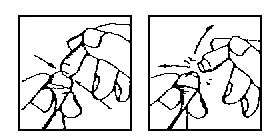
Instructions for opening the vial
The vial has a score line to facilitate breaking (pre-scored vial), so a file is not required.
If you use more Addofix than you should
After administration of excessive doses of this medicine, the following effects may occur:
- difficulty in urinating (urinary retention);
- dry mouth;
- increased heart rate (tachycardia);
- mild feeling of tiredness (lethargy);
- temporary visual disturbances.
In case of accidental ingestion/overdose of Addofix, inform your doctor immediately or go to the nearest
hospital.
If you forget to use Addofix
Do not use a double dose to make up for the forgotten dose.
If you stop using Addofix
If you are using high doses of this medicine, do not stop treatment with Addofix abruptly, but consult your
doctor, as gradual discontinuation is recommended.
If you have any doubts about how to use this medicine, consult your doctor, pharmacist or nurse.
4. Possible side effects
Like all medicines, Addofix can cause side effects, although not everybody gets them.
The following side effects may occur, usually of mild severity:
Common (may affect up to 1 in 10 people)
- Vision disorders (accommodation disturbances);
- Increased heart rate (tachycardia);
- Dizziness;
- Dry mouth (xerostomia).
Frequency not known (frequency cannot be estimated from the available data)
- Severe allergic reactions (anaphylactic shock, including fatal outcomes, anaphylactic reactions), breathing difficulties (dyspnoea), skin irritations (urticaria, skin rash, erythema), itching, and other allergic manifestations (hypersensitivity);
- Eye problems (mydriasis, increased intraocular pressure);
- Decreased blood pressure, skin flushing;
- Altered sweating;
- Difficulty in urination (urinary retention).
The following side effects have also been reported: - Drowsiness,
- Constipation,
- Difficulty in urination.
High doses may lead to signs of central nervous system stimulation, and interference with consciousness, heart and lung function.
Pain at the injection site is rarely observed, particularly following intramuscular administration.
Reporting of side effects
If you experience any side effect, including those not listed in this leaflet, please inform your doctor or pharmacist. You can also report side effects directly via the national reporting system at https://www.aifa.gov.it/content/segnalazioni-reazioni-avverse. By reporting side effects, you can help provide more information on the safety of this medicine.
5. How to store Addofix
Keep this medicine out of the sight and reach of children.
Do not use this medicine after the expiry date stated on the packaging after "Exp.". The expiry date refers to the last day of that month.
Store below 30 °C.
Do not dispose of medicines via wastewater or household waste. Ask your pharmacist how to dispose of medicines you no longer use. This will help protect the environment.
6. Package contents and other information
What Addofix contains
- The active substance is N-butylbromide of hyoscine. Each vial (1 ml) contains 20 mg of N-butylbromide of hyoscine.
- The other components are: sodium chloride, water for injectable preparations.
Description of the appearance of Addofix and contents of the pack
Pack containing 6 vials of 1 ml.
Marketing Authorization Holder
So.Se.PHARM S.r.l. - Via dei Castelli Romani, 22, 00071 Pomezia (RM) - Italy
Manufacturer
DOPPEL FARMACEUTICI S.r.l. – Via Volturno, 48 – Quinto de’ Stampi – 20089 Rozzano (MI) – Italy