Actisinu
Italy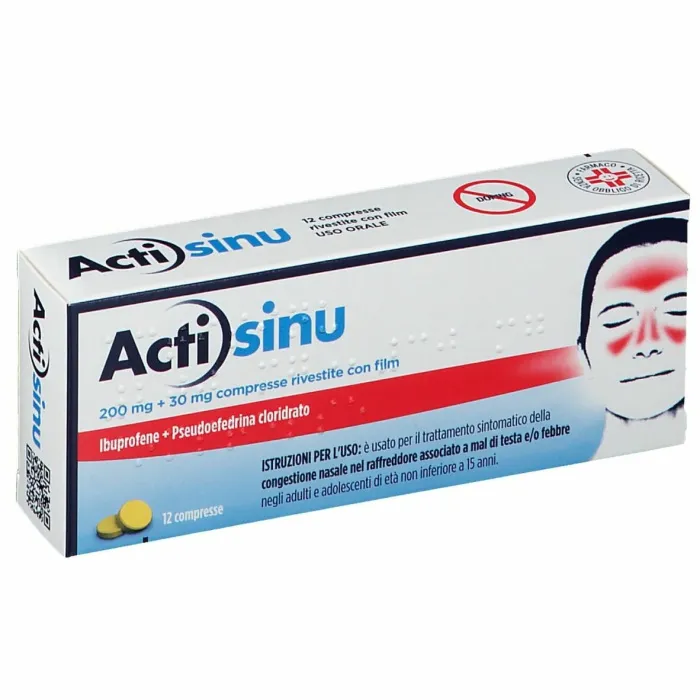
Table of Contents
Package leaflet: Information for the patient
ACTISINU 200 mg/30 mg, film-coated tablets
Ibuprofen/Pseudoephedrine hydrochloride
For adults and adolescents aged 15 years and over
Please read all of this leaflet carefully before taking this medicine because it contains important information for you.
Always take this medicine exactly as described in this leaflet or as your doctor or pharmacist has instructed you.
- Keep this leaflet. You may need to read it again.
- If you need more information or advice, consult your pharmacist.
- If you experience any side effects, including those not listed in this leaflet, consult your doctor or pharmacist. See section 4.
- Consult your doctor if symptoms worsen or if you need to use this medicine for longer than 4 days in adults or 3 days in adolescents.
Contents of this leaflet:
- What ACTISINU is and what it is used for
- What you need to know before taking ACTISINU
- How to take ACTISINU
- Possible side effects
- How to store ACTISINU
- Contents of the pack and other information
1. What ACTISINU is and what it is used for
ACTISINU contains two active substances: ibuprofen and pseudoephedrine hydrochloride.
Ibuprofen belongs to a group of medicines known as non-steroidal anti-inflammatory drugs (NSAIDs).
NSAIDs provide relief by reducing pain and lowering fever.
Pseudoephedrine hydrochloride belongs to a group of active substances called vasoconstrictors, which act on the blood vessels in the nose to relieve nasal congestion.
ACTISINU is used for the symptomatic treatment of nasal congestion in colds associated with headache and/or fever in adults and adolescents aged 15 years and older.
You should take this combination product only when experiencing both blocked nose and headache or fever. If only one of these symptoms is present, consult your pharmacist or doctor regarding the use of ibuprofen or pseudoephedrine alone.
Consult your doctor if symptoms worsen or if use of the medicine is required for more than 4 days in adults or more than 3 days in adolescents.
2. What you need to know before taking ACTISINU
Do not take ACTISINU if:
- you are allergic to ibuprofen or pseudoephedrine hydrochloride or to any of the other ingredients of this medicine (listed in section 6)
- you are under 15 years of age
- you are in the third trimester of pregnancy (6 months or later)
- you are breastfeeding
- in the past you have had an allergic reaction or shortness of breath, asthma, skin rash, runny nose, or itching of the nose or swelling of the face after taking acetylsalicylic acid or other NSAIDs
- you currently have or have a history of active or recurrent gastric/duodenal ulcers (peptic ulcers) or bleeding (at least two distinct episodes of ulcers or bleeding confirmed)
- you have a history of gastrointestinal bleeding or perforation related to previous use of NSAIDs
- you have severe liver or kidney failure
- you have severe heart failure
- you have serious heart or circulation problems (heart disease, high blood pressure, rapid heartbeat), overactive thyroid gland, diabetes, or pheochromocytoma (a tumor of the adrenal gland)
- you have a history of heart attack (myocardial infarction)
- you have had a stroke or have been told you are at risk of stroke
- you have a history of seizures (epileptic fits)
- you suffer from blood cell production disorders of unknown origin
- you have increased eye pressure (closed-angle glaucoma)
- you have difficulty urinating due to prostate problems
- you have been diagnosed with systemic lupus erythematosus (SLE), a disease affecting the immune system that causes joint pain, skin changes, and other problems
- you are taking:
- other nasal decongestants (vasoconstrictor medicines) administered orally or nasally (e.g. phenylpropanolamine, phenylephrine, ephedrine, xylometazoline or oxymetazoline)
- methylphenidate, a medicine for attention deficit hyperactivity disorder (ADHD)
- medicines for depression such as non-selective monoamine oxidase inhibitors (known as MAOIs, e.g. iproniazide) or if you have taken them in the last 14 days
Warnings and precautions
Talk to your doctor or pharmacist before taking ACTISINU if:
- you suffer from asthma; use of this medicine may trigger an asthma attack
- you have a history of gastrointestinal problems (such as hiatal hernia, gastrointestinal bleeding, peptic or duodenal ulcer)
- you have or have had a gastrointestinal disease (ulcerative colitis or Crohn's disease)
- you have high blood pressure, diabetes, high cholesterol levels, a family history of heart disease or stroke, or if you are a smoker
- you have liver or kidney problems
- you have diabetes due to potential diabetic nephropathy
- you have an overactive thyroid gland (hyperthyroidism) or psychosis
- you have a blood clotting disorder
- you are pregnant or breastfeeding
- you have had heart problems including heart failure, angina (chest pain), or if you have had a heart attack, bypass surgery, peripheral arterial disease (poor circulation in legs or feet due to narrowed or blocked arteries), or any type of stroke (including "mini-stroke" or transient ischemic attack "TIA").
Sudden abdominal pain or rectal bleeding may occur with ACTISINU due to inflammation of the colon (ischemic colitis). If you develop these gastrointestinal symptoms, stop taking ACTISINU and contact your doctor or seek immediate medical attention. See section 4.
If you develop a generalized feverish rash with pustules, stop taking ACTISINU and contact your doctor or seek immediate medical attention. See section 4.
Adverse effects can be minimized by using the lowest effective dose for the shortest possible duration. Elderly patients are at greater risk of adverse effects.
Concomitant use with NSAIDs, including specific cyclooxygenase (COX)-2 inhibitors, increases the risk of adverse reactions (see section "Other medicines and ACTISINU" below) and should be avoided.
Anti-inflammatory/pain-relieving medicines such as ibuprofen may be associated with a modest increase in the risk of heart attack or stroke, especially when used at high doses. Do not exceed the recommended dose or duration of treatment.
Do not use this medicine for purposes other than intended and never take more than the recommended amount. Do not take it for longer than the recommended treatment duration (4 days in adults or 3 days in adolescents).
Increased doses of pseudoephedrine can be toxic, and continued use may lead to taking more ACTISINU than the recommended dose to achieve the desired effect, increasing the risk of overdose. If you stop treatment suddenly, depression may occur.
Prolonged use of any type of painkiller for headache may cause worsening. If this occurs or is suspected, consult a doctor and discontinue treatment. Medication Overuse Headache (MOH) should be suspected in patients who have frequent or daily headache attacks despite (or because of) regular use of headache medicines.
Serious skin reactions have been reported in association with treatment with ACTISINU. Stop taking ACTISINU and consult your doctor immediately if you develop rash, mucosal lesions, blisters, or other signs of allergy, as these may be early signs of a very serious skin reaction. See section 4.
Interference with blood test results
Pseudoephedrine may interfere with certain blood diagnostic tests. Inform your doctor that you are taking this medicine if you are due to have a blood test.
Children and adolescents
ACTISINU must not be given to children under 15 years of age.
There is a risk of kidney failure in dehydrated adolescents.
Athletes
For those engaged in sports: using this medicine without therapeutic need constitutes doping and may lead to a positive anti-doping test.
Other medicines and ACTISINU
Tell your doctor or pharmacist if you are taking, have recently taken, or might take any other medicines.
ACTISINU may affect or be affected by certain other medicines. For example:
- anticoagulant medicines (that thin the blood/prevent clotting, e.g. acetylsalicylic acid, warfarin, ticlopidine)
- medicines that reduce high blood pressure (ACE inhibitors such as captopril, beta-blockers such as atenolol, angiotensin-II receptor antagonists such as losartan).
Other medicines may also affect or be affected by treatment with ACTISINU. Always consult a doctor before using ACTISINU together with other medicines.
ACTISINU must not be used in combination with:
- other vasoconstrictor agents used as nasal decongestants, administered either orally or nasally (e.g. phenylpropanolamine, phenylephrine, and ephedrine)
- a medicine for attention deficit hyperactivity disorder (ADHD) called methylphenidate
- medicines for depression such as non-selective monoamine oxidase inhibitors (MAOIs, such as iproniazide). Also, do not take this medicine if you have taken such medicines in the last 14 days. In particular, inform your doctor or pharmacist if you are taking:
- other non-steroidal anti-inflammatory drugs (NSAIDs), including acetylsalicylic acid at high doses and selective COX-2 inhibitors
- medicines for the treatment of cardiac arrhythmias (cardiac glycosides, e.g. digoxin)
- medicines for the treatment of epilepsy (e.g. phenytoin)
- glucocorticoids, which are used for various conditions such as pain, swelling, allergy, asthma, rheumatism, and skin problems
- injectable heparin
- certain antidepressants (e.g. lithium, selective serotonin reuptake inhibitors [SSRIs], monoamine oxidase inhibitors [MAOIs])
- medicines for temporary suppression of the immune system, e.g. methotrexate (for arthritis, psoriasis, and certain cancers), cyclosporine or tacrolimus (given after transplant surgery)
- antidiabetic medicines (sulfonylureas)
- medicines used to treat infections (e.g. quinolones, trimethoprim)
- medicines that help urination (diuretics, e.g. potassium-sparing)
- medicines for gout (e.g. probenecid and sulfinpyrazone)
- anti-migraine medicines (including ergot alkaloid derivatives)
- medicines for the treatment of HIV/AIDS (zidovudine)
- preparations containing Ginkgo biloba. Administration of pseudoephedrine may cause a sudden increase in blood pressure during surgery. Discontinue ACTISINU several days before surgery and inform your anaesthetist.
ACTISINU and alcohol
You should avoid consuming alcohol during treatment.
Pregnancy, breastfeeding and fertility
If you are pregnant, think you may be pregnant, are planning to become pregnant, or are breastfeeding, consult your doctor or pharmacist before taking this medicine.
Pregnancy
Avoid using this medicine during the first 6 months of pregnancy unless otherwise advised by your doctor. Do not take ACTISINU during the third trimester of pregnancy.
Breastfeeding
Do not take this medicine if you are breastfeeding, as it may harm the baby.
Fertility
Ibuprofen belongs to a group of medicines (NSAIDs) that may affect fertility in women. This effect is reversible upon discontinuation of the medicine.
Driving and using machines
ACTISINU may cause dizziness, hallucinations, unusual headache, and disturbances in vision or hearing, and therefore may temporarily affect your ability to drive or operate machinery. If you experience any of these symptoms, do not drive or operate machinery.
ACTISINU contains Sodium
This medicine contains less than 1 mmol (23 mg) of sodium per tablet, i.e. essentially 'sodium-free'.
3. How to take ACTISINU
Take this medicine exactly as stated in this leaflet or as instructed by your doctor or pharmacist. If you have any doubts, consult your doctor or pharmacist.
Duration of treatment
This medicine should only be used for short-term treatment. The lowest effective dose should be used for the shortest possible time needed to relieve symptoms.
If use of the medicine is required for longer than 4 days in adults or 3 days in adolescents, or if symptoms worsen, consult your doctor.
Dosage
The recommended dose for adults and adolescents aged 15 years and over is:
1 tablet every 6 hours, if necessary. For more severe symptoms, take 2 tablets every 6 hours, if necessary.
Do not exceed the maximum daily dose of 6 tablets per day (equivalent to 1200 mg of ibuprofen and 180 mg of pseudoephedrine hydrochloride).
Method of administration
The tablets are for oral use. They must be swallowed whole and not chewed, with a plentiful amount of water, preferably during meals.
Use in children and adolescents
ACTISINU must not be given to children and adolescents under 15 years of age.
If you take more ACTISINU than you should
Stop treatment immediately and consult your doctor, even if you do not feel any problems.
If you have taken more ACTISINU than you should, or if your child has accidentally taken this medicine, contact a doctor or the nearest hospital immediately to obtain advice on the risk and the actions to take.
Symptoms may include nausea, stomach ache, vomiting (possibly with traces of blood), headache, tinnitus, confusion, and uncontrolled eye movements. At high doses, drowsiness, chest pain, palpitations, loss of consciousness, seizures (especially in children), weakness and dizziness, blood in the urine, feeling cold, and breathing difficulties have been reported.
If you have any doubts about how to use this medicine, consult your doctor or pharmacist.
4. Possible side effects
Like all medicines, this medicine can cause side effects, although not everyone experiences them.
Stop taking ACTISINU and consult a doctor immediately if you notice:
- signs of intestinal bleeding such as: bright red stools, black tarry stools, vomiting blood or dark particles resembling coffee grounds
- signs of colitis (inflammation of the colon) such as: sudden stomach pain, blood in the stool, rectal bleeding, and diarrhoea
- signs of a severe allergic reaction such as: severe skin rashes, skin peeling, desquamation or blistering, facial swelling, swollen hands, feet or genitals, unexplained wheezing, shortness of breath, easy bruising
Contact your doctor if you experience any of the following side effects, if symptoms worsen, or if you experience any other side effects not listed below.
Common (may affect up to 1 in 10 people)
- indigestion, stomach discomfort or pain, nausea, vomiting, flatulence, diarrhoea, constipation, mild gastrointestinal bleeding, which rarely leads to anaemia
- insomnia, dry mouth
Uncommon (may affect up to 1 in 100 people)
- hypersensitivity reactions with urticaria, itching, and asthma attacks (with drop in blood pressure)
- central nervous system disorders such as headache, dizziness, difficulty sleeping, restlessness, irritability, or fatigue
- visual disturbances
- gastrointestinal ulcers, sometimes with bleeding and perforation, gastritis, swelling of the mouth lining with ulceration (ulcerative stomatitis), worsening of colitis and Crohn's disease
- various skin rashes
Rare (may affect up to 1 in 1,000 people)
- tinnitus (ringing in the ears)
- restlessness, tremor
- worsening of asthma or hypersensitivity reaction with shortness of breath
- kidney tissue damage (papillary necrosis), increased blood uric acid levels
Very rare (may affect up to 1 in 10,000 people)
- worsening of infectious inflammation (e.g. necrotizing fasciitis), aseptic meningitis (neck stiffness, headache, nausea, vomiting, fever or confusion) in patients with pre-existing autoimmune diseases (systemic lupus erythematosus (SLE), mixed connective tissue disease)
- problems with blood cell production (anaemia, leucopenia, thrombocytopenia, pancytopenia, agranulocytosis), which may lead to easy bruising or increased susceptibility to infections
- severe allergic reactions
- psychotic reactions and depression
- high blood pressure, irregular heartbeat, heart failure, heart attack
- skin rash, itching (pruritus)
- inflammation of the oesophagus (oesophagitis) and pancreas (pancreatitis), diaphragm-like intestinal stenosis
- liver dysfunction, liver damage, especially during long-term therapy, liver failure, acute liver inflammation (hepatitis)
- severe skin reactions including rashes with redness and blistering (e.g. Stevens-Johnson syndrome, toxic epidermal necrolysis/Lyell's syndrome), hair loss (alopecia), severe skin infections and soft tissue complications in case of chickenpox (varicella zoster virus infection)
- increased serum creatinine, oedema (particularly in patients with high blood pressure or kidney failure), nephrotic syndrome, interstitial nephritis, acute kidney failure
Not known (frequency cannot be estimated from the available data)
- abnormal behaviour
- stroke, epileptic seizures, headache
- chest pain, rapid heartbeat, irregular heartbeat
- thirst, nausea, vomiting
- urticaria, itching, excessive sweating, tingling sensation
- euphoric mood, hallucination, nervousness, anxiety
- drowsiness
- skin redness, blistering or rash
- pain, discomfort or difficulty urinating, inability to urinate
- high blood pressure
- angioedema (difficulty breathing, skin rash, swelling of the face, hands or feet)
- inflammation of the colon due to inadequate blood supply (ischaemic colitis)
- a serious skin reaction known as DRESS syndrome may occur. Symptoms of DRESS include: skin rash, fever, swollen lymph nodes and increased eosinophils (a type of white blood cells). A widespread, red, scaly rash with pustules under the skin and blisters mainly appearing in skin folds, trunk and upper limbs, accompanied by fever (Acute Generalized Exanthematous Pustulosis - AGEP) may occur at the beginning or within the first 2 days of treatment with ACTISINU.
Discontinue ACTISINU if you develop these symptoms and contact your doctor or seek immediate medical assistance. See section 2.
Medicines similar to ACTISINU may be associated with a slight increase in the risk of heart attack ("myocardial infarction") or stroke.
Reporting of side effects
If you experience any side effects, including those not listed in this leaflet, talk to your doctor or pharmacist. You can also report side effects directly via the national reporting system at https://www.aifa.gov.it/content/segnalazioni-reazioni-avverse. By reporting side effects, you can help provide more information on the safety of this medicine.
5. How to store ACTISINU
Keep this medicine out of the sight and reach of children.
Do not use this medicine after the expiry date stated on the carton or blister after (Exp.). The expiry date refers to the last day of that month.
Do not store above 30°C.
Do not dispose of any medicine via wastewater or household waste. Ask your pharmacist how to dispose of medicines you no longer use. This will help protect the environment.
6. Package contents and other information
What ACTISINU contains
- The active substances are ibuprofen and pseudoephedrine hydrochloride. Each film-coated tablet contains 200 mg of ibuprofen and 30 mg of pseudoephedrine hydrochloride.
- The other components are:
Tablet core: microcrystalline cellulose, anhydrous calcium hydrogen phosphate, sodium croscarmellose, maize starch, anhydrous colloidal silica, magnesium stearate.
Tablet coating: hypromellose, macrogol 400, talc, titanium dioxide (E171), yellow iron oxide (E172).
Description of the appearance of ACTISINU and package contents
ACTISINU are round, yellow, film-coated tablets.
Pack sizes: 10, 12, 20 or 24 film-coated tablets.
Not all pack sizes may be marketed.
Marketing Authorization Holder
Johnson & Johnson S.p.A., via Ardeatina km 23.500 - 00071 Santa Palomba – Pomezia, Rome, Italy
Manufacturer
Dragenopharm Apotheker Püschl GmbH, Göllstraße 1, 84529 Tittmoning, Germany.
This medicinal product is authorized in the European Economic Area (EEA) Member States under the following names:
Germany: Olytabs 200mg/30mg Filmtabletten
Belgium: Sinuphene 200mg/30mg Filmomhulde tabletten
Bulgaria: Олитабс 200mg/30mg филмирани таблетки
Croatia: Olytabs 200 mg/30 mg filmom obložene tablete
Ireland: Non-Drowsy Sudapro Head Cold 200mg/30mg film coated tablets
Italy: ACTISINU 200mg/30mg compresse rivestite con film
Luxembourg: Sinuphene 200mg/30mg comprimés pelliculés
Malta: Non-Drowsy Sudapro Head Cold 200 mg/30mg Film-coated Tablets
Portugal: Cegrinaso 200mg/30mg comprimido revestido por película
Romania: Olytabs 200 mg/30mg comprimate filmate
UK: Sudafed Sinus Pressure & Pain 200mg/30mg Tablets
“Detailed and up-to-date information on this medicinal product is available by scanning the QR Code on the outer packaging with a smartphone. Information is also available in the Medicines Database"