Acetylsalicylic acid Teva Italia
Italy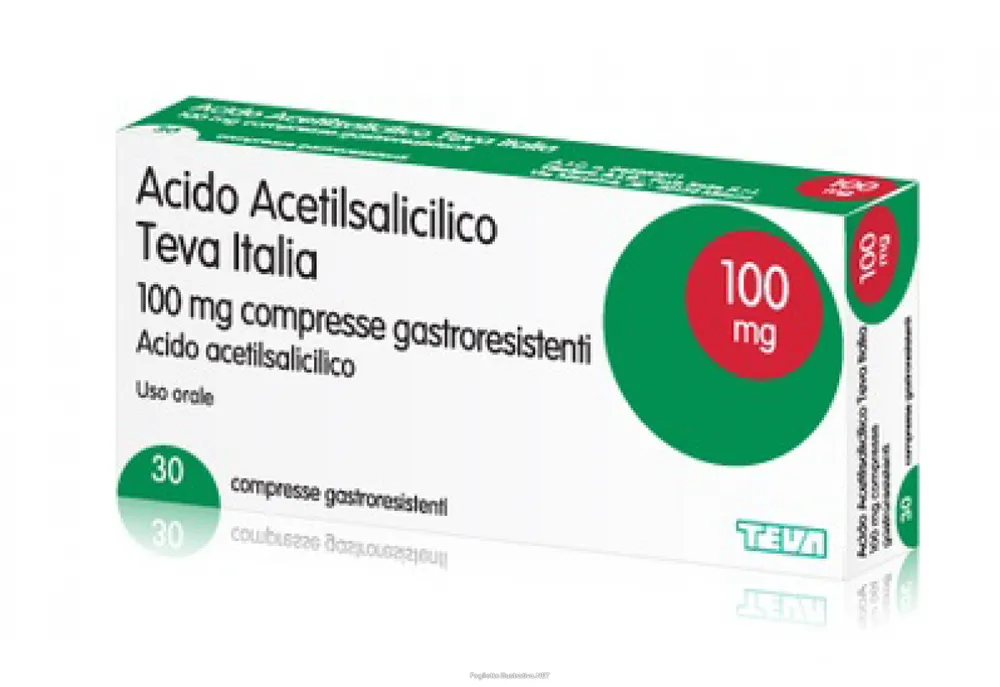
Table of Contents
- Package leaflet: Information for the user
- Acetylsalicylic Acid Teva Italia 100 mg gastro-resistant tablets
- 1. What Acido Acetilsalicilico Teva Italia is and what it is used for
- 2. What you need to know before taking Acetylsalicylic Acid Teva Italia
- 3. How to take Acetylsalicylic Acid Teva Italia
- 4. Possible side effects
- 5. How to store Acetylsalicylic Acid Teva Italia
- 6. Package contents and other information
Package leaflet: Information for the user
Acetylsalicylic Acid Teva Italia 100 mg gastro-resistant tablets
Acetylsalicylic acid
Please read this leaflet carefully before taking this medicine because it contains
important information for you.
- Keep this leaflet. You may need to read it again.
- If you have any questions, ask your doctor or pharmacist.
- This medicine has been prescribed for you. Do not give it to other people, even if they have the same symptoms as you, because it could be harmful.
- If you experience any side effects, including those not listed in this leaflet, talk to your doctor or pharmacist. See section 4.
Contents of this leaflet:
- What Acetylsalicylic Acid Teva Italia is and what it is used for
- What you need to know before taking Acetylsalicylic Acid Teva Italia
- How to take Acetylsalicylic Acid Teva Italia
- Possible side effects
- How to store Acetylsalicylic Acid Teva Italia
- Contents of the pack and other information
1. What Acido Acetilsalicilico Teva Italia is and what it is used for
Acido Acetilsalicilico Teva Italia contains acetylsalicylic acid, which at low doses belongs to a group of medicines called platelet aggregation inhibitors. Platelets are small blood cells that cause clotting and are involved in thrombosis. When a blood clot forms in an artery, blood flow becomes blocked and oxygen supply is interrupted. When this occurs in the heart, it may cause a heart attack or angina; in the brain, it may cause a stroke.
Acido Acetilsalicilico Teva Italia is taken to reduce the risk of blood clot formation and thus prevent the following:
- heart attacks
- strokes
- cardiovascular problems in patients suffering from stable or unstable angina (a type of chest pain).
Acido Acetilsalicilico Teva Italia is also used to prevent blood clot formation after certain heart procedures performed to widen or unblock blood vessels.
This medicine is not recommended for emergency use. It may only be used as preventive treatment.
2. What you need to know before taking Acetylsalicylic Acid Teva Italia
Do not take Acetylsalicilic Acid Teva Italia
- if you are allergic to acetylsalicylic acid, salicylates, or any of the other ingredients of this medicine (listed in section 6);
- if you have mastocytosis (a blood tumor), because the use of acetylsalicylic acid may cause you serious adverse reactions (including circulatory shock with flushing, hypotension, tachycardia, and vomiting);
- if you have previously suffered from asthma or swelling of certain body parts, e.g. face, lips, throat, or tongue (angioedema) after taking salicylates or non-steroidal anti-inflammatory drugs (NSAIDs), used for pain and inflammation;
- if you currently have or have ever had a stomach or small intestine ulcer or any other type of bleeding, such as a stroke;
- if you have had blood clotting problems;
- if you have severe liver or kidney problems;
- if you have severe heart failure (your heart's inability to properly supply blood to your body);
- if you are in the last 3 months of pregnancy; you must not take doses exceeding 100 mg per day (see section “Pregnancy and breastfeeding”);
- if you are taking a medicine called methotrexate (e.g. for the treatment of cancer or rheumatoid arthritis) at doses equal to or greater than 15 mg per week.
Warnings and precautions
Talk to your doctor before taking Acetylsalicylic Acid Teva Italia:
- if you have mild or moderate liver, heart (see section “Do not take Acetylsalicylic Acid Teva Italia”) or cardiovascular problems, such as renal vasculopathy (changes in the blood vessels of the kidneys), congestive heart failure, volume depletion (reduced blood volume), major surgery, sepsis (severe generalized infection), or major bleeding;
- if you have mild or moderate kidney problems, because acetylsalicylic acid may further increase the risk of impaired kidney function and acute kidney failure (rapid reduction in kidney function);
- if you have previously suffered from gastrointestinal ulcers or gastrointestinal bleeding;
- if you have liver disease (cirrhosis);
- if you are taking certain non-steroidal anti-inflammatory drugs (NSAIDs) such as ibuprofen or naproxen (medicines for pain, fever, or inflammation) (see “Other medicines and Acetylsalicylic Acid Teva Italia”);
- if you have or have previously had stomach or small intestine problems;
- if you have high blood pressure;
- if you frequently suffer from nosebleeds (epistaxis);
- if you are asthmatic, have hay fever, nasal polyps, or other chronic respiratory diseases; acetylsalicylic acid may trigger an asthma or rhinitis attack;
- if you are allergic to analgesic (pain-relieving) medicines, anti-inflammatory or anti-rheumatic drugs, and/or suffer from other allergies;
- if you have ever had gout;
- if you have heavy menstrual periods;
- if you are over 70 years old, especially if you are also undergoing other treatments;
- if you have a red blood cell disorder such as glucose-6-phosphate dehydrogenase (G6PD) deficiency, and if acetylsalicylic acid is used, a drop in hemoglobin levels and red blood cell breakdown (hemolytic anemia) may occur. Fever, high doses, or acute infections are factors that may increase the risk of hemolysis.
You must immediately contact your doctor if your symptoms worsen or if you experience serious or unexpected side effects, e.g. unusual bleeding symptoms, severe skin reactions, or any other sign of a serious allergic reaction (see section “Possible side effects”).
Inform your doctor if you are about to undergo surgery (even minor surgery, such as tooth extraction), because acetylsalicylic acid makes the blood thinner and therefore may increase the risk of bleeding.
Acetylsalicylic acid, when administered to children, may cause Reye's syndrome. Reye's syndrome is a very rare disease affecting the brain and liver, which can be life-threatening and may occur in children with viral infections such as chickenpox or influenza, requiring immediate medical intervention. Persistent vomiting in patients with these diseases may be a sign of Reye's syndrome.
For this reason, Acetylsalicylic Acid Teva Italia must not be given to children under 16 years of age, unless advised by a doctor.
You must take care not to become dehydrated (you may feel thirsty and have a dry mouth), because the concomitant use of acetylsalicylic acid may lead to impaired kidney function.
This medicine is not suitable as a painkiller or for reducing fever.
If any of the above conditions apply to you, or if you have any doubts about them, consult your doctor or pharmacist.
Other medicines and Acetylsalicylic Acid Teva Italia
Inform your doctor or pharmacist if you are taking, have recently taken, or might take any other medicines, including those without a prescription.
The effectiveness of treatment may be affected if acetylsalicylic acid is taken simultaneously with other medicines for:
- thinning the blood/preventing clots (e.g. warfarin, heparin, clopidogrel, ticlopidine)
- prevention of organ transplant rejection (cyclosporine, tacrolimus, and other immunosuppressants)
- high blood pressure (e.g. diuretics, aldosterone antagonists, ACE inhibitors, and angiotensin II antagonists)
- regulating heart rhythm (digoxin)
- manic-depressive illness (lithium)
- pain and inflammation (e.g. NSAIDs such as ibuprofen and naproxen, or steroids, or other analgesics/antipyretics such as metamizole). Metamizole (a substance used to reduce pain and fever) may reduce the effect of acetylsalicylic acid on platelet aggregation (blood cells that clump together to form a blood clot) when taken simultaneously. Therefore, this combination should be used with caution in patients taking low-dose aspirin for cardioprotection
- gout (e.g. benzbromarone and probenecid)
- epilepsy (sodium valproate/valproic acid, phenytoin)
- glaucoma (acetazolamide)
- cancer or rheumatoid arthritis (methotrexate at doses below 15 mg per week)
- diabetes (e.g. glibenclamide, insulin)
- depression (selective serotonin reuptake inhibitors (SSRIs) such as sertraline or paroxetine)
- use as hormone replacement therapy after destruction or removal of the adrenal glands or pituitary gland, or to treat inflammation, including rheumatic diseases and intestinal inflammation (systemic glucocorticoids, except hydrocortisone).
Acetylsalicylic Acid Teva Italia with food and drinks
Consumption of alcohol may increase the risk of gastrointestinal bleeding and prolong bleeding time.
Pregnancy, breastfeeding and fertility
If you are pregnant, suspect you may be pregnant, planning to become pregnant, or breastfeeding, consult your doctor or pharmacist before taking this medicine.
Pregnancy
Available data do not support any association between acetylsalicylic acid intake and an increased risk of spontaneous abortion.
Pregnant women should not take acetylsalicylic acid during pregnancy unless advised by a doctor.
You must not take Acetylsalicylic Acid Teva Italia during the last 3 months of pregnancy unless prescribed by your doctor, and in this case the daily dose must not exceed 100 mg (see section “Do not take Acetylsalicylic Acid Teva Italia”). Regular or high doses of this medicine during the last part of pregnancy may cause serious complications in the mother or the baby.
There is no evidence of an increased rate of major congenital malformations associated with acetylsalicylic acid. However, exposure to acetylsalicylic acid during the first trimester of pregnancy may be associated with an increased risk of gastroschisis (a congenital defect characterized by a defect in the anterior abdominal wall through which abdominal contents protrude freely).
Breastfeeding
Breastfeeding women should not take acetylsalicylic acid unless advised by a doctor.
Driving and using machines
Acetylsalicylic Acid Teva Italia does not affect the ability to drive or use machinery.
Acetylsalicylic Acid Teva Italia contains sodium
This medicine contains less than 1 mmol (23 mg) of sodium per dose, i.e. it is essentially “sodium-free”.
3. How to take Acetylsalicylic Acid Teva Italia
Take this medicine exactly as directed by your doctor. If you have any doubts, consult your
doctor or pharmacist.
Adults
Prevention of heart attacks:
- The recommended dose is 100 mg once daily. Prevention of stroke:
- The recommended dose is 100 mg once daily. Prevention of cardiovascular problems in patients suffering from stable or unstable angina (a type of chest pain):
- The recommended dose is 100 mg once daily. Prevention of blood clot formation after certain types of heart surgery:
- The recommended dose is 100 mg once daily.
The usual dose for long-term treatment is 100 mg (one tablet) once daily. Acetylsalicylic Acid Teva Italia
must not be taken at higher doses unless advised by your doctor, and the dose must not exceed 300 mg per day.
Elderly
As in adults. In general, acetylsalicylic acid should be used with caution in elderly patients, who are more
susceptible to developing adverse events. Treatment should be regularly re-evaluated at regular intervals.
Use in children and adolescents
Acetylsalicylic acid must not be administered to children and adolescents under 16 years of age,
unless specifically prescribed by a doctor (see section “Take special care with Acetylsalicylic Acid Teva Italia”).
Method of administration
Oral use.
The tablets must be swallowed whole with a sufficient amount of liquid (1/2 – 1 glass of
water), at least 30 minutes before meals. The tablets have an enteric coating that
prevents gastric irritation and ensures release in the alkaline environment of the intestine; therefore, they must not be crushed, broken, or chewed.
If you take more Acetylsalicylic Acid Teva Italia than you should
If you (or anyone else) accidentally take too many tablets, you must immediately contact your
doctor or go to the nearest emergency department. Show the doctor what is left of the
medicine or the empty packaging. There is no specific antidote. Treatment of poisoning is
symptomatic.
- Symptoms of moderate overdose may include: tinnitus, hearing problems, headache, dizziness, vertigo, confusion, and gastrointestinal symptoms (nausea, vomiting, and abdominal pain), rapid breathing (hyperventilation), excessive sweating (hyperhidrosis), tremor, and deafness.
- A significant overdose may lead, in addition to the above conditions, to symptoms such as fever, breathing difficulties, seizures, hallucinations, low or high blood sugar levels (hyper/hypoglycemia), low blood potassium levels (hypokalemia), excessive fluid loss (dehydration), fluid accumulation in the lungs (pulmonary edema), muscle damage (rhabdomyolysis), irregular heartbeat (arrhythmias), coma, and collapse.
If you forget to take Acetylsalicylic Acid Teva Italia
If you miss a dose, wait until it is time to take your next dose, then continue as usual.
Do not take a double dose to make up for the missed tablet.
If you have any doubts about how to use this medicine, consult your doctor or pharmacist.
4. Possible side effects
Like all medicines, this medicine can cause side effects, although not everyone gets them.
If you notice any of the following serious side effects, stop taking Acido Acetilsalicilico Teva Italia and contact your doctor immediately:
- Sudden wheezing, swelling of the lips, face or body, rash, fainting or difficulty swallowing (severe allergic reaction).
- Skin redness with blistering or peeling, possibly associated with high fever and joint pain. These may be signs of erythema multiforme, Stevens-Johnson syndrome or Lyell syndrome.
- Unusual bleeding, such as coughing up blood, blood in vomit or urine, or dark stools.
Common side effects (may affect up to 1 in 10 people):
- Indigestion, nausea, vomiting, abdominal pain, heartburn, diarrhoea.
- Increased tendency to bleed.
Uncommon side effects (may affect up to 1 in 100 people):
- Hives.
- Runny nose.
- Difficulty breathing.
Rare side effects (may affect up to 1 in 1,000 people):
- Severe stomach or intestinal bleeding, melena (passing black, tarry stools), haematemesis (vomiting blood or "coffee-ground" material).
- Cerebral haemorrhage.
- Changes in blood cell counts.
- Bronchospasm (tightening of the airways), asthma.
- Inflammation of blood vessels, shock.
- Bruising with purplish spots (skin haemorrhage).
- Severe skin reactions such as rashes known as erythema multiforme and its life-threatening variants, Stevens-Johnson syndrome and toxic epidermal necrolysis.
- Hypersensitivity reactions, such as swelling of, for example, lips, face or body.
- Anaphylactic reactions (severe allergic reactions).
- Very heavy or prolonged menstrual periods.
Side effects with unknown frequency (frequency cannot be estimated from the available data):
- Impaired hearing, ringing in the ears (tinnitus)*, deafness* or dizziness*. * May occur at high and prolonged doses. In such cases, stop treatment immediately.
- Headache.
- Dizziness.
- Confusion.
- Sweating.
- Stomach or small intestine ulcers and perforation.
- Upper gastrointestinal disorders: oesophagitis (inflammation of the oesophagus), erosive duodenitis (inflammation of the first part of the intestine), erosive gastritis, oesophageal ulcer, perforations.
- Lower gastrointestinal disorders: ulcers of the small intestine (jejunum and ileum) and large intestine (colon and rectum), colitis and intestinal perforations.
- Hypoprothrombinemia (deficiency of prothrombin) (occurs at high doses).
- Anaemia.
- Anaphylactoid reactions (allergy-like reactions); these may occur even in patients who previously did not show allergy to these medicines.
- Bleeding episodes with prolonged bleeding time (e.g. epistaxis, gingival bleeding, urogenital bleeding, etc.), haemolysis and haemolytic anaemia in patients with severe forms of glucose-6-phosphate dehydrogenase (G6PD) deficiency.
- Kidney damage, acute renal failure (rapid reduction in kidney function)*, acute interstitial nephritis (inflammation of the kidneys)*. * May occur at high and prolonged doses.
- Liver failure, hepatotoxicity, liver injury (mainly hepatocellular), increased liver enzymes, Reye's syndrome (in patients under 16 years of age).
- High levels of uric acid in the blood.
- Hypoglycaemia.
- Non-cardiogenic pulmonary oedema during chronic use of the medicine and in the context of an allergic reaction to acetylsalicylic acid.
- Angioedema, skin rash.
- Delayed childbirth.
If any of the side effects worsen, or if you notice any side effect not listed in this leaflet, inform your doctor.
Reporting of side effects
If you get any side effects, including ones not listed in this leaflet, talk to your doctor or pharmacist. You can also report side effects directly via the national reporting system at: www.aifa.gov.it/content/segnalazioni-reazioni-avverse.
By reporting side effects, you can help provide more information on the safety of this medicine.
5. How to store Acetylsalicylic Acid Teva Italia
Keep this medicine out of the sight and reach of children.
Store below 25°C.
Keep in the original packaging to protect the medicine from moisture.
Do not use this medicine after the expiry date stated on the carton or blister after "Exp.". The expiry date refers to the last day of the month.
Do not dispose of medicines via wastewater or household waste. Ask your pharmacist how to dispose of medicines you no longer use. This will help protect the environment.
6. Package contents and other information
What Acido Acetilsalicilico Teva Italia contains
The active substance is acetylsalicylic acid. Each gastro-resistant tablet contains 100 mg of acetylsalicylic acid.
The other components are: tablet core: microcrystalline cellulose, corn starch, anhydrous colloidal silica, stearic acid; film coating: methacrylic acid – ethyl acrylate copolymer (1:1), polysorbate 80, sodium lauryl sulfate, triethyl citrate, talc.
Description of the appearance of Acido Acetilsalicilico Teva Italia and package contents
Acido Acetilsalicilico Teva Italia 100 mg gastro-resistant tablets are white, round, biconvex, film-coated tablets with a diameter of 7.2 mm.
Packaging:
Blister pack: 30 gastro-resistant tablets.
Marketing Authorization Holder and Manufacturer
Teva Italia S.r.l.
Piazzale Luigi Cadorna, 4
20123 Milan, Italy
Manufacturer
Actavis Limited
BLB 016, Bulebel Industrial Estate
Zejtun ZTN 3000
Malta
Balkanpharma Dupnitsa AD
3, Samokovsko Shosse Str.
2600 Dupnitsa
Bulgaria
Actavis ehf
Reykjavíkurvegur, 78
IS - 220 Hafnarfjördur
Iceland