Acesistem
Italy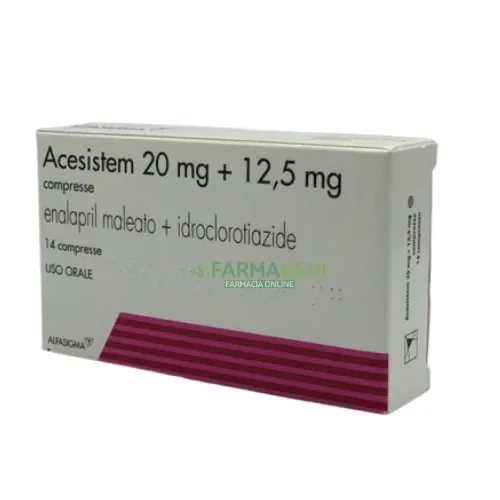
Table of Contents
Package leaflet: Information for the user
Acesistem 20 mg+12.5 mg tablets
enalapril maleate/hydrochlorothiazide
Please read this leaflet carefully before you start taking this medicine because it contains
important information for you.
- Keep this leaflet. You may need to read it again.
- If you have any questions, ask your doctor or pharmacist.
- This medicine has been prescribed for you only. Do not give it to other people, even if their symptoms are the same as yours, as it could be harmful.
- If you experience any side effect, including those not listed in this leaflet, talk to your doctor or pharmacist. See section 4.
Contents of this leaflet:
- What Acesistem is and what it is used for
- What you need to know before taking Acesistem
- How to take Acesistem
- Possible side effects
- How to store Acesistem
- Contents of the pack and other information
1. What Acesistem is and what it is used for
Acesistem contains the active substances enalapril and hydrochlorothiazide.
Enalapril belongs to a group of medicines called angiotensin-converting enzyme inhibitors (ACE inhibitors), and works by dilating blood vessels, making it easier for the heart to pump blood throughout the body.
Hydrochlorothiazide belongs to a group of medicines called diuretics, and works by increasing the elimination of water and salts through the kidneys, thereby lowering blood pressure.
Together, enalapril and hydrochlorothiazide help reduce high blood pressure.
Acesistem is indicated for the treatment of high blood pressure (hypertension) in patients whose blood pressure is not adequately controlled with enalapril alone.
2. What you should know before taking Acesistem
Do not take Acesistem:
- if you are allergic to enalapril, hydrochlorothiazide, or any of the other ingredients of this medicine (listed in section 6);
- if you have had allergic reactions, with swelling of the face, lips, tongue and/or throat, difficulty swallowing or breathing, after previous treatments with other angiotensin-converting enzyme (ACE) inhibitors;
- if you have hereditary or idiopathic angioedema (i.e. without an apparent cause);
- if you are allergic to any sulfonamide-derived medicines (ask your doctor if you are unsure what sulfonamide-derived medicines are);
- if you are not passing urine (anuria);
- if you have severe kidney dysfunction;
- if you are more than three months pregnant (It is best to avoid Acesistem even in the early stages of pregnancy; see sections “Warnings and precautions” and “Pregnancy and breastfeeding”);
- if you have severe liver dysfunction;
- if you have diabetes or impaired kidney function and are being treated with a blood pressure-lowering medicine containing aliskiren (see section “Other medicines and Acesistem”).
Warnings and precautions
Talk to your doctor or pharmacist before taking Acesistem.
Inform your doctor:
-
if you are over 70 years old;
-
if you think you may be pregnant or are planning a pregnancy, as your doctor will prescribe another medicine instead of Acesistem. Acesistem is not recommended during early pregnancy and must not be taken after the third month of pregnancy, as it may cause serious harm to the unborn baby if taken during this period (see sections “Do not take Acesistem” and “Pregnancy and breastfeeding”);
-
if you have or have had vomiting and/or diarrhoea;
-
if you are taking diuretics (medicines that increase the amount of water and salts excreted through the kidneys);
-
if you are taking certain types of diuretics known as potassium-sparing diuretics, or if you are using potassium supplements, medicines that increase potassium levels in the blood (e.g. heparin), or potassium-containing salt substitutes (see section “Other medicines and Acesistem”);
-
if you are on a low-sodium diet;
-
if you have or have had liver problems (see section 2 “Do not take Acesistem”);
-
if you have kidney problems or are undergoing haemodialysis (see section 2 “Do not take Acesistem”);
-
if you have narrowing or blockage of blood vessels supplying the kidneys (bilateral renal artery stenosis or stenosis of the artery to the only functioning kidney);
-
if you have kidney problems due to diabetes (diabetic nephropathy);
-
if you have recently undergone a kidney transplant;
-
if you urinate frequently;
-
if you are taking corticosteroids or adrenocorticotropic hormone (hormonal medicines);
-
if you have a connective tissue disorder affecting blood vessels (e.g. systemic lupus erythematosus, rheumatoid arthritis), if you are receiving treatment with medicines that suppress the immune response, if you are taking allopurinol or procainamide, or any combination of these conditions;
-
if you have or have had allergic conditions, asthma, or a condition causing joint pain, skin redness and fever (systemic lupus erythematosus);
-
if you have had allergic reactions that may manifest, for example, as swelling of the face, lips, mouth or throat (angioedema);
-
if you have heart or brain problems, in particular:
o heart failure.
o a condition caused by reduced blood flow in the blood vessels of the heart (cardiovascular ischemic disease)
o a condition caused by reduced blood circulation in the brain (cerebrovascular disease).
o narrowing of heart valves (aortic stenosis)
o a condition causing thickening of the heart muscle (hypertrophic cardiomyopathy).
o acute heart failure. -
if your doctor has told you that the acidity level of your blood is higher than normal (metabolic acidosis);
-
if you have diabetes;
-
if you have previously had skin cancer or develop unexpected skin lesions during treatment. Treatment with hydrochlorothiazide, particularly long-term use at high doses, may increase the risk of certain types of skin and lip cancer (non-melanoma skin cancer). Protect your skin from exposure to sunlight and UV rays during treatment with Acesistem.
-
if you experience vision disturbances or eye pain. These may be symptoms of fluid accumulation in the vascular layer of the eye (choroidal effusion) or increased intraocular pressure and may occur within hours or weeks of starting Acesistem. If not treated promptly, this condition may lead to permanent vision loss. If you are allergic to penicillin or sulfonamides, you may have an increased risk of developing choroidal effusion.
-
if you are dehydrated;
-
if you are taking any of the following medicines used to treat high blood pressure:
o an “angiotensin II receptor antagonist” (AIIRA) (also known as sartans – e.g. valsartan, telmisartan, irbesartan), especially if you have kidney problems related to diabetes.
o Aliskiren. Your doctor may monitor your kidney function, blood pressure, and blood electrolyte levels (e.g. potassium) at regular intervals. See also section “Do not take Acesistem”; -
if you are taking any of the following medicines, the risk of angioedema (rapid swelling under the skin, e.g. in the throat) is increased:
o sirolimus, everolimus, and other medicines belonging to the class of mTOR inhibitors (used to prevent rejection of transplanted organs);
-
if you are undergoing treatment to reduce the effects of allergy to bee or wasp stings (desensitization therapy);
-
if you are undergoing treatment to remove cholesterol from the blood using machines (low-density lipoprotein-LDL apheresis);
-
if you are undergoing surgery or anaesthesia. The anaesthetist must be informed that you are taking Acesistem;
-
if you are undergoing tests to evaluate parathyroid gland function (parathyroid function), as treatment with Acesistem should be discontinued before such tests.
Inform your doctor during treatment with Acesistem:
- if you have diabetes and experience episodes of hypoglycaemia.
- if you develop allergic reactions that may manifest, for example, as swelling of the face, lips, mouth or throat. Patients of black origin have a higher risk of developing these reactions.
- if you develop a dry, persistent cough, as this may be due to one of the active substances in Acesistem.
- if you experience symptoms of electrolyte imbalance, such as dry mouth, thirst, weakness and muscle pain, muscle cramps, fatigue, drowsiness, restlessness, low blood pressure, increased heart rate, reduced urine output, or gastrointestinal disturbances such as nausea and vomiting.
- if you show any signs of infection.
If you are of black origin, it is important to know that medicines like Acesistem may be less effective in lowering blood pressure.
Children and adolescents
Acesistem must not be given to children and adolescents.
Other medicines and Acesistem
Inform your doctor or pharmacist if you are taking, have recently taken, or might take any other medicine.
Inform your doctor if you are taking or need to take the following medicines:
- other medicines to lower blood pressure, as they may further reduce blood pressure;
- diuretics (medicines that increase the amount of water and salts excreted through the kidneys), e.g. furosemide;
- nitroglycerin, other nitrates, and medicines that work by dilating blood vessels (vasodilators);
- medicines used to treat heart rhythm disorders, e.g.:
o quinidine
o procainamide
o amiodarone
o sotalol; - antidepressants;
- medicines used for severe psychiatric disorders (antipsychotics);
- medicines used for anaesthesia;
- barbiturates (medicines for epilepsy);
- medicines for diabetes, e.g. insulin and other oral antidiabetic medicines;
- medicines that retain potassium or may increase potassium levels:
o potassium supplements
o potassium-containing salt substitutes
o potassium-sparing blood pressure medicines, e.g. amiloride, eplerenone, triamterene, spironolactone
o heparin
o co-trimoxazole (also known as trimethoprim/sulfamethoxazole); - lithium (a medicine for mood disorders);
- non-steroidal anti-inflammatory drugs, e.g. acetylsalicylic acid;
- cholestyramine and colestipol (medicines to lower blood cholesterol);
- corticosteroids, adrenocorticotropic hormone (hormonal medicines);
- noradrenaline;
- muscle relaxants, e.g. tubocurarine;
- anticancer medicines, e.g. cyclophosphamide, methotrexate;
- medicines acting on the heart (digitalis glycosides, e.g. digoxin);
- laxatives;
- carbenoxolone (a medicine for ulcers);
- sodium aurothiomalate, used in gold therapy and administered by injection;
- opioid analgesics (medicines used to relieve pain);
- medicines usually used to prevent rejection of transplanted organs (sirolimus, everolimus, and other mTOR inhibitors). See section “Warnings and precautions”.
Your doctor may consider it necessary to adjust the dose and/or take other precautions:
- if you are taking an angiotensin II receptor antagonist (AIIRA) or aliskiren (see also section “Do not take Acesistem” and “Warnings and precautions”).
Acesistem with food, drinks and alcohol
Do not drink alcohol during treatment with Acesistem, as this may cause a significant drop in blood pressure, especially when standing up (orthostatic hypotension).
Most people take Acesistem with a glass of water.
Pregnancy and breastfeeding
If you are pregnant, think you may be pregnant, are planning a pregnancy, or are breastfeeding, consult your doctor or pharmacist before taking this medicine.
Pregnancy
Acesistem is not recommended during early pregnancy and must not be taken after the third month of pregnancy, as it may cause serious harm to the unborn baby if taken during this period. Inform your doctor if you think you may be pregnant or are planning a pregnancy, as your doctor will prescribe another medicine instead of Acesistem.
Breastfeeding
Inform your doctor if you are breastfeeding or planning to breastfeed. Acesistem is not recommended during breastfeeding, unless your doctor considers it strictly necessary.
If you wish to breastfeed, your doctor may prescribe an alternative treatment to Acesistem.
Driving and using machines
Acesistem may cause dizziness and fatigue. Be especially careful if you drive or operate machinery.
Acesistem contains lactose (a milk sugar)
If your doctor has diagnosed you with an intolerance to certain sugars, contact your doctor before taking this medicine.
Acesistem contains less than 1 mmol of sodium (23 mg) per tablet, i.e. essentially “sodium-free”.
For athletes
Using this medicine without therapeutic need constitutes doping and may result in a positive anti-doping test.
3. How to take Acesistem
Take this medicine exactly as directed by your doctor or pharmacist. If you have any doubts, consult your doctor or pharmacist.
Your doctor will determine the appropriate dose of Acesistem based on your condition and any other medicines you are taking. It is very important that you continue taking Acesistem for as long as your doctor has instructed, as this will keep your blood pressure under control. Do not take more tablets than prescribed by your doctor.
The recommended starting dose for treatment is half a tablet daily.
The usual dose is 1 tablet daily; if necessary, your doctor may increase the dose to 2 tablets daily, taken as a single dose.
Most people take this medicine with a glass of water.
If you are being treated with a diuretic, your doctor will instruct you to stop it a few days before starting treatment with Acesistem. If this is not possible, your doctor will consider whether to start Acesistem therapy at a lower dose.
Use in patients with kidney problems
The use of Acesistem is not recommended in patients with kidney problems (renal insufficiency).
If you take more Acesistem than you should
In case of accidental overdose with Acesistem, contact your doctor immediately or go to the nearest hospital.
If you (or someone else) have taken an excessive dose of this medicine, the following symptoms may occur:
- excessive lowering of blood pressure (marked hypotension, associated with blockade of the renin-angiotensin system);
- dizziness;
- severe circulatory problems (circulatory shock);
- changes in blood electrolyte levels (electrolyte disturbances such as hypokalemia, hypochloremia, hyponatremia);
- severe kidney problems (renal failure);
- increased breathing rate (hyperventilation);
- increased or decreased heart rate (tachycardia, bradycardia);
- increased awareness of heartbeats (palpitations);
- dizziness;
- anxiety;
- cough;
- fluid loss (dehydration) due to excessive urine production (diuresis).
If you forget to take Acesistem
Do not take a double dose to make up for the missed tablet.
If you have any doubts about how to use this medicine, consult your doctor or pharmacist.
If you stop taking Acesistem
Do not stop treatment with this medicine unless instructed by your doctor.
If you have any doubts about how to use this medicine, consult your doctor or pharmacist.
4. Possible side effects
Like all medicines, this medicine can cause side effects, although not everyone gets them.
Stop taking Acesistem and contact your doctor immediately if you develop:
- swelling of the face, lips, tongue and/or throat which may cause difficulty breathing or swallowing
- swelling of the hands, feet or ankles
- hives
Very common (may affect more than 1 in 10 people)
- Blurred vision
- Dizziness
- Cough
- Nausea
- Muscle weakness
Common (may affect up to 1 in 10 people)
- Diarrhoea, abdominal pain
- Muscle cramps
- Headache
- Fatigue
- Depression
- Fainting
- Decrease or increase in blood potassium levels
- Increase in cholesterol and blood fats (triglycerides)
- Increased levels of uric acid in the blood
- Taste disturbances
- Reduction in blood pressure, especially when standing up
- Heart rhythm disorders
- Chest pain (angina pectoris)
- Chest discomfort
- Breathing difficulties
- Skin rash, allergic reactions
- Swelling of the face, tongue, lips and extremities
- Increased blood creatinine levels
Uncommon (may affect up to 1 in 100 people)
- Anaemia
- Decreased blood magnesium levels
- Hot flushes
- Gout
- Joint pain
- Ringing or noises in the ears (tinnitus)
- Decreased blood sugar levels
- Nervousness, confusion, insomnia, drowsiness
- Altered sensation in limbs or other body parts (paraesthesiae)
- Vertigo
- Heart attack, palpitations
- Stroke (TIA, "mini-stroke")
- Sore throat, voice changes (hoarseness), runny nose, asthma
- Inflammation of the pancreas (pancreatitis), vomiting, indigestion, constipation, loss of appetite, stomach irritation, dry mouth, stomach lesions (peptic ulcer), excess gas in the stomach or intestines (flatulence)
- Altered intestinal motility (ileus)
- Hives, itching, sweating
- Hair loss
- Impaired kidney function, including kidney failure, accumulation in the blood of substances normally eliminated by the kidneys (uraemia), presence of protein in the urine
- Decreased blood sodium levels
- Decreased sexual desire, impotence
- General feeling of being unwell (malaise), fever
Rare (may affect up to 1 in 1,000 people)
- Decreased white blood cells
- Decreased number of platelets in the blood
- Decreased number of all blood cells (pancytopenia)
- Bone marrow depression, i.e. a reduction in blood cells due to malfunction of the blood cell production system
- Enlarged lymph nodes
- Immune system disorders (autoimmune diseases)
- Decreased levels of blood cells (haematocrit) and haemoglobin
- Increased blood sugar levels
- Abnormal dreams, sleep disorders
- Partial loss of voluntary muscle movement and sensation
- Poor blood circulation in the limbs (Raynaud's phenomenon)
- Lung problems, including pneumonia, fluid in the lungs (causing breathing difficulties), allergic alveolitis, cold-like symptoms
- Inflammation of the mouth mucosa, mouth ulcers and aphthae, inflammation of the tongue
- Liver problems including liver failure, inflammation of the liver (hepatitis), yellowing of the skin, mucous membranes and eyes (jaundice), inflammation of the gallbladder, and liver cell death which may be potentially fatal
- Increased levels of liver enzymes (sign of liver damage)
- Increased bilirubin levels
- Severe allergic reactions with high fever, appearance of red skin patches (erythema multiforme, Stevens-Johnson syndrome, toxic epidermal necrolysis, purpura), severe skin rash with skin and hair loss (exfoliative dermatitis), cutaneous lupus erythematosus, skin rash with peeling (erythroderma), appearance of small fluid-filled blisters on the skin (pemphigus)
- Reduced urine output (oliguria)
- Acute kidney inflammation (interstitial nephritis)
- Breast enlargement in males (gynaecomastia)
Very rare (may affect up to 1 in 10,000 people)
- Increased calcium levels (hypercalcaemia)
- Fluid accumulation and swelling of the intestine (intestinal angioedema)
Not known (frequency cannot be estimated from the available data)
- Syndrome due to abnormal secretion of antidiuretic hormone (SIADH)
- Skin and lip cancer (non-melanoma skin cancer)
- Decreased vision or eye pain due to increased pressure (possible signs of fluid accumulation in the vascular layer of the eye (choroidal effusion))
Other possible side effects
A combination of symptoms which may include:
• fever
• inflammation of a specific type of membrane lining certain organs (serositis)
• inflammation of blood vessels
• muscle, joint and bone pain
• elevated ESR (visible in blood tests)
• increased number of certain types of white blood cells in the blood (eosinophilia, leucocytosis)
• skin reactions including skin reactions to sunlight
Reporting of side effects
If you experience any side effect, including those not listed in this leaflet, talk to your doctor or pharmacist. You can also report side effects directly via the national reporting system at https://www.aifa.gov.it/content/segnalazioni-reazioni-avverse. By reporting side effects, you can help provide more information on the safety of this medicine.
5. How to store Acesistem
Keep this medicine out of the sight and reach of children.
This medicine does not require any special storage conditions.
Do not use this medicine after the expiry date stated on the packaging after "Exp.".
The expiry date refers to the last day of that month.
Do not dispose of medicines in wastewater or household waste. Ask your pharmacist how to dispose of medicines you no longer use. This will help protect the environment.
6. Package contents and other information
What Acesistem contains
- The active substances are enalapril maleate and hydrochlorothiazide. Each tablet contains 20 mg of enalapril maleate and 12.5 mg of hydrochlorothiazide.
- The other components are sodium bicarbonate, monohydrate lactose, yellow iron oxide, maize starch, pregelatinized starch, magnesium stearate.
Description of the appearance of Acesistem and contents of the pack
Each pack contains a blister of 14 or 28 tablets.
Marketing Authorization Holder and Manufacturer
Marketing Authorization Holder
Alfasigma S.p.A. - Via Ragazzi del '99, n. 5 - 40133 Bologna (BO)
Manufacturer
Alfasigma S.p.A - Via Pontina km 30,400 – 00071 Pomezia (RM)
This leaflet was last updated: