Aceclofenac Accord
Italy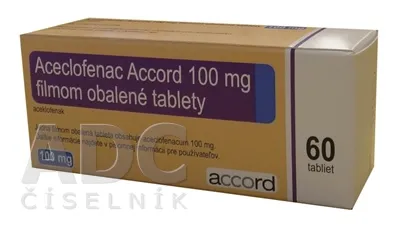
Table of Contents
- PACKAGE LEAFLET: INFORMATION FOR THE USER
- Aceclofenac Accord 100 mg film-coated tablets
- 1. What Aceclofenac Accord is and what it is used for
- 2. What you should know before taking Aceclofenac Accord
- 3. How to take Aceclofenac Accord
- 4. Possible side effects
- 5. How to store Aceclofenac Accord
- 6. Package contents and other information
PACKAGE LEAFLET: INFORMATION FOR THE USER
Aceclofenac Accord 100 mg film-coated tablets
Generic medicine
Please read all of this leaflet carefully before you start taking this medicine because it contains important information for you.
- Keep this leaflet. You may need to read it again.
- If you have any questions, ask your doctor, pharmacist or nurse.
- This medicine has been prescribed for you only. Do not give it to other people, even if they have the same symptoms as yours, because it could be harmful.
- If you experience any side effect, including those not listed in this leaflet, tell your doctor, pharmacist or nurse. See section 4.
Contents of this leaflet:
- What Aceclofenac Accord is and what it is used for
- What you need to know before taking Aceclofenac Accord
- How to take Aceclofenac Accord
- Possible side effects
- How to store Aceclofenac Accord
- Contents of the pack and other information
1. What Aceclofenac Accord is and what it is used for
Aceclofenac Accord belongs to a group of medicines called non-steroidal anti-inflammatory drugs (NSAIDs). These have anti-inflammatory and analgesic properties, reducing swelling, redness (inflammation), and pain. The active substance in Aceclofenac Accord tablets is aceclofenac.
Aceclofenac tablets work by blocking the production of hormone-like substances called prostaglandins. Prostaglandins have many functions in the body, including an important role both in the body's response to inflammation and in calcium reabsorption in certain bone diseases.
Aceclofenac Accord is used to relieve pain and reduce redness and swelling (inflammation) in patients with:
- arthritis of the joints (osteoarthritis). This commonly occurs in patients over 50 years of age and causes loss of cartilage and adjacent bone tissue near the joint.
- autoimmune disease causing chronic inflammation of the joints (rheumatoid arthritis).
- arthritis of the spine that may lead to fusion of the vertebrae (ankylosing spondylitis).
2. What you should know before taking Aceclofenac Accord
Do not take Aceclofenac Accord
- If you are allergic to aceclofenac or to any of the other ingredients of this medicine (listed in section 6).
- If you have experienced, after taking aspirin or other NSAIDs, one of the following symptoms:
- Asthma attacks causing chest tightness, wheezing, and breathing difficulties;
- Runny nose, itching and/or sneezing (nasal irritation);
- Raised, red, circular skin rash which may be itchy or cause a stinging or burning sensation;
- A severe allergic reaction known as anaphylactic shock. Symptoms can be life-threatening and include difficulty breathing, wheezing, abdominal pain, and vomiting.
- If you have had a stomach or duodenal ulcer or bleeding, or have experienced a perforation of the digestive tract during previous treatment with NSAIDs.
- If you have a history of gastric/duodenal ulcer or gastrointestinal bleeding (two or more distinct episodes).
- If you have severe kidney disease.
- If you have established heart disease and/or cerebrovascular disease, e.g. if you have had a heart attack, stroke, mini-stroke (TIA), or blockages in blood vessels of the heart or brain, or have undergone surgery to remove blockages or coronary bypass.
- If you have or have had circulation problems (peripheral arterial disease).
- If you have severe liver failure.
- If you are suffering from bleeding disorders or coagulation disorders (bleed easily).
- If you are in the third trimester of pregnancy or if you are breastfeeding your baby.
Aceclofenac Accord must not be administered to children.
Warnings and precautions
Talk to your doctor, pharmacist, or nurse before taking Aceclofenac Accord tablets:
- If you have kidney disease;
- If you have liver disease;
- If you suffer from any of the following conditions, as they may worsen:
- Inflammatory bowel disease (ulcerative colitis)
- Chronic inflammatory bowel disease (Crohn's disease)
- If you have had or are developing stomach or intestinal ulceration, bleeding, or perforation, which may present as severe or persistent abdominal pain and/or black stools, even without prior warning symptoms.
This risk is higher when high doses are used and treatment is prolonged, in patients with a history of peptic ulcer, and in elderly patients. In such cases, your doctor may consider prescribing a stomach-protective medicine.
Elderly patients have a higher incidence of adverse effects, particularly gastrointestinal bleeding and perforation (sometimes fatal).
- If you have circulation problems;
- If you are taking concomitantly medicines that affect blood coagulation, such as oral anticoagulants like warfarin, or antiplatelet agents such as acetylsalicylic acid, inform your doctor. Also inform your doctor about the use of other medicines that could increase the risk of bleeding, such as corticosteroids and selective serotonin reuptake inhibitors (SSRIs);
- If you have heart problems or have had a stroke (stroke, hemorrhage);
- If you have previously suffered from, and still suffer from, bronchial asthma;
- If you are a smoker;
- If you have diabetes;
- If you have circulation or blood coagulation problems;
- If you have high blood pressure;
- If you have high cholesterol or high triglycerides;
- If you have chickenpox, the use of this medicine should be avoided because rare, severe infections may develop following its use;
- If you are recovering from major surgery.
The use of NSAIDs may cause fluid retention, particularly in patients with heart failure and/or high blood pressure (hypertension).
Hypersensitivity reactions may occur, and very rarely severe allergic reactions (see section 4. Possible side effects). The risk is higher during the first month of treatment.
Aceclofenac tablets must be stopped immediately at the first appearance of symptoms such as chest tightness, breathing difficulties, fever, skin rashes, soreness of the mucous membranes lining the mouth and other mucous membranes causing ulcers, or any sign of hypersensitivity.
Medicines such as Aceclofenac tablets may be associated with a slight increase in the risk of heart attack ("myocardial infarction"). Any risk is more likely with higher doses and prolonged treatment.
Do not exceed the recommended dose or duration of treatment.
Other medicines and Aceclofenac Accord
Tell your doctor or pharmacist if you are taking, have recently taken, or might take any other medicine. Inform your doctor if you are taking:
- Medicines used to treat mental health conditions such as depression (selective serotonin reuptake inhibitors (SSRIs) such as citalopram, escitalopram, fluoxetine, fluvoxamine, paroxetine, and sertraline) or manic depression (lithium)
- Medicines used to treat heart failure and irregular heartbeat (cardiac glycosides such as digoxin)
- Medicines used to treat high blood pressure (antihypertensives: ACE inhibitors such as enalapril, lisinopril; angiotensin II receptor antagonists such as losartan, candesartan; also hydralazine, methyldopa, clonidine, moxonidine, propranolol)
- Medicines for treating infections (quinolone antibiotics such as ciprofloxacin, ofloxacin, levofloxacin, moxifloxacin)
- Medicines used to increase urinary excretion rate (diuretics such as thiazides, furosemide, amiloride hydrochloride)
- Medicines that prevent blood clotting (anticoagulants) such as warfarin, heparin
- Methotrexate, used to treat cancer and autoimmune disorders such as arthritis and skin diseases
- Mifepristone
- Any steroid used to treat swelling and inflammation (glucocorticoids such as hydrocortisone, prednisolone)
- Medicines used to suppress the immune system after organ transplantation (cyclosporine or tacrolimus)
- Medicines used to treat HIV (zidovudine)
- Medicines used to lower blood sugar levels in diabetes (antidiabetics such as glibenclamide, glipizide, tolbutamide)
- Any other NSAID painkiller (aspirin, ibuprofen, naproxen, COX-2 inhibitors such as celecoxib and etoricoxib)
- Antiplatelet drugs such as clopidogrel.
Aceclofenac Accord with food and drink
Aceclofenac Accord should preferably be taken with or without food.
Pregnancy, breastfeeding, and fertility
If you are pregnant or breastfeeding, think you may be pregnant, or are planning to have a baby, consult your doctor or pharmacist before taking this medicine.
Do not take Aceclofenac tablets if you are pregnant or think you may be pregnant. The safety of this medicine during pregnancy is not known. It is not recommended for use during pregnancy unless considered essential by your doctor. (It must not be used during the last three months of pregnancy.)
Aceclofenac tablets must not be used if you are breastfeeding. It is not known whether this medicine passes into breast milk. Use during breastfeeding is not recommended unless considered essential by your doctor.
Do not take Aceclofenac during the last three months of pregnancy, as it may harm the baby or cause problems during delivery. It may cause kidney and heart problems in the newborn. It may affect the tendency to bleed, both for you and your baby, and may cause delayed or prolonged labor. Do not take Aceclofenac during the first six months of pregnancy unless absolutely necessary and under medical advice. If treatment is needed during this period or while trying to conceive, the lowest possible dose for the shortest possible time should be used. If you have taken Aceclofenac for more than a few days from week 20 of pregnancy onwards, this may cause kidney problems in the fetus, leading to low levels of amniotic fluid surrounding the baby (oligohydramnios) or narrowing of a blood vessel (ductus arteriosus) in the baby's heart. If treatment for more than a few days is required, your doctor may recommend additional monitoring.
It is not known whether this medicine passes into breast milk. Its use during breastfeeding is not recommended unless considered essential by your doctor.
For patients of childbearing potential, it should be noted that this medicine has been associated with reduced fertility.
Driving and using machines:
If you are taking Aceclofenac tablets and experience dizziness, drowsiness, vertigo, fatigue, or any visual disturbances, you must not drive or operate dangerous tools or machinery.
Sodium:
This medicine contains less than 1 mmol (23 mg) of sodium per tablet, i.e. essentially ‘sodium-free’.
3. How to take Aceclofenac Accord
Always take this medicine exactly as instructed by your doctor or pharmacist. If
you have any doubts, consult your doctor or pharmacist.
You will be prescribed the lowest effective dose for the shortest duration necessary to reduce side effects.
Do not exceed the recommended daily dose.
The recommended dose in adults is 200 mg per day, divided into two 100 mg doses. Take one
100 mg tablet in the morning and one in the evening.
For patients with hepatic impairment, the recommended starting dose is 100 mg.
If you take this medicine for a long period of time, your doctor should perform regular quarterly
checks, for example, kidney, liver and blood tests.
Children:
Aceclofenac Accord is not recommended for use in children under 18 years of age.
Elderly:
If you are elderly, you have a higher risk of experiencing serious side effects (listed in
section 4 'Possible side effects'). If your doctor prescribes Aceclofenac Accord, you will be given
the lowest effective dose for the shortest possible treatment duration.
Method and route of administration:
Swallow the tablet whole with a glass of water. Do not crush or chew the tablets.
Never change the dose of this medicine without first consulting your doctor. Continue
taking the tablets for as long as recommended by your doctor.
If you take more Aceclofenac Accord than you should
If you accidentally take more Aceclofenac Accord, contact a doctor immediately or go to hospital
straight away. Take this leaflet or the Aceclofenac tablet pack with you to hospital so they know what you have taken.
If you forget to take Aceclofenac Accord
If you forget to take a dose, do not worry; simply take the next dose at the usual time. Do not take a double
dose to make up for a missed tablet.
If you stop taking Aceclofenac Accord
Do not stop taking Aceclofenac Accord tablets even if you feel well, unless your doctor tells you to.
If you have any doubts about how to use this medicine, consult your doctor, pharmacist or
nurse.
4. Possible side effects
Like all medicines, this medicine can cause side effects, although not everyone gets them.
Stop taking this medicine and contact your doctor immediately if you experience any of the following side effects:
- severe allergic reaction (anaphylactic shock). Symptoms may develop rapidly and can be life-threatening if not treated immediately, and include fever, difficulty breathing, wheezing, abdominal pain, vomiting, swelling of the face and throat.
- severe skin rashes such as Stevens-Johnson syndrome and toxic epidermal necrolysis. These are potentially life-threatening and develop rapidly, forming large blisters and causing the skin to peel off. The rash may also appear in the mouth, throat, or eyes. Fever, headache, and joint pain usually occur at the same time.
- meningitis. Symptoms include high fever, headache, vomiting, red blotchy rash, neck stiffness, sensitivity and intolerance to light.
- passing blood in stools (faeces/motions).
- passing black, tarry stools. Vomiting blood or dark particles that look like coffee grounds.
- kidney failure.
Stop taking the medicine and consult your doctor if you experience:
- indigestion or heartburn.
- abdominal pain (stomach ache) or other unusual stomach symptoms.
- blood disorders such as reduced production of blood cells, abnormal breakdown of red blood cells known as haemolytic anaemia, low iron levels in the blood, low white blood cell count, low platelet count, increased potassium levels in the blood which may irritate blood vessels causing inflammation known as vasculitis. These disorders may make you feel extremely tired, short of breath, have joint pain, and be prone to repeated infections and bruising.
If any of the side effects worsen, or if you notice any side effects not listed in this leaflet, inform your doctor or pharmacist.
Common (occur in up to 1 in 10 patients):
- dizziness
- nausea (feeling unwell)
- diarrhoea
- increased liver enzymes in the blood
Uncommon (occur in up to 1 in 100 patients):
- flatulence
- inflammation or irritation of the stomach lining
- constipation
- vomiting
- oral ulceration
- itching
- rash
- skin inflammation
- red, raised, itchy circular patches with stinging or burning sensation on the skin (urticaria)
- increased levels of urea in the blood
- increased levels of creatinine in the blood
Rare (occur in up to 1 in 1,000 patients):
- hypersensitivity (allergic reaction)
- vision problems
- anaemia
- heart failure
- high blood pressure
- difficulty breathing
- bleeding from the stomach or intestine, stomach or intestinal ulcers
- facial swelling
Very rare (occur in up to 1 in 10,000 patients):
- depression
- abnormal dreams
- inability to sleep
- tingling, pricking, or numbness of the skin
- uncontrollable shaking
- drowsiness
- headache
- abnormal taste in the mouth
- sensation of spinning while stationary
- ringing in the ears
- rapid or pounding heartbeat
- hot flushes
- bronchospasm
- high-pitched sound during breathing
- inflammation of the mucous membrane of the mouth
- perforation of the stomach, large intestine, or intestinal wall
- vomiting blood
- worsening of ulcerative colitis and Crohn's disease
- inflammation of the pancreas
- liver injury (including hepatitis)
- spontaneous bleeding of the skin (appears like a rash)
- nephrotic syndrome: a condition indicating kidney damage, including large amounts of protein in the urine, low levels of albumin in the blood, high cholesterol levels in the blood, and swelling of legs, feet, or ankles
- fluid retention and swelling
- fatigue
- muscle cramps
- increased levels of alkaline phosphatase in the blood
- weight gain
Other side effects reported with this type of medicine (NSAIDs) include:
- hallucinations
- confusion
- blurred, partial, or complete loss of vision
- painful eye movement
- worsening of asthma
- skin reaction to sunlight
- inflammation of the kidneys
- general feeling of being unwell
Severe skin infections may occur in association with chickenpox.
Reporting of side effects
If you experience any side effect, including those not listed in this leaflet, talk to your doctor or pharmacist. You can also report side effects directly via the national reporting system at https://www.aifa.gov.it/content/segnalazioni-reazioni-avverse. By reporting side effects, you can help provide more information on the safety of this medicine.
5. How to store Aceclofenac Accord
- Keep this medicine out of the sight and reach of children.
- Do not use this medicine after the expiry date stated on the carton after Exp. The expiry date refers to the last day of the month.
- Store below 25 °C.
- Do not dispose of any medicine via wastewater or household waste. Ask your pharmacist how to dispose of medicines you no longer use. This will help protect the environment.
6. Package contents and other information
What Aceclofenac Accord contains:
The active substance is aceclofenac. Each tablet contains 100 mg of aceclofenac.
The other excipients are:
Tablet core: microcrystalline cellulose, sodium croscarmellose, povidone K-30, glyceryl
palmitostearate.
Film coating: hypromellose 15 cps, macrogol 400, and titanium dioxide (E171).
Description of the appearance of Aceclofenac Accord and contents of the pack:
Aceclofenac Accord are film-coated, biconvex, round tablets, white to off-white in colour, with "100" engraved on one side and smooth on the other.
Aceclofenac Accord is available in packs of 10, 20, 30, 40, 60 and 100 tablets.
Not all pack sizes may be marketed.
Marketing Authorisation Holder:
Accord Healthcare S.L.U.
World Trade Center, Moll de Barcelona,
s/n, Edifici Est 6ª planta,
08039 Barcelona,
Spain
Manufacturer:
Accord Healthcare Polska Sp. z o.o.,
ul. Lutomierska 50, 95-200 Pabianice, Poland
This medicinal product is authorised in the European Economic Area Member States under the
following names:
| Member State Name | Proposed Name |
| United Kingdom (Northern Ireland) | Aceclofenac 100 mg film-coated Tablets |
| Italy | Aceclofenac Accord 100 mg film-coated tablets |
| Slovak Republic | Aceclofenac Accord 100 mg film-coated tablets |