Zyvoxid 100 mg/5 ml granules for oral suspension
Spain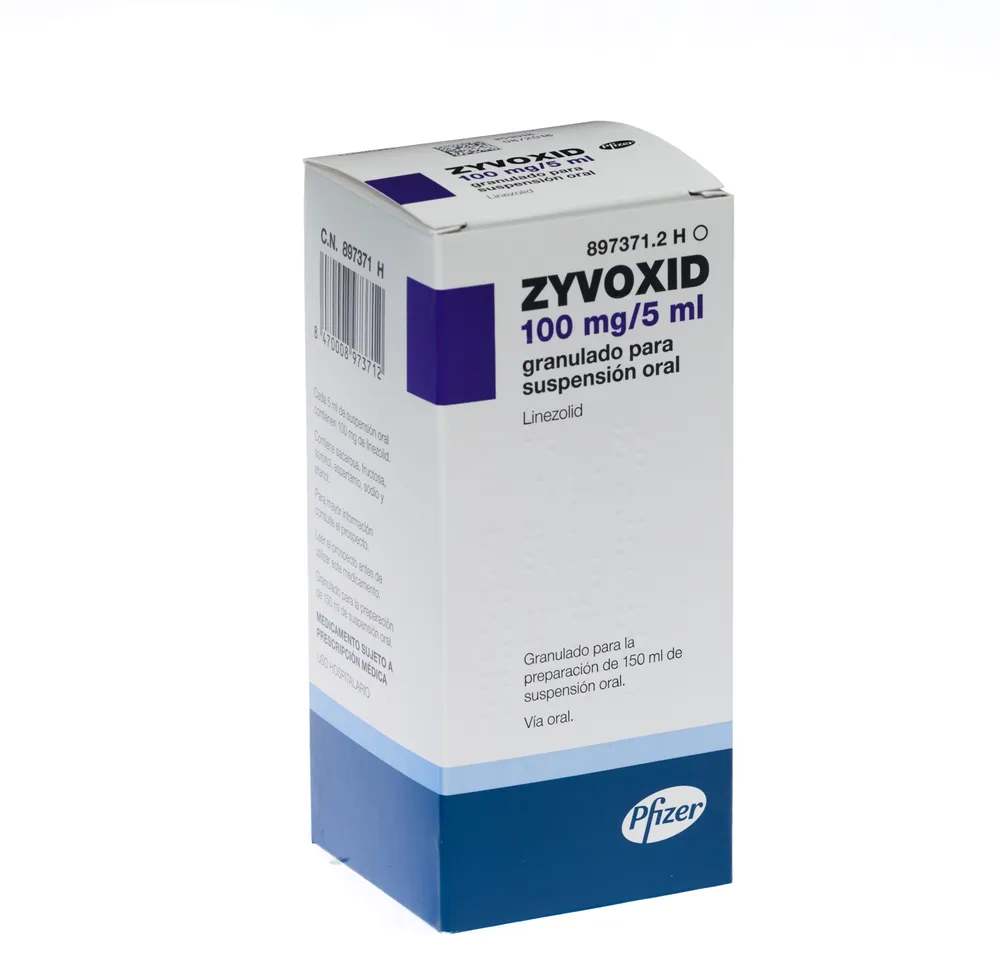
Table of Contents
Package leaflet: Information for the user
Introduction
Package leaflet: Information for the user
ZYVOXID 100mg/5 ml granules for oral suspension
Linezolid
Read the entire leaflet carefully before you start taking this medicine because it contains important information for you.
- Keep this leaflet as you may need to read it again.
- If you have any questions, ask your doctor, pharmacist or nurse.
- This medicine has been prescribed for you only; do not give it to others, even if they have the same symptoms as you, as it may harm them.
- If you experience any adverse reactions, consult your doctor, pharmacist or nurse, even if they are adverse reactions not listed in this leaflet. See section 4.
Leaflet contents:
- What Zyvoxid is and what it is used for
- What you need to know before taking Zyvoxid
- How to take Zyvoxid
- Possible side effects
- How to store Zyvoxid
- Contents of the pack and other information
1. What Zyvoxid is and what it is used for
Zyvoxid is an antibiotic belonging to the oxazolidinone group that works by preventing the growth of certain bacteria (germs) that cause infections.
Antibiotics are used to treat bacterial infections and are not effective against viral infections such as influenza or the common cold.
It is important that you follow your doctor's instructions regarding dosage, administration, and duration of treatment.
Do not store or reuse this medicine. If you have any antibiotic left over after completing your treatment, return it to the pharmacy for proper disposal. Do not dispose of medicines down the drain or in household waste.
It is used to treat pneumonia and certain skin or subcutaneous tissue infections. Your doctor will have determined whether Zyvoxid is appropriate for treating your infection.
2. What you need to know before using Zyvoxid
Do not take Zyvoxid if:
- you are allergic to linezolid or any of the other ingredients of this medicine (listed in section 6).
- you are taking or have taken within the last 2 weeks any medicines known as monoamine oxidase inhibitors (MAOIs, such as phenelzine, isocarboxazide, selegiline, moclobemide). These medicines are usually used to treat depression or Parkinson's disease.
- you are breastfeeding. Zyvoxid passes into breast milk and could affect the baby.
Warnings and precautions
Talk to your doctor, pharmacist, or nurse before starting to take Zyvoxid.
Zyvoxid may not be suitable for you if you answer yes to any of the following questions. In such cases, inform your doctor, as they may need to monitor your general health and blood pressure before and during treatment, or may decide that another treatment is more appropriate for you.
Ask your doctor if you are unsure whether any of these categories apply to you.
- Do you have high blood pressure, whether or not you are taking medication for it?
- Have you been diagnosed with hyperactive thyroid?
- Do you have a tumor of the adrenal glands (pheochromocytoma) or carcinoid syndrome (caused by tumors in the hormonal system, presenting symptoms such as diarrhea, skin flushing, wheezing)?
- Do you suffer from bipolar disorder, schizophrenia, confusion, or other mental health problems?
- Do you have a history of hyponatremia (low sodium levels in the blood), or are you taking medicines that reduce sodium levels in the blood, such as certain diuretics like hydrochlorothiazide?
- Are you taking opioids?
The use of certain medicines, including antidepressants and opioids, together with Zyvoxid may lead to serotonin syndrome, a potentially life-threatening condition (see section 2 “Other medicines and Zyvoxid” and section 4).
Take special care with Zyvoxid:
Inform your doctor before taking this medicine if:
- You are elderly.
- You bruise easily or bleed excessively.
- You have anemia (low red blood cell count).
- You are prone to infections.
- You have a history of seizures.
- You have liver or kidney problems, especially if you are on dialysis.
- You have diarrhea.
Inform your doctor immediately if, during treatment, you experience:
- Vision problems such as blurred vision, changes in color vision, difficulty seeing clearly, or if you notice a reduction in your visual field.
- Loss of sensation in your arms or legs, or a tingling or burning sensation in your arms or legs.
- Diarrhea may occur while taking or after stopping antibiotics, including linezolid. If diarrhea becomes severe, persists for a long time, or if you notice blood or mucus in your stools, stop taking Zyvoxid immediately and consult your doctor. In this situation, do not take medicines that stop or reduce intestinal movements.
- Nausea or repeated vomiting, abdominal pain, or rapid breathing.
- Muscle pain without apparent cause, tenderness or weakness, and/or dark urine. These may be signs of a serious condition called rhabdomyolysis (muscle breakdown), which can lead to kidney damage.
- Malaise and dizziness with muscle weakness, headache, confusion, and memory impairment, which may indicate hyponatremia (low sodium levels in the blood).
Using Zyvoxid with other medicines
Zyvoxid may sometimes interact with certain medicines and cause adverse effects such as changes in blood pressure, body temperature, or heart rate.
Tell your doctor or pharmacist if you are taking or have recently taken any other medicine.
Inform your doctor if you are taking or have taken within the last 2 weeks the following medicines, as you must not take Zyvoxid if you are still taking them or have recently taken them (see also section 2 above “Do not take Zyvoxid”):
- Monoamine oxidase inhibitors (MAOIs), such as phenelzine, isocarboxazide, selegiline, moclobemide. These medicines are commonly used to treat Parkinson's disease.
Also inform your doctor if you are taking the following medicines. Your doctor may decide to treat you with Zyvoxid, but will need to assess your general condition and blood pressure before and during treatment. In other cases, your doctor may decide that another treatment is more suitable for you.
- Cold decongestants containing pseudoephedrine or phenylpropanolamine.
- Certain asthma medicines such as salbutamol, terbutaline, fenoterol.
- Certain antidepressants called tricyclics or SSRIs (selective serotonin reuptake inhibitors). There are many medicines in this group, including amitriptyline, citalopram, clomipramine, dosulepin, doxepin, fluoxetine, fluvoxamine, imipramine, lofepramine, paroxetine, or sertraline.
- Medicines used to treat migraines such as sumatriptan or zolmitriptan.
- Medicines used to treat sudden severe allergic reactions such as adrenaline (epinephrine).
- Medicines that increase blood pressure, such as noradrenaline (norepinephrine), dopamine, and dobutamine.
- Opioids (e.g., pethidine) used to treat moderate to severe pain.
- Medicines used to treat anxiety disorders such as buspirone.
- Medicines that prevent blood clotting such as warfarin.
- An antibiotic called rifampicin.
Taking Zyvoxid with food, drinks, and alcohol
- You may take Zyvoxid before, during, or after meals.
- Avoid eating excessive amounts of cheese, yeast extracts, soy extracts (e.g., soy sauce), and alcoholic beverages, especially draught beer and wine. The reason is that Zyvoxid can react with a substance called tyramine, which is naturally present in some foods. This interaction may cause an increase in your blood pressure.
- If you develop a headache after eating or drinking, inform your doctor, pharmacist, or nurse immediately.
Pregnancy, breastfeeding, and fertility
The effect of Zyvoxid in pregnant women is unknown. Therefore, pregnant women should not use Zyvoxid unless advised by their doctor. If you are pregnant or breastfeeding, think you may be pregnant, or plan to become pregnant, consult your doctor or pharmacist before using this medicine.
You should not breastfeed while taking Zyvoxid, as this medicine passes into breast milk and may affect your baby.
Driving and using machines
Zyvoxid may cause dizziness or vision problems. If this occurs, do not drive or operate machinery. Remember that if you do not feel well, your ability to drive or use machines may be impaired.
Zyvoxid contains:
Aspartame
The suspension of this medicine contains 210 mg of aspartame per dose equivalent to 35 mg/5 ml. Aspartame contains a source of phenylalanine. Phenylalanine may be harmful if you have phenylketonuria (PKU), a rare genetic disorder in which phenylalanine accumulates because the body cannot properly eliminate it.
Sucrose and fructose (sugars), mannitol and sorbitol (sugar alcohols)
Zyvoxid suspension contains no more than 100.8 mg of fructose per dose equivalent to 16.8 mg/5 ml and no more than 262.8 mg of sorbitol per dose equivalent to 43.8 mg/5 ml. Sorbitol is a source of fructose.
If your doctor has informed you (or your child) that you have an intolerance to certain sugars, or if you have been diagnosed with hereditary fructose intolerance (HFI), a rare genetic disorder in which the patient cannot break down fructose, consult your doctor before taking this medicine.
The oral suspension may cause tooth decay due to its content of fructose and sucrose.
The oral suspension may have a mild laxative effect due to its content of mannitol and sorbitol.
Sodium
Zyvoxid suspension contains 68.43 mg of sodium (main component of table salt), equivalent to 11.4 mg per 5 ml. The amount of sodium per dose is equivalent to 3.4% of the recommended maximum daily intake for an adult, which should be considered in patients on low-sodium diets.
Sodium benzoate
When prepared as a suspension, this medicine contains 60 mg of sodium benzoate per dose equivalent to 10 mg/5 ml. Sodium benzoate may increase levels of a substance called bilirubin and may increase the risk of jaundice (yellowing of the skin and eyes) in newborns (up to 4 weeks of age).
Zyvoxid contains Alcohol (ethanol)
When prepared as a suspension, this medicine contains no more than 6 mg of alcohol (ethanol) per dose, equivalent to 1 mg/5 ml (0.02% v/v). The amount of alcohol in each dose is equivalent to less than 0.15 ml of beer or 0.06 ml of wine.
The small amount of alcohol contained in this medicine does not produce any noticeable effect.
3. How to take Zyvoxid
Adults
Always follow exactly the instructions for administration provided in this leaflet or those given by your doctor, pharmacist, or nurse. If in doubt, consult your doctor, pharmacist, or nurse.
Zyvoxid is supplied as granules, which must be reconstituted exclusively by a healthcare professional to prepare the suspension to be taken.
The recommended dose of Zyvoxid suspension is 6 tablespoons of 5 ml (600 mg of linezolid) twice daily (every 12 hours).
Before each use, gently invert the bottle several times. DO NOT SHAKE.
If you are on a dialysis programme, you must take Zyvoxid after each session.
The usual duration of treatment is 10–14 days, but may be extended up to 28 days. The safety and efficacy of this medicine have not been established for treatment periods longer than 28 days. Your doctor will decide the duration of your treatment.
While you are taking Zyvoxid, your doctor will perform periodic blood tests to monitor your blood count.
If you take Zyvoxid for longer than 28 days, your doctor should monitor your vision.
Use in children and adolescents
Zyvoxid is not normally used in children and adolescents (under 18 years of age).
If you take more Zyvoxid than you should
In case of overdose or accidental ingestion, consult your doctor or pharmacist immediately or call the Toxicology Information Service at telephone number 91 562 04 20, stating the medication and the amount ingested.
If you forget to take Zyvoxid
Take the missed dose as soon as you remember. Then take the next dose 12 hours later and continue taking the medicine every 12 hours. Do not take a double dose to make up for the missed dose.
If you stop taking Zyvoxid
It is important that you only stop your treatment if instructed by your doctor.
If, after stopping treatment, your initial symptoms reappear, inform your doctor or pharmacist immediately.
If you have any further questions about the use of this medicine, ask your doctor, pharmacist, or nurse.
4. Possible adverse effects
Like all medicines, this medicine can cause adverse effects, although not everyone will experience them.
Immediately inform your doctor, nurse, or pharmacist if you notice any of the following adverse effects while being treated with Zyvoxid:
The most serious adverse effects of Zyvoxid (frequency in parentheses) are:
- Severe skin reactions (uncommon), swelling particularly around the face and neck (uncommon), wheezing and/or difficulty breathing (rare). These may be signs of an allergic reaction, and treatment with Zyvoxid may need to be stopped. Skin reactions such as raised purple rash due to inflammation of blood vessels (rare), red, sore, scaly skin (dermatitis) (uncommon), skin rash (common), itching (common).
- Vision problems (uncommon), such as blurred vision (uncommon), changes in color perception (frequency not known), difficulty seeing fine details (frequency not known), or if you notice a reduction in your field of vision (rare).
- Severe diarrhoea containing blood and/or mucus (antibiotic-associated colitis including pseudomembranous colitis), which in rare cases may lead to complications that could be life-threatening (uncommon).
- Repeated nausea or vomiting, abdominal pain, or rapid breathing (rare).
- Seizures or convulsions have been reported (uncommon).
- Serotonin syndrome (frequency not known): inform your doctor if you experience agitation, confusion, delirium, muscle rigidity, tremor, lack of coordination, convulsions, rapid heartbeat, severe breathing problems, and diarrhoea (symptoms suggestive of serotonin syndrome) while also being treated with antidepressants called SSRIs or opioids (see section 2).
- Unexplained bleeding or bruising, which may be due to changes in the number of certain blood cells affecting blood clotting or causing anaemia (common).
- Reduction in the number of blood cells that can affect the ability to fight infections (uncommon). Some signs of infection include: fever (common), sore throat (uncommon), mouth ulcers (uncommon), and tiredness (uncommon).
- Muscle pain without apparent cause, tenderness or weakness, and/or dark urine (uncommon). These may be signs of a serious condition called rhabdomyolysis (muscle breakdown), which can lead to kidney damage.
- Inflammation of the pancreas (uncommon).
- Convulsions (uncommon).
- Transient ischaemic attacks (temporary disruption of blood flow to the brain causing short-term symptoms such as loss of vision, weakness in arms and legs, difficulty speaking, and loss of consciousness) (uncommon).
- Ringing in the ears (tinnitus) (uncommon).
Cases of numbness, tingling, or blurred vision have been reported in patients who have taken Zyvoxid for more than 28 days. If you experience vision problems, consult your doctor as soon as possible.
Other adverse effects include:
Common (may affect up to 1 in 10 people):
- Fungal infections, especially in the vagina or mouth.
- Headache.
- Metallic taste.
- Diarrhoea, vomiting, nausea.
- Changes in certain blood test results, including tests for proteins, electrolytes, or enzymes measuring liver or kidney function, or blood sugar levels.
- Difficulty sleeping.
- Increased blood pressure.
- Anaemia (reduction in the number of red blood cells).
- Dizziness.
- Localised or generalised abdominal pain.
- Constipation.
- Indigestion.
- Localised pain.
- Reduction in platelet count.
Uncommon (may affect up to 1 in 100 people):
-
Inflammation of the vagina or female genital area.
-
Tingling or numbness sensation.
-
Swelling, discomfort, changes in tongue color.
-
Dry mouth.
-
Need to urinate more frequently.
-
Chills.
-
Feeling thirsty.
-
Increased sweating.
-
Hyponatraemia (low sodium levels in blood).
-
Kidney failure.
-
Abdominal distension.
-
Increased creatinine.
-
Stomach pain.
-
Changes in heart rate (e.g., increased heart rate).
-
Decrease in blood cell count.
-
Weakness and/or sensory changes.
Rare (may affect up to 1 in 1,000 people):
- Change in the colour of tooth surfaces, which disappears with professional dental cleaning procedures.
The following adverse effects have also been reported (frequency not known: frequency cannot be estimated from the available data):
- Alopecia (hair loss).
Reporting of adverse effects
If you experience any adverse effect, talk to your doctor or pharmacist, even if it is a possible adverse effect not listed in this leaflet. You can also report them directly via the Spanish Pharmacovigilance System for Human Medicines: https://www.notificaRAM.es. By reporting adverse effects, you can help provide more information on the safety of this medicine.
5. Storage of Zyvoxid
Keep this medicine out of the sight and reach of children.
Store the bottle in the outer packaging to protect it from light.
Do not use this medicine after the expiry date stated on the packaging after “EXP”. The expiry date is the last day of the month indicated.
Validity period of the reconstituted suspension: 21 days. Discard any unused solution. Record the date of reconstitution on the outer packaging.
Medicines should not be disposed of via wastewater or household waste. Ask your pharmacist how to dispose of medicines and packaging that you no longer need. This will help protect the environment.
6. Contents of the pack and other information
Composition of Zyvoxid
- The active substance is linezolid. After reconstitution, each 5 ml of suspension contains 100 mg of linezolid.
- The other components are sucrose, mannitol (E421), microcrystalline cellulose (E460), sodium carboxymethylcellulose (E551), aspartame (E951), anhydrous colloidal silica (E446), sodium citrate (E331), xanthan gum (E415), sodium benzoate (E211), anhydrous citric acid (E330), sodium chloride, ethanol, and sweeteners (fructose, maltodextrin [derived from maize], ammonium glycyrrhizinate, and sorbitol). The flavourings are orange flavour, mint flavour, vanilla flavour, and orange cream flavour (see section 2 “Zyvoxid contains aspartame; sucrose, sorbitol, mannitol and fructose; sodium; sodium benzoate and alcohol (ethanol)”.
Appearance of the product and contents of the container of Zyvoxid granules for oral suspension
Zyvoxid granules for oral suspension are presented in brown bottles containing a granular/powder substance ranging in colour from white to yellow-orange, which may contain lumps ranging in colour from white to yellow-orange or yellow-orange-brown. When reconstituted with water, it forms a reconstituted orange-flavoured liquid (suspension) ranging in colour from white to yellow-orange. Each bottle is supplied in a cardboard outer package with a measuring spoon of 2.5/5 ml.
Marketing Authorisation Holder and Manufacturer
Marketing Authorisation Holder
Pfizer, S.L. Avda. Europa, 20B.
Parque Empresarial La Moraleja.
28108, Alcobendas,
Madrid, Spain
Manufacturer
Pfizer Service Company BV
Hermeslaan 11
1932 Zaventem
Belgium.
This medicinal product has been authorised in EU Member States under the following names:
Austria Belgium Cyprus Czech Republic Denmark Estonia Finland France Germany Greece Iceland Ireland Italy Latvia Lithuania Luxembourg Malta Netherlands Norway Poland Portugal Slovakia Slovenia Spain United Kingdom Sweden | Zyvoxid Zyvoxid Zyvoxid Zyvoxid Zyvoxid Zyvoxid Zyvoxid Zyvoxid Zyvoxid Zyvoxid Zyvoxid Zyvox Zyvoxid Zyvoxid Zyvoxid Zyvoxid Zyvox Zyvoxid Zyvoxid Zyvoxid Zyvoxid Zyvoxid Zyvoxid Zyvoxid Zyvox Zyvoxid |
Date of the most recent review of this leaflet: June 2024
Detailed and up-to-date information on this medicine is available on the website of the Spanish Agency for Medicinal Products and Health Products (AEMPS) http://www.aemps.gob.es/.
This information is intended for healthcare professionals only:
Instructions for the preparation of the oral suspension:
Linezolid is supplied as granules which must be prepared exclusively by a healthcare professional.
Peel off the foil and reconstitute using 123 ml of water in two approximately equal aliquots to obtain 150 ml of oral suspension. The suspension should be shaken vigorously between each addition of water. After reconstitution, the appearance is a white to yellowish-orange suspension.
Before use, gently invert the bottle several times. DO NOT SHAKE.
The usual dose of Zyvoxid suspension is six 5-ml teaspoons (600 mg of linezolid) twice daily (every 12 hours).
Disposal of unused medicine and of all materials that have come into contact with it should be carried out in accordance with local regulations.
See also section 3 above, "How to use Zyvoxid."