Zyntabac 150 mg prolonged-release tablets
Spain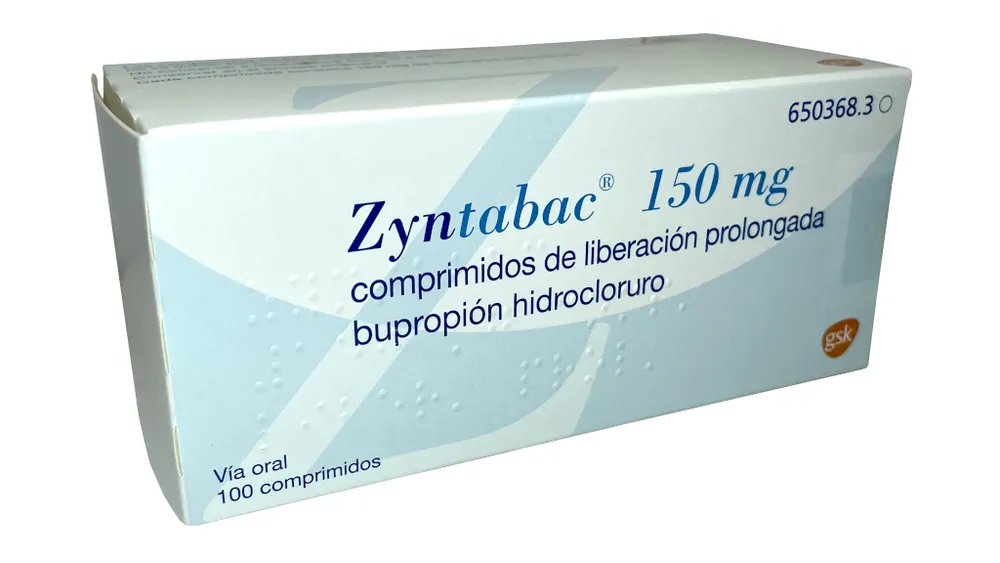
Table of Contents
Package leaflet: Information for the user
Introduction
Package leaflet: information for the user
Zyntabac 150 mg prolonged-release tablets
bupropion hydrochloride
Read the entire leaflet carefully before you start taking this medicine, because it contains important information for you.
- Keep this leaflet, as you may need to read it again.
- If you have any questions, ask your doctor or pharmacist.
- This medicine has been prescribed for you only, and you should not give it to others, even if they have the same symptoms as you, because it could harm them.
- If you experience any adverse effects, talk to your doctor or pharmacist, even if they are adverse effects not listed in this leaflet. See section 4.
Leaflet contents
- What Zyntabac is and what it is used for
- What you need to know before taking Zyntabac
- How to take Zyntabac
- Possible side effects
- How to store Zyntabac
- Contents of the pack and other information
1. What Zyntabac is and what it is used for
Zyntabac is a medicine prescribed by your doctor to help you stop smoking, when you are motivated to do so or are participating in smoking cessation support programs.
Zyntabac will be most effective if you are fully determined to quit smoking. Ask your doctor or pharmacist about treatments and other aids available to help you stop smoking.
2. What you need to know before taking Zyntabac
Do not take Zyntabac:
-
if you are allergic to bupropion or to any of the other components of this medicine (listed in section 6)
-
if you are taking other medicines containing bupropion (such as Elontril, for the treatment of depression)
-
if you have a condition causing seizures (convulsions), such as epilepsy, or if you have a history of seizures
-
if you have, or have had, an eating disorder (for example, bulimia or anorexia nervosa)
-
if you have severe liver dysfunction, such as cirrhosis
-
if you have a brain tumor
-
if you regularly drink large amounts of alcohol and decide to stop drinking alcohol, or if you plan to stop drinking alcohol during treatment with Zyntabac
-
if you have recently stopped taking sedatives or medicines for anxiety treatment (especially benzodiazepines or similar drugs), or if you decide to stop taking these medicines during treatment with Zyntabac
-
if you have bipolar disorder (sudden changes in mood), as Zyntabac could trigger an episode of this illness
-
if you are taking or have taken within the last 14 days, medicines for depression or Parkinson’s disease known as monoamine oxidase inhibitors (MAOIs). Your doctor will inform you that this time period may be shorter for certain types of MAOIs.
-
Inform your doctor immediately if any of these situations apply to you and do not take Zyntabac.
Warnings and precautions
Talk to your doctor or pharmacist before starting Zyntabac. This is because certain medical conditions may increase your risk of adverse effects (see also section 4).
Brugada syndrome
If you have a condition called Brugada syndrome (a rare inherited disorder affecting heart rhythm), or if there has been cardiac arrest or sudden death in your family.
Children and adolescents
Zyntabac is not recommended for individuals under 18 years of age.
Adults
Seizures (convulsions)
Zyntabac has been shown to cause seizures (convulsions) in approximately 1 out of every 1,000 people (see also “Other medicines and Zyntabac” in this section and section 4, “Possible side effects,” for more information). You are more likely to experience seizures:
- if you regularly drink large amounts of alcohol
- if you have diabetes being treated with insulin or oral tablets
- if you have suffered a serious head injury or have had a previous head trauma.
If any of these apply to you, do not take Zyntabac unless your doctor has specifically advised you to do so for an important reason.
If you experience seizures (convulsions) during treatment:
- Stop taking Zyntabac and never take it again. Consult your doctor.
You may have an increased risk of experiencing adverse effects:
- if you have kidney or liver problems
- if you are over 65 years old.
You may need to take a lower dose (see section 3) and will require close monitoring while taking Zyntabac.
If you have had any mental illness…
During treatment with Zyntabac, some people have experienced hallucinations or delusional thoughts (seeing, hearing, or believing things that are not real), thought disorders, or sudden mood changes. These effects are more likely in individuals who have previously had mental illness.
If you feel depressed or have suicidal thoughts…
Some people become depressed when trying to quit smoking; very rarely, they may have thoughts of suicide or attempt it. These symptoms have occurred in people taking Zyntabac, especially during the first weeks of treatment.
If you feel depressed or have thoughts of suicide:
- Contact your doctor or go to a hospital immediately.
If you are taking medicines for depression…
Using these medicines together with Zyntabac may cause serotonin syndrome, a potentially life-threatening condition (see “Other medicines and Zyntabac” in this section).
High blood pressure and Zyntabac…
During treatment with Zyntabac, some people have required treatment for high blood pressure. If you already have high blood pressure, this may worsen. This is more likely if you are also using nicotine patches to help you quit smoking.
You will need to monitor your blood pressure before starting Zyntabac and throughout treatment, especially if you already have high blood pressure. If you also use nicotine patches, you should check your blood pressure weekly. If your blood pressure increases, you may need to stop taking Zyntabac.
Other medicines and Zyntabac
Inform your doctor or pharmacist if you are currently using, have recently used, or might need to use any other medicines, including those obtained without a prescription.
There may be a higher than usual risk of seizures if you take:
-
medicines for depression or other mental illnesses (see also “Do not take Zyntabac” at the beginning of section 2)
-
theophylline for asthma or lung disease
-
tramadol, a strong painkiller
-
medicines for malaria
-
stimulants or other medicines used to control weight or appetite
-
steroids (except creams and lotions for eye or skin conditions)
-
antibiotics known as quinolones
-
certain types of antihistamines mainly used to treat allergies, which may cause drowsiness
-
medicines for diabetes.
-
If you are taking any of the medicines listed above, inform your doctor immediately before taking Zyntabac (see section 3 under “Some people need to take a lower dose”).
Some medicines may affect how Zyntabac works or increase the risk of adverse effects. These include:
-
medicines for treating depression (such as desipramine, imipramine, paroxetine, citalopram, escitalopram, venlafaxine) or other mental illnesses (such as risperidone, thioridazine). Zyntabac may interact with some antidepressants and may cause changes in mental state (e.g., agitation, hallucinations, coma) and other adverse effects such as body temperature above 38 °C, increased heart rate, unstable blood pressure, exaggerated reflexes, muscle rigidity, lack of coordination, and/or gastrointestinal symptoms (e.g., nausea, vomiting, diarrhea)
-
medicines for Parkinson’s disease (such as levodopa, amantadine, orphenadrine)
-
carbamazepine, phenytoin, or valproate, used to treat epilepsy or certain mental illnesses
-
some medicines used to treat cancer (such as cyclophosphamide, ifosfamide)
-
ticlopidine or clopidogrel, mainly used to treat heart disease or stroke
-
some beta-blockers (such as metoprolol), mainly used to treat high blood pressure
-
some medicines for irregular heart rhythm (such as propafenone, flecainide)
-
ritonavir or efavirenz, used to treat HIV infection.
-
If you are taking any medicine from this list, consult your doctor. Your doctor will assess the benefits and risks of taking Zyntabac or may decide to adjust the dose of other medicines you are taking.
Zyntabac may make other medicines less effective:
- if you take tamoxifen used for cancer treatment.
Inform your doctor if this applies to you. It may be necessary to change your smoking cessation treatment.
- if you take digoxin for heart conditions.
Inform your doctor if this applies to you. Your doctor may consider adjusting the dose of digoxin.
Dose reduction of certain medicines may be necessary when you stop smoking
When you smoke, chemicals absorbed by your body may reduce the effectiveness of certain medicines. When you stop smoking, you may need to reduce the dose of these medicines; otherwise, you may experience adverse effects.
If you are taking other medicines, consult your doctor if you experience any new symptoms you think may be adverse effects.
Use of Zyntabac with alcohol
Some people become more sensitive to alcohol during treatment with Zyntabac. Your doctor may advise you not to drink alcohol while taking Zyntabac, or to drink as little as possible. If you currently drink large amounts of alcohol, do not stop abruptly, as you may be at risk of having a seizure.
Effect on urine tests
Zyntabac may interfere with certain urine tests used to detect other drugs or substances. If you need a urine test, inform your doctor or hospital that you are taking Zyntabac.
Pregnancy and breastfeeding
Do not take Zyntabac if you are pregnant, think you may be pregnant, or plan to become pregnant. Consult your doctor or pharmacist before using this medicine. Some, but not all, studies have reported an increased risk of birth defects, particularly heart defects, in babies whose mothers took Zyntabac. It is not known whether this is due to the use of Zyntabac.
Components of Zyntabac may pass into breast milk. Seek advice from your doctor or pharmacist before taking Zyntabac.
Driving and using machines
Some of the adverse effects of Zyntabac, such as dizziness or lightheadedness, may affect your concentration and judgment.
If this affects you, do not drive or operate machinery.
3. How to take Zyntabac
Follow exactly the instructions for use of this medicine given by your doctor or pharmacist. If in doubt, consult your doctor or pharmacist again.
When to start and how much to take
| ||
Week 1 Continue smoking while taking Zyntabac | Days 1 to 6 | Take one tablet (150 mg), once daily |
Day 7 | Increase your dose to one tablet twice daily, with at least 8 hours between doses and not close to bedtime. | |
Week 2 | Continue taking one tablet twice daily. Stop smoking this week, on your pre-established Quit Date. | |
Weeks 3 to 9 | Continue taking one tablet twice daily for up to 9 weeks. If you are unable to stop smoking after 7 weeks, your doctor will advise you to discontinue treatment with Zyntabac. You will be advised to gradually stop taking Zyntabac after 7–9 weeks. |
Some people need to take a lower dose
… because they are more likely to experience adverse effects.
- if you are over 65 years of age
- if you have liver or kidney disease
- if you have an increased risk of seizures (see “Warnings and precautions” and “Other medicines and Zyntabac” in section 2).
For these people, the recommended maximum dose is one 150 mg tablet per day.
How to take your tablets
Take your Zyntabac tablets at least 8 hours apart. Do not take Zyntabac before going to bed – it may cause difficulty sleeping.
You may take Zyntabac with or without food.
 Swallow Zyntabac tablets whole. Do not chew, crush, or split them – doing so will cause the medicine to be released into your body too quickly, increasing the likelihood of adverse effects, including seizures.
If you take more Zyntabac than you should
If you take more tablets than prescribed by your doctor, you are more likely to experience seizures or other adverse effects.
- Do not delay. Contact your doctor immediately or go to the nearest emergency department.
In case of overdose or accidental ingestion, contact your doctor or pharmacist immediately, or call the Toxicology Information Service at: 91 562 04 20 (indicating the medication and the amount ingested).
If you forget to take Zyntabac
If you miss a dose, wait and take your next dose at the usual time.
Do not take a double dose to make up for a missed dose.
If you stop taking Zyntabac
You may need to take Zyntabac for more than 7 weeks to achieve its full effect.
Do not stop taking Zyntabac without first consulting your doctor. You may need to gradually reduce your dose.
If you have any further questions about the use of this medicine, ask your doctor or pharmacist.
4. Possible adverse effects
Like all medicines, this medicine can cause adverse effects, although not everyone will experience them.
Serious adverse effects
Seizures (convulsions)
Approximately 1 in every 1,000 people who take Zyntabac is at risk of experiencing seizures.
Symptoms of seizures include convulsions and often loss of consciousness. After a seizure, you may feel confused and may not remember what happened.
You are more likely to have a seizure if you take more tablets than prescribed, if you are taking other medicines, or if you have a higher than usual risk of seizures (see section 2).
- If you have a seizure, inform your doctor once you have recovered. Do not take any more Zyntabac.
Allergic reactions
Rarely (up to 1 in every 1,000 people), some individuals may experience potentially serious allergic reactions to Zyntabac. Signs of allergic reactions include:
-
skin rash (including itching, blisters, or hives). Some skin rashes may require hospitalization, especially if accompanied by swelling of the mouth and eyes
-
unusual wheezing in the chest or difficulty breathing
-
swelling of the eyelids, lips, or tongue
-
muscle or joint pain
-
fainting or collapse.
-
If you experience any sign of an allergic reaction, contact a doctor immediately. Do not take any more tablets.
Cutaneous lupus erythematosus or worsening of lupus symptoms
Frequency not known: frequency cannot be estimated from the available data in people taking Zyntabac. Lupus is an autoimmune disorder affecting the skin and other organs.
- If you experience a lupus flare-up, skin rash, or lesions (particularly in sun-exposed areas) while taking Zyntabac, contact your doctor immediately, as treatment interruption may be necessary.
Acute Generalized Exanthematous Pustulosis (AGEP)
Frequency not known: frequency cannot be estimated from the available data in people taking Zyntabac.
Symptoms of AGEP include a rash with pus-filled bumps/blisters.
- If you develop a rash with pus-filled bumps or blisters, contact your doctor immediately, as treatment interruption may be necessary.
Other adverse effects
Very common adverse effects
May affect more than 1 in 10 people:
- difficulty sleeping (make sure not to take Zyntabac in the hours before going to bed).
Common adverse effects
May affect up to 1 in 10 people:
- feeling depressed (see also “Warnings and precautions” in section 2)
- feeling anxious or restless
- difficulty concentrating
- restlessness (tremors)
- headache
- nausea, vomiting
- stomach pain or other gastrointestinal disturbances (such as constipation), altered sense of taste, dry mouth
- fever, dizziness, sweating, skin rashes (sometimes due to an allergic reaction), itching.
Uncommon adverse effects
May affect up to 1 in 100 people:
- ringing in the ears (tinnitus), visual disturbances
- increased blood pressure (sometimes severe), flushing
- loss of appetite (anorexia)
- weakness
- chest pain
- confusion
- increased heart rate (tachycardia).
Rare adverse effects
May affect up to 1 in 1,000 people:
- seizures (see beginning of this section)
- muscle spasms, muscle stiffness, lack of coordination in movement, difficulty walking or coordinating movements (ataxia)
- palpitations
- fainting or feeling faint upon standing suddenly due to a drop in blood pressure
- irritability or hostility; unusual dreams (including nightmares)
- memory loss
- tingling or numbness
- severe allergic reactions; rashes associated with muscle and joint pain (see beginning of this section)
- urinating more or less than usual
- severe skin rashes, which may affect the mouth and other parts of the body and may be life-threatening
- worsening of psoriasis (plaques of thickened or reddened skin)
- change in skin or whites of the eyes to yellow (jaundice), elevated liver enzymes, hepatitis
- changes in blood sugar levels
- feelings of unreality or strangeness (depersonalization); seeing or hearing things that are not real (hallucinations).
Very rare adverse effects
May affect up to 1 in 10,000 people:
- restlessness, aggressiveness
- believing or thinking unreal things (delusional ideas), severe distrust (paranoia)
- urinary incontinence (involuntary urination, urine leakage)
- unusual hair loss or thinning (alopecia).
Frequency not known
Other adverse effects have occurred in a small number of people, but their exact frequency is unknown:
- thoughts of harming yourself or of suicide during treatment with Zyntabac or shortly after stopping treatment (see section 2, “What you need to know before starting Zyntabac”). If you have these thoughts, contact your doctor or go immediately to a hospital
- loss of touch with reality and inability to think or judge clearly (psychosis); other symptoms may include hallucinations and/or delusions
- sudden intense fear (panic attack)
- stuttering
- reduction in red blood cells (anemia), white blood cells (leukopenia), and platelets (thrombocytopenia)
- low sodium levels in blood (hyponatremia)
- changes in mental state (e.g., restlessness, hallucinations, coma) and other adverse effects such as body temperature above 38°C, increased heart rate, unstable blood pressure, exaggerated reflexes, muscle rigidity, lack of coordination, and/or gastrointestinal symptoms (e.g., nausea, vomiting, diarrhea), while taking Zyntabac together with other medicines used to treat depression (such as paroxetine, citalopram, escitalopram, fluoxetine, and venlafaxine).
Effects of quitting smoking
Some people experience nicotine withdrawal symptoms when they stop smoking. This may also affect people taking Zyntabac. Symptoms of nicotine withdrawal include:
- difficulty sleeping
- trembling or sweating
- feeling anxious, restless, or depressed, sometimes with suicidal thoughts.
Talk to your doctor if you are concerned about how you are feeling.
Reporting of adverse effects
If you experience any type of adverse effect, consult your doctor or pharmacist, even if they are possible adverse effects not listed in this leaflet. You can also report them directly via the Spanish Pharmacovigilance System for Human Medicines: www.notificaRAM.es. By reporting adverse effects, you can help provide more information on the safety of this medicine.
5. Storage of Zyntabac
Keep this medicine out of the sight and reach of children.
Do not use this medicine after the expiry date stated on the packaging. The expiry date refers to the last day of the month indicated.
Do not store this medicine above 25 °C.
Store in the original packaging.
Medicines must not be disposed of via wastewater or household waste. Instead, dispose of empty containers and unused medicines at the SIGRE collection point at your pharmacy. If in doubt, ask your pharmacist how to properly dispose of containers and unused medicines. This helps protect the environment.
6. Package contents and other information
Composition of Zyntabac
The active substance is bupropion hydrochloride. Each tablet contains 150 mg of bupropion hydrochloride.
The other components are:
Tablet core: microcrystalline cellulose, hypromellose, monohydrate cysteine hydrochloride, magnesium stearate.
Tablet coating: hypromellose, macrogol 400, titanium dioxide (E171), carnauba wax.
Printing ink: hypromellose, black iron oxide (E172).
Appearance of the product and package contents
Zyntabac 150 mg prolonged-release tablets are white, biconvex, round tablets, marked on one side with "GX CH7". They are available in boxes containing blisters of 30, 40, 50, 60 or 100 tablets.
Only certain pack sizes may be marketed.
Marketing Authorization Holder and Manufacturer
Marketing Authorization Holder | GlaxoSmithKline, S.A. P.T.M. C/ Severo Ochoa, 2 28760 Tres Cantos (Madrid) Tel: +34 900 202 700 |
Manufacturer Responsible | Glaxo Wellcome, S.A. Avda. de Extremadura, 3 09400 – Aranda de Duero (Burgos) |
This medicinal product is authorized in the European Economic Area member states under the following names:
Zyban: Belgium, Denmark, Finland, France, Germany, Greece, Iceland, Ireland, Italy, Luxembourg, Norway, Portugal, Sweden, Netherlands.
Zyntabac: Spain, Netherlands.
Date of the most recent review of this leaflet: March 2024
Detailed and up-to-date information on this medicinal product is available on the website of the Spanish Agency for Medicines and Health Products (AEMPS) http://www.aemps.gob.es/