Zonisamide Normon 100 mg hard capsules EFG
Spain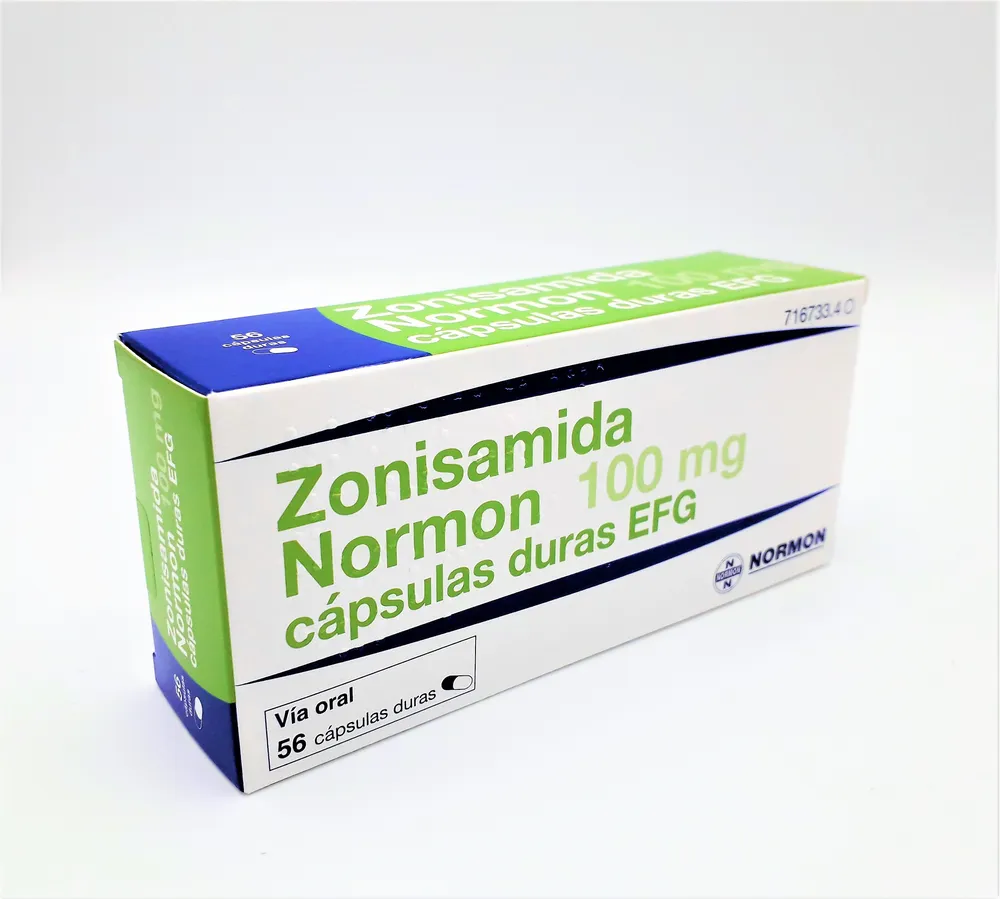
Table of Contents
Patient Information Leaflet
Introduction
Patient Information Leaflet
ZONISAMIDE NORMON 100 mg Hard Capsules EFG
(zonisamide)
Read the entire leaflet carefully before you start taking this medicine, as it contains important information for you.
- Keep this leaflet, as you may need to read it again. If you have any questions, consult your doctor or pharmacist.
- This medicine has been prescribed for you only, and you should not give it to other people, even if they have the same symptoms as you, because it could harm them.
- If you experience any adverse reactions, consult your doctor or pharmacist, even if they are adverse reactions not listed in this leaflet. See section 4.
Leaflet Contents
- What Zonisamida NORMON is and what it is used for
- What you need to know before taking Zonisamida NORMON
- How to take Zonisamida NORMON
- Possible adverse effects
- How to store Zonisamida NORMON
- Contents of the pack and other information
1. What Zonisamida NORMON is and what it is used for
Zonisamida NORMON contains the active substance zonisamide, and is used as an antiepileptic.
Zonisamida NORMON is used to treat seizures affecting one part of the brain (partial seizures), which may or may not be followed by a seizure affecting the entire brain (secondary generalization).
Zonisamida NORMON can be used:
- Alone to treat convulsive seizures in adults.
- In combination with other antiepileptic medicines to treat convulsive seizures in adults, adolescents, and children aged 6 years and older.
2. What you need to know before starting Zonisamida NORMON
Do not take Zonisamida NORMON:
- if you are allergic to zonisamide or to any of the components of this medicine (listed in section 6),
- if you are allergic to other sulfonamides, for example: sulfonamide antibiotics, thiazide diuretics, and sulfonylurea antidiabetics.
Warnings and precautions
Zonisamida NORMON belongs to a group of medicines (sulfonamides) that may cause serious allergic reactions, severe rashes, and blood disorders, which very rarely may lead to death (see section 4. Possible side effects).
Serious rashes have been reported with zonisamide therapy, including cases of Stevens-Johnson syndrome. |
Consult your doctor or pharmacist before starting to take this medicine:
- if you are under 12 years of age, as you may have an increased risk of experiencing reduced sweating, heat stroke, pneumonia, and liver problems. The use of zonisamide is not recommended in children under 6 years of age.
- if you are elderly, as the dose of zonisamide may need to be adjusted, and you may have a higher likelihood of developing an allergic reaction, severe rash, swelling of legs and feet, or itching while taking this medicine (see section 4. Possible side effects).
- if you have liver problems, as the dose of zonisamide may need to be adjusted.
- if you have eye problems such as glaucoma.
- if you have kidney problems, as the dose of zonisamide may need to be adjusted.
- if you have previously had kidney stones, as you may be at increased risk of developing further kidney stones. Reduce the risk of developing kidney stones by drinking enough water.
- if you live in or are traveling to a hot climate. Zonisamide may reduce sweating, which could lead to an increase in your body temperature. Reduce the risk of overheating by drinking enough water and keeping cool.
- if you are underweight or have lost a significant amount of weight, as this medicine may cause further weight loss. Inform your doctor, as monitoring may be necessary.
- if you are pregnant or could become pregnant (for further information, see section “Pregnancy, breastfeeding and fertility”).
The use of Zonisamida Normon may cause high levels of ammonia in the blood, which could affect brain function, especially if you are also taking other medicines that may increase ammonia levels (e.g., valproate), if you have a genetic disorder causing excessive ammonia production in the body (urea cycle disorder), or if you have liver disorders. Inform your doctor immediately if you experience unusual drowsiness or confusion.
If any of these situations apply to you, inform your doctor before taking zonisamide.
Children and adolescents
Consult your doctor regarding the following risks:
Preventing overheating and dehydration in children Zonisamide may cause your child to sweat less or experience excessive heat, which can lead to brain damage and death if not treated. Children are the most vulnerable population, especially on hot days. While your child is taking this medication:
If your child's skin is very hot with little or no sweating, the child feels confused or has muscle cramps, or has a rapid heartbeat or breathing:
|
- Weight: You must monitor your child's weight monthly and contact the doctor as soon as possible if they do not gain sufficient weight. Zonisamide is not recommended in children who are underweight or have poor appetite, and it should be used with caution in children weighing less than 20 kg.
- Increased blood acid levels and kidney stones: Reduce these risks by ensuring your child drinks enough water and does not take any medication that may cause kidney stones (see Other medicines). Your doctor will monitor your child's blood bicarbonate levels and kidney function (see also section 4).
Do not administer this medicine to children under 6 years of age, as it is not known whether the potential benefits outweigh the risks in this age group.
Use of zonisamide with other medicines
Inform your doctor or pharmacist if you are currently using, or have recently used, any other medicines, including those obtained without a prescription.
- Zonisamide should be used with caution in adults when taken with medicines that may cause kidney stones, such as topiramate or acetazolamide. This combination is not recommended in children.
- Zonisamide may possibly increase blood levels of medicines such as digoxin and quinidine, and therefore it may be necessary to reduce the dose of these medicines.
- Other medicines such as phenytoin, carbamazepine, phenobarbital, and rifampicin may decrease blood levels of zonisamide, which could require adjustment of the zonisamide dose.
Taking Zonisamida NORMON with food and drinks
Zonisamide may be taken with or without food.
Pregnancy, breastfeeding, and fertility
Women of childbearing potential must use effective contraceptive measures during treatment with zonisamide and for one month after stopping zonisamide.
If you plan to become pregnant, speak with your doctor before stopping contraception and before becoming pregnant about the possibility of switching to other suitable treatments. If you are or think you may be pregnant, inform your doctor immediately. Do not discontinue treatment without consulting your doctor.
You should take zonisamide during pregnancy only if specifically instructed by your doctor. Research shows an increased risk of birth defects in children of women taking antiepileptic medicines. The risk of birth defects or neurodevelopmental disorders (problems in brain development) for your child after taking zonisamide during pregnancy is unknown. One study showed that children whose mothers used zonisamide during pregnancy were smaller than expected for their age at birth, compared to children whose mothers were treated with lamotrigine monotherapy. Make sure you receive detailed information about the risks and benefits of using zonisamide for epilepsy during pregnancy.
Do not breastfeed while taking zonisamide or during the month after stopping zonisamide.
There are no clinical data on the effects of zonisamide on human fertility. Animal studies have shown changes in fertility parameters.
Driving and use of machines
Zonisamide may cause symptoms such as drowsiness, dizziness, or visual disturbances, and may reduce reaction ability. These effects, as well as the underlying disease itself, may impair your ability to drive vehicles or operate machinery. Therefore, do not drive, operate machinery, or engage in other activities requiring special attention until your doctor has assessed your response to this medicine.
Zonisamida NORMON contains sodium
This medicine contains less than 23 mg of sodium (1 mmol) per capsule; that is, essentially "sodium-free".
3. How to take Zonisamida NORMON
Follow exactly the instructions for administration of this medicine as given by your doctor. If in doubt, consult your doctor or pharmacist again.
The usual dose in adults
If you are taking Zonisamida NORMON alone:
- The initial dose is 100 mg once daily.
- This may be increased by 100 mg at intervals of two weeks.
- The usual dose is 300 mg once daily.
If you are taking Zonisamida NORMON with other antiepileptic drugs:
- The initial dose is 50 mg per day, divided into two equal doses of 25 mg.
- This may be increased by up to 100 mg at intervals of one to two weeks.
- The usual daily dose is between 300 mg and 500 mg.
- Some people respond to lower doses. The dose may be increased more slowly if you experience adverse effects or if you have kidney or liver problems.
Use in children (6 to 11 years) and adolescents (12 to 17 years) weighing at least 20 kg:
- The initial dose is 1 mg per kg of body weight once daily.
- This may be increased by 1 mg per kg of body weight at intervals of one to two weeks.
- The usual daily dose is between 6 mg and 8 mg per kg of body weight for a child weighing up to 55 kg, or between 300 mg and 500 mg once daily for a child weighing more than 55 kg (whichever is lower).
Example: a child weighing 25 kg should take 25 mg once daily during the first week, then the daily dose should be increased by 25 mg at the beginning of each week until reaching a daily dose of 150 to 200 mg.
If you think that the effect of this medicine is too strong or too weak, inform your doctor or pharmacist.
- Zonisamide capsules must be swallowed whole with water.
- Do not chew the capsules.
- Zonisamide may be taken once or twice daily, according to your doctor's instructions.
- If you take zonisamide twice daily, take half of the daily dose in the morning and the other half at night.
If you take more Zonisamida NORMON than you should
In case of overdose or accidental ingestion, contact your doctor or pharmacist immediately or call the Toxicology Information Service at telephone number: 91 562 04 20, indicating the medicine and the amount ingested.
You may feel drowsy and could lose consciousness. You may also feel nauseous, have stomach pain, muscle spasms, eye movements, feel faint, have a slow heartbeat, and reduced respiratory and kidney function. Do not attempt to drive.
If you forget to take Zonisamida NORMON
- If you forget to take a dose, do not worry; take the next dose at the usual time.
- Do not take a double dose to make up for forgotten doses.
If you stop taking Zonisamida NORMON
- Zonisamide is intended to be taken as a long-term medication. Do not reduce the dose or stop taking the medicine unless instructed by your doctor.
- If your doctor advises you to discontinue treatment, they will gradually reduce the dose to minimize the risk of having more seizures.
If you have any further questions about the use of this medicine, ask your doctor or pharmacist.
4. Possible adverse effects
Like all medicines, this medicine can cause adverse effects, although not everyone will experience them.
Zonisamide belongs to a group of medicines (sulfonamides) that may cause serious allergic reactions, severe rashes, and blood disorders, which very rarely may lead to death.
Contact your doctor immediately if:
- you have difficulty breathing, swelling of the face, lips, or tongue, or a severe rash, as these symptoms may indicate that you are experiencing a serious allergic reaction.
- you have signs of overheating: high body temperature with little or no sweating, rapid heartbeat and breathing, muscle cramps, and confusion.
- you have had thoughts of self-harm or suicide. A small number of people taking antiepileptic medicines such as zonisamide have had thoughts of self-harm or suicide.
- you have muscle pain or feel weak, as this may be a sign of abnormal muscle breakdown which can lead to kidney problems.
- you suddenly have back or stomach pain, experience pain when urinating, or notice blood in your urine, as this may be a sign of kidney stones.
- you experience visual problems such as eye pain or blurred vision while taking zonisamide.
Contact your doctor as soon as possible if:
- you develop an unexplained rash, as it may progress to a more severe rash or skin peeling.
- you feel unusually tired or feverish, have a sore throat, swollen glands, or notice you are bruising more easily, as this may mean you have a blood disorder.
- you have signs of increased acid levels in the blood: headache, drowsiness, difficulty breathing, and loss of appetite. Medical monitoring or treatment may be necessary.
Your doctor may decide that you should stop taking this medicine.
The adverse effects of zonisamide most commonly reported are all mild in nature. They occur during the first month of treatment and often decrease with continued treatment. In children aged 6 to 17 years, adverse effects were consistent with those described below, except for the following: pneumonia, dehydration, decreased sweating (frequent), and abnormal liver enzymes (uncommon).
Very common adverse effects: may affect more than 1 in 10 people
- agitation, irritability, confusion, depression.
- poor muscle coordination, dizziness, poor memory, drowsiness, double vision.
- loss of appetite, decreased levels of bicarbonate (a substance that prevents blood from becoming too acidic) in the blood.
Common adverse effects: may affect up to 1 in 10 people
- difficulty sleeping, unusual or strange thoughts, feeling anxious or emotionally unstable.
- slowed thinking, difficulty concentrating, speech abnormalities, abnormal skin sensations (tingling), tremor, involuntary eye movements.
- kidney stones.
- rashes, itching, allergic reactions, fever, fatigue, flu-like symptoms, hair loss.
- bruising (a small bruise caused by blood from a broken blood vessel under the skin).
- weight loss.
- nausea, indigestion, stomach pain, diarrhoea (loose stools), constipation.
- swelling of legs and feet.
Uncommon adverse effects: may affect up to 1 in 100 people
- rage, aggression, suicidal thoughts, suicide attempt.
- vomiting.
- inflammation of the gallbladder or gallstones.
- urinary stones.
- lung infection/inflammation, urinary tract infections.
- low blood potassium levels and seizures/convulsive attacks.
Rare adverse effects: may affect up to 1 in 10,000 people
- hallucinations, memory loss, coma, neuroleptic malignant syndrome (inability to move, sweating, fever, incontinence), epileptic status (prolonged or repeated seizures).
- respiratory disorders, difficulty breathing, lung inflammation.
- pancreatitis (severe stomach or back pain).
- liver problems, kidney failure, increased levels of creatinine (a waste product normally eliminated by the kidneys).
- severe rashes or skin peeling (you may also feel unwell and have a fever at the same time).
- abnormal muscle breakdown (you may have muscle pain or weakness) which may lead to kidney problems.
- swollen glands, blood disorders (reduction in the number of blood cells, which may make you more likely to get infections, appear pale, feel tired and feverish, and bruise more easily).
- decreased sweating, excessive body temperature.
- glaucoma, which is a blockage of the drainage of fluid from the eye leading to increased internal eye pressure. Eye pain, blurred vision, or vision loss may occur and may be signs of glaucoma.
Reporting of adverse effects
If you experience any adverse effects, consult your doctor or pharmacist. This includes any possible adverse effects not listed in this leaflet. You can also report them directly via the Spanish Pharmacovigilance System for Human Medicines: www.notificaram.es
By reporting adverse effects, you can help provide more information on the safety of this medicine.
5. Storage of Zonisamide NORMON
Keep this medicine out of the sight and reach of children.
Do not use this medicine after the expiry date stated on the blister and the outer carton after EXP. The expiry date refers to the last day of the month indicated.
<Do not store above 30°C.>
Do not use this medicine if you notice any signs of deterioration in the capsules, blister, or carton, or any visible signs of degradation in the medicine. Return the package to your pharmacist.
Medicines must not be disposed of via wastewater or household waste. Dispose of unused medicines and their containers at a pharmacy. If in doubt, ask your pharmacist how to dispose of medicines and containers you no longer need. This will help protect the environment.
6. Contents of the pack and other information
Composition of Zonisamida NORMON
The active substance is zonisamide.
Zonisamida NORMON 100 mg hard capsules contain 100 mg of zonisamide.
The other components present in the capsule contents are: microcrystalline cellulose, anhydrous colloidal silica, hydrogenated vegetable oil from cottonseed and sodium lauryl sulfate.
The capsule shell contains: gelatin, titanium dioxide (E171), yellow iron oxide (E172), erythrosine (E127) and indigo carmine (E132).
Appearance of the product and contents of the pack
Zonisamida 100 mg hard capsules have a yellow body and a red cap. Available in packs of 56 capsules. Blister made of <aluminum/PVC-PVDC(60)> or <aluminum/aluminum-polyamide-PVC>.
Marketing Authorization Holder and Manufacturer
LABORATORIOS NORMON, S.A.
Ronda de Valdecarrizo, 6 – 28760 Tres Cantos – Madrid (SPAIN)
Date of revision of this leaflet: March 2023
Detailed and up-to-date information on this medicinal product is available on the website of the Spanish Agency for Medicines and Health Products: http://www.aemps.gob.es