Zomacton 4 mg powder and solvent for solution for injection
Spain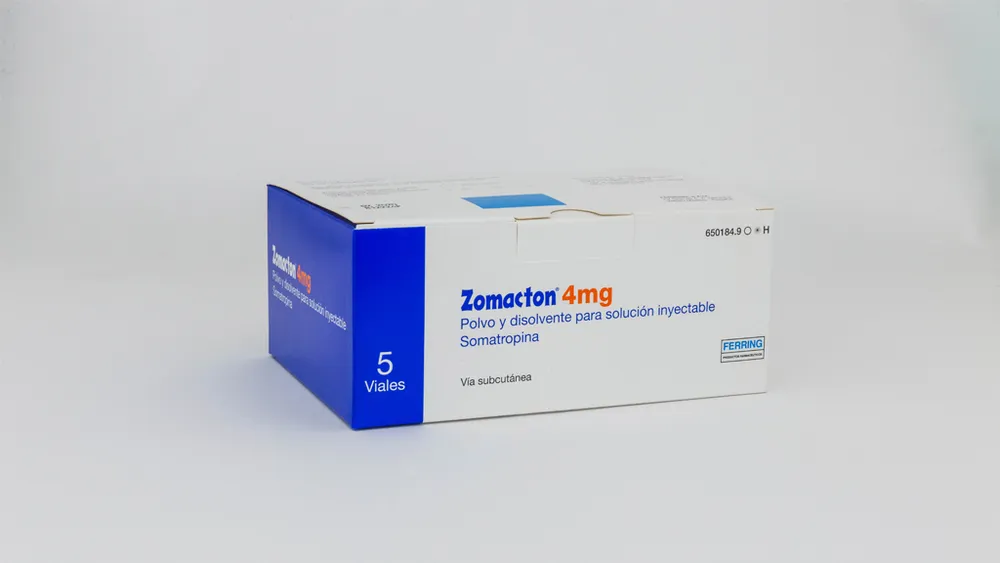
Table of Contents
Package leaflet: Information for the user
Introduction
Package leaflet: information for the user
Zomacton 4 mg powder and solvent for injectable solution
Somatropin
Read the entire leaflet carefully before you start using this medicine because it contains important information for you.
- Keep this leaflet, as you may need to read it again.
- If you have any questions, ask your doctor or pharmacist.
- This medicine has been prescribed for you only and must not be given to other people, even if they have the same symptoms, as it could harm them.
- If you experience any adverse reactions, consult your doctor or pharmacist, even if they are not listed in this leaflet. See section 4.
Leaflet contents
- What Zomacton is and what it is used for
- What you need to know before using Zomacton
- How to use Zomacton
- Possible adverse effects
- How to store Zomacton
- Contents of the pack and other information
1. What Zomacton is and what it is used for
Zomacton contains the active substance somatropin, also known as growth hormone. Growth hormone is naturally produced in the body and has an important role in growth. Zomacton contains somatropin produced in a pharmaceutical manufacturing facility.
Zomacton is indicated for long-term treatment of:
- Children with short stature due to insufficient production of growth hormone
Short stature associated with Turner syndrome (a genetic disorder affecting females).
2. What you need to know before using Zomacton
Do not use Zomacton
- if you are allergic to the active substance or to any of the other components of this medicine (listed in section 6).
- in children with closed epiphyses (when bone growth is complete)
- do not use Zomacton and inform your doctor if you have an active tumour (cancer). Tumours must be inactive and you must have completed your anti-tumour treatment before starting Zomacton
- in premature infants or newborns due to the presence of benzyl alcohol as excipient
- in patients who are seriously ill due to complications, for example open-heart or abdominal surgery, multiple trauma from an accident, or respiratory failure
- in children with chronic renal disease following kidney transplantation
Warnings and precautions
-
Zomacton contains benzyl alcohol as excipient and may cause toxic and allergic reactions in children and patients under 3 years of age, and must not be administered to premature infants or newborns.
-
Patients with Prader-Willi syndrome should not be treated with Zomacton unless they also have growth hormone deficiency.
-
Treatment with Zomacton must always be initiated and supervised by a specialist physician experienced in diagnosing patients with growth hormone deficiency.
-
If you have a family history of diabetes mellitus, your blood sugar levels should be checked at intervals by your doctor. If you are diabetic, strict blood glucose monitoring will be required and your dose may need to be adjusted to maintain adequate diabetic control. Your doctor will advise you if this is necessary.
-
If you are a patient with growth hormone deficiency due to an intracranial injury, you should be examined frequently to monitor progression or recurrence of the disease. If recurrence is confirmed, your doctor will inform you whether treatment with Zomacton needs to be discontinued.
-
Please consult your doctor if you develop symptoms or signs of relapse due to a previous malignant disease.
-
If you are receiving glucocorticoid replacement therapy, you should consult your doctor regularly, as your glucocorticoid dose may need to be adjusted.
-
If you develop any of the following while being treated with Zomacton, contact your doctor or nearest medical facility urgently:
-
severe or recurring headaches
-
vision problems
-
nausea and/or vomiting
-
Treatment with Zomacton may lead to thyroid hormone deficiency, which may require replacement therapy. To monitor this, your doctor will carry out periodic checks to ensure your thyroid gland is functioning properly.
-
Some children with growth hormone deficiency have developed leukaemia (increased number of white blood cells in blood), regardless of whether they received growth hormone treatment or not. However, there is no evidence that the incidence of leukaemia is increased in patients without risk factors who are treated with growth hormone. No causal relationship with growth hormone treatment has been proven.
-
Please consult your doctor immediately if you develop limping or hip or knee pain.
-
If you experience complications following surgery, trauma, or acute respiratory failure, consult your doctor.
-
If you require surgery, have suffered severe trauma, or are seriously ill, your doctor will review your treatment.
-
Zomacton may cause inflammation of the pancreas, which causes severe abdominal and back pain. If you or your child develops stomach pain after receiving Zomacton, consult your doctor.
Use in athletes
This medicine contains somatropin, which may result in a positive doping test.
Use of Zomacton with other medicines
Inform your doctor or pharmacist if you are using, have recently used, or might need to use any other medicines, including medicines obtained without a prescription.
In particular, inform your doctor if you are taking or have recently taken any of the following medicines. This is because your doctor may need to adjust the dose of Zomacton or of the other medicines:
- If you are being treated with steroids due to insufficient ACTH (adrenocorticotropic hormone) production. Patients treated with glucocorticoids should have their dose carefully adjusted, as glucocorticoids may inhibit the gradual growth effect of somatropin.
- If you are being treated with high doses of androgens or other anabolic steroids, as these may reduce final height gain.
- If you are taking oral estrogens (e.g., contraceptives) or estrogen hormone replacement therapy.
- If you are being treated with regularly prescribed medication, for example, steroids, medication for epilepsy, or medication to suppress the immune system.
If you are being treated with insulin, your dose may need to be adjusted, as somatropin may induce a state of insulin resistance.
Pregnancy and breastfeeding
There is no experience with use in pregnant women. Zomacton must not be used during pregnancy. It is unknown whether Zomacton passes into breast milk. Zomacton must not be used during breastfeeding.
Driving and use of machines
Zomacton has no or negligible influence on the ability to drive or use machines.
Zomacton contains benzyl alcohol
This medicine must not be administered to premature infants or newborns because it contains 9 mg/ml of benzyl alcohol. It may cause toxic reactions and allergic reactions in children under 3 years of age.
This medicine contains less than 23 mg (1 mmol) of sodium chloride and is therefore considered essentially "sodium-free".
3. How to use Zomacton
Follow exactly the administration instructions for this medicine as given by your doctor or pharmacist. If in doubt, consult your doctor or pharmacist again.
Your doctor or nurse will decide with you the most appropriate method of administration and will provide you with instructions for use according to the method chosen. Your doctor or nurse will inform you of the correct dose for you. The dose is administered subcutaneously (under the skin) using a syringe or a needle device, the Ferring-Pen.
Dosage:
Growth hormone deficiency in children
Your doctor will calculate the exact dose for you based on your body weight. Generally, a dose of 0.17 – 0.23 mg per kg of body weight per week is recommended. This weekly amount can be divided into six or seven doses, corresponding to a daily injection of 0.02 – 0.03 mg per kg of body weight. The maximum recommended weekly dose is 0.27 mg per kg of body weight, equivalent to daily injections of up to approximately 0.04 mg per kg of body weight.
Turner syndrome (females only)
Your doctor will calculate the exact dose for you based on your body weight. A dose of 0.33 mg per kg of body weight per week is generally recommended. This weekly amount can be divided into 6 – 7 doses, corresponding to a daily injection of 0.05 mg per kg of body weight.
Instructions for reconstitution:
The powder must only be dissolved with the solvent provided.
Two concentrations can be prepared depending on the volume of solvent used. Your doctor will inform you which concentration to use.
- For administration with a syringe or Ferring-Pen, use 1.3 ml of solvent for a concentration of 3.3 mg/ml (taking into account the total content of the vial, which is greater than 4 mg). The reconstituted powder and solvent for injectable solution must be administered with a syringe.
- For administration using only a syringe, use 3.2 ml of solvent for a concentration of 1.3 mg/ml (taking into account the total content of the vial, which is greater than 4 mg). The reconstituted powder and solvent for injectable solution must be administered with a syringe.
Reconstitution must be performed in accordance with good practice standards, particularly with respect to asepsis.
- Wash your hands.
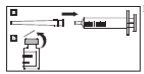
2 a. Attach the needle to the graduated syringe.
2 b. Remove the protective cap from the vial.
- Clean the top of the vial with an alcohol swab. Do not touch the rubber stopper after cleaning it.
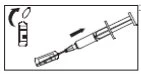
- Break the top off the solvent ampoule. Remove the plastic covering the needle. Ensure the plunger is fully depressed before inserting the needle into the ampoule.
Slowly draw the required volume into the syringe.
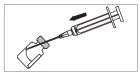
- Place the needle in the center of the clean rubber stopper and into the vial, and slowly inject the solvent into the vial, directing the stream of liquid against the glass wall to avoid foaming.
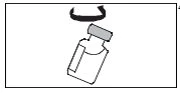
- Gently rotate the vial until the contents are completely dissolved to obtain a clear, colorless solution.
Since the powder contains mainly proteins, avoid vigorous shaking of the vial.
If, after mixing, the solution is cloudy or contains particles, the vial and its contents must be discarded. If cloudiness occurs after refrigeration, allow the solution to reach room temperature (25°C). If cloudiness persists or discoloration appears, discard the vial and its contents.
The solution must be used within a maximum of 14 days after reconstitution if stored in the refrigerator.
Any unused solution from the vial must be discarded at the end of the 14-day storage period.
Administration instructions
The clear and transparent solution should then be administered subcutaneously as shown to you in clinical use, using a syringe or Ferring-Pen.
After reconstitution, perform the following steps for injection:
- Wash your hands.
- Clean the top of the vial with an alcohol swab to prevent contamination of its contents. Do not touch the rubber stopper after cleaning it.
- Turn the vial upside down, keeping the tip of the needle below the surface of the medication. Gently pull back the plunger until the prescribed amount of medication fills the syringe. If there is not enough medication for a complete dose, reconstitute a new vial to make up the difference.
- With the needle still in the inverted vial, gently tap the syringe to dislodge air bubbles.
- Remove the needle from the vial and carefully replace the needle cap until ready to inject.
- Thoroughly clean the injection site with alcohol.
- Check that the syringe contains the correct dose.
- Remove the needle cap and hold the syringe the same way you would hold a pencil.
- With your free hand, gently pinch the skin around the injection site between your fingers.
- Insert the needle into the tissue beneath the skin surface at an angle of 45° to 90° to reduce discomfort.
- While holding the syringe in place, pull back slightly on the plunger (if blood appears in the syringe, this means you have entered a blood vessel. Do not inject ZOMACTON. Remove the needle, discard all supplies, and return to step 1. Choose and clean a new injection site). If no blood appears, slowly push the plunger until the syringe is empty.
- Quickly withdraw the needle and apply pressure to the injection site with a sterile gauze pad. Dispose of the needle and syringe in a sharps disposal container.
Do not share your syringes, needles, or vials with anyone else. You could transmit an infection to them or acquire one from them.
Any unused product or waste material must be disposed of in accordance with local requirements.
The Ferring Pen (needle device) is not included in the package.
Specific instructions for use of the Ferring Pen are provided in the leaflet supplied with the injector.
If you use more Zomacton than you should
An overdose may cause hypoglycemia (low blood sugar) and subsequently hyperglycemia (high blood sugar).
In case of overdose, contact your doctor or nearest hospital immediately or call the Toxicology Information Service at 915 620 420, indicating the medication and amount used. The effects of repeated overdose are unknown.
If you forget to use Zomacton
If you miss a dose, do not worry. Continue as normal and administer the next dose at your usual time.
You may experience hypoglycemia (low blood sugar levels). Although the long-term effectiveness of treatment will not be affected, you should consult your doctor if this happens.
4. Possible adverse effects
Like all medicines, this medicine may cause adverse effects, although not everyone experiences them.
Subcutaneous administration of growth hormone may cause loss or gain of fat at the injection site. Therefore, it is recommended to frequently change the injection site. Rarely, patients have developed pain or itching of the skin at the injection site.
Very common adverse effects (may affect more than 1 in 10 treated patients):
Adults only:
- Swelling due to fluid retention, especially in the hands and feet (Edema)
- Slightly increased blood sugar levels (hyperglycemia)
- Joint pain (Arthralgia)
- Muscle pain (Myalgia)
- Headache
- Numbness, tingling, burning, or crackling sensation in the skin (Paresthesia)
Common adverse effects (may affect up to 1 in 10 treated patients):
Children and adults:
- Hypothyroidism
- Immune reaction to growth hormone, which may be detected in a blood test (antibody formation)
- Headache
- Increased muscle tone stiffness (hypertonia)
Children only:
- Swelling due to fluid retention, especially in the hands and feet (edema, peripheral edema)
- Reactions at the injection site
- Weakness (asthenia)
- Impaired glucose tolerance
- Joint pain (arthralgia)
- Muscle pain (myalgia)
Adults only:
- Stiffness in legs and/or arms
- Difficulty falling asleep and/or staying asleep (insomnia)
Uncommon adverse effects (may affect up to 1 in 100 treated patients):
Children and adults:
- Anemia
- Rapid heartbeat (tachycardia)
- Sensation of spinning (dizziness)
- Double vision (diplopia)
- Papilledema
- Vomiting, abdominal pain, flatulence, nausea
- Weakness
- Atrophy at injection site, bleeding at injection site, lump at injection site, hypertrophy
- Low blood sugar levels (hypoglycemia)
- Hyperphosphatemia (elevated blood phosphate levels)
- Muscle atrophy
- Bone pain
- Carpal tunnel syndrome
- Malignant neoplasm, neoplasm
- Somnolence
- Involuntary eye movements (nystagmus)
- Personality disorders
- Urinary incontinence, hematuria (blood in urine), polyuria (increased urine volume), increased urinary frequency, urinary abnormalities
- Reactions at the injection site (including lipodystrophy, skin atrophy, exfoliative dermatitis, urticaria, hirsutism, skin hypertrophy)
- Breast enlargement (gynecomastia)
Children only:
- Stiffness in legs and/or arms
Adults only:
- High blood pressure (hypertension)
Rare adverse effects (may affect up to 1 in 1,000 treated patients):
Children and adults:
- Diarrhea
- Abnormal kidney function tests
- Type II Diabetes Mellitus
- Tingling or numbness in certain areas of the body (neuropathy)
- Fluid retention around the brain (manifested as recurrent or severe headache, blurred vision, and nausea and/or vomiting)
- Pain and rash at the injection site
Children only:
- High blood pressure (hypertension)
- Difficulty falling asleep and/or staying asleep (insomnia)
- Numbness, tingling, burning, or crackling sensation in the skin (paresthesia)
Very rare adverse effects (may affect up to 1 in 10,000 treated patients):
Children only:
- Leukemia (the occurrence does not appear to be more frequent than in children in the general population)
Frequency not known (cannot be estimated from available data):
Children only:
- Swelling of the face
- Itching of the skin (pruritus)
- Skin rash
Reporting of adverse effects:
If you experience any type of adverse effect, consult your doctor or pharmacist, even if they are possible adverse effects not listed in this leaflet. You may also report them directly via the Spanish Pharmacovigilance System for Human Medicines: http;//www.notificaram.es. By reporting adverse effects, you can help provide more information on the safety of this medicine.
5. Storage of Zomacton
Keep out of the sight and reach of children.
Do not use this medicine after the expiry date stated on the packaging, after EXP. The expiry date refers to the last day of the month indicated.
Store in a refrigerator at 2°C - 8°C; keep in the original packaging to protect from light.
After reconstitution, the solution may be stored for up to 14 days in the refrigerator (2°C-8°C). Keep the vial in an upright position.
Any unused solution in the vial must be discarded at the end of the 14-day storage period.
If cloudiness occurs after refrigeration, allow the solution to reach room temperature (25°C). If cloudiness persists or discoloration appears, discard the vial and its contents.
Medicines must not be disposed of via wastewater or household waste. Return unused medicines and their containers to the SIGRE collection point at your pharmacy. If you are unsure, ask your pharmacist how to dispose of medicines and containers you no longer need. This helps protect the environment.
6. Contents of the pack and other information
Composition of Zomacton
The active substance is somatropin: 4 mg in a vial, corresponding to a concentration of 1.3 mg/ml or 3.3 mg/ml after reconstitution.
The other components are:
Powder: Mannitol
Solvent: 9 mg/ml of benzyl alcohol, sodium chloride and water for injections
Zomacton contains less than 1 mmol of sodium (23 mg) per dose and is therefore considered essentially “sodium-free”.
Appearance of the product and contents of the pack
Zomacton is a powder and solvent for injectable solution.
Powder in a vial (4 mg somatropin) and solvent in an ampoule (3.5 ml) in three different types of packs:
- packs of 1, 5 or 10 vials, or
- packs with a syringe and a needle.
Pack of 5 vials
Not all pack sizes are marketed.
The powder is white to off-white. After reconstitution, the solution is clear and transparent.
Marketing Authorisation Holder and Manufacturer
Marketing Authorisation Holder:
Ferring S.A.U.
C/ del Arquitecto Sánchez Arcas nº3, 1º
28040 Madrid
Spain
Manufacturer:
Ferring GmbH
Wittland 11, D-24109 Kiel
Germany
This medicinal product is authorised in the European Economic Area and in the United Kingdom (Northern Ireland) under the following names:
Belgium Zomacton
Denmark Zomacton
Finland Zomacton
France Zomacton 4 mg
Germany Zomacton 4 mg
Greece Zomacton
Ireland Zomacton
Luxembourg Zomacton
Netherlands Zomacton 4 mg
Spain Zomacton
Sweden Zomacton
United Kingdom (Northern Ireland) Zomacton
Date of the latest revision of this leaflet: March 2026
Detailed and up-to-date information on this medicinal product is available on the website of the Spanish Agency of Medicines and Health Products (AEMPS) http://www.aemps.gob.es/