Zoladex 3.6 mg implant in pre-filled syringe
Spain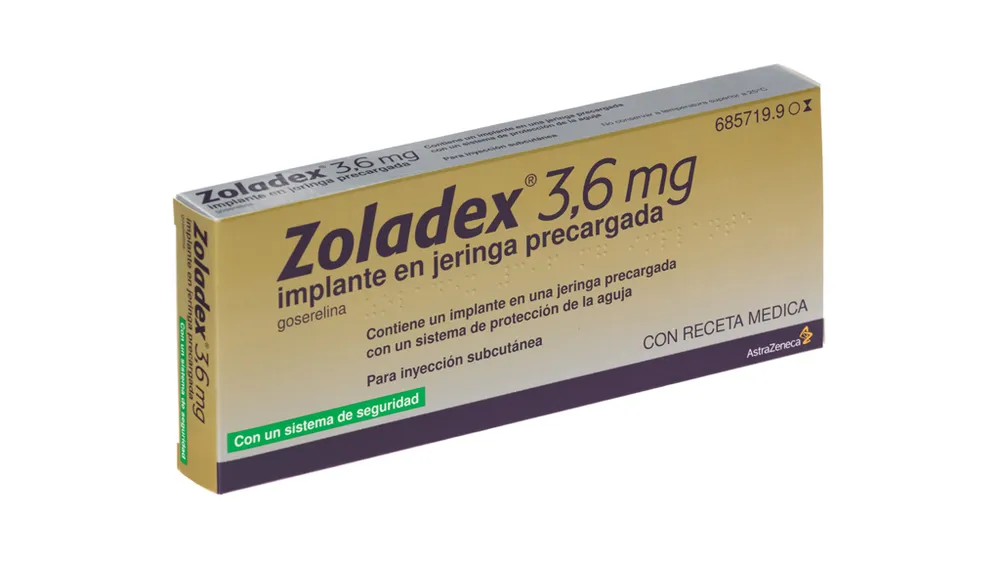
Table of Contents
Package leaflet: Information for the user
Introduction
Package leaflet: information for the user
Zoladex 3.6 mg implant in pre-filled syringe
goserelin
Read all of this leaflet carefully before you start using this medicine, because it contains important information for you.
- Keep this leaflet. You may need to read it again.
- If you have any questions, ask your doctor or pharmacist.
- This medicine has been prescribed for you only. Do not pass it on to others. It may harm them even if their symptoms are the same as yours.
- If you experience any side effects, talk to your doctor or pharmacist, even if it is a side effect not listed in this leaflet. See section 4.
Leaflet contents:
- What Zoladex 3.6 mg is and what it is used for.
- What you need to know before using Zoladex 3.6 mg.
- How to use Zoladex 3.6 mg.
- Possible side effects.
- How to store Zoladex 3.6 mg.
Package contents and other information.
1. What Zoladex 3.6 mg is and what it is used for
Zoladex 3.6 mg belongs to a group of medicines called anti-hormonals, which means that it affects the levels of different hormones (natural chemicals produced by the body). In men, it will reduce levels of the male hormone, testosterone, and in women, levels of the female hormone, oestrogen.
Zoladex 3.6 mg is used:
- In men, to treat certain types of prostate cancer.
- In women, to:
- treat certain types of breast cancer.
- treat endometriosis, which is a benign condition in which tissue that normally grows inside the uterus also forms outside the uterus.
- treat uterine fibroids, which are benign lumps that form in the uterus.
- reduce the thickness of the lining of the uterus (endometrium) before undergoing a surgical procedure called endometrial ablation, which involves removal of the uterine lining.
to control the release of eggs from the ovary as part of a treatment for infertility.
2. What you need to know before using Zoladex 3.6 mg
Do not use Zoladex 3.6 mg
- If you are allergic to goserelin or to any of the other ingredients of this medicine (listed in section 6).
- Before receiving your injection, inform your doctor if you are pregnant, think you may be pregnant, or are breastfeeding. Zoladex 3.6 mg must not be used if you are pregnant or trying to become pregnant, except when this medicine is used as part of infertility treatment. Zoladex 3.6 mg must not be used during breastfeeding (see section “Fertility, Pregnancy and Breastfeeding” below).
Warnings and precautions
-
Consult your doctor or pharmacist before starting to use Zoladex 3.6 mg.
-
Cases of depression, which may be severe, have been reported in patients taking Zoladex 3.6 mg. If you are taking Zoladex 3.6 mg and experience depression, inform your doctor.
-
Inform your doctor if you have any heart or blood vessel condition or are being treated for such conditions, including medications to control heart rhythm (arrhythmias). The risk of heart rhythm problems may increase when Zoladex 3.6 mg is used.
-
Inform your doctor if you have high blood pressure (hypertension).
-
Immediately inform your doctor if you experience abdominal pain and bruising or other symptoms of severe bleeding, such as difficulty breathing, dizziness, low blood pressure and/or altered level of consciousness, which could result from vascular injury at the injection site during administration of Zoladex 3.6 mg (see section 4).
-
Treatment with Zoladex 3.6 mg may lead to positive results in doping tests.
If you are admitted to hospital, inform healthcare staff that you are being treated with Zoladex 3.6 mg.
Men:
- Before starting treatment with this medicine, inform your doctor if:
- you have previously experienced difficulty urinating or have had lower back pain, or
- you have diabetes.
- Medicines of this type may cause loss of calcium from bones (reduced bone thickness). If you have any condition affecting bone strength or risk factors for osteoporosis [e.g. chronic alcohol abuse, smoking, long-term treatment with anticonvulsants (medicines for epilepsy or seizures) or corticosteroids (a type of anti-inflammatory medicine), family history of osteoporosis], inform your doctor or nurse.
Women:
- Medicines of this type may cause loss of calcium from bones. Part of this bone loss may be recovered after treatment ends. If you have any condition affecting bone strength or risk factors for osteoporosis [e.g. chronic alcohol abuse, smoking, long-term treatment with anticonvulsants (medicines for epilepsy or seizures) or corticosteroids, family history of osteoporosis, malnutrition such as anorexia nervosa], inform your doctor or nurse, as the reduction in your bone mineral density may be more harmful. If you are using Zoladex 3.6 mg for the treatment of endometriosis, your doctor may prescribe additional treatment to counteract this reduction in bone thickness.
- Inform your doctor if you experience vaginal bleeding that does not stop after the first month of treatment with Zoladex 3.6 mg.
- If you are using Zoladex 3.6 mg for the treatment of endometriosis or uterine fibroids, the maximum duration of treatment with this medicine should not exceed 6 months.
- During treatment with Zoladex 3.6 mg and until menstruation resumes after stopping treatment, contraceptive methods such as condoms or diaphragm should be used, and oral contraceptives (“the pill”) must not be used. This warning does not apply when Zoladex 3.6 mg is used as part of infertility treatment.
Children and adolescents
Zoladex 3.6 mg is not indicated for use in children.
Use of Zoladex 3.6 mg with other medicines
Inform your doctor, pharmacist, or nurse if you are taking, have recently taken, or might need to take any other medicines.
Zoladex 3.6 mg may interfere with certain medicines used to treat heart rhythm problems (e.g. quinidine, procainamide, amiodarone, and sotalol), or may increase the risk of heart rhythm problems when used together with other medicines (e.g. methadone (used for pain relief and medication detoxification), moxifloxacin (an antibiotic), antipsychotics (used to treat serious mental illnesses)).
Pregnancy and breastfeeding
If you are pregnant or breastfeeding, think you may be pregnant, or plan to become pregnant, consult your doctor, pharmacist, or nurse before using this medicine.
Zoladex 3.6 mg must not be used if you are pregnant or trying to become pregnant, except when this medicine is used as part of infertility treatment. Zoladex 3.6 mg must not be used during breastfeeding.
Driving and using machines
There is no evidence that Zoladex 3.6 mg affects the ability to drive or operate machinery.
3. How to use Zoladex 3.6 mg
Follow exactly the instructions for administration of this medicine given by your doctor.
If in doubt, consult your doctor, pharmacist, or nurse again.
Remember to have your medicine administered.
Your doctor will tell you how long to take Zoladex 3.6 mg. Do not stop treatment before your doctor tells you to do so.
Zoladex 3.6 mg will be administered to you as an injection by your doctor or nurse, who will follow the instructions on the package label for correct use.
Zoladex 3.6 mg is usually administered by subcutaneous injection every 28 days.
It is important that you continue treatment with Zoladex 3.6 mg even if you feel well, unless your doctor decides to discontinue it.
If you have any further questions about the use of this product, ask your doctor or pharmacist.
4. Possible adverse effects
Like all medicines, this medicine can cause adverse effects, although not everyone experiences them.
- When receiving Zoladex 3.6 mg, the injection may cause injury at the site of administration, including injury to abdominal blood vessels. In very rare cases, this has led to serious bleeding. Seek immediate medical attention if you experience any of the following symptoms:
Abdominal pain, abdominal swelling, difficulty breathing, dizziness, low blood pressure, and/or any alteration in level of consciousness. These could be symptoms of serious bleeding due to accidental injury of an abdominal blood vessel during administration of Zoladex 3.6 mg.
- Adverse effects reported in women:
Very common (may affect more than 1 in 10 people)
- Hot flushes, sweating. These adverse effects may continue after stopping treatment with Zoladex 3.6 mg.
- Decreased sexual desire.
- Vaginal dryness.
- Acne, usually during the first month of treatment with Zoladex 3.6 mg.
- Breast enlargement.
- Reactions at the injection site, such as pain, bruising, bleeding, redness or swelling at the site, or other reactions.
Common (may affect up to 1 in 10 people)
- Tingling or numbness in fingers or toes.
- Headaches.
- Changes in blood pressure (increase or decrease).
- Skin rash, which is usually mild and resolves without discontinuing treatment.
- Hair loss (alopecia), which is usually mild, although occasionally it may be severe, and may also occur in younger women.
- Joint pain.
- Weight gain.
- Loss of bone mineral density (reduction in bone thickness).
- Mood changes and depression (with prolonged treatment with Zoladex 3.6 mg).
- Tumour flare and pain.
Uncommon (may affect up to 1 in 100 people)
- Hypersensitivity reactions to the medicine.
- Increased levels of calcium in your blood, which may present as nausea, vomiting and/or excessive thirst. Inform your doctor if you experience any of these symptoms, as you may require a blood test.
- Mood changes and depression (with short-term treatment with Zoladex 3.6 mg).
Rare (may affect up to 1 in 1,000 people)
- Anaphylactic reaction (severe allergic reaction).
- Ovarian cysts.
Ovarian hyperstimulation when Zoladex 3.6 mg is used as part of infertility treatment. If you experience abdominal pain, abdominal swelling, nausea or vomiting after treatment with this medicine, inform your doctor immediately.
Very rare (may affect up to 1 in 10,000 people)
- Development of a tumour in the pituitary gland (an endocrine gland located in the head). If you have a pituitary tumour, this medicine may cause bleeding from the tumour. Pituitary tumours can cause headache, malaise, loss of vision, and may even cause loss of consciousness.
- Psychotic disorders that may cause hallucinations, thought disorders, and personality changes.
Frequency not known (cannot be estimated from available data)
-
Vaginal bleeding at the beginning of treatment.
-
Inflammation of the vagina.
-
Vaginal discharge.
-
If you have breast cancer, you may notice a worsening of your condition, such as increased pain and/or increased size of the affected tissue. These symptoms occur at the beginning and disappear with continued treatment.
-
Menopause. At the end of treatment with Zoladex 3.6 mg, your periods may not return. It is unknown whether this is due to the effect of Zoladex.
-
If you have uterine fibroids, you may experience a slight worsening of symptoms, such as pain. If symptoms persist or you feel uncomfortable, inform your doctor.
-
Changes in the electrocardiogram (prolongation of the QT interval).
-
Changes in blood cell count (observed in a blood test).
-
Blood clots in the lungs (causing chest pain and difficulty breathing) and inflammation of the tissue surrounding the lung structures (alveoli) where oxygen is absorbed (interstitial pneumonia) (causing symptoms such as cough and difficulty breathing).
-
Liver dysfunction.
-
High levels of calcium in the blood, which may occur at the beginning of treatment in patients with breast cancer and metastases.
-
Nervousness, sleep disturbances.
-
Fluid retention in the limbs (peripheral oedema).
-
Voice changes.
-
Changes in body hair.
-
Nausea, vomiting, diarrhoea, constipation, abdominal pain.
-
Increased blood cholesterol.
-
Dry skin.
-
Muscle pain.
-
Cramps in the calves.
-
Fatigue.
-
Adverse effects reported in men:
Very common (may affect more than 1 in 10 people)
- Hot flushes, sweating. These adverse effects may continue after stopping treatment with Zoladex 3.6 mg.
- Decreased sexual desire and impotence.
Common (may affect up to 1 in 10 people)
- Increased blood sugar levels.
- Mood changes and depression (with prolonged treatment).
- Tingling or numbness in fingers or toes (paraesthesia).
- Spinal cord compression.
- Skin rash, which is generally mild and often resolves without discontinuing treatment.
- Reduced cardiac function, heart attack. The risk of developing these is higher when Zoladex is used together with other medicines (antiandrogens) to treat prostate cancer.
- Changes in blood pressure (increase or decrease).
- Bone pain, usually at the beginning of treatment with Zoladex 3.6 mg. If this occurs, inform your doctor, as you may need to be prescribed a medicine to relieve the pain.
- Weight gain.
- Breast swelling.
- Reactions at the injection site, such as pain, bruising, bleeding, redness or swelling at the site, or other reactions.
- Loss of bone mineral density (reduction in bone thickness).
Uncommon (may affect up to 1 in 100 people)
- Hypersensitivity reactions to the medicine.
- Joint pain.
- Breast discomfort.
- Mood changes and depression (with short-term treatment).
- Obstruction of the ureters (tubes that carry urine from the kidneys to the bladder), which may cause difficulty urinating or discomfort in the lower back.
Rare (may affect up to 1 in 1,000 people)
- Anaphylactic reaction (severe allergic reaction).
Very rare (may affect up to 1 in 10,000 people)
- Psychotic disorders that may cause hallucinations, thought disorders, and personality changes.
- Development of a tumour in the pituitary gland (an endocrine gland located in the head). If you have a pituitary tumour, Zoladex 3.6 mg may cause bleeding from the tumour. Pituitary tumours can cause headache, malaise, loss of vision, and may even cause loss of consciousness.
Frequency not known (cannot be estimated from available data)
- Hair loss, especially loss of body hair.
- Changes in the electrocardiogram (prolongation of the QT interval).
- Changes in blood cell count (observed in a blood test).
- Blood clots in the lungs (causing chest pain and difficulty breathing) and inflammation of the tissue surrounding the lung structures (alveoli) where oxygen is absorbed (interstitial pneumonia) (causing symptoms such as cough and difficulty breathing).
- Liver dysfunction.
Reporting of adverse effects
If you experience any adverse effect, consult your doctor, pharmacist, or nurse, even if it is a possible adverse effect not listed in this leaflet. You can also report them directly via the Spanish Pharmacovigilance System for Human Medicines: www.notificaRAM.es. By reporting adverse effects, you can help provide more information on the safety of this medicine.
5. Storage of Zoladex 3.6 mg
Keep this medicine out of the sight and reach of children.
Do not store above 25°C.
Store in the original packaging.
Do not use Zoladex 3.6 mg after the expiry date stated on the container and sachet after EXP. The expiry date refers to the last day of the month indicated.
Medicines should not be disposed of via wastewater or household waste. Unused containers and medicines should be taken to a SIGRE collection point at your pharmacy. If you have any doubts, ask your pharmacist how to dispose of containers and medicines you no longer need. This will help protect the environment.
6. Package Contents and Additional Information
Composition of Zoladex 3.6 mg
- The active substance is goserelin (as acetate). Each implant contains 3.6 mg of goserelin.
- The other component is lactide-glycolide copolymer.
Appearance of the Medicinal Product and Contents of the Container
The medicine is presented as a 3.6 mg implant in a pre-filled syringe within a sealed pouch.
The implant is sterile, cream-colored, and provides prolonged release of the drug.
The pouch also contains a desiccant inside.
The pre-filled syringe is equipped with a safety device (red clip) and a needle protection system.
Marketing Authorization Holder and Manufacturer
Marketing Authorization Holder
AstraZeneca Farmacéutica Spain, S.A.
C/ Puerto de Somport 21-23
28050 Madrid
Spain
Manufacturer
AstraZeneca AB
Gärtunavägen
SE-152 57 Södertälje
Sweden
Other Presentations
Zoladex Trimestral 10.8 mg: Pack containing one 10.8 mg implant in a pre-filled syringe within a sealed pouch, which also contains a desiccant inside. The pre-filled syringe is equipped with a safety device (blue clip) and a needle protection system.
Date of Most Recent Revision of the Summary: February 2020
Detailed and up-to-date information on this medicinal product is available on the website of the Spanish Agency of Medicines and Health Products (AEMPS) http://www.aemps.gob.es/
<----------------------------------------------------------------------------------------------------------------------------------?
This information is intended for healthcare professionals only:
Zoladex 3.6 mg must be administered by subcutaneous injection – read and fully understand all instructions before administration.
- Position the patient comfortably lying down, with the upper body slightly elevated. Clean the abdominal injection site with a cotton swab moistened with a disinfectant agent (alcohol, etc.).
NOTE: Exercise caution when administering Zoladex 3.6 mg by subcutaneous injection into the anterior abdominal wall, due to the proximity of the underlying inferior epigastric artery and its branches. Patients who are very thin may be at higher risk of vascular injury.
- Examine the pouch and syringe for any damage. Remove the syringe from the opened pouch and hold it at an angle toward the light.
Check that at least part of the Zoladex 3.6 mg implant is visible. (Figure 1).
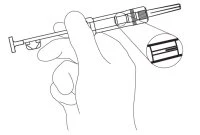 Figure 1
- Gently remove the red plastic safety tab from the syringe and discard it. (Figure 2).
Remove the needle protective cap. Since this is not a liquid injectable, there is no need to expel air bubbles, as attempting to do so may displace the Zoladex 3.6 mg implant.
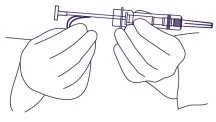 Figure 2
- Hold the syringe around the protective system using an aseptic technique. Grasp a skin fold of the patient and insert the needle at a shallow angle (30 to 45 degrees).
With the needle bevel facing upward, insert the needle into the subcutaneous tissue of the anterior abdominal wall below the umbilical line, until the protective system touches the patient's skin. (Figure 3).
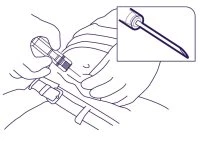 Figure 3
NOTE: The Zoladex 3.6 mg syringe cannot be used for aspiration. If the hypodermic needle enters a large vessel, blood will be immediately visible in the syringe chamber. If a vessel is punctured, withdraw the needle immediately and promptly control any resulting bleeding, monitoring the patient for any signs or symptoms of abdominal hemorrhage. After confirming the patient is hemodynamically stable, another Zoladex 3.6 mg implant may be administered using a new syringe at a different site. Exercise extreme caution when administering Zoladex 3.6 mg to patients with low BMI and/or those receiving full-dose anticoagulants.
- Do not penetrate muscle or peritoneum. Incorrect syringe handling and angle of insertion are shown in Figure 4 below.
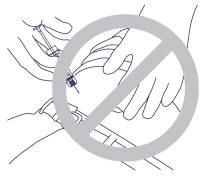 Figure 4
- Press the plunger completely until no further movement is possible, in order to deposit the Zoladex 3.6 mg implant and activate the needle protection system. You may hear a "click" and feel the protection system activate, automatically sliding forward to cover the needle. If the plunger is not fully depressed, the protection system WILL NOT activate.
NOTE: The needle does not retract.
- Continue holding the syringe as shown in Figure 5, and withdraw the needle, allowing the protective system to continue sliding forward and covering the needle.
Dispose of the syringe in a sharps container according to local regulations.
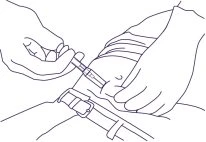 Figure 5
NOTE: In the unlikely event that surgical removal of a Zoladex 3.6 mg implant is required, it can be localized using ultrasound.