Zevtera 500 mg powder for concentrate for solution for infusion
Spain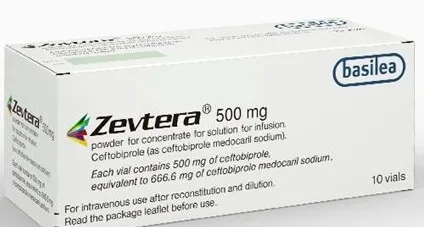
Table of Contents
Package leaflet: Information for the user
Introduction
Package leaflet: information for the user
Zevtera 500 mg powder for concentrate for solution for infusion
ceftobiprol
Read the entire leaflet carefully before you start using this medicine, because it contains important information for you.
- Keep this leaflet, as you may need to read it again.
- If you have any questions, ask your doctor or nurse.
- This medicine has been prescribed for you only, and you should not give it to other people, even if they have the same symptoms as you, because it may harm them.
- If you experience any adverse effects, consult your doctor or nurse, even if they are adverse effects not listed in this leaflet. See section 4.
Leaflet contents
- What Zevtera is and what it is used for
- What you need to know before using Zevtera
- How to use Zevtera
- Possible adverse effects
- How to store Zevtera
- Contents of the pack and other information
1. What Zevtera is and what it is used for
Zevtera is an antibiotic that contains ceftobiprole medocaril sodium as the active substance. It belongs to a group of antibiotic medicines called cephalosporins.
Antibiotics are used to treat bacterial infections and are not effective against viral infections such as influenza or the common cold. It is important that you follow the instructions regarding dosage, dosing interval, and duration of treatment as indicated by your doctor. Do not store or reuse this medication. If you have any antibiotic left over after completing the treatment, return it to the pharmacy for proper disposal. Do not dispose of medicines down the drain or in the household waste. |
Zevtera is used to treat full-term newborns, infants, children, adolescents, and adults with lung infections called pneumonia.
Zevtera works by destroying certain bacteria that can cause serious lung infections.
2. What you need to know before starting Zevtera
Do not use Zevtera:
- if you are allergic to ceftobiprole medocaril sodium or to any of the other ingredients of this medicine (listed in section 6);
- if you are allergic to other antibiotics such as cephalosporins or beta-lactams;
- if you have previously had a severe allergic reaction to other antibiotics such as penicillin or carbapenem;
Do not use Zevtera if any of the above apply to you. If you are unsure, consult your doctor or nurse before being administered Zevtera.
Warnings and precautions
Talk to your doctor or nurse before starting Zevtera:
- if you have kidney problems (your doctor may reduce the dose of the medicine);
- if you have ever had an allergic reaction to other antibiotics such as penicillin or carbapenem;
- if you have ever had seizures (epileptic fits);
- if you have had diarrhea before, during, or after treatment with this medicine (you may have an intestinal inflammation called colitis). Do not take any medication for diarrhea without first consulting your doctor;
- if you test positive for HIV;
- if your immune system is severely weakened;
- if your white blood cell counts are very low or if your bone marrow function is suppressed;
- if your lung infection developed more than 48 hours after the onset of mechanical ventilation, Zevtera is not suitable for you (your doctor will prescribe an appropriate antibiotic for your condition);
- if you require (or are expected to require) concomitant solutions containing calcium, except lactated Ringer's injection solution, administered via the same intravenous line due to the risk of precipitation.
If your doctor considers it necessary, you may be advised to drink plenty of fluids, or you may need to receive fluids by intravenous infusion while being administered Zevtera.
If you start taking Zevtera and later require mechanical ventilation, your doctor will advise you on whether Zevtera remains appropriate for you.
Laboratory tests
You may develop a positive result in a laboratory test (Coombs test) that detects antibodies that could destroy your red blood cells. Zevtera may also interfere with tests measuring serum creatinine (Jaffé reaction) or with certain tests determining glucose content in urine. These tests could yield false results.
If any of the above conditions apply to you (or you are unsure), consult your doctor or nurse before starting Zevtera.
Children
There is no available data on the use of Zevtera in premature neonates (babies born prematurely).
Other medicines and Zevtera
Inform your doctor or nurse if you are taking, have recently taken, or might need to take any other medicines.
Pregnancy and breastfeeding
If you are pregnant or breastfeeding, think you may be pregnant, or plan to become pregnant, consult your doctor before using this medicine.
Driving and use of machines
Zevtera may cause dizziness as an adverse effect. This may affect your ability to drive or operate machinery.
Zevtera contains sodium
This medicine contains approximately 29 mg of sodium (main component of table/cooking salt) per dose. This corresponds to 1.45% of the maximum daily recommended sodium intake for an adult.
3. How to use Zevtera
Your doctor or nurse will administer Zevtera to you.
The recommended dose for adults is 500 mg of ceftobiprole given every 8 hours as an intravenous infusion over a period of 2 hours.
The recommended dose for full-term newborns, infants, children, and adolescents depends on the child's age and weight, and is administered every 8 hours (infants 3 months or older, children, and adolescents) or every 12 hours (full-term newborns and infants under 3 months) as a 2-hour intravenous infusion.
The infusion solution with a ceftobiprole concentration of 2 mg/ml is used for adults and adolescents. For infants and full-term newborns, the infusion solution with a ceftobiprole concentration of 4 mg/ml is used.
Patients with kidney problems
You may require a lower dose of Zevtera if you have kidney problems.
If you use more Zevtera than you should
If you think you have been given too much Zevtera, contact your doctor or nurse immediately.
In case of overdose or accidental ingestion, contact your doctor or pharmacist immediately or call the Toxicology Information Service at telephone number: 91 562 04 20, stating the medication and the amount ingested.
If you forget to use Zevtera
If you think a dose has been missed, contact your doctor or nurse immediately.
If you have any further questions about the use of this medicine, ask your doctor or nurse.
4. Possible adverse effects
Like all medicines, this medicine can cause adverse effects, although not everyone will experience them. This medicine may cause the following adverse effects:
Speak to your doctor immediately if you experience any of these symptoms, as you may require urgent medical treatment:
- Swelling of the lips, face, throat or tongue, severe skin rash, or difficulty swallowing or breathing. These may be signs of a serious allergic reaction (anaphylaxis) and could be potentially life-threatening.
- Diarrhea that becomes severe or persistent, or presence of blood or mucus in the stool during or after treatment with Zevtera. In this situation, you should not take medicines that stop or slow down intestinal movement.
Frequent: may affect up to 1 in 10 people
- Nausea
- Headache, drowsiness
- Dizziness
- Skin rash, itching or hives
- Diarrhea (if you have diarrhea, inform your doctor immediately)
- Vomiting
- Stomach pain (abdominal pain), indigestion or heartburn (dyspepsia)
- Taste disturbances (dysgeusia)
- Fungal infections in different parts of the body
- Redness, pain and swelling at the injection site
- Low levels of sodium in the blood
- Increased blood levels of certain liver enzymes
- Hypersensitivity, including skin redness
Uncommon: may affect up to 1 in 100 people
- Seizures (epileptic seizures)
- Temporary decrease or increase in the number of certain blood cells
- Blood tests showing decreased potassium levels
- Insomnia and sleep disorders, sometimes including anxiety, panic attacks and nightmares
- Feeling short of breath or difficulty breathing, asthma
- Muscle cramps
- Kidney problems
- Swelling, especially in ankles and legs
- Blood tests showing a temporary increase in triglycerides, blood sugar or creatinine levels
Frequency not known: cannot be estimated from the available data
- More severe decrease in a specific type of white blood cells (agranulocytosis)
Reporting of adverse effects
If you experience any kind of adverse effect, consult your doctor or nurse, even if it is a possible adverse effect not listed in this leaflet. You can also report them directly via the Spanish Pharmacovigilance System for Human Medicinal Products: https://www.notificaram.es. By reporting adverse effects, you can help provide more information on the safety of this medicine.
5. Storage of Zevtera
Keep this medicine out of the sight and reach of children.
Do not use this medicine after the expiry date stated on the carton and vial after EXP. The expiry date refers to the last day of the month indicated.
Store in a refrigerator (between 2 °C and 8 °C).
Keep the vial in the outer packaging to protect it from light.
For information regarding the storage of reconstituted and diluted Zevtera infusion solutions, refer to the accompanying information for healthcare professionals.
Medicines must not be disposed of via wastewater or household waste. Dispose of containers and unused medicines at a pharmacy’s SIGRE collection point. Ask your pharmacist how to dispose of containers and medicines you no longer need. This helps protect the environment.
6. Contents of the pack and other information
Composition of Zevtera
- The active substance is ceftobiprole. Each vial contains 500 mg of ceftobiprole, equivalent to 666.6 mg of ceftobiprole medocaril sodium. After reconstitution, each ml of concentrate contains 50 mg of ceftobiprole, equivalent to 66.7 mg of ceftobiprole medocaril sodium.
- The other components are citric acid monohydrate (E330) and sodium hydroxide (E524); see section 2.
Appearance of the product and contents of the container
Zevtera is a compact or loose powder, white to yellowish or slightly brownish in colour, for concentrate for solution for infusion in a 20 ml vial. It is available in packs containing 10 vials.
Marketing Authorisation Holder and Manufacturer
Marketing Authorisation Holder:
Advanz Pharma Limited
Unit 17, Northwood House,
Northwood Crescent,
Dublin 9,
D09 V504,
Ireland
Manufacturer:
ACS DOBFAR S.P.A.
Via A. Fleming, 2
37135 Verona (VR)
Italy
For further information about this medicinal product, please contact the local representative of the Marketing Authorisation Holder:
Advanz Pharma Spain S.L.U.
Paseo de la Castellana 135, 7th floor
28046 Madrid (Spain)
Tel. +34 900 834 889
[email protected]
This medicinal product is authorised in the European Economic Area Member States and in the United Kingdom (Northern Ireland) under the following names:
Austria: Zevtera 500mg Pulver für ein Konzentrat zur Herstellung einer Infusionslösung
Denmark: Zevtera
Finland: Zevtera 500mg, kuiva-aine välikonsentraatiksi infuusionestettä varten, liuos
France: Mabelio 500mg, poudre pour solution à diluer pour solution pour perfusion
Germany: Zevtera 500mg Pulver für ein Konzentrat zur Herstellung einer Infusionslösung
Ireland: Adaluzis 500mg powder for concentrate for solution for infusion
Italy: Mabelio 500mg, polvere per concentrato per soluzione per infusione
Luxembourg: Mabelio 500mg, poudre pour solution à diluer pour solution pour perfusion
Norway: Zevtera 500mg, pulver til konsentrat til infusjonsvæske, oppløsning
Poland: Zevtera*, 500mg, proszek do sporzadzania koncentratu roztworu do infuzji*
Portugal: Zevtera 500mg pó para concentrado para solução para perfusão
Spain: Zevtera 500mg polvo para concentrado para solución para perfusión
Sweden: Zevtera 500mg pulver till koncentrat till infusionsvätska, lösning
United Kingdom (Northern Ireland): Zevtera 500mg powder for concentrate for solution for infusion.
Date of the most recent review of this leaflet: January 2025
Detailed information on this medicinal product is available on the website of the Spanish Agency of Medicines and Health Products (AEMPS) http://www.aemps.es/
____________________________________________________________________________
This information is intended for healthcare professionals only:
All vials are for single use only.
Preparation of Zevtera infusion solutions
Before infusion, Zevtera must be reconstituted and then diluted.
Step 1: Reconstitution
For adult and paediatric patients ≥ 12 years of age requiring an infusion solution with a ceftobiprole concentration of 2 mg/ml, the lyophilised powder should be reconstituted with 10 ml of water for injections or with 50 mg/ml (5%) dextrose solution for injection.
For paediatric patients < 12 years of age requiring an infusion solution with a ceftobiprole concentration of 4 mg/ml, the lyophilised powder should be reconstituted with 10 ml of 50 mg/ml (5%) dextrose solution for injection if further dilution will be performed with the same diluent (i.e., 50 mg/ml (5%) dextrose solution for injection), or with 10 ml of sterile water for injections if further dilution will be performed with 9 mg/ml (0.9%) sodium chloride solution for injection.
Shake the vial vigorously until complete dissolution, which may take up to 10 minutes in some cases. The volume of the resulting concentrate is approximately 10.6 ml. Allow foam to dissipate and visually inspect the reconstituted solution to ensure the product is fully dissolved and free from particles. The reconstituted concentrate contains 50 mg/ml of ceftobiprole (66.7 mg/ml of ceftobiprole medocaril sodium) and must be further diluted before administration. Immediate dilution of the reconstituted solution is recommended. However, if this is not possible, the reconstituted solution may be stored at room temperature for up to 1 hour or in the refrigerator (2°C–8°C) for up to 24 hours.
Step 2: Dilution (infusion solution)
Use in adult and paediatric patients ≥12years of age
Preparation of the 500 mg dose of Zevtera infusion solution (2 mg/ml ceftobiprole)
Withdraw 10 ml of the reconstituted solution from the vial and transfer it into a suitable container (e.g., PVC or PE infusion bags, glass bottles) containing 250 ml of one of the following solutions: 9 mg/ml (0.9%) sodium chloride solution for injection, 50 mg/ml (5%) dextrose solution for injection, or Ringer Lactate solution for injection. Gently invert the infusion solution 5–10 times to ensure homogeneity. Avoid vigorous shaking to prevent foaming.
In adults, the entire contents of the infusion bag should be infused to deliver the 500 mg dose of ceftobiprole.
In paediatric patients ≥ 12 years of age, the volume to be administered should be calculated based on body weight and must not exceed a maximum of 250 ml (500 mg dose).
Preparation of the 250 mg dose of Zevtera infusion solution for adult patients with severe renal impairment
Withdraw 5 ml of the reconstituted solution from the vial and transfer it into a suitable container (e.g., PVC or PE infusion bags, glass bottles) containing 125 ml of 0.9% sodium chloride solution for injection, 5% glucose solution for injection, or Ringer Lactate solution for injection. Gently invert the infusion solution 5–10 times to ensure homogeneity. Avoid vigorous shaking to prevent foaming. The entire contents of the infusion bag should be infused to deliver the 250 mg dose of ceftobiprole.
Use in paediatric patients <12years of age
Preparation of Zevtera infusion solution at a concentration of 4 mg/ml ceftobiprole
Administration via infusion bags, bottles, or syringes:
The reconstituted solution prepared with 10 ml of 50 mg/ml (5%) dextrose solution for injection should be diluted with the same diluent (i.e., 50 mg/ml (5%) dextrose solution for injection). The reconstituted solution prepared with 10 ml of water for injections should be diluted with 9 mg/ml (0.9%) sodium chloride solution for injection.
Remove 10 ml from an infusion container (e.g., PVC or PE infusion bags, glass bottles) containing 125 ml of diluent and replace it with 10 ml of the reconstituted solution withdrawn from the vial. Gently invert the infusion solution 5–10 times to ensure homogeneity. Avoid vigorous agitation to prevent foaming. The volume to be administered should be calculated based on body weight and must not exceed a maximum of 125 ml (500 mg dose).
For administration via a 50 ml syringe, if the calculated dose does not exceed 200 mg, withdraw 4 ml of the reconstituted solution (equivalent to 200 mg of ceftobiprole) prepared with either 50 mg/ml (5%) dextrose solution for injection or water for injections, and dilute it with 46 ml of the appropriate diluent for infusion solution (see table below). Gently invert the infusion solution 5–10 times to ensure homogeneity. Avoid vigorous agitation to prevent foaming. The volume to be administered should be calculated based on body weight and must not exceed a maximum of 50 ml (200 mg dose).
Appearance of the diluted solution
The infusion solution should be clear to slightly opalescent and yellowish in colour. Before administration, the infusion solution should be visually inspected for the presence of particles and discarded if visible particles are observed.
See section 3 for further information.
Storage of reconstituted and diluted Zevtera infusion solutions
Chemical and physical in-use stability has been demonstrated for the reconstituted solution for up to 1 hour at 25°C and up to 24 hours at 2°C–8°C.
Chemical and physical in-use stability data support the total reconstitution and infusion times for ceftobiprole dilution solutions of 2 mg/ml or 4 mg/ml as described in the following tables:
Use in adults and adolescents ≥12 years of age (2 mg/ml ceftobiprole): Total time within which reconstitution and infusion (including infusion period) must be completed
Diluent for the reconstitution solution | Diluent for the infusion solution | Infusion solutions stored at 25°C | Infusion solutions stored at 2°C to 8°C | |
Protected from light | Not protected from light | Protected from light | ||
Dextrose 50 mg/ml (5%) injectable solution or Water for injection | Sodium chloride 9 mg/ml (0.9%) injectable solution | 24 hours | 8 hours | 96 hours |
Dextrose 50 mg/ml (5%) injectable solution | 12 hours | 8 hours | 96 hours | |
Lactated Ringer's injectable solution | 24 hours | 8 hours | Do not refrigerate |
Use in children, infants, and neonates (<12 years of age) (4 mg/ml ceftobiprole): Total time within which reconstitution and infusion (including the infusion period) must be completed
Diluent for the reconstitution solution | Diluent for the infusion solution | Infusion solutions stored at 25°C | Infusion solutions stored at 2°C to 8°C |
Unprotected from light | Protected from light | ||
Dextrose 50 mg/ml (5%) injectable solution | Dextrose 50 mg/ml (5%) injectable solution | 12 hours | 24 hours |
Water for injections | Sodium chloride 9 mg/ml (0.9%) injectable solution | 8 hours | 8 hours |
From a microbiological point of view, unless the reconstitution/dilution method eliminates the risk of microbial contamination, the product should be used immediately. If not used immediately, the in-use storage periods and conditions prior to use are the responsibility of the user.
Reconstituted and infusion solutions must not be frozen or exposed to direct sunlight.
If the infusion solution has been stored in the refrigerator, it should be brought to room temperature before administration. It is not necessary to protect the infusion solution from light during administration.
See section 5 for further information.