Zepilen 1 g powder for solution for injection and for infusion EFG
Spain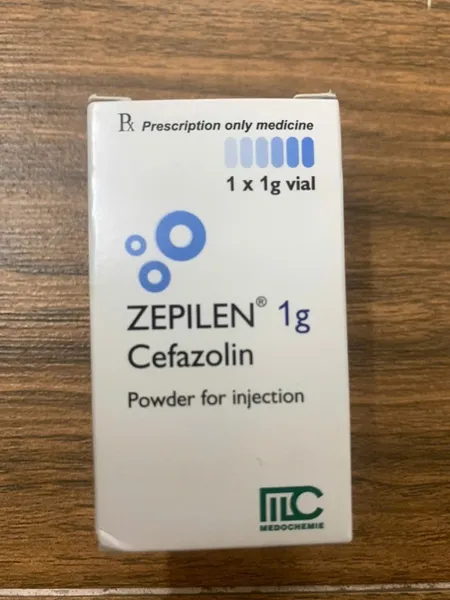
Table of Contents
Package leaflet: Information for the user
Introduction
Package leaflet: Information for the user
Zepilen 1g powder for solution for injection and for infusion EFG
Cefazolin (as cefazolin sodium)
Read the entire leaflet carefully before you start using this medicine, because it contains important information for you.
-
Keep this leaflet, as you may need to read it again.
- If you have any questions, ask your doctor, pharmacist or nurse.
-
This medicine has been prescribed for you only and must not be given to other people, even if they have the same symptoms as you, because it may harm them.
- If you experience any adverse effects, consult your doctor, pharmacist or nurse, even if they are adverse effects not listed in this leaflet. See section 4.
Leaflet contents
- What Zepilen is and what it is used for
- What you need to know before using Zepilen
- How to use Zepilen
- Possible side effects
5 Storage of Zepilen
- Contents of the pack and other information
1. What Zepilen is and what it is used for
Zepilen is a powder for the preparation of an injectable solution containing the active substance cefazolin (as cefazolin sodium).
Cefazolin is an antibiotic medicine and belongs to a group of medicines called cephalosporins. Zepilen treats certain infections.
Antibiotics are used to treat bacterial infections and are not effective against viral infections such as influenza or the common cold.
It is important that you follow your doctor's instructions regarding dose, dosing interval, and duration of treatment.
Do not store or reuse this medicine. If you have any leftover antibiotic after completing the treatment, return it to the pharmacy for proper disposal. Medicines must not be disposed of via wastewater or household waste.
Zepilen is used to treat the following infections:
- Skin and soft tissue infections
- Bone and joint infections
- Infections due to, or as a precaution against the occurrence of infection before, during, or after surgery
2. What you need to know before using Zepilen
Do not use Zepilen:
- if you are allergic to cefazolin, to other cephalosporins, or to any of the other components of this medicine (including those listed in section 6).
- if you have had an immediate and/or severe allergic reaction to penicillin or other beta-lactam antibiotics.
- Cefazolin must not be dissolved in lidocaine solution for administration to children under 1 year of age.
Warnings and precautions
Talk to your doctor, pharmacist, or nurse before using Zepilen:
- If you have a history of allergic reactions to penicillins or other medicines, you may also be allergic to cefazolin. Treatment with this medicine should be discontinued if an allergic reaction occurs. The allergic reaction should be treated and kidney function should be checked.
- In case of an allergic reaction due to cefazolin, administration of the product will be stopped. Your doctor will recommend an alternative treatment.
- If you are receiving the maximum dose and are seriously ill, or if you are taking other medicines that may be harmful to the kidneys (aminoglycosides or strong diuretics), your doctor will check your kidney function and adjust the dose if necessary.
- If you are given cefazolin for a prolonged period, your doctor will monitor to ensure non-susceptible bacteria do not grow uncontrollably.
- In some cases, blood coagulation disorders may occur during treatment with cefazolin. This risk is particularly present if you have risk factors causing vitamin K deficiency or risk factors affecting other mechanisms of blood coagulation. In addition, blood coagulation may be affected in patients with conditions that cause or worsen bleeding, such as hemophilia, or gastric and intestinal ulcers. In such cases, your blood coagulation will be monitored.
- You may experience severe, persistent diarrhea after treatment with cefazolin, caused by inflammation of the small and large intestine leading to damage of the mucosal membranes (pseudomembranous colitis).
Consult your doctor if any of the above warnings apply to you or have applied in the past.
Children and adolescents
Cefazolin should not be used in neonates (newborns and infants under 1 month of age), as safety of use has not been established in this group.
Using Zepilen with other medicines
Inform your doctor or pharmacist if you are taking, have recently taken, or might need to take any other medicines.
Contraindicated combinations:
- If you are simultaneously taking antibiotics from certain groups (bacteriostatic agents), such as tetracyclines and macrolides, these may counteract the effect of cefazolin, making cefazolin less effective.
Combinations not recommended:
- Concomitant use of probenecid (for a metabolic disorder) may inhibit the renal excretion of cefazolin.
Use with caution:
- If you are taking vitamin K1, cefazolin may cause an increase in vitamin K1 concentrations.
- Cephalosporins rarely may cause disorders of blood coagulation. When administered together with anticoagulant medicines (oral anticoagulants or heparin) at high doses, coagulation parameters should be monitored.
- If you are taking medicines that have nephrotoxic effects (toxic to the kidneys), such as certain antibiotics (aminoglycosides, polymyxin B) and certain diuretics (furosemide), kidney function should be monitored during concomitant use.
- Cefazolin may have an adverse effect on the effectiveness of hormonal contraceptives. Therefore, it is advisable to use additional non-hormonal contraceptive methods.
Pregnancy, breastfeeding, and fertility
If you are pregnant or breastfeeding, think you may be pregnant, or are planning to become pregnant, consult your doctor or pharmacist before using this medicine.
There are insufficient data on the use of cefazolin during pregnancy in humans to evaluate potential harm.
Zepilen should not be taken during pregnancy without medical recommendation.
Cefazolin is excreted in breast milk in low concentrations, but is not expected to affect breastfed infants. If you are pregnant or breastfeeding, your doctor will decide whether cefazolin is appropriate for you.
Driving and using machines
No studies have been conducted on the effects on the ability to drive and use machines.
There are no data on the effects of cefazolin on the ability to drive or use machines. However, effects are unlikely.
Zepilen contains sodium
This medicine contains 50.6 mg of sodium (main component in kitchen/table salt) per vial, equivalent to 2.53% of the maximum daily recommended dietary intake of sodium for an adult.
3. How to use Zepilen
Follow exactly the instructions for administration of this medicine as given by your doctor. If in doubt, consult your doctor or pharmacist again.
This medicine will be administered by a qualified person, such as a doctor or nurse.
The recommended dose is:
Adults
-
Infections caused by bacteria highly susceptible to this medicine: 1 g to 2 g daily in two or three equal doses.
-
Infections caused by bacteria less susceptible to this medicine: 3 g to 4 g daily in three or four equal doses. If necessary, in cases of very severe infections, the total daily dose may be increased up to 6 g per day.
-
As a precaution against the occurrence of infections:
-
before surgery: 1 g administered 30 minutes to 1 hour before the start of surgery;
-
during surgery: for prolonged surgery (e.g., 2 hours or more), 500 mg to 1 g will be administered, with duration depending on the length of the operation;
-
after surgery: between 500 mg and 1 g administered every 6 to 8 hours for 24 hours.
A lower dose may be required in adults with impaired renal function.
The dose is determined based on blood levels or renal function values.
Use in children and adolescents
Premature infants and neonates
Safety has not been established in children under one month of age.
Infants
The doctor will determine the dose according to the child's body weight. The daily dose for children may range from 25 to 50 mg per kilogram of body weight. Depending on the severity of the infection, this dose may be increased to 100 mg per kilogram of body weight.
Elderly patients
Dose adjustment is not necessary in elderly patients with normal renal function.
Duration of treatment
The duration of treatment depends on the course of the disease. In accordance with the general principle of antibiotic therapy, treatment with cefazolin should continue for at least 2 to 3 days after the fever has subsided or until it has been demonstrated that the cause has been controlled.
If you use more Zepilen than you should
If you have been given too much Zepilen, contact your doctor immediately. High doses of cefazolin may cause seizures (convulsions), especially in patients with impaired renal function. In such cases, treatment with cefazolin should be discontinued and appropriate treatment administered. Vital functions will be monitored.
If you forget to use Zepilen
If you think a dose of cefazolin has not been administered, inform your doctor immediately.
If you stop treatment with Zepilen
It is important to complete the full course of treatment, even if you feel better before it ends. If not all bacteria are eliminated, symptoms may return.
If you have any further questions about the use of this medicine, ask your doctor, pharmacist, or nurse.
4. Possible adverse effects
Like all medicines, this medicine can cause adverse effects, although not everyone will experience them.
Hypersensitivity reactions:
Uncommon adverse effects (may affect up to 1 in 100 people)
- Skin redness (erythema), widespread skin rash (erythema multiforme or exanthema), hives (papular red rash with itching) on the skin surface (urticaria), fever, swelling beneath the skin (angioedema), and/or swelling of lung tissue possibly accompanied by cough and breathing difficulties (interstitial pneumonia or pneumonitis).
Rare adverse effects (may affect up to 1 in 1,000 people)
- Severe skin rash with redness, fever, blisters or ulcers (Stevens-Johnson syndrome), or severe rash with redness, peeling and swelling of the skin resembling a burn (toxic epidermal necrolysis).
Very rare adverse effects (may affect up to 1 in 10,000 people)
- Anal itching (pruritus ani), genital itching (pruritus genitalis), a severe allergic reaction (anaphylactic shock) with difficulty breathing, swelling of the throat, face, eyelids or lips, increased heart rate, drop in blood pressure, decreased consciousness.
Infections and infestations
Uncommon adverse effects (may affect up to 1 in 100 people)
- Oral thrush (thick white or creamy deposits in the mouth and on the tongue).
Rare adverse effects (may affect up to 1 in 1,000 people)
- Bacterial infection of male or female genitals with symptoms such as itching, redness, swelling and vaginal discharge (genital candidiasis, moniliasis, vaginitis).
Blood and lymphatic system disorders
Rare adverse effects (may affect up to 1 in 1,000 people)
- Reversible blood abnormalities, including decreased or increased numbers of red and white blood cells (leukopenia, granulocytopenia, neutropenia, thrombocytopenia, leukocytosis, granulocytosis, monocytosis, lymphocytopenia, basophilia and eosinophilia), which may cause bleeding, easy bruising and/or skin discoloration (confirmed by blood tests). These effects are reversible.
Hepatobiliary disorders
Rare adverse effects (may affect up to 1 in 1,000 people)
- Transient inflammation of the liver (hepatitis), transient jaundice (cholestatic jaundice).
Nervous system disorders
Uncommon adverse effects (may affect up to 1 in 100 people)
- Seizures in patients with kidney problems who have been treated with inappropriately high doses.
Rare adverse effects (may affect up to 1 in 1,000 people)
- Dizziness, fatigue and general malaise. These symptoms often resolve during or after treatment.
Gastrointestinal disorders
Frequent adverse effects (may affect up to 1 in 10 people)
- Mild gastrointestinal disturbances (loss of appetite, diarrhoea, nausea, vomiting, severe and frequent diarrhoea). These side effects usually resolve after a few days.
If severe and frequent diarrhoea occurs during or after treatment with cefazolin, a doctor should be consulted. Sometimes diarrhoea may indicate a more serious condition (pseudomembranous colitis) that requires immediate treatment.
Patients should avoid self-medication with drugs that suppress contractions of stomach and intestinal muscles (peristalsis).
Renal and urinary disorders
Rare adverse effects (may affect up to 1 in 1,000 people)
- Temporary increase in a certain kidney function value (blood urea nitrogen), loss of protein through urine (proteinuria), inflammation of the kidneys accompanied by blood in the urine, fever and flank pain (interstitial nephritis), undefined kidney diseases (nephropathies), kidney poisoning (nephrotoxicity), usually in patients concurrently treated with other potentially nephrotoxic drugs.
General disorders and administration site conditions
Frequent adverse effects (may affect up to 1 in 10 people)
- Pain at the intramuscular injection site, sometimes with induration.
Uncommon adverse effects (may affect up to 1 in 100 people)
- Intravenous administration may cause venous inflammation with blood clot formation, often appearing as a hard cord beneath red skin (thrombophlebitis).
Other adverse effects
- Other adverse reactions reported during treatment with cephalosporins include chest pain, difficulty breathing (pleural effusion, dyspnoea), chest tightness, cough, inflammation of the nasal mucosa (rhinitis), increased or decreased blood glucose concentration.
In rare cases, the following have been reported with certain cephalosporins:
- Decreased haemoglobin and/or haematocrit levels (blood volume), anaemia, a very serious blood disorder (lack of white blood cells) accompanied by sudden high fever, sore throat and mouth ulcers (agranulocytosis), anaemia due to lack of red blood cell production (aplastic anaemia), reduction in all types of blood cells (pancytopenia), anaemia due to excessive breakdown of blood cells (haemolytic anaemia).
The following cases have been reported during treatment with certain cephalosporins:
- Nightmares, dizziness (vertigo), hyperactivity, nervousness (anxiety), insomnia, drowsiness, weakness, hot flushes, altered colour vision, confusion, epileptogenic activity.
Reporting of adverse effects
If you experience any adverse effect, talk to your doctor, pharmacist or nurse, even if it is a possible adverse effect not listed in this leaflet. You can also report them directly via the Spanish Pharmacovigilance System for Human Medicines: https://www.notificaRAM.es. By reporting adverse effects, you can help provide more information on the safety of this medicine.
5. Storage of Zepilen
Keep this medicine out of the sight and reach of children.
Store at a temperature below 25 °C.
The reconstituted solution should preferably be used immediately. Physical and chemical stability has been demonstrated for up to 24 hours at 2°C - 8°C during use. From a microbiological standpoint, the product should be used immediately. If not used immediately, the storage duration and conditions prior to use are the responsibility of the user and should normally not exceed 24 hours at 2°C - 8°C, unless reconstitution has been carried out under controlled and validated aseptic conditions.
Do not use this medicine after the expiry date stated on the label, after EXP. The expiry date refers to the last day of the month indicated.
Medicines must not be disposed of via wastewater or household waste. Ask your pharmacist how to dispose of medicines and packaging you no longer need. This will help protect the environment.
6. Contents of the pack and other information
Composition of Zepilen
- The active substance is cefazolin as cefazolin sodium. Each vial contains 1 g of cefazolin in the form of cefazolin sodium.
- The medicine contains no excipients.
Appearance of the product and contents of the pack
White or almost white, highly hygroscopic powder for injectable solution or infusion.
Colorless type I glass vials with a nominal capacity of 10 ml, sealed with a bromobutyl stopper and an aluminum cap (with or without a plastic flip-off seal).
Available in packs containing 1, 10, 25, 50 or 100 vials.
Only certain pack sizes may be marketed.
Marketing Authorization Holder and Manufacturer
Marketing Authorization Holder
Medochemie Ltd.
1-10 Constantinoupoleos Street
3011 Limassol
Cyprus
Manufacturer
Medochemie Limited (Factory C)
2 Michael Erakleous Street, Agios Athanassios, Industrial Area,
4101 Agios Athanassios,
Limassol, Cyprus
For more information about this medicine, you may contact the local representative of the Marketing Authorization Holder:
Medochemie Iberia S.A., Sucursal en España
Avenida de las Águilas, nº 2 B; planta 5 oficina 6,
28044 Madrid
SPAIN
This medicine is authorized in the EEA Member States under the following names:
Malta | ZOLINEF 1g powder for solution for injection/infusion |
Romania | ZOLINEF 1g powder for injectable/infusion solution |
Slovenia | FREZOL 1 g powder for injection/infusion solution |
Portugal | ZEPILEN 1g powder for injectable or perfusion solution |
Date of the last review of this summary: October 2023
Detailed information on this medicine is available on the website of the Spanish Agency of Medicines and Health Products (AEMPS) (http://www.aemps.gob.es/)
This information is intended solely for healthcare professionals:
This leaflet contains practical information on the preparation and/or handling of the medicine. Read this summary carefully before administering this medicine to the patient.
Incompatibilities:
Cefazolin must not be mixed with any other injectable/perfusion solution except those indicated in the following section.
Cefazolin is incompatible with aminoglycosides, amobarbital-Na, ascorbic acid, bleomycin sulfate, calcium glucoheptonate, calcium gluconate, cimetidine, colistin methanesulfonate-Na, erythromycin glucoheptonate, lidocaine HCl, pentobarbital Na, polymyxin B sulfate, tetracyclines.
Reconstitution instructions
Reconstitution/dilution of the product must be carried out under aseptic conditions. The solution should be inspected visually for particles and discoloration prior to administration. The solution should only be used if it is clear and free of particles.
Intramuscular administration
Reconstitute the vial with 2.5 ml of water for injection. Shake well until completely dissolved. Administer by deep intramuscular injection.
Intravenous injection
First reconstitute the vial with 2.5 ml of water for injection, then dilute with water for injection to a final volume of 10 ml, until completely dissolved (over no less than 3 minutes), and inject over 5 minutes directly into a vein or into an intravenous infusion line.
Intravenous infusion
Reconstitute the vial with 2.5 ml of water for injection until completely dissolved, then dilute in 100 ml of one of the following diluents:
- 0.9% sodium chloride;
- 0.9% sodium chloride and 5% dextrose;
- Ringer Lactate solution.
Special storage precautions
This medicine does not require special storage conditions.
The reconstituted solution should preferably be used immediately. Physical and chemical stability has been demonstrated for up to 24 hours at 2°C - 8°C. From a microbiological standpoint, the product should be used immediately. If not used immediately, the duration and conditions of storage prior to use are the responsibility of the user and should normally not exceed 24 hours at 2°C - 8°C, unless reconstitution has been carried out under controlled and validated aseptic conditions.