Zeninas film-coated tablets
Spain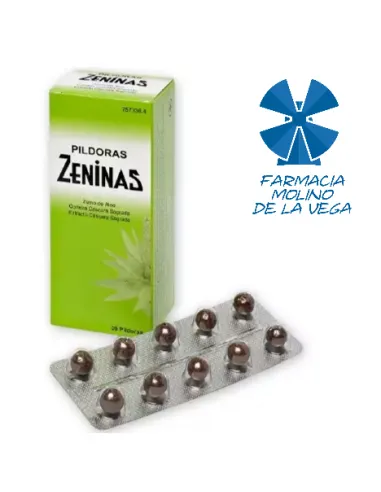
Table of Contents
- Package leaflet: Information for the user
- Introduction
- 1. What Zeninas coated tablets are and what they are used for
- 2. What you need to know before starting to take Zeninas coated tablets
- 3. How to take Zeninas coated tablets
- 4. Possible adverse effects
- 5. Storage of Zeninas coated tablets
- 6. Package contents and other information
Package leaflet: Information for the user
Introduction
Package leaflet: Information for the user
Zeninas film-coated tablets
Powder of Aloe ferox (Aloe)/Extract of Rhamnus purshianus D.C. (Cascara Sagrada)
Read the entire leaflet carefully before you start taking this medicine, because it contains important information for you.
- Keep this leaflet, as you may need to read it again.
- If you need advice or more information, consult your pharmacist. If you experience any adverse effects, consult your doctor or pharmacist, even if they are effects not listed in this leaflet. See section 4.
- You should consult a doctor if you worsen or do not improve within 4 days.
Leaflet contents
-
What Zeninas film-coated tablets are and what they are used for
-
What you need to know before taking Zeninas film-coated tablets
-
How to take Zeninas film-coated tablets
-
Possible side effects
-
How to store Zeninas film-coated tablets
-
Contents of the pack and other information
1. What Zeninas coated tablets are and what they are used for
Zeninas coated tablets are a stimulant-type laxative. The laxative effect occurs through increased movement of the colon and stimulation of fluid secretion processes, thereby promoting bowel evacuation.
Zeninas coated tablets are a herbal medicine used for the treatment of occasional constipation.
You should consult a doctor if your condition worsens or does not improve after 4 days.
2. What you need to know before starting to take Zeninas coated tablets
Do not take Zeninas coated tablets
- If you are allergic (hypersensitive) to Cape Aloe (Aloe ferox), to Cascara Sagrada (Rhamnus purshianus), or to any of the other components of this medicine (listed in section 6).
- If you have appendicitis or symptoms of appendicitis such as nausea, vomiting, abdominal cramps, or abdominal pain.
- If you have intestinal disorders such as: undiagnosed rectal bleeding, intestinal obstruction, haemorrhoids; inflammatory abdominal diseases (such as Crohn's disease and ulcerative colitis); intestinal atony; or severe states of dehydration with reduction of water and electrolytes.
- If you have severe liver or kidney disease.
- If you have congestive heart failure (the heart does not pump enough blood).
Warnings and precautions
Consult your doctor or pharmacist before starting to take Zeninas coated tablets.
- Do not use higher doses than those indicated in section 3 “How to take Zeninas coated tablets”.
- Before using laxatives for the treatment of constipation, a trial with high-fibre foods or concentrated fibre should be attempted first.
- Prolonged use of laxatives should be avoided. If constipation or irregular bowel movements persist for more than four days, the clinical condition should be evaluated. Long-term use may lead to tolerance (habituation) to the laxative effect and dependence (need) on it for bowel evacuation, as well as disturbances in water and electrolyte metabolism.
If this medicine is administered to dependent patients, frequent diaper changes should be performed to avoid prolonged contact with faeces.
Use of other medicines and Zeninas coated tablets
Inform your doctor or pharmacist if you are taking, have recently taken, or might need to take any other medicines, including those obtained without a prescription.
Patients being treated with cardiac glycosides, antiarrhythmics, medicines that prolong the QT interval (quinidine), diuretics (medicines that increase urine elimination), liquorice root, antibiotics (used to treat infections), medicines for stomach acidity (antacids) such as cimetidine, famotidine and ranitidine, potassium supplements, indomethacin, acetylsalicylic acid, and other prostaglandin synthesis inhibitors, should consult their doctor before taking this medicine.
Pregnancy, breastfeeding and fertility
If you are pregnant or breastfeeding, think you may be pregnant, or are planning to become pregnant, consult your doctor or pharmacist before using this medicine.
This preparation is excreted in small amounts in breast milk and, although there are no data on possible laxative effects in infants, its use is not recommended under these circumstances.
Driving and using machines
No effects on the ability to drive or use machines have been reported at the recommended doses.
3. How to take Zeninas coated tablets
Follow exactly the instructions for use provided in this leaflet or those given by your doctor, pharmacist, or nurse. If in doubt, ask your doctor or pharmacist.
The recommended dose is:
Adults and adolescents over 12 years of age: 1 coated tablet per day.
Use in children
Do not use this medicine in children under 12 years of age.
Use in elderly patients (over 65 years of age)
Elderly individuals should not take this medicine without consulting their doctor, as they are more likely to experience adverse effects.
Method of administration
This medicine is administered orally.
The Zeninas coated tablet should be swallowed with a glass of water, one hour after dinner, preferably before going to bed; the laxative effect will generally be observed the following morning.
- Take the medicine with meals or milk, especially if gastrointestinal discomfort is noticed. Do not take this medicine on an empty stomach.
If constipation persists for more than 4 days, or if symptoms worsen or new symptoms appear, you must stop treatment and consult your doctor.
If you take more Zeninas coated tablets than you should
If you have taken more Zeninas coated tablets than recommended, consult your doctor or pharmacist immediately. The main symptoms of overdose are: massive diarrhea with loss of water and electrolytes.
If severe, it may cause confusion, cardiac arrhythmia, cramps, fatigue, or weakness, which may be more pronounced in elderly individuals.
In case of overdose or accidental ingestion, contact your doctor or pharmacist or call the Toxicology Information Service at telephone number 91 562 04 20, indicating the medicine and the amount ingested. It is recommended to bring the medicine’s packaging and leaflet to the healthcare professional.
If you forget to take Zeninas coated tablets
Do not take a double dose to make up for missed doses.
If you have any further questions about the use of this medicine, ask your doctor or pharmacist.
4. Possible adverse effects
Like all medicines, this medicine may cause adverse effects, although not everybody will experience them.
The adverse effects of the medicine are mild and transient.
Gastrointestinal discomfort, abdominal pain of a colicky nature, belching, and intestinal cramps may occur. Urine may turn pink-yellow to brown; this is harmless and due to the elimination of the medicine's components.
If you consider any of the adverse effects you experience to be severe, or if you notice any other adverse effects not mentioned in this leaflet, inform your doctor or pharmacist.
Reporting of adverse effects
If you experience any type of adverse effect, consult your doctor or pharmacist, even if it is a possible adverse effect not listed in this leaflet. You may also report them directly via the Spanish Pharmacovigilance System for Human Medicinal Products: www.notificaRAM.es. By reporting adverse effects, you can help provide more information on the safety of this medicine.
5. Storage of Zeninas coated tablets
Keep out of the sight and reach of children.
Do not use this medicine after the expiry date stated on the packaging after EXP. The expiry date refers to the last day of the month indicated.
This medicine does not require any special storage conditions.
Do not use Zeninas coated tablets if you notice any signs of deterioration in the inner packaging containing the coated tablets.
Medicines must not be disposed of via wastewater or household waste. Return unused containers and medicines to the SIGRE collection point at your pharmacy. If you are unsure, please ask your pharmacist how to dispose of containers and medicines you no longer need. This will help protect the environment.
6. Package contents and other information
Composition of Zeninas coated tablets
-
Active substances:
- Powder of Aloe ferox (Aloe): approximately 51.72 mg - 92.59 mg (equivalent to 15 mg of hydroxyanthracene glycosides).
- Standardized dry extract of Rhamnus purshianus D.C. (Cascara sagrada): approximately 60 mg - 78.95 mg (equivalent to 15 mg of hydroxyanthracene glycosides). DER (4-6:1). Ethanol 60% v/v.
-
Other components (excipients):
Core: liquorice, microcrystalline cellulose, sodium croscarmellose, colloidal silica, magnesium stearate and purified water.
Coating: Vivacoat PA, containing hypromellose, polydextrose, talc, red iron oxide, black ferro-ferric oxide, titanium dioxide, polyethylene glycol 3350, yellow iron oxide and indigotine DYE.
Appearance of the medicinal product and contents of the container
Brown, round, coated tablet, convex in shape.
Packaged in packs of 30 coated tablets in PVC/PVDC/AL blister packs.
Marketing Authorization Holder
Vemedia Manufacturing B.V.
Verrijn Stuartweg 60
NL-1112 AX Diemen
The Netherlands
Local representative:
Vemedia Pharma Hispania S.A.
Aragón 182, 5th floor
08011 Barcelona
Spain
Manufacturer responsible
Vemedia Manufacturing B.V.
Verrijn Stuartweg 60
NL-1112 AX Diemen
The Netherlands
Laboratorium Sanitatis, S.L.
Álava Technology Park
Leonardo Da Vinci, 11
E-01510 Miñano – Araba / Álava (Spain)
This patient information leaflet was approved in September 2020
Date of the most recent review of this patient information leaflet:
Detailed and up-to-date information on this medicinal product is available on the website of the Spanish Agency for Medicinal Products and Medical Devices (AEMPS) http://www.aemps.gob.es/