Zeffix 5 mg/ml oral solution
Spain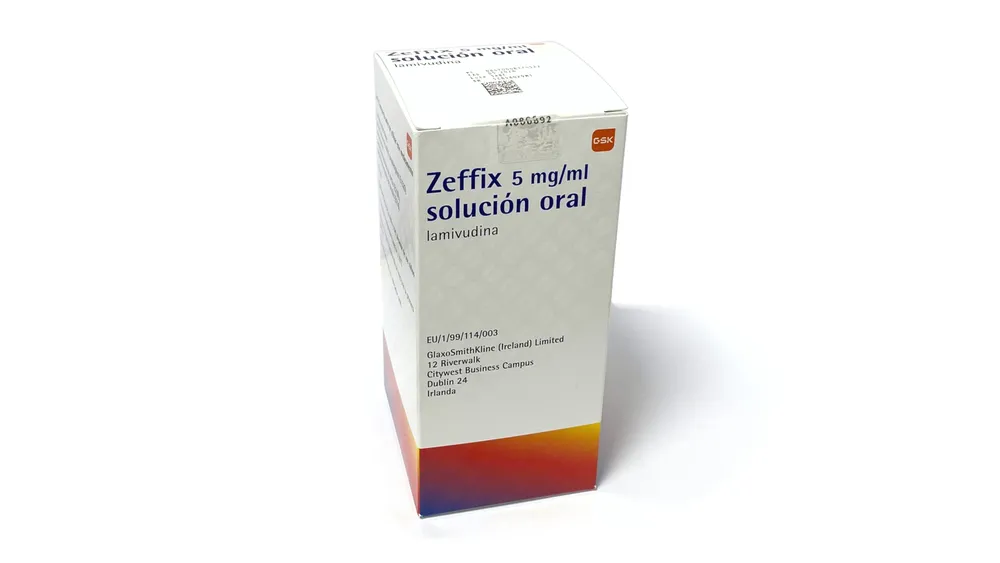
Table of Contents
Patient Information Leaflet
Introduction
Package leaflet: Information for the patient
Zeffix 5mg/ml oral solution
lamivudina
Read the entire leaflet carefully before you start taking this medicine.
-
Keep this leaflet, as you may need to read it again.
-
If you have any questions, consult your doctor or pharmacist.
-
This medicine has been prescribed for you only, and you should not give it to other people, even if they have the same symptoms as you, because it could harm them.
-
If you experience any adverse effects, consult your doctor or pharmacist, even if these adverse effects are not listed in this leaflet. See section 4.
Leaflet contents
- What Zeffix is and what it is used for
- What you need to know before taking Zeffix
- How to take Zeffix
- Possible side effects
- How to store Zeffix
- Contents of the pack and other information
1. What Zeffix is and what it is used for
The active substance in Zeffix is lamivudine.
Zeffix is used to treat long-term (chronic) hepatitis B infection in adults.
Zeffix is an antiviral medicine that inhibits the hepatitis B virus and belongs to a group of medicines known as nucleoside reverse transcriptase inhibitors (NRTIs).
The hepatitis B virus infects the liver, causes long-term (chronic) infection, and can lead to liver damage. Zeffix may be used in patients whose liver is damaged but still functions normally (compensated liver disease) and in combination with other medicines in patients whose liver is damaged and does not function normally (decompensated liver disease).
Treatment with Zeffix can reduce the amount of hepatitis B virus in your body. This may result in reduced liver damage and improved liver function. Not everyone responds to treatment with Zeffix in the same way. Your doctor will monitor the effectiveness of treatment with periodic blood tests.
2. What you need to know before starting Zeffix
Your doctor should provide counseling and testing for HIV infection before starting lamivudine treatment for hepatitis B infection and during treatment. If you have or develop HIV infection, see section 3.
Do not take Zeffix
- if you are allergic to lamivudina or to any of the other ingredients of this medicine (listed in section 6 ).
- Consult your doctor if you think this applies to you.
Warnings and precautions
Some people who take Zeffix or other similar medicines are at higher risk of serious adverse effects. You should be aware that the risk is greater:
- if you have previously had other types of liver disease , such as hepatitis C
- if you are significantly overweight (especially if you are a woman)
- Talk to your doctor if you have any of these conditions. You may need additional tests, such as blood tests, while taking this medicine. For more information about the risks, see Section 4.
Do not stop taking Zeffix without medical advice, as there is a risk that your hepatitis may worsen. After stopping Zeffix, your doctor will monitor you for at least four months to check for any problems. This will involve blood tests to monitor for increases in liver enzymes that may indicate liver damage. See section 3 for more information on how to take Zeffix.
Protect other people
Hepatitis B is transmitted through sexual contact with an infected person or through transfer of infected blood (for example, by sharing needles). Zeffix does not prevent the risk of transmitting hepatitis B to others. To prevent other people from becoming infected with hepatitis B:
- Use a condom during oral or penetrative sex.
- Avoid the risk of blood transfer — for example, do not share needles.
Other medicines and Zeffix
Tell your doctor or pharmacist if you are taking, have recently taken, or might need to take any other medicines, including herbal remedies or over-the-counter medicines.
Remember to inform your doctor or pharmacist if you start taking any other medicine while taking Zeffix.
These medicines must not be taken with Zeffix:
- medicines, if taken regularly (usually liquids), containing sorbitol and other polyols (such as xylitol, mannitol, lactitol, or maltitol)
- other medicines containing lamivudine, used to treat HIV infection (sometimes also called the AIDS virus)
- emtricitabine, used to treat HIV or hepatitis B infection
- cladribine, used to treat hairy cell leukemia
- Tell your doctor if you are being treated with any of these medicines.
Pregnancy
If you are pregnant, think you may be pregnant, or are planning to become pregnant:
- Talk to your doctor about the risks and benefits of taking Zeffix during pregnancy.
Do not stop treatment with Zeffix without medical advice.
Breast-feeding
Zeffix can pass into breast milk. If you are breast-feeding or planning to breast-feed:
- Talk to your doctor before taking Zeffix.
Driving and using machines
Zeffix may make you feel tired, which could affect your ability to drive or use machines.
- Do not drive or operate machinery unless you are sure it does not affect you.
Zeffix contains sugar, preservatives, propylene glycol, and sodium
If you are diabetic, note that each dose of Zeffix (100 mg – 20 ml) contains 4 g of sugar.
Zeffix contains sucrose. If your doctor has told you that you have an intolerance to certain sugars, consult with him before taking Zeffix. Sucrose may be harmful to your teeth.
Zeffix contains preservatives (parahydroxybenzoates ) which may cause allergic reactions (possibly delayed).
This medicine contains 400 mg of propylene glycol in each 20 ml.
This medicine contains 58.8 mg of sodium (a main component of table/cooking salt) in each 20 ml. This corresponds to 2.9% of the maximum daily intake of sodium recommended for an adult.
3. How to take Zeffix
Follow exactly the instructions given by your doctor for taking this medicine. If in doubt, consult your doctor or pharmacist again.
Keep regular contact with your doctor
Zeffix helps control your hepatitis B infection. You need to keep taking it every day to control the infection and prevent it from worsening.
- Stay in contact with your doctor and do not stop taking Zeffix without your doctor's advice.
How much to take
The usual dose of Zeffix is 20 ml (100 mg of lamivudine) once daily.
Your doctor may prescribe a lower dose if you have kidney problems.
- Talk to your doctor if you are in this situation.
Patients who also have or may acquire HIV infection
If you have or acquire HIV infection that is not being treated with antiviral medicines while taking lamivudine for hepatitis B infection, the HIV virus may develop resistance to certain HIV medicines, making it harder to treat. Lamivudine is also used to treat HIV infection. Consult your doctor if you have HIV infection. Your doctor may treat you with another medicine containing a higher dose of lamivudine, usually 150 mg twice daily, as the lower dose of 100 mg is not sufficient to treat HIV infection. If you are planning to change your HIV treatment, discuss this change with your doctor beforehand.
- Talk to your doctor if you are in this situation.
Swallow the tablet whole with water. Zeffix can be taken with or without food.
See the diagram and instructions for measuring and taking a dose of medicine after section 6 of this leaflet.
If you take more Zeffix than you should
If you accidentally take too much Zeffix, inform your doctor or pharmacist or go to the nearest hospital emergency department for advice. If possible, show them the Zeffix packaging.
If you forget to take Zeffix
If you forget to take a dose, take it as soon as you remember. Then continue taking it as before. Do not take a double dose to make up for forgotten doses.
Do not interrupt treatment with Zeffix
Do not stop taking Zeffix without consulting your doctor. There is a risk that your hepatitis may worsen (see section 2). When you stop taking Zeffix, your doctor will monitor you for at least four months to check for any problems. This means you will have blood tests to check for increases in liver enzyme levels, which may indicate liver damage.
4. Possible adverse effects
Like all medicines, this medicine may cause adverse effects, although not everyone gets them.
The most commonly reported adverse effects in clinical trials with Zeffix were fatigue, respiratory tract infections, sore throat, headache, stomach discomfort and pain, nausea, vomiting and diarrhoea, and increases in liver enzymes and in enzymes produced in the muscles (see below).
Allergic reaction
Rare (may affect up to 1 in 1,000 people). Signs include:
- swelling of the eyelids, face or lips
- difficulty swallowing or breathing.
- Contact a doctor immediately if you experience these symptoms. Stop taking Zeffix.
Adverse effects believed to be caused by Zeffix:
A very common adverse effect (may affect more than 1 in 10 people) that may be seen in blood tests is:
- an increase in levels of certain enzymes produced by the liver (transaminases), which may be a sign of inflammation or damage to the liver.
A common adverse effect (may affect up to 1 in 10 people) is:
- muscle cramps and pain
- skin rash or hives anywhere on the body.
A common adverse effect that may be seen in blood tests is:
- an increase in the level of an enzyme produced in the muscles (creatine phosphokinase), which may be a sign that body tissue is damaged.
A very rare adverse effect (may affect up to 1 in 10,000 people) is:
- lactic acidosis (excess lactic acid in the blood).
Other adverse effects
Other adverse effects have been reported in a very small number of people, but their exact frequency is unknown:
- muscle breakdown
- worsening of liver disease if the hepatitis B virus becomes resistant to Zeffix or if treatment is stopped. This may be fatal in some people.
An adverse effect that may appear in blood tests is:
- a reduction in the number of cells involved in blood clotting (thrombocytopenia).
If you get adverse effects
- Consult your doctor or pharmacist, even if they are possible adverse effects not listed in this leaflet.
Reporting of adverse effects
If you experience any adverse effect, talk to your doctor or pharmacist, even if it is a possible adverse effect not listed in this leaflet. You can also report them directly through the national reporting system included in Appendix V. By reporting adverse effects, you can help provide more information on the safety of this medicine.
5. Zeffix Storage
Keep this medicine out of the sight and reach of children.
Do not use this medicine after the expiry date stated on the packaging and bottle.
Do not store above 25 °C.
Discard one month after first opening.
Medicines should not be disposed of via wastewater or household waste. Ask your pharmacist how to dispose of medicines and packaging you no longer need. This will help protect the environment.
6. Contents of the pack and other information
Composition of Zeffix
The active substance is lamivudine. Each ml of oral solution contains 5 mg of lamivudine.
The other components are: sucrose, methylparahydroxybenzoate (E218), propylparahydroxybenzoate (E216), citric acid, propylene glycol (E1520), sodium citrate, artificial strawberry flavouring, artificial banana flavouring, purified water.
Nature of the product and contents of the container
Zeffix oral solution is supplied in packs containing a white polyethylene bottle with a child-resistant cap. The solution is clear, colourless or pale yellow, with a strawberry/banana flavour. The bottle contains 240 ml of lamivudine solution (5 mg/ml). The pack includes an oral dosing dispenser graduated in ml and a dispenser adapter, which must be fitted into the bottle before use.
Manufacturer GlaxoSmithKline Trading Services Limited 12 Riverwalk, Citywest Business Campus Dublin 24, Ireland D24 YK11 | Marketing Authorization Holder GlaxoSmithKline Trading Services Limited 12 Riverwalk Citywest Business Campus Dublin 24, Ireland D24 YK11 |
You can request further information about this medicinal product by contacting the local representative of the marketing authorization holder:
Belgium/Belgium/Belgium GlaxoSmithKline Pharmaceuticals s.a./n.v. Tel/Tel: + 32 (0)10 85 52 00 | Lithuania GlaxoSmithKline Trading Services Limited Tel: + 370 80000334 |
| Luxembourg/Luxembourg GlaxoSmithKline Pharmaceuticals s.a./n.v. Belgium/Belgium Tel/Tel: + 32 (0) 10 85 52 00 |
Czech Republic GlaxoSmithKline s.r.o. Tel: + 420 222 001 111 | Hungary GlaxoSmithKline Trading Services Limited Tel.: + 36 80088309 |
Denmark GlaxoSmithKline Pharma A/S Tlf: + 45 36 35 91 00 | Malta GlaxoSmithKline Trading Services Limited Tel: + 356 80065004 |
Germany GlaxoSmithKline GmbH & Co. KG Tel.: + 49 (0)89 36044 8701 | Netherlands GlaxoSmithKline BV Tel: + 31 (0) 33 2081100 |
Estonia GlaxoSmithKline Trading Services Limited Tel: + 372 8002640 | Norway GlaxoSmithKline AS Tlf: + 47 22 70 20 00 |
Greece GlaxoSmithKline Μονοπρόσωπη A.E.B.E. Tel: + 30 210 68 82 100 | Austria GlaxoSmithKline Pharma GmbH Tel: + 43 (0)1 97075 0 |
Spain GlaxoSmithKline, S.A. Tel: + 34 900 202 700 | Poland GSK Services Sp.zo.o. Tel.: + 48 (0)22 576 9000 |
France Laboratoire GlaxoSmithKline Tél.: + 33 (0)1 39 17 84 44 | Portugal Glaxo Wellcome Farmacêutica, Lda. Tel: + 351 21 412 95 00 |
Croatia GlaxoSmithKline Trading Services Limited Tel: + 385 800787089 | Romania GlaxoSmithKline Trading Services Limited Tel: + 40 800672524 |
Ireland GlaxoSmithKline Trading Services Limited Tel: + 353 (0)1 4955000 | Slovenia GlaxoSmithKline Trading Services Limited Tel: + 386 80688869 |
Iceland Vistor hf. Tel: + 354 535 7000 | Slovakia GlaxoSmithKline Trading Services Limited Tel: + 421 800500589 |
Italy GlaxoSmithKline S.p.A. Tel: + 39 (0)45 7741 111 | Finland GlaxoSmithKline Oy Tel: + 358 (0)10 30 30 30 |
Cyprus GlaxoSmithKline Trading Services Limited Tel: + 357 80070017 | Sweden GlaxoSmithKline AB Tel: + 46 (0)8 638 93 00 |
Latvia GlaxoSmithKline Trading Services Limited Tel: + 371 80205045 |
Date of the most recent review of this leaflet: MM/YYYY
Detailed information on this medicine is available on the European Medicines Agency website: http://www.ema.europa.eu
How to measure the dose and take the medicine
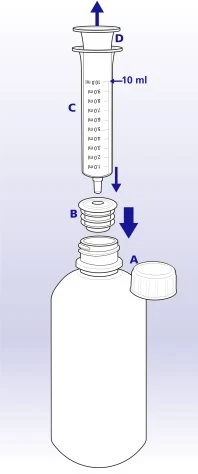
To measure your dose accurately, use the oral dosing syringe provided in the package (see also Section 3).
When full, the dosing syringe contains 10 ml of solution.
- Remove the plastic wrapper from the oral dosing syringe/adapter.
- Remove the adapter from the dosing syringe.
- Remove the child-resistant cap (A) from the bottle. Keep the cap.
- Hold the bottle. Insert the plastic adapter (B) into the neck of the bottle as far as possible.
- Insert the dosing syringe (C) firmly into the adapter.
- Turn the bottle upside down.
- Pull the plunger of the dosing syringe (D) until the first portion of your full dose has been withdrawn.
- Return the bottle to its upright position. Remove the dosing syringe from the adapter.
- Place the dosing syringe into your mouth, positioning the tip towards the inside of your cheek. Slowly push the plunger, allowing time to swallow. Do not squeeze too hard, and do not pour the liquid towards the back of your throat, as you may choke.
- Repeat steps 5 to 9 in the same way until the full dose has been taken. For example, if your dose is 20 ml, you will need to take 2 full syringes of medicine.
- Remove the dosing syringe from the bottle and wash it thoroughly with clean water. Allow it to dry completely before using it again. Leave the adapter in the bottle.
- Close the bottle tightly with the cap.
Discard the oral solution one month after first opening the bottle.