Zavesca 100 mg hard capsules
Spain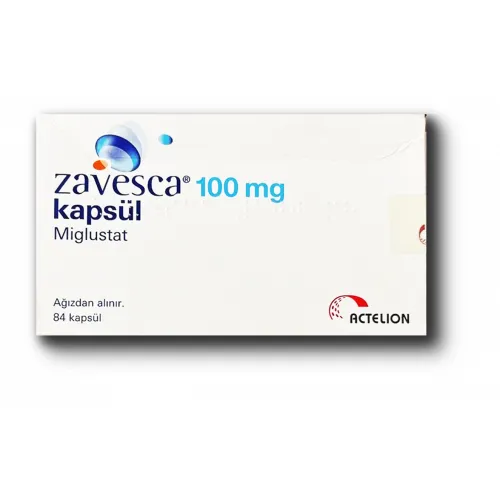
Table of Contents
Package leaflet: Information for the user
Introduction
Package leaflet: information for the user
Zavesca 100 mg capsules
miglustat
Read the entire leaflet carefully before you start taking this medicine, because it contains important information for you.
- Keep this leaflet, as you may need to read it again.
- If you have any questions, ask your doctor or pharmacist.
- This medicine has been prescribed for you only and must not be given to other people, even if they have the same symptoms as you, because it could harm them.
- If you experience any adverse effects, consult your doctor or pharmacist, even if they are effects not listed in this leaflet. See section 4.
Leaflet contents:
- What Zavesca is and what it is used for
- What you need to know before taking Zavesca
- How to take Zavesca
- Possible side effects
- How to store Zavesca
- Contents of the pack and other information
1. What Zavesca is and what it is used for
Zavesca contains the active substance miglustat, which belongs to a group of medicines that affect metabolism. It is used to treat two disorders:
- Zavesca is used to treat mild to moderate type 1 Gaucher disease in adults.
In type 1 Gaucher disease, your body cannot eliminate a substance called glucosylceramide. As a result, it accumulates in certain cells of your immune system. This may cause enlargement of the liver and spleen, changes in the blood, and bone problems.
The standard treatment for type 1 Gaucher disease is enzyme replacement therapy (ERT). Zavesca will only be used in cases where enzyme replacement therapy is considered unsuitable for the patient.
- Zavesca is also used to treat progressive neurological symptoms of Niemann-Pick disease type C in adults and children.
If you have Niemann-Pick disease type C, lipids such as glycosphingolipids may accumulate in the cells of your brain. This can lead to neurological impairment, including slowed eye movements, problems with balance, swallowing, memory, or seizures.
Zavesca works by inhibiting an enzyme called glucosylceramide synthase, which is responsible for the first step in the synthesis of most glycosphingolipids.
2. What you need to know before starting Zavesca
Do not take Zavesca
- if you are allergic to miglustat or to any of the other ingredients of this medicine (listed in section 6).
Warnings and precautions
Talk to your doctor or pharmacist before starting Zavesca
- if you have kidney disease
- if you have liver disease
Your doctor will perform the following tests before and during treatment with Zavesca:
- physical examination of the nerves in the arms and legs
- measurement of vitamin B12 levels
- monitoring of growth in children or adolescents with Niemann-Pick disease type C
- monitoring of platelet count in blood
These tests are necessary because some patients have reported symptoms such as tingling or numbness in hands and feet, or a reduction in body weight during treatment with Zavesca. The tests will help your doctor determine whether these effects are due to your underlying disease or pre-existing conditions, or are adverse effects of Zavesca (see section 4 for more details).
If you experience diarrhoea, your doctor may advise you to modify your diet to reduce intake of lactose and carbohydrates such as sucrose (cane sugar), or to avoid taking Zavesca with food, or to temporarily reduce the dose. In some cases, your doctor may prescribe medications to treat diarrhoea, such as loperamide. Consult your doctor if diarrhoea does not respond to these measures or if you experience any other abdominal discomfort. In such cases, your doctor may decide to carry out additional investigations.
Male patients are advised to use reliable contraceptive methods during treatment with Zavesca and for three months after stopping the treatment.
Children and adolescents
Do not give this medicine to children and adolescents (under 18 years of age) with type 1 Gaucher disease, as it is unknown whether it is effective in this condition.
Other medicines and Zavesca
Tell your doctor or pharmacist if you are taking, have recently taken, or might need to take any other medicines.
Inform your doctor if you are taking medicines containing imiglucerase, which are sometimes used at the same time as Zavesca. These may reduce the amount of Zavesca in your body.
Pregnancy, breastfeeding and fertility
Do not take Zavesca if you are pregnant or planning to become pregnant. For further information, consult your doctor or pharmacist. You must use an effective method of contraception while taking Zavesca. You must not breastfeed while taking Zavesca.
Male patients should use a reliable contraceptive method during treatment with Zavesca and for three months after stopping treatment.
If you are pregnant or breastfeeding, think you may be pregnant, or are planning to become pregnant, consult your doctor or pharmacist before using this medicine.
Driving and using machines
Zavesca may cause dizziness. Do not drive or operate tools or machinery if you feel dizzy.
Zavesca contains sodium
This medicine contains less than 1 mmol of sodium (23 mg) per capsule; that is, essentially “sodium-free”.
3. How to take Zavesca
Follow exactly the instructions for use of this medicine as given by your doctor. If in doubt, consult your doctor or pharmacist again.
-
For type 1 Gaucher disease: In adults, the usual dose is one capsule (100 mg) three times a day (morning, afternoon, evening), which corresponds to a maximum daily dose of three capsules (300 mg).
-
For Niemann-Pick disease type C: In adults and adolescents (over 12 years of age), the usual dose is two capsules (200 mg) three times a day (morning, afternoon, and evening). This corresponds to a maximum daily dose of six capsules (600 mg).
For children under 12 years of age, your doctor will adjust the dose for Niemann-Pick disease type C.
If you have kidney problems, your doctor may prescribe you a lower initial dose. Your doctor may reduce the dose of Zavesca to one capsule (100 mg) once or twice a day if diarrhea occurs during treatment with Zavesca (see section 4). Your doctor will advise you on the duration of treatment.
To remove the capsule:
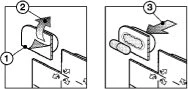
- Tear along the perforated line
- Remove the paper as indicated by the arrows
- Push the capsule through the aluminum foil
Zavesca may be taken with or without food. The capsule must be swallowed whole with a glass of water.
If you take more Zavesca than you should
If you take more capsules than prescribed, consult your doctor immediately. In clinical trials, Zavesca has been used at doses up to 3000 mg, which caused a reduction in blood leukocytes and other side effects similar to those described in section 4.
If you forget to take Zavesca
Take the next capsule at the scheduled time. Do not take a double dose to make up for missed doses.
If you stop taking Zavesca
Do not stop treatment with Zavesca without consulting your doctor.
If you have any further questions about the use of this medicine, ask your doctor or pharmacist.
4. Possible adverse effects
Like all medicines, this medicine can cause adverse effects, although not everyone will experience them.
More serious adverse effects:
Some patients have experienced tingling or numbness in the hands and feet (this is seen frequently). These could be signs of peripheral neuropathy due to side effects of Zavesca, or they could be due to pre-existing diseases. Your doctor will perform tests before and during treatment with Zavesca to assess your condition (see section 2).
If you experience any of these effects, inform your doctor as soon as possible.
If you experience a slight tremor, usually tremor in the hands, inform your doctor as soon as possible. Often, the tremor resolves without the need to interrupt treatment. Occasionally, your doctor may need to reduce the dose or even discontinue treatment with Zavesca to control the tremor.
Very common: (may affect more than 1 in 10 patients)
The most frequently reported adverse effects include diarrhea, flatulence (gas), abdominal pain (stomach pain), weight loss, and decreased appetite.
If you lose some weight when starting treatment with Zavesca, do not be concerned; usually people stop losing weight as treatment continues.
Common: (may affect up to 1 in 10 patients)
Common adverse effects include headache, dizziness, paresthesias (tingling or numbness), coordination disturbances, hypoesthesias (reduced sensation to touch), dyspepsia (indigestion), nausea (feeling sick), constipation and vomiting, abdominal swelling or discomfort (stomach), and thrombocytopenia (reduced blood platelet levels). Neurological symptoms and thrombocytopenia may be due to the underlying disease.
Other possible adverse effects include muscle spasms or weakness, fatigue, chills and feeling unwell, depression, difficulty sleeping, forgetfulness, and decreased libido.
Most patients notice one or more of these types of side effects, usually when starting treatment or at various times during treatment. Most are mild and resolve relatively quickly. If any of these adverse effects cause you problems, consult your doctor. He or she may reduce your dose of Zavesca or prescribe other medicines to manage the side effects.
Reporting of adverse effects
If you experience adverse effects, talk to your doctor or pharmacist, even if they are adverse effects not listed in this leaflet. You can also report them directly through the national reporting system listed in Annex V. By reporting adverse effects, you can help provide more information on the safety of this medicine.
5. Storage of Zavesca
Keep this medicine out of the sight and reach of children.
Do not use this medicine after the expiry date stated on the packaging after "EXP". The expiry date refers to the last day of the month indicated.
Do not store above 30°C.
Medicines should not be disposed of via wastewater or household waste. Ask your pharmacist how to dispose of medicines and packaging you no longer need. This will help protect the environment.
6. Contents of the pack and other information
Composition of Zavesca
Active substance:
Miglustat 100 mg.
Other components:
Sodium starch glycolate,
Povidone (K30),
Magnesium stearate,
Gelatin,
Titanium dioxide (E171),
Black iron oxide (E172),
Shellac.
Nature and contents of the container
Zavesca is a white 100 mg capsule with “OGT 918” printed in black on the cap and “100” printed in black on the body.
Pack: Four blister strips, each containing 21 capsules, for a total of 84 capsules.
Marketing Authorization Holder:
Janssen-Cilag International NV
Turnhoutseweg 30
B-2340 Beerse
Belgium
Manufacturer:
Janssen Pharmaceutica NV
Turnhoutseweg 30
B-2340 Beerse
Belgium
Further information on this medicinal product is available upon request to the local representative of the Marketing Authorization Holder.
Belgium/Belgium/Belgium Janssen-Cilag NV Tel/Tel: +32 14 64 94 11 | Lithuania UAB "JOHNSON & JOHNSON" Tel: +370 5 278 68 88 |
| Luxembourg/Luxembourg Janssen-Cilag NV Tél/Tel: +32 14 64 94 11 |
Czech Republic Janssen-Cilag s.r.o. Tel: +420 227 012 227 | Hungary Janssen-Cilag Kft. Tel.: +36 1 884 2858 |
Denmark Janssen-Cilag A/S Tlf: +45 4594 8282 | Malta AM MANGION LTD Tel: +356 2397 6000 |
Germany Janssen-Cilag GmbH Tel: +49 2137 955 955 | Netherlands Janssen-Cilag B.V. Tel: +31 76 711 1111 |
Estonia UAB "JOHNSON & JOHNSON" Estonia branch Tel: +372 617 7410 | Norway Janssen-Cilag AS Tlf: +47 24 12 65 00 |
Greece Janssen-Cilag Φαρμακευτική Α.Ε.Β.Ε. Tel: +30 210 80 90 000 | Austria Janssen-Cilag Pharma GmbH Tel: +43 1 610 300 |
Spain Janssen-Cilag, S.A. Tel: +34 91 722 81 00 | Poland Janssen-Cilag Polska Sp. z o.o. Tel.: +48 22 237 60 00 |
France Janssen-Cilag Tel: 0 800 25 50 75 / +33 1 55 00 40 03 | Portugal Janssen-Cilag Farmacêutica, Lda. Tel: +351 214 368 600 |
Croatia Johnson & Johnson S.E. d.o.o. Tel: +385 1 6610 700 | Romania Johnson & Johnson România SRL Tel: +40 21 207 1800 |
Ireland Janssen Sciences Ireland UC Tel: +353 1 800 709 122 | Slovenia Johnson & Johnson d.o.o. Tel: +386 1 401 18 00 |
Iceland Janssen-Cilag AB c/o Vistor hf. Tel: +354 535 7000 | Slovakia Johnson & Johnson, s.r.o. Tel: +421 232 408 400 |
Italy Janssen-Cilag SpA Tel: 800.688.777 / +39 02 2510 1 | Finland Janssen-Cilag Oy Tel: +358 207 531 300 |
| Sweden Janssen-Cilag AB Tel: +46 8 626 50 00 |
Latvia UAB "JOHNSON & JOHNSON" Latvia branch Tel: +371 678 93561 | United Kingdom (Northern Ireland) Janssen Sciences Ireland UC Tel: +44 1 494 567 444 |


Date of the most recent review of this leaflet:
Detailed information on this medicine is available on the website of the European Medicines Agency: http://www.ema.europa.eu. There are also links to other websites on rare diseases and orphan medicines.