Zavedos 1 mg/ml concentrate for solution for infusion
Spain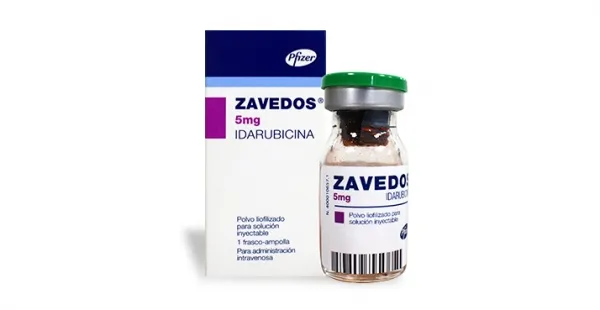
Table of Contents
Patient Information Leaflet
Introduction
Package leaflet: Information for the patient
ZAVEDOS 1 mg/ml concentrate for solution for infusion
(Idarubicin hydrochloride)
Read the entire leaflet carefully before you start using this medicine, as it contains important information for you.
- Keep this leaflet, as you may need to read it again.
- If you have any questions, consult your doctor, pharmacist, or nurse.
- This medicine has been prescribed for you personally. Do not give it to others, even if they have the same symptoms as you, as it may harm them.
- If you experience any adverse effects, consult your doctor, pharmacist, or nurse, even if they are adverse effects not listed in this leaflet. See section 4.
Contents of this leaflet
-
What Zavedos is and what it is used for
-
What you need to know before using Zavedos
-
How to use Zavedos
-
Possible side effects
-
Storage of Zavedos
-
Contents of the pack and other information
1. What Zavedos is and what it is used for
Zavedos is an anticancer antibiotic belonging to the anthracycline group and is used for the treatment of various types of cancer. This medicine is administered intravenously. Zavedos works by inhibiting the cell cycle, thereby preventing the proliferation of cancer cells.
Adults:
Zavedos may be used alone or in combination with other anticancer medicines for the treatment of acute myeloid leukemia and acute lymphoblastic leukemia as second-line therapy.
Children:
Zavedos may be used alone or in combination with other anticancer medicines such as cytarabine for the treatment of acute myeloid leukemia as first-line therapy and acute lymphoblastic leukemia as second-line therapy.
2. What you need to know before starting Zavedos
Do not use Zavedos
- if you are allergic to idarubicin or to any of the other components of this medicine (listed in section 6), or to other anticancer medicines in the same group (anthracyclines or anthracenediones)
- if you have or have had severe liver and/or kidney problems
- if you have uncontrolled infections
- if you have or have had serious heart problems or have recently had a myocardial infarction
- if bone marrow function is reduced, i.e., if your immune system is impaired and has lost its ability to fight infections or diseases
- if you have previously received treatment with maximum doses of this medicine and/or other anticancer medicines in the same group (anthracyclines or anthracenediones)
- if you are breastfeeding, you must stop breastfeeding
Warnings and precautions
Talk to your doctor, pharmacist, or nurse before starting Zavedos
- If you have recently had mouth ulcers (stomatitis), low neutrophil count (neutropenia), low platelet count (thrombocytopenia), or systemic infections. In these cases, your doctor must ensure that you have recovered before starting treatment with Zavedos.
- If you have recently been treated with medicines that can suppress heart contraction, if you have or have had heart disease, or if you have cardiac problems or have received radiotherapy to areas near the heart.
- If during treatment you develop a decrease in red blood cells, white blood cells, and/or platelets.
- If you have received or are currently receiving treatment with other medicines in the same group as Zavedos (anthracyclines).
- If you develop swelling, heaviness, pain without known cause, increased temperature, difficulty moving, and/or tingling, "suffocating" sensation or difficulty breathing, rapid heartbeat, or chest discomfort—symptoms associated with thrombophlebitis or thromboembolic events—contact your doctor immediately.
- If you have previously received other therapies (medicines, radiotherapy) that may have reduced bone marrow function.
- If you develop mouth ulcers or difficulty swallowing.
- If you have or have had liver or kidney problems.
- If you have elevated levels of uric acid, these must be monitored and adequate fluid intake ensured.
- If you plan to be vaccinated, as your ability to fight infections or diseases may be affected by Zavedos.
- If you are male, you must use effective contraceptive methods during treatment, as this medicine may impair fertility. Men who wish to father children in the future are advised to seek advice regarding sperm preservation before treatment.
Zavedos should only be administered under the supervision of physicians experienced in the use of medicines for leukemia.
Inform your doctor or pharmacist if you are taking or have recently taken trastuzumab (a medicine used to treat certain types of cancer). Trastuzumab can remain in the body for up to 7 months. Since trastuzumab can affect the heart, you must not use Zavedos until 7 months after stopping trastuzumab. If Zavedos is used before this time, your cardiac function must be carefully monitored.
Your doctor will regularly monitor your condition to check whether Zavedos is having the intended effect.
Before starting treatment with Zavedos and during treatment, you will have regular blood tests and tests to monitor liver, kidney, and heart function. Since infants and children are more sensitive to the cardiac toxicity of anthracyclines, long-term follow-up to assess heart function is also recommended.
This medicine may cause red discoloration of the urine for 1–2 days after administration.
Zavedos may affect male fertility. Talk to your doctor about fertility preservation before starting treatment. Both men and women should use effective contraceptive methods (see section “Pregnancy, breastfeeding, and fertility”).
If you wish to have children after Zavedos treatment, discuss your options with your doctor.
Use of Zavedos with other medicines
Inform your doctor or pharmacist if you are currently using, have recently used, or might need to use any other medicines.
Zavedos may increase adverse effects or alter the action of other medicines, such as those used for heart conditions, cancer treatment, anticoagulants, or immunosuppressants (e.g., cyclosporine).
Concomitant use of live-attenuated vaccines (e.g., yellow fever) is not recommended. An inactivated vaccine should be used if available.
Pregnancy, breastfeeding, and fertility
If you are pregnant or breastfeeding, think you might be pregnant, or plan to become pregnant, consult your doctor or pharmacist before using this medicine.
Pregnancy
Avoid becoming pregnant if you or your partner are being treated with Zavedos.
Zavedos can harm the fetus, so it is important to inform your doctor if you think you are pregnant.
Contraception in women of childbearing potential
You must always use an effective method of birth control (contraception) during treatment with Zavedos and for at least 6.5 months after the last dose. Discuss suitable contraceptive methods with your doctor for you and your partner.
Contraception in men
Men must always use effective contraception during treatment with Zavedos and for at least 3.5 months after the last dose.
Breastfeeding
Do not breastfeed during treatment with Zavedos and for at least 14 days after the last dose, as some of the medicine may pass into breast milk and could harm your baby.
Fertility
Both men and women should seek advice on fertility preservation before treatment.
Driving and use of machines
It is unknown whether Zavedos has any effect on the ability to drive or use machines.
3. How to use Zavedos
Zavedos will be administered to you by a healthcare professional.
Zavedos is administered slowly by intravenous infusion, through an intravenous infusion system delivering 0.9% sodium chloride or 5% dextrose over a period of 5 to 10 minutes.
Your doctor will determine the most appropriate dose and duration of treatment based on your condition and response to therapy. If in doubt, consult your doctor or nurse again.
Adults:
- In acute myeloid leukemia:
A daily dose of 12 mg/m² administered intravenously for 3 days in combination with cytarabine (another medicine used to treat cancer) is recommended in adults. Zavedos may also be administered as a single agent or in combination with other medicines at a dose of 8 mg/m² administered intravenously for 5 days.
- In acute lymphoblastic leukemia:
As a single agent, the recommended dose is 12 mg/m² daily administered intravenously for 3 days.
Children:
As a single agent, the recommended dose is 10 mg/m² daily administered intravenously for 3 days.
If the child is to be treated with idarubicin and another medicine to treat leukemia, such as cytarabine, the recommended dose is 10–12 mg/m² daily administered intravenously for 3 days.
Patients with impaired liver and/or kidney function:
Your doctor will consider reducing the dose if your bilirubin and/or creatinine levels (substances used to assess liver and kidney function) are above 2 mg/dl. Zavedos must not be administered to patients with severe impairment of liver or kidney function.
If you receive more Zavedos than you should
Although unlikely, if you receive more Zavedos than you should, some of the known adverse effects of the medicine (mainly on the heart and bone marrow) may occur. If this happens, appropriate supportive measures will be applied.
4. Possible adverse effects
Like all medicines, this medicine can cause adverse effects, although not everyone experiences them.
Very common adverse effects (may affect more than 1 in 10 patients) are:
- Infection.
- Decreased platelets in the blood (thrombocytopenia), severe decrease in white blood cells (leukopenia, neutropenia), decrease in the number of red blood cells (anemia).
- Loss of appetite.
- Nausea, vomiting, inflammation of the mucosa of the mouth and/or gums (mucositis/stomatitis), diarrhea, abdominal pain or burning sensation.
- Hair loss.
- Reddish discoloration of the urine for 1–2 days after administration.
- Fever, headache, chills.
Common adverse effects (may affect up to 1 in 10 patients) are:
- Slowing of the heart rate (bradycardia), loss of the heart's ability to pump blood (congestive heart failure), increased heart rate (tachycardia), disturbances in heart rhythm (tachyarrhythmias), reduced force with which the heart pumps blood (decreased left ventricular ejection fraction), disease of the heart muscle (cardiomyopathies).
- Bleeding (haemorrhage), local inflammation of a vein (local phlebitis), inflammation and blockage of a vein (thrombophlebitis).
- Gastrointestinal bleeding, stomach pain.
- Increased liver enzymes and bilirubin (substances used to assess liver function).
- Rash, itching (pruritus), increased sensitivity of the skin area exposed to radiation (“radiation recall reaction”).
Uncommon adverse effects (may affect up to 1 in 100 patients) are:
- Sepsis, septicemia.
- Secondary leukemia (acute myeloid leukemia and myelodysplastic syndrome).
- Dehydration.
- Hyperuricemia (increased uric acid in the blood).
- Myocardial infarction and changes in the electrocardiogram.
- Shock.
- Inflammation of the esophagus, inflammation of part of the intestine (colitis, including severe enterocolitis and neutropenic enterocolitis with perforation).
- Itchy red spots (urticaria), skin and nail discoloration (hyperpigmentation), cellulitis which may be severe, tissue death (tissue necrosis).
Rare adverse effects (may affect up to 1 in 1,000 patients) are:
- Cerebral hemorrhages.
Very rare adverse effects (may affect up to 1 in 10,000 patients) are:
- Severe generalized allergic reaction (anaphylaxis).
- Inflammation of the tissue covering the heart (pericarditis) and of the heart muscle tissue (myocarditis), deterioration in the conduction of cardiac impulses from the atria to the ventricles (atrioventricular and bundle branch block).
- Blockage of a blood vessel by material transported in the blood (thromboembolism), hot flushes.
- Changes in the stomach mucosa (erosion and ulceration in the stomach).
- Redness, sensitivity and/or peeling of the palms of the hands and soles of the feet (acral erythema).
Adverse effects with unknown frequency (cannot be estimated from available data) include:
- Decrease in blood cells (pancytopenia).
- Tumor lysis syndrome.
- Local reaction.
Reporting of adverse effects
If you experience any type of adverse effect, consult your doctor, pharmacist, or nurse, even if it is a possible adverse effect not listed in this leaflet. You may also report them directly via the Spanish Pharmacovigilance System for Human Medicinal Products: https://www.notificaram.es. By reporting adverse effects, you can help provide more information on the safety of this medicine.
5. Zavedos Storage Instructions
Keep this medicine out of the sight and reach of children.
Do not use this medicine after the expiry date stated on the container after EXP. The expiry date is the last day of the month indicated.
Do not use this medicine if the container is damaged or open.
Store the vial in the outer packaging to protect it from light. Store and transport refrigerated (between 2 °C and 8 °C).
This medicine should be used immediately after opening the vial. If not used immediately, the storage times and conditions are the responsibility of the user.
Any unused product or waste material must be disposed of in accordance with local regulations.
6. Contents of the container and other information
Composition of Zavedos
- The active substance is idarubicin hydrochloride.
- The other components are: glycerol (E-422), hydrochloric acid (for pH adjustment), and water for injections.
Appearance of the product and contents of the container
Zavedos 1 mg/ml concentrate for solution for infusion is supplied in clear glass vials stoppered with halobutyl rubber closures and sealed with an aluminum cap with a plastic flip-off closure.
The vials are covered with a protective plastic coating called "ONCO-TAIN®" to reduce the risk of spillage in case of breakage.
The product is orange-red in colour.
Zavedos 1 mg/ml concentrate for solution for infusion is available in 5 ml, 10 ml, and 20 ml vials, packed in cardboard boxes.
Marketing Authorization Holder and Manufacturer
Marketing Authorization Holder:
Pfizer, S.L
Avda Europa 20B
Parque Empresarial La Moraleja
28108, Alcobendas, Madrid
Spain
Manufacturer:
Pfizer Service Company BV
Hermeslaan 11
1932 Zaventem
Belgium
Date of the most recent revision of this leaflet: June 2022
Detailed and up-to-date information on this medicine is available on the website of the Spanish Agency of Medicines and Health Products (AEMPS) http://www.aemps.gob.es/
This information is intended for healthcare professionals only:
Zavedos must be administered by personnel specialized in chemotherapy for leukaemias.
Protective measures: Due to the toxic nature of the compound, the following protective recommendations should be followed:
- Personnel must be trained in proper handling techniques.
- Pregnant women should avoid handling this medicine.
- Personnel handling idarubicin must wear protective clothing: protective goggles, gowns, and disposable gloves and masks.
- Handling should be performed in a designated area (preferably under a laminar flow system). The work surface should be protected with absorbent, plastic-backed, disposable paper.
- All materials used for administration or cleaning, including gloves, must be disposed of in high-risk waste bags for destruction by high-temperature incineration.
- Any spillage or leakage should be treated with diluted sodium hypochlorite solution (1% available chlorine), preferably by soaking, followed by rinsing with water.
- In case of accidental skin or eye contact, immediately wash thoroughly with abundant water or soap and water, or with a sodium bicarbonate solution.
- In case of eye contact, retract the eyelid(s) and rinse the affected eye(s) with copious amounts of water for at least 15 minutes. Medical advice should then be sought.
- Always wash hands after removing gloves.
- Unused solution must be discarded.
Disposal:
Disposal of unused medicine and of all materials that have come into contact with it must be carried out in accordance with local regulations for cytotoxic agents.