Zarzio 48 MU/0.5 ml solution for injection or for infusion in pre-filled syringe
Spain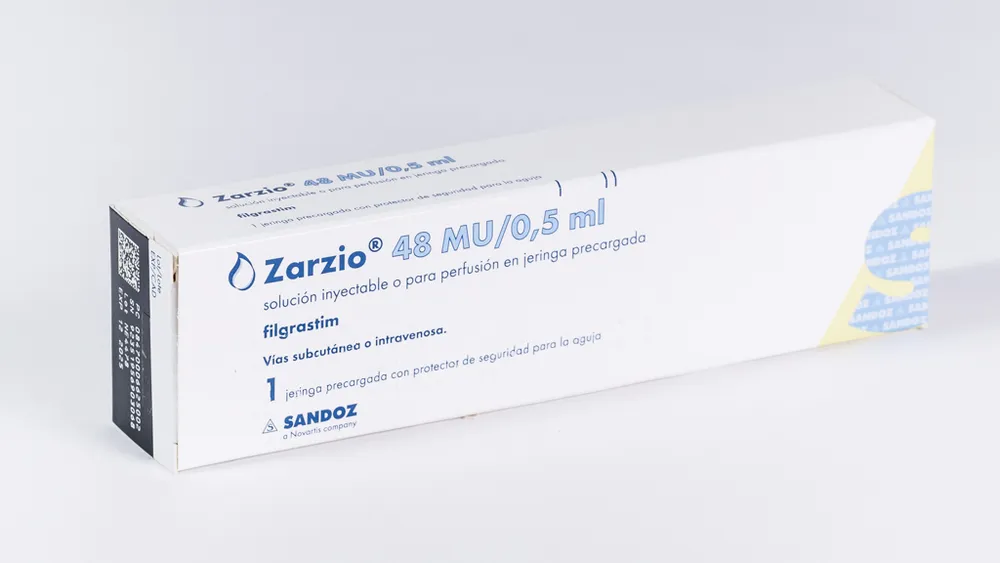
Table of Contents
Package leaflet: Information for the user
Introduction
Package leaflet: information for the user
Zarzio 30MU/0.5ml solution for injection or infusion in a pre-filled syringeZarzio 48MU/0.5ml solution for injection or infusion in a pre-filled syringe
filgrastim
Read the entire leaflet carefully before you start using this medicine, because it contains important information for you.
- Keep this leaflet, as you may need to read it again.
- If you have any questions, ask your doctor, pharmacist, or nurse.
- This medicine has been prescribed for you only, and must not be given to other people, even if they have the same symptoms as you, because it could harm them.
- If you experience any adverse reactions, consult your doctor, pharmacist, or nurse, even if they are adverse reactions not listed in this leaflet. See section 4.
Leaflet contents
- What Zarzio is and what it is used for
- What you need to know before using Zarzio
- How to use Zarzio
- Possible side effects
- How to store Zarzio
- Contents of the pack and other information
- Instructions for use
1. What Zarzio is and what it is used for
Zarzio is a white blood cell growth factor (granulocyte colony-stimulating factor) and belongs to a group of medicines known as cytokines. Growth factors are proteins that occur naturally in the body, but can also be produced by biotechnology for use as medicines. Zarzio works by stimulating the bone marrow to produce more white blood cells.
A reduction in the number of white blood cells (neutropenia) may occur for various reasons and makes it harder for your body to fight infections. Zarzio stimulates the bone marrow to rapidly produce new white blood cells.
Zarzio can be used:
- to increase the number of white blood cells after chemotherapy treatment, to help prevent infections;
- to increase the number of white blood cells after a bone marrow transplant, to help prevent infections;
- before undergoing high-dose chemotherapy, to stimulate the bone marrow to produce more stem cells which can be collected and later returned to your body after treatment. These may be collected from yourself or from a donor. The stem cells will then return to the bone marrow and produce blood cells;
- to increase the number of white blood cells in patients with severe chronic neutropenia, to help prevent infections;
- in patients with advanced HIV infection to help reduce the risk of infections.
2. What you need to know before using Zarzio
Do not use Zarzio
- if you are allergic to filgrastim or to any of the other ingredients of this medicine (listed in section 6).
Warnings and precautions
Talk to your doctor, pharmacist, or nurse before you start using Zarzio.
Tell your doctor before starting treatment if you have:
- osteoporosis (a bone disease);
- sickle cell anaemia, as Zarzio may trigger sickle cell crises.
Tell your doctor immediately during treatment with Zarzio if:
- you feel pain in the upper left part of your abdomen, pain in the lower left side of your rib cage, or pain at the tip of your left shoulder [these may be symptoms of an enlarged spleen (splenomegaly) or possible rupture of the spleen].
- you have unusual bleeding or bruising [these may be symptoms of a low platelet count (thrombocytopenia), which reduces the blood’s ability to form clots].
- you develop sudden signs of allergy, such as rash, itching, or hives on the skin, swelling of the face, lips, tongue or other parts of the body, difficulty breathing, wheezing or trouble breathing, as these could be signs of a severe allergic reaction (hypersensitivity).
- you have swelling in your face or ankles, blood in your urine, or if your urine is brown in colour or you notice that you are passing less urine than usual (glomerulonephritis).
- you experience symptoms of inflammation of the aorta (the large blood vessel carrying blood from the heart to the rest of the body); this has been reported in rare cases in cancer patients and healthy donors. Symptoms may include fever, abdominal pain, general malaise, back pain, and increased inflammatory markers. Inform your doctor if you experience these symptoms.
Loss of response to filgrastim
If you lose response to filgrastim treatment or the response is not maintained, your doctor will investigate possible reasons, for example, whether you have developed antibodies that neutralize the activity of filgrastim.
Your doctor may wish to monitor you closely; see section 4 of the package leaflet.
If you are a patient with severe chronic neutropenia, you may be at risk of developing blood cancer (leukaemia, myelodysplastic syndrome [MDS]). You should discuss with your doctor your risk of developing blood cancer and which tests should be performed. You should not use Zarzio unless instructed by your doctor if you have developed or are likely to develop blood cancer.
If you are a stem cell donor, you must be between 16 and 60 years of age.
Take special care with other medicines that stimulate white blood cells.
Zarzio belongs to a group of medicines that stimulate the production of white blood cells. The healthcare professional treating you must always record the exact product you are using in your medical records.
Other medicines and Zarzio
Tell your doctor or pharmacist if you are taking, have recently taken, or might need to take any other medicines.
Pregnancy, breast-feeding and fertility
Zarzio has not been studied in pregnant or breast-feeding women.
Use of Zarzio during pregnancy is not recommended.
It is important that you inform your doctor if:
- you are pregnant or breast-feeding,
- you think you might be pregnant, or
- you are planning to become pregnant.
If you become pregnant while being treated with Zarzio, inform your doctor.
Unless your doctor tells you otherwise, you should stop breast-feeding while using Zarzio.
Driving and using machines
Zarzio has a minor influence on the ability to drive and use machines. This medicine may cause dizziness. It is advisable to wait and see how you feel after using Zarzio before driving or operating machinery.
Zarzio contains sorbitol and sodium
Zarzio contains sorbitol (E 420).
Sorbitol is a source of fructose. If you (or your child) have hereditary fructose intolerance (HFI), a rare genetic disorder, you must not take this medicine. Patients with HFI cannot break down fructose, which may lead to serious adverse effects.
Consult your doctor before receiving this medicine if you (or your child) have HFI or cannot consume sweet foods or drinks because they cause dizziness, vomiting, or unpleasant effects such as bloating, stomach cramps, or diarrhoea.
This medicine contains less than 1 mmol of sodium (23 mg) per volumetric dose unit; this is essentially “sodium-free”.
3. How to use Zarzio
Follow exactly the instructions for administering this medicine as given by your doctor. If in doubt, consult your doctor, nurse, or pharmacist again.
How is Zarzio administered and what dose should I use?
Zarzio is usually given as a daily injection into the tissue just beneath the skin (this is called a subcutaneous injection). It may also be given as a daily slow injection into the vein (known as intravenous infusion). The usual dose varies depending on your condition and body weight. Your doctor will tell you how much Zarzio you should use.
Patients undergoing bone marrow transplantation after chemotherapy:
You will generally receive the first dose of Zarzio at least 24 hours after chemotherapy and at least 24 hours after the bone marrow transplant.
You, or the people caring for you, may receive training on how to administer subcutaneous injections so that you can continue treatment at home. However, you must not attempt this until a healthcare professional has properly trained you.
How long should I use Zarzio?
You should use Zarzio until your white blood cell count returns to normal. You will have periodic blood tests to monitor your white blood cell count. Your doctor will tell you how long you will need to continue using Zarzio.
Use in children
Zarzio is used to treat children receiving chemotherapy or who have a very low white blood cell count (neutropenia). The dose for children receiving chemotherapy is the same as that for adults.
Administration of small doses
Do not inject a dose smaller than 0.3 ml using the pre-filled syringe, as it cannot be accurately measured since the graduation marks for 0.1 and 0.2 ml are not visible.
If necessary, the injectable solution may be diluted.
If you use more Zarzio than you should
Do not increase the dose prescribed by your doctor. If you think you have injected more than you should have, contact your doctor as soon as possible.
If you forget to use Zarzio
If you miss an injection, or if the amount injected was too small, contact your doctor as soon as possible. Do not use a double dose to make up for a missed dose.
If you have any further questions about the use of this medicine, ask your doctor, pharmacist, or nurse.
4. Possible adverse effects
Like all medicines, this medicine can cause adverse effects, although not everyone experiences them.
Tell your doctor immediately during treatment:
-
if you have an allergic reaction including weakness, low blood pressure, breathing difficulty, facial swelling (anaphylaxis), skin rash, itchy rash (urticaria), swelling of the face, lips, tongue or throat (angioedema), and difficulty breathing (dyspnea).
-
if you have cough, fever, and breathing difficulties (dyspnea), as these could be signs of acute respiratory distress syndrome (ARDS).
-
if you have pain in the upper left part of the abdomen, pain in the lower left side of the chest, or pain at the tip of the shoulder, as this could indicate a problem with the spleen [enlargement of the spleen (splenomegaly)] or rupture of the spleen.
-
if you are being treated for severe chronic neutropenia and have blood in your urine (hematuria). Your doctor may perform regular urine tests if you experience this adverse effect or if you have protein in your urine (proteinuria).
-
if you experience one or a combination of the following adverse effects:
-
swelling or fluid retention, which may be associated with reduced frequency of urination, difficulty breathing, abdominal swelling and fullness, and a general feeling of fatigue. These symptoms usually develop very rapidly.
These may be symptoms of a condition called "capillary leak syndrome," which can cause blood to leak from small blood vessels into other areas of your body and requires urgent medical attention.
-
if you experience a combination of any of the following symptoms:
-
fever, chills, or feeling very cold, high heart rate, confusion or disorientation, difficulty breathing, severe pain or discomfort, and sweaty or moist skin.
These may be symptoms of a condition called "sepsis" (or "septicemia"), a serious infection causing a whole-body inflammatory response that can be life-threatening and requires urgent medical attention.
- if you experience kidney injury (glomerulonephritis). Kidney injury has been observed in patients treated with filgrastim. Call your doctor immediately if you notice swelling in your face or ankles, blood in your urine, or if your urine is brown-colored, or if you notice you are urinating less than usual.
A common adverse effect of filgrastim is muscle or bone pain (musculoskeletal pain), which can be relieved by taking common painkillers. Patients undergoing stem cell or bone marrow transplantation may develop graft-versus-host disease (GVHD). This is a reaction of donor cells against the transplant recipient, with signs and symptoms including rash on the palms of the hands or soles of the feet, and ulcers or sores in the mouth, intestine, liver, skin, eyes, lungs, vagina, joints, or lungs. In healthy stem cell donors, an increase in white blood cells (leucocytosis) is very frequently observed, along with a decrease in platelets reducing the blood's ability to clot (thrombocytopenia); both will be monitored by your doctor.
Very common adverse effects (may affect more than 1 in 10 people)
- decrease in platelets, reducing the blood's ability to clot (thrombocytopenia)
- low red blood cell count (anemia)
- headache
- diarrhea
- vomiting
- nausea
- unusual hair thinning or loss (alopecia)
- fatigue (fatigue)
- irritation and swelling of the digestive mucosa from mouth to anus (mucosal inflammation)
- fever (pyrexia)
Common adverse effects (may affect up to 1 in 10 people)
- lung inflammation (bronchitis)
- upper respiratory tract infection
- urinary tract infection
- decreased appetite
- sleep problems (insomnia)
- dizziness
- loss of sensation, especially in the skin (hypoesthesia)
- tingling or numbness in the hands or feet (paresthesia)
- low blood pressure (hypotension)
- high blood pressure (hypertension)
- cough
- coughing up blood (hemoptysis)
- mouth and throat pain (oropharyngeal pain)
- nosebleed (epistaxis)
- constipation
- mouth pain
- enlarged liver (hepatomegaly)
- rash
- redness of the skin (erythema)
- muscle spasms
- pain when urinating (dysuria)
- chest pain
- pain
- general weakness (asthenia)
- general malaise
- swelling of the hands and feet (peripheral edema)
- increase in certain blood enzymes
- changes in blood biochemical parameters
- transfusion reaction
Uncommon adverse effects (may affect up to 1 in 100 people)
- increase in white blood cells (leukocytosis)
- allergic reaction (hypersensitivity)
- rejection of transplanted bone marrow (graft-versus-host disease)
- high levels of uric acid in the blood, which can cause gout (hyperuricemia) [elevation of uric acid in blood]
- liver injury caused by blockage of small liver veins (veno-occlusive disease)
- abnormal lung function causing shortness of breath (respiratory failure)
- swelling or fluid in the lungs (pulmonary edema)
- lung inflammation (interstitial lung disease)
- radiological abnormalities in the lungs (pulmonary infiltration)
- bleeding from the lung (pulmonary hemorrhage)
- poor oxygen absorption in the lungs (hypoxia)
- irregular rash (maculopapular exanthema)
- condition causing reduced bone density, making bones weaker, more fragile, and more prone to fracture (osteoporosis)
- injection site reaction
Rare adverse effects (may affect up to 1 in 1,000 people):
- severe bone, chest, intestinal, or joint pain (sickle cell anemia with crisis)
- sudden potentially life-threatening allergic reaction (anaphylactic reaction)
- joint pain and swelling similar to gout (pseudogout)
- an abnormal change in how the body regulates body fluids that may cause swelling (fluid volume disturbances)
- inflammation of blood vessels in the skin (cutaneous vasculitis)
- painful dark red lesions with an inflammatory halo on the limbs, and sometimes face and neck, accompanied by fever (Sweet's syndrome)
- worsening of rheumatoid arthritis
- abnormal change in urine
- reduced bone density
- inflammation of the aorta (the large blood vessel carrying blood from the heart to the rest of the body), see section 2
- formation of blood cells outside the bone marrow (extramedullary hematopoiesis)
Reporting of adverse effects
If you experience any adverse effect, talk to your doctor, pharmacist, or nurse, even if it is a possible adverse effect not listed in this leaflet. You can also report them directly through the national reporting system listed in Appendix V. By reporting adverse effects, you can help provide more information on the safety of this medicine.
5. Storage of Zarzio
Keep this medicine out of the sight and reach of children.
Do not use this medicine after the expiry date stated on the carton and on the label of the pre-filled syringe after CAD and EXP, respectively. The expiry date refers to the last day of the stated month.
Store in a refrigerator (between 2 °C and 8 °C).
Keep the pre-filled syringe in its outer packaging to protect it from light.
Accidental freezing will not cause damage to Zarzio.
The syringe may be removed from the refrigerator and kept at room temperature for a single period of up to 8 days (but at a temperature not exceeding 25 °C). After this period, the product must not be re-refrigerated and should be discarded.
Do not use this medicine if discoloration, turbidity, or particles are observed; it should be a clear, colourless to slightly yellowish liquid.
Medicines should not be disposed of via wastewater or household waste. Ask your pharmacist how to dispose of medicines and packaging that you no longer need. This will help protect the environment.
6. Contents of the pack and other information
Composition of Zarzio
- The active substance is filgrastim.
Zarzio 30 MU/0.5 ml solution for injection or for infusion in pre-filled syringe: each pre-filled syringe contains 30 MU of filgrastim in 0.5 ml, corresponding to 60 MU/ml.
Zarzio 48 MU/0.5 ml solution for injection or for infusion in pre-filled syringe: each pre-filled syringe contains 48 MU of filgrastim in 0.5 ml, corresponding to 96 MU/ml.
- The other components are glutamic acid, sorbitol (E 420), polysorbate 80, sodium hydroxide, and water for injections. See section 2 "Zarzio contains sorbitol and sodium".
Nature and contents of the container
Zarzio is a clear, colourless to slightly yellowish solution for injection or for infusion, supplied in a pre-filled syringe containing 0.5 ml of solution.
Zarzio is available in packs of 1, 3, 5 or 10 pre-filled glass syringes (Type I glass) with a plunger stopper (bromobutyl rubber), a 29-gauge stainless steel needle with automatic needle safety guard, and a needle cap (thermoplastic elastomer).
The pre-filled syringe has markings from 0.1 ml to 1 ml; however, it is not designed to measure volumes below 0.3 ml due to the spring mechanism.
Some pack sizes may not be marketed.
Marketing Authorisation Holder
Sandoz GmbH
Biochemiestr. 10
6250 Kundl
Austria
Manufacturer
Sandoz GmbH
Biochemiestr. 10
6336 Langkampfen
Austria
Novartis Pharmaceutical Manufacturing GmbH
Biochemiestrasse 10
6336 Langkampfen
Austria
More information about this medicinal product is available upon request by contacting the local representative of the Marketing Authorisation Holder:
Belgium/Belgium/Belgium Sandoz nv/sa Tel/Tel: +32 2 722 97 97 | Lithuania Sandoz Pharmaceuticals d.d. branch office Tel: +370 5 2636 037 |
| Luxembourg/Luxembourg Sandoz nv/sa (Belgium/Belgium) Tel/Tel.: +32 2 722 97 97 |
Czech Republic Sandoz s.r.o. Tel: +420 234 142 222 | Hungary Sandoz Hungária Kft. Tel.: +36 1 430 2890 |
Denmark/Norway/Iceland/Sweden Sandoz A/S Tlf/Sími/Tel: +45 63 95 10 00 | Malta Sandoz Pharmaceuticals d.d. Tel: +35699644126 |
Germany Hexal AG Tel: +49 8024 908 0 | Netherlands Sandoz B.V. Tel: +31 36 52 41 600 |
Estonia Sandoz d.d. Estonian branch Tel: +372 665 2400 | Austria Sandoz GmbH Tel: +43 5338 2000 |
Greece SANDOZ HELLAS MONOPROSOPIKI EPE Tel: +30 216 600 5000 | Poland Sandoz Polska Sp. z o.o. Tel.: +48 22 209 70 00 |
Spain Sandoz Farmacéutica, S.A. Tel: +34 900 456 856 | Portugal Sandoz Farmacêutica Lda. Tel: +351 21 000 86 00 |
France Sandoz SAS Tel: +33 1 49 64 48 00 | Romania Sandoz Pharmaceuticals SRL Tel: +40 264 50 15 00 |
Croatia Sandoz d.o.o. Tel: +385 1 23 53 111 | Slovenia Sandoz farmacevtska družba d.d. Tel: +386 1 580 29 02 |
Ireland Rowex Ltd. Tel: +353 27 50077 | Slovakia Sandoz d.d. - organisational unit Tel: +421 2 48 20 0600 |
Italy Sandoz S.p.A. Tel: +39 02 96541 | Finland/Finland Sandoz A/S Puh/Tel: +358 10 6133 400 |
Cyprus SANDOZ HELLAS MONOPROSOPIKI EPE Tel: +30 216 600 5000 | United Kingdom (Northern Ireland) Sandoz GmbH (Austria) Tel: +43 5338 2000 |
Latvia Sandoz d.d. Latvia branch Tel: +371 67 892 006 |
Date of the most recent review of this leaflet: {MM/YYYY}
Detailed information on this medicine is available on the European Medicines Agency website: http://www.ema.europa.eu/.
7. Instructions for use
Follow these instructions to help prevent a possible infection.
It is important that you do not try to administer the injection yourself or give it to another person unless your doctor, nurse, or pharmacist has first explained how to do so. Read all instructions before administering an injection. Each sealed blister contains one single pre-filled syringe.
Each pre-filled syringe contains 30 MU/0.5 ml or 48 MU/0.5 ml of filgrastim.
Figure 7-1 Pre-filled syringe of Zarzio with needle shield
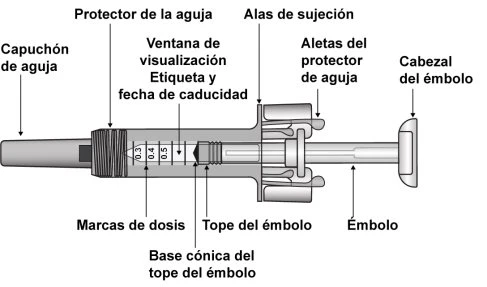
After the medication has been injected, the needle shield will automatically activate to cover the needle. The needle shield is designed to protect healthcare professionals, caregivers, and patients from injuries due to accidental needle sticks after injection.
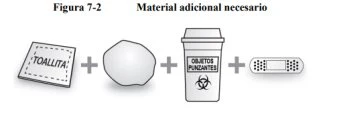
Additional materials required for injection:
Gauze
for sharp objects
|
|
Important safety information
Caution: Keep the pre-filled syringe out of the reach of children.
- Do not open the outer carton until you are ready to use the pre-filled syringe.
- Do not use the pre-filled syringe if the blister seal is broken, as it may not be safe for you to use.
- Do not use the pre-filled syringe if there is liquid in the plastic tray. Do not use the pre-filled syringe if the needle cap is missing or not properly in place. In all these cases, return the complete product package to the pharmacy.
- Do not attempt to inject a dose smaller than 0.3 ml using a pre-filled syringe. A dose smaller than 0.3 ml cannot be accurately measured with the Zarzio pre-filled syringe, as the 0.1 and 0.2 ml graduation marks are not visible on the syringe barrel.
- Never leave the pre-filled syringe unattended where others could handle it.
- Do not shake the pre-filled syringe.
- Be careful not to touch the wings of the needle guard before use. Touching the wings may cause the needle guard to activate prematurely.
- Do not remove the needle cap until immediately before administering the injection.
- The pre-filled syringe is not reusable. Immediately dispose of the used pre-filled syringe.
- Do not use the syringe if it has been dropped on a hard surface or after removing the needle cap.
Storage of the Zarzio pre-filled syringe
- Store the pre-filled syringe in its outer carton to protect it from light. Store it in the refrigerator at 2 °C to 8 °C (36 °F to 46 °F). Do not freeze.
- Remember to remove the blister from the refrigerator and allow it to warm for 15–30 minutes to reach room temperature before preparing the syringe for injection.
- Do not use the pre-filled syringe after the expiry date stated on the outer carton or on the syringe label. If expired, return the complete package to the pharmacy.
- The syringe may be removed from the refrigerator and kept at room temperature for a single period of up to 8 days (but not above 25 °C). At the end of this period, the product must not be returned to the refrigerator and must be discarded.
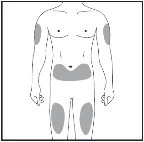
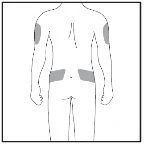
Injection site
Figure 7-3 Injection sites
| The injection site is the location on the body where you will use the pre-filled syringe.
|
|
|
Preparing the Zarzio pre-filled syringe for use
- Remove the blister containing the pre-filled syringe from the refrigerator and leave it unopened for approximately 15–30 minutes so it can reach room temperature.
- When ready to use the pre-filled syringe, open the blister and wash your hands thoroughly with soap and water.
- Clean the injection site with an alcohol swab.
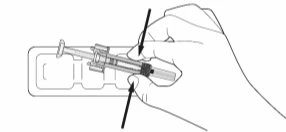
- Remove the pre-filled syringe from the blister by holding it in the middle, as shown in Figure 7-4. Do not touch the plunger rod or the needle cap.
Figure 7-4 Removing the pre-filled syringe from the blister
- Check that the clear plastic needle shield is positioned over the glass syringe barrel. If the clear plastic needle shield is covering the needle cap (as shown in Figure 7-5), the syringe has been activated; DO NOT use this syringe and take a new one. A syringe ready for use is shown in Figure 7-6.
Figure 7-5 DO NOT USE
| In this configuration, the needle guard is ACTIVATED: DO NOT USE the pre-filled syringe |
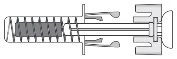
Figure 7-6 List for use
| In this configuration, the needle guard is NOT ACTIVATED and the syringe is ready for use. |
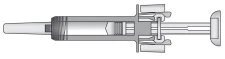
-
Inspect the pre-filled syringe. The liquid should be clear. The color may range from colorless to slightly yellowish. DO NOT USE the pre-filled syringe if you observe particles or color changes; return the pre-filled syringe and its packaging to the pharmacy.
-
DO NOT USE the pre-filled syringe if it is broken or if the needle guard has been activated. In all these cases, return the complete product package to the pharmacy.
How to use the pre-filled syringe
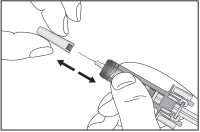
Figure 7-7 Remove the needle cap
| Carefully pull off the needle cap from the pre-filled syringe. Discard the cap. You may see a drop of liquid at the tip of the needle. This is normal. |
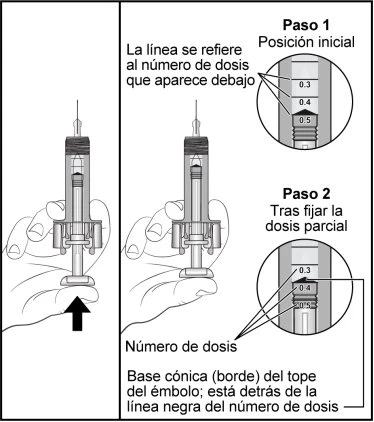
Hold the syringe as shown in the figure, and slowly press the plunger to expel excess medication until the edge of the conical base of the plunger stopper aligns with the syringe mark corresponding to the prescribed dose. The following example is for a dose of 0.4 ml. Be careful not to touch the wings of the needle shield before use. The needle shield may activate prematurely. Double-check that the pre-filled syringe contains the correct dose of Zarzio. Contact your doctor or nurse if you have any difficulty measuring or injecting the dose of Zarzio. | |
Figure 7-8 Example for a 0.4 ml dose
| |
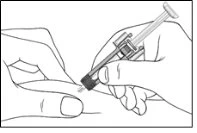
Figure 7-9 Insert the needle
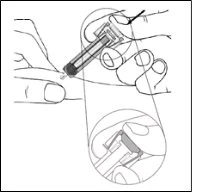
| Gently pinch the skin at the injection site and insert the needle as shown in the figure. Push the needle fully in to ensure the complete dose is delivered. |
Figure 7-10 Press the plunger
| Holding the pre-filled syringe as shown, press the plunger slowly until it reaches the end, so that the plunger head is completely between the wings of the needle shield. Keep the plunger fully pressed while holding the syringe in place for 5 seconds. |
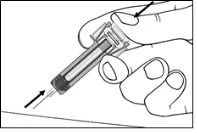
Figure 7-11 Remove the needle
| Keep the plunger fully pressed while carefully removing the needle from the injection site. |
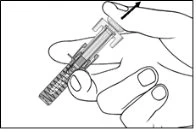
Figure 7-12 Release the plunger
| Slowly release the plunger and allow the needle shield to automatically cover the exposed needle. A small amount of blood may appear at the injection site. You may apply gentle pressure with a cotton ball or gauze pad over the injection site for 10 seconds. Do not rub the injection site. A bandage may be applied if needed. |
Disposal Instructions
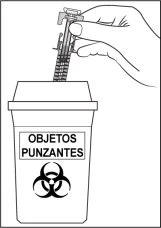
Figure 7-13 Disposal
| Dispose of the used syringe in a sharps container (a puncture-resistant, tightly sealed container). For your health and safety, and that of others, used needles and syringes must never be reused. |
This information is intended for healthcare professionals only:
The solution should be inspected visually before use. Only clear solutions without particles should be used. Accidental exposure to freezing temperatures does not adversely affect the stability of Zarzio.
Zarzio does not contain preservatives: due to the potential risk of microbiological contamination, Zarzio pre-filled syringes are for single use only.
Dilution prior to administration (optional)
Zarzio may, if necessary, be diluted in a glucose solution of 50 mg/ml (5%). Zarzio must not be diluted with sodium chloride solutions.
Dilution to final concentrations < 0.2 MU/ml (2 micrograms/ml) is not recommended under any circumstances.
In patients treated with filgrastim diluted to concentrations < 1.5 MU/ml (15 micrograms/ml), human serum albumin (HSA) should be added to a final concentration of 2 mg/ml.
Example: if the final injection volume is 20 ml and the total filgrastim dose is less than 30 MU (300 micrograms), 0.2 ml of a 200 mg/ml (20%) human serum albumin solution Ph. Eur. should be added.
When diluted in a glucose solution of 50 mg/ml (5%), filgrastim is compatible with glass and various plastics, including polyvinyl chloride, polyolefin (a copolymer of polypropylene and polyethylene), and polypropylene.
After dilution: the diluted infusion solution has been shown to remain physicochemically stable for 24 hours at 2–8 °C during use. From a microbiological standpoint, the product should be used immediately. If not used immediately, storage times and conditions prior to use are the responsibility of the user and normally should not exceed 24 hours at 2–8 °C, unless dilution has been carried out under validated and controlled aseptic conditions.
Use of the pre-filled syringe with needle safety guard
The needle safety guard covers the needle after injection to prevent accidental needlestick injuries. This does not affect the way the syringe is used. Push the plunger slowly and steadily until the full dose has been administered and the plunger cannot move further. Remove the syringe while maintaining pressure on the plunger. The needle safety guard will cover the needle once the plunger is released.
Disposal
Any unused medicine and waste materials that have come into contact with the medicine must be disposed of in accordance with local regulations.