Zamene 22.75 mg/ml oral suspension drops
Spain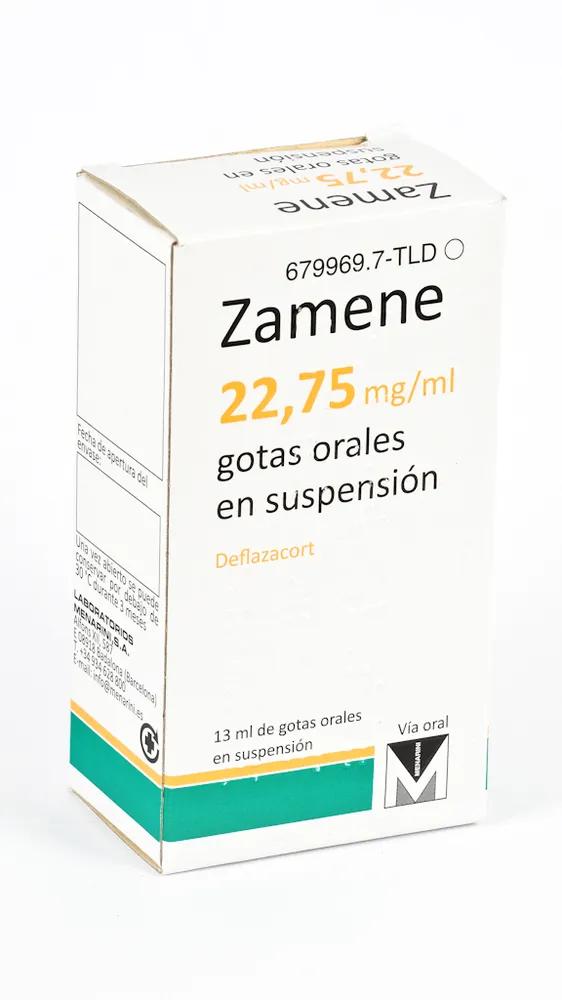
Instructions for Use
Package leaflet: Information for the user
Introduction
Package leaflet: information for the patient
Zamene 22.75 mg/ml oral suspension drops
deflazacort
Read the entire leaflet carefully before you start taking this medicine, because it contains important information for you.
- Keep this leaflet, as you may need to read it again.
- If you have any questions, ask your doctor or pharmacist.
- This medicine has been prescribed for you only, and you should not give it to other people, even if they have the same symptoms as you, because it may harm them.
- If you experience any adverse effects, consult your doctor or pharmacist, even if they are adverse effects not listed in this leaflet. See section 4.
Contents of the leaflet
- What Zamene is and what it is used for
- What you need to know before taking Zamene
- How to take Zamene
- Possible side effects
- How to store Zamene
- Contents of the pack and other information
1. What Zamene is and what it is used for
Zamene is a medicine belonging to a group of medicines known as corticosteroids, which have anti-inflammatory and antiallergic properties.
Zamene is indicated for the treatment of:
- Rheumatic and collagen diseases: such as rheumatoid arthritis, psoriatic arthritis, and systemic lupus erythematosus.
- Skin diseases: such as pemphigus, generalized exfoliative dermatitis, and severe psoriasis.
- Allergic diseases: bronchial asthma unresponsive to conventional treatment.
- Pulmonary diseases: sarcoidosis, organic dust pneumoconiosis, idiopathic pulmonary fibrosis.
- Ocular diseases: choroiditis, chorioretinitis, iritis, and iridocyclitis.
- Blood disorders: idiopathic thrombocytopenia, hemolytic anemias, and palliative treatment of leukemias and lymphomas.
- Gastrointestinal and liver diseases: ulcerative colitis, Crohn's disease, and active chronic hepatitis.
- Kidney diseases: nephrotic syndrome.
2. What you need to know before taking Zamene
Do not take Zamene
- If you are allergic to deflazacort or any of the other ingredients of this medicine (listed in section 6).
- If you have a stomach ulcer.
- If you have bacterial infections (active tuberculosis), viral infections (ocular herpes simplex, herpes zoster, varicella), or systemic fungal infections.
- If you are in a pre- or post-vaccination period.
Warnings and precautions
Talk to your doctor or pharmacist before starting to take Zamene.
- It is important that your doctor knows about all diseases you currently have or have had in the past before advising you on this treatment. In particular, inform your doctor about cardiovascular diseases (heart failure, high blood pressure), diseases caused by blood clots (thrombosis, embolism), gastrointestinal or intestinal disorders (stomach ulcer, intestinal inflammation, chronic diarrhea), serious liver or kidney diseases, diabetes, osteoporosis, behavioral disorders (mood changes, insomnia), epilepsy, glaucoma, thyroid gland insufficiency, muscle weakness, and certain acute or chronic infections.
- You should not be vaccinated during treatment with this medicine. Your doctor will advise you on what to do in these cases. Also inform your doctor if you have recently visited tropical countries.
- With prolonged treatment, eye disorders may occur; therefore, your doctor may recommend periodic visits to an ophthalmologist.
- It is necessary to adjust corticosteroid doses in special situations (surgery, infections, and others), and therefore your doctor must be aware of any other illnesses you may have had.
- In children, prolonged use of this medicine may impair growth and development.
- After long-term treatment with Zamene, the medication should be discontinued gradually. Do not stop taking this medicine without first consulting your doctor.
- Contact your doctor if you experience blurred vision or other visual disturbances.
Serious skin reactions
In post-marketing experience, serious skin rashes (Stevens-Johnson syndrome and toxic epidermal necrolysis) have been reported in association with the use of deflazacort.
Frequently, these rashes may involve ulcers in the mouth, throat, nose, genitals, and conjunctivitis (red, swollen eyes).
These severe skin rashes are often preceded by fever, headache, and body pain (flu-like symptoms). The rash may progress to widespread blisters and skin peeling. If you develop a rash or these skin symptoms, stop taking deflazacort and contact your doctor immediately.
Use in athletes
Patients should be informed that this medicine contains deflazacort, which may result in a positive doping test.
Other medicines and Zamene
Inform your doctor or pharmacist if you are currently taking, have recently taken, or might need to take any other medicines.
Some medicines may increase the effects of Zamene, so your doctor will perform careful monitoring if you are taking these medicines (including some used for HIV: ritonavir, cobicistat).
In particular, inform your doctor or pharmacist if you are taking any of the following medicines, as Zamene may interact with them:
- Medicines used to relieve pain or inflammation.
- Medicines for diabetes.
- Diuretics.
- Anti-infective agents.
- Estrogens or oral contraceptives.
- Medicines that cause muscle relaxation. Anticholinesterase agents used in myasthenia gravis.
- Medicines used to treat heart failure or coagulation disorders.
- Vaccines and toxoids.
- Medicines for epilepsy and psychiatric treatments (phenytoin, phenobarbital).
Pregnancy, breastfeeding, and fertility
If you are pregnant or breastfeeding, think you may be pregnant, or are planning to become pregnant, consult your doctor or pharmacist before using this medicine.
Human experience is limited; therefore, Zamene should only be used when a prior risk/benefit assessment justifies its use.
Zamene is excreted in breast milk; therefore, its use during breastfeeding is not recommended.
Driving and using machines
There are no available data, although it is advisable that, until your response to treatment is satisfactory, you avoid tasks requiring special attention, such as driving vehicles or operating dangerous machinery.
Zamene contains sorbitol, benzyl alcohol, and sodium
This medicine contains 100 mg of sorbitol in each ml of oral suspension.
Sorbitol is a source of fructose. If your doctor has informed you (or your child) that you have an intolerance to certain sugars, or if you have been diagnosed with hereditary fructose intolerance (HFI), a rare genetic disorder in which the patient cannot metabolize fructose, consult your doctor (or your child’s doctor) before taking this medicine.
This medicine contains 0.01 mg of benzyl alcohol in each ml of oral suspension.
Benzyl alcohol may cause allergic reactions. Consult your doctor or pharmacist if you are pregnant or breastfeeding, or if you have liver or kidney disease. This is because large amounts of benzyl alcohol may accumulate in your body and cause adverse effects (metabolic acidosis).
Benzyl alcohol has been associated with the risk of serious adverse effects, including breathing problems ("gasping syndrome") in children.
Do not administer this medicine to your newborn (up to 4 weeks of age) unless specifically advised by your doctor.
This medicine should not be used for more than one week in children under 3 years of age unless directed by your doctor or pharmacist.
This medicine contains less than 23 mg of sodium (1 mmol) per ml of oral suspension, which means it is essentially “sodium-free.”
3. How to take Zamene
Follow exactly the instructions given by your doctor for taking this medicine. If in doubt, consult your doctor or pharmacist again.
Your doctor will determine the daily dose. The dosage is individual for each patient depending on the type and severity of the disease, as well as the response to treatment.
The usual dose in adults may range from 6 to 90 mg per day and in children from 0.25 to 1.5 mg/kg. It is therefore important that you fully understand your doctor's instructions regarding administration of the medicine, and if in doubt, do not hesitate to consult them.
In special situations (stress, severe infections, serious trauma, or surgical procedures), dose adjustment may be required. Consult your doctor to explain the appropriate course of action in these cases.
Instructions for correct administration:
This medicine is administered orally. Shake the bottle well before use. The suspension to be administered may be diluted immediately before intake in sugared water or non-carbonated beverages.
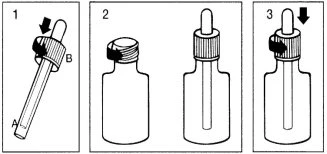
- To release the dropper from its protective cap, hold A and simultaneously pull B upwards.
- Unscrew the metal cap from the bottle and place and screw the dropper in place.
- To open the bottle containing the dropper, press the cap down firmly while unscrewing it. CHILD-RESISTANT SAFETY CAP.
Your doctor will indicate how long the treatment should last. Do not stop the treatment prematurely or without authorization, and never stop abruptly.
After prolonged treatment, administration of this medicine must never be stopped abruptly. Your doctor will instruct you on how to gradually reduce the dose. It is also important that you remain in contact with your doctor after treatment ends, so they can act promptly if symptoms reappear.
If you take more Zamene than you should
In case of overdose or accidental ingestion, contact your doctor or pharmacist immediately or call the Toxicology Information Service at 91 562 04 20, indicating the medicine and the amount ingested.
If you forget to take Zamene
Do not take a double dose to make up for missed doses.
If you stop taking Zamene
Prolonged treatments, if interrupted abruptly, may cause: fever, malaise, and muscle and joint pain.
If you have any further questions about the use of this medicine, ask your doctor or pharmacist.
4. Possible adverse effects
Like all medicines, this medicine may cause adverse effects, although not everyone experiences them.
In short-term treatments, this medicine is well tolerated and adverse effects are uncommon. However, in prolonged treatments the following have been observed:
-
Gastrointestinal disorders: Stomach ulcer, bleeding, indigestion, acute pancreatitis (especially in children).
-
Nervous system disorders: Headache, dizziness, agitation, insomnia, mood changes (depression, euphoria), and increased intracranial pressure.
-
Skin and subcutaneous tissue disorders: Thinning of the skin, stretch marks, and acne. With unknown frequency (cannot be estimated from available data): potentially life-threatening skin rashes: Stevens-Johnson syndrome and toxic epidermal necrolysis.
-
Cardiac and vascular disorders: Increased blood pressure, fluid retention in tissues (edema), heart failure, complications caused by blood clots (thromboembolism), decreased potassium levels, and salt retention.
-
Endocrine disorders: Adrenal insufficiency, weight gain, moon face, worsening of diabetes, cessation of menstruation, and growth delay in children.
-
Musculoskeletal and connective tissue disorders: Muscle disorders or weakness, osteoporosis.
-
Eye disorders: Eye disorders (cataracts, increased intraocular pressure). With unknown frequency (cannot be estimated from available data): blurred vision.
During treatment with this medicine, your susceptibility to infections may increase. Therefore, if you notice any symptoms of illness that could be related to taking this medicine, you should contact your doctor.
Reporting of adverse effects
If you experience any type of adverse effect, consult your doctor or pharmacist, even if it is an adverse effect not listed in this leaflet. You can also report them directly via the Spanish Pharmacovigilance System for Human Medicines: www.notificaram.es. By reporting adverse effects, you can help provide more information on the safety of this medicine.
5. Storage of Zamene
No special storage conditions are required.
Keep this medicine out of the sight and reach of children.
Do not use this medicine after the expiry date stated on the packaging after EXP. The expiry date refers to the last day of the month indicated.
The bottle, once opened, can be stored below 30 °C for 3 months.
Medicines must not be disposed of via wastewater or household waste. Dispose of containers and unused medicines at the SIGRE collection point at your pharmacy. If you are unsure, please ask your pharmacist how to dispose of containers and medicines you no longer need. This will help protect the environment.
6. Contents of the pack and other information
Composition of Zamene
- The active substance is deflazacort. One ml contains 22.75 mg of deflazacort. One drop contains 1 mg of deflazacort.
- The other components are: magnesium aluminium silicate, sodium carboxymethylcellulose, benzyl alcohol, 70% sorbitol, polysorbate 80 (E-433), acetic acid and purified water.
Appearance of the product and contents of the pack
Zamene 22.75 mg/ml oral drops in suspension is a slightly viscous, whitish suspension.
It is supplied in 20 ml amber glass bottles with an aluminum seal cap, and includes a glass dropper.
The pack contains 13 ml of oral suspension drops.
Marketing Authorisation Holder and Manufacturer
Laboratorios Menarini, S.A.
C/Alfons XII, 587 – E 08918 Badalona (Barcelona), Spain
Telephone: +34 934 628 800 – E-mail: [email protected]
Date of the most recent revision of this leaflet: March 2023.
Detailed information about this medicine is available on the website of the Spanish Agency of Medicines and Health Products (AEMPS) http://www.aemps.gob.es/
Similar Medications
-
Dezacor 22.75 mg/ml oral suspension drops
Form: suspension, oral
Active substance Dosage DEFLAZACORT 22,75 mg Manufacturer: Faes Farma S.A.
This page has been machine-translated and may contain inaccuracies. The original data is available in the manufacturing country's language.
Last data check: May 18, 2026 · Data source: CIMA — AEMPS