Yselty 100 mg film-coated tablets
Spain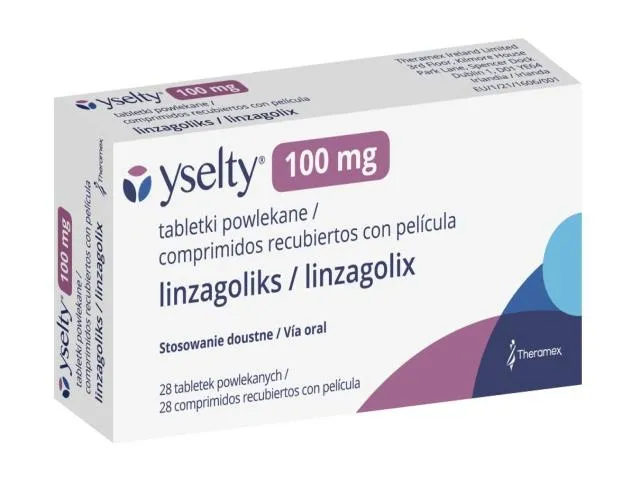
Table of Contents
Package leaflet: Information for the user
Introduction
Package leaflet: information for the patient
Yselty 100 mg film-coated tablets
linzagolix
This medicinal product is subject to additional monitoring, which will allow quicker identification of new safety information. You can help by reporting any side effects you may experience. Section 4 at the end includes information on how to report side effects.
Read all of this leaflet carefully before you start taking this medicine, because it contains important information for you.
- Keep this leaflet, as you may need to read it again.
- If you have any questions, ask your doctor or pharmacist.
- This medicine has been prescribed for you only, and you should not give it to other people, even if they have the same symptoms as you, because it may harm them.
- If you experience any side effects, consult your doctor or pharmacist, even if they are side effects not listed in this leaflet. See section 4.
Contents of this leaflet
-
What Yselty is and what it is used for
-
What you need to know before taking Yselty
-
How to take Yselty
-
Possible side effects
-
How to store Yselty
-
Contents of the container and other information
1. What Yselty is and what it is used for
Yselty contains the active substance linzagolix. It is used to treat
- moderate to severe symptoms of uterine fibroids, which are non-cancerous tumours of the uterus (womb).
- symptoms associated with endometriosis in women with a history of prior medical or surgical treatment for endometriosis (endometriosis is a disorder often causing pain, in which tissue similar to the one that normally lines the inside of the uterus – the endometrium – grows outside the uterus).
Yselty is used in adult women (over 18 years of age) of reproductive age.
In some women, uterine fibroids can cause heavy menstrual bleeding (periods with excessive blood loss) and pelvic pain (pain below the navel). Yselty is used to treat fibroids in order to stop or reduce bleeding and decrease pelvic pain and discomfort associated with uterine fibroids.
Women with endometriosis may experience pelvic or lower abdominal pain, menstrual pain, and pain during sexual intercourse. Yselty is used in the treatment of endometriosis to reduce symptoms caused by misplaced uterine lining tissue.
Linzagolix blocks the action of a hormone called gonadotropin-releasing hormone (GnRH), which helps regulate the release of the female sex hormones estradiol and progesterone. These hormones trigger menstruation (periods) in women. When this hormone is blocked, circulating levels of estrogen and progesterone hormones in the body are reduced. By lowering their levels, linzagolix stops or reduces menstrual bleeding and decreases pelvic pain, discomfort, and other symptoms associated with uterine fibroids and endometriosis.
2. What you need to know before starting to take Yselty
Do not take Yselty
If you have any of the conditions listed below:
- you are allergic to linzagolix or to any of the other ingredients of this medicine (listed in section 6);
- you are pregnant or think you might be pregnant, or if you are breastfeeding;
- you have osteoporosis (a condition that causes bones to become fragile);
- you have genital bleeding of unknown origin.
If you are taking Yselty together with additional hormonal treatment containing estradiol and norethisterone acetate (also known as add-back hormonal treatment), follow the instructions in the "Do not take..." section of the patient information leaflets for estradiol and norethisterone acetate.
Warnings and precautions
Talk to your doctor or pharmacist before starting to take Yselty.
Before starting treatment with Yselty, your doctor will review your personal and family medical history and explain relevant risk factors to you. Your doctor will also need to check your blood pressure and confirm that you are not pregnant. You may also need to undergo a physical examination and additional tests before starting treatment, such as a bone density assessment, tailored to your individual needs or medical conditions.
Stop taking Yselty and seek urgent medical attention if:
-
you notice signs of liver disease:
-
yellowing of the skin or whites of the eyes (jaundice);
-
nausea or vomiting, fever, severe fatigue;
-
dark urine, itching, or abdominal pain in the upper right side.
-
you become pregnant.
Talk to your doctor or pharmacist before starting to take Yselty if:
- you have impaired liver or kidney function.
The use of Yselty is not recommended in women with severe hepatic impairment or moderate to severe renal impairment, as blood levels of linzagolix may become too high.
- you have elevated liver enzyme levels in the blood.
During treatment with Yselty, temporary increases in liver enzyme levels in the blood may occur without symptoms.
-
you have heart or circulatory problems, a family history of changes in the heart's electrical activity known as "QT interval prolongation," or if you are taking a medicine that affects the heart's electrical activity;
-
you have elevated blood lipid levels (cholesterol). These levels should be monitored during treatment, as Yselty may cause further increases.
-
you have previously experienced a fracture not caused by major trauma, or have other risk factors for bone mineral loss or reduced bone density. Yselty may reduce bone mineral density, so your doctor may wish to assess it beforehand in such cases.
-
you have previously had depression, mood changes, suicidal thoughts, or any depressive symptoms, as these have been reported with medicines that work similarly to Yselty.
-
you think you might be pregnant. Yselty typically reduces or may even stop menstrual bleeding (period) during treatment and for several weeks afterward, making it difficult to recognize pregnancy. See the section "Pregnancy and breastfeeding."
Yselty has not been shown to have contraceptive effects. See the section "Pregnancy and breastfeeding."
Yselty may be used together with another tablet containing the hormones estradiol and norethisterone acetate (also known as add-back hormonal treatment). If prescribed, please read carefully the patient information leaflet for the tablet containing these hormones, as well as this leaflet.
Children and adolescents
Yselty is not recommended for girls and adolescents under 18 years of age, as it has not been studied in this age group.
Other medicines and Yselty
Inform your doctor or pharmacist if you are taking, have recently taken, or might need to take any other medicines, including hormonal contraception.
In particular, inform your doctor or pharmacist if you are taking:
- repaglinide (a medicine used to treat diabetes);
- paclitaxel, sorafenib (medicines used to treat cancer).
The use of Yselty is not recommended if you are taking any of these medicines.
Pregnancy and breastfeeding
Do not use Yselty if you are pregnant or breastfeeding, as it could harm your baby. If you think you might be pregnant or intend to become pregnant, consult your doctor before using this medicine.
If you become pregnant, stop taking Yselty and contact your doctor immediately. Because Yselty reduces or stops menstruation, pregnancy may be difficult to recognize. Perform a pregnancy test if there is any possibility you could be pregnant.
Women who can become pregnant must use an effective non-hormonal method of contraception while taking Yselty.
Driving and using machines
Yselty has no influence on the ability to drive and use machines.
Yselty contains lactose and sodium
If you have been told by your doctor that you have an intolerance to certain sugars, consult your doctor before taking this medicine.
This medicine contains less than 1 mmol of sodium (23 mg) per tablet, i.e., essentially "sodium-free."
3. How to take Yselty
Follow exactly the instructions for administering this medicine as given by your doctor or pharmacist. If in doubt, consult your doctor or pharmacist again.
Uterine fibroids:
Your doctor will calculate the appropriate dose of Yselty for you. The following dosing options are possible:
-
100 mg of Yselty (one tablet) or 200 mg of Yselty (two 100 mg tablets), taken once daily together with another tablet taken once daily containing the hormones estradiol and norethisterone acetate (also known as add-back hormonal treatment). If your doctor prescribes the add-back treatment, it is important that you always take it together with the Yselty tablets, as this will help reduce adverse effects, such as the risk and extent of loss of bone mineral density.
-
In women for whom estradiol and norethisterone acetate are not suitable, Yselty may be taken at a dose of one 100 mg tablet per day without estradiol and norethisterone acetate.
-
For short-term use (only up to 6 months), Yselty 200 mg per day (two 100 mg tablets) may be administered without estradiol or norethisterone acetate to treat symptoms associated with large fibroid or uterine size.
Endometriosis:
- Two 100 mg tablets of Yselty taken once daily together with a medicine containing estrogen and progestogen hormones (also known as add-back hormonal treatment). It is important to take the add-back hormonal treatment together with the Yselty tablets, as this will help reduce adverse effects, such as the risk and extent of loss of bone mineral density.
Take the recommended dose once daily.
Start taking Yselty preferably during the first week of your menstrual cycle, which is the week when you have bleeding.
Swallow the tablets with a glass of water, with or without food.
Duration of treatment
Your doctor will decide how long you should continue treatment, based on the risk of loss of bone mineral density. In the case of fibroids, the 200 mg dose (two 100 mg tablets) without add-back hormonal treatment must not be prescribed for longer than 6 months.
Your doctor will check your bone mineral density by requesting a scan after the first 12 months of treatment with Yselty to determine whether treatment can continue. If treatment with Yselty continues beyond one year, your doctor will continue to monitor your bone mineral density at periodic intervals.
If you take more Yselty than you should
Inform your doctor if you think you have taken too much Yselty.
No serious harmful effects have been reported after taking several doses of this medicine at once. If Yselty is used together with the additional hormonal treatment of estradiol and norethisterone acetate, overdose of the hormones may cause nausea and vomiting, breast tenderness, abdominal pain, drowsiness, fatigue, and withdrawal bleeding.
If you forget to take Yselty
If you forget to take a dose, take it as soon as you remember, and then take the next tablet the following day as usual. Do not take a double dose to make up for missed doses.
If you stop taking Yselty
If you wish to stop taking Yselty, consult your doctor first. Your doctor will explain the effects of stopping treatment and discuss other options with you.
If you have any further questions about the use of this medicine, ask your doctor or pharmacist.
4. Possible adverse effects
Like all medicines, this medicine can produce adverse effects, although not everyone will experience them.
Adverse effects may occur with the following frequencies:
Very common (may affect more than 1 in 10 people)
- hot flushes
Common (may affect up to 1 in 10 people)
- mood disorders, such as mood changes and emotional instability (i.e. rapid changes in emotions), anxiety, depression, irritability, and emotional disturbance
- excessive, irregular or prolonged bleeding from the womb (uterine bleeding)
- vaginal dryness
- pelvic pain
- joint pain
- headache
- reduction in bone mineral density or bone strength
- increased levels of liver enzymes in the blood
- nausea, vomiting, abdominal pain
- constipation
- decreased interest in sex (libido)
- weakness
- increased sweating
- night sweats
Uncommon (may affect up to 1 in 100 people)
- high blood pressure
Reporting of adverse effects
If you experience any type of adverse effect, consult your doctor or pharmacist, even if it is a possible adverse effect not listed in this leaflet. You may also report them directly through the Spanish Pharmacovigilance System for Human Medicines: www.notificaRAM.es. By reporting adverse effects, you can help provide more information on the safety of this medicine.
5. Yselty Storage
Keep this medicine out of the sight and reach of children.
Do not use this medicine after the expiry date stated on the blister and cardboard box after EXP. The expiry date refers to the last day of the month indicated.
This medicine does not require any special storage conditions.
Medicines should not be disposed of via wastewater drains or household waste. Ask your pharmacist how to dispose of any unused medicine and its packaging. This will help protect the environment.
6. Contents of the pack and other information
Composition of Yselty
- The active substance is linzagolix.
One tablet of Yselty 100 mg contains 100 mg of linzagolix.
- The other components are:
Tablet core: lactose monohydrate, microcrystalline cellulose, low-substituted hydroxypropyl cellulose, hydroxypropyl cellulose, sodium croscarmellose, and magnesium stearate. See section 2, "Yselty contains lactose and sodium".
Film coating: graft copolymer of macrogol and poly (vinyl alcohol) (E 1209), talc (E 553b), titanium dioxide (E 171), yellow iron oxide (E 172).
Nature and contents of the container
Yselty 100 mg are film-coated tablets, round, 10 mm in diameter, light yellow in colour, marked with "100" on one side and smooth on the other.
Yselty is supplied in a cardboard box containing 2 or 6 blisters, each blister containing 14 film-coated tablets.
Pack sizes: 28 or 84 film-coated tablets.
Only certain pack sizes may be marketed.
Marketing Authorisation Holder
Theramex Ireland Limited
3rd Floor, Kilmore House,
Park Lane, Spencer Dock,
Dublin 1
D01 YE64
Ireland
Manufacturer
Theramex Poland Sp. z o.o.
Amsterdam Building,
ul. Poleczki 35,
02-822 Warszawa
Poland
Date of the latest revision of this leaflet: 11/2024
Other sources of information
Detailed information on this medicinal product is available on the European Medicines Agency website: http://www.ema.europa.eu