Xumadol 1 g effervescent granules EFG
Spain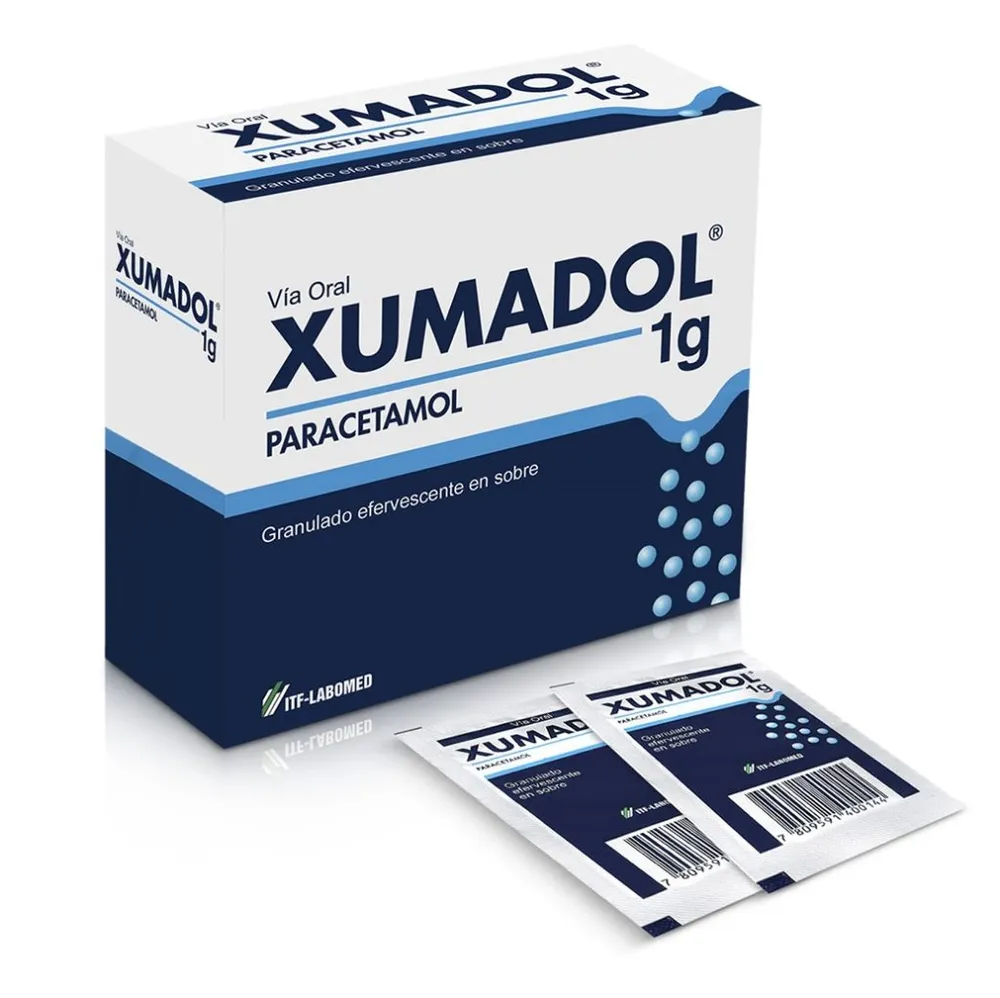
Table of Contents
- Package leaflet: Information for the user
- Introduction
- 1. What Xumadol is and what it is used for
- 2. What you need to know before taking Xumadol
- ***If necessary, Xumadol may be used during pregnancy. Use the lowest possible dose that controls pain or fever, and use it for the shortest duration possible. Contact your doctor or midwife if pain or fever does not improve or if you need to take the medicine more frequently.***
- 3. How to take Xumadol
- 4. Possible adverse effects
- 5. Storage of Xumadol
- 6. Contents of the pack and other information
Package leaflet: Information for the user
Introduction
Package leaflet: information for the user
Xumadol 1 g effervescent granules EFG
Paracetamol
Read the entire leaflet carefully before you start taking this medicine, because it contains important information for you.
-
Keep this leaflet. You may need to read it again.
-
If you have any questions, ask your doctor or pharmacist.
-
This medicine has been prescribed for you only. Do not give it to other people, even if they have the same symptoms as you, because it could harm them.
-
If you experience any adverse effects, consult your doctor or pharmacist, even if they are effects not listed in this leaflet.
Leaflet contents:
- What Xumadol is and what it is used for.
- What you need to know before taking Xumadol.
- How to take Xumadol.
- Possible side effects.
- How to store Xumadol.
- Contents of the pack and other information.
1. What Xumadol is and what it is used for
- Xumadol belongs to a group of medicines called analgesics (medicines for treating pain) and antipyretics (medicines for treating fever): anilines.
- This medicine is used to relieve moderate-intensity pain and fever.
2. What you need to know before taking Xumadol
Do not take Xumadol
- If you are allergic to paracetamol or to any of the other ingredients of this medicine (listed in section 6).
- If you have any liver disease.
Warnings and precautions
Consult your doctor or pharmacist before starting to take Xumadol.
During treatment with Xumadol, inform your doctor immediately:
- If you have kidney disease, the interval between doses must be at least 8 hours.
- If you have heart or lung disease, or have anaemia (reduced haemoglobin in the blood, with or without a reduction in red blood cells), you should consult your doctor before taking this medicine.
- In chronic alcoholics, care should be taken not to exceed 2 g/day of paracetamol.
- Caution is recommended in patients with asthma who are sensitive to acetylsalicylic acid (aspirin).
- Do not take more than the recommended dose stated in section 3, How to take Xumadol.
- If pain persists for more than 5 days, fever for more than 3 days, or if pain or fever worsen or new symptoms appear, you should consult your doctor and the clinical situation should be re-evaluated.
- If you have serious conditions such as severe renal failure or sepsis (when bacteria and their toxins circulate in the blood, causing organ damage), or if you suffer from malnutrition, chronic alcoholism, or are also taking flucloxacillin (an antibiotic). A serious condition called metabolic acidosis (an abnormality in blood and body fluids) has been reported in patients under these conditions when paracetamol is used at regular doses for prolonged periods or when paracetamol is taken together with flucloxacillin. Symptoms of metabolic acidosis may include: severe breathing difficulty with deep and rapid breathing, drowsiness, feeling unwell (nausea), and vomiting.
Children and adolescents:
In children and adolescents under 15 years of age, consult your doctor or pharmacist, as other formulations with doses adapted to this patient group are available.
Interference with diagnostic tests:
If you are due to have any laboratory tests (including blood and urine tests), inform your doctor that you are taking this medicine, as it may alter the results of these tests.
Taking Xumadol with other medicines
Inform your doctor or pharmacist if you are using, have recently used, or might need to use any other medicines.
Paracetamol may interact with the following medicines:
-
Antibiotics (chloramphenicol)
-
Oral anticoagulants (used to treat thromboembolic disorders)
-
Antiepileptics (used to treat epileptic seizures)
-
Contraceptives
-
Diuretics (used to increase urine elimination)
-
Isoniazid (used to treat tuberculosis)
-
Lamotrigine (used to treat epilepsy)
-
Probenecid (used to treat gout)
-
Propranolol (used to treat hypertension and cardiac arrhythmias)
-
Rifampicin (used to treat tuberculosis)
-
Anticholinergics (used to relieve spasms or contractions of the stomach, intestine, and bladder)
-
Zidovudine (used to treat HIV infections)
-
Colestyramine (used to reduce blood cholesterol levels)
-
Flucloxacillin (antibiotic), due to a serious risk of blood and fluid abnormalities (called metabolic acidosis) requiring urgent treatment (see section 2).
Do not use with other analgesics (medicines that relieve pain) without consulting your doctor.
Taking Xumadol with food, drinks, and alcohol
The use of paracetamol in patients who habitually consume alcohol (three or more alcoholic drinks per day) may cause liver damage. |
Pregnancy and breastfeeding
If you are pregnant or breastfeeding, think you may be pregnant, or are planning to become pregnant, consult your doctor or pharmacist before using this medicine.
If necessary, Xumadol may be used during pregnancy. Use the lowest possible dose that controls pain or fever, and use it for the shortest duration possible. Contact your doctor or midwife if pain or fever does not improve or if you need to take the medicine more frequently.
Paracetamol passes into breast milk; therefore, women who are breastfeeding should consult their doctor or pharmacist before using this medicine.
Driving and use of machinery
The effect of paracetamol on the ability to drive and operate machinery is none or negligible.
Xumadol contains aspartame. This medicine contains 15 mg of aspartame per sachet, equivalent to 9.38 mg/g. Aspartame contains a source of phenylalanine, which may be harmful in individuals with phenylketonuria (PKU), a rare genetic disorder in which phenylalanine accumulates because the body cannot properly metabolize it.
Xumadol contains sodium. This medicine contains 91.34 mg of sodium (the main component of table/cooking salt) per sachet. This corresponds to 5% of the maximum daily sodium intake recommended for an adult.
3. How to take Xumadol
Follow exactly the instructions for use of this medicine given by your doctor or pharmacist. If in doubt, consult your doctor or pharmacist again.
This medicine is administered orally, dissolving the contents of the sachet in a glass of water. Do not take until effervescence has completely stopped.
The recommended dose is:
- Adults and adolescents over 15 years of age: 1 sachet every 4–6 hours, not exceeding 4 grams (4 sachets) of paracetamol in 24 hours.
- Elderly patients should consult their doctor, as a dose reduction may be recommended.
- In case of severe kidney impairment, the interval between doses should be at least 8 hours.
Always take the lowest possible dose required to relieve symptoms.
This medicine should be taken only when pain or fever symptoms appear. As symptoms subside, this medication should be discontinued.
If symptoms worsen or do not improve after 5 days, you must consult your doctor.
If you take more Xumadol than you should
Contact your doctor or pharmacist immediately. In case of overdose or accidental ingestion, go immediately to a medical center or call the Toxicology Information Service at 91 562 04 20, indicating the medicine and the amount ingested.
If an overdose has been ingested, seek urgent medical attention even if no symptoms are present, as symptoms often do not appear until 3 days after the overdose, even in cases of severe poisoning.
Symptoms of overdose may include: dizziness, vomiting, loss of appetite, yellowing of the skin and eyes (jaundice), and abdominal pain.
Treatment of overdose is most effective if started within 4 hours of taking the medicine.
Patients undergoing treatment with barbiturates or chronic alcoholics may be more susceptible to the toxicity of a paracetamol overdose.
If you forget to take Xumadol
Do not take a double dose to make up for missed doses.
If you stop taking Xumadol
If you have any further questions about the use of this medicine, ask your doctor or pharmacist.
4. Possible adverse effects
Like all medicines, this one may produce adverse effects, although not everyone will experience them.
This medicine may cause the following adverse effects:
- Rare (may affect up to 1 in 1,000 patients): malaise, increased levels of liver transaminase enzymes, and low blood pressure.
- Very rare (may affect up to 1 in 10,000 patients): skin rashes, low blood sugar, blood disorders, jaundice (yellowing of the skin), kidney disorders, cloudy urine.
Very rarely, severe skin reactions have been reported.
- Frequency not known (cannot be estimated from available data): A serious condition that may make the blood more acidic (called metabolic acidosis) in patients with severe illness who use paracetamol (see section 2).
Reporting of adverse effects
If you experience any type of adverse effect, consult your doctor or pharmacist, even if it is a possible adverse effect not listed in this leaflet. You may also report them directly through the Spanish Pharmacovigilance System for Human Medicines: https://www.notificaram.es. By reporting adverse effects, you can help provide more information on the safety of this medicine.
5. Storage of Xumadol
Keep this medicine out of the sight and reach of children.
Store in the original packaging.
Do not use this medicine after the expiry date stated on the container after EXP. The expiry date is the last day of the month indicated.
Medicines must not be disposed of via wastewater or household waste. Dispose of unused medicines and their containers at the SIGRE Point in your pharmacy. If you are in doubt, please ask your pharmacist how to dispose of medicines and containers you no longer need. This will help protect the environment.
6. Contents of the pack and other information
Composition of Xumadol
The active substance is paracetamol. Each sachet contains 1 g of paracetamol.
The other components (excipients) are: aspartame (E-951), sodium saccharin, povidone, anhydrous sodium carbonate, sodium bicarbonate, anhydrous citric acid, anhydrous monosodium citrate and lemon flavor.
Nature of the product and contents of the pack
Xumadol 1 g is a white granular powder which, when in contact with water, effervesces and produces a lemon odor and taste.
It is available in packs containing 20 or 40 sachets.
Marketing Authorization Holder and Manufacturer:
Italfarmaco, S.A.
San Rafael, 3
28108 - Alcobendas (Madrid)
Spain Tel.: 916572323
Date of the most recent review of this leaflet: December 2024
Detailed information about this medicine is available on the website of the Spanish Agency for Medicines and Health Products (AEMPS) http://www.aemps.gob.es/