Xiliarx 50 mg tablets
Spain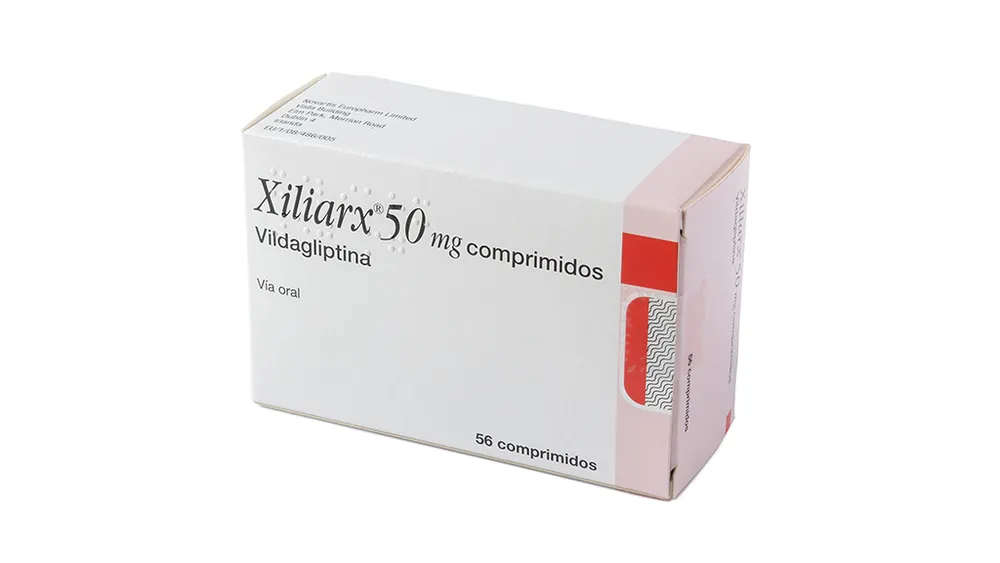
Table of Contents
Package leaflet: Information for the user
Introduction
Package leaflet: information for the user
Xiliarx 50 mg tablets
vildagliptin
Read all of this leaflet carefully before you start taking this medicine, because it contains important information for you.
- Keep this leaflet. You may need to read it again.
- If you have any questions, ask your doctor, pharmacist or nurse.
- This medicine has been prescribed for you only, and you should not give it to other people, even if they have the same symptoms as you, because it may harm them.
- If you experience any side effects, talk to your doctor, pharmacist or nurse, including any possible side effects not listed in this leaflet. See section 4.
What this leaflet contains:
- What Xiliarx is and what it is used for
- What you need to know before you take Xiliarx
- How to take Xiliarx
- Possible side effects
- How to store Xiliarx
- Contents of the pack and other information
1. What Xiliarx is and what it is used for
The active substance in Xiliarx, vildagliptin, belongs to a group of medicines called "oral antidiabetics".
Xiliarx is used to treat adult patients with type 2 diabetes when diabetes cannot be controlled by diet and exercise alone. It helps control blood sugar levels. Your doctor will prescribe Xiliarx either alone or in combination with other antidiabetic medicines you are already taking, if these are not sufficiently effective in controlling diabetes.
Type 2 diabetes occurs when the body does not produce enough insulin or when the insulin produced does not work properly. It may also occur when the body produces too much glucagon.
Insulin is a substance that helps lower blood sugar levels, especially after meals. Glucagon is a substance that promotes sugar production by the liver and causes blood sugar levels to rise. Both substances are produced in the pancreas.
How Xiliarx works
Xiliarx stimulates the pancreas to produce more insulin and less glucagon. This helps control blood sugar levels. This medicine has been shown to reduce blood sugar, which will help prevent complications of your diabetes.
Even if you start taking this medicine for your diabetes, it is important that you continue with the diet and/or exercise regimen recommended to you.
2. What you need to know before taking Xiliarx
Do not take Xiliarx
- if you are allergic to vildagliptin or to any of the other ingredients of this medicine (listed in section 6). If you think you may be allergic to vildagliptin or any other component of Xiliarx, do not take this medicine and consult your doctor.
Warnings and precautions
Consult your doctor, pharmacist, or nurse before starting Xiliarx
- if you have type 1 diabetes (i.e., your body does not produce insulin) or if you have a condition called diabetic ketoacidosis.
- if you are taking an antidiabetic medicine known as a sulfonylurea (your doctor may want to reduce your sulfonylurea dose when taken together with Xiliarx to prevent low blood sugar levels [hypoglycemia]).
- if you have moderate or severe kidney disease (you will need to take a lower dose of Xiliarx).
- if you are undergoing dialysis.
- if you have liver disease.
- if you have heart failure.
- if you have or have had pancreatic disease.
If you have previously taken vildagliptin but had to stop due to liver disease, you must not take this medicine.
Skin lesions are common complications of diabetes. Follow your doctor's or nurse's recommendations for skin and foot care, paying special attention to the appearance of blisters or ulcers while taking Xiliarx. If this occurs, you should consult your doctor as soon as possible.
Liver function tests should be performed before starting treatment with Xiliarx, at three-month intervals during the first year, and periodically thereafter. This is done to detect as early as possible any signs indicating increased liver enzymes (transaminases).
Children and adolescents
The use of Xiliarx is not recommended in children and adolescents under 18 years of age.
Taking Xiliarx with other medicines
Inform your doctor or pharmacist if you are using, have recently used, or might need to use any other medicines.
Your doctor may need to adjust your dose of Xiliarx if you are taking other medicines such as:
- thiazides or other diuretics (also called water tablets)
- corticosteroids (generally used to treat inflammation)
- thyroid medicines
- certain medicines that affect the nervous system.
Pregnancy and breastfeeding
If you are pregnant or breastfeeding, think you may be pregnant, or plan to become pregnant, consult your doctor or pharmacist before using this medicine.
You must not use Xiliarx during pregnancy. It is unknown whether Xiliarx passes into breast milk. You must not take Xiliarx if you are breastfeeding or planning to breastfeed.
Driving and use of machines
If you feel dizzy while taking Xiliarx, do not drive or operate tools or machinery.
Xiliarx contains lactose
Xiliarx contains lactose (milk sugar). If your doctor has informed you that you have an intolerance to certain sugars, consult with him before taking this medicine.
Xiliarx contains sodium
This medicine contains less than 1 mmol of sodium (23 mg) per tablet; i.e., it is essentially "sodium-free".
3. How to take Xiliarx
Follow exactly the instructions given by your doctor or pharmacist for taking this medicine. If in doubt, consult your doctor or pharmacist again.
How much to take and when
The dose of Xiliarx required by each individual varies depending on their condition. Your doctor will tell you exactly how many Xiliarx tablets you should take. The maximum daily dose is 100 mg.
The recommended dose of Xiliarx is:
- 50 mg once daily in the morning, if you are taking Xiliarx together with another medicine known as a sulfonamide.
- 100 mg per day in two doses of 50 mg in the morning and at night if you are taking Xiliarx alone, with another medicine known as metformin or a glitazone, with a combination of metformin and a sulfonamide, or with insulin.
- 50 mg once daily in the morning if you have moderate or severe kidney disease or are undergoing dialysis.
How to take Xiliarx
- Swallow the tablet whole with some water.
Duration of treatment with Xiliarx
- Take Xiliarx every day as long as your doctor tells you to. You may need to continue this treatment for a long period of time.
- Your doctor will carry out periodic checks to ensure that the treatment is having the desired effect.
If you take more Xiliarx than you should
If you have taken too many Xiliarx tablets, or if someone else has taken your medicine, consult your doctor immediately. You may require medical attention. If you need to visit a doctor or go to the nearest hospital, take the pack with you.
If you forget to take Xiliarx
If you forget to take a dose of this medicine, take it as soon as you remember. Then take the next dose at your usual time. If it is almost time for the next dose, skip the missed dose. Do not take a double dose to make up for missed doses.
If you stop taking Xiliarx
Do not stop taking Xiliarx unless your doctor tells you to. If you have any doubts about the duration of treatment with Xiliarx, consult your doctor.
4. Possible adverse effects
Like all medicines, this medicine can cause adverse effects, although not everyone experiences them.
Some symptoms require immediate medical attention
You must stop taking Xiliarx and contact your doctor immediately if you experience any of the following adverse effects:
- Angioedema (rare: may affect up to 1 in 1,000 people): symptoms including swelling of the face, tongue or throat, difficulty swallowing, difficulty breathing, sudden appearance of rash or hives, which may indicate a reaction called "angioedema".
- Liver disease (hepatitis) (frequency not known): symptoms including yellowing of the skin and eyes, nausea, loss of appetite, or darkening of the urine, which may indicate liver disease (hepatitis).
- Inflammation of the pancreas (pancreatitis) (rare: may affect up to 1 in 1,000 people): symptoms including severe and persistent abdominal pain (stomach area), which may radiate to your back, as well as nausea and vomiting.
Other adverse effects
Some patients experienced the following adverse effects while taking Xiliarx:
- Very common (may affect more than 1 in 10 people): sore throat, nasal congestion, fever.
- Common (may affect up to 1 in 10 people): itchy rash, tremor, headache, dizziness, muscle pain, joint pain, constipation, swollen hands, ankles or feet (edema), excessive sweating, vomiting, stomach and abdominal pain (abdominal pain), diarrhea, heartburn, nausea (feeling unwell), blurred vision.
- Uncommon (may affect up to 1 in 100 people): weight gain, chills, weakness, sexual dysfunction, low blood glucose levels, flatulence.
- Rare (may affect up to 1 in 1,000 people): inflammation of the pancreas.
Since the marketing of this product, the following adverse effects have also been reported:
- Frequency not known (cannot be estimated from available data): localized skin peeling or blistering, inflammation of blood vessels (vasculitis) which may cause skin rashes or small, flat, red, round spots under the skin surface or bruising.
Reporting of adverse effects
If you experience any type of adverse effect, consult your doctor, pharmacist or nurse, even if it is a possible adverse effect not listed in this leaflet. You may also report them directly through the national reporting system included in Appendix V. By reporting adverse effects, you can help provide more information on the safety of this medicine.
5. Storage of Xiliarx
- Keep this medicine out of the sight and reach of children.
- Do not use this medicine after the expiry date which is stated on the blister and packaging after “EXP”/”CAD”. The expiry date refers to the last day of the month indicated.
- Store in the original packaging to protect it from moisture.
- Do not use Xiliarx if you notice that the packaging is damaged or shows signs of deterioration.
- Medicines must not be disposed of via wastewater or household waste. Ask your pharmacist how to dispose of medicines and packaging that you no longer need. This will help protect the environment.
6. Contents of the pack and other information
Composition of Xiliarx
- The active substance is vildagliptin.
Each tablet contains 50 mg of vildagliptin.
- The other components are anhydrous lactose, microcrystalline cellulose, sodium starch glycolate (type A) and magnesium stearate.
Nature and contents of the container
Xiliarx 50 mg tablets are white to slightly yellowish, round, flat tablets, marked with "NVR" on one side and "FB" on the other.
Xiliarx 50 mg tablets are available in packs containing 7, 14, 28, 30, 56, 60, 90, 112, 180 or 336 tablets, and in multiple packs consisting of 3 packs, each containing 112 tablets.
Only certain pack sizes may be marketed.
Marketing Authorization Holder
Novartis Europharm Limited
Vista Building
Elm Park, Merrion Road
Dublin 4
Ireland
Manufacturer responsible
Lek d.d.
Verovskova ulica 57
Ljubljana 1526
Slovenia
Novartis Farmacéutica S.A.
Gran Via de les Corts Catalanes, 764
08013 Barcelona
Spain
Novartis Pharmaceutical Manufacturing LLC
Verovskova ulica 57
Ljubljana 1000
Slovenia
Novartis Pharma GmbH
Sophie-Germain-Strasse 10
90443 Nuremberg
Germany
For further information about this medicinal product, please contact the local representative of the Marketing Authorization Holder:
Belgium/Belgium/Belgium Novartis Pharma N.V. Tel/Tel: +32 2 246 16 11 | Lithuania SIA Novartis Baltics Lithuania branch Tel: +370 5 269 16 50 |
| Luxembourg/Luxembourg Novartis Pharma N.V. Tel/Tel: +32 2 246 16 11 |
Czech Republic Novartis s.r.o. Tel: +420 225 775 111 | Hungary Novartis Hungária Kft. Tel.: +36 1 457 65 00 |
Denmark Novartis Healthcare A/S Tel: +45 39 16 84 00 | Malta Novartis Pharma Services Inc. Tel: +356 2122 2872 |
Germany Novartis Pharma GmbH Tel: +49 911 273 0 | Netherlands Novartis Pharma B.V. Tel: +31 88 04 52 111 |
Estonia SIA Novartis Baltics Estonia branch Tel: +372 66 30 810 | Norway Novartis Norge AS Tlf: +47 23 05 20 00 |
Greece Novartis (Hellas) A.E.B.E. Tel: +30 210 281 17 12 | Austria Novartis Pharma GmbH Tel: +43 1 86 6570 |
Spain Laboratorios Gebro Pharma, S.A. Tel: +34 93 205 86 86 | Poland Novartis Poland Sp. z o.o. Tel.: +48 22 375 4888 |
France Novartis Pharma S.A.S. Tel: +33 1 55 47 66 00 | Portugal Laboratório Normal – Produtos Farmacêuticos Lda. Tel. +351 21 000 8600 |
Croatia Novartis Croatia d.o.o. Tel. +385 1 6274 220 | Romania Novartis Pharma Services Romania SRL Tel: +40 21 31299 01 |
Ireland Novartis Ireland Limited Tel: +353 1 260 12 55 | Slovenia Novartis Pharma Services Inc. Tel: +386 1 300 75 50 |
Iceland Vistor hf. Tel: +354 535 7000 | Slovak Republic Novartis Slovakia s.r.o. Tel: +421 2 5542 5439 |
Italy Novartis Farma S.p.A. Tel: +39 02 96 54 1 | Finland Novartis Finland Oy Tel/Tel: +358 (0)10 6133 200 |
Cyprus Novartis Pharma Services Inc. Tel: +357 22 690 690 | Sweden Novartis Sverige AB Tel: +46 8 732 32 00 |
Latvia SIA Novartis Baltics Tel: +371 67 887 070 |
Date of the most recent revision of this leaflet:
Other sources of information
Detailed information on this medicine is available on the European Medicines Agency website: http://www.ema.europa.eu